
- Home
- Robert Silverberg
Worlds of Maybe Page 10
Worlds of Maybe Read online
Page 10
In time, the oceans would run dry on the upper part of the planet. However, I postulate a rocky wall along the edges to contain most of the ocean. Here and there are breaks, and through this the waters pour. But the waters, flowing “down” the side and across the flat underside, rise (or “fall”) through fissures in the body of the planet and so replenish the water on the topside. But this is the only way to account for Oceanus not emptying itself.
What keeps the gravitational attraction of the great mass of Earth from breaking up the elongated hemisphere and reforming it into a ball? Remember, the Earth was never a molten and spinning spheroid. It was created solid and does not rotate. Besides, it is only six thousand years old and has not had time to crumble in on itself, even if there were forces to cause this, which there are not.
Most of the terms used by Friar Sparks in “Sail On! Sail On!” are, I hope, self-evident. The Baconian scientists, being Churchmen, would tend to describe physical phenomena in theological phrases. Thus, radio waves are thought of as little angelic messengers and positive and negative electricity are “good” and “bad” angels. The spark-gap transmitter “realizes” the angels, which fill the ether in a chaos or disarrangment. The realizer places a number of angels in temporary order so that messages may be transmitted for the good of mankind or for the Baconians, anyway.
Friar Sparks and his society are only following their professional bent in their type of description of natural phenomena. Undoubtedly, when science becomes even more advanced on the flat Earth, quantum jumps will be described as “states of grace” A jump of an electron (or “angel”) from a high-energy level to a low will be a “fall” from grace. Gravitational attraction might be caritas, a form of love between physical objects. Since heavier things fall faster than lighter things, the heavier have more caritas.
As you can see, a full delving into the universe of the Columbus of this story would require far more wordage than in the story itself. Someday I will write a sequel. Then the full extrapolation will be done.
Meanwhile, Columbus hurtles over the edge of the world.
Philip José Farmer
Slips Take Over by Miriam Allen deFord
In our society it is considered improper to reveal a womans age—especially in print. But in the case of Miriam Allen deFord I think awe and admiration must triumph over chivalry, for she is a phenomenon of nature, and phenomena deserve close analysis. It happens that she passed her eightieth birthday several years ago; yet her mind is unblurred by time, her storytelling powers are unimpaired, and her crisp, vigorous writing is cherished as dearly by editors today as it was half a century ago. Born in Philadelphia, long a resident of San Francisco, she has written biographies, literary criticism, history, verse, mysteries, essays on criminology, and, since 1946, a great deal of superb science fiction. Regardless of what her chronological age is supposed to be, she is very much a woman of our times, as the presence of a deFord story in that conspicuously contemporary science-fiction anthology, Harlan Ellisons Dangerous Visions, demonstrates.
Here is a story written when she was merely in her mid-seventies. It has the quiet authority of the most devastating kind of nightmare— the one in which you fail to realize until much too late that you are dreaming, and that the dream is a bad one.
Davenant looked up from his beer with interest. Words were a hobby of his, and though he had often seen “Bah!” in print this was the first time he had ever heard anybody say it.
“Interviews with Martians—and photographs of them!” the man next to him had said. “Bah!”
Davenant had checked out of his hotel, frugally, to save another day's rent, and had two hours to kill before his plane left for Boston. He was through with the work that had brought him to New York, and he could think of nobody he wanted to call up or go to see. Strolling with his traveling bag in the general direction of the air terminal, he had been brought up short by this little bar he had never noticed before.
“Tim’s Place,” it said in modest neon; and it had an old-fashioned air. A good place to waste time in, he thought, if it happened to be quiet.
It was quiet enough. There was nobody in the bar at this mid-afternoon hour except the bartender and this bald middle-aged man in a tweed suit. Davenant ordered a beer and had just lifted his glass when he heard that “Bah.” He wasn’t sure whether the man was talking to the bartender or to him.
It was Davenant he was addressing. His left hand indicating a headline on a newspaper spread before him—which one, Davenant couldn’t make out—he gesticulated with a half-full highball glass in his right.
“Science has proved,” he went on to the receptive expression on Davenant’s face, “that not one of the planets of our solar system is habitable, at least not for creatures like ourselves. The best you could hope for on Mars would be a thinking mushroom. Venus, a thinking fish—a very odd kind of fish. Jupiter, a thinking salamander.”
“You don’t believe, then, that beings from other planets are watching the earth?” Davenant asked.
“I didn’t say that. This universe is full of suns, and a lot of them must have planets revolving around them. Some of those planets may very well be populated by sentient beings. But any civilized—let’s say entities—capable of traversing illimitable space would probably be so different from our pattern we wouldn’t recognize them as human, or even as individuals. They wouldn’t resemble us the least bit, let alone be able to communicate with us.
“No,” he went on reflectively, “truth is so much stranger—and so much more familiar. Like this world we’re in right now.”
“You mean—just our world?”
“I mean this world—this frame of reference parallel to the one you come from—I imagine, the same one I did—this one we’ve both slipped over to.”
Davenant gaped at him. The man seemed sober, and perfectly sane.
"I don’t get you,” he said.
“Look,” retorted the bald man. “I can tell. I’ve never missed a slipover yet. But maybe it’s just happened to you and you don’t understand.
“You seem to be an educated man. Know any higher mathematics?”
“I ought to. I’m an accountant.”
“I don’t mean arithmetic. I mean this high-up stuff. Space-time continuum, things like that.”
“Sure, I know a little.”
“Well, then, didn’t you ever hear about multidimensional worlds—parallel frames of reference? I don’t know how many there are—nobody does; innumerable ones, possibly. But I do know that in each of them, some few people are so constituted psychologically that the film between is weak—so that they can and sometimes do slip over from one to another. And I miss my guess if you aren’t one of them—just as I am.”
“I’m afraid you’re way beyond my depth,” Davenant said.
“No, I’m not. See here.” The man in tweeds emptied his glass at a gulp. “Tim!” he called down the bar. “Another of the same for me. And fill up this gentleman’s glass.”
The burly bartender did the needful, and then stood listening. Davenant nodded his thanks. The bald-headed man went on.
“Ever hear about the farmer who went to his barn to milk his cows, and the cows were found unmilked and the farmer never seen again? Or the private plane that crashed with only the owner in it, and the plane was found, but never the pilot? Or the diplomat who walked around the horses of his carriage—and vanished? Hell, Charles Fort's books are full of cases— supposing you ever heard of Charles Fort. Take Dorothy Arnold, and Judge Crater, and, away back in the early nineteenth century, Chief Justice Lansing. Where did they all go?
“And how about the people who suddenly turn up on a park bench or on some busy street, years and miles from the life they used to know? Usually they say they can't remember. But where had they been?
“Or take the universal myth, in every country and older than history, of the children stolen by the fairies, or the shepherd who finds a hole in the mountain and enters it. Or Rip Van Winkle.
Or the Pied Piper of Hamelin. Myths are just attempts to explain facts without the necessary data.
“And take it another way—what about people like Kaspar Hauser, who suddenly appear—where from?
“So what did happen? In my book, they all slipped over. They slipped into the slot and the zipper closed on them.”
“You mean you think they got themselves transplanted into some other dimension?”
“Not the way you probably mean. They couldn’t walk out of locked rooms, or turn themselves inside out, or dig holes from the bottom up. But I know darned well they slipped over. I don’t know where Crater is—maybe he just got himself murdered—but I’ve met Miss Arnold—here. She’s pretty old by now. And I’ve seen plenty of others—like you. I recognized the look in your eyes the instant you stepped in here.
“Hell, I ought to know. I’m a slipover myself, as I said. So’s Tim here.”
Tim nodded solemnly.
Davenant smiled uncertainly.
“Well, it’s a good story,” he ventured.
The bald man frowned.
“Is that what you think?” he said. “Tell me, a while back, didn’t you feel a—a kind of electric shock? In your head? We usually do.”
Davenant started. That described it exactly—that funny feeling, just before he’d noticed Tim’s Place: like a minor earthquake inside his skull; and then everything seemed to right itself in a second, as if it had been—crooked, before. For a moment he had thought worriedly about high blood pressure, wondered if he’d had a slight stroke. He nodded involuntarily.
“I thought so,” said the man.
Davenant got hold of himself with an effort.
“Now wait,” he cried suddenly. “I’ve got you cornered. If this is a different world, how does it happen you speak English?”
“Why not? Don’t you? This is New York, isn’t it?”
“You mean, you think every city—every place on earth—has its—what did you call it—parallel?”
“Sure. I know they have. I’ve been in enough of them, in my native world and here.”
“So your—your New York has an Empire State Building, and a Rockefeller Center, and a Statue of Liberty, just like mine?”
“I didn’t say that. It has the equivalents, but they may not have the same names, or be in the same places, because the history is different. For instance, in our former world I remember there used to be a florist’s shop where this bar is now.”
Davenant laughed.
“All right, my friend,” he said.
“I’ll take you right up on that. I’m just down here on business—I live in Boston. Pretty soon I’ll be taking a plane home. And I’m willing to bet you anything you like that when I get there Boston will be just where it always has been.”
“You can get your plane—though the airport may not be where you expect. And you’ll reach Boston on schedule. Boston Harbor will be there, and Beacon Hill, and the Charles River—all natural objects. But they might not be called by the same names (I don’t know—I’ve never been in Boston in this world), and all the buildings will be different. And in the whole city there won’t be one human being you ever saw before—unless you meet another slipover.”
“And even if he did meet another,” the bartender interpolated, “he might not be from the same world originally, Mr. Gorham. You and me aren’t.”
“That’s right. I didn’t think of that. I’ve got a hunch, though, that you and I did come from the same place, Mr. —”
“Davenant. Charles Davenant.”
“My name’s Gorham—James B. Tell me, Mr. Davenant, did you ever hear of Aristotle, or Julius Caesar, or William the Conqueror, or Shakespeare?”
“Are you kidding?”
“O.K. Tim—you ever hear any of these names before?”
“Now, Mr. Gorham, you know I ain’t had much education.”
“All right, then tell me—who was Lincoln? Who was Washington? Ever hear of Hitler? Or Stalin? Or Eisenhower?”
“You’ve got me,” Tim said soberly.
“You see? You and I have the same history—Tim hasn’t. The great names he knows we wouldn’t recognize. But he came from his America, just as we came from ours.”
“But once in a while I do meet somebody from my own place,” Tim put in eagerly, “and then we remember the same things. Like, Randolph took Richmond in the Civil War, or Thomas Endicott was the first president. . . . It’s never anybody I ever knew before, though.”
“See?” said Gorham. “That’s the way it goes, Mr. Davenant. History gets changed a little in each world.
“Few slipovers, relatively—in numbers, many. Hell, people disappear from every big city every day. If they happen not to have friends or relatives to notice or care about them, they’re never even missed. You married?”
“No,” said Davenant uncommunicatively. He was thinking.
“That’s good. The worst part of it all, the way I see it, is the wife or husband left to wait and wonder and never know what happened. It’s worse for them than for the one that slips over, for at least he knows he isn’t dead and didn’t desert. I was lucky that way too— though I’d give anything to be able to let my mother and dad know I didn’t just run out on them.
“It’s funny—sometimes more than one member of a family is the special type that can slip over. I heard of two brothers, out in Oakland, California. They both slipped over, four years apart; both did it the same way—walked out of their house—two old bachelors they were—leaving the lights burning, the radio going, dinner on the stove. When the second one arrived, they found each other. If they’re not dead, they’re still together in Oakland—this Oakland.
“But I’ve never heard of a married couple who were both slipovers. They say opposites attract—perhaps slipover types never marry each other. Sometimes when a man or woman has been here a long time and seems likely to stay here, he or she remarries. It’s bigamy, of course—but the law will never catch up with them. I’m married now myself—but then I never was before.”
Davenant stared at the two men.
“You really believe all this stuff?” he asked slowly.
Gorham sighed.
“I know—it took me a long, hard time too. That’s why I try now to help others, when I recognize them.
“Haven’t you noticed that nobody’s walked in here since you did? It’s not that quiet, even at this hour, eh, Tim? I didn’t want us to be interrupted. I gave Tim the wink while you had your back turned and he locked the door so we could have a long talk. This is his own place—he’s boss.”
“That’s right,” said Tim. “Mr. Gorham’s been a good friend to me—helped me buy this joint. I don’t mind losing a little trade once in a while to do him a favor.”
Davenant felt the blood rushing to his head.
“Hey!” he yelled. “I don’t like this! Let me out, or—”
“Easy does it, fellow. You can walk out any time you want. We won’t stop you.
“But look, let’s discuss this quietly a little, shall we? Have another beer, and go ahead and ask me any questions you want.”
Davenant’s momentary anger left him. He could be a good sport and go along with a joke. He glanced at his watch. Plenty of time yet.
“O.K.,” he said. “What about clothes? Or this bag of mine?”
“Your clothes were on you, and they came over with you. It isn’t like teleportation. But look and see if you’ve got a return ticket to Boston. You won’t have, because you didn’t buy one here.”
Davenant pulled his fingers away from his empty pocket as if they had been bitten.
“It’s some sort of sleight-of-hand,” he muttered. “I can feel the money still in my wallet.”
“Why not? You had that on you too—though you can’t spend it here. You can exchange it for as much as you need of mine. It will look different, but it will be good, and I can keep yours as a souvenir.”
Interesting new con game, Davenant thought. Gorham seemed to read his m
ind.
“Listen, Mr. Davenant, if you think I’m playing a silly joke on you, I can prove to you who I am.”
He began producing identification—driver’s license, Chamber of Commerce membership, credit cards.
“I want to help you, my friend. Nobody helped me, at first, and I know how tough it is. Say you go to Boston, and for the sake of the argument say you find things the way I’ve told you. You won’t have your home or your job—they’re off somewhere in another parallel frame of reference. See here—”
He held out a business card. James B. Gorham, assistant vice-president, Bank Mutual Life Insurance Company.
“We can use another accountant in our Boston office. You’d have to qualify, of course. But you can refer to me, and that will get you over the worst hurdle for every slipover—not having any proof of degrees or experience.”
Davenant look suspiciously at the card in his hand.
“Never heard of the company,” he remarked.
“It’s an old-line one,” said Gorham equably. He pointed to a printed statement: “Established 1848.”
Something occurred to Davenant. His face brightened with triumph.
“Got you at last!” he chuckled. “So you’re a ‘slipover’ yourself, are you? You didn’t have any credentials, either, when you came. So how come all at once you’re assistant vice-president of a big insurance company?”
“Not all at once, Mr. Davenant.” Gorham’s voice was dreary. “I’ve spent half a lifetime here by now. I guess I’ll die here. I don’t know that I’d even want to go back any more—I’ve forgotten a lot, and most of the people I knew there would be dead.”
“Well, what about the people who do go back?” Davenant demanded. “Why don’t they tell what happened to them? Why do they always have amnesia, when you don’t have it here for the—for your other world?”
 The Longest Way Home
 Hawksbill Station
 A Time of Changes
 This Way to the End Times: Classic Tales of the Apocalypse
 Beyond the Gate of Worlds
 Lord Valentine's Castle
 The Man in the Maze
 Tales of Majipoor
 Time of the Great Freeze
 The Collected Stories of Robert Silverberg, Volume 3: Something Wild Is Loose: 1969-72
 Planet of Death
 Trips: The Collected Stories of Robert Silverberg, Volume Four
 In the Beginning: Tales From the Pulp Era
 Hot Sky at Midnight
 Valentine Pontifex
 Up the Line
 Thorns
 Amanda and the Alien
 Star of Gypsies
 Nightwings
 The Time Hoppers
 Blood on the Mink
 Dying Inside
 The Last Song of Orpheus
 The King of Dreams
 The Stochastic Man
 The Collected Stories of Robert Silverberg, Volume Seven: We Are for the Dark
 The Millennium Express: The Collected Stories of Robert Silverberg, Volume Nine
 The Iron Chancellor
 Lord Prestimion
 To Open the Sky
 The World Inside
 Chains of the Sea
 The Collected Stories of Robert Silverberg, Volume Five: The Palace at Midnight
 Postmark Ganymede
 The Second Trip
 The Collected Stories of Robert Silverberg, Volume 4: Trips: 1972-73
 Son of Man
 Tom O'Bedlam
 To the Land of the Living
 To Be Continued: The Collected Stories of Robert Silverberg, Volume One
 Shadrach in the Furnace
 The Chalice of Death: Three Novels of Mystery in Space
 The Queen of Springtime
 To Be Continued 1953-1958
 Legends
 Roma Eterna
 To Live Again
 At Winter's End
 Needle in a Timestack
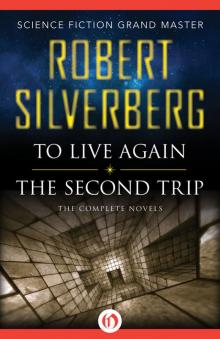 To Live Again and the Second Trip: The Complete Novels
 Lord of Darkness
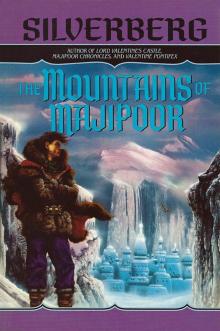 The Mountains of Majipoor
 The World Outside
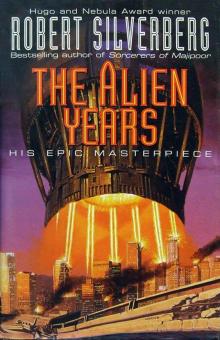 The Alien Years
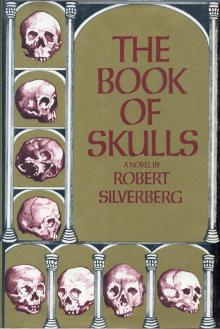 The Book of Skulls
 The Face of the Waters
 Gilgamesh the King
 The Collected Stories of Robert Silverberg, Volume 6: Multiples: 1983-87
 The Happy Unfortunate
 Three Survived
 Cronos
 Tower of Glass
 Legends II
 The Planet Killers
 The Collected Stories of Robert Silverberg, Volume 2: To the Dark Star: 1962-69
 Downward to the Earth
 Lord Valentine's Castle: Book One of the Majipoor Cycle
 Hot Times in Magma City, 1990-95
 Hunt the Space-Witch! Seven Adventures in Time and Space
 Majipoor Chronicles
 The Robert Silverberg Science Fiction Megapack(r)
 Starman's Quest
 Car Sinister
 Worlds of Maybe
 Fantasy The Best of 2001
 Revolt on Alpha C
 Homefaring
 The Pardoner's Tale
 Sailing to Byzantium - Six Novellas
 The Chalice of Death
 Sundance
 A Tip on a Turtle
 Nebula Awards Showcase 2001: The Year's Best SF and Fantasy Chosen by the Science Fiction and Fantasy Writers of America
 The Fangs of the Trees
 The Palace at Midnight: The Collected Work of Robert Silverberg, Volume Five
 The Millennium Express - 1995-2009 - The Collected Stories of Robert Silverberg Volume Nine
 Book of Skulls
 Passengers
 Something Wild is Loose - 1969–72 - The Collected Stories of Robert Silverberg Volume Three
 Multiples
 Starborne
 The Masks of Time
 The Mountains of Majipoor m-8
 Multiples (1983-87)
 Those Who Watch
 In the Beginning
 Earth Is The Strangest Planet
 Collision Course
 Neutral Planet
 To the Dark Star - 1962–69 - The Collected Stories of Robert Silverberg Volume Two
 Mutants
 Sailing to Byzantium
 When We Went to See the End of the World
 Robert Silverberg The Science Fiction Hall Of Fame Volume One, 1929-1964
 To Be Continued - 1953–58 - The Collected Stories of Robert Silverberg Volume One
 Valentine Pontifex m-3
 Gianni
 Majipoor Chronicles m-2
 We Are for the Dark (1987-90)
 Waiting for the Earthquake
 Fantasy: The Best of 2001
 How It Was When the Past Went Away
 Beauty in the Night
 The Man Who Never Forgot
 The Book of Changes m-9
 Lord Valentine's Castle m-1
 This Way to the End Times
 Queen of Springtime
 Legends-Volume 3 Stories by the Masters of Modern Fantasy
 The Palace at Midnight - 1980–82 - The Collected Stories of Robert Silverberg Volume Five
 Something Wild is Loose: The Collected Stories of Robert Silverberg, Volume Three
 Multiples - 1983–87 - The Collected Stories of Robert Silverberg Volume Six
 Alaree
 Three Survived: A Science Fiction Novel
 Defenders of the Frontier
 The New Springtime
 We Are for the Dark - 1987–90 - The Collected Stories of Robert Silverberg Volume Seven
 The Science Fiction Hall of Fame, Volume One 1929-1964--The Greatest Science Fiction Stories of All Time Chosen by the Members of the Science Fiction Writers of America
 Master Of Life And Death
 Choke Chain
 Sorcerers of Majipoor m-4
 Absolutely Inflexible
 Trips - 1962–73 - The Collected Stories of Robert Silverberg Volume Four
 Hot Times in Magma City - 1990-95 - The Collected Stories of Robert Silverberg Volume Eight
 Far Horizons
 The Queen of Springtime ns-2
 The Seventh Science Fiction Megapack
 Invaders From Earth
 Hanosz Prime Goes To Old Earth
 The Macauley Circuit
 Science Fiction: The Best of 2001
 To the Dark Star: The Collected Stories of Robert Silverberg, Volume Two
 Stochastic Man
 Legends: Stories By The Masters of Modern Fantasy
 To Live Again And The Second Trip
 Flies
Flies The Silent Invaders
 Ship-Sister, Star-Sister