
- Home
- Robert Silverberg
Dying Inside Page 11
Dying Inside Read online
Page 11
Nyquist came into the livingroom half an hour later, the blonde with him, both of them naked. He didn’t bother to knock, which surprised the redhead a little; Selig had no way of telling her that Nyquist had known they were finished. Nyquist put some music on and they all sat quietly, Selig and the redhead working on the bourbon, Nyquist and the blonde nipping into the Scotch, and toward dawn, as the snow began to slacken, Selig tentatively suggested a second round of lovemaking with a change of partners. “No,” the redhead said. “I’m all fucked out. I want to go to sleep. Some other time, okay?” She fumbled for her clothes. At the door, wobbling and staggering, making a boozy farewell, she let something slip. “I can’t help thinking there’s something peculiar about you two guys,” she said. In vino veritas. “You aren’t a couple of queers, by any chance, are you?”
SEVENTEEN.
I remain on dead center. Becalmed, static, anchored. No, that’s a lie, or if not a lie then at the very least a benign misstatement, a faulty cluster of metaphors. I am ebbing. Ebbing all the time. My tide is going out. I am revealed as a bare rocky shore, iron-hard, with trailing streamers of dirty brown seaweed dangling toward the absenting surf. Green crabs scuttling about. Yes, I ebb, which is to say I diminish, I attenuate. Do you know, I feel quite calm about it now? Of course my moods fluctuate but
I feel
Quite calm
About it now.
This is the third year since first I began to recede from myself. I think it started in the spring of 1974. Up till then it worked faultlessly, I mean the power, always there when I had occasion to call upon it, always dependable, doing all its customary tricks, serving me in all my dirty needs; and then without warning, without reason, it began dying. Little failures of input. Tiny episodes of psychic impotence. I associate these events with early spring, blackened wisps of late snow still clinging to the streets, and it could not have been ’75 nor was it ’73, which leads me to place the onset of outgo in the intermediate year. I would be snug and smug inside someone’s head, scanning scandals thought to be safely hidden, and suddenly everything would blur and become uncertain. Rather like reading the Times and having the text abruptly turn to Joycean dream-gabble between one line and the next, so that a straightforward dreary account of the latest Presidential fact-finding commission’s finding of futile facts has metamorphosed into a foggy impenetrable report on old Earwicker’s borborygmi. At such times I would falter and pull out in fear. What would you do if you believed you were in bed with your heart’s desire and awakened to find yourself screwing a starfish? But these unclarities and distortions were not the worst part: I think the inversions were, the total reversal of signal. Such as picking up a flash of love when what is really being radiated is frosty hatred. Or vice versa. When that happens I want to pound on walls to test reality. From Judith one day I got strong waves of sexual desire, an overpowering incestuous yearning, which cost me a fine dinner as I ran nauseated and retching to the bowl. All an error, all a deception; she was aiming spears at me and I took them for Cupid’s arrows, more fool I. Well, after that I got blank spaces, tiny deaths of perception in mid-contact, and after that came mingled inputs, crossed wires, two minds coming in at once and me unable to tell the which from the which. For a time the color appercept dropped out, though that has come back, one of the many false returns. And there were other losses, barely discernible ones but cumulative in their effect. I make lists now of the things I once could do that I can no longer. Inventories of the shrinkage. Like a dying man confined to his bed, paralyzed but observant, watching his relatives pilfer his goods. This day the television set has gone, and this day the Thackeray first editions, and this day the spoons, and now they have made off with my Piranesis, and tomorrow it will be the pots and pans, the Venetian blinds, my neckties, and my trousers, and by next week they will be taking toes, intestines, corneas, testicles, lungs, and nostrils. What will they use my nostrils for? I used to fight back with long walks, cold showers, tennis, massive doses of Vitamin A, and other hopeful, implausible remedies, and more recently I experimented with fasting and pure thoughts, but such struggling now seems to me inappropriate and even blasphemous; these days I strive toward cheerful acceptance of loss, with such success as you may have already perceived. Aeschylus warns me not to kick against the pricks, also Euripides and I believe Pindar, and if I were to check the New Testament I think I would find the injunction there as well, and so I obey, I kick not, even when the pricks are fiercest. I accept, I accept. Do you see that quality of acceptance growing in me? Make no mistake, I am sincere. This morning, at least, I am well on my way to acceptance, as golden autumn sunlight floods my room and expands my tattered soul. I lie here practicing the techniques that will make me invulnerable to the knowledge that it’s all fleeing from me. I search for the joy that I know lies buried in the awareness of decline. Grow old along with me! The best is yet to be, The last of life, for which the first was made. Do you believe that? I believe that. I’m getting better at believing all sorts of things. Why, sometimes I’ve believed as many as six impossible things before breakfast. Good old Browning! How comforting he is:
Then welcome each rebuff
That turns earth’s smoothness rough,
Each sting that bids not sit nor stand, but go!
Be our joys three parts pain!
Strive, and hold cheap the strain.
Yes. Of course. And be our pains three parts joy, he might have added. Such joy this morning. And it’s all fleeing from me, all ebbing. Going out of me from every pore.
* * *
Silence is coming over me. I will speak to no one after it’s gone. And no one will speak to me.
* * *
I stand here over the bowl patiently pissing my power away. Naturally I feel some sorrow over what’s happening, I feel regret, I feel—why crap around?—I feel anger and frustration and despair, but also, strangely, I feel shame. My cheeks burn, my eyes will not meet other eyes, I can hardly face my fellow mortals for the shame of it, as if something precious has been entrusted to me and I have failed in my trusteeship. I must say to the world, I’ve wasted my assets, I’ve squandered my patrimony, I’ve let it slip away, going, going, I’m a bankrupt now, a bankrupt. Perhaps this is a family trait, this embarrassment when disaster comes. We Seligs like to tell the world we are orderly people, captains of our souls, and when something external downs us we are abashed. I remember when my parents briefly owned a car, a dark-green 1948 Chevrolet purchased at some absurdly low price in 1950, and we were driving somewhere deep in Queens, perhaps on our way to my grandmother’s grave, the annual pilgrimage, and a car emerged from a blind alley and hit us. A schvartze at the wheel, drunk, giddy. Nobody hurt, but our fender badly crumpled and our grille broken, the distinctive T-bar that identified the 1948 model hanging loose. Though the accident was in no way his fault my father reddened and reddened, transmitting feverish embarrassment, as though he were apologizing to the universe for having done anything so thoughtless as allowing his car to be hit. How he apologized to the other driver, too, my grim bitter father! It’s all right, it’s all right, accidents can happen, you mustn’t feel upset about it, see, we’re all okay! Looka mah car, man, looka mah car, the other driver kept saying, evidently aware that he was on to a soft touch, and I feared my father was going to give him money for the repairs, but my mother, fearing the same thing, headed him off at the pass. A week later he was still embarrassed; I popped into his mind while he was talking with a friend and heard him trying to pretend my mother had been driving, which was absurd—she never had a license—and then I felt embarrassed for him. Judith, too, when her marriage broke up, when she walked out on an impossible situation, registered enormous grief over the shameful fact that someone so purposeful and effective in life as Judith Hannah Selig should have entered into a lousy, murderous marriage which had to be terminated vulgarly in the divorce courts. Ego, ego, ego. I the miraculous mindreader, entering upon a mysterious decline, apologizing for my carel
essness. I have misplaced my gift somewhere. Will you forgive me?
* * *
Good, to forgive;
Best, to forget!
Living, we fret;
Dying, we live.
* * *
Take an imaginary letter, Mr. Selig. Harrumph. Miss Kitty Holstein, Something West Sixty-something Street, New York City. Check the address later. Don’t bother about the zipcode.
Dear Kitty:
I know you haven’t heard from me in ages but I think now it’s appropriate to try to get in touch with you again. Thirteen years have passed and a certain maturity must have come over both of us, I think, healing old wounds and making communication possible. Despite all hard feelings that may once have existed between us I never lost my fondness for you, and you remain bright in my mind.
Speaking of my mind, there’s something I ought to tell you. I no longer do things very well with it. By “things” I mean the mental thing, the mindreading trick, which of course I couldn’t do on you in any case, but which defined and shaped my relationship to everybody else in the world. This power seems to be slipping away from me now. It caused us so much grief, remember? It was what ultimately split us up, as I tried to explain in my last letter to you, the one you never answered. In another year or so—who knows, six months, a month, a week?—it will be totally gone and I will be just an ordinary human being, like yourself. I will be a freak no longer. Perhaps then there will be an opportunity for us to resume the relationship that was interrupted in 1963 and to reestablish it on a more realistic footing.
I know I did dumb things then. I pushed you mercilessly. I refused to accept you for yourself, and tried to make something else out of you, something freakish, in fact, something just like myself. I had good reasons in theory for attempting that, I thought then, but of course they were wrong, they had to be wrong, and I never saw that until it was too late. To you I seemed domineering, overpowering, dictatorial-me, mild self-effacing me! Because I was trying to transform you. And eventually I bored you. Of course you were very young then, you were—shall I say it?—shallow, unformed, and you resisted me. But now that we’re both adults we might be able to make a go of it.
I hardly know what my life will be like as an ordinary human being unable to enter minds. Right now I’m floundering, looking for definitions of myself, looking for structures. I’m thinking seriously of entering the Roman Catholic Church. (Good Christ, am I? That’s the first I’ve heard of that! The stink of incense, the mumble of priests, is that what I want?) Or perhaps the Episcopalians, I don’t know. It’s a matter of affiliating myself with the human race. And also I want to fall in love again. I want to be part of someone else. I’ve already begun tentatively, timidly getting in touch with my sister Judith again, after a whole lifetime of warfare; we’re starting to relate to each other for the first time, and that’s encouraging to me. But I need more: a woman to love, not just sexually but in all ways. I’ve really had that only twice in my life, once with you, once about five years later with a girl named Toni who wasn’t very much like you, and both times this power of mine ruined things, once because I got too close with it, once because I couldn’t get close enough. As the power slips away from me, as it dies, perhaps there’s a chance for an ordinary human relationship between us at last, of the kind that ordinary human beings have all the time. For I will be ordinary. For I will be very ordinary.
I wonder about you. You’re 35 years old now, I think. That sounds very old to me, even though I’m 41. (41 doesn’t sound old, somehow!) I still think of you as being 22. You seemed even younger than that: sunny, open, naive. Of course that was my fantasy-image of you; I had nothing to go by but externals, I couldn’t do my usual number on your psyche, and so I made up a Kitty who probably wasn’t the real Kitty at all. Anyway, so you’re 35. I imagine you look younger than that today. Did you marry? Of course you did. A happy marriage? Lots of kids? Are you still married? What’s your married name, then, and where do you live, and how can I find you? If you’re married, will you be able to see me anyway? Somehow I don’t think you’d be a completely faithful wife—does that insult you?—and so there ought to be room in your life for me, as a friend, as a lover. Do you ever see Tom Nyquist? Did you go on seeing him for long, after you and I broke up? Were you bitter toward me for the things I told you about him in that letter? If your marriage has broken up, or if somehow you never married, would you live with me now? Not as a wife, not yet, just as a companion. To help me get through the last phases of what’s happening to me? I need help so much. I need love. I know that’s a lousy way to go about making a proposition, let alone a proposal, that is, saying, Help me, comfort me, stay with me. I’d rather reach to you in strength than in weakness. But right now I’m weak. There’s this globe of silence growing in my head, expanding, expanding, filling my whole skull, creating this big empty place. I’m suffering a slow reality leakage. I can only see the edges of things, not their substance, and now the edges are getting indistinct too. Oh, Christ. Kitty I need you. Kitty how will I find you? Kitty I hardly knew you. Kitty Kitty Kitty
* * *
Twang. The plangent chord. Twing. The breaking string. Twong. The lyre untuned. Twang. Twing. Twong.
* * *
Dear children of God, my sermon this morning will be a very short one. I wish only that you should ponder and meditate the deep meaning and mystery of a few lines I intend to rip off the saintly Tom Eliot, a thoughtful guide for troubled times. Beloved, I direct you to his Four Quartets, to his paradoxical line, “In my beginning is my end,” which he amplifies some pages later with the comment, “What we call the beginning is often the end/ And to make an end is to make a beginning.” Some of us are ending right now, dear children; that is to say, aspects of their lives that once were central to them are drawing to a close. Is this an end or is it a beginning? Can the end of one thing not be the beginning of another? I think so, beloved. I think that the closing of a door does not preclude the opening of a different door. Of course, it takes courage to walk through that new door when we do not know what may lie beyond it, but one who has faith in Our Lord who died for us, who trusts fully in Him who came for the salvation of man, need have no fears. Our lives are pilgrimages toward Him. We may die small deaths every day, but we are reborn from death to death, until at last we go into the dark, into the vacant interstellar spaces where He awaits us, and why should we fear that, if He is there? And until that time comes let us live our lives without giving way to the temptation to grieve for ourselves. Remember always that the world still is full of wonders, that there are always new quests, that seeming ends are not ends in truth, but only transitions, stations of the way. Why should we mourn? Why should we give ourselves over to sorrow, though our lives be daily subtractions? If we lose this, do we also lose that? If sight goes, does love go also? If feeling grows faint, may we not return to old feelings and draw comfort from them? Much of our pain is mere confusion…
Be then of good cheer on this Our Lord’s day, beloved, and spin no snares in which to catch yourselves, nor allow yourselves the self-indulgent sin of misery, and make no false distinctions between ends and beginnings, but go onward, ever searching, to new ecstasies, to new communions, to new worlds, and give no space in your soul to fear, but yield yourself up to the Peace of Christ and await that which must come. In the Name of the Father, and of the Son, and of the Holy Ghost. Amen.
* * *
Now comes a dark equinox out of its proper moment. The bleached moon glimmers like a wretched old skull. The leaves shrivel and fall. The fires die down. The dove, wearying, flutters to earth. Darkness spreads. Everything blows away. The purple blood falters in the narrowing veins; the chill impinges on the straining heart; the soul dwindles; even the feet become untrustworthy. Words fail. Our guides admit they are lost. That which has been solid grows transparent. Things pass away. Colors fade. This is a gray time, and I fear it will be grayer still, one of these days. Tenants of the house, thoughts of a dry bra
in in a dry season.
EIGHTEEN.
When Toni moved out of my place on 114th Street I waited two days before I did anything. I assumed she would come back when she calmed down; I figured she’d call, contrite, from some friend’s house and say she was sorry she panicked and would I come get her in a cab. Also, in those two days I was in no shape to take any sort of action, because I was still suffering the aftereffects of my vicarious trip; I felt as though someone had seized my head and pulled on it, stretching my neck like a rubber band, letting it finally snap back into place with a sharp thwock! that addled my brains. I spent those two days in bed, dozing mostly, occasionally reading, and rushing madly out into the hall every time the telephone rang.
But she didn’t come back and she didn’t call, and on the Tuesday after the acid trip I started searching for her. I phoned her office first. Teddy, her boss, a bland sweet scholarly man, very gentle, very gay. No, she hadn’t been to work this week. No, she hadn’t been in touch at all. Was it urgent? Would I like to have her home number? “I’m calling from her home number,” I said. “She isn’t here and I don’t know where she’s gone. This is David Selig, Teddy.” “Oh,” he said. Very faintly, with great compassion. “Oh.” And I said, “If she happens to call in, will you tell her to get in touch with me?” Next I started to phone her friends, those whose numbers I could find: Alice, Doris, Helen, Pam, Grace. Most of them, I knew, didn’t like me. I didn’t have to be telepathic to realize that. They thought she was throwing herself away on me, wasting her life with a man without career, prospects, money, ambition, talent, or looks. All five of them told me they hadn’t heard from her. Doris, Helen, and Pam sounded sincere. The other two, it seemed to me, were lying. I took a taxi over to Alice’s place in the Village and shot a probe upward, zam! nine stories into her head, and I learned a lot of things about Alice that I hadn’t really wanted to know, but I didn’t find out where Toni was. I felt dirty about spying and didn’t probe Grace. Instead I called my employer, the writer, whose book Toni was editing, and asked if he’d seen her. Not in weeks, he told me, all ice. Dead end. The trail had run out.
 The Longest Way Home
 Hawksbill Station
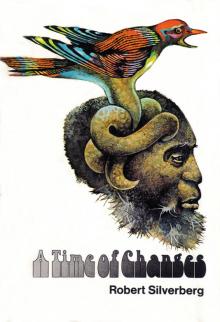 A Time of Changes
 This Way to the End Times: Classic Tales of the Apocalypse
 Beyond the Gate of Worlds
 Lord Valentine's Castle
 The Man in the Maze
 Tales of Majipoor
 Time of the Great Freeze
 The Collected Stories of Robert Silverberg, Volume 3: Something Wild Is Loose: 1969-72
 Planet of Death
 Trips: The Collected Stories of Robert Silverberg, Volume Four
 In the Beginning: Tales From the Pulp Era
 Hot Sky at Midnight
 Valentine Pontifex
 Up the Line
 Thorns
 Amanda and the Alien
 Star of Gypsies
 Nightwings
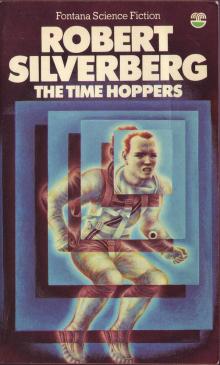 The Time Hoppers
 Blood on the Mink
 Dying Inside
 The Last Song of Orpheus
 The King of Dreams
 The Stochastic Man
 The Collected Stories of Robert Silverberg, Volume Seven: We Are for the Dark
 The Millennium Express: The Collected Stories of Robert Silverberg, Volume Nine
 The Iron Chancellor
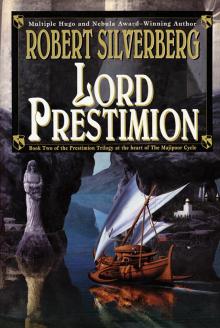 Lord Prestimion
 To Open the Sky
 The World Inside
 Chains of the Sea
 The Collected Stories of Robert Silverberg, Volume Five: The Palace at Midnight
 Postmark Ganymede
 The Second Trip
 The Collected Stories of Robert Silverberg, Volume 4: Trips: 1972-73
 Son of Man
 Tom O'Bedlam
 To the Land of the Living
 To Be Continued: The Collected Stories of Robert Silverberg, Volume One
 Shadrach in the Furnace
 The Chalice of Death: Three Novels of Mystery in Space
 The Queen of Springtime
 To Be Continued 1953-1958
 Legends
 Roma Eterna
 To Live Again
 At Winter's End
 Needle in a Timestack
 To Live Again and the Second Trip: The Complete Novels
 Lord of Darkness
 The Mountains of Majipoor
 The World Outside
 The Alien Years
 The Book of Skulls
 The Face of the Waters
 Gilgamesh the King
 The Collected Stories of Robert Silverberg, Volume 6: Multiples: 1983-87
 The Happy Unfortunate
 Three Survived
 Cronos
 Tower of Glass
 Legends II
 The Planet Killers
 The Collected Stories of Robert Silverberg, Volume 2: To the Dark Star: 1962-69
 Downward to the Earth
 Lord Valentine's Castle: Book One of the Majipoor Cycle
 Hot Times in Magma City, 1990-95
 Hunt the Space-Witch! Seven Adventures in Time and Space
 Majipoor Chronicles
 The Robert Silverberg Science Fiction Megapack(r)
 Starman's Quest
 Car Sinister
 Worlds of Maybe
 Fantasy The Best of 2001
 Revolt on Alpha C
 Homefaring
 The Pardoner's Tale
 Sailing to Byzantium - Six Novellas
 The Chalice of Death
 Sundance
 A Tip on a Turtle
 Nebula Awards Showcase 2001: The Year's Best SF and Fantasy Chosen by the Science Fiction and Fantasy Writers of America
 The Fangs of the Trees
 The Palace at Midnight: The Collected Work of Robert Silverberg, Volume Five
 The Millennium Express - 1995-2009 - The Collected Stories of Robert Silverberg Volume Nine
 Book of Skulls
 Passengers
 Something Wild is Loose - 1969–72 - The Collected Stories of Robert Silverberg Volume Three
 Multiples
 Starborne
 The Masks of Time
 The Mountains of Majipoor m-8
 Multiples (1983-87)
 Those Who Watch
 In the Beginning
 Earth Is The Strangest Planet
 Collision Course
 Neutral Planet
 To the Dark Star - 1962–69 - The Collected Stories of Robert Silverberg Volume Two
 Mutants
 Sailing to Byzantium
 When We Went to See the End of the World
 Robert Silverberg The Science Fiction Hall Of Fame Volume One, 1929-1964
 To Be Continued - 1953–58 - The Collected Stories of Robert Silverberg Volume One
 Valentine Pontifex m-3
 Gianni
 Majipoor Chronicles m-2
 We Are for the Dark (1987-90)
 Waiting for the Earthquake
 Fantasy: The Best of 2001
 How It Was When the Past Went Away
 Beauty in the Night
 The Man Who Never Forgot
 The Book of Changes m-9
 Lord Valentine's Castle m-1
 This Way to the End Times
 Queen of Springtime
 Legends-Volume 3 Stories by the Masters of Modern Fantasy
 The Palace at Midnight - 1980–82 - The Collected Stories of Robert Silverberg Volume Five
 Something Wild is Loose: The Collected Stories of Robert Silverberg, Volume Three
 Multiples - 1983–87 - The Collected Stories of Robert Silverberg Volume Six
 Alaree
 Three Survived: A Science Fiction Novel
 Defenders of the Frontier
 The New Springtime
 We Are for the Dark - 1987–90 - The Collected Stories of Robert Silverberg Volume Seven
 The Science Fiction Hall of Fame, Volume One 1929-1964--The Greatest Science Fiction Stories of All Time Chosen by the Members of the Science Fiction Writers of America
 Master Of Life And Death
 Choke Chain
 Sorcerers of Majipoor m-4
 Absolutely Inflexible
 Trips - 1962–73 - The Collected Stories of Robert Silverberg Volume Four
 Hot Times in Magma City - 1990-95 - The Collected Stories of Robert Silverberg Volume Eight
 Far Horizons
 The Queen of Springtime ns-2
 The Seventh Science Fiction Megapack
 Invaders From Earth
 Hanosz Prime Goes To Old Earth
 The Macauley Circuit
 Science Fiction: The Best of 2001
 To the Dark Star: The Collected Stories of Robert Silverberg, Volume Two
 Stochastic Man
 Legends: Stories By The Masters of Modern Fantasy
 To Live Again And The Second Trip
 Flies
Flies The Silent Invaders
 Ship-Sister, Star-Sister