
- Home
- Robert Silverberg
Legends II Page 11
Legends II Read online
Page 11
It was not large as such things went, but it looked strong. Two stout wooden barricades had been thrown across the stream from bank to bank, made from the trunks of trees with the bark still on. The space between them was filled with rocks and earth and packed down hard. Behind the dam the flow was creeping up the banks and spilling off into a ditch that had been cut through Lady Webber’s fields. Dunk stood in his stirrups for a better look. The glint of sun on water betrayed a score of lesser channels, running off in all directions like a spider’s web.They are stealing our stream. The sight filled him with indignation, especially when it dawned on him that the trees must surely have been taken from Wat’s Wood.
“See what you went and did, lunk,” said Bennis. “Couldn’t have it that the stream dried up, no. Might be this starts with water, but it’ll end with blood. Yours and mine, most like.” The brown knight drew his sword. “Well, no help for it now. There’s your thrice-damned diggers. Best we put some fear in them.” He raked his garron with his spurs and galloped through the grass.
Dunk had no choice but to follow. Ser Arlan’s longsword rode his hip, a good straight piece of steel.If these ditchdiggers have a lick of sense, they’ll run. Thunder’s hooves kicked up clods of dirt.
One man dropped his shovel at the sight of the oncoming knights, but that was all. There were a score of the diggers, short and tall, old and young, all baked brown by the sun. They formed a ragged line as Bennis slowed, clutching their spades and picks. “This is Coldmoat land,” one shouted.
“And that’s an Osgrey stream.” Bennis pointed with his longsword. “Who put that damned dam up?”
“Maester Cerrick made it,” said one young digger.
“No,” an older man insisted. “The gray pup pointed some and said do this and do that, but it were us who made it.”
“Then you can bloody well unmake it.”
The diggers’ eyes were sullen and defiant. One wiped the sweat off his brow with the back of his hand. No one spoke.
“You lot don’t hear so good,” said Bennis. “Do I need to lop me off an ear or two? Who’s first?”
“This is Webber land.” The old digger was a scrawny fellow, stooped and stubborn. “You got no right to be here. Lop off any ears and m’lady will drown you in a sack.”
Bennis rode closer. “Don’t see no ladies here, just some mouthy peasant.” He poked the digger’s bare brown chest with the point of his sword, just hard enough to draw a bead of blood.
He goes too far.“Put up your steel,” Dunk warned him. “This is not his doing. This maester set them to the task.”
“It’s for the crops, ser,” a jug-eared digger said. “The wheat was dying, the maester said. The pear trees, too.”
“Well, maybe them pear trees die, or maybe you do.”
“Your talk don’t frighten us,” said the old man.
“No?” Bennis made his longsword whistle, opening the old man’s cheek from ear to jaw. “I said, them pear trees die, or you do.” The digger’s blood ran red down one side of his face.
He should not have done that.Dunk had to swallow his rage. Bennis was on his side in this. “Get away from here,” he shouted at the diggers. “Go back to your lady’s castle.”
“Run,”Ser Bennis urged.
Three of them let go of their tools and did just that, sprinting through the grass. But another man, sunburned and brawny, hefted a pick and said, “There’s only two of them.”
“Shovels against swords is a fool’s fight, Jorgen,” the old man said, holding his face. Blood trickled through his fingers. “This won’t be the end of this. Don’t think it will.”
“One more word, and I might be the end o’ you.”
“We meant no harm to you,” Dunk said to the old man’s bloody face. “All we want is our water. Tell your lady that.”
“Oh, we’ll tell her, ser,” promised the brawny man, still clutching his pick. “That we will.”
On the way home they cut through the heart of Wat’s Wood, grateful for the small measure of shade provided by the trees. Even so, they cooked. Supposedly there were deer in the wood, but the only living things they saw were flies. They buzzed about Dunk’s face as he rode, and crept round Thunder’s eyes, irritating the big warhorse no end. The air was still, suffocating.At least in Dorne the days were dry, and at night it grew so cold I shivered in my cloak. In the Reach the nights were hardly cooler than the days, even this far north.
When ducking down beneath an overhanging limb, Dunk plucked a leaf and crumpled it between his fingers. It fell apart like thousand-year-old parchment in his hand. “There was no need to cut that man,” he told Bennis.
“A tickle on the cheek was all it was, to teach him to mind his tongue. I should of cut his bloody throat for him, only then the rest would of run like rabbits, and we’d of had to ride down the lot o’ them.”
“You’d kill twenty men?” Dunk said, incredulous.
“Twenty-two. That’s two more’n all your fingers and your toes, lunk. You have to kill them all, else they go telling tales.” They circled round a deadfall. “We should of told Ser Useless the drought dried up his little pissant stream.”
“SerEustace . You would have lied to him.”
“Aye, and why not? Who’s to tell him any different? The flies?” Bennis grinned a wet red grin. “Ser Useless never leaves the tower, except to see the boys down in the blackberries.”
“A sworn sword owes his lord the truth.”
“There’s truths and truths, lunk. Some don’t serve.” He spat. “The gods make droughts. A man can’t do a bloody buggering thing about the gods. The Red Widow, though . . . we tell Useless that bitch dog took his water, he’ll feel honor-bound to take it back. Wait and see. He’ll think he’s got todo something .”
“He should. Our smallfolk need that water for their crops.”
“Oursmallfolk?” Ser Bennis brayed his laughter. “Was I off having a squat when Ser Useless made you his heir? How many smallfolk you figure you got? Ten? And that’s counting Squinty Jeyne’s half-wit son that don’t know which end o’ the ax to hold. Go make knights o’ every one, and we’ll have half as many as the Widow, and never mind her squires and her archers and the rest. You’d need both hands and both feet to count all them, and your bald-head boy’s fingers and toes, too.”
“I don’t need toes to count.” Dunk was sick of the heat, the flies, and the brown knight’s company.He may have ridden with Ser Arlan once, but that was years and years ago. The man is grown mean and false and craven. He put his heels into his horse and trotted on ahead, to put the smell behind him.
Standfast was a castle only by courtesy. Though it stood bravely atop a rocky hill and could be seen for leagues around, it was no more than a towerhouse. A partial collapse a few centuries ago had required some rebuilding, so the north and west faces were pale gray stone above the windows, and the old black stone below. Turrets had been added to the roofline during the repair, but only on the sides that were rebuilt; at the other two corners crouched ancient stone grotesques, so badly abraded by wind and weather that it was hard to say what they had been. The pinewood roof was flat, but badly warped and prone to leaks.
A crooked path led from the foot of the hill up to the tower, so narrow it could only be ridden single file. Dunk led the way on the ascent, with Bennis just behind. He could see Egg above them, standing on a jut of rock in his floppy straw hat.
They reined up in front of the little daub-and-wattle stable that nestled at the tower’s foot, half hidden under a misshapen heap of purple moss. The old man’s gray gelding was in one of the stalls, next to Maester. Egg and Sam Stoops had gotten the wine inside, it seemed. Hens were wandering the yard. Egg trotted over. “Did you find what happened to the stream?”
“The Red Widow’s dammed it up.” Dunk dismounted, and gave Thunder’s reins to Egg. “Don’t let him drink too much at once.”
“No, ser. I won’t.”
“Boy,”Ser Bennis called. “You can take my horse as well.”
Egg gave him an insolent look. “I’m not your squire.”
That tongue of his will get him hurt one day,Dunk thought. “You’ll take his horse, or you’ll get a clout in the ear.”
Egg made a sullen face, but did as he was bid. As he reached for the bridle, though, Ser Bennis hawked and spat. A glob of glistening red phlegm struck the boy between two toes. He gave the brown knight an icy look. “You spit on my foot, ser.”
Bennis clambered to the ground. “Aye. Next time I’ll spit in your face. I’ll have none o’ your bloody tongue.”
Dunk could see the anger in the boy’s eyes. “Tend to the horses, Egg,” he said, before things got any worse. “We need to speak with Ser Eustace.”
The only entrance into Standfast was through an oak-and-iron door twenty feet above them. The bottom steps were blocks of smooth black stone, so worn they were bowl-shaped in the middle. Higher up, they gave way to a steep wooden stair that could be swung up like a drawbridge in times of trouble. Dunk shooed the hens aside and climbed two steps at a time.
Standfast was bigger than it appeared. Its deep vaults and cellars occupied a good part of the hill on which it perched. Aboveground, the tower boasted four stories. The upper two had windows and balconies, the lower two only arrow slits. It was cooler inside, but so dim that Dunk had to let his eyes adjust. Sam Stoops’ wife was on her knees by the hearth, sweeping out the ashes. “Is Ser Eustace above or below?” Dunk asked her.
“Up, ser.” The old woman was so hunched that her head was lower than her shoulders. “He just come back from visiting the boys, down in the blackberries.”
The boys were Eustace Osgrey’s sons: Edwyn, Harrold, Addam. Edwyn and Harrold had been knights, Addam a young squire. They had died on the Redgrass Field fifteen years ago, at the end of the Blackfyre Rebellion. “They died good deaths, fighting bravely for the king,” Ser Eustace told Dunk, “and I brought them home and buried them among the blackberries.” His wife was buried there as well. Whenever the old man breached a new cask of wine, he went down the hill to pour each of his boys a libation. “To the king!” he would call out loudly, just before he drank.
Ser Eustace’s bedchamber occupied the fourth floor of the tower, with his solar just below. That was where he would be found, Dunk knew, puttering amongst the chests and barrels. The solar’s thick gray walls were hung with rusted weaponry and captured banners, prizes from battles fought long centuries ago and now remembered by no one but Ser Eustace. Half the banners were mildewed, and all were badly faded and covered with dust, their once bright colors gone to gray and green.
Ser Eustace was scrubbing the dirt off a ruined shield with a rag when Dunk came up the steps. Bennis followed fragrant at his heels. The old knight’s eyes seemed to brighten a little at the sight of Dunk. “My good giant,” he declared, “and brave Ser Bennis. Come have a look at this. I found it in the bottom of that chest. A treasure, though fearfully neglected.”
It was a shield, or what remained of one. That was little enough. Almost half of it had been hacked away, and the rest was gray and splintered. The iron rim was solid rust, and the wood was full of wormholes. A few flakes of paint still clung to it, but too few to suggest a sigil.
“M’lord,” said Dunk. The Osgreys had not been lords for centuries, yet it pleased Ser Eustace to be styled so, echoing as it did the past glories of his House. “What is it?”
“The Little Lion’s shield.” The old man rubbed at the rim, and some flakes of rust came off. “Ser Wilbert Osgrey bore this at the battle where he died. I am sure you know the tale.”
“No, m’lord,” said Bennis. “We don’t, as it happens. TheLittle Lion, did you say? What, was he a dwarf or some such?”
“Certainly not.” The old knight’s mustache quivered. “Ser Wilbert was a tall and powerful man, and a great knight. The name was given him in childhood, as the youngest of five brothers. In his day there were still seven kings in the Seven Kingdoms, and Highgarden and the Rock were oft at war. The green kings ruled us then, the Gardeners. They were of the blood of old Garth Greenhand, and a green hand upon a white field was their kingly banner. Gyles the Third took his banners east, to war against the Storm King, and Wilbert’s brothers all went with him, for in those days the chequy lion always flew beside the green hand when the King of the Reach went forth to battle.
“Yet it happened that while King Gyles was away, the King of the Rock saw his chance to tear a bite out of the Reach, so he gathered up a host of westermen and came down upon us. The Osgreys were the Marshalls of the Northmarch, so it fell to the Little Lion to meet them. It was the fourth King Lancel who led the Lannisters, it seems to me, or mayhaps the fifth. Ser Wilbert blocked King Lancel’s path, and bid him halt.’Come no farther,’ he said.’You are not wanted here. I forbid you to set foot upon the Reach.’ But the Lannister ordered all his banners forward.
“They fought for half a day, the gold lion and the chequy. The Lannister was armed with a Valyrian sword that no common steel can match, so the Little Lion was hard pressed, his shield in ruins. In the end, bleeding from a dozen grievous wounds with his own blade broken in his hand, he threw himself headlong at his foe. King Lancel cut him near in half, the singers say, but as he died the Little Lion found the gap in the king’s armor beneath his arm, and plunged his dagger home. When their king died, the westermen turned back, and the Reach was saved.” The old man stroked the broken shield as tenderly as if it had been a child.
“Aye, m’lord,” Bennis croaked, “we could use a man like that today. Dunk and me had a look at your stream, m’lord. Dry as a bone, and not from no drought.”
The old man set the shield aside. “Tell me.” He took a seat and indicated that they should do the same. As the brown knight launched into the tale, he sat listening intently, with his chin up and his shoulders back, as upright as a lance.
In his youth, Ser Eustace Osgrey must have been the very picture of chivalry, tall and broad and handsome. Time and grief had worked their will on him, but he was still unbent, a big-boned, broad-shouldered, barrel-chested man with features as strong and sharp as some old eagle. His close-cropped hair had gone white as milk, but the thick mustache that hid his mouth remained an ashy gray. His eyebrows were the same color, the eyes beneath a paler shade of gray, and full of sadness.
They seemed to grow sadder still when Bennis touched upon the dam. “That stream has been known as the Chequy Water for a thousand years or more,” the old knight said. “I caught fish there as a boy, and my sons all did the same. Alysanne liked to splash in the shallows on hot summer days like this.” Alysanne had been his daughter, who had perished in the spring. “It was on the banks of the Chequy Water that I kissed a girl for the first time. A cousin, she was, my uncle’s youngest daughter, of the Osgreys of Leafy Lake. They are all gone now, even her.” His mustache quivered. “This cannot be borne, sers. The woman will not have my water. She will not have mychequy water.”
“Dam’s built strong, m’lord,” Ser Bennis warned. “Too strong for me and Ser Dunk to pull down in an hour, even with the bald-head boy to help. We’ll need ropes and picks and axes, and a dozen men. And that’s just for the work, not for the fighting.”
Ser Eustace stared at the Little Lion’s shield.
Dunk cleared his throat. “M’lord, as to that, when we came upon the diggers, well . . .”
“Dunk, don’t trouble m’lord with trifles,” said Bennis. “I taught one fool a lesson, that was all.”
Ser Eustace looked up sharply. “What sort of lesson?”
“With my sword, as it were. A little claret on his cheek, that’s all it were, m’lord.”
The old knight looked long at him. “That . . . that was ill considered, ser. The woman has a spider’s heart. She murdered three of her husbands. And all her brothers died in swaddling clothes. Five, there were. Or six, mayhaps, I don’t recall. They stood between her and the castle. She would whip the skin off any peasant who displeased her, I do not doubt, but f
oryou to cut one . . . no, she will not suffer such an insult. Make no mistake. She will come for you, as she came for Lem.”
“Dake, m’lord,” Ser Bennis said. “Begging your lordly pardon, you knew him and I never did, but his name were Dake.”
“If it please m’lord, I could go to Goldengrove and tell Lord Rowan of this dam,” said Dunk. Rowan was the old knight’s liege lord. The Red Widow held her lands of him as well.
“Rowan? No, look for no help there. Lord Rowan’s sister wed Lord Wyman’s cousin Wendell, so he is kin to the Red Widow. Besides, he loves me not. Ser Duncan, on the morrow you must make the rounds of all my villages, and roust out every able-bodied man of fighting age. I am old, but I am not dead. The woman will soon find that the chequy lion still has claws!”
Two,Dunk thought glumly,and I am one of them.
Ser Eustace’s lands supported three small villages, none more than a handful of hovels, sheepfolds, and pigs. The largest boasted a thatched one-room sept with crude pictures of the Seven scratched upon the walls in charcoal. Mudge, a stoop-backed old swineherd who’d once been to Oldtown, led devotions there every seventh day. Twice a year a real septon came through to forgive sins in the Mother’s name. The smallfolk were glad of the forgiveness, but hated the septon’s visits all the same, since they were required to feed him.
They seemed no more pleased by the sight of Dunk and Egg. Dunk was known in the villages, if only as Ser Eustace’s new knight, but not so much as a cup of water was offered him. Most of the men were in the fields, so it was largely women and children who crept out of the hovels at their coming, along with a few grandfathers too infirm for work. Egg bore the Osgrey banner, the chequy lion green and gold, rampant upon its field of white. “We come from Standfast with Ser Eustace’s summons,” Dunk told the villagers. “Every able-bodied man between the ages of fifteen and fifty is commanded to assemble at the tower on the morrow.”
“Is it war?” asked one thin woman, with two children hiding behind her skirts and a babe sucking at her breast. “Is the black dragon come again?”
 The Longest Way Home
 Hawksbill Station
 A Time of Changes
 This Way to the End Times: Classic Tales of the Apocalypse
 Beyond the Gate of Worlds
 Lord Valentine's Castle
 The Man in the Maze
 Tales of Majipoor
 Time of the Great Freeze
 The Collected Stories of Robert Silverberg, Volume 3: Something Wild Is Loose: 1969-72
 Planet of Death
 Trips: The Collected Stories of Robert Silverberg, Volume Four
 In the Beginning: Tales From the Pulp Era
 Hot Sky at Midnight
 Valentine Pontifex
 Up the Line
 Thorns
 Amanda and the Alien
 Star of Gypsies
 Nightwings
 The Time Hoppers
 Blood on the Mink
 Dying Inside
 The Last Song of Orpheus
 The King of Dreams
 The Stochastic Man
 The Collected Stories of Robert Silverberg, Volume Seven: We Are for the Dark
 The Millennium Express: The Collected Stories of Robert Silverberg, Volume Nine
 The Iron Chancellor
 Lord Prestimion
 To Open the Sky
 The World Inside
 Chains of the Sea
 The Collected Stories of Robert Silverberg, Volume Five: The Palace at Midnight
 Postmark Ganymede
 The Second Trip
 The Collected Stories of Robert Silverberg, Volume 4: Trips: 1972-73
 Son of Man
 Tom O'Bedlam
 To the Land of the Living
 To Be Continued: The Collected Stories of Robert Silverberg, Volume One
 Shadrach in the Furnace
 The Chalice of Death: Three Novels of Mystery in Space
 The Queen of Springtime
 To Be Continued 1953-1958
 Legends
 Roma Eterna
 To Live Again
 At Winter's End
 Needle in a Timestack
 To Live Again and the Second Trip: The Complete Novels
 Lord of Darkness
 The Mountains of Majipoor
 The World Outside
 The Alien Years
 The Book of Skulls
 The Face of the Waters
 Gilgamesh the King
 The Collected Stories of Robert Silverberg, Volume 6: Multiples: 1983-87
 The Happy Unfortunate
 Three Survived
 Cronos
 Tower of Glass
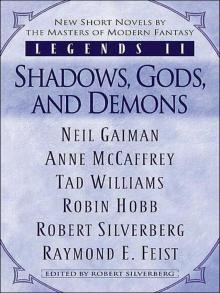 Legends II
 The Planet Killers
 The Collected Stories of Robert Silverberg, Volume 2: To the Dark Star: 1962-69
 Downward to the Earth
 Lord Valentine's Castle: Book One of the Majipoor Cycle
 Hot Times in Magma City, 1990-95
 Hunt the Space-Witch! Seven Adventures in Time and Space
 Majipoor Chronicles
 The Robert Silverberg Science Fiction Megapack(r)
 Starman's Quest
 Car Sinister
 Worlds of Maybe
 Fantasy The Best of 2001
 Revolt on Alpha C
 Homefaring
 The Pardoner's Tale
 Sailing to Byzantium - Six Novellas
 The Chalice of Death
 Sundance
 A Tip on a Turtle
 Nebula Awards Showcase 2001: The Year's Best SF and Fantasy Chosen by the Science Fiction and Fantasy Writers of America
 The Fangs of the Trees
 The Palace at Midnight: The Collected Work of Robert Silverberg, Volume Five
 The Millennium Express - 1995-2009 - The Collected Stories of Robert Silverberg Volume Nine
 Book of Skulls
 Passengers
 Something Wild is Loose - 1969–72 - The Collected Stories of Robert Silverberg Volume Three
 Multiples
 Starborne
 The Masks of Time
 The Mountains of Majipoor m-8
 Multiples (1983-87)
 Those Who Watch
 In the Beginning
 Earth Is The Strangest Planet
 Collision Course
 Neutral Planet
 To the Dark Star - 1962–69 - The Collected Stories of Robert Silverberg Volume Two
 Mutants
 Sailing to Byzantium
 When We Went to See the End of the World
 Robert Silverberg The Science Fiction Hall Of Fame Volume One, 1929-1964
 To Be Continued - 1953–58 - The Collected Stories of Robert Silverberg Volume One
 Valentine Pontifex m-3
 Gianni
 Majipoor Chronicles m-2
 We Are for the Dark (1987-90)
 Waiting for the Earthquake
 Fantasy: The Best of 2001
 How It Was When the Past Went Away
 Beauty in the Night
 The Man Who Never Forgot
 The Book of Changes m-9
 Lord Valentine's Castle m-1
 This Way to the End Times
 Queen of Springtime
 Legends-Volume 3 Stories by the Masters of Modern Fantasy
 The Palace at Midnight - 1980–82 - The Collected Stories of Robert Silverberg Volume Five
 Something Wild is Loose: The Collected Stories of Robert Silverberg, Volume Three
 Multiples - 1983–87 - The Collected Stories of Robert Silverberg Volume Six
 Alaree
 Three Survived: A Science Fiction Novel
 Defenders of the Frontier
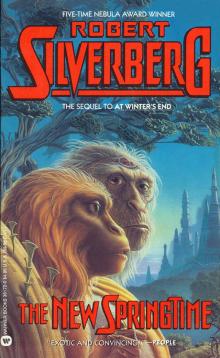 The New Springtime
 We Are for the Dark - 1987–90 - The Collected Stories of Robert Silverberg Volume Seven
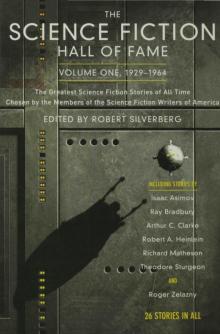 The Science Fiction Hall of Fame, Volume One 1929-1964--The Greatest Science Fiction Stories of All Time Chosen by the Members of the Science Fiction Writers of America
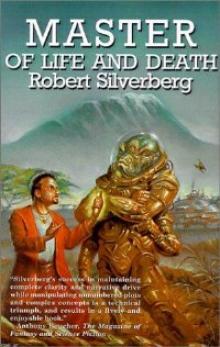 Master Of Life And Death
 Choke Chain
 Sorcerers of Majipoor m-4
 Absolutely Inflexible
 Trips - 1962–73 - The Collected Stories of Robert Silverberg Volume Four
 Hot Times in Magma City - 1990-95 - The Collected Stories of Robert Silverberg Volume Eight
 Far Horizons
 The Queen of Springtime ns-2
 The Seventh Science Fiction Megapack
 Invaders From Earth
 Hanosz Prime Goes To Old Earth
 The Macauley Circuit
 Science Fiction: The Best of 2001
 To the Dark Star: The Collected Stories of Robert Silverberg, Volume Two
 Stochastic Man
 Legends: Stories By The Masters of Modern Fantasy
 To Live Again And The Second Trip
 Flies
Flies The Silent Invaders
 Ship-Sister, Star-Sister