
- Home
- Robert Silverberg
Far Horizons Page 12
Far Horizons Read online
Page 12
Then a third project, long on the shelf, came to life when I realized that it would make a good sequel to Speaker—but this time the book would be yet a third kind of science fiction, the novel of metaphysical speculation. Eventually divided into two books, this work became Xenocide and Children of the Mind. I daresay there has been no series of novels starring the same character whose volumes have been more disparate in theme, story, and genre. And yet through all four volumes the character of Ender Wiggin struggled to resolve personal and moral dilemmas that carried over from book to book.
Those dilemmas were resolved at the end of the fourth book. I plan to write more novels in the same universe (one about Ender’s brother, Peter, and another about Bean, a young companion of Ender in the first novel), but the story of Ender himself is finished—except for one small gap.
During the three thousand years between Ender’s Game and Speaker for the Dead, during which Ender journeyed from planet to planet, using lightspeed time dilation to skim through time without living in any decade very long, he somehow acquired a computer-based companion named Jane, who is second only to Ender in importance in the last three books of the series. The story now before you is an account of how they met.
—Orson Scott Card
INVESTMENT COUNSELOR
by Orson Scott Card
Andrew Wiggin turned twenty the day he reached the planet Sorelledolce. Or rather, after complicated calculations of how many seconds he had been in flight, and at what percentage of lightspeed, and therefore what amount of subjective time had elapsed for him, he reached the conclusion that he had passed his twentieth birthday just before the end of the voyage.
This was much more relevant to him than the other pertinent fact—that four hundred and some-odd years had passed since the day he was born, back on Earth, back when the human race had not spread beyond the solar system of its birth.
When Valentine emerged from the debarkation chamber—alphabetically she was always after him—Andrew greeted her with the news. “I just figured it out,” he said. “I’m twenty.”
“Good,” she said. “Now you can start paying taxes like the rest of us.”
Ever since the end of the war of Xenocide, Andrew had lived on a trust fund set up by a grateful world to reward the commander of the fleets that saved humanity. Well, strictly speaking, that action was taken at the end of the Third Bugger War, when people still thought of the Buggers as monsters and the children who commanded the fleet as heroes. By the time the name was changed to the War of Xenocide, humanity was no longer grateful, and the last thing any government would have dared to do was authorize a pension trust fund for Ender Wiggin, the perpetrator of the most awful crime in human history.
In fact, if it had become known that such a fund existed, it would have become a public scandal. But the interstellar fleet was slow to convert to the idea that destroying the Buggers had been a bad idea. And so they carefully shielded the trust fund from public view, dispersing it among many mutual funds and as stock in many different companies, with no single authority controlling any significant portion of the money. Effectively, they had made the money disappear, and only Andrew himself and his sister Valentine knew where the money was, or how much of it there was.
One thing, though, was certain: By law, when Andrew reached the subjective age of twenty, the tax-exempt status of his holdings would be revoked. The income would start being reported to the appropriate authorities. Andrew would have to file a tax report either every year or every time he concluded an interstellar voyage of greater than one year in objective time, the taxes to be annualized and interest on the unpaid portion duly handed over.
Andrew was not looking forward to it.
“How does it work with your book royalties?” he asked Valentine.
“The same as anyone,” she answered, “except that not many copies sell, so there isn’t much in the way of taxes to pay.”
Only a few minutes later she had to eat her words, for when they sat down at the rental computers in the starport of Sorelledolce, Valentine discovered that her most recent book, a history of the failed Jung Calvin colonies on the planet Helvetica, had achieved something of a cult status.
“I think I’m rich,” she murmured to Andrew.
“I have no idea whether I’m rich or not,” said Andrew.
“I can’t get the computer to stop listing my holdings.”
The names of companies kept scrolling up and back, the list going on and on.
“I thought they’d just give you a check for whatever was in the bank when you turned twenty,” said Valentine.
“I should be so lucky,” said Andrew. “I can’t sit here and wait for this.”
“You have to,” said Valentine. “You can’t get through customs without proving that you’ve paid your taxes and that you have enough left over to support yourself without becoming a drain on public resources.”
“What if I didn’t have enough money? They send me back?”
“No, they assign you to a work crew and compel you to earn your way free at an extremely unfair rate of pay.”
“How do you know that?”
“I don’t. I’ve just read a lot of history and I know how governments work. If it isn’t that, it’ll be the equivalent. Or they’ll send you back.”
“I can’t be the only person who ever landed and discovered that it would take him a week to find out what his financial situation was,” said Andrew. “I’m going to find somebody.”
“I’ll be here, paying my taxes like a grown-up,” said Valentine. “Like an honest woman.”
“You make me ashamed of myself,” called Andrew blithely as he strode away.
Benedetto took one look at the cocky young man who sat down across the desk from him and sighed. He knew at once that this one would be trouble. A young man of privilege, arriving at a new planet, thinking he could get special favors for himself from the tax man. “What can I do for you?” asked Benedetto—in Italian, even though he was fluent in Starcommon and the law said that all travelers had to be addressed in that language unless another was mutually agreed upon.
Unfazed by the Italian, the young man produced his identification.
“Andrew Wiggin?” asked Benedetto, incredulous.
“Is there a problem?”
“Do you expect me to believe that this identification is real?” He was speaking Starcommon now; the point had been made.
“Shouldn’t I?”
“Andrew Wiggin? Do you think this is such a backwater that we are not educated enough to recognize the name of Ender the Xenocide?”
“Is having the same name a criminal offense?” asked Andrew.
“Having false identification is.”
“If I were using false identification, would it be smart or stupid to use a name like Andrew Wiggin?” he asked.
“Stupid,” Benedetto grudgingly admitted.
“So let’s start from the assumption that I’m smart, but also tormented by having grown up with the name of Ender the Xenocide. Are you going to find me psychologically unfit because of the imbalance these traumas caused me?”
“I’m not customs,” said Benedetto. “I’m taxes.”
“I know. But you seemed preternaturally absorbed with the question of identity, so I thought you were either a spy from customs or a philosopher, and who am I to deny the curiosity of either?”
Benedetto hated the smart-mouthed ones. “What do you want?”
“I find my tax situation is complicated. This is the first time I’ve had to pay taxes—I just came into a trust fund—and I don’t even know what my holdings are. I’d like to have a delay in paying my taxes until I can sort it all out.”
“Denied,” said Benedetto.
“Just like that?”
“Just like that,” said Benedetto.
Andrew sat there for a moment.
“Can I help you with something else?” asked Benedetto.
“Is there any appeal?”
; “Yes,” said Benedetto. “But you have to pay your taxes before you can appeal.”
“I intend to pay my taxes,” said Andrew. “It’s just going to take me time to do it, and I thought I’d do a better job of it on my own computer in my own apartment rather than on the public computers here in the starport.”
“Afraid someone will look over your shoulder?” asked Benedetto. “See how much of an allowance Grandmother left you?”
“It would be nice to have more privacy, yes,” said Andrew.
“Permission to leave without payment is denied.”
“All right, then, release my liquid funds to me so I can pay to stay here and work on my taxes.”
“You had your whole flight to do that.”
“My money had always been in a trust fund. I never knew how complicated the holdings were.”
“You realize, of course, that if you keep telling me these things you’ll break my heart and I’ll run from the room crying,” said Benedetto calmly.
The young man sighed. “I’m not sure what you want me to do.”
“Pay your taxes like every other citizen.”
“I have no way to get to my money until I pay my taxes,” said Andrew. “And I have no way to support myself while I figure out my taxes unless you release some funds to me.”
“Makes you wish you had thought of this earlier, doesn’t it?” said Benedetto.
Andrew looked around the office. “It says on that sign that you’ll help me fill out my tax form.”
“Yes.”
“Help.”
“Show me the form.”
Andrew looked at him oddly. “How can I show it to you?”
“Bring it up on the computer here.” Benedetto turned his computer around on his desk, offering the keyboard side of it to Andrew.
Andrew looked at the blanks in the form displayed above the computer, and typed in his name and his tax I.D. number, then his private I.D. code. Benedetto pointedly looked away while he typed in the code, even though his software was recording each keystroke the young man entered. Once he was gone, Benedetto would have full access to all his records and all his funds. The better to assist him with his taxes, of course.
The display began scrolling.
“What did you do?” asked Benedetto. The words appeared at the bottom of the display, as the top of the page slid back and out of the way, rolling into an ever-tighter scroll. Because it wasn’t paging, Benedetto knew that this long list of information was appearing as it was being called up by a single question on the form. He turned the computer around to where he could see it. The list consisted of the names and exchange codes of corporations and mutual funds, along with numbers of shares.
“You see my problem,” said the young man.
The list went on and on. Benedetto reached down and pressed a few keys in combination. The list stopped. “You have,” he said softly, “a large number of holdings.”
“But I didn’t know it,” said Andrew. “I mean, I knew that the trustees had diversified me some time ago, but I had no idea the extent. I just drew an allowance whenever I was on planet, and because it was a tax-free government pension I never had to think any more about it.”
So maybe the kid’s wide-eyed innocence wasn’t an act. Benedetto disliked him a little less. In fact, Benedetto felt the first stirrings of true friendship. This lad was going to make Benedetto a rich man without even knowing it. Benedetto might even retire from the tax service. Just his stock in the last company on the interrupted list, Enzichel Vinicenze, conglomerate with extensive holdings on Sorelledolce, was worth enough for Benedetto to buy a country estate and keep servants for the rest of his life. And the list was only up to the Es.
“Interesting,” said Benedetto.
“How about this?” said the young man. “I only turned twenty in the last year of my voyage. Up to then, my earnings were still tax-exempt and I’m entitled to them without paying taxes. Free up that much of my funds, and then give me a few weeks to get some expert to help me analyze the rest of this and I’ll submit my tax forms then.”
“Excellent idea,” said Benedetto. “Where are those liquid earnings held?”
“Catalonian Exchange Bank,” said Andrew.
“Account number?”
“All you need is to free up any funds held in my name,” said Andrew. “You don’t need the account number.”
Benedetto didn’t press the point. He wouldn’t need to dip into the boy’s petty cash. Not with the mother lode waiting for him to pillage at will before he ever got into a tax attorney’s office. He typed in the necessary information and published the form. He also gave Andrew Wiggin a thirty-day pass, allowing him the freedom of Sorelledolce as long as he logged in daily with the tax service and turned in a full tax form and paid the estimated tax within that thirty-day period, and promised not to leave the planet until his tax form had been evaluated and confirmed.
Standard operating procedure. The young man thanked him—that’s the part Benedetto always liked, when these rich idiots thanked him for lying to them and skimming invisible bribes from their accounts—and then left the office.
As soon as he was gone, Benedetto cleared the display and called up his snitch program to report the young man’s I.D. code. He waited. The snitch program did not come up. He brought up his log of running programs, checked the hidden log, and found that the snitch program wasn’t on the list. Absurd. It was always running. Only now it wasn’t. And in fact it had disappeared from memory.
Using his version of the banned Predator program, he searched for the electronic signature of the snitch program, and found a couple of its temp files. But none contained any useful information, and the snitch program itself was completely gone.
Nor, when he tried to return to the form Andrew Wiggin had created, was he able to bring it back. It should have been there, with the young man’s list of holdings intact, so Benedetto could make a run at some of the stocks and funds manually—there were plenty of ways to ransack them, even when he couldn’t get the password from his snitch. But the form was blank. The company names had all disappeared.
What had happened? How could both these things go wrong at the same time?
No matter. The list was so long it had to have been buffered. Predator would find it.
Only now Predator wasn’t responding. It wasn’t in memory either. He had used it only a moment ago! This was impossible. This was…
How could the boy have introduced a virus on his system just by entering tax form information? Could he have embedded it into one of the company names somehow? Benedetto was a user of illegal software, not a designer; but still, he had never heard of anything that could come in through uncrunched data, not through the security of the tax system.
This Andrew Wiggin had to be some kind of spy. Sorelledolce was one of the last holdouts against complete federation with Starways Congress—he had to be a Congress spy sent to try to subvert the independence of Sorelledolce.
Only that was absurd. A spy would have come in prepared to submit his tax forms, pay his taxes, and move right along. A spy would have done nothing to call attention to himself.
There had to be some explanation. And Benedetto was going to get it. Whoever this Andrew Wiggin was, Benedetto was not going to be cheated out of inheriting his fair share of the boy’s wealth. He’d waited a long time for this, and just because this Wiggin boy had some fancy security software didn’t mean Benedetto wouldn’t find a way to get his hands on what was rightly his.
Andrew was still a little steamed as he and Valentine made their way out of the starport. Sorelledolce was one of the newer colonies, only a hundred years old, but its status as an associated planet meant that a lot of shady and unregulatable businesses migrated there, bringing full employment, plenty of opportunities, and a boomtown ethos that made everyone’s step seem vigorous—and everyone’s eyes seem to keep glancing over their shoulder. Ships came here full of people and left full of cargo, so that the colony popul
ation was nearing four million and that of the capital, Donnabella, a full million.
The architecture was an odd mix of log cabins and prefab plastic. You couldn’t tell a building’s age by that, though-both materials had coexisted from the start. The native flora was fern jungle and so the fauna—dominated by legless lizards—were of dinosaurian proportions, but the human settlements were safe enough and cultivation produced so much that half the land could be devoted to cash crops for export—legal ones like textiles and illegal ones for ingestion. Not to mention the trade in huge colorful serpent skins used as tapestries and ceiling coverings all over the worlds governed by Starways Congress. Many a hunting party went out into the jungle and came back a month later with fifty pelts, enough for the survivors to retire in luxury. Many a hunting party went out, however, and was never seen again. The only consolation, according to local wags, was that the biochemistry differed just enough that any snake that ate a human had diarrhea for a week. It wasn’t quite revenge, but it helped.
New buildings were going up all the time, but they couldn’t keep up with demand, and Andrew and Valentine had to spend a whole day searching before they found a room they could share. But their new roommate, an Abyssinian hunter of enormous fortune, promised that he’d have his expedition and be gone on the hunt within a few days, and all he asked was that they watch over his things until he returned…or didn’t.
“How will we know when you haven’t returned?” asked Valentine, ever the practical one.
“The women weeping in the Libyan quarter,” he replied.
Andrew’s first act was to sign on to the net with his own computer, so he could study his newly revealed holdings at leisure. Valentine had to spend her first few days dealing with a huge volume of correspondence arising from her latest book, in addition to the normal amount of mail she had from historians all over the settled worlds. Most of it she marked to answer later, but the urgent messages alone took three long days. Of course, the people writing to her had no idea they were corresponding with a young woman of about twenty-five years (subjective age). They thought they were corresponding with the noted historian Demosthenes. Not that anyone thought for a moment that the name was anything but a pseudonym; and some reporters, responding to her first rush of fame with this latest book, had attempted to identify the “real Demosthenes” by figuring out from her long spates of slow responses or no responses at all when she was voyaging, and then working from passenger lists of candidate flights. It took an enormous amount of calculation, but that’s what computers were for, wasn’t it? So several men of varying degrees of scholarliness were accused of being Demosthenes, and some were not trying all that hard to deny it.
 The Longest Way Home
 Hawksbill Station
 A Time of Changes
 This Way to the End Times: Classic Tales of the Apocalypse
 Beyond the Gate of Worlds
 Lord Valentine's Castle
 The Man in the Maze
 Tales of Majipoor
 Time of the Great Freeze
 The Collected Stories of Robert Silverberg, Volume 3: Something Wild Is Loose: 1969-72
 Planet of Death
 Trips: The Collected Stories of Robert Silverberg, Volume Four
 In the Beginning: Tales From the Pulp Era
 Hot Sky at Midnight
 Valentine Pontifex
 Up the Line
 Thorns
 Amanda and the Alien
 Star of Gypsies
 Nightwings
 The Time Hoppers
 Blood on the Mink
 Dying Inside
 The Last Song of Orpheus
 The King of Dreams
 The Stochastic Man
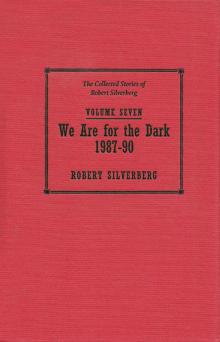 The Collected Stories of Robert Silverberg, Volume Seven: We Are for the Dark
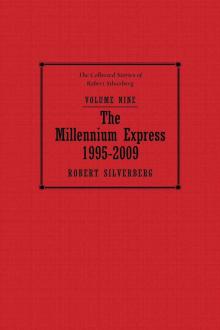 The Millennium Express: The Collected Stories of Robert Silverberg, Volume Nine
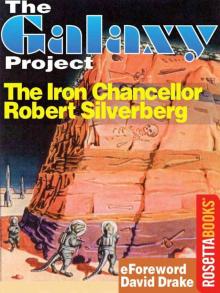 The Iron Chancellor
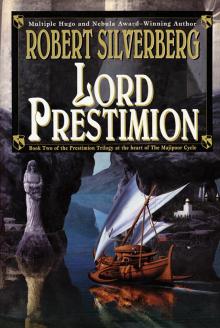 Lord Prestimion
 To Open the Sky
 The World Inside
 Chains of the Sea
 The Collected Stories of Robert Silverberg, Volume Five: The Palace at Midnight
 Postmark Ganymede
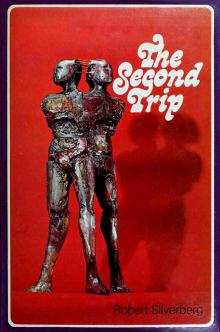 The Second Trip
 The Collected Stories of Robert Silverberg, Volume 4: Trips: 1972-73
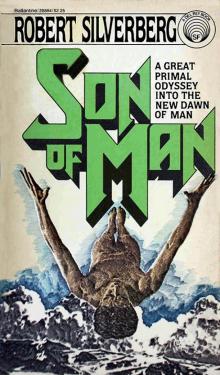 Son of Man
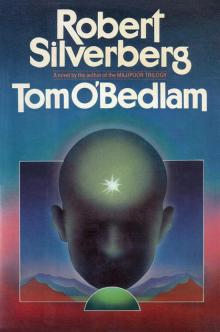 Tom O'Bedlam
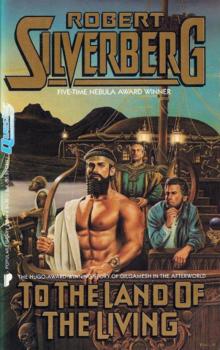 To the Land of the Living
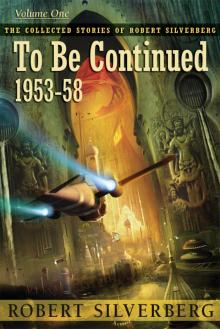 To Be Continued: The Collected Stories of Robert Silverberg, Volume One
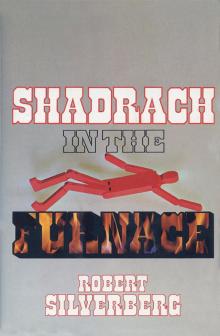 Shadrach in the Furnace
 The Chalice of Death: Three Novels of Mystery in Space
 The Queen of Springtime
 To Be Continued 1953-1958
 Legends
 Roma Eterna
 To Live Again
 At Winter's End
 Needle in a Timestack
 To Live Again and the Second Trip: The Complete Novels
 Lord of Darkness
 The Mountains of Majipoor
 The World Outside
 The Alien Years
 The Book of Skulls
 The Face of the Waters
 Gilgamesh the King
 The Collected Stories of Robert Silverberg, Volume 6: Multiples: 1983-87
 The Happy Unfortunate
 Three Survived
 Cronos
 Tower of Glass
 Legends II
 The Planet Killers
 The Collected Stories of Robert Silverberg, Volume 2: To the Dark Star: 1962-69
 Downward to the Earth
 Lord Valentine's Castle: Book One of the Majipoor Cycle
 Hot Times in Magma City, 1990-95
 Hunt the Space-Witch! Seven Adventures in Time and Space
 Majipoor Chronicles
 The Robert Silverberg Science Fiction Megapack(r)
 Starman's Quest
 Car Sinister
 Worlds of Maybe
 Fantasy The Best of 2001
 Revolt on Alpha C
 Homefaring
 The Pardoner's Tale
 Sailing to Byzantium - Six Novellas
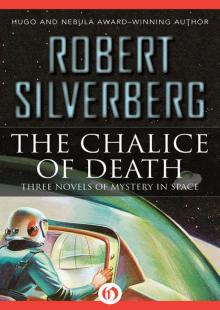 The Chalice of Death
 Sundance
 A Tip on a Turtle
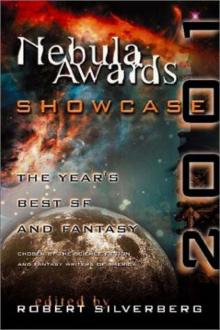 Nebula Awards Showcase 2001: The Year's Best SF and Fantasy Chosen by the Science Fiction and Fantasy Writers of America
 The Fangs of the Trees
 The Palace at Midnight: The Collected Work of Robert Silverberg, Volume Five
 The Millennium Express - 1995-2009 - The Collected Stories of Robert Silverberg Volume Nine
 Book of Skulls
 Passengers
 Something Wild is Loose - 1969–72 - The Collected Stories of Robert Silverberg Volume Three
 Multiples
 Starborne
 The Masks of Time
 The Mountains of Majipoor m-8
 Multiples (1983-87)
 Those Who Watch
 In the Beginning
 Earth Is The Strangest Planet
 Collision Course
 Neutral Planet
 To the Dark Star - 1962–69 - The Collected Stories of Robert Silverberg Volume Two
 Mutants
 Sailing to Byzantium
 When We Went to See the End of the World
 Robert Silverberg The Science Fiction Hall Of Fame Volume One, 1929-1964
 To Be Continued - 1953–58 - The Collected Stories of Robert Silverberg Volume One
 Valentine Pontifex m-3
 Gianni
 Majipoor Chronicles m-2
 We Are for the Dark (1987-90)
 Waiting for the Earthquake
 Fantasy: The Best of 2001
 How It Was When the Past Went Away
 Beauty in the Night
 The Man Who Never Forgot
 The Book of Changes m-9
 Lord Valentine's Castle m-1
 This Way to the End Times
 Queen of Springtime
 Legends-Volume 3 Stories by the Masters of Modern Fantasy
 The Palace at Midnight - 1980–82 - The Collected Stories of Robert Silverberg Volume Five
 Something Wild is Loose: The Collected Stories of Robert Silverberg, Volume Three
 Multiples - 1983–87 - The Collected Stories of Robert Silverberg Volume Six
 Alaree
 Three Survived: A Science Fiction Novel
 Defenders of the Frontier
 The New Springtime
 We Are for the Dark - 1987–90 - The Collected Stories of Robert Silverberg Volume Seven
 The Science Fiction Hall of Fame, Volume One 1929-1964--The Greatest Science Fiction Stories of All Time Chosen by the Members of the Science Fiction Writers of America
 Master Of Life And Death
 Choke Chain
 Sorcerers of Majipoor m-4
 Absolutely Inflexible
 Trips - 1962–73 - The Collected Stories of Robert Silverberg Volume Four
 Hot Times in Magma City - 1990-95 - The Collected Stories of Robert Silverberg Volume Eight
 Far Horizons
 The Queen of Springtime ns-2
 The Seventh Science Fiction Megapack
 Invaders From Earth
 Hanosz Prime Goes To Old Earth
 The Macauley Circuit
 Science Fiction: The Best of 2001
 To the Dark Star: The Collected Stories of Robert Silverberg, Volume Two
 Stochastic Man
 Legends: Stories By The Masters of Modern Fantasy
 To Live Again And The Second Trip
 Flies
Flies The Silent Invaders
 Ship-Sister, Star-Sister