
- Home
- Robert Silverberg
To Open the Sky Page 12
To Open the Sky Read online
Page 12
Never before had he been this close to a group of high-casters. There was a rank odor about them, an odor that reminded Martell of the scent of the Wheel. They stared in disbelief as the Vorster emerged.
“What do they want?” Martell asked.
Mondschein gaped at him. “Go back inside! I’m negotiating with them!”
One of the Venusians unfurled a sword. He drove it a foot into the spongy earth, leaned on it, and said, “There’s the priestling now! What are we waiting for?”
Mondschein said helplessly to Martell, “You shouldn’t have come out. There might have been a chance to quiet them down.”
“Not a chance. They’ll destroy your whole mission here if I don’t pacify them. I’ve got no right to bring that on you.”
“You’re our guest,” Mondschein reminded him.
Martell did not care to accept the charity of heretics. He had come to the Harmonists, as they had guessed, in the hope of spying; that had failed, as had the rest of his mission here, and he would not hide behind Mondschein’s green robe. He caught the older man’s arm and said, “Go inside. Fast!”
Mondschein shrugged and disappeared. Martell swung around to face the Venusians.
“Why are you here?” he asked.
A gob of spittle caught him in the face. Without speaking directly to him, one Venusian said, “We’ll skewer him and throw him in Ludlow Pond, eh?”
“Hack him! Spit him!”
“Stake him out for a Wheel!”
Martell said, “I came here in peace. I bring you the gift of life. Why won’t you listen? What are you afraid of?” They were big children, he saw, reveling in their power to crush an ant. “Let’s all sit down by that tree. Allow me to talk to you for a while. I’ll take the drunkenness out of you. If you’ll only give me your hand—”
“Watch out!” a Venusian roared. “He stings!”
Martell reached for the nearest of the giants. The man leaped back with a most ungallant display of edginess. An instant later, as though to atone for bolting that way, his sword was out, a glittering anachronism nearly as long as Martell himself. Two Venusians drew their daggers. They strutted forward, and Martell filled his altered lungs with alien air and waited for the shedding of his no-longer-red blood, and then suddenly he was no longer there.
“How did you get here?” Ambassador Nat Weiner asked.
“I wish I knew,” said Martell.
The sudden brightness of the Martian’s office stabbed at Martell’s eyes. He still could see the descending blades of the fearsome swords, and he was rocked by a sensation of unreality, as though he had left one dream to enter another in which he was dreaming yet a different thread.
“This is a maximum-security building,” said Weiner. “You have no right to be here.”
“I have no right even to be alive,” replied the missionary flatly.
six
BROODINGLY, MARTELL CONSIDERED retreating to Earth to tell Santa Fe what he knew. He could go to the Vorst Center, where, less than a year ago, he had gone into a room as an Earthman, to be turned by whirling knives and lashing lasers into an alien thing. He could request an interview with Reynolds Kirby and let that grizzled, thin-lipped centenarian know that the Venusians had telekinesis, that they could deflect a Wheel or throw an attacker into Trouble Fungus or speed a living human figure safely across five miles and pass him through walls.
Santa Fe would have to know. The situation looked bad. Harmonists snugly established on Venus, and the place chock-full of teleports—it could mean a disastrous blow to Vorst’s master plan. Of course, the Vorsters on Earth had made great gains, too. They were masters of the planet. Their laboratories had run simulated life spans that showed a tally of from three to four hundred years, without organ replacement—simple regeneration from within, amounting to a kind of immortality. But immortality was only one Vorster goal. The other was transport to the unreachable stars.
And there the Harmonists had their big lead. They had teleports who already could work miracles. Given a few generations of genetic work, they might be sending expeditions to other solar systems. Once you could move a man five miles in safety, it was only a quantitative jump, not qualitative, to get him to Procyon. Martell had to tell them. Santa Fe called to him—that vast sprawl of buildings where technicians split genes and laboriously pasted them back together, where esper families submitted to an endless round of tests, where bionics men performed wonders beyond comprehension.
But he did not go. A personal report seemed unnecessary. A message cube would do just as well. Earth now was an alien world to Martell, and he was uneasy about returning to it, living in breathing-suits. He balked at making the return journey.
Through the good offices of Nat Weiner, Martell recorded a cube and had it shipped to Kirby at Santa Fe. He remained at the Martian Embassy while waiting for his reply. He had set forth the situation on Venus as he understood it, expressing his great fear that the Harmonists were too far ahead and would have the stars. In time Kirby’s reply arrived. He thanked Martell for his invaluable data. And he expressed a calming note: the Harmonists, he said, were men. If they were to reach the stars, it would be a human achievement. Not theirs, not ours, but everyone’s, for the way would be opened. Did Brother Martell follow that reasoning, Kirby asked?
Martell felt quicksand beneath him. What was Kirby saying? Means and ends were hopelessly jumbled. Was the purpose of the order fulfilled if heretics conquered the universe? In distress, he stood before the improvised altar in the room Weiner had given him, seeking answers to unaskable questions.
A few days later he returned to the Harmonists.
seven
MARTELL STOOD WITH Christopher Mondschein by the edge of a sparkling lake. Through the clouds came the dull glow of the masked sun, imparting a faint gleam to the water-that-was-not-water. It was not that trickle of sunlight that made the water sparkle, though; it teemed with luminous coelenterates that lined its shallow bottom. Their tentacles, waving in the currents, emitted a gentle greenish radiance.
There were other creatures in the lake, too. Martell saw them gliding beneath the surface, ribbed and bony, with gnashing jaws and metallic fins. Now and then a snout split the water and a slim, ugly creature whipped twenty yards through the air before subsiding. From the depths came writhing, sucker-tipped tendrils that belonged to monsters Martell did not care to know.
Mondschein said, “I thought I’d never see you again.”
“When I went out to face the Venusians?”
“No. Afterward, when you holed up with the Martians. I thought you were making arrangements to go back to Earth. You know it’s hopeless to try to plant a Vorster chapel here.”
“I know,” Martell said. “But I’ve got that boy’s death on my conscience. I can’t leave. I lured him into visiting me, and he died for it. He’d be alive if I had turned him away. And I’d be dead if you hadn’t had one of your other little Venusians teleport me to safety.”
“Elwhit was one of our finest prospects,” Mondschein said sadly. “But he had this streak of wildness—the thing that brought him to us in the first place. A restless boy, he was. I wish you had left him alone.”
“I did what I had to do,” Martell replied. “I’m sorry it worked out so awfully.” He followed the path of a sinuous black serpent that swept from right to left across the lake. It extended telescoping arms in a sudden terrifying gesture and enveloped a low-flying bird. Martell said carefully, “I didn’t come back here to spy on you. I came back to join your order.”
Mondschein’s domed blue forehead wrinkled a little. “Please. We’ve been through all this already.”
“Test me! Have one of your espers read me! I swear it, Mondschein. I’m sincere.”
“They’ve embedded a pack of hypnotic commands in you in Santa Fe. I know. I’ve been through it myself. They sent you here to be a spy, but you don’t know it yourself, and if we probed you, we might have trouble finding out the truth. You’ll soak up
all you can about us, and then you’ll return to Santa Fe, and they’ll toss you to a debriefing esper who’ll pump it all out of you. Eh?”
“No. Not at all.”
“Are you sure?”
“Listen,” said Martell, “I don’t think they did anything to my mind in Santa Fe. I came to you because I belong on Venus. I’ve been changed.” He held out his hands. “My skin is blue. My metabolism is a biologist’s nightmare. I’ve got gills. I’m a Venusian, and this is where the changed ones go. But I can’t be a Vorster here, because the natives won’t have it. Therefore I’ve got to join you. Do you see?”
Mondschein nodded. “I still think you’re a spy.”
“I tell you—”
“Stay calm,” said the Harmonist. “Be a spy. That’s quite all right. You can stay. You can join us. You’ll be our bridge, Brother. You’ll be the link that will span the Vorsters and the Harmonists. Play both sides if you like. That’s exactly what we want.”
Once again Martell felt the foundations giving way beneath his feet. He imagined himself in a dropshaft with the gravity field suddenly gone—falling, falling, endlessly falling. He peered into the mild eyes of the older man and perceived that Mondschein must be in the grip of some crazy ecumenical scheme, some private fantasy that—
He said, “Are you trying to put the orders back together?”
“Not personally. It’s part of the plan of Lazarus.”
Martell thought Mondschein was referring to his own assistant. He said, “Is he in charge here or are you?”
Smiling, Mondschein replied, “I don’t mean my Lazarus here. I mean David Lazarus, the founder of our order.”
“He’s dead.”
“Certainly. But we still follow the course he mapped for us half a century ago. And that course envisages the eventual reuniting of the orders. It has to come, Martell. We each have something the other wants. You have Earth and immortality. We have Venus and teleportation. There’s bound to be a pooling of interests, and possibly you’ll be one of the men who’ll help to bring it about.”
“You aren’t serious!”
“As serious as I know how to be,” said Mondschein. Martell saw the darkening of his expression; the amiable mask dropped away. “Do you want to live forever, Martell?”
“I’m not eager to die. Except for some overriding purpose, of course.”
“The translation is that you want to live as long as you can, with honor.”
“Right.”
“The Vorsters are getting nearer to that goal every day. We have some idea of what’s going on in Santa Fe. Once, about forty years ago, we stole the contents of an entire longevity lab. It helped us, but not enough. We didn’t have the substratum of knowledge. On the other hand, we’ve made some strides, too, as I think you’ve discovered. Will it be worth a reunion, do you think? We’ll have the stars—you’ll have eternity. Stay here and spy, Brother. I think—and I know Lazarus thought—that the fewer secrets we have, the faster our progress will be.”
Martell did not reply. A boy emerged from the woods—a Venusian boy, possibly the one who had saved him from the Wheel, perhaps the dead Elwhit’s brother. They looked so interchangeable in their strangeness. Instantly Mondschein’s manner changed. He donned a bland smile; cosmic matters receded.
“Bring us a fish,” he told the boy.
“Yes, Brother Christopher.”
There was silence. Veins throbbed on the boy’s forehead. In the center of the lake the water boiled, white foam splashing upward. A creature appeared, scaly and dull gold in color. It hovered in the air, ten feet of frustrated fury, its great underslung jaw opening and closing impotently. The beast soared toward the group on the shore.
“Not that one!” Mondschein gasped.
The boy laughed. The huge fish slipped back into the lake. An instant later something opalescent throbbed on the ground at Martell’s feet—a toothy, snapping thing a foot and a half long, with fins that nearly were legs, and a fan-like tail in which wicked spikes stirred and quivered. Martell leaped away, but he was in no danger, he realized. The fish’s skull caved in as though smitten by an invisible fist, and it lay still. Martell knew terror in that moment. The slender, laughing boy, who had so mischievously pulled that monster from the waters and then this equally deadly little thing, could kill with a flicker of his frontal lobes.
Martell stared at Mondschein. “Your pushers—are they all Venusians?”
“All.”
“I hope you can keep them under control.”
“I hope so, too,” Mondschein replied. He seized the dead fish carefully by a stubby fin, holding it so the tail-spikes pointed away from him. “A great delicacy,” he said. “Once we remove the poison sacs, of course. We’ll catch two or three more and have a devilfish dinner tonight to celebrate your conversion, Brother Martell.”
eight
THEY GAVE HIM a room, and they gave him menial jobs to do, and in their spare time they instructed him in the tenets of Transcendent Harmony. Martell found the room sufficient and the labor unobjectionable, but it was a more difficult matter to swallow the theology. He could not pretend, to himself or to them, that it had any meaning for him. Warmed-over Christianity, a dollop of Islam, a tinge of latter-day Buddhism—all spread over a structure borrowed shamelessly from Vorst—it was an unpalatable mixture for Martell. There was syncretism enough in the Vorster teachings, but Martell accepted those because he had been born to them. Schooling himself in heresy was a different matter.
They began with Vorst, accepting him as a prophet just as Christianity respected Moses and Islam honored Jesus. But, of course, there was the later dispensation, represented by the figure of David Lazarus. Vorster writings made no mention of Lazarus. Martell knew of him only from his studies in the history of the Brotherhood of the Immanent Radiance, which mentioned Lazarus in passing as a tangential figure, an early supporter of Vorst’s and then an early dissenter.
But Vorst lived, and, so said both groups, he would live forever, in tune with the cosmos, the First Immortal. Lazarus was dead, a martyr to honesty, cruelly betrayed and slain by the domineering Vorsters in their moment of triumph on Earth.
The Book of Lazarus told the sad story. Martell twitched beneath his skin as he read it:
Lazarus was trusting and without guile. But the men whose hearts were hard came upon him and slew him in the night, and fed his body to the converter so that not even a molecule remained. And when Vorst learned of their deed, he wept and said, “I wish you had slain me instead, for now you have given him an immortality he can never lose…”
Martell could find nothing in the Harmonist scriptures that was actually discreditable to Vorst. Even the assassination of Lazarus itself clearly was shown to be the work of underlings, carried out without Vorst’s knowledge or desire. And through the writings ran an expression of hope that one day the faith would be reunited, though it was stressed that the Harmonists must submit to unity only out of a position of strength, and in complete equality.
A few months before, Martell would have regarded their pretensions as absurd. On Earth they were a pipsqueak movement, losing members from year to year. Now, among them if not entirely of them, he saw that he had badly underestimated their power. Venus was theirs. The high-caste natives might boast and swagger, but they were no longer the masters. There were espers among the downtrodden lower-caste Venusians—pushers, no less—and they had given their destinies into Harmonist hands.
Martell worked. He learned. He listened. And he feared.
The stormy season came. From the eternal clouds there burst tongues of lightning that set all Venus ablaze. Torrents of bitter rain flailed the flat plains. Trees five hundred feet tall were ripped from the ground and hurled great distances. From time to time, high-casters arrived at the chapel to sneer or to threaten, and in the shrieking gales they roared their blustering defiance, while within the building grinning low-caste boys waited to defend their teachers if necessary. Once Martell saw three high-c
aste men thrown twenty yards back from the entrance as they tried to break in. “A stroke of lightning,” they told one another. “We’re lucky to be alive.”
In the spring came warmth. Stripping to his alien skin, Martell worked in the fields, Bradlaugh and Lazarus beside him. He did not yet teach at all. He was well versed by now in the Harmonist teachings, but it was all from the outside in, and a seemingly impermeable barrier of skepticism prevented it from getting deeper.
Then, on a steamy day when sweat rolled in rivers from the altered pores of the four former Earthmen at the Harmonist chapel, Brother Leon Bradlaugh joined the blessed company of martyrs. It happened swiftly. They were in the fields, and a shadow crossed above them, and a silent voice within Martell screamed, “Watch out!”
He could not move. But this was not his day to die. Something plummeted from the sky, something heavy and leather-winged, and Martell saw a beak a yard long plunge into Bradlaugh’s chest, and there was the fountaining of coppery blood. Bradlaugh lay outstretched with the shrike on him, and the great beak was withdrawn, and Martell heard a sound of rending and tearing.
They gave the last rites to what was left of Bradlaugh. Brother Christopher Mondschein presided, and called Martell to his side afterward.
“There are only three of us now,” he said. “Will you teach, Brother Martell?”
“I’m not one of you.”
“You wear a green tunic. You know our creed. Do you still think of yourself as a Vorster, Brother?”
“I—I don’t know what I am,” answered Martell. “I need to think about this.”
“Give me your answer soon. There’s much to be done here, Brother.”
Martell did not realize that he would know within a day where he really stood. A day after Bradlaugh’s funeral the regular thrice-weekly passenger ship from Mars arrived. Martell knew nothing of it until Mondschein came to him and said, “Take one of the boys in the car, and do it quickly. A man needs saving!”
 The Longest Way Home
 Hawksbill Station
 A Time of Changes
 This Way to the End Times: Classic Tales of the Apocalypse
 Beyond the Gate of Worlds
 Lord Valentine's Castle
 The Man in the Maze
 Tales of Majipoor
 Time of the Great Freeze
 The Collected Stories of Robert Silverberg, Volume 3: Something Wild Is Loose: 1969-72
 Planet of Death
 Trips: The Collected Stories of Robert Silverberg, Volume Four
 In the Beginning: Tales From the Pulp Era
 Hot Sky at Midnight
 Valentine Pontifex
 Up the Line
 Thorns
 Amanda and the Alien
 Star of Gypsies
 Nightwings
 The Time Hoppers
 Blood on the Mink
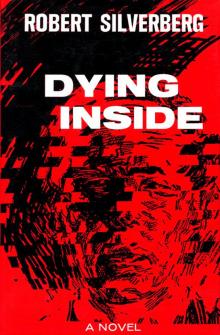 Dying Inside
 The Last Song of Orpheus
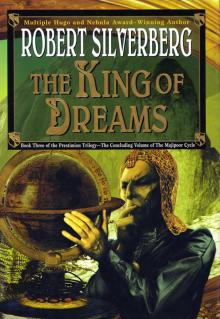 The King of Dreams
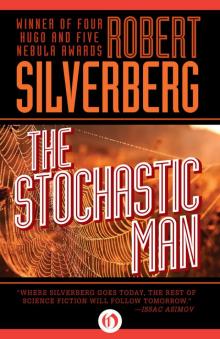 The Stochastic Man
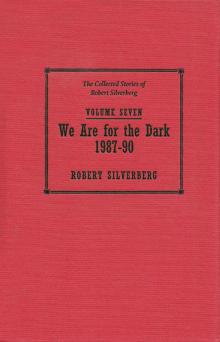 The Collected Stories of Robert Silverberg, Volume Seven: We Are for the Dark
 The Millennium Express: The Collected Stories of Robert Silverberg, Volume Nine
 The Iron Chancellor
 Lord Prestimion
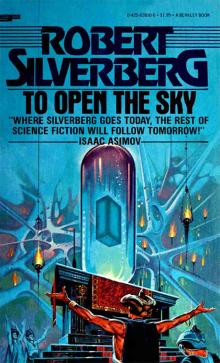 To Open the Sky
 The World Inside
 Chains of the Sea
 The Collected Stories of Robert Silverberg, Volume Five: The Palace at Midnight
 Postmark Ganymede
 The Second Trip
 The Collected Stories of Robert Silverberg, Volume 4: Trips: 1972-73
 Son of Man
 Tom O'Bedlam
 To the Land of the Living
 To Be Continued: The Collected Stories of Robert Silverberg, Volume One
 Shadrach in the Furnace
 The Chalice of Death: Three Novels of Mystery in Space
 The Queen of Springtime
 To Be Continued 1953-1958
 Legends
 Roma Eterna
 To Live Again
 At Winter's End
 Needle in a Timestack
 To Live Again and the Second Trip: The Complete Novels
 Lord of Darkness
 The Mountains of Majipoor
 The World Outside
 The Alien Years
 The Book of Skulls
 The Face of the Waters
 Gilgamesh the King
 The Collected Stories of Robert Silverberg, Volume 6: Multiples: 1983-87
 The Happy Unfortunate
 Three Survived
 Cronos
 Tower of Glass
 Legends II
 The Planet Killers
 The Collected Stories of Robert Silverberg, Volume 2: To the Dark Star: 1962-69
 Downward to the Earth
 Lord Valentine's Castle: Book One of the Majipoor Cycle
 Hot Times in Magma City, 1990-95
 Hunt the Space-Witch! Seven Adventures in Time and Space
 Majipoor Chronicles
 The Robert Silverberg Science Fiction Megapack(r)
 Starman's Quest
 Car Sinister
 Worlds of Maybe
 Fantasy The Best of 2001
 Revolt on Alpha C
 Homefaring
 The Pardoner's Tale
 Sailing to Byzantium - Six Novellas
 The Chalice of Death
 Sundance
 A Tip on a Turtle
 Nebula Awards Showcase 2001: The Year's Best SF and Fantasy Chosen by the Science Fiction and Fantasy Writers of America
 The Fangs of the Trees
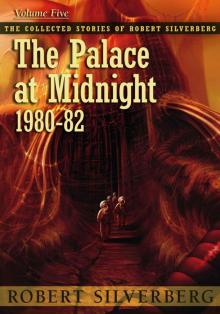 The Palace at Midnight: The Collected Work of Robert Silverberg, Volume Five
 The Millennium Express - 1995-2009 - The Collected Stories of Robert Silverberg Volume Nine
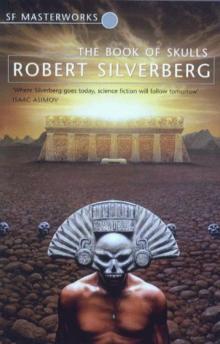 Book of Skulls
 Passengers
 Something Wild is Loose - 1969–72 - The Collected Stories of Robert Silverberg Volume Three
 Multiples
 Starborne
 The Masks of Time
 The Mountains of Majipoor m-8
 Multiples (1983-87)
 Those Who Watch
 In the Beginning
 Earth Is The Strangest Planet
 Collision Course
 Neutral Planet
 To the Dark Star - 1962–69 - The Collected Stories of Robert Silverberg Volume Two
 Mutants
 Sailing to Byzantium
 When We Went to See the End of the World
 Robert Silverberg The Science Fiction Hall Of Fame Volume One, 1929-1964
 To Be Continued - 1953–58 - The Collected Stories of Robert Silverberg Volume One
 Valentine Pontifex m-3
 Gianni
 Majipoor Chronicles m-2
 We Are for the Dark (1987-90)
 Waiting for the Earthquake
 Fantasy: The Best of 2001
 How It Was When the Past Went Away
 Beauty in the Night
 The Man Who Never Forgot
 The Book of Changes m-9
 Lord Valentine's Castle m-1
 This Way to the End Times
 Queen of Springtime
 Legends-Volume 3 Stories by the Masters of Modern Fantasy
 The Palace at Midnight - 1980–82 - The Collected Stories of Robert Silverberg Volume Five
 Something Wild is Loose: The Collected Stories of Robert Silverberg, Volume Three
 Multiples - 1983–87 - The Collected Stories of Robert Silverberg Volume Six
 Alaree
 Three Survived: A Science Fiction Novel
 Defenders of the Frontier
 The New Springtime
 We Are for the Dark - 1987–90 - The Collected Stories of Robert Silverberg Volume Seven
 The Science Fiction Hall of Fame, Volume One 1929-1964--The Greatest Science Fiction Stories of All Time Chosen by the Members of the Science Fiction Writers of America
 Master Of Life And Death
 Choke Chain
 Sorcerers of Majipoor m-4
 Absolutely Inflexible
 Trips - 1962–73 - The Collected Stories of Robert Silverberg Volume Four
 Hot Times in Magma City - 1990-95 - The Collected Stories of Robert Silverberg Volume Eight
 Far Horizons
 The Queen of Springtime ns-2
 The Seventh Science Fiction Megapack
 Invaders From Earth
 Hanosz Prime Goes To Old Earth
 The Macauley Circuit
 Science Fiction: The Best of 2001
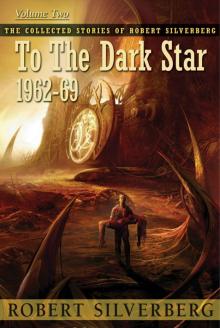 To the Dark Star: The Collected Stories of Robert Silverberg, Volume Two
 Stochastic Man
 Legends: Stories By The Masters of Modern Fantasy
 To Live Again And The Second Trip
 Flies
Flies The Silent Invaders
 Ship-Sister, Star-Sister