
- Home
- Robert Silverberg
Thorns Page 13
Thorns Read online
Page 13
He regretted having snarled at Lona that way.
But his patience had snapped. She was strikingly ignorant, but he had known that from the start. What he had not known was how quickly her ignorance would cease to seem charming and would begin to seem contemptible.
To awake, aching and agonized, and have to submit to that thin stream of adolescent questioning…
Look at the other side, he told himself. He had awakened in the middle of the night, too. He had dreamed of Manipool and naturally had burst from sleep screaming. That had happened before, but never before had there been someone beside him, warm and soft, to comfort him. Lona had done that. She had not scolded him for interfering with her own sleep. She had stroked him and soothed him until the nightmare receded into unreality again. He was grateful for that. She was so tender, so loving. And so stupid.
“Have you ever seen Antarctica from space?” Lona asked.
“Many times.”
“What does it look like?”
“Just as it does on maps. More or less round, with a thumb sticking out toward South America. And white. Everywhere white. You’ll see it when we head for Titan.”
She nestled into the hollow of his arm as they walked. The arm-socket was adaptable; he extended it, making a comfortable harbor for her. This body had its merits.
Lona said, “Someday I want to come back here again and see all the sights—the Pole, the museums of the explorers, the glaciers. Only I want to come with my children.”
An icicle slipped neatly through his throat.
“What children, Lona?”
“There’ll be two. A boy and a girl. In about eight years, that’ll be the right time to bring them.”
His eyelids flickered uncontrollably within his thermal hood. They gnashed like the ringing walls of the Symplegades. In a low, fiercely controlled voice he said, “You ought to know, Lona, I can’t give you any children. The doctors checked that part out. The internal organs simply—”
“Yes, I know. I didn’t mean children that we’d have, Minner.”
He felt his bowels go spilling out onto the ice.
She went on sweetly, “I mean the babies I have now. The ones that were taken from my body. I’m going to get two of them back—didn’t I tell you?”
Burris felt oddly relieved at the knowledge that she wasn’t planning to leave him for some biologically whole man. Simultaneously he was surprised at the depth of his own relief. How smugly he had assumed that any children she mentioned would be children she expected to have by him! How stunning it had been to think that she might have children by another!
But she already had a legion of children. He had nearly forgotten that.
He said, “No, you didn’t tell me. You mean it’s been agreed that you’re going to get some of the children to raise yourself?”
“More or less.”
“What does that mean?”
“I don’t think it’s really been agreed yet But Chalk said he’d arrange it. He promised me, he gave me his word. And I know he’s an important enough man to be able to do it. There are so many of the babies—they can spare a couple for the real mother if she wants them. And I do. I do. Chalk said he’d get the children for me if I—if I—”
She was silent. Her mouth was round a moment, then clamped tight.
“If you what, Lona?”
“Nothing.”
“You started to say something.”
“I said, he’d get the children for me if I wanted them.”
He turned on her. “That’s not what you were going to say. We already know you want them. What did you promise Chalk in return for getting them for you?”
The spectrum of guilt rippled across her face.
“What are you hiding from me?” he demanded.
She shook her head mutely. He seized her hand, and she pulled it away. He stood over her, dwarfing her, and as always when his emotions came forth in the new body there were strange poundings and throbbings within him.
“What did you promise him?” he asked.
“Minner, you look so strange. Your face is all blotched. Red, and purple over your cheeks…”
“What was it, Lona?”
“Nothing. Nothing. All I said to him…all I agreed was…”
“Was?”
“That I’d be nice to you.” In a small voice. “I promised him I’d make you happy. And he’d get me some of the babies for my own. Was that wrong, Minner?”
He felt air escaping from the gigantic puncture in his chest. Chalk had arranged this? Chalk had bribed her to care for him? Chalk? Chalk?
“Minner, what’s wrong?”
Stormwinds blew through him. The planet was tilting on its axis, rising up, crushing him, the continents breaking loose and sliding free in a massive cascade upon him.
“Don’t look at me like that,” she begged.
“If Chalk hadn’t offered you the babies, would you ever have come near me?” he asked tightly. “Would you ever have touched me at all, Lona?”
Her eyes were flecked now with tears. “I saw you in the hospital garden. I felt so sorry for you. I didn’t even know who you were. I thought you were in a fire or something. Then I met you. I love you, Minner. Chalk couldn’t make me love you. He could only get me to be good to you. But that isn’t love.”
He felt foolish, idiotic, shambling, a heap of animate mud. He gawked at her. She looked mystified. Then she stooped, seized snow, balled it, flung it laughing in his face. “Stop looking so weird,” she said. “Chase me, Minner. Chase me!”
She sprinted away from him. In a moment she was unexpectedly far away. She paused, a dark spot on the whiteness, and picked up more snow. He watched her fashion another snowball. She threw it awkwardly, from the elbow, as a girl would, but even so it carried well, landing a dozen yards from his feet.
He broke from the stupor that her careless words had cast him into. “You can’t catch me!” Lona shrilled, and he began to run, running for the first time since he had left Manipool, taking long loping strides over the carpet of snow. Lona ran, too, arms windmilling, elbows jabbing the thin, frosty air. Burris felt power flooding his limbs. His legs, which had seemed so impossible to him with their multiple jointing, now pistoned in perfect coordination, propelling him smoothly and rapidly. His heart scarcely pounded at all. On impulse, he threw back his hood and let the near-freezing air stream across his cheeks.
It took him only a few minutes of hard running to overtake her. Lona, gasping with laughter and breathlessness, swung around as he neared her, mid flung herself into his arms. His momentum carried him onward five more steps before they fell. They rolled over and over, gloved hands beating the snow, and he pushed back her hood, too, and scraped a palm’s-load of ice free and thrust it into her face. The ice trickled down, past her throat, into her wrap, under her clothing, along her breasts, her belly. She shrieked in wild pleasure and indignation.
“Minner! No, Minner! No!”
He thrust more snow at her. And she at him now. Convulsed with laughter, she forced it past his collar. It was so cold that it seemed to burn. Together they floundered on the snow. Then she was in his arms, and he held her tight, nailing her to the floor of the lifeless continent. It was a long while before they rose.
TWENTY-TWO
HENCE, LOATHED MELANCHOLY
■
■ He woke screaming again that night.
Lona had been expecting it. For most of the night she had been awake herself, lying beside him in the dark, waiting for the inevitable demons to take possession of him. He had been brooding, on and off, much of the evening.
The day had been pleasant enough—barring that nasty moment right at the outset. Lona wished she could call back the admission she had made: that it was Chalk who had put her up to approaching him in the first place. At least she had withheld the most damning part of all: that Nikolaides had thought of presenting the cactus, that Nikolaides had even dictated her little note. She knew now what effect such knowl
edge would have on Burris. But it had been stupid even to mention Chalk’s promise of restoring the babies. Lona saw that clearly now. But now was too late to unspeak the words.
He had recovered from that taut moment, and they had gone off to have fun. A snowball fight, a hike in the trackless wilderness of ice. Lona had been scared when suddenly she realized that the hotel was no longer in sight. She saw flat whiteness everywhere. No trees to cast shadows, no movements of the sun to indicate directions, and no compass. They had walked miles through an unchanging landscape. “Can we get back?” she asked, and he nodded. “I’m tired. I’d like to go back now.” Actually she was not all that tired, but it frightened her to think of getting lost here. They turned back, or so Burris said they had done. This new direction looked just the same as the old. There was a darkness several feet long just below the snow in one place. A dead penguin, Burris told her, and she shuddered, but then the hotel miraculously appeared. If the world was flat here, she wondered, why had the hotel vanished? And Burris explained, as he had explained so many things to her (but in a more patient tone now) that the world was not really flat here, but actually nearly as curved as at any other place, so that they need walk only a very few miles for familiar landmarks to drop below the horizon. As the hotel had done.
But the hotel had returned, and their appetites were huge, and they had hearty lunches, washed down with flagon after flagon of beer. Here no one drank green cocktails with live things swimming in them. Beer, cheese, meat—that was fit food for this land of eternal winter.
They took power-sled tours that afternoon. First they went to the South Pole.
“It looks like everything else around,” Lona said.
“What did you expect?” he asked. “A striped pole sticking out of the snow?”
So he was being sarcastic again. She saw the sorrow in his eyes that followed his crackling comment, and told herself that he had not meant to hurt her. It was natural to him, that was all. Maybe he was in such pain himself—real pain—that he had to keep lashing put that way.
But actually the Pole was different from the surrounding blankness of the polar plateau. There were buildings there. A circular zone around the world’s bottom some twenty yards in diameter was sacrosanct, untouched. Near it was the restored or reproduced tent of the Norwegian, Roald Amundsen, who had come by dogsled to this places century or two ago. A striped flag fluttered over the dark tent. They peered inside: nothing.
Nearby was a small building of logs. “Why logs?” Lona asked. “There aren’t any trees in Antarctica?” For once her question was a shrewd one. Burris laughed.
The building was sacred to the memory of Robert Falcon Scott, who had followed Amundsen to the Pole and who, unlike the Norwegian, had died on the way back. Within were diaries, sleeping-bags, the odds and ends of explorers. Lona read the plaque. Scott and his men had not died here, but rather many miles away, trapped by weariness and winter gales as they plodded toward their base. All this was strictly for show. The phoniness of it bothered Lona, and she thought it bothered Burris, too.
But it was impressive to stand right at the South Pole.
“The whole world is north of us right now,” Burris told her. “We’re hanging off the bottom edge. Everything’s above us from here. But we won’t fall off.”
She laughed. Nevertheless, the world did not look at all unusual to her at that moment. The surrounding land stretched away to the sides, and not up and down. She tried to picture the world as it would look from a space ferry, a ball hanging in the sky, and herself, smaller than an ant, standing at the bottom with her feet toward the center and her head pointed to the stars. Somehow it made no sense to her.
There was a refreshment stand near the Pole. They kept it covered with snow to make it inconspicuous. Burris and Lona had steaming mugs of hot chocolate.
They did not visit the underground scientific base a few hundred yards away. Visitors were welcome; scientists in thick beards lived there the year round, studying magnetism and weather and such. But Lona did not care to enter a laboratory again. She exchanged glances with Burris, and he nodded, and the guide took them back on the power-sled.
It was too late in the day to go all the way to the Ross Ice Shelf. But they traveled for more than an hour northwest from the Pole, toward a chain of mountains that never got any closer, and came to a mysterious warm spot where there was no snow, only bare brown earth stained red by a crust of algae, and rocks covered with a thin coating of yellow-green lichens. Lona asked to see penguins then, and was told that at this time of the year there were no penguins in the interior except strays. “They’re water birds,” the guide said. “They stay close to the coast and come inland only when it’s time to lay their eggs.”
“But it’s summer here. They ought to be nesting now.”
“They make their nests in midwinter. The baby penguins are hatched in June and July. The darkest, coldest time of the year. You want to see penguins, you sign up for the Adélie Land tour. You’ll see penguins.”
Burris seemed to be in good spirits on the long sled ride back to the hotel. He teased Lona in a lighthearted way, and at one point had the guide stop the sled so they could go sliding down a glassy-smooth embankment of snow. But as they neared the lodge, Lona detected the change coming over him. It was like the onset of twilight, but this was a season of no twilight at the Pole. Burris darkened. His face grew rigid, and he stopped laughing and joking. By the time they were passing through the double doors of the lodge, he seemed like something hewn from ice.
“What’s wrong?” she asked.
“Who said anything was wrong?”
“Would you like to have a drink?”
They went to the cocktail lounge. It was a big room, paneled in wood, with a real fireplace to give it that twentieth-century look. Two dozen people, more or less, sat at the heavy oaken tables, talking and drinking. All of them couples, Lona noticed. This was almost entirely a honeymoon resort. Young married people came here to begin their lives in icy Antarctic purity. The skiing was said to be excellent in the mountains of Marie Byrd Land.
Heads turned their way as Burris and Lona entered. And just as quickly turned away again in a quick reflex of aversion. Oh, so sorry. Didn’t mean to stare. A man with a face like yours, he probably doesn’t like to be stared at. We were just looking to see if our friends the Smiths had come down for drinks.
“The demon at the wedding feast,” Burris muttered.
Lona wasn’t sure she had heard it correctly. She didn’t ask him to repeat.
A robot servitor took their order. She drank beer, he a filtered rum. They sat alone at a table near the edge of the room. Suddenly they had nothing to say to each other. All about them conversation seemed unnaturally loud. Talk of future holidays, of sports, of the many available tours the resort offered.
No one came over to join them.
Burris sat rigidly, his shoulders forced upright in a posture that Lona knew must hurt him. He finished his drink quickly and did not order another. Outside, the pale sun refused to set.
“It would be so pretty here if we got a romantic sunset,” Lona said. “Streaks of blue and gold on the ice. But we won’t get it, will we?”
Burris smiled. He did not answer.
There was a flow of people in and out of the room constantly. The flow swept wide around their table. They were boulders in the stream. Hands were shaken, kisses exchanged. Lona heard people making introductions. It was the sort of place where one couple could come freely up to another, strangers, and find a warm response.
No one freely came to them.
“They know who we are,” Lona said to Burris. “They think we’re celebrities, so very important that we don’t want to be bothered. So they leave us alone. They don’t want to seem to be intruding.”
“All right.”
“Why don’t we go over to someone? Break the ice, show them that we’re not stand-offish.”
“Let’s not. Let’s just sit here.”
>
She thought she knew what was eating at him. He was convinced they were avoiding this table because he was ugly, or at least strange. No one wanted to have to look him full in the face. And one could not very well hold a conversation while staring off to one side. So the others stayed away. Was that what was troubling him? His self-consciousness returning? She did not ask. She thought she might be able to do something about that.
An hour or so before dinner they returned to their room. It was a single large enclosure with a false harshness about it. The walls were made of split logs, rough and coarse, but the atmosphere was carefully regulated and there were all the modern conveniences. He sat quietly. After a while he stood up and began to examine his legs, swinging them back and forth. His mood was so dark now that it frightened her.
She said, “Excuse me. I’ll be back in five minutes.”
“Where are you going?”
“To check on the tours they’re offering for tomorrow.”
He let her go. She went down the curving corridor toward the main lobby. Midway, a giant screen was producing an aurora australis for a group of the guests. Patterns of green and red and purple shot dramatically across a neutral gray background. It looked like a scene from the end of the world.
In the lobby Lona gathered a fistful of brochures on the tours. Then she returned to the screen-room. She saw a couple who had been in the cocktail lounge. The woman was in her early twenties, blonde, with artful green streaks rising from her hairline. Her eyes were cool. Her husband, if husband he was, was an older man, near forty, wearing a costly looking tunic. A perpetual-motion ring from one of the outworlds writhed on his left hand.
Tensely Lona approached them. She smiled.
“Hello. I’m Lona Kelvin. Perhaps you noticed us in the lounge.”
She drew tight smiles, nervous ones. They were thinking, she knew, what does she want from us?
They gave their names. Lona did not catch them, but that did not matter.
She said, “I thought perhaps it would be nice if the four of us sat together at dinner tonight. I think you’d find Minner very interesting. He’s been to so many planets…”
 The Longest Way Home
 Hawksbill Station
 A Time of Changes
 This Way to the End Times: Classic Tales of the Apocalypse
 Beyond the Gate of Worlds
 Lord Valentine's Castle
 The Man in the Maze
 Tales of Majipoor
 Time of the Great Freeze
 The Collected Stories of Robert Silverberg, Volume 3: Something Wild Is Loose: 1969-72
 Planet of Death
 Trips: The Collected Stories of Robert Silverberg, Volume Four
 In the Beginning: Tales From the Pulp Era
 Hot Sky at Midnight
 Valentine Pontifex
 Up the Line
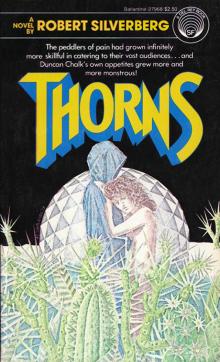 Thorns
 Amanda and the Alien
 Star of Gypsies
 Nightwings
 The Time Hoppers
 Blood on the Mink
 Dying Inside
 The Last Song of Orpheus
 The King of Dreams
 The Stochastic Man
 The Collected Stories of Robert Silverberg, Volume Seven: We Are for the Dark
 The Millennium Express: The Collected Stories of Robert Silverberg, Volume Nine
 The Iron Chancellor
 Lord Prestimion
 To Open the Sky
 The World Inside
 Chains of the Sea
 The Collected Stories of Robert Silverberg, Volume Five: The Palace at Midnight
 Postmark Ganymede
 The Second Trip
 The Collected Stories of Robert Silverberg, Volume 4: Trips: 1972-73
 Son of Man
 Tom O'Bedlam
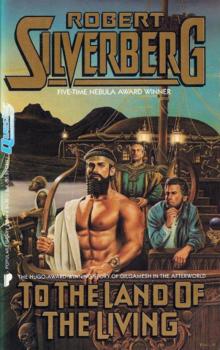 To the Land of the Living
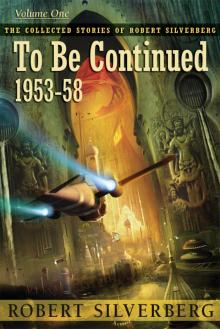 To Be Continued: The Collected Stories of Robert Silverberg, Volume One
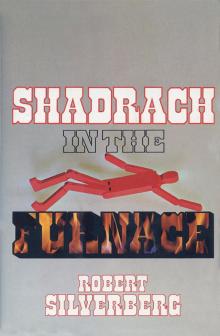 Shadrach in the Furnace
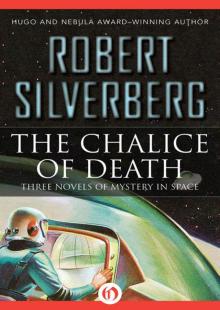 The Chalice of Death: Three Novels of Mystery in Space
 The Queen of Springtime
 To Be Continued 1953-1958
 Legends
 Roma Eterna
 To Live Again
 At Winter's End
 Needle in a Timestack
 To Live Again and the Second Trip: The Complete Novels
 Lord of Darkness
 The Mountains of Majipoor
 The World Outside
 The Alien Years
 The Book of Skulls
 The Face of the Waters
 Gilgamesh the King
 The Collected Stories of Robert Silverberg, Volume 6: Multiples: 1983-87
 The Happy Unfortunate
 Three Survived
 Cronos
 Tower of Glass
 Legends II
 The Planet Killers
 The Collected Stories of Robert Silverberg, Volume 2: To the Dark Star: 1962-69
 Downward to the Earth
 Lord Valentine's Castle: Book One of the Majipoor Cycle
 Hot Times in Magma City, 1990-95
 Hunt the Space-Witch! Seven Adventures in Time and Space
 Majipoor Chronicles
 The Robert Silverberg Science Fiction Megapack(r)
 Starman's Quest
 Car Sinister
 Worlds of Maybe
 Fantasy The Best of 2001
 Revolt on Alpha C
 Homefaring
 The Pardoner's Tale
 Sailing to Byzantium - Six Novellas
 The Chalice of Death
 Sundance
 A Tip on a Turtle
 Nebula Awards Showcase 2001: The Year's Best SF and Fantasy Chosen by the Science Fiction and Fantasy Writers of America
 The Fangs of the Trees
 The Palace at Midnight: The Collected Work of Robert Silverberg, Volume Five
 The Millennium Express - 1995-2009 - The Collected Stories of Robert Silverberg Volume Nine
 Book of Skulls
 Passengers
 Something Wild is Loose - 1969–72 - The Collected Stories of Robert Silverberg Volume Three
 Multiples
 Starborne
 The Masks of Time
 The Mountains of Majipoor m-8
 Multiples (1983-87)
 Those Who Watch
 In the Beginning
 Earth Is The Strangest Planet
 Collision Course
 Neutral Planet
 To the Dark Star - 1962–69 - The Collected Stories of Robert Silverberg Volume Two
 Mutants
 Sailing to Byzantium
 When We Went to See the End of the World
 Robert Silverberg The Science Fiction Hall Of Fame Volume One, 1929-1964
 To Be Continued - 1953–58 - The Collected Stories of Robert Silverberg Volume One
 Valentine Pontifex m-3
 Gianni
 Majipoor Chronicles m-2
 We Are for the Dark (1987-90)
 Waiting for the Earthquake
 Fantasy: The Best of 2001
 How It Was When the Past Went Away
 Beauty in the Night
 The Man Who Never Forgot
 The Book of Changes m-9
 Lord Valentine's Castle m-1
 This Way to the End Times
 Queen of Springtime
 Legends-Volume 3 Stories by the Masters of Modern Fantasy
 The Palace at Midnight - 1980–82 - The Collected Stories of Robert Silverberg Volume Five
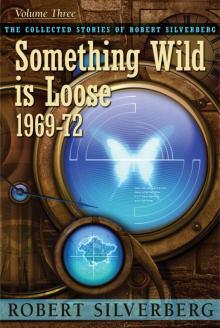 Something Wild is Loose: The Collected Stories of Robert Silverberg, Volume Three
 Multiples - 1983–87 - The Collected Stories of Robert Silverberg Volume Six
 Alaree
 Three Survived: A Science Fiction Novel
 Defenders of the Frontier
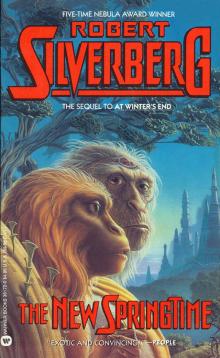 The New Springtime
 We Are for the Dark - 1987–90 - The Collected Stories of Robert Silverberg Volume Seven
 The Science Fiction Hall of Fame, Volume One 1929-1964--The Greatest Science Fiction Stories of All Time Chosen by the Members of the Science Fiction Writers of America
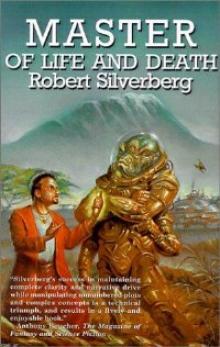 Master Of Life And Death
 Choke Chain
 Sorcerers of Majipoor m-4
 Absolutely Inflexible
 Trips - 1962–73 - The Collected Stories of Robert Silverberg Volume Four
 Hot Times in Magma City - 1990-95 - The Collected Stories of Robert Silverberg Volume Eight
 Far Horizons
 The Queen of Springtime ns-2
 The Seventh Science Fiction Megapack
 Invaders From Earth
 Hanosz Prime Goes To Old Earth
 The Macauley Circuit
 Science Fiction: The Best of 2001
 To the Dark Star: The Collected Stories of Robert Silverberg, Volume Two
 Stochastic Man
 Legends: Stories By The Masters of Modern Fantasy
 To Live Again And The Second Trip
 Flies
Flies The Silent Invaders
 Ship-Sister, Star-Sister