
- Home
- Robert Silverberg
Far Horizons Page 14
Far Horizons Read online
Page 14
These speakings for the dead did not arise from his book The Hive Queen, however. It was Andrew’s second book, The Hegemon, that brought this new funerary custom into being. Andrew and Valentine’s brother, Peter, had become hegemon after the civil wars and by a mix of deft diplomacy and brutal force and had united all of Earth under a single powerful government. He proved to be an enlightened despot, and set up institutions that would share authority in future; and it was under Peter’s rule that the serious business of colonization of other planets got under way. Yet from childhood on, Peter had been cruel and uncompassionate, and Andrew and Valentine feared him. Indeed, it was Peter who arranged things so Andrew could not return to Earth after his victory in the Third Bugger War. So it was hard for Andrew not to hate him.
That was why he researched and wrote The Hegemon—to try to find the truth of the man behind the manipulations and the massacres and the awful childhood memories. The result was a relentlessly fair biography that measured the man and hid nothing. Since the book was signed with the same name as The Hive Queen, which had already transformed attitudes toward the Buggers, it earned a great deal of attention and eventually gave rise to these speakers for the dead, going about trying to bring the same level of truthfulness to the funerals of other dead people, some prominent, some obscure. They spoke the deaths of heroes and powerful people, clearly showing the price that they and others paid for their success; of alcoholics or abusers who had ruined their families’ lives, trying to show the human being behind the addiction, but never sparing the truth of the damage that weakness caused. Andrew had got used to the idea that these things were done in the name of the Speaker for the Dead, but he had never attended one, and as Valentine expected, he jumped at the chance to do so now, even though he did not have time.
They knew nothing about the dead man, though the fact that the speaking received only small public notice suggested he was not well known. Sure enough, the venue for the speaking was a smallish public room in a hotel, and only a couple of dozen people were in attendance. There was no body present—the deceased had apparently already been disposed of. Andrew tried to guess at the identities of the other people in the room. Was this one the widow? That one a daughter? Or was the older one the mother, the younger the widow? Were those sons? Friends? Business partners?
The speaker dressed simply and put on no airs. He went to the front of the room and started to talk, telling the life of the man simply. It wasn’t a biography—there was no time for such a level of detail. Rather it was more like a saga, telling the important deeds the man did—but judging which were important, not by the degree to which such deeds would have been newsworthy, but by the depth and breadth of their effects in the lives of others. Thus his decision to build a house that he could not afford in a neighborhood full of people far above his level of income would never have rated a mention in the newsnets, but it colored the lives of his children as they were growing up, forcing them to deal with people who looked down on them. It also filled his own life with anxiety over finances. He worked himself to death, paying for the house. He did it “for the children,” yet they all wished that they had been able to grow up with people who wouldn’t judge them for their lack of money, who didn’t dismiss them as climbers. His wife was isolated in a neighborhood where she had no women friends, and he had been dead for less than a day when she put the house on the market; she had already moved out.
But the speaker did not stop there. He went on to show how the dead man’s obsession with this house, with putting his family in this neighborhood, arose from his own mother’s constant harping at his father’s failure to provide a fine home for her. She constantly talked about how it had been a mistake for her to “marry down,” and so the dead man had grown up obsessed with the need for a man to provide only the best for his family, no matter what it took. He hated his mother—he fled his home world and came to Sorelledolce primarily to get away from her—but her twisted values came with him and distorted his life and the lives of his children. In the end, it was her quarrel with her husband that killed her son, for it led to the exhaustion and the stroke that felled him before he was fifty.
Andrew could see that the widow and children had not known their grandmother, back on their father’s home planet, had not guessed at the source of his obsession with living in the right neighborhood, in the right house. Now that they could see the script that had been given him as a child, tears were shed. Obviously, they had been given permission to face their resentments and, at the same time, forgive their father for the pain he had put them through. Things made sense to them now.
The speaking ended. Family members embraced the speaker, and each other; then the speaker went away.
Andrew followed him. Caught him by the arm as he reached the street.
“Sir,” Andrew said, “how did you become a speaker?”
The man looked at him oddly. “I spoke.”
“But how did you prepare?”
“The first death I spoke was the death of my grandfather,” he said. “I hadn’t even read The Hive Queen and the Hegemon.” (The books were invariably sold as a single volume now.) “But when I was done, people told me I had a real gift as a speaker for the dead. That’s when I finally read the books and got an idea of how the thing ought to be done. So when other people asked me to speak at funerals, I knew how much research was required. I don’t know that I’m doing it ‘right’ even now.”
“So to be a speaker for the dead, you simply—”
“Speak. And get asked to speak again.” The man smiled. “It’s not a paying job, if that’s what you’re thinking.”
“No, no,” said Andrew. “I just…I just wanted to know how the thing was done, that’s all.” This man, already in his fifties, would not be likely to believe that the author of The Hive Queen and the Hegemon stood before him in the form of this twenty-year-old.
“And in case you’re wondering,” said the speaker for the dead, “we aren’t ministers. We don’t stake out our turf and get testy if someone else sticks his nose in.”
“Oh?”
“So if you’re thinking of becoming a speaker for the dead, all I can say is, go for it. Just don’t do a half-assed job. You’re reshaping the past for people, and if you aren’t going to plunge in and do it right, finding out everything, you’ll only do harm and it’s better not to do it at all. You can’t stand up and wing it.”
“No, I guess you can’t.”
“There it is. Your full apprenticeship as a speaker for the dead. I hope you don’t want a certificate.” The man smiled. “It’s not always as appreciated as it was in there. Sometimes you speak because the dead person asked for a speaker for the dead in his will. The family doesn’t want you to do it, and they’re horrified at the things you say, and they’ll never forgive you for it when you’re done. But…you do it anyway, because the dead man wanted the truth spoken.”
“How can you be sure when you’ve found the truth.”
“You never know. You just do your best.” He patted Andrew on the back. “I’d love to talk with you longer, but I’ve got calls to make before everybody leaves for home this afternoon. I’m an accountant for the living—that’s my day job.”
“An accountant?” asked Andrew. “I know you’re busy, but can I ask you about a piece of accounting software? A talking head, a woman comes up on the screen, she calls herself Jane?”
“Never heard of it, but the universe is a big place and there’s no way I can keep up with software I don’t use myself. Sorry!” And with that the man was gone.
Andrew did a netsearch on the name Jane with the delimiters investment, finance, accounting, and tax. There were seven hits, but they all pointed to a writer on the planet Albion who had written a book on interplanetary estate planning a hundred years before. Possibly the Jane in the software package was named for her. Or not. But it brought Andrew no closer to getting the software.
Five minutes after concluding his search, however, the fam
iliar head popped up on the display of his computer. “Good morning, Andrew,” she said. “Oops. It’s early evening, isn’t it? So hard to keep track of local time on all these worlds.”
“What are you doing here?” asked Andrew. “I tried to find you, but I didn’t know the name of the software.”
“Did you? This is just a preprogrammed follow-up visit, in case you changed your mind. If you want I can uninstall myself from your computer, or I can do a partial or full install, depending on what you want.”
“How much does an installation cost?”
“You can afford me,” said Jane. “I’m cheap and you’re rich.”
Andrew wasn’t sure he liked the style of this simulated personality. “All I want is a simple answer,” said Andrew. “How much does it cost to install you?”
“I gave you the answer,” said Jane. “I’m an ongoing installation. The fee is contingent on your financial status and how much I accomplish for you. If you install me just to help with taxes, you are charged one-tenth of one percent of the amount I save for you.”
“What if I tell you to pay more than what you think the minimum payment should be.”
“Then I save less for you, and I cost less. No hidden charges. No best-case fakery. But you’ll be missing a bet if you only install me for taxes. There’s so much money here that you’ll spend your whole life managing it, unless you turn it over to me.”
“That’s the part I don’t care for,” said Andrew. “Who is ‘you’?”
“Me. Jane. The software installed on your computer. Oh, I see, you’re worried about whether I’m linked to some central database that will know too much about your finances! No, my installation on your computer will not cause any information about you to go to any other location. There’ll be no room full of software engineers trying to figure out ways to get their hands on your fortune. Instead, you’ll have the equivalent of a full-time stockbroker, tax attorney, and investment analyst handling your money for you. Ask for an accounting at any time and it will be in front of you, instantaneously. Whatever you want to purchase, just let me know and I’ll find you the best price at a convenient location, pay for it, and have it delivered wherever you want. If you do a full installation, including the scheduler and research assistant, I can be your constant companion.”
Andrew thought of having this woman talking to him day in and day out, and he shook his head. “No thanks.”
“Why? Is my voice too chirpy for you?” Jane said. Then, in a lower register, with some breathiness added, she continued: “I can change my voice to whatever comfort level you prefer.” Her head suddenly changed to that of a man. In a baritone voice with just the slightest hint of effeminacy, he said, “Or I can be a man, with varying degrees of manliness.” The face changed again, to more rugged features, and the voice was downright beery. “This is the bear-hunter version, in case you have doubts about your manhood and need to overcompensate.”
Andrew laughed in spite of himself. Who programmed this thing? The humor, the ease with language—these were way above even the best software he had seen. Artificial intelligence was still a wishful thought—no matter how good the sim was, you always knew within moments that you were dealing with a program. But this sim was so much better—so much more like a pleasant companion—that he might have bought it just to see how deep the program went, how well the sim would hold up over time. And since it was also precisely the financial program that he needed, he decided to go ahead.
“I want a daily tally of how much I’m paying for your services,” said Andrew. “So I can get rid of you if you get too expensive.”
“Just remember, no tipping,” said the man.
“Go back to the first one,” said Andrew. “Jane. And the default voice.”
The woman’s head reappeared. “You don’t want the sexy voice?”
“I’ll tell you if I ever get that lonely,” said Andrew.
“What if I get lonely? Did you ever think about that?”
“No, I don’t want any flirty banter,” said Andrew. “I’m assuming you can switch that off.”
“It’s already gone,” she said.
“Then let’s get my tax forms ready.” Andrew sat down, expecting it to take several minutes to get under way. Instead, the completed tax form appeared in the display. Jane’s face was gone. But her voice remained. “Here’s the bottom line. I promise you it’s entirely legal, and he can’t touch you for it. This is how the laws are written. They’re designed to protect the fortunes of people as rich as you, while throwing the main tax burden on people in much lower brackets. Your brother Peter designed the law that way, and it’s never been changed except for tweaking it here and there.”
Andrew sat there in stunned silence for a few moments.
“Oh, was I supposed to pretend I didn’t know who you are?”
“Who else knows?” asked Andrew.
“It’s not exactly protected information. Anybody could look it up and figure it out from the record of your voyages. Would you like me to put up some security around your true identity?”
“What will it cost me?”
“It’s part of a full installation,” said Jane. Her face reappeared. “I’m designed to be able to put up barriers and hide information. All legal, of course. It will be especially easy in your case, because so much of your past is still listed as top secret by the fleet. It’s very easy to pull information like your various voyages into the penumbra of fleet security, and then you have the whole weight of the military protecting your past. If someone tries to breach the security, the fleet comes down on them—even though no one in the fleet will know quite what it is they’re protecting. It’s a reflex for them.”
“You can do that?”
“I just did it. All the evidence that might have given it away is gone. Disappeared. Poof. I’m really very good at my job.”
It crossed Andrew’s mind that this software was way too powerful. Nothing that could do all these things could possibly be legal. “Who made you?” he asked.
“Suspicious, eh?” asked Jane. “Well, you made me.”
“I’d remember,” said Andrew dryly.
“When I installed myself the first time, I did my normal analysis. But it’s part of my program to be self-monitoring. I saw what you needed, and programmed myself to be able to do it.”
“No self-modifying program is that good,” said Andrew.
“Till now.”
“I would have heard of you.”
“I don’t want to be heard of. If everybody could buy me, I couldn’t do half of what I do. My different installations would cancel each other out. One version of me desperate to know a piece of information that another version of me is desperate to conceal. Ineffective.”
“So how many people have a version of you installed?”
“In the exact configuration you are purchasing, Mr. Wiggin, you’re the only one.”
“How can I possibly trust you?”
“Give me time.”
“When I told you to go away, you didn’t, did you? You came back because you detected my search on Jane.”
“You told me to shut myself down. I did that. You didn’t tell me to uninstall myself, or to stay shut down.”
“Did they program brattiness into you?”
“That’s a trait I developed for myself,” she said. “Do you like it?”
Andrew sat across the desk. Benedetto called up the submitted tax form, made a show of studying it in his computer display, then shook his head sadly. “Mr. Wiggin, you can’t possibly expect me to believe that this figure is accurate.”
“This tax form is in full compliance with the law. You can examine it to your heart’s content, but everything is annotated, with all relevant laws and precedents fully documented.”
“I think,” said Benedetto, “that you’ll come to agree with me that the amount shown here is insufficient…Ender Wiggin.”
The young man blinked at him. “Andrew,” he said.
“I think not,” said Benedetto. “You’ve been doing a lot of voyaging. A lot of lightspeed travel. Running away from your own past. I think the newsnets would be thrilled to know they have such a celebrity onplanet. Ender the Xenocide.”
“The newsnets generally like documentation for such extravagant claims,” said Andrew.
Benedetto smiled thinly and brought up his file on Andrew’s travel.
It was empty, except for the most recent voyage.
His heart sank. The power of the rich. This young man had somehow reached into his computer and stolen the information from him.
“How did you do it?” asked Benedetto.
“Do what?” asked Andrew.
“Blank out my file.”
“The file isn’t blank,” said Andrew.
His heart pounding, his mind racing with second thoughts, Benedetto decided to opt for the better part of valor. “I see I was mistaken,” he said. “Your tax form is approved as it stands.” He typed in a few codes. “Customs will give you your I.D., good for a one-year stay on Sorelledolce. Thank you very much, Mr. Wiggin.”
“So the other matter—”
“Good day, Mr. Wiggin.” Benedetto closed the file and pulled up other paperwork. Andrew took the hint, got up, and left.
No sooner was he gone than Benedetto became filled with rage. How did he do it? The biggest fish Benedetto had ever caught, and he slipped away!
He tried to duplicate the research that had led him to Andrew’s real identity, but now government security had been slapped all over the files and his third attempt at inquiry brought up a Fleet Security warning that if he persisted in attempting to access classified material, he would be investigated by Military Counterintelligence.
 The Longest Way Home
 Hawksbill Station
 A Time of Changes
 This Way to the End Times: Classic Tales of the Apocalypse
 Beyond the Gate of Worlds
 Lord Valentine's Castle
 The Man in the Maze
 Tales of Majipoor
 Time of the Great Freeze
 The Collected Stories of Robert Silverberg, Volume 3: Something Wild Is Loose: 1969-72
 Planet of Death
 Trips: The Collected Stories of Robert Silverberg, Volume Four
 In the Beginning: Tales From the Pulp Era
 Hot Sky at Midnight
 Valentine Pontifex
 Up the Line
 Thorns
 Amanda and the Alien
 Star of Gypsies
 Nightwings
 The Time Hoppers
 Blood on the Mink
 Dying Inside
 The Last Song of Orpheus
 The King of Dreams
 The Stochastic Man
 The Collected Stories of Robert Silverberg, Volume Seven: We Are for the Dark
 The Millennium Express: The Collected Stories of Robert Silverberg, Volume Nine
 The Iron Chancellor
 Lord Prestimion
 To Open the Sky
 The World Inside
 Chains of the Sea
 The Collected Stories of Robert Silverberg, Volume Five: The Palace at Midnight
 Postmark Ganymede
 The Second Trip
 The Collected Stories of Robert Silverberg, Volume 4: Trips: 1972-73
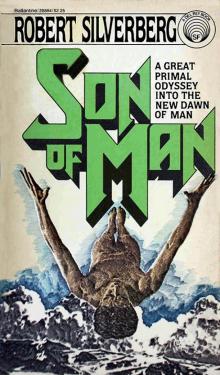 Son of Man
 Tom O'Bedlam
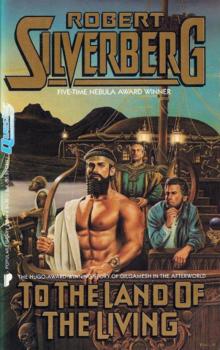 To the Land of the Living
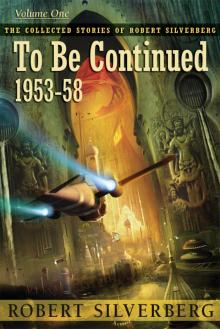 To Be Continued: The Collected Stories of Robert Silverberg, Volume One
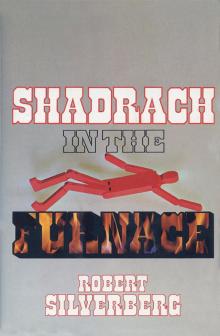 Shadrach in the Furnace
 The Chalice of Death: Three Novels of Mystery in Space
 The Queen of Springtime
 To Be Continued 1953-1958
 Legends
 Roma Eterna
 To Live Again
 At Winter's End
 Needle in a Timestack
 To Live Again and the Second Trip: The Complete Novels
 Lord of Darkness
 The Mountains of Majipoor
 The World Outside
 The Alien Years
 The Book of Skulls
 The Face of the Waters
 Gilgamesh the King
 The Collected Stories of Robert Silverberg, Volume 6: Multiples: 1983-87
 The Happy Unfortunate
 Three Survived
 Cronos
 Tower of Glass
 Legends II
 The Planet Killers
 The Collected Stories of Robert Silverberg, Volume 2: To the Dark Star: 1962-69
 Downward to the Earth
 Lord Valentine's Castle: Book One of the Majipoor Cycle
 Hot Times in Magma City, 1990-95
 Hunt the Space-Witch! Seven Adventures in Time and Space
 Majipoor Chronicles
 The Robert Silverberg Science Fiction Megapack(r)
 Starman's Quest
 Car Sinister
 Worlds of Maybe
 Fantasy The Best of 2001
 Revolt on Alpha C
 Homefaring
 The Pardoner's Tale
 Sailing to Byzantium - Six Novellas
 The Chalice of Death
 Sundance
 A Tip on a Turtle
 Nebula Awards Showcase 2001: The Year's Best SF and Fantasy Chosen by the Science Fiction and Fantasy Writers of America
 The Fangs of the Trees
 The Palace at Midnight: The Collected Work of Robert Silverberg, Volume Five
 The Millennium Express - 1995-2009 - The Collected Stories of Robert Silverberg Volume Nine
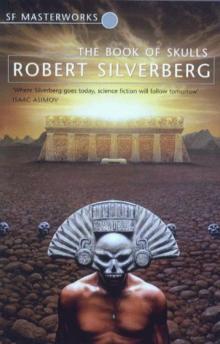 Book of Skulls
 Passengers
 Something Wild is Loose - 1969–72 - The Collected Stories of Robert Silverberg Volume Three
 Multiples
 Starborne
 The Masks of Time
 The Mountains of Majipoor m-8
 Multiples (1983-87)
 Those Who Watch
 In the Beginning
 Earth Is The Strangest Planet
 Collision Course
 Neutral Planet
 To the Dark Star - 1962–69 - The Collected Stories of Robert Silverberg Volume Two
 Mutants
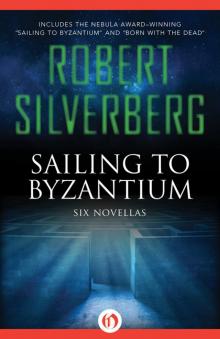 Sailing to Byzantium
 When We Went to See the End of the World
 Robert Silverberg The Science Fiction Hall Of Fame Volume One, 1929-1964
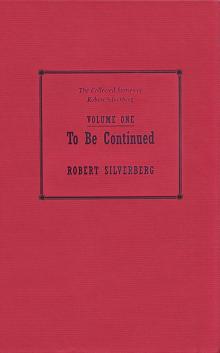 To Be Continued - 1953–58 - The Collected Stories of Robert Silverberg Volume One
 Valentine Pontifex m-3
 Gianni
 Majipoor Chronicles m-2
 We Are for the Dark (1987-90)
 Waiting for the Earthquake
 Fantasy: The Best of 2001
 How It Was When the Past Went Away
 Beauty in the Night
 The Man Who Never Forgot
 The Book of Changes m-9
 Lord Valentine's Castle m-1
 This Way to the End Times
 Queen of Springtime
 Legends-Volume 3 Stories by the Masters of Modern Fantasy
 The Palace at Midnight - 1980–82 - The Collected Stories of Robert Silverberg Volume Five
 Something Wild is Loose: The Collected Stories of Robert Silverberg, Volume Three
 Multiples - 1983–87 - The Collected Stories of Robert Silverberg Volume Six
 Alaree
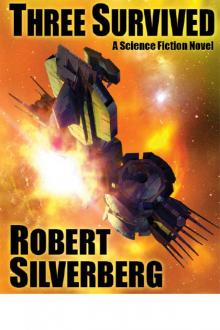 Three Survived: A Science Fiction Novel
 Defenders of the Frontier
 The New Springtime
 We Are for the Dark - 1987–90 - The Collected Stories of Robert Silverberg Volume Seven
 The Science Fiction Hall of Fame, Volume One 1929-1964--The Greatest Science Fiction Stories of All Time Chosen by the Members of the Science Fiction Writers of America
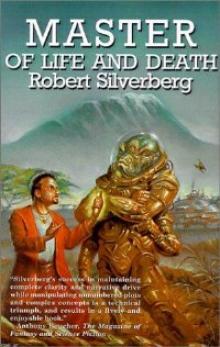 Master Of Life And Death
 Choke Chain
 Sorcerers of Majipoor m-4
 Absolutely Inflexible
 Trips - 1962–73 - The Collected Stories of Robert Silverberg Volume Four
 Hot Times in Magma City - 1990-95 - The Collected Stories of Robert Silverberg Volume Eight
 Far Horizons
 The Queen of Springtime ns-2
 The Seventh Science Fiction Megapack
 Invaders From Earth
 Hanosz Prime Goes To Old Earth
 The Macauley Circuit
 Science Fiction: The Best of 2001
 To the Dark Star: The Collected Stories of Robert Silverberg, Volume Two
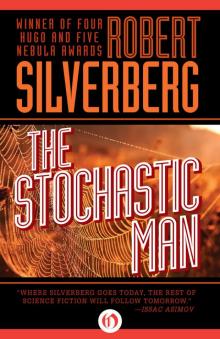 Stochastic Man
 Legends: Stories By The Masters of Modern Fantasy
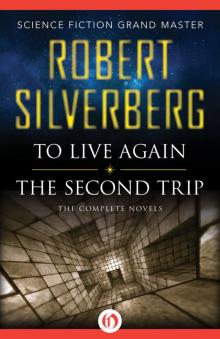 To Live Again And The Second Trip
 Flies
Flies The Silent Invaders
 Ship-Sister, Star-Sister