
- Home
- Robert Silverberg
The Alien Years Page 14
The Alien Years Read online
Page 14
It was like becoming a small child again, confronted by stern, vast, incomprehensible, omnipotent, and distinctly unloving parents. The Colonel felt utterly and completely disempowered. He was nothing. He was nobody.
This was the experience that had already become known to its recipients as the Touch. It was caused by the silent and non-verbal penetration of a human mind in some telepathic way by the mind of an Entity.
Had the Entities, the Colonel wondered afterward, really intended any such humiliation of their human guests? Perhaps that had been the whole purpose of the meeting: a reinforcement of the fact of their superiority. On the other hand, they had established that fact pretty damned thoroughly already. Why bother to make the point again in this fashion? When you’ve conquered a world overnight without lifting a tentacle in anger, you have no real need to rub it in. More likely the depressing effect of the meeting had merely been an inevitable thing: they are what they are, we are what we are, and when we stand before them we must unavoidably feel this way as an incidental by-product of the disparity in general puissance and all-around effectuality between one species and the other. And so, he concluded, they probably hadn’t meant them to come away from the meeting feeling quite as crappy as they did.
But understanding that did not make him feel much better, of course.
The Touch, the Colonel had already been informed, was usually followed by the Push. Which was the exertion of mental pressure by the infiltrating Entity against the infiltrated human mind, for the purpose of achieving something beneficial to the general welfare of the Entities.
That was what befell them next. The delegates from the California Army of Liberation now were subjected to the Push.
The Colonel felt something—he could not say what, but he felt it, felt himself somehow nudged, no, taken hold of and gently but firmly shoved, he knew not where—and then it was over. Over and gone and already becoming a non-event. But in the moment of that sensation the meeting, such as it had been, had reached its consummation. The Colonel saw that plainly. It was clear, from that point on, that they had already had whatever there was going to be, that the whole content of the meeting would be the Touch followed by the Push. A meeting of minds, indeed, in the most literal sense, but not a very satisfying one for the human delegates. No discussions of any sort. No exchange of statements, no discussion of aims and intents, most certainly no negotiations of any kind. The session was ended, though so far as the Colonel was concerned it had never really begun.
Another lengthy gray span of time without perceptible event went by in an unquantifiable way, one more timeless kind of period in which nothing in particular took place, an absence of incident or even awareness; and then he and Leonards and Carlyle-Macavoy found themselves standing outside the ship again, reeling like drunkards but gradually getting themselves under control.
For some while none of them spoke. Did not want to; perhaps could not.
“Well!” Leonards said, finally, or perhaps it was Carlyle-Macavoy who said it first. The monosyllable came out sounding profound. “And so now we know,” said Carlyle-Macavoy, and Leonards said the same thing half an instant later, just as profoundly. “Now we know, all right,” said the Colonel.
He found himself oddly unable to make eye contact with them; and they too were looking anywhere but straight at him. But then they all came together in a rush like the fellow survivors that they were; they wrapped their arms around each other’s shoulders, burly little Leonards in the middle and the two taller men close against him; and in a lurching, staggering way, not without laughter, they went blundering like some deranged six-legged creature across the barren brown field to the car that was waiting for them beyond the boundary of the Entities’ compound.
And that was that. The Colonel was glad to have escaped with his sanity and independence of mind intact, if indeed he had. And it had been a valuable meeting, in its fashion. He saw now even more clearly than before that the Entities could do as they pleased with us; that they had powers so supreme that it was impossible even to describe them, let alone to comprehend them, and certainly not to do battle against them. That would be pure madness, the Colonel thought, doing battle against such creatures as these.
And yet it was not in him to accept that idea.
He still carried within himself, embedded in his awareness of the hopelessness of resistance, a congenital unwillingness to accede to the eternal slavery of mankind. Despite everything he had just experienced, he intended to fight on and on, in whatever fashion he could, against these invaders. Those were not compatible concepts, his awareness of the enemy’s utter supremacy and his desire to defeat them anyway. The Colonel found himself skewered by that irresolvable incompatibility. And knew that he must remain so skewered until the end of his days, forever denying within himself that thing which he knew beyond all doubt could not be denied.
Ronnie and Peggy stood side by side by the edge of the flagstone patio, facing outward, looking into the wooded canyon that led down to the city of Santa Barbara. It was just before midnight, a bright moonlit night. Dinner was long over and the others had gone to sleep, and he and she, the last ones left, had simply walked outside together without the need for either of them to make the formal suggestion. She stood now very close to him, almost but not quite touching him. The top of her head was barely armpit-high against him.
The air was clear and eerily mild, even for a Southern California December, as though the silvery moonlight were bathing the landscape in mysterious warmth. The red rooftops of the little city far below were glowing purple-black in the darkness. A soft wind blew from the sea, perhaps portending rain in a day or two.
For a time neither of them spoke. It was very pleasant, he thought, just standing here next to this small, lithe, pretty woman in the peace and quiet of the gentle winter night.
If he said anything, he knew, he would find himself automatically dropping into the kind of games, seductive, manipulative, that he invariably played when he encountered an attractive new woman. He wanted not to do that with her, though he was not sure why. So he remained silent. So did she. She seemed to be expecting him to make some sort of move, but he did not, and that appeared to puzzle her. It puzzled him, too. But he let the silence continue.
Then she said, as though unable to allow it to last another moment, reaching for something and coming up with the most obvious gambit, “What they tell me is that you’re, like, the naughty boy of the family.”
Ronnie laughed. “I have been, I suppose. At least by my father’s standards. I never thought of myself as a particularly bad guy, just an opportunist, I guess. And some of the business deals I got myself involved with were, well, not altogether nice deals. The way the Colonel saw it, there was a certain element of chicanery about them. To me they were just deals. But the true issue, the basic thing for him, is that I never went into the military, which for the Colonel is an unpardonable sin for a member of our family. Though he seems to have pardoned me.”
“He loves you,” Peggy said. “He can’t understand where you went wrong.”
“Well, neither can I. But not for the same reason. By my lights I was just doing what made sense to me. Not every idea I had was a good one. But that doesn’t make me a villain, does it? Of course Hider could have said the same thing.—Hey, tell me about yourself, okay?”
“What’s to tell?” But she told a little anyway: growing up on the outskirts of Los Angeles, family, high school, her first couple of jobs. Nothing unusual; nothing intimate. No mention of her sojourn aboard the Entities’ starship.
She was perky, cheerful, straightforward, very likable, nothing tricky about her. Ronnie understood now why the Colonel had asked her to come to live with him and help him run the ranch. But ordinarily Ronnie’s own tastes ran to women of a more baroque sort. He was surprised how attractive he found her. He began to see that he was getting snared more deeply than he had bargained for. Something was happening to him, here, something strange, even inexplicable. We
ll, so be it. A lot of inexplicable things were loose in the world these days.
“Ever been married?” he asked.
“No. Never occurred to me. What about you?”
“Only twice so far. Both youthful mistakes.”
“Everybody makes mistakes.”
“I think I’ve already had my full quota, though.”
“What does that mean?” she said. “Like, no more marriages?”
“No more inappropriate ones.”
She didn’t respond to that. After a while she said, “It’s a pretty night, isn’t it?”
It certainly was. Big bright moon, glittering stars, soft balmy air. Crickets singing somewhere. The scent of gardenia blossoms aloft. The nearness of her, the sense of her trim little body within easy reach, of the powerful pull that it was exerting on him.
Where was the source of that pull, which seemed out of all proportion to her actual qualities? Did it lie in the fact that she was a planet in orbit around the sun that was his father, and by laying hold of her he would attach himself more firmly to the Colonel, which was something that apparently was important to him now? He didn’t know. He refused even to seek an answer. That had been the root of Ronnie’s success all through life, the refusal to look closely into that which he knew he was better off not understanding.
“We can’t do white Christmases here in Southern California,” he said, after a short while, “but we sure can do nice ones of the sort that we do.”
“I’ve never seen snow, do you know that? Except in the movies.”
“I have. I lived in Michigan for two years, my first marriage. Snow’s a very pretty thing. You get tired of it when you live with it day after day, but it’s nice to look at, especially when it’s coming down. Everybody should see it once or twice in their lifetime. Maybe the Entities will arrange for it to start snowing in California as their next trick.”
“Do you seriously think so?” she asked.
“Actually, no. But you never can tell what they’ll do, can you?”
And just at that moment a cold hard point of brilliant blue-white light blossomed suddenly in the sky, to the left of the moon. It was so intense that it seemed to be vibrating.
“Look,” Ronnie said quickly. “The Star of Bethlehem, making a return appearance by popular demand.”
But Peggy wasn’t amused. What she was was scared. She caught her breath with a little hissing intake and pressed herself up against his ribs, and without hesitating he slipped his arm around her and gathered her in.
The point now elongated, becoming a long streaking comet-like smear of brightness that went arcing across the sky from south to north, a blurry white blare, and was gone.
“An Entity ship,” he said. “They’re traveling around somewhere, delivering their Christmas presents a couple of days early.”
“Don’t make jokes about them.”
“I can’t help joking about things like the Entities. I’d go out of my mind if I had to take them as seriously as they deserve.”
“I know what you mean. I still can’t believe it really happened, you know? That they dropped down out of the sky one day, these big hideous monstrous beings, and just took over the whole world. It doesn’t seem possible. It’s all like something you would read about in a comic book. Or a bad dream.”
Very cautiously Ronnie said, “I understand that you were actually a captive on one of their ships.”
“For a little while, yes. That was really like a dream. The whole time I was there I was like, ‘This isn’t really happening to me, this isn’t really happening to me.’ But it was. It was the strangest thing I could ever have imagined.—I met a relative of yours while I was up there, did you know that?”
“Cindy, yes. My uncle’s wife. A little on the eccentric side.”
“She sure was. What a weird woman! Went right up to the aliens, and she was like, ‘Hi, I’m Cindy, I want to welcome you to our planet.’ Just like they were long-lost friends.”
“To her they probably seemed that way.”
“I thought she was outrageous. A lunatic, too.”
“I never cared for her very much myself,” said Ronnie. “Not that I knew her very well, or wanted to. And my father—he absolutely loathed her. So the invasion hasn’t been such a bad thing for him, has it? In one stroke he gets rid of his sister-in-law Cindy and is reconciled with his rogue son Ronnie.”
Peggy seemed to think about that for a moment.
“Are you really such a rogue, then?” she asked.
He grinned. “Through and through, top to bottom. But I can’t help it. It’s just the way I am, like some people have red hair and freckles.”
A second point of light appeared, elongated, streaked across the sky to the north.
She shivered against him.
“Where are they going? What are they doing?”
“Nobody knows. Nobody knows the first goddamned thing about them.”
“I hate it that they’re here. I’d give everything to have them go back where they came from.”
“Me too,” he said. She was still shivering. He pivoted ninety degrees and bent from the hips until his face was opposite hers, and kissed her in a tentative way, and then, as she began to respond, uncertainly at first and then with enthusiasm, got less tentative about it, a good deal less tentative. Quite a good deal less.
And now it was Christmas Eve, and they had had their festive dinner just as though everything was right in the world, plenty of turkey for all and the proper trimmings and any number of bottles from the Colonel’s stock of quite decent Napa Valley wines. And then, when a glossy after-dinner glow had come over everybody, the Colonel stood up and announced, “All right, now. It’s time to get down to brass tacks, folks.”
Anse, who had been expecting this moment since his arrival but in the past thirty-six hours had not managed to garner a single clue about what was coming, sat up tensely, wholly sober even though he had allowed himself an extra glass or two of wine. The others appeared less attentive. Carole, sitting opposite Anse, had a glazed look of satiation. His brother-in-law Doug Gannett, untidy and uncouth as always, seemed actually to be asleep. Rosalie might have been dozing too. Anse’s unhappy cousin Helena seemed several million miles away, as usual. Her brother Paul, ever vigilant for her, was watching her warily. Anse noticed disapprovingly that Ronnie, wide-awake but looking even more than usually flushed from all the wine he had had, was nuzzling up against Peggy Gabrielson, who did not appear to mind.
The Colonel said, launching right into things in a crisp, overly fluent way that suggested that these were well-rehearsed words, “I think you all know that I’ve moved quite some distance out of retirement since the beginning of the invasion crisis. I’m active in Southern California liberation-front circles and I’m in touch, as much as it’s possible to be, with sectors of the former national government that still are operating in various eastern states. Contact is very iffy, you know. But news does reach me from time to time about what’s going on back there. For example, to cite the most spectacular example: within the past five weeks New York City has been completely shut down and sealed off.”
“Shut—down—and—sealed—off?” Anse said. “You mean, some kind of travel interdiction?”
“A very total one. The George Washington Bridge—that’s the one across the Hudson River—has been severed at the Manhattan end. The bridges within the city have been blocked in one way and another also. The subway system is kaput. The various tunnels from New Jersey have been plugged. There are walls across the highways at the northern end of the city. Et cetera. The airports, of course, haven’t been functioning for quite some time. The overall effect is to isolate the place completely from the rest of the country.”
“What about the people who live there?” Ronnie asked. “New York City isn’t a great farming area. What are they going to be eating from now on? Each other?”
“So far as I’m aware,” the Colonel said, “pretty much the whole population of New
York is now living in the surrounding states. They were given three days’ notice to evacuate, and apparently most of them did.”
Anse whistled. “Jesus! The mother of all traffic jams!”
“Exactly. A few hundred thousand people were either physically incapable of leaving or simply didn’t believe the Entities were serious, and they’re still in there, where I suppose they’ll gradually starve. The rest, seven million suddenly homeless people, are living in refugee camps in New Jersey and Connecticut, or as squatters wherever they find vacant housing, or in tents, or however they can. You can imagine the scene back there.” The Colonel paused to let them imagine it; and then, just in case they weren’t up to the job, added, “Utter chaos, of course. More or less an instant reversion to barbarism and savagery.”
Doug Gannett, who, as it turned out, had not been asleep, said now, “It’s true. I got the story from a hacker in Cleveland. People are killing each other right and left to find food and shelter. Plus it’s twenty degrees back there now and snowing every third day and thousands are freezing to death in the woods. But there’s nothing we can do about any of this stuff, can we? It’s not our problem. So frankly I don’t understand why you’re bringing it up right here and now, Colonel Carmichael, all this depressing stuff right after such a nice fine meal,” Doug finished, his voice turning puzzled and morose and a little truculent.
The Colonel’s lip-corners crinkled ever so minutely, the gesture that Anse knew was the outward sign of scathing disapproval verging on disgust, within. The old man had never been good at disguising the disdain and even contempt he felt for his daughter’s husband, a slovenly and shambling man who was said to be a cracker-jack computer programmer, but who in no other way had demonstrated any kind of worthiness in the Colonel’s eyes. In thirteen years Doug had not figured out anything better to call his father-in-law than “Colonel Carmichael,” either.
The Colonel said, “What if they were to do the same thing to Los Angeles? Give everybody from Santa Monica east to Pasadena and from Mulholland Drive south to Palos Verdes and Long Beach a couple of days to clear out, let’s say, and then interdict all the freeways and cut the place off totally from the surrounding counties.”
 The Longest Way Home
 Hawksbill Station
 A Time of Changes
 This Way to the End Times: Classic Tales of the Apocalypse
 Beyond the Gate of Worlds
 Lord Valentine's Castle
 The Man in the Maze
 Tales of Majipoor
 Time of the Great Freeze
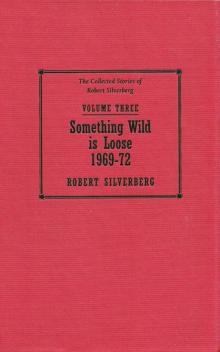 The Collected Stories of Robert Silverberg, Volume 3: Something Wild Is Loose: 1969-72
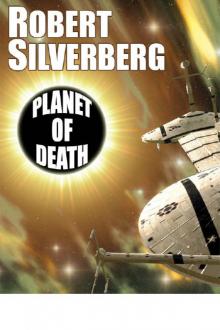 Planet of Death
 Trips: The Collected Stories of Robert Silverberg, Volume Four
 In the Beginning: Tales From the Pulp Era
 Hot Sky at Midnight
 Valentine Pontifex
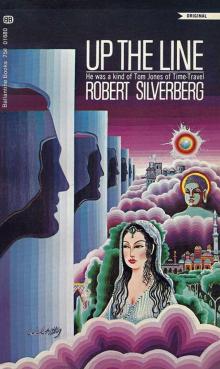 Up the Line
 Thorns
 Amanda and the Alien
 Star of Gypsies
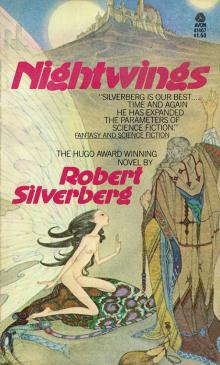 Nightwings
 The Time Hoppers
 Blood on the Mink
 Dying Inside
 The Last Song of Orpheus
 The King of Dreams
 The Stochastic Man
 The Collected Stories of Robert Silverberg, Volume Seven: We Are for the Dark
 The Millennium Express: The Collected Stories of Robert Silverberg, Volume Nine
 The Iron Chancellor
 Lord Prestimion
 To Open the Sky
 The World Inside
 Chains of the Sea
 The Collected Stories of Robert Silverberg, Volume Five: The Palace at Midnight
 Postmark Ganymede
 The Second Trip
 The Collected Stories of Robert Silverberg, Volume 4: Trips: 1972-73
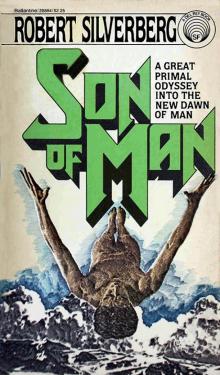 Son of Man
 Tom O'Bedlam
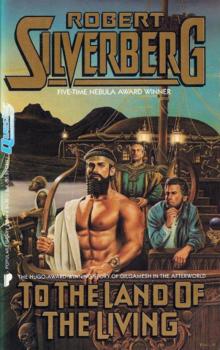 To the Land of the Living
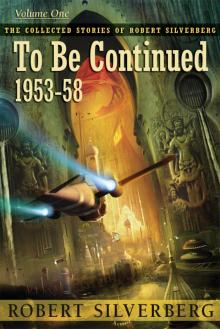 To Be Continued: The Collected Stories of Robert Silverberg, Volume One
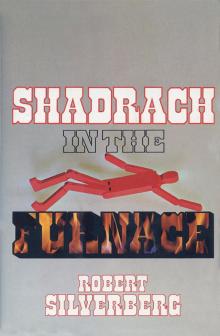 Shadrach in the Furnace
 The Chalice of Death: Three Novels of Mystery in Space
 The Queen of Springtime
 To Be Continued 1953-1958
 Legends
 Roma Eterna
 To Live Again
 At Winter's End
 Needle in a Timestack
 To Live Again and the Second Trip: The Complete Novels
 Lord of Darkness
 The Mountains of Majipoor
 The World Outside
 The Alien Years
 The Book of Skulls
 The Face of the Waters
 Gilgamesh the King
 The Collected Stories of Robert Silverberg, Volume 6: Multiples: 1983-87
 The Happy Unfortunate
 Three Survived
 Cronos
 Tower of Glass
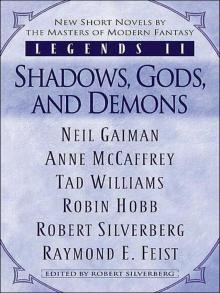 Legends II
 The Planet Killers
 The Collected Stories of Robert Silverberg, Volume 2: To the Dark Star: 1962-69
 Downward to the Earth
 Lord Valentine's Castle: Book One of the Majipoor Cycle
 Hot Times in Magma City, 1990-95
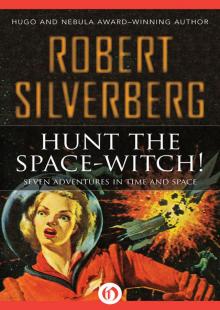 Hunt the Space-Witch! Seven Adventures in Time and Space
 Majipoor Chronicles
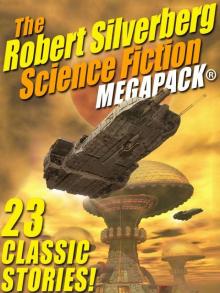 The Robert Silverberg Science Fiction Megapack(r)
 Starman's Quest
 Car Sinister
 Worlds of Maybe
 Fantasy The Best of 2001
 Revolt on Alpha C
 Homefaring
 The Pardoner's Tale
 Sailing to Byzantium - Six Novellas
 The Chalice of Death
 Sundance
 A Tip on a Turtle
 Nebula Awards Showcase 2001: The Year's Best SF and Fantasy Chosen by the Science Fiction and Fantasy Writers of America
 The Fangs of the Trees
 The Palace at Midnight: The Collected Work of Robert Silverberg, Volume Five
 The Millennium Express - 1995-2009 - The Collected Stories of Robert Silverberg Volume Nine
 Book of Skulls
 Passengers
 Something Wild is Loose - 1969–72 - The Collected Stories of Robert Silverberg Volume Three
 Multiples
 Starborne
 The Masks of Time
 The Mountains of Majipoor m-8
 Multiples (1983-87)
 Those Who Watch
 In the Beginning
 Earth Is The Strangest Planet
 Collision Course
 Neutral Planet
 To the Dark Star - 1962–69 - The Collected Stories of Robert Silverberg Volume Two
 Mutants
 Sailing to Byzantium
 When We Went to See the End of the World
 Robert Silverberg The Science Fiction Hall Of Fame Volume One, 1929-1964
 To Be Continued - 1953–58 - The Collected Stories of Robert Silverberg Volume One
 Valentine Pontifex m-3
 Gianni
 Majipoor Chronicles m-2
 We Are for the Dark (1987-90)
 Waiting for the Earthquake
 Fantasy: The Best of 2001
 How It Was When the Past Went Away
 Beauty in the Night
 The Man Who Never Forgot
 The Book of Changes m-9
 Lord Valentine's Castle m-1
 This Way to the End Times
 Queen of Springtime
 Legends-Volume 3 Stories by the Masters of Modern Fantasy
 The Palace at Midnight - 1980–82 - The Collected Stories of Robert Silverberg Volume Five
 Something Wild is Loose: The Collected Stories of Robert Silverberg, Volume Three
 Multiples - 1983–87 - The Collected Stories of Robert Silverberg Volume Six
 Alaree
 Three Survived: A Science Fiction Novel
 Defenders of the Frontier
 The New Springtime
 We Are for the Dark - 1987–90 - The Collected Stories of Robert Silverberg Volume Seven
 The Science Fiction Hall of Fame, Volume One 1929-1964--The Greatest Science Fiction Stories of All Time Chosen by the Members of the Science Fiction Writers of America
 Master Of Life And Death
 Choke Chain
 Sorcerers of Majipoor m-4
 Absolutely Inflexible
 Trips - 1962–73 - The Collected Stories of Robert Silverberg Volume Four
 Hot Times in Magma City - 1990-95 - The Collected Stories of Robert Silverberg Volume Eight
 Far Horizons
 The Queen of Springtime ns-2
 The Seventh Science Fiction Megapack
 Invaders From Earth
 Hanosz Prime Goes To Old Earth
 The Macauley Circuit
 Science Fiction: The Best of 2001
 To the Dark Star: The Collected Stories of Robert Silverberg, Volume Two
 Stochastic Man
 Legends: Stories By The Masters of Modern Fantasy
 To Live Again And The Second Trip
 Flies
Flies The Silent Invaders
 Ship-Sister, Star-Sister