
- Home
- Robert Silverberg
Dying Inside Page 14
Dying Inside Read online
Page 14
Naturally she kept up with the research into extrasensory perception that J. B. Rhine was doing down at Duke University. It terrified David whenever she spoke of this. He constantly feared that she was going to give way to the temptation to run some Rhine experiments in class, and would thereby flush him out of hiding. He had read Rhine himself, of course, The Reach of the Mind and New Frontiers of the Mind, had even peered into the opacities of The Journal of Parapsychology, hoping to find something that would explain him to himself, but there was nothing there except statistics and foggy conjecture. Okay, Rhine was no threat to him so long as he went on piddling around in North Carolina. But muddled Miss Mueller might just strip him naked and deliver him to the pyre.
Inevitable, the progression toward disaster. The topic for the week, suddenly, was the human brain, its functions and capabilities. See, this is the cerebrum, this is the cerebellum, this is the medulla oblongata. A child’s garden of synapses. Fat-cheeked Norman Heimlich, gunning for a 99, knowing precisely which button to push, put up his hand: “Miss Mueller, do you think it’ll ever be possible for people really to read minds, I mean not by tricks or anything but actual mental telepathy?” Oh, the joy of Miss Mueller! Her lumpy face glowing. This was her cue to launch into an animated discussion of ESP, parapsychology, inexplicable phenomena, supernormal modes of communication and perception, the Rhine researches, et cetera, et cetera, a torrent of metaphysical irrelevance. David wanted to hide under his desk. The word “telepathy” made him wince. He already suspected that half the class realized what he was. Now a flash of wild paranoia. Are they looking at me, are they staring and pointing and tapping their heads and nodding? Certainly these were irrational fears. He had surveyed every mind in the class again and again, desperately trying to amuse himself during the arid stretches of boredom, and he knew that his secret was safe. His classmates, plodding young Brooklynites all, would never cotton to the veiled presence of a superman in their midst. They thought he was strange, yes, but had no notion of how strange. Would Miss Mueller now blow his cover, though? She was talking about conducting parapsychology experiments in class to demonstrate the potential reach of the human brain. Oh where can I hide?
No escape. She had her cards with her the next day. “These are known as Zener cards,” she explained solemnly, holding them up, fanning them out like Wild Bill Hickok about to deal himself a straight flush. David had never actually seen a set of the cards before, yet they were as familiar to him as the deck his parents used in their interminable canasta games. “They were devised about twenty-five years ago at Duke University by Dr. Karl E. Zener and Dr. J. B. Rhine. Another name for them is ‘ESP cards.’ Who can tell me what ‘ESP’ means?”
Norman Heimlich’s stubby hand waving in the air. “Extrasensory perception, Miss Mueller!”
“Very good, Norman.” Absentmindedly she began to shuffle the cards. Her eyes, normally inexpressive, gleamed with a Las Vegas intensity. She said, “The deck consists of 25 cards, divided into five ‘suits’ or symbols. There are five cards marked with a star, five with a circle, five with a square, five with a pattern of wavy lines, and five with a cross or plus sign. Otherwise they look just like ordinary playing cards.” She handed the pack to Barbara Stein, another of her favorites, and told her to copy the five symbols on the blackboard. “The idea is for the subject being examined to look at each card in turn, face down, and try to name the symbol on the other side. The test can be run in many different ways. Sometimes the examiner looks briefly at each card first; that gives the subject a chance to pick the right answer out of the examiner’s mind, if he can. Sometimes neither the subject nor the examiner sees the card in advance. Sometimes the subject is allowed to touch the card before he makes his guess. Sometimes he may be blindfolded, and other times he may be permitted to stare at the back of each card. No matter how it’s done, though, the basic aim is always the same: for the subject to determine, using extrasensory powers, the design on a card that he can’t see. Estelle, suppose the subject has no extrasensory powers at all, but is simply operating on pure guesswork. How many right guesses could we expect him to make, out of the 25 cards?”
Estelle, caught by surprise, reddened and blurted, “Uh—twelve and a half?”
A sour smirk from Miss Mueller, who turned to the brighter, happier twin. “Beverly?”
“Five, Miss Mueller?”
“Correct. You always have one chance out of five of guessing the right suit, so five right calls out of 25 is what luck alone ought to bring. Of course, the results are never that neat. On one run through the deck you might have four correct hits, and then next time six, and then five, and then maybe seven, and then perhaps only three—but the average, over a long series of trials, ought to be about five. That is, if pure chance is the only factor operating. Actually, in the Rhine experiments some groups of subjects have averaged 6½ or 7 hits out of 25 over many tests. Rhine believes that this above-average performance can only be explained as ESP. And certain subjects have done much better. There was a man once who called nine straight cards right, two days in a row. Then a few days later he hit 15 straight cards, 21 out of 25. The odds against that are fantastic. How many of you think it could have been nothing but luck?”
About a third of the hands in the class went up. Some of them belonged to dullards who failed to realize that it was shrewd politics to show sympathy for the teacher’s pet enthusiasms. Some of them belonged to incorrigible skeptics who disdained such cynical manipulations. One of the hands belonged to David Selig. He was merely trying to don protective coloration.
Miss Mueller said, “Let’s run a few tests today. Victor, will you be our first guinea pig? Come to the front of the room.”
Grinning nervously, Victor Schlitz shambled forward. He stood stiffly beside Miss Mueller’s desk as she cut the cards and cut them again. Then, peering quickly at the top card, she slid it toward him. “Which symbol?” she asked.
“Circle?”
“We’ll see. Class, don’t say anything.” She handed the card to Barbara Stein, telling her to place a checkmark under the proper symbol on the blackboard. Barbara checked the square. Miss Mueller glanced at the next card. Star, David thought.
“Waves,” Victor said. Barbara checked the star.
“Plus.” Square, dummy! Square.
“Circle.” Circle. Circle. A sudden ripple of excitement in the classroom at Victor’s hit. Miss Mueller, glaring, called for silence.
“Star.” Waves. Waves was what Barbara checked.
“Square.” Square, David agreed. Square. Another ripple, more subdued.
Victor went through the deck. Miss Mueller had kept score: four correct hits. Not even as good as chance. She put him through a second round. Five. All right, Victor: you may be sexy, but a telepath you aren’t. Miss Mueller’s eyes roved the room. Another subject? Let it not be me, David prayed. God, let it not be me. It wasn’t. She summoned Sheldon Feinberg. He hit five the first time, six the second. Respectable, unspectacular. Then Alice Cohen. Four and four. Stony soil, Miss Mueller. David, following each turn of the cards, had hit 25 out of 25 every time, but he was the only one who knew that.
“Next?” Miss Mueller said. David shrank into his seat. How much longer until the dismissal bell? “Norman Heimlich.” Norman waddled toward the teacher’s desk. She glanced at a card. David, scanning her, picked up the image of a star. Bouncing then to Norman’s mind, David was amazed to detect a flicker of an image there, a star perversely rounding its points to form a circle, then reverting to being a star. What was this? Did the odious Heimlich have a shred of the power? “Circle,” Norman murmured. But he hit the next one—the waves—and the one after that, the square. He did indeed seem to be picking up emanations, fuzzy and indistinct but emanations all the same, from Miss Mueller’s mind. Fat Heimlich had the vestiges of the gift. But only the vestiges; David, scanning his mind and the teacher’s, watched the images grow ever more cloudy and vanish altogether by the tenth card, fatigue scatteri
ng Norman’s feeble strength. He scored a seven, though, the best so far. The bell, David prayed. The bell, the bell, the bell! Twenty minutes away.
A small mercy. Miss Mueller briskly distributed test paper. She would run the whole class at once. “I’ll call numbers from 1 to 25,” she said. “As I call each number, write down the symbol you think you see. Ready? One.”
David saw a circle. Waves, he wrote.
Star. Square.
Waves. Circle.
Star. Waves.
As the test neared its close, it occurred to him that he might be making a tactical error by muffing every call. He told himself to put down two or three right ones, just for camouflage. But it was too late for that. There were only four numbers left; it would look too conspicuous if he hit several of them correctly after missing all the others. He went on missing.
Miss Mueller said, “Now exchange papers with your neighbor and mark his answers. Ready? Number one: circle. Number two: star. Number three: waves. Number four…”
Tensely she called for results. Had anyone scored ten hits or more? No, teacher. Nine? Eight? Seven? Norman Heimlich had seven again. He preened himself: Heimlich the mind-reader. David felt disgust at the knowledge that Heimlich had even a crumb of power. Six? Four students had six. Five? Four? Miss Mueller diligently jotted down the results. Any other figures? Sidney Goldblatt began to snicker. “Miss Mueller, how about zero?”
She looked startled. “Zero? Was there someone who got all 25 cards wrong?”
“David Selig did!”
David Selig wanted to drop through the floor. All eyes were on him. Cruel laughter assailed him. David Selig got them all wrong. It was like saying, David Selig wet his pants, David Selig cheated on the exam, David Selig went into the girls’ toilet. By trying to conceal himself, he had made himself terribly conspicuous. Miss Mueller, looking stern and oracular, said, “A null score can be quite significant too, class. It might mean extremely strong ESP abilities, rather than the total absence of such powers, as you might think.” Oh, God. Extremely strong ESP abilities. She went on, “Rhine talks of phenomena such as ‘forward displacement’ and ‘backward displacement,’ in which an unusually powerful ESP force might accidentally focus on one card ahead of the right one, or one card behind it, or even two or three cards away. So the subject would appear to get a below-average result when actually he’s hitting perfectly, just off the target! David, let me see your answers.”
“I wasn’t getting anything, Miss Mueller. I was just putting down my guesses, and I suppose they were all wrong.”
“Let me see.”
As though marching to the scaffold, he brought her the sheet. She placed it beside her own list and tried to realign it, searching for some correlation, some displacement sequence. But the randomness of his deliberately wrong answers protected him. A forward displacement of one card gave him two hits; a backward displacement of one card gave him three. Nothing significant there. Nevertheless, Miss Mueller would not let go. “I’d like to test you again,” she said. “We’ll run several kinds of trials. A null score is fascinating.” She began to shuffle the deck. God, God, God, where are you? Ah. The bell! Saved by the bell! “Can you stay after class?” she asked. In agony, he shook his head. “Got to go to geometry next, Miss Mueller.” She relented. Tomorrow, then. We’ll run the tests tomorrow. God! He was up all the night in a turmoil of fear, sweating, shivering; about four in the morning he vomited. He hoped his mother would make him stay home from school, but no luck: at half past seven he was aboard the bus. Would Miss Mueller forget about the test? Miss Mueller had not forgotten. The fateful cards were on her desk. There would be no escape. He found himself the center of all attention. All right, Duv, be cleverer this time. “Are you ready to begin?” she asked, tipping up the first card. He saw a plus sign in her mind.
“Square,” he said.
He saw a circle. “Waves,” he said.
He saw another circle. “Plus,” he said.
He saw a star. “Circle,” he said.
He saw a square. “Square,” he said. That’s one.
He kept careful count. Four wrong answers, then a right one. Three wrong answers, another right one. Spacing them with false randomness, he allowed himself five hits on the first test. On the second he had four. On the third, six. On the fourth, four. Am I being too average, he wondered? Should I give her a one-hit run, now? But she was losing interest. “I still can’t understand your null score, David,” she told him. “But it does seem to me as if you have no ESP ability whatever.” He tried to look disappointed. Apologetic, even. Sorry, teach, I ain’t got no ESP. Humbly the deficient boy made his way to his seat.
* * *
In one blazing instant of revelation and communion, Miss Mueller, I could have justified your whole lifelong quest for the improbable, the inexplicable, the unknowable, the irrational. The miraculous. But I didn’t have the guts to do it. I had to look after my own skin, Miss Mueller. I had to keep a low profile. Will you forgive me? Instead of giving you truth, I faked you out, Miss Mueller, and sent you spinning blindly onward to the tarot, to the signs of the zodiac, to the flying-saucer people, to a thousand surreal vibrations, to a million apocalyptic astral antiworlds, when the touch of my mind against yours might have been enough to heal your madness. One touch from me. In a moment. In the twinkling of an eye.
TWENTY-ONE.
These are the days of David’s passion, when he writhes a lot on his bed of nails. Let’s do it in short takes. It hurts less that way.
* * *
Tuesday. Election Day. For months the clamor of the campaign has fouled the air. The free world is choosing its new maximum leader. The sound-trucks rumble along Broadway, belching slogans. Our next President! The man for all America! Vote! Vote! Vote! Vote for X! Vote for Y! The hollow words merge and blur and flow. Republocrat. Demican. Boum. Why should I vote? I will not vote. I do not vote. I am not plugged in. I am not part of the circuit. Voting is for them. Once, in the late autumn of 1968, I think it was, I was standing outside Carnegie Hall, thinking of going over to the paperback bookshop on the other side of the street, when suddenly all traffic halted on 57th and scores of policemen sprang up from the pavement like the dragon’s-teeth warriors sown by Cadmus, and a motorcade came rumbling out of the east, and lo! in a dark black limousine rode Richard M. Nixon, President-Elect of the United States of America, waving jovially to the assembled populace. My big chance at last, I thought. I will look into his mind and make myself privy to great secrets of state; I will discover what it is about our leaders that sets them apart from ordinary mortals. And I looked into his mind, and what I found in there I will not tell you, except to say that it was more or less what I should have expected to find. And since that day I have had nothing to do with politics or politicians. Today I stay home from the polls. Let them elect the next President without my help.
* * *
Wednesday. I doodle with Yahya Lumumba’s half-finished term paper and other such projects, a few futile lines on each. Getting nowhere. Judith calls. “A party,” she says. “You’re invited. Everybody’ll be there.”
“A party? Who? Where? Why? When?”
“Saturday night. Near Columbia. The host is Claude Guermantes. Do you know him? Professor of French Literature.” No, the name is not Guermantes. I have changed the name to protect the guilty. “He’s one of those charismatic new professors. Young, dynamic, handsome, a friend of Simone de Beauvoir, of Genet. Karl and I are coming. And a lot of others. He always invites the most interesting people.”
“Genet? Simone de Beauvoir? Will they be there?”
“No, silly, not them. But it’ll be worth your time. Claude gives the best parties of anybody I know. Brilliant combinations of people.”
“Sounds like a vampire to me.”
“He gives as well as takes, Duv. He specifically asked me to invite you.”
“How does he know me at all?”
“Through me,” she says. “I’ve talked of yo
u. He’s dying to meet you.”
“I don’t like parties.”
“Duv—”
I know that warning tone of voice. I have no stomach for a hassle just now. “All right,” I say, sighing. “Saturday night. Give me the address.” Why am I so pliable? Why do I let Judith manipulate me? Is this how I build my love for her, through these surrenders?
 The Longest Way Home
 Hawksbill Station
 A Time of Changes
 This Way to the End Times: Classic Tales of the Apocalypse
 Beyond the Gate of Worlds
 Lord Valentine's Castle
 The Man in the Maze
 Tales of Majipoor
 Time of the Great Freeze
 The Collected Stories of Robert Silverberg, Volume 3: Something Wild Is Loose: 1969-72
 Planet of Death
 Trips: The Collected Stories of Robert Silverberg, Volume Four
 In the Beginning: Tales From the Pulp Era
 Hot Sky at Midnight
 Valentine Pontifex
 Up the Line
 Thorns
 Amanda and the Alien
 Star of Gypsies
 Nightwings
 The Time Hoppers
 Blood on the Mink
 Dying Inside
 The Last Song of Orpheus
 The King of Dreams
 The Stochastic Man
 The Collected Stories of Robert Silverberg, Volume Seven: We Are for the Dark
 The Millennium Express: The Collected Stories of Robert Silverberg, Volume Nine
 The Iron Chancellor
 Lord Prestimion
 To Open the Sky
 The World Inside
 Chains of the Sea
 The Collected Stories of Robert Silverberg, Volume Five: The Palace at Midnight
 Postmark Ganymede
 The Second Trip
 The Collected Stories of Robert Silverberg, Volume 4: Trips: 1972-73
 Son of Man
 Tom O'Bedlam
 To the Land of the Living
 To Be Continued: The Collected Stories of Robert Silverberg, Volume One
 Shadrach in the Furnace
 The Chalice of Death: Three Novels of Mystery in Space
 The Queen of Springtime
 To Be Continued 1953-1958
 Legends
 Roma Eterna
 To Live Again
 At Winter's End
 Needle in a Timestack
 To Live Again and the Second Trip: The Complete Novels
 Lord of Darkness
 The Mountains of Majipoor
 The World Outside
 The Alien Years
 The Book of Skulls
 The Face of the Waters
 Gilgamesh the King
 The Collected Stories of Robert Silverberg, Volume 6: Multiples: 1983-87
 The Happy Unfortunate
 Three Survived
 Cronos
 Tower of Glass
 Legends II
 The Planet Killers
 The Collected Stories of Robert Silverberg, Volume 2: To the Dark Star: 1962-69
 Downward to the Earth
 Lord Valentine's Castle: Book One of the Majipoor Cycle
 Hot Times in Magma City, 1990-95
 Hunt the Space-Witch! Seven Adventures in Time and Space
 Majipoor Chronicles
 The Robert Silverberg Science Fiction Megapack(r)
 Starman's Quest
 Car Sinister
 Worlds of Maybe
 Fantasy The Best of 2001
 Revolt on Alpha C
 Homefaring
 The Pardoner's Tale
 Sailing to Byzantium - Six Novellas
 The Chalice of Death
 Sundance
 A Tip on a Turtle
 Nebula Awards Showcase 2001: The Year's Best SF and Fantasy Chosen by the Science Fiction and Fantasy Writers of America
 The Fangs of the Trees
 The Palace at Midnight: The Collected Work of Robert Silverberg, Volume Five
 The Millennium Express - 1995-2009 - The Collected Stories of Robert Silverberg Volume Nine
 Book of Skulls
 Passengers
 Something Wild is Loose - 1969–72 - The Collected Stories of Robert Silverberg Volume Three
 Multiples
 Starborne
 The Masks of Time
 The Mountains of Majipoor m-8
 Multiples (1983-87)
 Those Who Watch
 In the Beginning
 Earth Is The Strangest Planet
 Collision Course
 Neutral Planet
 To the Dark Star - 1962–69 - The Collected Stories of Robert Silverberg Volume Two
 Mutants
 Sailing to Byzantium
 When We Went to See the End of the World
 Robert Silverberg The Science Fiction Hall Of Fame Volume One, 1929-1964
 To Be Continued - 1953–58 - The Collected Stories of Robert Silverberg Volume One
 Valentine Pontifex m-3
 Gianni
 Majipoor Chronicles m-2
 We Are for the Dark (1987-90)
 Waiting for the Earthquake
 Fantasy: The Best of 2001
 How It Was When the Past Went Away
 Beauty in the Night
 The Man Who Never Forgot
 The Book of Changes m-9
 Lord Valentine's Castle m-1
 This Way to the End Times
 Queen of Springtime
 Legends-Volume 3 Stories by the Masters of Modern Fantasy
 The Palace at Midnight - 1980–82 - The Collected Stories of Robert Silverberg Volume Five
 Something Wild is Loose: The Collected Stories of Robert Silverberg, Volume Three
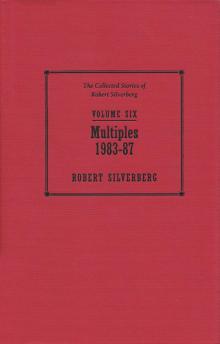 Multiples - 1983–87 - The Collected Stories of Robert Silverberg Volume Six
 Alaree
 Three Survived: A Science Fiction Novel
 Defenders of the Frontier
 The New Springtime
 We Are for the Dark - 1987–90 - The Collected Stories of Robert Silverberg Volume Seven
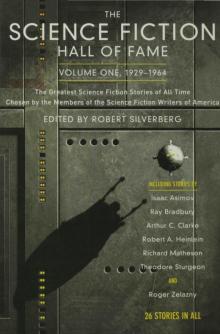 The Science Fiction Hall of Fame, Volume One 1929-1964--The Greatest Science Fiction Stories of All Time Chosen by the Members of the Science Fiction Writers of America
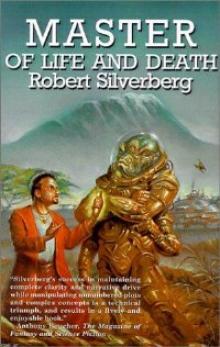 Master Of Life And Death
 Choke Chain
 Sorcerers of Majipoor m-4
 Absolutely Inflexible
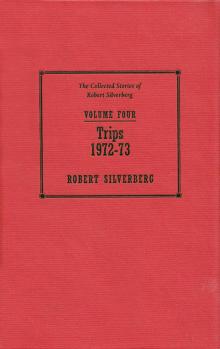 Trips - 1962–73 - The Collected Stories of Robert Silverberg Volume Four
 Hot Times in Magma City - 1990-95 - The Collected Stories of Robert Silverberg Volume Eight
 Far Horizons
 The Queen of Springtime ns-2
 The Seventh Science Fiction Megapack
 Invaders From Earth
 Hanosz Prime Goes To Old Earth
 The Macauley Circuit
 Science Fiction: The Best of 2001
 To the Dark Star: The Collected Stories of Robert Silverberg, Volume Two
 Stochastic Man
 Legends: Stories By The Masters of Modern Fantasy
 To Live Again And The Second Trip
 Flies
Flies The Silent Invaders
 Ship-Sister, Star-Sister