
- Home
- Robert Silverberg
Roma Eterna Page 15
Roma Eterna Read online
Page 15
But the night passed without incident. In the morning, as work on the palisade resumed, Drusus summoned Marcus Junianus, who was serving as his prefect of the camp, and ordered him to begin assembling the scouting party that would attempt to find the location of the nearest Mexican village. Junianus saluted smartly and hurried off.
Later in the day Drusus sent for him again, on another matter. A long while went by; and then the messenger returned with the news that Junianus was not in the camp.
“Not in the camp?” said Drusus, puzzled.
“No, sir. I am told that you sent him out on a scouting mission this morning, sir.”
Drusus stared. Anger rose in him like a fountain, and it was all he could do to keep from striking the man. But that would be stupidly misdirected anger, he knew. Marcus was the one at fault, not the messenger. He had never given Marcus any order to go out scouting, just to get a team of scouts together. With the rampart only half finished, it was much too soon to dispatch scouts: the last thing Drusus wanted now was to alert the natives prematurely to their presence, which could easily happen if the scouts stumbled incautiously into one of their villages. And in any case he had never had any intention of sending Marcus himself out with those scouts. Scouts were expendable; Marcus was not.
He realized that this was something he should have foreseen. Marcus, now that he was a freedman, was forever trying to demonstrate his civic valor. More than once he had put himself needlessly in danger when he and Drusus were serving on border patrol in Africa. Sometimes one had to take deliberate risks, yes—Drusus himself, standing watch with his men this night past, had done just that. But there were necessary risks and there were foolish ones. The thought of Marcus blithely misunderstanding his intent so that he could lead the scouting party in person was infuriating.
There was nothing that could be done about it now, though. He would have to take it up with Marcus when the scouting party returned, and forbid him to place himself at risk again.
The problem was that the day passed, and sundown came and deepened swiftly into black night, and the scouts did not return.
Drusus had had no discussion with Marcus about the length of time the scouting mission was supposed to stay out. He had never had it in mind himself to ask the scouts to remain out overnight, not the very first night; but what Marcus had had in mind, Jupiter alone could say. Maybe he planned to keep going until he found something worth finding.
Morning came. No Junianus. At midday, deeply exasperated and more than a little apprehensive, Drusus sent a second band of scouts off to look for the first ones, telling them that under no circumstances were they to remain out after dark. But they returned in less than three hours, and the instant Drusus saw the look on the face of their captain, a Thracian named Rufus Trogus, he knew there was trouble.
“They have been captured, sir,” said Trogus without any preamble whatever.
Drusus worked hard to conceal his dismay. “Where? By whom?”
The Thracian told the story quickly and concisely. A thousand paces inland due west and two hundred paces to the north they had come upon signs of a struggle, broken branches, scuffed soil, a fallen scabbard, a javelin, a sandal. They were able to follow a trail of disturbed undergrowth for another hundred paces or so westward; then the forest closed over itself and there was no further sign of human presence, not so much as a bent twig. It was as though the attackers, having surprised and very quickly overcome the scouting party, had in short order melted into the air, and their prisoners also.
“You saw no bodies?”
“None, sir. Nor signs of bloodshed.”
“Let’s be grateful for that much, I suppose,” Drusus said.
But it was a miserable situation. Two days on shore and he had already lost half a dozen men, his best friend among them. At this moment the natives might be putting them to the torture, or worse. And also he had inadvertently sent word to the folk of this land that an invading army had once again landed on their shores. They would have found that out sooner or later anyway, of course. But Drusus had wanted to have some sense of where he was located in relation to the enemy, first. Not to mention having his camp fully walled in, his siege engines and other war machinery set up and ready, the horses of the cavalry properly accustomed to being on land once again, and all the rest.
Instead it was possible now that they might find themselves under attack at any moment, and not in any real way prepared for it. How splendid, that Titus Livius Drusus would be remembered down the ages for having so swiftly placed the second New World expedition on the path to the same sort of catastrophe that had overwhelmed the first!
It was appropriate, Drusus knew, to send word of what had happened down the beach to Lucius Aemilius Capito’s camp. One was supposed to keep one’s superior officer informed of things like this. He hated the idea of confessing such stupidity, even if the stupidity had been Marcus Junianus’s, not his own. But the responsibility ultimately was his, he knew. He scribbled a note to the effect that he had sent a scouting party out and it appeared to have been captured by enemies. Nothing more than that. No apology for having let scouts go out before the camp was completely defended. Bad enough that the thing had happened; there was no need to point out to Capito how serious a breach of standard tactics it had been.
From Capito, toward nightfall, came back a frosty memorandum asking to be kept up to date on developments. The implication was there, more in what Capito did not say than in what he did, that if the natives did happen to strike at Drusus’s camp in the next day or two, Drusus would be on his own in dealing with it.
No attack came. All the next day Drusus moved restlessly about the camp, urging his engineers onward with the job of finishing the palisade. When new foraging parties went out to hunt for deer and pigs and those great birds, he saw to it that they were accompanied by three times as many soldiers as would ordinarily be deemed necessary, and he worried frantically until they returned. He sent another party of scouts out under Rufus Trogus, too, to investigate the zone just beyond the place where Marcus and his men had been taken and look for clues to their disappearance. But Trogus came back once more with no useful information.
Drusus slept badly that night, plagued by mosquitoes and the unending shrieks and boomings of the jungle beasts and the moist heat that wrapped itself about him with almost tangible density. A bird in a tree that could not have been very far from his tent began to sing in a deep, throbbing voice, a tune so mournful it sounded to Drusus like a funeral dirge. He speculated endlessly about the fate of Marcus. They have not killed him, he told himself earnestly, because if they had wanted to do that, they would have done it in the original ambush in the forest. No, they’ve taken him in for interrogation. They are trying to get information from him about our numbers, our intentions, our weapons. Then he reflected once more that they were unlikely to get such information out of Marcus without torturing him. And then—
Morning came, eventually. Drusus emerged from his tent and saw sentries of the watch coming down the beach in his direction.
Marcus Junianus was with them, looking weary and tattered, and trailing along behind were half a dozen equally ragged Romans who must have been the scouts he took with him on his venture into the forest.
Drusus suppressed his anger. There would be time enough for scolding Junianus later. The flood of relief that surged through him took precedence over such things, anyway.
He embraced Junianus warmly, and stepped back to study him for signs of injury—he saw none—and said, finally, “Well, Marcus? I didn’t expect you to stay away overnight, you know.”
“Nor I, Titus. A few hours, a little sniffing around, and then we’d turn back, that was what I thought. But we had hardly gone anywhere when they fell upon us from the treetops. We fought, but there must have been a hundred of them. It was all over in moments. They tied us with silken cord—it felt like silk, anyway, but perhaps it was some other kind of smooth rope—and carried us away on their shoulders t
hrough the forest. Their city is less than an hour’s march away.”
“Their city, you say? In the midst of this wilderness, a city?”
“A city, yes. That is the only word for it. I couldn’t tell you how big it is, but it would be a city by anyone’s reckoning, a very great one. It is the size of Neapolis, at the least. Perhaps even the size of Roma.” The forest had been cleared away over an enormous area, he said, gesturing with both arms. He told of broad plazas surrounding gleaming temples and palaces of white stone that were greater in their dimensions than the Capitol in Roma, of towering pyramids with hundreds of steps leading to the shrines at their summits, of terraced avenues of the same finely chiseled white stone stretching off into the jungled distance, with mighty statues of fearsome gods and monstrous beasts lining them for their entire lengths. The population of the city, Junianus said, was incalculably huge, and its wealth had to be extraordinary. Even the common folk, though they wore little more than simple cotton tunics, looked prosperous. The majestic priests and nobles who moved freely among them were magnificent beyond belief. Junianus struggled for words to describe them. Garbed in the skins of tigers, they were, with green and red capes of bright feathers on their shoulders, and brilliant feather headdresses that rose to extravagant, incredible heights. Pendants of smooth green stone hung from their earlobes, and great necklaces of that same stone were draped about their necks, and around their waists and wrists and ankles they had bangles of shining gold. Gold was everywhere, said Junianus. It was to these people as copper or tin was to Romans. You could not escape the sight of it: gold, gold, gold.
“We were fed, and then we were taken before their king,” Junianus told Drusus. “With his own hands he poured out drink for us, using polished bowls of the same smooth green stone that they employ for their jewelry. It was a strong sweet liquor, brewed of honey, I think, with the herbs of this land in it, strange to the taste, but pleasing—and when we had refreshed ourselves he asked us our names, and the purpose for which we had come, and—”
“He asked you, Marcus? And you understood what he was saying? But how was that possible?”
“He was speaking Latin,” Junianus replied, as though that should have been self-evident. “Not very good Latin, of course, but one can expect nothing better from a Norseman, is that not so? In fact it was very poor Latin indeed. But he spoke it well enough for us to comprehend what he was saying, after a fashion. Naturally I didn’t tell him outright that I was a scout for an invading army, but it was clear enough that he—”
“Wait a moment,” Drusus said. His head was beginning to spin. “Surely I’m not hearing this right. The king of these people is a Norseman?”
“Did I not tell you, Titus?” Junianus laughed. “A Norseman, yes! He’s been here for years and years. His name is Olaus Danus, one of those who came down from Vinilandius with Haraldus the Svean on that first voyage long ago, when the Norse discovered this place, and he’s lived here ever since. They treat him almost like a god. There he sits on a glistening throne, with a scepter of green stone in his hand and a bunch of golden necklaces around his throat, and wearing a crown of feathers half as tall as I am, and they strew flower petals before him whenever he gets up and walks, and crouch before him and cover their eyes with their hands so he won’t blind them with his splendor, and—”
“Their king is a Norseman,” Drusus said, lost in astonishment.
“A great hulking giant of a Norseman with a black beard and eyes like a devil’s,” said Junianus. “Who wants to see you right away. Send me your general, he said. I must speak with him. Bring him to me tomorrow, early in the day. There should not be any soldiers with him. The general must come alone. He told me that I am permitted to accompany you as far as the place in the forest where we were set upon, but then I must leave you, and you must wait by yourself for his men to fetch you. He was very clear on that point, I have to say.”
This was rapidly getting beyond the scope of Drusus’s official authority. He saw no choice but to take himself down the shore in person and report the whole business to the Consul Lucius Aemilius Capito.
Capito’s camp, Drusus was pleased to see, was not nearly as far along in construction as Drusus’s own. But the Consul had had his tent, at least, erected—unsurprisingly, it was quite a grand one—and Capito himself, flanked by what looked like a small regiment of clerks, was at his desk, going over a thick stack of inventory sheets and engineering reports.
Looking up, he gave Drusus a bilious glare, as though he regarded a visit from the legionary legate of the northern camp as an irritating intrusion on his contemplation of the inventory sheets. There had never been much amiability between them. Capito, a hard-faced, slab-jawed man of fifty, had evidently had some serious battles with Drusus’s father in the Senate, long ago, over the size of military appropriations—Drusus was unsure of the details, and did not want to know—and had never taken the trouble to conceal his annoyance at having had the younger Drusus wished off on him in so high a position of command.
“A problem?” Capito asked.
“It would seem so, Consul.”
He set the situation forth in the fewest possible sentences: the safe return of the captured scouts, the discovery of the startling proximity of a major city with its inexplicable Norse king, and the request that Drusus take himself there, alone, as an ambassador to that king.
Capito seemed to have forgotten all about the missing party of scouts. Drusus could see him rummaging through his memory as though their disappearance were some episode out of the reign of Lucius Agrippa. Then at last he fixed his cold gaze on Drusus and said, “Well? What do you intend to do?”
“Go to him, I suppose.”
“You suppose? What other option is there? By some miracle this man has made himself king of these copper-skinned barbarians, the gods alone know how, and now he summons a Roman officer to a conference, quite possibly for the sake of concluding a treaty that will convey this entire nation to the authority of His Imperial Majesty, which was the intent of these Norsemen in the first place, I remind you—and the officer hesitates?”
“Well—but if the Norseman has some other and darker intention, Consul—I will be going to him without an escort, I remind you—”
“As an ambassador. Even a Norseman would not lightly take the life of an ambassador, Drusus. But if he does, well, Drusus, I will see to it that you are properly avenged. You have my pledge on that. We will extract rivers of blood from them for every drop of yours that is shed.”
And, favoring Drusus with a basilisk smile, the Consul Lucius Aemilius Capito returned his attention to his inventories and reports.
It was well past dark by the time Drusus reached his own camp again. The usual beasts were howling madly in the woods; the usual mysterious flying creatures were flitting by overhead; the mosquitoes had awakened and were seeking their nightly feast. But by now he had spent four nights in this place. He was growing accustomed to it. A little to his own surprise, he passed a good night’s sleep, and in the morning made ready for his journey to the city of the copper-skinned folk.
“He will not harm you,” said Marcus Junianus gloomily, as they reached the trampled place in the forest where they were supposed to part company. “I’m entirely certain of that.” His tone did not carry much conviction. “The Norse are savage with each other, but they’d never lift a hand against a Roman officer.”
“I don’t expect that he will,” Drusus said. “But thank you for your reassurance. Is this the place?”
“This is the place. Titus—”
Drusus pointed back toward the camp. “Go, Marcus. Let’s not make a drama out of this. I’ll speak to this Olaus, we’ll find out how things stand here, and by evening I’ll be back, with some idea of the strategy to follow next. Go. Leave me, Marcus.”
Junianus gave him a quick embrace and a sad smile and went trudging off. Drusus leaned against the rough trunk of a palm tree and waited for his barbarian guides to arrive.
&n
bsp; Perhaps an hour went by. Though it was only an hour past sunrise, the heat was already becoming troublesome. If this is what winter is like here, he thought, I wonder how we will survive a summer. Drusus had chosen to dress formally, greaves and chain mail, the crested helmet, his cloak of office as a legate, his short ceremonial sword. He had wanted to muster as much Roman majesty as he could when he came before the barbaric king of these barbaric people. But it was all a little too much for the warmth of this place, and he was sweating as though he were at the baths. An insect or two had penetrated his armor, too: he was aware of bothersome ticklings along his back. He was beginning to feel a little faint by the time he caught sight of a line of marchers emerging out of the thickets in front of him, moving forward without making a sound.
There were six of them, bare to the waist, dusky-skinned, with tightly set, unsmiling mouths, noses like hatchet blades, and odd sloping foreheads. They were amazingly short, no bigger than small women, but their dignity and gravity of bearing made them seem taller than they were, and also they wore headdresses of jutting green and yellow feathers that rose to an astounding height. Three were armed with spears, three with nasty-looking swords made of some dark, glassy stone, their blades notched like those of saws.
Were these his guides, or his executioners?
Drusus stood motionless as they approached. It was an uneasy moment for him. Of personal fear he had none. As ever, he understood that he owed the gods a death, sooner or later. But, as ever, he did not want it to be a shameful, embarrassing death—walking with his eyes wide open into the clutches of a murderous enemy, for instance. In times of danger he had always prayed that if the time of his death were at hand, let it at least serve some useful purpose for the Empire. There could be no purpose in dying stupidly.
But these men hadn’t come here to kill him. They reached his side and took up positions flanking him, three before, three behind, and studied him for a moment with eyes black as night and utterly expressionless. Then one of them signaled with the tips of two fingers, and they led him away into the forest.
 The Longest Way Home
 Hawksbill Station
 A Time of Changes
 This Way to the End Times: Classic Tales of the Apocalypse
 Beyond the Gate of Worlds
 Lord Valentine's Castle
 The Man in the Maze
 Tales of Majipoor
 Time of the Great Freeze
 The Collected Stories of Robert Silverberg, Volume 3: Something Wild Is Loose: 1969-72
 Planet of Death
 Trips: The Collected Stories of Robert Silverberg, Volume Four
 In the Beginning: Tales From the Pulp Era
 Hot Sky at Midnight
 Valentine Pontifex
 Up the Line
 Thorns
 Amanda and the Alien
 Star of Gypsies
 Nightwings
 The Time Hoppers
 Blood on the Mink
 Dying Inside
 The Last Song of Orpheus
 The King of Dreams
 The Stochastic Man
 The Collected Stories of Robert Silverberg, Volume Seven: We Are for the Dark
 The Millennium Express: The Collected Stories of Robert Silverberg, Volume Nine
 The Iron Chancellor
 Lord Prestimion
 To Open the Sky
 The World Inside
 Chains of the Sea
 The Collected Stories of Robert Silverberg, Volume Five: The Palace at Midnight
 Postmark Ganymede
 The Second Trip
 The Collected Stories of Robert Silverberg, Volume 4: Trips: 1972-73
 Son of Man
 Tom O'Bedlam
 To the Land of the Living
 To Be Continued: The Collected Stories of Robert Silverberg, Volume One
 Shadrach in the Furnace
 The Chalice of Death: Three Novels of Mystery in Space
 The Queen of Springtime
 To Be Continued 1953-1958
 Legends
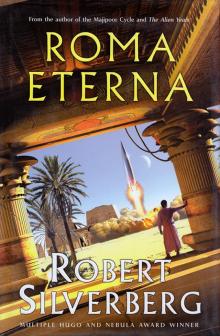 Roma Eterna
 To Live Again
 At Winter's End
 Needle in a Timestack
 To Live Again and the Second Trip: The Complete Novels
 Lord of Darkness
 The Mountains of Majipoor
 The World Outside
 The Alien Years
 The Book of Skulls
 The Face of the Waters
 Gilgamesh the King
 The Collected Stories of Robert Silverberg, Volume 6: Multiples: 1983-87
 The Happy Unfortunate
 Three Survived
 Cronos
 Tower of Glass
 Legends II
 The Planet Killers
 The Collected Stories of Robert Silverberg, Volume 2: To the Dark Star: 1962-69
 Downward to the Earth
 Lord Valentine's Castle: Book One of the Majipoor Cycle
 Hot Times in Magma City, 1990-95
 Hunt the Space-Witch! Seven Adventures in Time and Space
 Majipoor Chronicles
 The Robert Silverberg Science Fiction Megapack(r)
 Starman's Quest
 Car Sinister
 Worlds of Maybe
 Fantasy The Best of 2001
 Revolt on Alpha C
 Homefaring
 The Pardoner's Tale
 Sailing to Byzantium - Six Novellas
 The Chalice of Death
 Sundance
 A Tip on a Turtle
 Nebula Awards Showcase 2001: The Year's Best SF and Fantasy Chosen by the Science Fiction and Fantasy Writers of America
 The Fangs of the Trees
 The Palace at Midnight: The Collected Work of Robert Silverberg, Volume Five
 The Millennium Express - 1995-2009 - The Collected Stories of Robert Silverberg Volume Nine
 Book of Skulls
 Passengers
 Something Wild is Loose - 1969–72 - The Collected Stories of Robert Silverberg Volume Three
 Multiples
 Starborne
 The Masks of Time
 The Mountains of Majipoor m-8
 Multiples (1983-87)
 Those Who Watch
 In the Beginning
 Earth Is The Strangest Planet
 Collision Course
 Neutral Planet
 To the Dark Star - 1962–69 - The Collected Stories of Robert Silverberg Volume Two
 Mutants
 Sailing to Byzantium
 When We Went to See the End of the World
 Robert Silverberg The Science Fiction Hall Of Fame Volume One, 1929-1964
 To Be Continued - 1953–58 - The Collected Stories of Robert Silverberg Volume One
 Valentine Pontifex m-3
 Gianni
 Majipoor Chronicles m-2
 We Are for the Dark (1987-90)
 Waiting for the Earthquake
 Fantasy: The Best of 2001
 How It Was When the Past Went Away
 Beauty in the Night
 The Man Who Never Forgot
 The Book of Changes m-9
 Lord Valentine's Castle m-1
 This Way to the End Times
 Queen of Springtime
 Legends-Volume 3 Stories by the Masters of Modern Fantasy
 The Palace at Midnight - 1980–82 - The Collected Stories of Robert Silverberg Volume Five
 Something Wild is Loose: The Collected Stories of Robert Silverberg, Volume Three
 Multiples - 1983–87 - The Collected Stories of Robert Silverberg Volume Six
 Alaree
 Three Survived: A Science Fiction Novel
 Defenders of the Frontier
 The New Springtime
 We Are for the Dark - 1987–90 - The Collected Stories of Robert Silverberg Volume Seven
 The Science Fiction Hall of Fame, Volume One 1929-1964--The Greatest Science Fiction Stories of All Time Chosen by the Members of the Science Fiction Writers of America
 Master Of Life And Death
 Choke Chain
 Sorcerers of Majipoor m-4
 Absolutely Inflexible
 Trips - 1962–73 - The Collected Stories of Robert Silverberg Volume Four
 Hot Times in Magma City - 1990-95 - The Collected Stories of Robert Silverberg Volume Eight
 Far Horizons
 The Queen of Springtime ns-2
 The Seventh Science Fiction Megapack
 Invaders From Earth
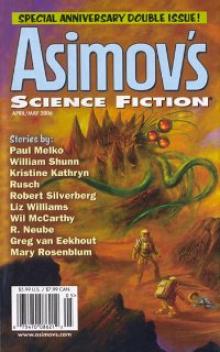 Hanosz Prime Goes To Old Earth
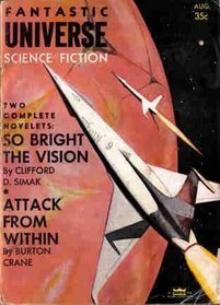 The Macauley Circuit
 Science Fiction: The Best of 2001
 To the Dark Star: The Collected Stories of Robert Silverberg, Volume Two
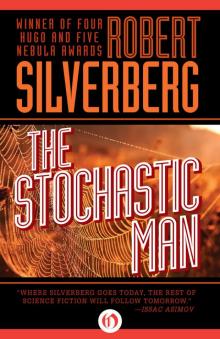 Stochastic Man
 Legends: Stories By The Masters of Modern Fantasy
 To Live Again And The Second Trip
 Flies
Flies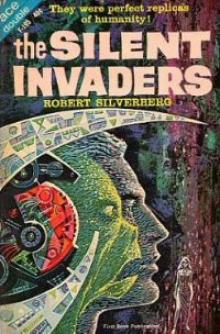 The Silent Invaders
 Ship-Sister, Star-Sister