
- Home
- Robert Silverberg
Nightwings Page 16
Nightwings Read online
Page 16
“Are we Surgeons?”
“We are Pilgrims,” I said quietly. “The benefits we gain from that carry certain obligations. If we are entitled to the hospitality of all we meet, we must also place our souls at the free disposal of the humble. Come.”
“I won’t go!”
“How will that sound in Jorslem, when you give an accounting of yourself, Olmayne?”
“It’s a hideous disease. What if we get it?”
“Is that what troubles you? Trust in the Will! How can you expect renewal if your soul is so deficient in grace?”
“May you rot, Tomis,” she said in a low voice. “When did you become so pious? You’re doing this deliberately, because of what I said to you by Land Bridge. In a stupid moment I taunted you, and now you’re willing to expose us both to a ghastly affliction for your revenge. Don’t do it, Tomis!”
I ignored her accusation. “The children are growing agitated, Olmayne. Will you wait here for me, or will you go on to the next village and wait in the hostelry there?”
“Don’t leave me alone in the middle of nowhere!”
“I have to go to the sick ones,” I said.
In the end she accompanied me—I think not out of any suddenly conceived desire to be of help, but rather out of fear that her selfish refusal might somehow be held against her in Jorslem. We came shortly to the village, which was small and decayed, for Agupt lies in a terrible hot sleep and changes little with the millennia. The contrast with the busy cities farther to the south in Afreek—cities that prosper on the output of luxuries from their great Manufactories—is vast.
Shivering with heat, we followed the children to the houses of sickness.
The crystallization disease is an unlovely gift from the stars. Not many afflictions of outworlders affect the Earthborn; but from the worlds of the Spear came this ailment, carried by alien tourists, and the disease has settled among us. If it had come during the glorious days of the Second Cycle we might have eradicated it in a day; but our skills are dulled now, and no year has been without its outbreak. Olmayne was plainly terrified as we entered the first of the clay huts where the victims were kept.
There is no hope for one who has contracted this disease. One merely hopes that the healthy will be spared; and fortunately it is not a highly contagious disease. It works insidiously, transmitted in an unknown way, often failing to pass from husband to wife and leaping instead to the far side of a city, to another land entirely, perhaps. The first symptom is a scaliness of the skin; itch, flakes upon the clothing, inflammation. There follows a weakness in the bones as the calcium is dissolved. One grows limp and rubbery, but this is still an early phase. Soon the outer tissues harden. Thick, opaque membranes form on the surface of the eyes; the nostrils may close and seal; the skin grows coarse and pebbled. In this phase prophecy is common. The sufferer partakes of the skills of a Somnambulist, and utters oracles. The soul may wander, separating from the body for hours at a time, although the life-processes continue. Next, within twenty days after the onset of the disease, the crystallization occurs. While the skeletal structure dissolves, the skin splits and cracks, forming shining crystals in rigid geometrical patterns. The victim is quite beautiful at this time and takes on the appearance of a replica of himself in precious gems. The crystals glow with rich inner lights, violet and green and red; their sharp facets adopt new alignments from hour to hour; the slightest illumination in the room causes the sufferer to give off brilliant glittering reflections that dazzle and delight the eye. All this time the internal body is changing, as if some strange chrysalis is forming. Miraculously the organs sustain life throughout every transformation, although in the crystalline phase the victim is no longer able to communicate with others and possibly is unaware of the changes in himself. Ultimately the metamorphosis reaches the vital organs, and the process fails. The alien infestation is unable to reshape those organs without killing its host. The crisis is swift: a brief convulsion, a final discharge of energy along the nervous system of the crystallized one, and there is a quick arching of the body, accompanied by the delicate tinkling sounds of shivering glass, and then all is over. On the planet to which this is native, crystallization is not a disease but an actual metamorphosis, the result of thousands of years of evolution toward a symbiotic relationship. Unfortunately, among the Earthborn, the evolutionary preparation did not take place, and the agent of change invariably brings its subject to a fatal outcome.
Since the process is irreversible, Olmayne and I could do nothing of real value here except offer consolation to these ignorant and frightened people. I saw at once that the disease had seized this village some time ago. There were people in all stages, from the first rash to the ultimate crystallization. They were arranged in the hut according to the intensity of their infestation. To my left was a somber row of new victims, fully conscious and morbidly scratching their arms as they contemplated the horrors that awaited them. Along the rear wall were five pallets on which lay villagers in the coarse-skinned and prophetic phase. To my right were those in varying degrees of crystallization, and up front, the diadem of the lot, was one who clearly was in his last hours of life. His body, encrusted with false emeralds and rubies and opals, shimmered in almost painful beauty; he scarcely moved; within that shell of wondrous color he was lost in some dream of ecstasy, finding at the end of his days more passion, more delight, than he could ever have known in all his harsh peasant years.
Olmayne shied back from the door.
“It’s horrible,” she whispered. “I won’t go in!”
“We must. We are under an obligation.”
“I never wanted to be a Pilgrim!”
“You wanted atonement,” I reminded her. “It must be earned.”
“We’ll catch the disease!”
“The Will can reach us anywhere to infect us with this, Olmayne. It strikes at random. The danger is no greater for us inside this building than it is in Perris.”
“Why, then, are so many in this one village smitten?”
“This village has earned the displeasure of the Will.”
“How neatly you serve up the mysticism, Tomis,” she said bitterly. “I misjudged you. I thought you were a sensible man. This fatalism of yours is ugly.”
“I watched my world conquered,” I said. “I beheld the Prince of Roum destroyed. Calamities breed such attitudes as I now have. Let us go in, Olmayne.”
We entered, Olmayne still reluctant. Now fear assailed me, but I concealed it. I had been almost smug in my piety while arguing with the lovely Rememberer woman who was my companion, but I could not deny the sudden seething of fright.
I forced myself to be tranquil.
There are redemptions and redemptions, I told myself. If this disease is to be the source of mine, I will abide by the Will.
Perhaps Olmayne came to some such decision too, as we went in, or maybe her own sense of the dramatic forced her into the unwanted role of the lady of mercy. She made the rounds with me. We passed from pallet to pallet, heads bowed, starstones in our hands. We said words. We smiled when the newly sick begged for reassurance. We offered prayers. Olmayne paused before one girl in the secondary phase, whose eyes already were filming over with horny tissue, and knelt and touched her starstone to the girl’s scaly cheek. The girl spoke in oracles, but unhappily not in any language we understood.
At last we came to the terminal case, he who had grown his own superb sarcophagus. Somehow I felt purged of fear, and so too was Olmayne, for we stood a long while before this grotesque sight, silent, and then she whispered, “How terrible! How wonderful! How beautiful!”
Three more huts similar to this one awaited us.
The villagers clustered at the doorways. As we emerged from each building in turn, the healthy ones fell down about us, clutching at the hems of our robes, stridently demanding that we intercede for them with the Will. We spoke such words as seemed appropriate and not too insincere. Those within the huts received our words blankly, as if they already realiz
ed there was no chance for them; those outside, still untouched by the disease, clung to every syllable. The headman of the village—only an acting headman; the true chief lay crystallized—thanked us again and again, as though we had done something real. At least we had given comfort, which is not to be despised.
When we came forth from the last of the sickhouses, we saw a slight figure watching us from a distance: the Changeling Bernalt. Olmayne nudged me.
“That creature has been following us, Tomis. All the way from Land Bridge!”
“He travels to Jorslem also.”
“Yes, but why should he stop here? Why in this awful place?”
“Hush, Olmayne. Be civil to him now.”
“To a Changeling?”
Bernalt approached. The mutated one was clad in a soft white robe that blunted the strangeness of his appearance. He nodded sadly toward the village and said, “A great tragedy. The Will lies heavy on this place.”
He explained that he had arrived here several days ago and had met a friend from his native city of Nayrub. I assumed he meant a Changeling, but no, Bernalt’s friend was a Surgeon, he said, who had halted here to do what he could for the afflicted villagers. The idea of a friendship between a Changeling and a Surgeon seemed a bit odd to me, and positively contemptible to Olmayne, who did not trouble to hide her loathing of Bernalt.
A partly crystallized figure staggered from one of the huts, gnarled hands clutching. Bernalt went forward and gently guided it back within. Returning to us, he said, “There are times one is actually glad one is a Changeling. That disease does not affect us, you know.” His eyes acquired a sudden glitter. “Am I forcing myself on you, Pilgrims? You seem like stone behind your masks. I mean no harm; shall I withdraw?”
“Of course not,” I said, meaning the opposite. His company disturbed me; perhaps the ordinary disdain for Changelings was a contagion that had at last reached me. “Stay awhile. I would ask you to travel with us to Jorslem, but you know it is forbidden for us.”
“Certainly. I quite understand.” He was coolly polite, but the seething bitterness in him was close to the surface. Most Changelings are such degraded bestial things that they are incapable of knowing how detested they are by normal guilded men and women; but Bernalt clearly was gifted with the torment of comprehension. He smiled, and then he pointed. “My friend is here.”
Three figures approached. One was Bernalt’s Surgeon, a slender man, dark-skinned, soft-voiced, with weary eyes and sparse yellow hair. With him were an official of the invaders and another outworlder from a different planet. “I had heard that two Pilgrims were summoned to this place,” said the invader. “I am grateful for the comfort you may have brought these sufferers. I am Earthclaim Nineteen; this district is under my administration. Will you be my guests at dinner this night?”
I was doubtful of taking an invader’s hospitality, and Olmayne’s sudden clenching of her fist over her starstone told me that she also hesitated. Earthclaim Nineteen seemed eager for our acceptance. He was not as tall as most of his kind, and his malproportioned arms reached below his knees. Under the blazing Aguptan sun his thick waxy skin acquired a high gloss, although he did not perspire.
Into a long, tense, and awkward silence the Surgeon inserted: “No need to hold back. In this village we all are brothers. Join us tonight, will you?”
We did. Earthclaim Nineteen occupied a villa by the shore of Lake Medit; in the clear light of late afternoon I thought I could detect Land Bridge jutting forward to my left, and even Eyrop at the far side of the lake. We were waited upon by members of the guild of Servitors who brought us cool drinks on the patio. The invader had a large staff, all Earthborn; to me it was another sign that our conquest had become institutionalized and was wholly accepted by the bulk of the populace. Until long after dusk we talked, lingering over drinks even as the writhing auroras danced into view to herald the night. Bernalt the Changeling remained apart, though, perhaps ill at ease in our presence. Olmayne too was moody and withdrawn; a mingled depression and exaltation had settled over her in the stricken village, and the presence of Bernalt at the dinner party had reinforced her silence, for she had no idea how to be polite in the presence of a Changeling. The invader, our host, was charming and attentive, and tried to bring her forth from her bleakness. I had seen charming conquerors before. I had traveled with one who had posed as the Earthborn Changeling Gormon in the days just before the conquest. This one, Earthclaim Nineteen, had been a poet on his native world in those days. I said, “It seems unlikely that one of your inclinations would care to be part of a military occupation.”
“All experiences strengthen the art,” said Earthclaim Nineteen. “I seek to expand myself. In any case I am not a warrior but an administrator. Is it so strange that a poet can be an administrator, or an administrator a poet?” He laughed. “Among your many guilds, there is no guild of Poets. Why?”
“There are Communicants,” I said. “They serve your muse.”
“But in a religious way. They are interpreters of the Will, not of their own souls.”
“The two are indistinguishable. The verses they make are divinely inspired, but rise from the hearts of their makers,” I said.
Earthclaim Nineteen looked unconvinced. “You may argue that all poetry is at bottom religious, I suppose. But this stuff of your Communicants is too limited in scope. It deals only with acquiescence to the Will.”
“A paradox,” said Olmayne. “The Will encompasses everything, and yet you say that our Communicants’ scope is limited.”
“There are other themes for poetry besides immersion in the Will, my friends. The love of person for person, the joy of defending one’s home, the wonder of standing naked beneath the fiery stars—” The invader laughed. “Can it be that Earth fell so swiftly because its only poets were poets of acquiescence to destiny?”
“Earth fell,” said the Surgeon, “because the Will required us to atone for the sin our ancestors committed when they treated your ancestors like beasts. The quality of our poetry had nothing to do with it.”
“The Will decreed that you would lose to us by way of punishment, eh? But if the Will is omnipotent, it must have decreed the sin of your ancestors that made the punishment necessary. Eh? Eh? The Will playing games with itself? You see the difficulty of believing in a divine force that determines all events? Where is the element of choice that makes suffering meaningful? To force you into a sin, and then to require you to endure defeat as atonement, seems to me an empty exercise. Forgive my blasphemy.”
The Surgeon said, “You misunderstand. All that has happened on this planet is part of a process of moral instruction. The Will does not shape every event great or small; it provides the raw material of events, and allows us to follow such patterns as we desire.”
“Example?”
“The Will imbued the Earthborn with skills and knowledge. During the First Cycle we rose from savagery in little time; in the Second Cycle we attained greatness. In our moment of greatness we grew swollen with pride, choosing to exceed our limitations. We imprisoned intelligent creatures of other worlds under the pretense of ‘study,’ when we were acting really out of an arrogant desire for amusement; and we toyed with our world’s climate until oceans joined and continents sank and our old civilization was destroyed. Thus the Will instructed us in the boundaries of human ambition.”
“I dislike that dark philosophy even more,” said Earthclaim Nineteen. “I—”
“Let me finish,” said the Surgeon. “The collapse of Second Cycle Earth was our punishment. The defeat of Third Cycle Earth by you folk from the stars is a completion of that earlier punishment, but also the beginning of a new phase. You are the instruments of our redemption. By inflicting on us the final humiliation of conquest, you bring us to the bottom of our trough; now we renew our souls, now we begin to rise, tested by adversities.”
I stared in sudden amazement at this Surgeon, who was uttering ideas that had been stirring in me all along the road to
Jorslem, ideas of redemption both personal and planetary. I had paid little attention to the Surgeon before.
“Permit me a statement,” Bernalt said suddenly, his first words in hours.
We looked at him. The pigmented bands in his face were ablaze, marking his emotion.
He said, nodding to the Surgeon, “My friend, you speak of redemption for the Earthborn. Do you mean all Earthborn, or only the guilded ones?”
“All Earthborn, of course,” said the Surgeon mildly. “Are we not all equally conquered?”
“We are not equal in other things, though. Can there be redemption for a planet that keeps millions of its people thrust into guildlessness? I speak of my own folk, of course. We sinned long ago when we thought we were striking out against those who had created us as monsters. We strove to take Jorslem from you; and for this we were punished, and our punishment has lasted for a thousand years. We are still outcasts, are we not? Where has our hope of redemption been? Can you guilded ones consider yourself purified and made virtuous by your recent suffering, when you still step on us?”
The Surgeon looked dismayed. “You speak rashly, Bernalt. I know the Changelings have a grievance. But you know as well as I that your time of deliverance is at hand. In the days to come no Earthborn one will scorn you, and you will stand beside us when we regain our freedom.”
Bernalt peered at the floor. “Forgive me, my friend. Of course, of course, you speak the truth. I was carried away. The heat—this splendid wine—how foolishly I spoke!”
Earthclaim Nineteen said, “Are you telling me that a resistance movement is forming that will shortly drive us from your planet?”
“I speak only in abstract terms,” said the Surgeon.
“I think your resistance movement will be purely abstract, too,” the invader replied easily. “Forgive me, but I see little strength in a planet that could be conquered in a single night. We expect our occupation of Earth to be a long one and to meet little opposition. In the months that we have been here there has been no sign of increasing hostility to us. Quite the contrary: we are increasingly accepted among you.”
 The Longest Way Home
 Hawksbill Station
 A Time of Changes
 This Way to the End Times: Classic Tales of the Apocalypse
 Beyond the Gate of Worlds
 Lord Valentine's Castle
 The Man in the Maze
 Tales of Majipoor
 Time of the Great Freeze
 The Collected Stories of Robert Silverberg, Volume 3: Something Wild Is Loose: 1969-72
 Planet of Death
 Trips: The Collected Stories of Robert Silverberg, Volume Four
 In the Beginning: Tales From the Pulp Era
 Hot Sky at Midnight
 Valentine Pontifex
 Up the Line
 Thorns
 Amanda and the Alien
 Star of Gypsies
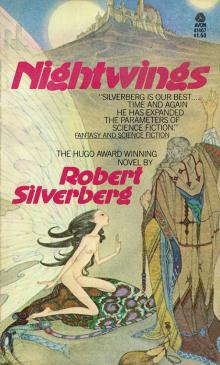 Nightwings
 The Time Hoppers
 Blood on the Mink
 Dying Inside
 The Last Song of Orpheus
 The King of Dreams
 The Stochastic Man
 The Collected Stories of Robert Silverberg, Volume Seven: We Are for the Dark
 The Millennium Express: The Collected Stories of Robert Silverberg, Volume Nine
 The Iron Chancellor
 Lord Prestimion
 To Open the Sky
 The World Inside
 Chains of the Sea
 The Collected Stories of Robert Silverberg, Volume Five: The Palace at Midnight
 Postmark Ganymede
 The Second Trip
 The Collected Stories of Robert Silverberg, Volume 4: Trips: 1972-73
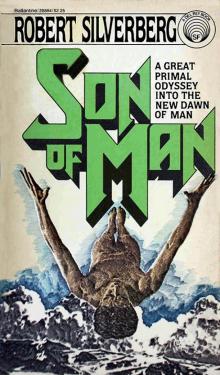 Son of Man
 Tom O'Bedlam
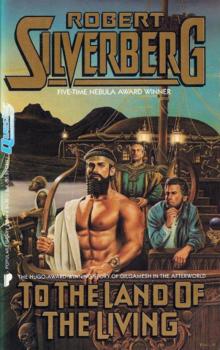 To the Land of the Living
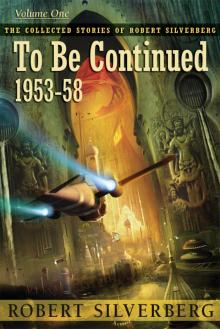 To Be Continued: The Collected Stories of Robert Silverberg, Volume One
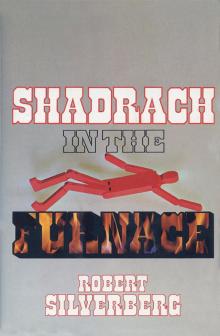 Shadrach in the Furnace
 The Chalice of Death: Three Novels of Mystery in Space
 The Queen of Springtime
 To Be Continued 1953-1958
 Legends
 Roma Eterna
 To Live Again
 At Winter's End
 Needle in a Timestack
 To Live Again and the Second Trip: The Complete Novels
 Lord of Darkness
 The Mountains of Majipoor
 The World Outside
 The Alien Years
 The Book of Skulls
 The Face of the Waters
 Gilgamesh the King
 The Collected Stories of Robert Silverberg, Volume 6: Multiples: 1983-87
 The Happy Unfortunate
 Three Survived
 Cronos
 Tower of Glass
 Legends II
 The Planet Killers
 The Collected Stories of Robert Silverberg, Volume 2: To the Dark Star: 1962-69
 Downward to the Earth
 Lord Valentine's Castle: Book One of the Majipoor Cycle
 Hot Times in Magma City, 1990-95
 Hunt the Space-Witch! Seven Adventures in Time and Space
 Majipoor Chronicles
 The Robert Silverberg Science Fiction Megapack(r)
 Starman's Quest
 Car Sinister
 Worlds of Maybe
 Fantasy The Best of 2001
 Revolt on Alpha C
 Homefaring
 The Pardoner's Tale
 Sailing to Byzantium - Six Novellas
 The Chalice of Death
 Sundance
 A Tip on a Turtle
 Nebula Awards Showcase 2001: The Year's Best SF and Fantasy Chosen by the Science Fiction and Fantasy Writers of America
 The Fangs of the Trees
 The Palace at Midnight: The Collected Work of Robert Silverberg, Volume Five
 The Millennium Express - 1995-2009 - The Collected Stories of Robert Silverberg Volume Nine
 Book of Skulls
 Passengers
 Something Wild is Loose - 1969–72 - The Collected Stories of Robert Silverberg Volume Three
 Multiples
 Starborne
 The Masks of Time
 The Mountains of Majipoor m-8
 Multiples (1983-87)
 Those Who Watch
 In the Beginning
 Earth Is The Strangest Planet
 Collision Course
 Neutral Planet
 To the Dark Star - 1962–69 - The Collected Stories of Robert Silverberg Volume Two
 Mutants
 Sailing to Byzantium
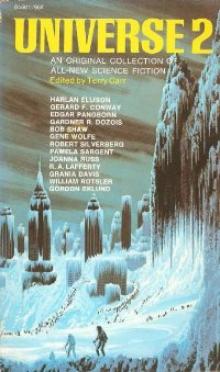 When We Went to See the End of the World
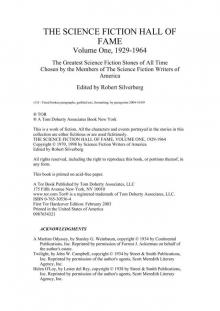 Robert Silverberg The Science Fiction Hall Of Fame Volume One, 1929-1964
 To Be Continued - 1953–58 - The Collected Stories of Robert Silverberg Volume One
 Valentine Pontifex m-3
 Gianni
 Majipoor Chronicles m-2
 We Are for the Dark (1987-90)
 Waiting for the Earthquake
 Fantasy: The Best of 2001
 How It Was When the Past Went Away
 Beauty in the Night
 The Man Who Never Forgot
 The Book of Changes m-9
 Lord Valentine's Castle m-1
 This Way to the End Times
 Queen of Springtime
 Legends-Volume 3 Stories by the Masters of Modern Fantasy
 The Palace at Midnight - 1980–82 - The Collected Stories of Robert Silverberg Volume Five
 Something Wild is Loose: The Collected Stories of Robert Silverberg, Volume Three
 Multiples - 1983–87 - The Collected Stories of Robert Silverberg Volume Six
 Alaree
 Three Survived: A Science Fiction Novel
 Defenders of the Frontier
 The New Springtime
 We Are for the Dark - 1987–90 - The Collected Stories of Robert Silverberg Volume Seven
 The Science Fiction Hall of Fame, Volume One 1929-1964--The Greatest Science Fiction Stories of All Time Chosen by the Members of the Science Fiction Writers of America
 Master Of Life And Death
 Choke Chain
 Sorcerers of Majipoor m-4
 Absolutely Inflexible
 Trips - 1962–73 - The Collected Stories of Robert Silverberg Volume Four
 Hot Times in Magma City - 1990-95 - The Collected Stories of Robert Silverberg Volume Eight
 Far Horizons
 The Queen of Springtime ns-2
 The Seventh Science Fiction Megapack
 Invaders From Earth
 Hanosz Prime Goes To Old Earth
 The Macauley Circuit
 Science Fiction: The Best of 2001
 To the Dark Star: The Collected Stories of Robert Silverberg, Volume Two
 Stochastic Man
 Legends: Stories By The Masters of Modern Fantasy
 To Live Again And The Second Trip
 Flies
Flies The Silent Invaders
 Ship-Sister, Star-Sister