
- Home
- Robert Silverberg
The Stochastic Man Page 16
The Stochastic Man Read online
Page 16
31
In waking dreams I imagine a time when I am truly able to see. My vision pierces the murky invisible sphere that surrounds us all, and I penetrate into the realm of light. I have been asleep, I have been imprisoned, I have been blind, and now, now that the transformation has come upon me, it is like an awakening. My chains are gone; my eyes are open. About me move slow uncertain shadow-shrouded figures, blind and stumbling, their faces gray with bewilderment and uncertainty. These figures are you. And among you and about you I dance, my eyes luminous, my body ablaze with the joy of new perception. It has been like living beneath the sea, bent under a terrible pressure and held away from the tantalizing brightness by that membrane, flexible yet impenetrable, that is the interface between sea and sky; and now I have broken through it, into a place where everything glows and gleams, everything is haloed with radiance, shimmering in gold and violet and scarlet. Yes. Yes. At last I see.
What do I see?
I see the sweet and tranquil earth upon which our dramas are played. I see the sweaty struggles of the blind and deaf, buffeted as they strive by an incomprehensible fate. I see the years unrolling like the long uncoiling fronds of spring ferns, bright green at the tips, stretching away from me into infinity. In brilliant flashes of intermittent illumination I see decades sprouting into centuries and centuries becoming eons and epochs. I see the slow processions of the seasons, the systole and diastole of winter and summer, autumn and spring, the whole delicately interlocked rhythm of warmth and cold, of drought and rain, of sunlight and mist and darkness.
There are no limits to my vision. Here are the labyrinths of tomorrow’s cities, rising and falling and rising again, New York in lunatic growth, tower piled on tower, the old foundations becoming the rubble on which the new foundations rest, layer upon layer down below like the jumbled strata of Schliemann’s Troy. Through twisted streets scuttle strangers in unfamiliar clothing, speaking a jargon beyond my understanding. Machines walk about on jointed legs. Mechanical birds, twittering like creaky gates, flutter overhead. All is in flux. Look, the ocean recedes, and slippery brown beasts lie stranded and gasping on the naked sea floor! Look, the sea returns, lapping at the ancient highways that span the city’s margin! Look, the sky is green! Look, the rain is black! Look, here is change, here is transformation, here are the whims of time! I see it all!
These are the eternal motions of the galaxies, dim and fathomless. These are the processing equinoxes, these are the shifting sands. The sun is very warm. Words have become needle sharp. I catch quick glimpses of great entities sprouting and rising and decaying and dying. These are the boundaries of the empire of the toads. This wall marks the place where the republic of the long-legged insects begins. Man himself changes. His body is transformed many times, he becomes gross and then pure and then more gross than ever, he evolves strange organs that tremble like tuning forks from the nodes of his leathery skin, he has no eyes and is seamless from lips to scalp, he has many eyes, he is covered with eyes, he is no longer male and female but functions in the form of some intermediate sex, he is tiny, he is vast, he is liquid, he is metallic, he leaps across the starry spaces, he huddles in moist caverns, he floods the planet with legions of his own kind, he diminishes by choice to a few dozen, he shakes his fist at a red swollen sky, he sings frightening songs in a nasal drone, he gives love ‘to monsters, he abolishes death, he basks like a mighty whale in the sea, he becomes a horde of buzzing insectlike toilers, he pitches his tent in blazing diamond-bright desert sands, he laughs with the sound of drums, he lies down with dragons, he writes poems of grass, he builds vessels of air, he becomes a god, he becomes a demon, he is everything, he is nothing.
The continents move ponderously about, like hippopotamuses doing a stately polka. The moon dips low in the sky, peering out of its own forehead like an aching white blister, and shatters with a wonderful glassy ping! that reverberates for years. The sun itself drifts from its moorings, for everything in the universe is in constant motion and the journeys are infinitely various. I see it slide into the gulf of night, and I wait for it to return, but it does not return, and a sleeve of ice glides over the black skin of the planet, and those who live at that time become things of the night, cold-loving, self-sustaining. And across the ice come hard-breathing beasts from whose nostrils fog issues; and from the ice come flowers of blue and yellow crystal; and in the sky shines a new light, I know not from where.
What do I see, what do I see?
These are the leaders of mankind, the new kings and emperors, holding their batons of office aloft and summoning fire from the mountaintops. These are the gods yet unimagined. These are the shamans and warlocks. These are the singers, these the poets, these the makers of images. These are the new rites. These are the fruits of war. Look: lovers, killers, dreamers, seers! Look: generals, priests, explorers, lawgivers! There are unknown continents to find. There are untasted apples to eat. Look! Madmen! Courtesans! Heroes! Victims! I see the schemes. I see the mistakes. I see the miraculous achievements, and they bring tears of pride to my eyes. Here is the daughter of your daughter’s daughter. Here is the son of your sons beyond reckoning. These are nations still unknown; these are nations newly reborn. What is this language, all clicks and hisses? What is this music, all stabs and snarls? Rome will fall again. Babylon will come a second time, and lie astride the world like a great gray octopus. How wondrous are the times to come! All that you can ever imagine will befall, and more, much more, and I see it all.
Are these the things I see?
Are all doors open to me? Are all walls made into windows?
Do I look upon the murdered prince and the newborn savior, on the fires of the destroyed empire burning on the horizon, on the tomb of the lord of lords, on the hard-eyed voyagers setting forth across the golden sea that spans the belly of the transformed world? Do I survey the million million tomorrows of the race, and drink it all down, and make the future’s flesh my own? The heavens falling? The stars colliding? What are these unfamiliar constellations that shape and reshape themselves as I watch? Who are these masked faces? What does this stone idol, tall as three mountains, represent? When will the cliffs that wall the sea be ground to red powder? When will the polar ice descend like inexorable night upon the fields of red flowers? Who owns these fragments? Oh, what do I see, what do I see?
All of time, all of space.
No. Of course it won’t be like that. All I’ll see is what I can send myself out of my own few scruffy tomorrows. Brief dull messages, like the vague transmissions of the tin-can telephones we built as boys: no epic splendors, no baroque apocalypses. Yet even those blurred and muffled sounds are more than I could have hoped to have when I was asleep like you, when I was one of those blind and stumbling figures moving in clumsy sluggish lurches through the kingdom of shadows that is this world.
32
Mardikian found me a lawyer. He was Jason Komurjian—another Armenian, of course, one of the partners in Mardikian’s own firm, the divorce specialist, a great fullback of a man with oddly sad little eyes set close together within a massive swarthy slab of a face. He was a college classmate of Haig’s, and therefore must have been about my own age, but he seemed older, much older, ageless, a patriarch who had taken upon himself the traumas of thousands of contumacious spouses. His features were youthful, his aura was ancient.
We conferred in his office on the ninety-fifth floor of the Martin Luther King Building, a dark incense-ridden office almost rivaling Bob Lombroso’s for pomp and circumstance, a place as rich and heavy in ornamentation as the imperial chapel of a Byzantine cathedral. “Divorce,” Komurjian said dreamily, “you wish to obtain a divorce, yes, to terminate, yes, a final parting,” rotating the concept in the vast vaulted arenas of his consciousness as though it were some fine point of theology, as though we were talking about the consubstantiality of the Father and Son or the doctrine of the apostolic succession. “Yes, it should be possible to obtain that for you. You live separately now?”
“Not yet.”
He looked displeased. His heavy lips sagged, his beefy face took on a deeper hue. “This must be done,” he said. “Continued cohabitation endangjers the plausibility of any suit for termination of matrimony. Even today, even today. Establish separate lodgings. Establish separate financial conduits. Demonstrate your purposes, my friend. Eh?” He reached for an ornate jeweled crucifix on his desk, a thing of rubies and emeralds, and played with it, running thick fingers over its sleek well-worn surface, and for a time he was lost in his own ruminations. I imagined the tones of an unseen organ, I saw a procession of bedecked and bearded priests strolling through the choirs of his mind. I could almost hear him muttering to himself in Latin, not church Latin but a lawyer Latin, a litany of platitudes. Magna est vis consuetudinis, falsus in uno, falsus in omnibus, eadem sed aliter, res ipsa loquiter. Huius huius huius, hunc haec hoc. He looked up, spearing me with an unexpectedly intent stare. “Grounds?”
“No, not that kind of divorce. We just want to break it up, to go our individual ways, a simple termination.”
“Of course you’ve discussed this with Mrs. Nichols and come to a preliminary understanding.”
I reddened. “Ah—not yet,” I said, uneasy.
Komurjian plainly disapproved. “You must introduce the subject at some point, you realize. Presumably her reaction will be tranquil. Then her lawyer and I will meet and the thing will be done.” He reached for a memo belt. “As for division of property—”
“She can have whatever she wants.”
“Whatever?” He sounded amazed.
“I don’t want a hassle with her over anything.”
Komurjian spread his hands before me on the desk. He wore more rings even than Lombroso. These Levantines, these luxurious Levantines! “What if she demands everything?” he asked. “All the assets in common? You yield without contest?”
“She won’t do that.”
“Is she not of allegiance to the Transit Creed?”
Startled, I said, “How do you know that?”
“Haig and I have discussed the case, you must realize.”
“I see.”
“And Transit people are unpredictable.”
I managed a choked laugh. “Yes. Very.”
“She might whimsically ask for all the assets,” Komurjian said.
“Or whimsically ask for none.”
“Or none, true. One never knows. Are you instructing me to accept whatever position she takes?”
“Let’s wait and see,” I said. “She’s basically a reasonable person, I think. It’s my feeling that she won’t make any unusual demand about division of property.”
“And settlement of income?” the lawyer asked. “She will want no continuing payments from you?” You have a standard two-group contract, yes?”
“Yes. Termination ends all financial responsibility.”
Komurjian began to hum, very quietly, almost beneath my threshold of hearing. Almost. How routine all this must seem to him, this severing of sacramental unions! “Then there should be no problems, yes? But you must announce your intentions to your wife, Mr. Nichols, before we go further.”
Which I did. Sundara was now so busy with her manifold Transit activities—her process sessions, her volatility circles, her ego-decay exercises, her missionary duties, and all the rest—that close to a week passed before I was able to have a quiet word with her at home. By then I had rehearsed the whole thing in my head a thousand times, so that the lines were worn like tracks; if ever there was an instance of following the script, this would be it. But would she give me the right cues?
Almost apologetically, as though it were an intrusion on her privacy for me to request the privilege of a conversation with her, I said early one evening that I wanted to talk to her about something important, and then I told her, as I had so often heard myself telling her, that I was going to get a divorce. Saying it, I understood something of what it must be like, for Carvajal to see, because I bad lived this scene so often in imagination that it already felt like an event of the past to me.
Sundara regarded me thoughtfully, saying nothing, displaying neither surprise nor annoyance nor hostility nor enthusiasm nor dismay nor despair.
Her silence baffled me.
I said, eventually, “I’ve hired Jason Komurjian as my lawyer. One of Mardikian’s partners. He’ll sit down with your lawyer, when you’ve got one, and they’ll work everything out. I want this to be a civilized parting of the ways, Sundara.”
She smiled. Mona Lisa of Bombay.
“You don’t have anything to say?” I asked.
“Not really.”
“Is divorce such a trifle to you?”
“Divorce and marriage are aspects of the same illusion, my love.”
“This world seems more real to me than it does to you, I think. That’s one reason why it doesn’t appear to be a good idea for us to go on living together.”
She said, “Will there be a messy fight about dividing the things we own?”
“I told you I want this to be a civilized parting of the ways.”
“Good. So do I.”
The ease with which she was accepting all this dumbfounded me. We had been so badly out of touch with each other recently that we had never even discussed the growing failures of communication between us; but there are many marriages that go on like that for centuries, placidly drifting, no one caring to rock the boat. Now I was preparing to sink the boat, and she had no comment. Eight years of living together; suddenly I call in the lawyers; Sundara has no comment. Her imperturbability was a measure of the change Transit had worked in her, I decided.
“Do all Transit people accept great upheavals in their lives so casually?” I asked.
“Is this a great upheaval?”
“It seems like one to me.”
“To me it seems only the ratifying of a decision made a long time ago.”
“It’s been a bad time,” I admitted. “But even at the worst of it I always kept telling myself it’s just a phase, it’s a passing thing, every marriage goes through it, we’ll get back together eventually.”
As I spoke, I found myself convincing myself that all that was still true, that Sundara and I could still work out a continuing relationship like the basically reasonable human beings we were. And yet here I was asking her to hire a lawyer. I remembered Carvajal telling me, You’ve lost her, with inexorable finality in his voice. But he had been speaking of the future, not the past.
She said, “Now you think it’s hopeless, is that it? What made you change your mind?”
“Well?”
“Did you change your mind?”
I said nothing.
“I don’t think you really want a divorce, Lew.”
“I do,” I said hoarsely.
“So you say.”
“I’m not asking you to read my mind, Sundara. Just to go along with the legal rigmarole we have to follow in order to be free to live our separate lives.”
“You don’t want a divorce, but yet you do. How strange, Lew. An attitude like that is a perfect Transit situation, you know, what we call a keying point, a situation where you hold opposing positions simultaneously and try to reconcile them. There are three possible outcomes of that. Are you interested in hearing this? One possibility is schizophrenia. One is self-deception, as when you pretend to embrace both alternatives but really don’t. And the third is the condition of illumination known in Transit as—”
“Please, Sundara.”
“I thought you were interested.”
“I guess I’m not.”
She studied me for a long moment. Then she smiled. “This divorce business is connected somehow with your gift of precognition, isn’t it? You don’t really want a divorce now, even though we aren’t getting along very well, but you nevertheless think you ought to start arranging a divorce, because you’ve had a hunch that sometime in the near future you’re going to have one, and— Isn’t that right, Lew? Come on:
tell me the truth. I won’t be angry.”
“You aren’t far off the mark,” I said.
“I thought not. Well, what shall we do?”
“Work out terms of a separation,” I replied grimly. “Hire a lawyer, Sundara.”
“And if I don’t?”
“You mean you’ll contest it?”
“I never said that. I simply don’t want to deal through a lawyer. Let’s handle it ourselves, Lew. Like civilized human beings.”
“I’ll have to check with Komurjian about that. That way may be civilized, but it may not be smart”
“Do you think I’ll cheat you?”
“I don’t think anything any more.”
She walked up to me. Her eyes glowed; her body radiated a throbbing sensuality. I was helpless before her. She could have had anything from me. Leaning forward, Sundara kissed the tip of my nose and said huskily, stagily, “If you want a divorce, darling, you can have your divorce. Whatever you want. I won’t stand in the way. I want you to be happy. I love you, you know.” She smiled wickedly. Oh, that Transit mischief! “Whatever you want,” she said.
33
I rented an apartment for myself in Manhattan, a three-room furnished job in an old, once-luxurious high rise on East Sixty-third near Second Avenue, which is an old, once-luxurious neighborhood not yet seriously into disrepair. The building’s pedigree was evidenced by an assortment of security devices dating from the 1960s or thereabouts through the early 1990s, everything from police locks and hidden peepholes up to early-model filter mazes and velocity screens. The furniture was simple and timeless in style, venerable and utilitarian, couches and chairs and bed and tables and bookcases and stuff of that sort, so anonymous as to be invisible. I felt invisible, too, after I was completely moved in and the movers and the building superintendent had gone away, leaving me standing alone in my new living room like an ambassador newly arrived from nowhere to take up residence in limbo. What was this place, and how had it happened that I was living here? Whose chairs are these? Whose fingerprints on the bare blue walls?
 The Longest Way Home
 Hawksbill Station
 A Time of Changes
 This Way to the End Times: Classic Tales of the Apocalypse
 Beyond the Gate of Worlds
 Lord Valentine's Castle
 The Man in the Maze
 Tales of Majipoor
 Time of the Great Freeze
 The Collected Stories of Robert Silverberg, Volume 3: Something Wild Is Loose: 1969-72
 Planet of Death
 Trips: The Collected Stories of Robert Silverberg, Volume Four
 In the Beginning: Tales From the Pulp Era
 Hot Sky at Midnight
 Valentine Pontifex
 Up the Line
 Thorns
 Amanda and the Alien
 Star of Gypsies
 Nightwings
 The Time Hoppers
 Blood on the Mink
 Dying Inside
 The Last Song of Orpheus
 The King of Dreams
 The Stochastic Man
 The Collected Stories of Robert Silverberg, Volume Seven: We Are for the Dark
 The Millennium Express: The Collected Stories of Robert Silverberg, Volume Nine
 The Iron Chancellor
 Lord Prestimion
 To Open the Sky
 The World Inside
 Chains of the Sea
 The Collected Stories of Robert Silverberg, Volume Five: The Palace at Midnight
 Postmark Ganymede
 The Second Trip
 The Collected Stories of Robert Silverberg, Volume 4: Trips: 1972-73
 Son of Man
 Tom O'Bedlam
 To the Land of the Living
 To Be Continued: The Collected Stories of Robert Silverberg, Volume One
 Shadrach in the Furnace
 The Chalice of Death: Three Novels of Mystery in Space
 The Queen of Springtime
 To Be Continued 1953-1958
 Legends
 Roma Eterna
 To Live Again
 At Winter's End
 Needle in a Timestack
 To Live Again and the Second Trip: The Complete Novels
 Lord of Darkness
 The Mountains of Majipoor
 The World Outside
 The Alien Years
 The Book of Skulls
 The Face of the Waters
 Gilgamesh the King
 The Collected Stories of Robert Silverberg, Volume 6: Multiples: 1983-87
 The Happy Unfortunate
 Three Survived
 Cronos
 Tower of Glass
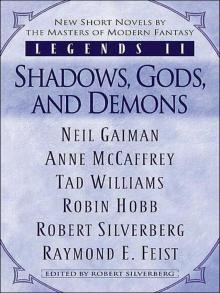 Legends II
 The Planet Killers
 The Collected Stories of Robert Silverberg, Volume 2: To the Dark Star: 1962-69
 Downward to the Earth
 Lord Valentine's Castle: Book One of the Majipoor Cycle
 Hot Times in Magma City, 1990-95
 Hunt the Space-Witch! Seven Adventures in Time and Space
 Majipoor Chronicles
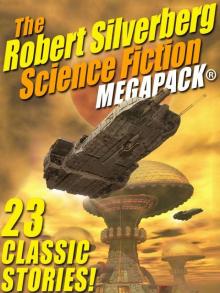 The Robert Silverberg Science Fiction Megapack(r)
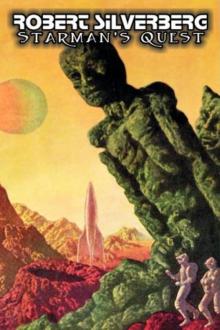 Starman's Quest
 Car Sinister
 Worlds of Maybe
 Fantasy The Best of 2001
 Revolt on Alpha C
 Homefaring
 The Pardoner's Tale
 Sailing to Byzantium - Six Novellas
 The Chalice of Death
 Sundance
 A Tip on a Turtle
 Nebula Awards Showcase 2001: The Year's Best SF and Fantasy Chosen by the Science Fiction and Fantasy Writers of America
 The Fangs of the Trees
 The Palace at Midnight: The Collected Work of Robert Silverberg, Volume Five
 The Millennium Express - 1995-2009 - The Collected Stories of Robert Silverberg Volume Nine
 Book of Skulls
 Passengers
 Something Wild is Loose - 1969–72 - The Collected Stories of Robert Silverberg Volume Three
 Multiples
 Starborne
 The Masks of Time
 The Mountains of Majipoor m-8
 Multiples (1983-87)
 Those Who Watch
 In the Beginning
 Earth Is The Strangest Planet
 Collision Course
 Neutral Planet
 To the Dark Star - 1962–69 - The Collected Stories of Robert Silverberg Volume Two
 Mutants
 Sailing to Byzantium
 When We Went to See the End of the World
 Robert Silverberg The Science Fiction Hall Of Fame Volume One, 1929-1964
 To Be Continued - 1953–58 - The Collected Stories of Robert Silverberg Volume One
 Valentine Pontifex m-3
 Gianni
 Majipoor Chronicles m-2
 We Are for the Dark (1987-90)
 Waiting for the Earthquake
 Fantasy: The Best of 2001
 How It Was When the Past Went Away
 Beauty in the Night
 The Man Who Never Forgot
 The Book of Changes m-9
 Lord Valentine's Castle m-1
 This Way to the End Times
 Queen of Springtime
 Legends-Volume 3 Stories by the Masters of Modern Fantasy
 The Palace at Midnight - 1980–82 - The Collected Stories of Robert Silverberg Volume Five
 Something Wild is Loose: The Collected Stories of Robert Silverberg, Volume Three
 Multiples - 1983–87 - The Collected Stories of Robert Silverberg Volume Six
 Alaree
 Three Survived: A Science Fiction Novel
 Defenders of the Frontier
 The New Springtime
 We Are for the Dark - 1987–90 - The Collected Stories of Robert Silverberg Volume Seven
 The Science Fiction Hall of Fame, Volume One 1929-1964--The Greatest Science Fiction Stories of All Time Chosen by the Members of the Science Fiction Writers of America
 Master Of Life And Death
 Choke Chain
 Sorcerers of Majipoor m-4
 Absolutely Inflexible
 Trips - 1962–73 - The Collected Stories of Robert Silverberg Volume Four
 Hot Times in Magma City - 1990-95 - The Collected Stories of Robert Silverberg Volume Eight
 Far Horizons
 The Queen of Springtime ns-2
 The Seventh Science Fiction Megapack
 Invaders From Earth
 Hanosz Prime Goes To Old Earth
 The Macauley Circuit
 Science Fiction: The Best of 2001
 To the Dark Star: The Collected Stories of Robert Silverberg, Volume Two
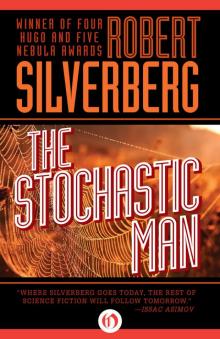 Stochastic Man
 Legends: Stories By The Masters of Modern Fantasy
 To Live Again And The Second Trip
 Flies
Flies The Silent Invaders
 Ship-Sister, Star-Sister