
- Home
- Robert Silverberg
Multiples (1983-87) Page 17
Multiples (1983-87) Read online
Page 17
The Englishman had guessed, rightly enough, that he was in India: “I do believe these little brown Moorish folk are of the Hindu sort,” he said. But that was as far as his comprehension of what had befallen him could go.
It had not occurred to him that he was no longer living in the sixteenth century. And of course he did not begin to suspect that this strange and somber brick city in which he found himself was a wanderer out of an era even more remote than his own. Was there any way, Phillips wondered, of explaining that to him?
He had been here only three days. He thought it was devils that had carried him off. “While I slept did they come for me,” he said. “Mephistophilis Sathanas, his henchmen seized me—God alone can say why—and swept me in a moment out to this torrid realm from England, where I had reposed among friends and family. For I was between one voyage and the next, you must understand, awaiting Drake and his ship—you know Drake, the glorious Francis? God’s blood, there’s a mariner for ye! We were to go to the Main again, he and I, but instead here I be in this other place—” Willoughby leaned close and said, “I ask you, soothsayer, how can it be, that a man go to sleep in Plymouth and wake up in India? It is passing strange, is it not?”
“That it is,” Phillips said.
“But he that is in the dance must needs dance on, though he do but hop, eh? So do I believe.” He gestured toward the two citizen-women. “And therefore to console myself in this pagan land I have found me some sport among these little Portugal women—”
“Portugal?” said Phillips.
“Why, what else can they be, but Portugals? Is it not the Portugals who control all these coasts of India? See, the people are of two sorts here, the blackamoors and the others, the fair-skinned ones, the lords and masters who lie here in these baths. If they be not Hindus, and I think they are not, then Portugals is what they must be.” He laughed and pulled the women against himself and rubbed his hands over their breasts as though they were fruits on a vine. “Is that not what you are, you little naked shameless Papist wenches? A pair of Portugals, eh?”
They giggled, but did not answer.
“No,” Phillips said. “This is India, but not the India you think you know. And these women are not Portuguese.”
“Not Portuguese?” Willoughby said, baffled.
“No more so than you. I’m quite certain of that.”
Willoughby stroked his beard. “I do admit I found them very odd, for Portugals. I have heard not a syllable of their Portugee speech on their lips. And it is strange also that they run naked as Adam and Eve in these baths, and allow me free plunder of their women, which is not the way of Portugals at home, God wot. But I thought me, this is India, they choose to live in another fashion here—”
“No,” Phillips said. “I tell you, these are not Portuguese, nor any other people of Europe who are known to you.”
“Prithee, who are they, then?”
Do it delicately, now, Phillips warned himself. Delicately.
He said, “It is not far wrong to think of them as spirits of some kind—demons, even. Or sorcerers who have magicked us out of our proper places in the world.” He paused, groping for some means to share with Willoughby, in a way that Willoughby might grasp, this mystery that had enfolded them. He drew a deep breath. “They’ve taken us not only across the sea,” he said, “but across the years as well. We have both been hauled, you and I, far into the days that are to come.”
Willoughby gave him a look of blank bewilderment.
“Days that are to come? Times yet unborn, d’ye mean? Why, I comprehend none of that!”
“Try to understand. We’re both castaways in the same boat, man! But there’s no way we can help each other if I can’t make you see—”
Shaking his head, Willoughby muttered, “In faith, good friend, I find your words the merest folly. Today is today, and tomorrow is tomorrow, and how can a man step from one to t’other until tomorrow be turned into today?”
“I have no idea,” said Phillips. Struggle was apparent on Willoughby’s face; but plainly he could perceive no more than the haziest outline of what Phillips was driving at, if that much. “But this I know,” he went on. “That your world and all that was in it is dead and gone. And so is mine, though I was born four hundred years after you, in the time of the second Elizabeth.”
Willoughby snorted scornfully. “Four hundred—”
“You must believe me!”
“Nay! Nay!”
“It’s the truth. Your time is only history to me. And mine and yours are history to them—ancient history. They call us visitors, but what we are is captives.” Phillips felt himself quivering in the intensity of his effort. He was aware how insane this must sound to Willoughby. It was beginning to sound insane to him. “They’ve stolen us out of our proper times—seizing us like gypsies in the night—”
“Fie, man! You rave with lunacy!”
Phillips shook his head. He reached out and seized Willoughby tightly by the wrist. “I beg you, listen to me!” The citizen-women were watching closely, whispering to one another behind their hands, laughing. “Ask them!” Phillips cried. “Make them tell you what century this is! The sixteenth, do you think? Ask them!”
“What century could it be, but the sixteenth of our Lord?”
“They will tell you it is the fiftieth.”
Willoughby looked at him pityingly. “Man, man, what a sorry thing thou art! The fiftieth, indeed!” He laughed. “Fellow, listen to me, now. There is but one Elizabeth, safe upon her throne in Westminster. This is India. The year is Anno 1591. Come, let us you and I steal a ship from these Portugals, and make our way back to England, and peradventure you may get from there to your America—”
“There is no England.”
“Ah, can you say that and not be mad?”
“The cities and nations we knew are gone. These people live like magicians, Francis.” There was no use holding anything back now, Phillips thought leadenly. He knew that he had lost. “They conjure up places of long ago, and build them here and there to suit their fancy, and when they are bored with them they destroy them, and start anew. There is no England. Europe is empty, featureless, void. Do you know what cities there are? There are only five in all the world. There is Alexandria of Egypt. There is Timbuctoo in Africa. There is New Chicago in America. There is a great city in China—in Cathay, I suppose you would say. And there is this place, which they call Mohenjo-daro, and which is far more ancient than Greece, than Rome, than Babylon.”
Quietly Willoughby said, “Nay. This is mere absurdity. You say we are in some far tomorrow, and then you tell me we are dwelling in some city of long ago.”
“A conjuration, only,” Phillips said in desperation. “A likeness of that city. Which these folk have fashioned somehow for their own amusement. Just as we are here, you and I: to amuse them. Only to amuse them.”
“You are completely mad.”
“Come with me, then. Talk with the citizens by the great pool. Ask them what year this is; ask them about England; ask them how you come to be here.” Once again Phillips grasped Willoughby’s wrist. “We should be allies. If we work together, perhaps we can discover some way to get ourselves out of this place, and—”
“Let me be, fellow.”
“Please—”
“Let me be!” roared Willoughby, and pulled his arm free. His eyes were stark with rage. Rising in the tank, he looked about furiously as though searching for a weapon. The citizen-women shrank back away from him, though at the same time they seemed captivated by the big man’s fierce outburst. “Go to, get you to Bedlam! Let me be, madman! Let me be!”
Dismally Phillips roamed the dusty unpaved streets of Mohenjo-daro alone for hours. His failure with Willoughby had left him bleak-spirited and somber: he had hoped to stand back to back with the Elizabethan against the citizens, but he saw now that that was not to be. He had bungled things; or, more likely, it had been impossible ever to bring Willoughby to see the truth of their pr
edicament.
In the stifling heat he went at random through the confusing congested lanes of flat-roofed windowless houses and blank featureless walls until he emerged into a broad marketplace. The life of the city swirled madly around him: the pseudo-life, rather, the intricate interactions of the thousands of temporaries who were nothing more than windup dolls set in motion to provide the illusion that pre-Vedic India was still a going concern. Here vendors sold beautiful little carved stone seals portraying tigers and monkeys and strange humped cattle, and women bargained vociferously with craftsmen for ornaments of ivory, gold, copper, and bronze. Weary-looking women squatted behind immense mounds of newly made pottery, pinkish red with black designs. No one paid any attention to him. He was the outsider here, neither citizen nor temporary. They belonged.
He went on, passing the huge granaries where workmen ceaselessly unloaded carts of wheat and others pounded grain on great circular brick platforms. He drifted into a public restaurant thronging with joyless silent people standing elbow to elbow at small brick counters, and was given a flat round piece of bread, a sort of tortilla or chapatti, in which was stuffed some spiced mincemeat that stung his lips like fire. Then he moved onward down a wide shallow timbered staircase into the lower part of the city, where the peasantry lived in cell-like rooms packed together as though in hives.
It was an oppressive city, but not a squalid one. The intensity of the concern with sanitation amazed him: wells and fountains and public privies everywhere, and brick drains running from each building, leading to covered cesspools. There was none of the open sewage and pestilent gutters that he knew still could be found in the India of his own time. He wondered whether ancient Mohenjo-daro had in truth been so fastidious. Perhaps the citizens had redesigned the city to suit their own ideals of cleanliness. No: most likely what he saw was authentic, he decided, a function of the same obsessive discipline that had given the city its rigidity of form. If Mohenjo-daro had been a verminous filthy hole, the citizens probably would have re-created it in just that way, and loved it for its fascinating reeking filth.
Not that he had ever noticed an excessive concern with authenticity on the part of the citizens; and Mohenjo-daro, like all the other restored cities he had visited, was full of the usual casual anachronisms. Phillips saw images of Shiva and Krishna here and there on the walls of buildings he took to be temples, and the benign face of the mother-goddess Kali loomed in the plazas. Surely those deities had arisen in India long after the collapse of the Mohenjo-daro civilization. Were the citizens indifferent to such matters of chronology? Or did they take a certain naughty pleasure in mixing the eras—a mosque and a church in Greek Alexandria, Hindu gods in prehistoric Mohenjo-daro? Perhaps their records of the past had become contaminated with errors over the thousands of years. He would not have been surprised to see banners bearing portraits of Gandhi and Nehru being carried in procession through the streets. And there were phantasms and chimeras at large here again, too, as if the citizens were untroubled by the boundary between history and myth: little fat elephant-headed Ganeshas blithely plunging their trunks into water fountains, a six-armed three-headed woman sunning herself on a brick terrace. Why not? Surely that was the motto of these people: Why not, why not, why not? They could do as they pleased, and they did. Yet Gioia had said to him, long ago, “Limits are very important.” In what, Phillips wondered, did they limit themselves, other than the number of their cities? Was there a quota, perhaps, on the number of “visitors” they allowed themselves to kidnap from the past? Until today he had thought he was the only one; now he knew there was at least one other; possibly there were more elsewhere, a step or two ahead or behind him, making the circuit with the citizens who traveled endlessly from New Chicago to Chang-an to Alexandria. We should join forces, he thought, and compel them to send us back to our rightful eras. Compel? How? File a class-action suit, maybe? Demonstrate in the streets? Sadly he thought of his failure to make common cause with Willoughby. We are natural allies, he thought. Together perhaps we might have won some compassion from these people. But to Willoughby it must be literally unthinkable that Good Queen Bess and her subjects were sealed away on the far side of a barrier hundreds of centuries thick. He would prefer to believe that England was just a few months’ voyage away around the Cape of Good Hope, and that all he need do was commandeer a ship and set sail for home. Poor Willoughby: probably he would never see his home again.
The thought came to Phillips suddenly:
Neither will you.
And then, after it:
If you could go home, would you really want to?
One of the first things he had realized here was that he knew almost nothing substantial about his former existence. His mind was well stocked with details on life in twentieth-century New York, to be sure; but of himself he could say not much more than that he was Charles Phillips and had come from 1984. Profession? Age? Parents’ names? Did he have a wife? Children? A cat, a dog, hobbies? No data: none. Possibly the citizens had stripped such things from him when they brought him here, to spare him from the pain of separation. They might be capable of that kindness. Knowing so little of what he had lost, could he truly say that he yearned for it? Willoughby seemed to remember much more of his former life, somehow, and longed for it all the more intensely. He was spared that. Why not stay here, and go on and on from city to city, sightseeing all of time past as the citizens conjured it back into being? Why not? Why not? The chances were that he had no choice about it, anyway.
He made his way back up toward the citadel and to the baths once more. He felt a little like a ghost, haunting a city of ghosts.
Belilala seemed unaware that he had been gone for most of the day. She sat by herself on the terrace of the baths, placidly sipping some thick milky beverage that had been sprinkled with a dark spice. He shook his head when she offered him some.
“Do you remember I mentioned that I saw a man with red hair and a beard this morning?” Phillips said. “He’s a visitor. Hawk told me that.”
“Is he?” Belilala asked.
“From a time about four hundred years before mine. I talked with him. He thinks he was brought here by demons.” Phillips gave her a searching look. “I’m a visitor, too, isn’t that so?”
“Of course, love.”
“And how was I brought here? By demons also?”
Belilala smiled indifferently. “You’d have to ask someone else. Hawk, perhaps. I haven’t looked into these things very deeply.”
“I see. Are there many visitors here, do you know?”
A languid shrug. “Not many, no, not really. I’ve only heard of three or four besides you. There may be others by now, I suppose.” She rested her hand lightly on his. “Are you having a good time in Mohenjo, Charles?”
He let her question pass as though he had not heard it.
“I asked Hawk about Gioia,” he said.
“Oh?”
“He told me that she’s no longer here, that she’s gone on to Timbuctoo or New Chicago, he wasn’t sure which.”
“That’s quite likely. As everybody knows, Gioia rarely stays in the same place very long.”
Phillips nodded. “You said the other day that Gioia is a short-timer. That means she’s going to grow old and die, doesn’t it?”
“I thought you understood that, Charles.”
“Whereas you will not age? Nor Hawk, nor Stengard, nor any of the rest of your set?”
“We will live as long as we wish,” she said. “But we will not age, no.”
“What makes a person a short-timer?”
“They’re born that way, I think. Some missing gene, some extra gene—I don’t actually know. It’s extremely uncommon. Nothing can be done to help them. It’s very slow, the aging. But it can’t be halted.”
Phillips nodded. “That must be very disagreeable,” he said. “To find yourself one of the few people growing old in a world where everyone stays young. No wonder Gioia is so impatient. No wonder she runs ar
ound from place to place. No wonder she attached herself so quickly to the barbaric hairy visitor from the twentieth century, who comes from a time when everybody was a short-timer. She and I have something in common, wouldn’t you say?”
“In a manner of speaking, yes.”
“We understand aging. We understand death. Tell me: is Gioia likely to die very soon, Belilala?”
“Soon? Soon?” She gave him a wide-eyed childlike stare. “What is soon? How can I say? What you think of as soon and what I think of as soon are not the same things, Charles.” Then her manner changed: she seemed to be hearing what he was saying for the first time. Softly she said, “No, no, Charles. I don’t think she will die very soon.”
“When she left me in Chang-an, was it because she had become bored with me?”
Belilala shook her head. “She was simply restless. It had nothing to do with you. She was never bored with you.”
“Then I’m going to go looking for her. Wherever she may be, Timbuctoo, New Chicago, I’ll find her. Gioia and I belong together.”
“Perhaps you do,” said Belilala. “Yes. Yes, I think you really do.” She sounded altogether unperturbed, unrejected, unbereft. “By all means, Charles. Go to her. Follow her. Find her. Wherever she may be.”
They had already begun dismantling Timbuctoo when Phillips got there. While he was still high overhead, his flitterflitter hovering above the dusty tawny plain where the River Niger met the sands of the Sahara, a surge of keen excitement rose in him as he looked down at the square gray flat-roofed mud brick buildings of the great desert capital. But when he landed he found gleaming metal-skinned robots swarming everywhere, a horde of them scuttling about like giant shining insects, pulling the place apart.
He had not known about the robots before. So that was how all these miracles were carried out, Phillips realized: an army of obliging machines. He imagined them bustling up out of the earth whenever their services were needed, emerging from some sterile subterranean storehouse to put together Venice or Thebes or Knossos or Houston or whatever place was required, down to the finest detail, and then at some later time returning to undo everything that they had fashioned. He watched them now, diligently pulling down the adobe walls, demolishing the heavy metal-studded gates, bulldozing the amazing labyrinth of alleyways and thoroughfares, sweeping away the market. On his last visit to Timbuctoo that market had been crowded with a horde of veiled Tuaregs and swaggering Moors, black Sudanese, shrewd-faced Syrian traders, all of them busily dickering for camels, horses, donkeys, slabs of salt, huge green melons, silver bracelets, splendid vellum Korans. They were all gone now, that picturesque crowd of swarthy temporaries. Nor were there any citizens to be seen. The dust of destruction choked the air. One of the robots came up to Phillips and said in a dry crackling insect-voice, “You ought not to be here. This city is closed.”
 The Longest Way Home
 Hawksbill Station
 A Time of Changes
 This Way to the End Times: Classic Tales of the Apocalypse
 Beyond the Gate of Worlds
 Lord Valentine's Castle
 The Man in the Maze
 Tales of Majipoor
 Time of the Great Freeze
 The Collected Stories of Robert Silverberg, Volume 3: Something Wild Is Loose: 1969-72
 Planet of Death
 Trips: The Collected Stories of Robert Silverberg, Volume Four
 In the Beginning: Tales From the Pulp Era
 Hot Sky at Midnight
 Valentine Pontifex
 Up the Line
 Thorns
 Amanda and the Alien
 Star of Gypsies
 Nightwings
 The Time Hoppers
 Blood on the Mink
 Dying Inside
 The Last Song of Orpheus
 The King of Dreams
 The Stochastic Man
 The Collected Stories of Robert Silverberg, Volume Seven: We Are for the Dark
 The Millennium Express: The Collected Stories of Robert Silverberg, Volume Nine
 The Iron Chancellor
 Lord Prestimion
 To Open the Sky
 The World Inside
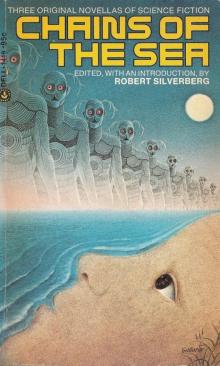 Chains of the Sea
 The Collected Stories of Robert Silverberg, Volume Five: The Palace at Midnight
 Postmark Ganymede
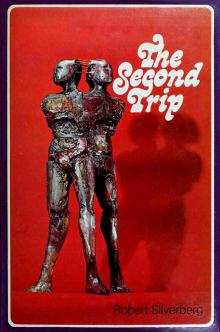 The Second Trip
 The Collected Stories of Robert Silverberg, Volume 4: Trips: 1972-73
 Son of Man
 Tom O'Bedlam
 To the Land of the Living
 To Be Continued: The Collected Stories of Robert Silverberg, Volume One
 Shadrach in the Furnace
 The Chalice of Death: Three Novels of Mystery in Space
 The Queen of Springtime
 To Be Continued 1953-1958
 Legends
 Roma Eterna
 To Live Again
 At Winter's End
 Needle in a Timestack
 To Live Again and the Second Trip: The Complete Novels
 Lord of Darkness
 The Mountains of Majipoor
 The World Outside
 The Alien Years
 The Book of Skulls
 The Face of the Waters
 Gilgamesh the King
 The Collected Stories of Robert Silverberg, Volume 6: Multiples: 1983-87
 The Happy Unfortunate
 Three Survived
 Cronos
 Tower of Glass
 Legends II
 The Planet Killers
 The Collected Stories of Robert Silverberg, Volume 2: To the Dark Star: 1962-69
 Downward to the Earth
 Lord Valentine's Castle: Book One of the Majipoor Cycle
 Hot Times in Magma City, 1990-95
 Hunt the Space-Witch! Seven Adventures in Time and Space
 Majipoor Chronicles
 The Robert Silverberg Science Fiction Megapack(r)
 Starman's Quest
 Car Sinister
 Worlds of Maybe
 Fantasy The Best of 2001
 Revolt on Alpha C
 Homefaring
 The Pardoner's Tale
 Sailing to Byzantium - Six Novellas
 The Chalice of Death
 Sundance
 A Tip on a Turtle
 Nebula Awards Showcase 2001: The Year's Best SF and Fantasy Chosen by the Science Fiction and Fantasy Writers of America
 The Fangs of the Trees
 The Palace at Midnight: The Collected Work of Robert Silverberg, Volume Five
 The Millennium Express - 1995-2009 - The Collected Stories of Robert Silverberg Volume Nine
 Book of Skulls
 Passengers
 Something Wild is Loose - 1969–72 - The Collected Stories of Robert Silverberg Volume Three
 Multiples
 Starborne
 The Masks of Time
 The Mountains of Majipoor m-8
 Multiples (1983-87)
 Those Who Watch
 In the Beginning
 Earth Is The Strangest Planet
 Collision Course
 Neutral Planet
 To the Dark Star - 1962–69 - The Collected Stories of Robert Silverberg Volume Two
 Mutants
 Sailing to Byzantium
 When We Went to See the End of the World
 Robert Silverberg The Science Fiction Hall Of Fame Volume One, 1929-1964
 To Be Continued - 1953–58 - The Collected Stories of Robert Silverberg Volume One
 Valentine Pontifex m-3
 Gianni
 Majipoor Chronicles m-2
 We Are for the Dark (1987-90)
 Waiting for the Earthquake
 Fantasy: The Best of 2001
 How It Was When the Past Went Away
 Beauty in the Night
 The Man Who Never Forgot
 The Book of Changes m-9
 Lord Valentine's Castle m-1
 This Way to the End Times
 Queen of Springtime
 Legends-Volume 3 Stories by the Masters of Modern Fantasy
 The Palace at Midnight - 1980–82 - The Collected Stories of Robert Silverberg Volume Five
 Something Wild is Loose: The Collected Stories of Robert Silverberg, Volume Three
 Multiples - 1983–87 - The Collected Stories of Robert Silverberg Volume Six
 Alaree
 Three Survived: A Science Fiction Novel
 Defenders of the Frontier
 The New Springtime
 We Are for the Dark - 1987–90 - The Collected Stories of Robert Silverberg Volume Seven
 The Science Fiction Hall of Fame, Volume One 1929-1964--The Greatest Science Fiction Stories of All Time Chosen by the Members of the Science Fiction Writers of America
 Master Of Life And Death
 Choke Chain
 Sorcerers of Majipoor m-4
 Absolutely Inflexible
 Trips - 1962–73 - The Collected Stories of Robert Silverberg Volume Four
 Hot Times in Magma City - 1990-95 - The Collected Stories of Robert Silverberg Volume Eight
 Far Horizons
 The Queen of Springtime ns-2
 The Seventh Science Fiction Megapack
 Invaders From Earth
 Hanosz Prime Goes To Old Earth
 The Macauley Circuit
 Science Fiction: The Best of 2001
 To the Dark Star: The Collected Stories of Robert Silverberg, Volume Two
 Stochastic Man
 Legends: Stories By The Masters of Modern Fantasy
 To Live Again And The Second Trip
 Flies
Flies The Silent Invaders
 Ship-Sister, Star-Sister