
- Home
- Robert Silverberg
Roma Eterna Page 17
Roma Eterna Read online
Page 17
The day brought choking heat, air so clogged with moisture it was next to impossible to breathe, and wave upon wave of noxious creatures—snakes, spiders, avalanches of stinging ants, platoons of scorpions, and all manner of other unpleasant things—that the storm appeared to have flushed out of the forest and driven toward the beach. It was like a dream that would not end with the coming of daybreak. Grimly Drusus marshaled his men and set them to working at cleaning the place up, but it was hard to know where to begin, and everyone moved as though still adrift in sleep.
For two days they struggled against the chaos that the storm had left. On the second morning Drusus sent a runner down toward Capito’s camp to find out how things had fared there, but the man returned in little more than an hour, reporting that a great arc of beachfront had been washed away not far to the south, cutting the shoreline route in half, and the forest flanking the coast was such a maze of fallen trees that he had found that impassable too and had to turn back.
On the third day came the first Maian offensive: a shower of arrows, descending without warning out of thin air. No archers were in view: they had to be well back in the forest, sending their shafts aloft without aiming, using bows of unusual force and carrying power. Down from the sky the arrows came in the hundreds, in the thousands, even, striking at random in the Roman camp. Fifty men perished within moments. Drusus ordered five squadrons of armored infantrymen into the forest under the command of Marcus Junianus in search of the attackers, but they found no signs of anyone.
The next day a ship flying the banner of Lucius Aemilius Capito appeared in the harbor, with three more behind it. Drusus had himself rowed out to greet the Consul. Capito, looking very much the worse for wear, told him that the storm had all but destroyed his camp: he had lost nearly half his men and all his equipment, and the site itself had been rendered unusable by flooding. These were his only surviving ships. Unable to make contact with the southern camp of Masurius Titianus, he had come sailing up the coast, hoping to find Drusus’s camp still reasonably intact.
Drusus had no alternative but to surrender command of the camp to Capito, although the older man seemed addled and befogged by all that had befallen him. “He is useless,” said Marcus Junianus vehemently, but Drusus shrugged away his friend’s objections: Capito was the senior officer, and that was that.
Another attack by archers came the next day, and the day after that. The arrows came in thicker clouds even than before, falling in dense barrages from the sky. Drusus understood now that there was no end to the Maian archers—he imagined thousands of them, millions, standing calmly in row upon row for miles, each row waiting to step forward and discharge its arrows when the one before it had had its turn. This land was full of people and all of them were enemies of Roma. And here the invading force waited in the wreckage of its camp, unable to move fifty feet into that steaming inimical jungle, vulnerable to new storms, venomous crawling creatures, hunger, illness, mosquitoes, arrows. Arrows. It was an impossible situation. Things could not have been worse for Quinctilius Varus who had lost the three legions of Augustus Caesar. But there were seven legions at risk here.
After proper consultation with the obviously ailing Capito, Drusus stationed a line of his own archers along the beach, who met the Maian onslaught with shafts of their own, sent blindly into the bush. This had some small effect: a dozen dead Maia were found after the battle. They were wearing armor of a sort, made of quilted cotton. But the Romans had lost twenty more to the arrows falling from the sky in the second attack, and fifteen in the third. The camp was still full of snakes, and they did lethal work also; and other men puffed up and died from the stings of insects, no one knew which.
Fever was the next enemy—the men began sickening by the dozens—and food was beginning to run short, the storm having denuded the nearby forest of its deer and pigs. Marcus Junianus drew Drusus aside and said, “We are beaten, even as the first expedition was. We should get aboard our ships and sail for home.” Drusus shook his head, though he knew it was true. Any order to retreat would have to come from Capito, and the Consul was lost in some foggy feverish dream.
So the days passed. Each dawn brought its casualties from disease or hunger or simple weariness, and the sporadic attacks by the Maian archers brought more. “We will smash down the walls of their city,” Capito declared in one of his few lucid moments, but Drusus knew there was no possibility of that. It was all they could do to hold their own here at the camp, forage for food and water, drive off the unending waves of archers.
On the twenty-third day a little band of men, perhaps fifty of them, gaunt and ravaged, came staggering up the beach from the south. They were the only survivors of Masurius Titianus’s camp, who had cut their way through the forest in search of other remaining Romans. Titianus himself was dead, and all their ships had gone down in the storm.
“We have to leave this place,” Drusus told the glassy-eyed Capito. “There’s no hope for us here. The archers will pick us off by handfuls every day, and if the rest of us don’t die of fever, eventually Olaus the Dane will send an army in here to finish the job.”
“The Emperor has sent us to conquer this land,” said Capito, rising halfway to a sitting position and glaring around with some desperate semblance of vitality. “Are we not Romans? Do we dare return to His Imperial Majesty with a sorry tale of failure?” And sank back exhausted, muttering in indistinct whispers; but Drusus knew that he must still regard him as the commander.
On the twenty-eighth day several hundred Maian troops appeared on the beach armed with spears, swarthy little men practically naked except for feather headdresses and the quilted-cotton armor. Drusus himself led the counterattack, though he was hard pressed to find enough men capable of withstanding the rigors of battle. The Maia conducted themselves surprisingly well against Roman swords and Roman shields, but finally were driven off, at the cost of thirty Roman lives. A few more battles like this, Drusus thought, and we are finished.
Capito died of his fever the next day.
Drusus saw to it that he had a proper burial, as befitted a Consul who had died in the service of the Empire on a foreign shore. When the last words had been chanted and the last shovelful of sand had been thrown upon the grave, Drusus, taking a deep breath, turned to his lieutenants and said, “Well, we are done with this, now. To the ships, everyone! To the ships!”
This time, of the more than forty thousand men who had gone forth on Roma’s second attempt to conquer the New World, six hundred returned. Hundreds more were lost at sea in the return voyage, including those aboard the vessel that Drusus had placed under the command of Marcus Junianus. For Drusus that was the hardest blow of all, losing Marcus on this idiotic adventure in folly. Try as he could to look upon Marcus’s death with the dispassionate eye of a Roman of ancient days, he found himself incapable of hiding from the pain of his grief. He owed the gods a death, yes, but he had not owed them Marcus’s death, and he knew he would carry the sorrow of that loss, and the guilt of it, to his grave.
The arduous voyage home had left him greatly weakened. He required two weeks of rest at his family estate in Latium before he was strong enough to deliver his report to the Emperor, who received him at the thousand-year-old royal villa at Tibur.
Saturninus seemed to have grown much older since Drusus last had seen him. He was not as tall as Drusus remembered—perhaps he had begun to stoop a little—and his lustrous black hair was touched now with the first gray. Well, everyone gets older, Drusus thought. But something else had gone from the Emperor besides his youthful glow. That aura of irrepressible regal vitality that had made him such an awesome figure seemed to have left him as well. Perhaps it was the passing of time, thought Drusus, or perhaps it was only his own memories of Olaus the Dane, that man of truly boundless force and limitless ferocity, that by comparison had lessened the Emperor in his eyes.
The Emperor asked Drusus, in a distant, somewhat dim way, to tell him of the fate of the second expedition. Drus
us replied in a measured, unemotional tone, describing first the land, the climate, the splendor of the one Maian city that he had seen. Then he went on to the calamity itself: there had been great problems, he said, the heat, the serpents and scorpions and the stinging ants, disease, the hostility of the natives, above all a terrible storm. He did not mention Olaus the Dane. It seemed unwise to suggest to the Emperor that a savage Norseman had built an empire in that far-off land that was able to hold Roma at bay: that would only fire Saturninus up with the desire to bring such a man to Roma in chains.
Saturninus listened to the tale in that same remote manner, now and again asking a question or two, but showing a striking lack of real interest. And now Drusus was approaching the most difficult part of his report, the summary of his thoughts about his mission to the New World.
This had to be done carefully. One does not instruct an Emperor, Drusus knew; one merely suggests, one guides him toward the conclusions that one hopes he will reach. One has to be particularly cautious when one has come to the realization that a favorite project of the Emperor’s is wrongheaded and impossible.
So he spoke warily at first about the difficulties they had encountered, the challenge of maintaining supply lines over so great a distance, the probable huge native population of the New World, the special complexities posed by climate and disease. Saturninus appeared to be paying attention, but from very far away.
Then Drusus grew more reckless. He reminded the Emperor of his revered predecessor the Emperor Hadrianus, who had built the very villa where they were sitting now: how Hadrianus had come to see, in the end, that Roma could not send her legions to every nation of the world, that there were limits to her grasp, that certain far frontiers had to be left unconquered. Although at first he had not agreed with Hadrianus’s thinking, Drusus told the Emperor, his experiences in Yucatan had changed his mind about that.
The Emperor no longer appeared to be listening, though. And Drusus realized that it was very likely that he had not been listening for some while. In sudden desire to break through this glacial remoteness of Saturninus’s he found himself on the verge of saying outright, “The thing is impossible, Caesar, we will never succeed, we should give it up as a bad job. For if we continue it will destroy many thousands of our best troops, it will consume our revenues, it will break our spirit.”
But before any of those words could pass his lips he heard the Emperor murmur, like an oracle speaking in a trance, “Roma is the ocean, Drusus, immense and inexhaustible. We will beat against their shores as the ocean does.” And he realized in shock and horror that the Emperor was already beginning to plan the next expedition.
A.U.C. 1951: WAITING FOR THE END
The uglier of the two Praetorians, flat-faced and gruff, with close-cropped red hair and thick Slavic cheekbones, said, “The Emperor wants you, Antipater. Has some work for you, he says.”
“Translation work,” said the prettier guardsman, a ringleted blond Gaul. “The latest little love note from our friends the Greeks, I guess. Or maybe he wants you to write one for him to them.” He gave Antipater a flirtatious little wink-and-wriggle, mock-seductive. The Praetorians all thought Antipater was of that sort, probably because he had such a sleek, well-oiled Levantine look about him, but perhaps merely because he was fluent in Greek. They were wrong, though. He was a slim-hipped, dusky-skinned, dark-haired man of somewhat feline gait and undeniably Eastern appearance, yes, but that was simply an artifact of his ancestry, the heritage of his long-ago Syrian forefathers. His understanding of Greek was a requirement of his job, not an advertisement of his sexual tastes. But he was at least as Roman as either of them. And as for his preference for women’s embraces, they need only ask Justina Botaniates, to name just one.
“Where is His Majesty now?” Antipater asked coolly.
“The Emerald Office,” replied the Slav. “Greek Letters, he said. Get me the Master of Greek Letters.” He glanced at his companion and his broad face writhed in a heavy grin. “We’ll all be masters of Greek letters soon enough, won’t we, Marius?”
“Those of us who can read and write, at any rate,” said the Gaul. “Eh? Eh?—Well, get along with you now, Antipater! Don’t keep Caesar waiting!”
They had no respect. They were crude men. Antipater was a high palatine official and they were mere soldiers, and they had no business ordering him about. He glared them down and they backed away, and he gathered up his tablets and stylus and went down the dimly lit halls of the palace annex to the tunnel that led to the main building, and thence to the row of small private offices—Emerald, Scarlet, Indigo, Topaz—clustered along the east side of the Great Hall of Audience. The Emerald Office, the farthest in the series, was the Emperor Maximilianus’s favorite, a long narrow windowless room hung with draperies of Indian weave, dark-green in hue, on which scenes of men with spears hunting elephants and tigers and other fantastic creatures were depicted.
“Lucius Aelius Antipater,” he told the guard on duty, a vacant-eyed boy of eighteen or so, whom he had never seen before. “Master of Greek Letters to Caesar.” The boy nodded him on through, not even bothering with the routine check for concealed weapons.
Antipater wondered about today’s assignment. An outgoing letter, he supposed. In these dark days, three or four went out for every one that came in. Yet what was there to write about, with the Greek army on the verge of pouring across the Western Empire’s porously defended frontiers? Surely not still another stern ultimatum addressed to Roma’s great enemy the Basileus Andronicus, ordering him to cease and desist at once from further military encroachment on the Imperial domain. They had sent the latest in the long series of such ultimatums only last week. The courier most likely was no farther east with it yet than Macedonia, certainly was still a long way from delivering it to the Basileus in Constantinopolis—where it would only be tossed aside with a snort of amusement, like all the rest.
No, Antipater decided. This one had to be something more unusual. A letter from Caesar to some slippery Byzantine lordling on the African coast of the Great Sea, say—the exarch of Alexandria, maybe, or of Carthage—urging him, with the promise of immense bribes, to defect to the Roman side and launch some surprise attack from the rear, one that would distract Andronicus long enough for Roma to recover its balance and mobilize its long overdue counterthrust against the invaders.
A wild stratagem indeed. Nobody but he would ever think of it. “The trouble with you, Lucius Aelius,” Justina liked to tell him, “is that you have too much imagination for your own good.”
Maybe so. But here he was, just thirty-two years old that year—which was the year 1951 since the founding of the city—and for two years now he had been a member of the high palatinate, the Emperor’s inner circle. Caesar had already bestowed a knighthood on him and a seat in the Senate would surely be next. Not bad going for a poor lad from the provinces. A pity that he had achieved his spectacular rise to prominence just as the Empire itself, weakened by its own senseless imprudence, seemed to be about to collapse.
“Caesar?” he said, peering into the Emerald Office.
At first Antipater saw no one. Then, by the smoky light of two dim tapers burning in a far corner of the room, he perceived the Emperor at his desk, the venerable Imperial desk of dark exotic woods that had been occupied in the past by the likes of Aemilius Magnus and Metellus Domitius and Publius Clemens and, for all Antipater knew, by Augustus and Hadrianus and Diocletianus as well. Great Caesars all; but the huge curving desk seemed to swallow their current successor, a pallid wiry little man with a glint of wholly justified worry in his close-set, sea-green, brightly shining eyes. He was wearing a simple gray jerkin and a peasant’s red leggings; only the faint thread of pearls running along one shoulder, flanked by a pair of purple stripes, indicated that his rank was anything out of the ordinary.
He bore a grand name, did Maximilianus. It had been Maximilianus III, Maximilianus the Great, who in his short but brilliant reign had beaten the troublesome barba
rians of the north into submission once and for all, the Huns and Goths and Vandals and the rest of that unruly shaggy-haired crowd. But that had been almost seven hundred years ago, and this Maximilianus, Maximilianus VI, possessed none of his famous namesake’s fire and drive. Once again the Empire was at risk, tottering on the brink, in truth, as it had seemed to be in that other Maximilianus’s far-off time. But this latter-day Maximilianus was not very likely to be its savior.
“You summoned me, Caesar?”
“Oh, Antipater. Yes. Look at this, Antipater.” The Emperor held a yellow vellum scroll out toward him. So what needed translation was an incoming document of some sort, then. Antipater noticed that the Emperor’s hand was quivering.
The Emperor, as a matter of fact, seemed to have turned overnight into a palsied old man. There were tics and tremors all over him. And he was only fifty, too. But he had held the throne for twenty grueling years, now, and his reign had been a hard one from its very first hour, when news of his father’s death had reached him virtually at the same moment as word of the Greek thrust westward into the African proconsular region. That African invasion was the first major escalation of what had until then been a slow-burning border dispute confined to the province of Dalmatia, a dispute that had blossomed, through subsequent Greek probes along the border separating the two empires, into a full-scale war between East and West that now seemed to be entering its final dismal phase.
Antipater unrolled the scroll and began quickly to scan it.
“This was intercepted at sea by one of our patrols,” said the Emperor. “Just south of Sardinia. Greek ship, it was, disguised as a fishing vessel, sailing northward out of Sicilia. I can understand some of what the message says, of course—”
 The Longest Way Home
 Hawksbill Station
 A Time of Changes
 This Way to the End Times: Classic Tales of the Apocalypse
 Beyond the Gate of Worlds
 Lord Valentine's Castle
 The Man in the Maze
 Tales of Majipoor
 Time of the Great Freeze
 The Collected Stories of Robert Silverberg, Volume 3: Something Wild Is Loose: 1969-72
 Planet of Death
 Trips: The Collected Stories of Robert Silverberg, Volume Four
 In the Beginning: Tales From the Pulp Era
 Hot Sky at Midnight
 Valentine Pontifex
 Up the Line
 Thorns
 Amanda and the Alien
 Star of Gypsies
 Nightwings
 The Time Hoppers
 Blood on the Mink
 Dying Inside
 The Last Song of Orpheus
 The King of Dreams
 The Stochastic Man
 The Collected Stories of Robert Silverberg, Volume Seven: We Are for the Dark
 The Millennium Express: The Collected Stories of Robert Silverberg, Volume Nine
 The Iron Chancellor
 Lord Prestimion
 To Open the Sky
 The World Inside
 Chains of the Sea
 The Collected Stories of Robert Silverberg, Volume Five: The Palace at Midnight
 Postmark Ganymede
 The Second Trip
 The Collected Stories of Robert Silverberg, Volume 4: Trips: 1972-73
 Son of Man
 Tom O'Bedlam
 To the Land of the Living
 To Be Continued: The Collected Stories of Robert Silverberg, Volume One
 Shadrach in the Furnace
 The Chalice of Death: Three Novels of Mystery in Space
 The Queen of Springtime
 To Be Continued 1953-1958
 Legends
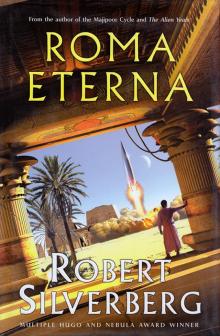 Roma Eterna
 To Live Again
 At Winter's End
 Needle in a Timestack
 To Live Again and the Second Trip: The Complete Novels
 Lord of Darkness
 The Mountains of Majipoor
 The World Outside
 The Alien Years
 The Book of Skulls
 The Face of the Waters
 Gilgamesh the King
 The Collected Stories of Robert Silverberg, Volume 6: Multiples: 1983-87
 The Happy Unfortunate
 Three Survived
 Cronos
 Tower of Glass
 Legends II
 The Planet Killers
 The Collected Stories of Robert Silverberg, Volume 2: To the Dark Star: 1962-69
 Downward to the Earth
 Lord Valentine's Castle: Book One of the Majipoor Cycle
 Hot Times in Magma City, 1990-95
 Hunt the Space-Witch! Seven Adventures in Time and Space
 Majipoor Chronicles
 The Robert Silverberg Science Fiction Megapack(r)
 Starman's Quest
 Car Sinister
 Worlds of Maybe
 Fantasy The Best of 2001
 Revolt on Alpha C
 Homefaring
 The Pardoner's Tale
 Sailing to Byzantium - Six Novellas
 The Chalice of Death
 Sundance
 A Tip on a Turtle
 Nebula Awards Showcase 2001: The Year's Best SF and Fantasy Chosen by the Science Fiction and Fantasy Writers of America
 The Fangs of the Trees
 The Palace at Midnight: The Collected Work of Robert Silverberg, Volume Five
 The Millennium Express - 1995-2009 - The Collected Stories of Robert Silverberg Volume Nine
 Book of Skulls
 Passengers
 Something Wild is Loose - 1969–72 - The Collected Stories of Robert Silverberg Volume Three
 Multiples
 Starborne
 The Masks of Time
 The Mountains of Majipoor m-8
 Multiples (1983-87)
 Those Who Watch
 In the Beginning
 Earth Is The Strangest Planet
 Collision Course
 Neutral Planet
 To the Dark Star - 1962–69 - The Collected Stories of Robert Silverberg Volume Two
 Mutants
 Sailing to Byzantium
 When We Went to See the End of the World
 Robert Silverberg The Science Fiction Hall Of Fame Volume One, 1929-1964
 To Be Continued - 1953–58 - The Collected Stories of Robert Silverberg Volume One
 Valentine Pontifex m-3
 Gianni
 Majipoor Chronicles m-2
 We Are for the Dark (1987-90)
 Waiting for the Earthquake
 Fantasy: The Best of 2001
 How It Was When the Past Went Away
 Beauty in the Night
 The Man Who Never Forgot
 The Book of Changes m-9
 Lord Valentine's Castle m-1
 This Way to the End Times
 Queen of Springtime
 Legends-Volume 3 Stories by the Masters of Modern Fantasy
 The Palace at Midnight - 1980–82 - The Collected Stories of Robert Silverberg Volume Five
 Something Wild is Loose: The Collected Stories of Robert Silverberg, Volume Three
 Multiples - 1983–87 - The Collected Stories of Robert Silverberg Volume Six
 Alaree
 Three Survived: A Science Fiction Novel
 Defenders of the Frontier
 The New Springtime
 We Are for the Dark - 1987–90 - The Collected Stories of Robert Silverberg Volume Seven
 The Science Fiction Hall of Fame, Volume One 1929-1964--The Greatest Science Fiction Stories of All Time Chosen by the Members of the Science Fiction Writers of America
 Master Of Life And Death
 Choke Chain
 Sorcerers of Majipoor m-4
 Absolutely Inflexible
 Trips - 1962–73 - The Collected Stories of Robert Silverberg Volume Four
 Hot Times in Magma City - 1990-95 - The Collected Stories of Robert Silverberg Volume Eight
 Far Horizons
 The Queen of Springtime ns-2
 The Seventh Science Fiction Megapack
 Invaders From Earth
 Hanosz Prime Goes To Old Earth
 The Macauley Circuit
 Science Fiction: The Best of 2001
 To the Dark Star: The Collected Stories of Robert Silverberg, Volume Two
 Stochastic Man
 Legends: Stories By The Masters of Modern Fantasy
 To Live Again And The Second Trip
 Flies
Flies The Silent Invaders
 Ship-Sister, Star-Sister