
- Home
- Robert Silverberg
The Stochastic Man Page 18
The Stochastic Man Read online
Page 18
He said, “Time for business. New instructions for Quinn.”
There was only one thing to convey this time: the mayor was supposed to start shopping around for a new police commissioner, because Commissioner Sudakis was shortly going to resign. That startled me. Sudakis had been one of Quinn’s best appointments—effective and popular, the closest thing to a hero the New York Police Department had had in a couple of generations, a solid, reliable, incorruptible, personally courageous man. In his first year and a half as head of the department he had come to seem a fixture; it was as if he had always been in charge, always would be. He had done a beautiful job transforming the Gestapo that the police had become under the late Mayor Gottfried into a peacemaking force once again, and the job was not yet done: only a couple of months ago I had heard Sudakis tell the mayor he would need another year and a half to finish the cleanup. Sudakis about to quit? It didn’t ring true.
“Quinn won’t believe it,” I said. “He’ll laugh in my face.”
Carvajal shrugged. “Sudakis will no longer be police commissioner after the first of the year. The mayor ought to have a capable replacement ready.”
“Maybe so. But it’s all so damned implausible. Sudakis sits there like the Rock of Gibraltar. I can’t go in and tell the mayor he’s about to quit, even if he is. There was so much static over the Thibodaux and Ricciardi businesses that Mardikian insisted I take a rest cure. If I go in there with something as wild as this, they might have me put away.”
Carvajal stared at me imperturbably, implacably.
I said, “At least give me some supporting data. Why does Sudakis plan to quit?”
“I don’t know.”
“Would I get any clues if I approached Sudakis myself?”
“I don’t know.”
“You don’t know. You don’t know. And you don’t care, do you? All you know is that he’s planning to leave. The rest is trivial to you.”
“I don’t even know that, Lew. Only that he will leave. Sudakis may not know it himself yet.”
“Oh, fine. Fine! I tell the mayor, the mayor sends for Sudakis, Sudakis denies everything, because as of now it isn’t so.”
“Reality is always conserved,” said Carvajal. “Sudakis will resign. It will happen very suddenly.”
“Must I be the one to tell Quinn that? What if I don’t say anything? If reality is truly conserved, Sudakis will leave no matter what I do. Isn’t that so? Isn’t it?”
“Do you want the mayor to be caught unprepared when it happens?”
“Better that than to have the mayor think I’m crazy.”
“Are you afraid to warn Quinn about the resignation?”
“Yes.”
“What do you think would happen to you?”
“I’ll be put in an embarrassing position,” I said. “I’ll be asked to justify something that makes no sense to me. I’ll have to fall back on saying it’s a hunch, only a hunch, and if Sudakis denies he’s going to quit I’ll lose influence with Quinn. I might even lose my job. Is that what you want?”
“I have no desires whatever,” said Carvajal distantly.
“Besides, which, Quinn won’t let Sudakis quit.”
“Are you sure?”
“Positive. He needs him too much. He won’t accept his resignation. No matter what Sudakis says, he’ll stay on the job, and what does that do to the conservation of reality?”
“Sudakis won’t stay,” Carvajal said indifferently.
I went away and thought about it.
My objections to recommending that Quinn start looking for a successor to Sudakis struck me as logical, reasonable, plausible, and unarguable. I was unwilling to crawl into so exposed a position so soon after my return, when I was still vulnerable to Mardikian’s skepticism about my stability. On the other hand, if some unforeseen turn of events would force Sudakis to quit, I’d have been derelict in my duties if I had failed to give the mayor the warning. In a city forever on the edge of chaos, even a few days’ confusion about lines of authority in the Police Department could bring matters close to anarchy in the streets, and one thing Quinn really didn’t need as a potential presidential candidate was a resurgence, however brief, of the lawlessness that had roiled the city so often before the repressive Gottfried administration and in the time of the feeble Mayor DiLaurenzio. And on the third hand, I had never before refused to be the vehicle of one of Carvajal’s directives, and it troubled me to defy him now. Imperceptibly Carvajal’s notions of reality conservation had become part of me; imperceptibly I had accepted his philosophy to an extent that left me fearful of tampering with the inevitable uncoiling of the inevitable. Feeling a bit like someone who was climbing aboard an ice floe heading downstream in the Niagara River, I found myself resolving to bring the Sudakis story to Quinn, misgivings or no.
But I let a week slide by, hoping the situation would somehow resolve itself without my interference, and then I let most of another week go past; and so I might have allowed the rest of the year to slip away, but I knew I was deluding myself. So I drew up a memo and sent it in to Mardikian.
“I’m not going to show this to Quinn,” he told me two hours later.
“You have to,” I said without much conviction.
“You know what’ll happen if I do? He’ll have your ass, Lew. I had to do half a day of fancy dancing over Ricciardi and the Louisiana trip, and the things Quinn said about you then weren’t very complimentary. He’s afraid you’re cracking up.”
“All of you think that. Well, I’m not. I had a nice sweet vacation in California and I’ve never felt better in my life. And come next January this town is going to need a new police commissioner.”
“No, Lew.”
“No?”
Mardikian grunted heavily. He was tolerating me, humoring me; but he was sick of me and my predictions, I knew. He said, “After I got your memo I called in Sudakis and told him there’s a rumor going around that he’s thinking of quitting. I didn’t attribute it. I let him think I got it from one of the boys in the press corps. You should have seen his face, Lew. You’d have thought I’d called his mother a Turk. He swore by seventy saints and fifty angels that the only way he’d leave his job was if the mayor fired him. I can usually tell when a man’s putting me on, and Sudakis was as sincere as anybody I’ve ever seen.”
“All the same, Haig, he’s going to quit in a month or two.”
“How can that be?”
“Unexpected circumstances do arise.”
“Such as?”
“Anything. Reasons of health. A sudden scandal in the department. A megabuck job offer from San Francisco. I don’t know what the exact reason will be. I’m just telling you—”
“Lew, how can you possibly know what Sudakis is going to do in January when not even Sudakis does?”
“I know,” I insisted.
“How can you?”
“It’s a hunch.”
“A hunch. A hunch. You keep saying that. It’s one hunch too many, Lew. Your skill has to do with interpretation of trends, not with individual predictive instances, right, but more and more you’ve been coming in with these isolated shots, these crystal-ball stunts, these—”
“Haig, have any of them been wrong?”
“I’m not sure.”
“None. Not a one. A lot of them haven’t proved out yet, one way or the other, but there isn’t one that’s been contradicted by later developments, no recommended course of action that has definitely been shown to be unwise, no—”
“All the same, Lew, I told you the last time, we don’t believe in soothsayers around here. Stick to broad projections of visible trends, will you?”
“I’m only looking out for Quinn’s welfare.”
“Sure. But I think you ought to start looking out more for your own.”
“What does that mean?” I asked.
“That unless your work here takes on, well, a less unconventional tone, the mayor may have to terminate your services.”
“Crap. He needs me, Haig.”
“He’s starting not to think so. He’s starting to think you may even be a liability.”
“He doesn’t realize how much I’ve done for him, then. He’s a thousand kilometers closer to the White House than he would ever have been without me. Listen, Haig, whether or not you and Quinn think I’m crazy, this city is going to wake up without a police commissioner one day in January, and the mayor ought to begin a personnel search this afternoon, and I want you to let him know that.”
“I won’t. For your own protection,” Mardikian said.
“Don’t be obstinate.”
“Obstinate? Obstinate? Tm trying to save your neck.”
“What would it hurt if Quinn did quietly start looking for a new commissioner? If Sudakis doesn’t quit, Quinn could drop the whole thing and nobody’d need to know. Do I have to be right all the time? I happen to be right about Sudakis, but even if I’m not, what of it? It’s a potentially useful bit of information I’m offering, something important if true, and—”
Mardikian said, “Nobody says you have to be a hundred percent right, and of course there’d be no harm in opening a quiet contingency search for a new police commissioner. The harm I’m trying to avoid is to you. Quinn as much as told me that if you show up with one more way-out bit of black-magic prophecy he’d transfer you to the Department of Sanitation or worse, and he will, Lew, he will. Maybe you’ve had a tremendous run of luck, pulling stuff like this out of the air, but—”
“It isn’t luck, Haig,” I told him quietly.
“What?”
“I’m not using stochastic processes at all. I’m not operating by guesswork. I see, is what I’m saying. I’m able to look into the future and hear conversations, read headlines, observe events, I can dredge all sorts of data out of time to come.” It was only a small lie, displacing Carvajal’s powers to myself. Operationally the results were the same, whichever one of us was doing the seeing. “That’s why I can’t always give supporting data to explain my memos,” I said. “I look into January, I see Sudakis resigning, and that’s all, I don’t know why, I don’t yet perceive the surrounding structure of cause and effect, only the event itself. It’s different from projection of trends, it’s something else entirely, wilder, a lot less plausible, but more reliable, a hundred percent reliable, one hundred percent! Because I can see what’s going to happen.”
Mardikian was silent a very long time.
He said, finally, in a hoarse, cottony voice, “Lew, are you serious?”
“Extremely.”
“If I go and get Quinn, will you tell him exactly what you just told me? Exactly?”
“Yes.”
“Wait here,” he said.
I waited. I tried not to think about anything. Keeping mind a blank, let the stochasticity flow: had I blundered, had I overplayed my hand? I didn’t believe so. I believed the time had come for me to reveal something of what I was really up to. For the sake of plausibility I hadn’t bothered to mention Carvajal’s role in the process, but otherwise I had held nothing back, and I felt a great release from tension, I felt a warm flood of relief surging in me, now that I had come out at last from behind my cover.
After what may have been fifteen minutes Mardikian returned. The mayor was with him. They took a few steps into the office and halted side by side near the door, an oddly mismatched pair, Mardikian dark and absurdly tall, Quinn fairhaired, short, thick-bodied. They looked terribly solemn.
Mardikian said, “Tell the mayor what you told me, Lew.”
Blithely I repeated my confession of second sight, using, as far as was possible, the same phrases. Quinn listened expressionlessly. When I finished, he said, “How long have you been working for me, Lew?”
“Since the beginning of ‘96.”
“Four years, almost. And how long is it since you’ve had a direct pipeline into the future?”
“Not long. Only since last spring. You remember, when I urged you to get that oil-gellation bill through the City Council, just before those tankers broke up off Texas and California? It was about then. I wasn’t just guessing. And then, the other things, the ones that sometimes seemed so weird—”
“Like having a crystal ball,” Quinn said wonderingly.
“Yes. Yes. You remember, Paul, the day you told me you had decided to make a run for the White House in ‘04, what you said to me? You told me, You’re going to be the eyes that see into the future for me. You didn’t know how right you were!”
Quinn laughed. It wasn’t a cheerful laugh.
He said, “I thought if you just went off to rest for a couple of weeks, Lew, it would help you get yourself together. But now I see the problem runs much deeper than that.”
“What?”
“You’ve been a good friend and a valuable adviser for four years. I won’t underestimate the value of the help you’ve provided. Maybe you were getting your ideas from close intuitive analysis of trends, or maybe from computers, or maybe a genie was whispering things in your ear, but wherever you got it, you were giving me useful advice. But I can’t risk keeping you on the staff after what I’ve heard. If word gets around that Paul Quinn’s key decisions are made for him by a guru, by a seer, by some kind of clairvoyant Rasputin, that I’m really nothing but a puppet twitching in the dark, I’m done for, I’m dead. We’ll put you on full-time leave, effective today, with your salary continuing through to the end of the fiscal year, all right? That’ll give you better than seven months to rebuild your old private consulting business before you’re dropped from the municipal payroll. With your divorce and everything, you’re probably in a tight financial position, and I don’t want to make it any worse. And let’s make a deal, you and me: I won’t make any public statements about the reasons for your resignation, and you won’t make any open claims about the alleged origin of the advice you were giving me. Fair enough?”
“You’re firing me?” I muttered.
“I’m sorry, Lew.”
“I can make you President, Paul!”
“I’ll have to get there on my own, I guess.”
“You think I’m crazy, don’t you?” I said.
“That’s a harsh word.”
“But you do, right? You think you’ve been getting advice from a dangerous lunatic, and it doesn’t matter that the lunatic’s advice was always right, you have to get rid of him now, because it would look bad, yes, it would look very bad if people started thinking you had a witch doctor on your staff, and so—”
“Please, Lew,” Quinn said. “Don’t make this any harder for me.” He crossed the room and caught my limp, cold hand in his fierce grip. His face was close to mine. Here it came: the famed Quinn Treatment, once more, one last time. Urgently he said, “Believe me, I’m going to miss you around here. As a friend, as an adviser. I may be making a big mistake. And it’s painful to have to do this. But you’re right: I can’t take the risk, Lew. I can’t take the risk.”
35
I cleaned out my desk after lunch and went home, went to what passed for home for me, and wandered around the shabby half-empty rooms the rest of the afternoon, trying to comprehend what had happened to me. Fired? Yes, fired. I had taken off my mask, and they hadn’t liked what was underneath. I had stopped pretending to science and had admitted sorcery, I had told Mardikian the true truth, and now no more would I go to City Hall and sit among the mighty, and no longer would I shape and guide the destinies of the charismatic Paul Quinn, and when he took the oath of office in Washington come January five years hence I would watch the scene on television from afar, the forgotten man, the shunned man, the leper of the administration. I felt too forlorn even to cry. Wifeless, jobless, purposeless, I roamed my dreary flat for hours, and, wearying of that, stood idly by a window for an hour or more, watching the sky turn leaden, watching the unexpected flakes of the season’s first snowfall begin to descend, watching cold night spread over Manhattan.
Then anger displaced despair and, furious, I phoned Carvajal.
“Quinn knows,” I said. “About the Sudakis resignation. I gave the memo to Mardikian and he conferred with the mayor.”
“Yes?”
“And they fired me. They think I’m crazy. Mardikian checked with Sudakis, who said he didn’t have any intention of quitting, and Mardikian said he and the mayor were worried about my wild crystal-ball predictions, they wanted me to go back to straight projective stuff, so I told them about seeing. I didn’t mention you. I said I was able to do it, and that was where I was getting stuff like the Thibodaux trip and the Sudakis resignation, and Mardikian made me repeat everything to Quinn, and Quinn said it was too dangerous for him to keep a lunatic like me on his staff. He put it more gently than that, though. I’m on leave until June thirtieth, and then I get cut from the city payroll.”
“I see,” said Carvajal. He didn’t sound upset and he didn’t sound sympathetic.
“You knew this would happen.”
“Did I?”
“You must have. Don’t play games with me, Carvajal. Did you know I’d get thrown out if I told the mayor that Sudakis was going to quit in January?”
Carvajal said nothing.
“Did you know or didn’t you?”
I was shouting.
“I knew,” he said.
“You knew. Of course you knew. You know everything. But you didn’t tell me.”
“You didn’t ask,” he replied innocently.
“It didn’t occur to me to ask. God knows why, but it didn’t. Couldn’t you have warned me? Couldn’t you have said, Keep a tight lip, you’re in worse trouble than you suspect, you’re going to get tossed out on your ass if you aren’t careful?”
“How can you ask such a question this late in the game, Lew?”
 The Longest Way Home
 Hawksbill Station
 A Time of Changes
 This Way to the End Times: Classic Tales of the Apocalypse
 Beyond the Gate of Worlds
 Lord Valentine's Castle
 The Man in the Maze
 Tales of Majipoor
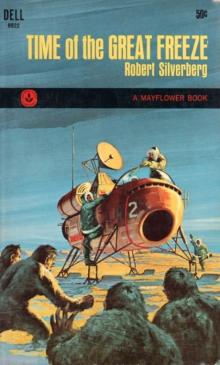 Time of the Great Freeze
 The Collected Stories of Robert Silverberg, Volume 3: Something Wild Is Loose: 1969-72
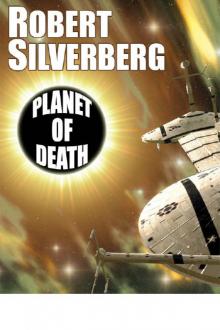 Planet of Death
 Trips: The Collected Stories of Robert Silverberg, Volume Four
 In the Beginning: Tales From the Pulp Era
 Hot Sky at Midnight
 Valentine Pontifex
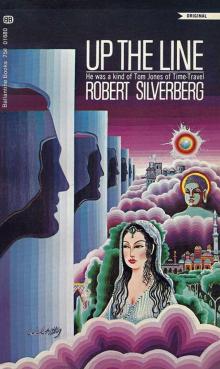 Up the Line
 Thorns
 Amanda and the Alien
 Star of Gypsies
 Nightwings
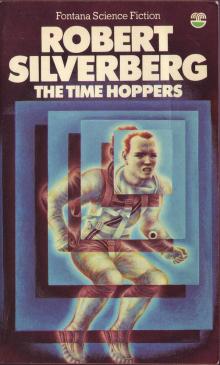 The Time Hoppers
 Blood on the Mink
 Dying Inside
 The Last Song of Orpheus
 The King of Dreams
 The Stochastic Man
 The Collected Stories of Robert Silverberg, Volume Seven: We Are for the Dark
 The Millennium Express: The Collected Stories of Robert Silverberg, Volume Nine
 The Iron Chancellor
 Lord Prestimion
 To Open the Sky
 The World Inside
 Chains of the Sea
 The Collected Stories of Robert Silverberg, Volume Five: The Palace at Midnight
 Postmark Ganymede
 The Second Trip
 The Collected Stories of Robert Silverberg, Volume 4: Trips: 1972-73
 Son of Man
 Tom O'Bedlam
 To the Land of the Living
 To Be Continued: The Collected Stories of Robert Silverberg, Volume One
 Shadrach in the Furnace
 The Chalice of Death: Three Novels of Mystery in Space
 The Queen of Springtime
 To Be Continued 1953-1958
 Legends
 Roma Eterna
 To Live Again
 At Winter's End
 Needle in a Timestack
 To Live Again and the Second Trip: The Complete Novels
 Lord of Darkness
 The Mountains of Majipoor
 The World Outside
 The Alien Years
 The Book of Skulls
 The Face of the Waters
 Gilgamesh the King
 The Collected Stories of Robert Silverberg, Volume 6: Multiples: 1983-87
 The Happy Unfortunate
 Three Survived
 Cronos
 Tower of Glass
 Legends II
 The Planet Killers
 The Collected Stories of Robert Silverberg, Volume 2: To the Dark Star: 1962-69
 Downward to the Earth
 Lord Valentine's Castle: Book One of the Majipoor Cycle
 Hot Times in Magma City, 1990-95
 Hunt the Space-Witch! Seven Adventures in Time and Space
 Majipoor Chronicles
 The Robert Silverberg Science Fiction Megapack(r)
 Starman's Quest
 Car Sinister
 Worlds of Maybe
 Fantasy The Best of 2001
 Revolt on Alpha C
 Homefaring
 The Pardoner's Tale
 Sailing to Byzantium - Six Novellas
 The Chalice of Death
 Sundance
 A Tip on a Turtle
 Nebula Awards Showcase 2001: The Year's Best SF and Fantasy Chosen by the Science Fiction and Fantasy Writers of America
 The Fangs of the Trees
 The Palace at Midnight: The Collected Work of Robert Silverberg, Volume Five
 The Millennium Express - 1995-2009 - The Collected Stories of Robert Silverberg Volume Nine
 Book of Skulls
 Passengers
 Something Wild is Loose - 1969–72 - The Collected Stories of Robert Silverberg Volume Three
 Multiples
 Starborne
 The Masks of Time
 The Mountains of Majipoor m-8
 Multiples (1983-87)
 Those Who Watch
 In the Beginning
 Earth Is The Strangest Planet
 Collision Course
 Neutral Planet
 To the Dark Star - 1962–69 - The Collected Stories of Robert Silverberg Volume Two
 Mutants
 Sailing to Byzantium
 When We Went to See the End of the World
 Robert Silverberg The Science Fiction Hall Of Fame Volume One, 1929-1964
 To Be Continued - 1953–58 - The Collected Stories of Robert Silverberg Volume One
 Valentine Pontifex m-3
 Gianni
 Majipoor Chronicles m-2
 We Are for the Dark (1987-90)
 Waiting for the Earthquake
 Fantasy: The Best of 2001
 How It Was When the Past Went Away
 Beauty in the Night
 The Man Who Never Forgot
 The Book of Changes m-9
 Lord Valentine's Castle m-1
 This Way to the End Times
 Queen of Springtime
 Legends-Volume 3 Stories by the Masters of Modern Fantasy
 The Palace at Midnight - 1980–82 - The Collected Stories of Robert Silverberg Volume Five
 Something Wild is Loose: The Collected Stories of Robert Silverberg, Volume Three
 Multiples - 1983–87 - The Collected Stories of Robert Silverberg Volume Six
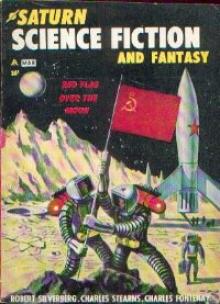 Alaree
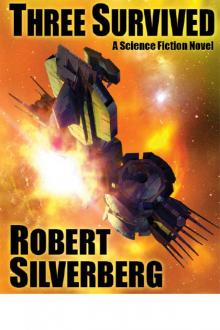 Three Survived: A Science Fiction Novel
 Defenders of the Frontier
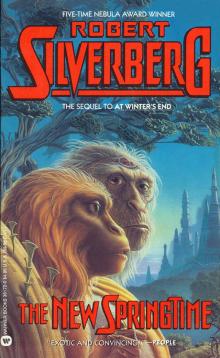 The New Springtime
 We Are for the Dark - 1987–90 - The Collected Stories of Robert Silverberg Volume Seven
 The Science Fiction Hall of Fame, Volume One 1929-1964--The Greatest Science Fiction Stories of All Time Chosen by the Members of the Science Fiction Writers of America
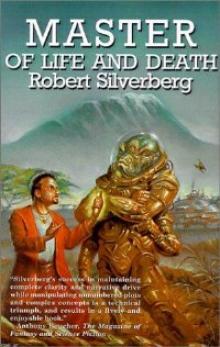 Master Of Life And Death
 Choke Chain
 Sorcerers of Majipoor m-4
 Absolutely Inflexible
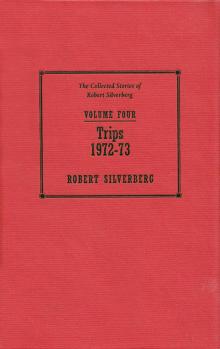 Trips - 1962–73 - The Collected Stories of Robert Silverberg Volume Four
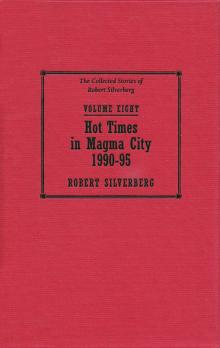 Hot Times in Magma City - 1990-95 - The Collected Stories of Robert Silverberg Volume Eight
 Far Horizons
 The Queen of Springtime ns-2
 The Seventh Science Fiction Megapack
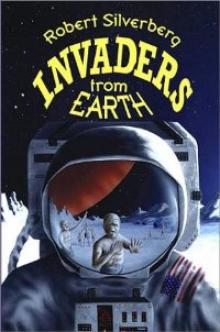 Invaders From Earth
 Hanosz Prime Goes To Old Earth
 The Macauley Circuit
 Science Fiction: The Best of 2001
 To the Dark Star: The Collected Stories of Robert Silverberg, Volume Two
 Stochastic Man
 Legends: Stories By The Masters of Modern Fantasy
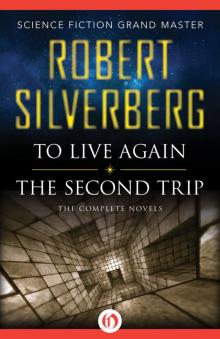 To Live Again And The Second Trip
 Flies
Flies The Silent Invaders
 Ship-Sister, Star-Sister