
- Home
- Robert Silverberg
Roma Eterna Page 19
Roma Eterna Read online
Page 19
The prince, smirking at him across the room, made a little impatient circling gesture with his hand. Obediently Antipater skimmed silently through the rest of the flourish of Byzantine pomp with which the letter opened and began reading again from the middle of the scroll:
“—to hoist anchor forthwith and undertake the northerly road, keeping well clear of Corsica isle, so that you journey straightaway to the Ligurian province of the Western Empire and make yourself the master of the ports of Antipolis and Nicaea—”
There was murmuring in the chamber already. These people had no need of maps in order to visualize the maritime movements that were involved. Or to grasp the nature of the danger to the city of Roma that the presence of a Greek fleet in those waters would pose.
Antipater closed the scroll and put it down.
The Emperor looked toward him and said, “Would you say, Antipater, that this document is authentic?”
“It’s written in good upper-class Byzantine Greek, majesty. I don’t recognize the handwriting, but it’s that of a capable scribe, the sort who’d be attached to an important admiral’s staff. And the seal looks like a genuine one.”
“Thank you, Antipater.” Maximilianus sat quietly for a moment, staring into the distance. Then he let his gaze travel slowly along the rows of Roma’s great leaders. At last it came to bear on the frail figure of Aurelianus Arcadius Ablabius, who had had command of the Tyrrhenian Sea fleet until his retirement to the capital for reasons of health a year before. “Explain to me, Ablabius, how a Byzantine armada could make its way up from Sicilia to the Sardinian coast without our so much as noticing the fact. Tell us about the Empire’s naval bases along the west coast of Sardinia, if you will, Ablabius.”
Ablabius, a thin, chalk-white man with pale blue eyes, moistened his lips and said, “Majesty, we have no significant naval bases on the west coast of Sardinia. Our ports are Calaris in the southeast and Olbia in the northeast. We have small outposts at Bosa and Othoca in the west, nothing more. The island is desolate and unhealthy and we have not seen the need to fortify it greatly.”
“Under the assumption, I suppose, that our enemies of the Eastern Empire were not likely to slip around us and attack us from the west?”
“This is so, majesty,” said Ablabius, visibly squirming.
“Ah. Ah. So nobody is watching the sea from western Sardinia. How interesting. Tell me about Corsica, now, Ablabius. Do we have a military base somewhere along the western coast of that island, perhaps?”
“There are no good harbors in the west at all, Caesar. The mountains come right down to the sea. Our bases are on the eastern shore, at Aleria and Mariana. It is another wild, useless island.”
“So, then, if a Greek fleet should succeed in entering the waters west of Sardinia, it would have clear sailing right on up to the Ligurian coast, is that right, Ablabius? We have no naval force whatsoever guarding that entire sea, is what you’re saying?”
“Essentially, yes, your majesty,” said Ablabius, in a very small voice.
“Ah. Thank you, Ablabius.” The Emperor Maximilianus once more traversed the room with his gaze. This time his eyes did not come to rest, but circled unceasingly about, as though he saw no place to land.
The tense hush was broken at last by Erucius Glabro, the senior Consul, a noble-looking hawk-nosed man who traced his ancestry back to the earliest years of the Empire. He had had Imperial pretensions himself, once, thirty or forty years back, but he was old now and generally thought to have become very foolish. “This is a serious matter, Caesar! If they land an army on the coast and begin marching toward Genua, we’d have no way of keeping them from coming on all the way down to the city itself.”
The Emperor smiled. He looked immensely weary. “Thank you for stating the obvious, Glabro. I was certain that I could count on you for that.”
“Majesty—”
“Thank you, I said.” The senior Consul shriveled back into his seat. The Emperor, his glinting narrow eyes roaming the group once more, said, “We have, I think, four choices here. We could transfer the army under Julius Fronto from the Gallian frontier to the vicinity of Genua, and hope that they’ll get there in time to meet any Greek force coming eastward along the Ligurian coast. But in all probability they’d be too late. Or we could bring the forces commanded by Claudius Lentulus across from Venetia to hold the Genuan border. That would probably work, but it would leave our northeastern frontier wide open to the army that Andronicus has in Dalmatia, and we’d see them in Ravenna or even Florentia before we knew what was happening. On the other hand, we could call the army of Sempronius Rufus northward from Calabria to defend the capital, bring Lentulus south to Tuscia and Umbria, and abandon the rest of the peninsula to the Greeks. That would put us back to where we were two thousand years ago, I suppose, but the chances seem fairly good that we could hold out here in the ancient Roman heartland for a long time.”
There was another long silence.
Then Germanicus Caesar said, in that lazy, offensive drawl of his, “I think you mentioned that we had four choices, brother. You mentioned only three.”
The Emperor did not look displeased. He seemed actually to be amused. “Very good, brother! Very good! There is a fourth choice. Which is to do nothing at all, to ignore this captured message entirely, to sit tight with our defenses in their present configuration and allow the Greeks to make whatever moves they have in mind.”
Antipater heard a few gasps of astonishment; and then there commenced a wild general hubbub. The Emperor, motionless, arms folded across his breast, lips curving into the faintest of smiles, waited for it to die down. As order began to return the voice of the Consul Herennius Capito could be heard clearly asking, “Would that not be the suicide of our nation, Caesar?”
“You might argue that any response at all that we might make at this time would be suicidal,” said the Emperor. “Defending ourselves on some new front means leaving some existing front unguarded. Pulling troops from any of our borders now will create a breach through which the enemy can easily move.”
“But to take no action whatever, Caesar, while the Greeks are landing an army virtually in our back yard—!”
“Ah, but are they, Capito? What if this message Antipater has just read to us is merely a fraud?”
There was a moment of astounded stillness, after which came a second uproar. “A fraud? A fraud? A fraud?” cried a host of high ministers and Imperial counselors all at once. They seemed stunned. As was Antipater as well, for was this not precisely the idea—implausible, absurd—that Justina had proposed to him in the privacy of his apartments the night before?
Antipater listened in amazement as Maximilianus now set forth the argument that the supposed letter of the Grand Admiral Chrysoloras might have been designed purely as a trap, that its intention was to induce the Romans to draw their forces away from a military front that was in genuine need of defending and move them to a place where no real threat existed.
That was possible, yes. But was it in any way likely?
Not to Antipater. His father had taught him never to underestimate an enemy’s cunning, but by the same token never to overestimate it, either. He had seen often enough how easily you could outsmart yourself by trying to think too many moves ahead in a game. It was far more reasonable, he thought, to believe that the Greeks really did have warships out there beyond Sardinia and were at this moment making ready to grab the Ligurian ports than it was to suppose that the Chrysoloras letter was merely a clever ploy in some game of—what was that game the Persians liked to play?—chess. A gigantic game of chess.
But no one could tell the Emperor to his face that a position he had put forth was absurd, or even just improbable. Very swiftly the assembled ministers and counselors could be seen bringing themselves around to an acceptance of the argument that it might not be necessary to react to the Grand Admiral’s purported orders to the commander of the Sardinian fleet, because there just might not be any Sardinian fleet. Which
was the safest way to deal with it, anyway, politically speaking. A decision to do nothing spared them from having to yank Roman legions away from a border point that was quite definitely in danger of imminent attack. Nobody wanted the responsibility for doing that.
In the end, then, the Grand Council voted to take a wait-and-see position; and off went everyone to the Senate House in the Forum to go through the meaningless ritual of presenting the non-decision to the full Senate for its foreordained ratification.
“Stay a moment,” said the Emperor to Antipater, as the others headed for their waiting litters.
“Caesar?”
“I saw you shaking your head, there at the end, when the vote was being tallied.”
Antipater saw no purpose in offering a reply. He regarded the Emperor with a blank bland subservient stare.
“You think the Admiral’s letter is real, don’t you, Antipater?”
“Unquestionably the penmanship and the style of phrasing are Byzantine,” said Antipater cautiously. “The seal looks right also.”
“I don’t mean that. I’m talking about the fleet that we’re supposed to believe is lying at anchor off western Sardinia. You think it’s actually there.”
“Caesar, I am in no position to speculate about—”
“I think it’s really there, too,” Maximilianus said.
“You do, Caesar?”
“Absolutely.”
“Then why did you—?”
“Allow them to vote to take no action?” A look of terrible fatigue crossed the Emperor’s face. “Because that was the easiest thing, Antipater. It was my duty to bring the letter to their attention. But there’s no way we can respond to it, don’t you see? Even if the Greeks are on their way to Liguria, we don’t have any troops to send out there to meet them.”
“What will we do, Caesar, if they invade the peninsula?”
“Fight, I suppose,” said Maximilianus dully. “What else is there to do? I’ll pull Lentulus’s army down from the Dalmatian border and bring Sempronius Rufus’s men up from the south and we’ll hole up in the capital and defend ourselves as well as we can.” There was no trace of Imperial vigor in his voice, not a shred of conviction or fire. He is just striking a pose, Antipater thought, and not working very hard at it, either.
To Antipater the outcome seemed utterly clear.
The Empire is lost, he thought. All we’re doing is waiting for the end.
Once he had translated the Chrysoloras letter for the benefit of the Senate, there was no need for Antipater to remain for the rest of the debate, nor did he feel any desire to do so. Disdaining the litter-bearers who were waiting outside to take him back to his office at the palace, he set out on foot into the Forum, wandering blindly and purposelessly through the dense crowds, hoping only to soothe the agitation that pounded through his brain.
But the heat and the myriad chaotic sights and smells and sounds of the Forum only made things worse for him. The Empire’s present situation seemed all the more tragic to him here amidst the Forum’s multitude of glorious gleaming buildings.
Had there ever been an empire like the Roman Empire, in all of history? Or any city like mighty Roma? Surely not, thought Antipater. The greatness of Roma, city and Empire, had been growing steadily with scarcely any check for nearly two thousand years, from the era of the Republic to the coming of the Caesars and then on to the period of grand Imperial expansion that took the eagles of Roma into almost every region of the world. By the time that great age of empire-building had come to its natural end, with as much territory under control as was practical to administer, the power of Roma prevailed from the cool gray island of Britannia in the west to Persia and Babylon in the east.
He was aware that there had been a couple of occasions when that pattern of never-ending growth had suffered interruptions, but those were anomalies of long ago. In the modest early days of the Republic the barbarian Gauls had burst in here and burned the city, such as it had been then, but what had their invasion achieved? Only to strengthen the resolve of Roma never to let such a thing happen again; and the Gauls today were placid provincials, their warrior days long forgotten.
And then the business with Carthago—that affair was ancient history, too. The Carthaginian general Hannibal had caused his little disturbance, true, the thing with the elephants, but his invasion had come to nothing, and Roma had razed Carthago to its foundations and then built it all up again as a Roman colony, and the Carthaginians now were a nation of smiling hotel-keepers and restaurateurs who existed to serve the sun-seeking winter-holiday trade from Europa.
This Forum here, this crowded array of temples and law courts and statues and colonnades and triumphal arches, was the heart and core and nerve center of the whole splendid Empire. For twelve hundred years, from the time of Julius Caesar to the time of the present Maximilianus, the monarchs of Roma had filled these streets with a stunning conglomeration of glistening marble monuments to the national grandeur. Each building was grand in itself; the totality was altogether overwhelming, and, to Antipater just at this moment, depressing in the very fact of its own splendor. It all seemed like a giant memorial display for the dying realm.
Here, today, this sweltering humid blue-skied day in early autumn, Antipater wandered like a sleepwalker under the blazing golden eye of Sol among the innumerable architectural wonders of the Forum. The mammoth Senate House, the lofty temples to Augustus and Vespasianus and Antoninus Pius and half a dozen other early Emperors who had been proclaimed as gods, the colossal tomb of Julius that had been built hundreds of years after his time by some Emperor who had claimed disingenuously to be his descendant. The arches of Septimius Severus and Constantinus; the five great basilicas; the House of the Vestal Virgins, and on and on and on. There were richly ornamented buildings everywhere, a surfeit of them, occupying every possible site to north and south and even up the sides of the Capitoline Hill. Nothing ever was torn down in the Forum. Each Emperor added his own contribution wherever room could be found, at whatever cost to rational planning and ease of movement.
At any hour, therefore, the Forum was a noisy, turbulent place. Antipater, numbed by the fierce heat and his own despair and confusion, was jostled again and again by unthinking common citizens hurrying blindly on to the shops and marketplaces along the fringes of the great public buildings. He began to feel a little dizzy. Clammy sweat soaked his light robe and his forehead was throbbing.
I must be somewhat ill, he decided.
Then, suddenly bewildered, he staggered and lurched and it was all he could do to keep from falling to the ground. He knew that he had to pause and rest. A high-domed eight-sided temple with massive ochre walls loomed up before him. Antipater lowered himself carefully to the bottommost of its broad stone steps and huddled there with his face in his hands, surprised to find himself shivering in this great warmth. Exhaustion, he thought. Exhaustion, stress, perhaps a little touch of fever.
“Thinking of making an offering to Concordia, are you, Antipater?” a cool mocking voice from above asked him.
He looked blearily up into the dazzling glare of the midday sunlight. A long smirking angular face, fashionably pale, caked with cracking makeup, hovered before him. Shining sea-green eyes, eyes precisely the color of the Emperor’s, but these were bloodshot and crazed.
Germanicus Caesar, it was, the royal heir, the profligate, sybaritic younger brother.
He had descended from a litter right in front of Antipater and stood rocking back and forth before him, grinning lopsidedly as if still drunk from the night before.
“Concordia?” Antipater asked muzzily. “Concordia?”
“The temple,” Germanicus said. “The one you’re sitting in front of.”
“Ah,” Antipater said. “Yes.”
He understood. The steps on which he had taken refuge, he saw now, were those of the magnificent Temple of Concordia. There was rich irony in that. The Temple of Concordia, Antipater knew, had been a gift to the city of Roma from the
celebrated Eastern Emperor Justinianus, six hundred fifty years earlier, by way of paying homage to the spirit of fraternal harmony that existed between the two halves of the Roman Empire. And here was the Eastern Empire now, no longer so touchingly fraternal, about to invade Italia and subjugate as much of the senior Roman realm as it could manage to conquer, up to and including the city of Roma itself. So much for Concordia. So much for the harmony of the two empires.
“What’s the matter with you?” Germanicus demanded. “Drunk?”
“The heat—the crowds—”
“Yes. That could make anybody sick. What are you doing walking around by yourself here, anyway?” Germanicus leaned forward. His breath, stinking of wine and overripe anchovies, was like a blast out of Hades. Nodding toward his litter, he said, “My chair’s big enough for two. Come on: I’ll give you a ride home.”
That was the last thing Antipater wanted, to be cooped up with this foul-smelling lascivious prince inside a covered litter, even for the quarter of an hour it would take to cross the Forum to the Palatine. He shook his head. “No—no—”
“Well, get out of the sun, at least. Let’s go into the temple. I want to talk to you, anyway.”
“You do?”
Helplessly Antipater allowed himself to be tugged to his feet and herded up the dozen or more steps of Justinianus’s temple. Within, behind the great bronze door, all was cool and dark. The place was deserted, no priests, no worshipers. A brilliant shaft of light descending from an opening high overhead in the dome illuminated a marble slab above the altar that proclaimed, in fiery letters of gold, the Emperor Justinianus’s eternal love for his kinsman and royal counterpart of the West, His Imperial Roman Majesty Heraclius II Augustus.
Germanicus laughed softly. “Those two should only know what’s going on now! Could it ever have worked, d’ye think—dividing the Empire and expecting the two halves to live together peacefully forever after?”
Antipater, still dizzied and faint, felt little wish to discuss history with Prince Germanicus just now.
 The Longest Way Home
 Hawksbill Station
 A Time of Changes
 This Way to the End Times: Classic Tales of the Apocalypse
 Beyond the Gate of Worlds
 Lord Valentine's Castle
 The Man in the Maze
 Tales of Majipoor
 Time of the Great Freeze
 The Collected Stories of Robert Silverberg, Volume 3: Something Wild Is Loose: 1969-72
 Planet of Death
 Trips: The Collected Stories of Robert Silverberg, Volume Four
 In the Beginning: Tales From the Pulp Era
 Hot Sky at Midnight
 Valentine Pontifex
 Up the Line
 Thorns
 Amanda and the Alien
 Star of Gypsies
 Nightwings
 The Time Hoppers
 Blood on the Mink
 Dying Inside
 The Last Song of Orpheus
 The King of Dreams
 The Stochastic Man
 The Collected Stories of Robert Silverberg, Volume Seven: We Are for the Dark
 The Millennium Express: The Collected Stories of Robert Silverberg, Volume Nine
 The Iron Chancellor
 Lord Prestimion
 To Open the Sky
 The World Inside
 Chains of the Sea
 The Collected Stories of Robert Silverberg, Volume Five: The Palace at Midnight
 Postmark Ganymede
 The Second Trip
 The Collected Stories of Robert Silverberg, Volume 4: Trips: 1972-73
 Son of Man
 Tom O'Bedlam
 To the Land of the Living
 To Be Continued: The Collected Stories of Robert Silverberg, Volume One
 Shadrach in the Furnace
 The Chalice of Death: Three Novels of Mystery in Space
 The Queen of Springtime
 To Be Continued 1953-1958
 Legends
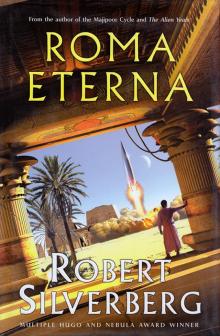 Roma Eterna
 To Live Again
 At Winter's End
 Needle in a Timestack
 To Live Again and the Second Trip: The Complete Novels
 Lord of Darkness
 The Mountains of Majipoor
 The World Outside
 The Alien Years
 The Book of Skulls
 The Face of the Waters
 Gilgamesh the King
 The Collected Stories of Robert Silverberg, Volume 6: Multiples: 1983-87
 The Happy Unfortunate
 Three Survived
 Cronos
 Tower of Glass
 Legends II
 The Planet Killers
 The Collected Stories of Robert Silverberg, Volume 2: To the Dark Star: 1962-69
 Downward to the Earth
 Lord Valentine's Castle: Book One of the Majipoor Cycle
 Hot Times in Magma City, 1990-95
 Hunt the Space-Witch! Seven Adventures in Time and Space
 Majipoor Chronicles
 The Robert Silverberg Science Fiction Megapack(r)
 Starman's Quest
 Car Sinister
 Worlds of Maybe
 Fantasy The Best of 2001
 Revolt on Alpha C
 Homefaring
 The Pardoner's Tale
 Sailing to Byzantium - Six Novellas
 The Chalice of Death
 Sundance
 A Tip on a Turtle
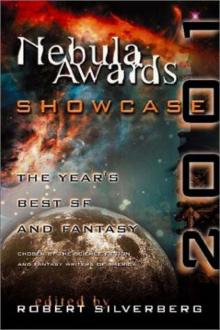 Nebula Awards Showcase 2001: The Year's Best SF and Fantasy Chosen by the Science Fiction and Fantasy Writers of America
 The Fangs of the Trees
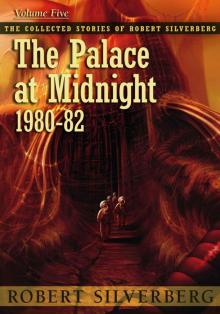 The Palace at Midnight: The Collected Work of Robert Silverberg, Volume Five
 The Millennium Express - 1995-2009 - The Collected Stories of Robert Silverberg Volume Nine
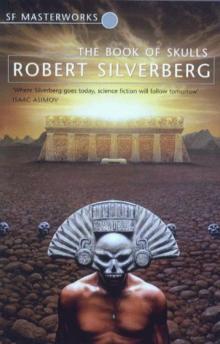 Book of Skulls
 Passengers
 Something Wild is Loose - 1969–72 - The Collected Stories of Robert Silverberg Volume Three
 Multiples
 Starborne
 The Masks of Time
 The Mountains of Majipoor m-8
 Multiples (1983-87)
 Those Who Watch
 In the Beginning
 Earth Is The Strangest Planet
 Collision Course
 Neutral Planet
 To the Dark Star - 1962–69 - The Collected Stories of Robert Silverberg Volume Two
 Mutants
 Sailing to Byzantium
 When We Went to See the End of the World
 Robert Silverberg The Science Fiction Hall Of Fame Volume One, 1929-1964
 To Be Continued - 1953–58 - The Collected Stories of Robert Silverberg Volume One
 Valentine Pontifex m-3
 Gianni
 Majipoor Chronicles m-2
 We Are for the Dark (1987-90)
 Waiting for the Earthquake
 Fantasy: The Best of 2001
 How It Was When the Past Went Away
 Beauty in the Night
 The Man Who Never Forgot
 The Book of Changes m-9
 Lord Valentine's Castle m-1
 This Way to the End Times
 Queen of Springtime
 Legends-Volume 3 Stories by the Masters of Modern Fantasy
 The Palace at Midnight - 1980–82 - The Collected Stories of Robert Silverberg Volume Five
 Something Wild is Loose: The Collected Stories of Robert Silverberg, Volume Three
 Multiples - 1983–87 - The Collected Stories of Robert Silverberg Volume Six
 Alaree
 Three Survived: A Science Fiction Novel
 Defenders of the Frontier
 The New Springtime
 We Are for the Dark - 1987–90 - The Collected Stories of Robert Silverberg Volume Seven
 The Science Fiction Hall of Fame, Volume One 1929-1964--The Greatest Science Fiction Stories of All Time Chosen by the Members of the Science Fiction Writers of America
 Master Of Life And Death
 Choke Chain
 Sorcerers of Majipoor m-4
 Absolutely Inflexible
 Trips - 1962–73 - The Collected Stories of Robert Silverberg Volume Four
 Hot Times in Magma City - 1990-95 - The Collected Stories of Robert Silverberg Volume Eight
 Far Horizons
 The Queen of Springtime ns-2
 The Seventh Science Fiction Megapack
 Invaders From Earth
 Hanosz Prime Goes To Old Earth
 The Macauley Circuit
 Science Fiction: The Best of 2001
 To the Dark Star: The Collected Stories of Robert Silverberg, Volume Two
 Stochastic Man
 Legends: Stories By The Masters of Modern Fantasy
 To Live Again And The Second Trip
 Flies
Flies The Silent Invaders
 Ship-Sister, Star-Sister