
- Home
- Robert Silverberg
A Time of Changes Page 19
A Time of Changes Read online
Page 19
57
IN EARLY SPRING a lunatic heat settled over Manneran, coupled with such frequent rains that all the city’s vegetation went mad, and would have swallowed every street if not given a daily hacking. It was green, green, green, everywhere: green haze in the sky, green rain falling, green sunlight sometimes breaking through, broad glossy green leaves unfurling on every balcony and in every garden plot. A man’s own soul can mildew in that. Green, too, were the awnings on the street of the spice-merchants’ shops. Loimel had given me a long list of things to purchase, delicacies from Threish and Velis and the Wet Lowlands, and in a docile husbandly way I went to obtain them, since the street of spice was only a short walk from the Justiciary. She was mounting a grand feast to celebrate the Naming Day of our eldest daughter, who was at last going to come into the adult-name we had intended for her: Loimel. All the great ones of Manneran had been invited to look on as my wife acquired a namesake. Among the guests would be several who had covertly sampled the Sumaran drug with me, and I took private pleasure in that; Schweiz, though, had not been invited, since Loimel deemed him coarse, and in any event he had left Manneran on some business trip just as the weather was beginning to go berserk.
I moved through the greenness to the best of the shops. A recent rain had ended and the sky was a flat green plaque resting on the rooftops. To me came delicious fragrances, sweetnesses, pungencies, clouds of tongue-tickling flavors. Abruptly there were black bubbles coursing through my skull and for a moment I was Schweiz haggling on a pier with a skipper who had just brought a cargo of costly produce in from the Gulf of Sumar. I halted to enjoy this tangling of selves. Schweiz faded; through Noim’s mind I smelled the scent of newly threshed hay on the Condorit estates, under a delicious late-summer sun; then suddenly and surprisingly I was the bank director with my hand tight on some other man’s loins. I cannot convey to you the impact of that last bolt of transferred experience, brief and incandescent. I had taken the drug with the bank director not very long before, and I had seen nothing in his soul, then, of his taste for his own sex. It was not the kind of thing I would overlook. Either I had manufactured this vision gratuitously, or he had somehow shielded that part of his self from me, keeping his predilections sealed until this instant of breaking through. Was such a partial sealing possible? I had thought one’s mind lay fully open. I was not upset by the nature of his lusts, only by my inability to reconcile what I had just experienced with what had come to me from him on the day of our drug-sharing. But I had little time to ponder the problem, for, as I stood gaping outside the spice-shop, a thin hand fell on mine and a guarded voice said, “I must talk to you secretly, Kinnall.” I. The word jolted me from my dreaming.
Androg Mihan, keeper of the archives of Manneran’s prime septarch, stood beside me. He was a small man, sharp-featured and gray, the last you would think to seek illegal pleasures; the Duke of Sumar, one of my early conquests, had led him to me. “Where shall we go?” I asked, and Mihan indicated a disreputable-looking lower-class godhouse across the street. Its drainer lounged outside, trying to stir up business. I could not see how we could talk secretly in a godhouse, but I followed the archivist anyway; we entered the godhouse and Mihan told the drainer to fetch his contract forms. The moment the man was gone, Mihan leaned close to me and said, “The police are on their way to your house. When you return home this evening you will be arrested and taken to prison on one of the Sumar Gulfs isles.”
“Where do you learn this?”
“The decree was verified this morning and has passed to me for filing.”
“What charge?” I asked.
“Selfbaring,” Mihan said. “Accusation filed by agents of the Stone Chapel. There is also a secular charge: use and distribution of illegal drugs. They have you, Kinnall.”
“Who is the informer?”
“A certain Jidd, said to be a drainer in the Stone Chapel. Did you let the tale of the drug be drained from you?”
“I did. In my innocence. The sanctity of the godhouse—”
“The sanctity of the dunghouse!” Androg Mihan said vehemently. “Now you must flee! The full force of the government is mustered against you.”
“Where shall I go?”
“The Duke of Sumar will shelter you tonight,” said Mihan. “After that—I do not know.”
The drainer now returned, bearing a set of contracts. He gave us a proprietary smile and said, “Well, gentlemen, which of you is to be first?”
“One has remembered another appointment,” Mihan said.
“One feels suddenly unwell,” I said.
I tossed the startled drainer a fat coin and we left the godhouse. Outside, Mihan pretended not to know me, and we went our separate ways without a word. Not for a moment did I doubt the truth of his warning. I had to take flight; Loimel would have to purchase her own spices. I hailed a car and went at once to the mansion of the Duke of Sumar.
58
THIS DUKE IS one of the wealthiest in Manneran, with sprawling estates along the Gulf and in the Huishtor foothills, and a splendid home at the capital set amidst a park worthy of an emperor’s palace. He is hereditary customs-keeper of Stroin Gap, which is the source of his family’s opulence, since for centuries they have skimmed a share of all that is brought forth to market out of the Wet Lowlands. In his person this duke is a man of great ugliness or remarkable beauty, I am not sure which: he has a large flat triangular head, thin lips, a powerful nose, and strange dense tightly curled hair that clings like a carpet to his skull. His hair is entirely white, yet his face is unlined. His eyes are huge and dark and intense. His cheeks are hollow. It is an ascetic face, which to me always seemed alternately saintly and monstrous, and sometimes the both at once. I had been close with him almost since my arrival in Manneran so many years before; he had helped Segvord Helalam into power, and he had stood soulbinder to Loimel at our wedding ceremony. When I took up the use of the Sumaran drug, he divined it as if by telepathy, and in a conversation of marvelous subtlety learned from me that I had the drug, and arranged that he should take it with me. That had been four moonrises earlier, in late winter.
Arriving at his home, I found a tense conference in progress. Present were most of the men of consequence whom I had inveigled into my circle of self-barers. The Duke of Mannerangu Smor. The Marquis of Woyn. The bank director. The Commissioner of the Treasury and his brother, the Procurator-General of Manneran. The Master of the Border. And five or six others of similar significance. Archivist Mihan arrived shortly after I did.
“We are all here now,” the Duke of Mannerangu Smor said. “They could sweep us up with a single stroke. Are the grounds well guarded?”
“No one will invade us,” said the Duke of Sumar, a trifle icily, clearly offended by the suggestion that common police might burst into his home. He turned his huge alien eyes on me. “Kinnall, this will be your last night in Manneran, and no help for it. You are to be the scapegoat.”
“By whose choice?” I asked.
“Not ours,” the duke replied. He explained that something close to a coup d’état had been attempted in Manneran this day, and might well yet succeed: a revolt of junior bureaucrats against their masters. The beginning, he said, lay in my having admitted my use of the Sumaran drug to the drainer Jidd. (Around the room faces darkened. The unspoken implication was that I had been a fool to trust a drainer, and now must pay the price of my folly. I had not been as sophisticated as these men.) Jidd, it seemed, had leagued himself with a cabal of disaffected minor officials, hungry for their turn at power. Since he was drainer to most of the great men of Manneran, he was in an extraordinarily good position to aid the ambitious, by betraying the secrets of the mighty. Why Jidd had chosen to contravene his oaths in this fashion was not yet known. The Duke of Sumar suspected that in Jidd familiarity had bred contempt, and after listening for years to the melancholy outpourings of his powerful clients, he had grown to loathe them: exasperated by their confessions, he found pleasure in collaborating in
their destruction. (This gave me a new view of what a drainer’s soul might be like.) Hence Jidd had, for some months now, been slipping useful facts to rapacious subordinates, who had threatened their masters with them, often to considerable effect. By admitting my use of the drug to him, I had made myself vulnerable, and he had sold me to certain folk of the Justiciary who wished to have me out of office.
“But this is absurd!” I cried. “The only evidence against me is protected by the sanctity of the godhouse! How can Jidd place a complaint against me based on what I’ve drained to him? I’ll have him up on charges for violation of contract!”
“There is other evidence,” the Marquis of Woyn said sadly.
“There is?”
“Using what he heard from your own lips,” the Marquis said, “Jidd was able to guide your enemies into channels of investigation. They have found a certain woman who lives in the hovels behind the Stone Chapel, who has admitted to them that you gave her a strange drink that opened her eyes to you—”
“The beasts.”
“They have also,” the Duke of Sumar said, “been able to link several of us to you. Not all, but several. This morning some of us were presented, by their own subordinates, with demands to resign their offices or face exposure. We met these threats firmly, and those who made them are now under detention, but there is no telling how many allies they have in high places. It is possible that by next moonrise we will all have been cast down and new men will hold our power. However, I doubt this, since, so far as we can determine, the only solid evidence so far is the confession of the slut, who has implicated only you, Kinnall. The accusations made by Jidd will of course be inadmissible, though they can do damage anyway.”
“We can destroy her credibility,” I said. “I’ll claim I never knew her. I’ll—”
“Too late,” said the Procurator-General. “Her deposition is on record. I’ve had a copy from the Grand Justiciar. It will stand up. You’re hopelessly implicated.”
“What will happen?” I asked.
“We will crush the ambitions of the blackmailers,” said the Duke of Sumar, “and send them into poverty. We will break Jidd’s prestige and drive him from the Stone Chapel. We will deny all of the charges of selfbaring that may be brought against us. You, however, must leave Manneran.”
“Why?” I looked at the duke in perplexity. “I’m not without influence. If you can withstand the charges, why not I?”
“Your guilt is on record,” the Duke of Mannerangu Smor said. “If you flee, it can be claimed that you alone, and this girl you corrupted, were the only ones involved, and the rest is merely the fabrication of self-serving underlings trying to overthrow their masters. If you stay and try to fight a hopeless case, you’ll eventually bring us all down, as your interrogation proceeds.”
It was wholly plain to me now.
I was dangerous to them. My strength might be broken in court and their guilt thus exposed. Thus far I was the only one indicted, and I was the only one vulnerable to the processes of Mannerangi justice. They were vulnerable solely through me, and if I went, there was no way of getting at them. The safety of the majority required my departure. Moreover: my naive faith in the godhouse, which had led me rashly to confess to Jidd, had led to this tempest, which otherwise might have been avoided. I had caused all this; I was the one who must go.
The Duke of Sumar said, “You will remain with us until the dark hours of night, and then my private groundcar, escorted by bodyguards as though it were I who was traveling, will take you to the estate of the Marquis of Woyn. A riverboat will be waiting there. By dawn you will be across the Woyn and into your homeland of Salla, and may the gods journey at your side.”
59
ONCE MORE A REFUGEE. In a single day all the power I had accumulated in fifteen years in Manneran was lost. Neither high birth nor high connections could save me: I might have ties of marriage or love or politics to half the masters of Manneran, yet they were helpless in helping me. I have made it seem as if they had forced me into exile to save their own skins, but it was not like that. My going was necessary, and it brought as much sorrow to them as to me.
I had nothing with me but the clothes I wore. My wardrobe, my weapons, my ornaments, my wealth itself, must remain behind in Manneran. As a boy-prince fleeing from Salla to Glin, I had had the prudence to transfer funds ahead of myself, but now I was cut off. My assets would be sequestered; my sons would be paupered. There had been no time for preparations.
Here at least my friends were of service. The Procurator-General, who was nearly of a size with me, had brought several changes of handsome clothing. The Commissioner of the Treasury had obtained for me a fair fortune in Sallan currency. The Duke of Mannerangu Smor pulled two rings and a pendant from his own body, so that I should not go unadorned into my native province. The Marquis of Woyn pressed on me a ceremonial dagger and his heat-rod, with a hilt worked with precious gems. Mihan promised to speak with Segvord Helalam, and tell him the details of my downfall; Segvord would be sympathetic, Mihan believed, and would protect my sons with all his influence, and keep them untainted by their father’s indictment. Lastly, the Duke of Sumar came to me at the deepest time of the night, when I sat alone sourly eating the dinner I had had no time for earlier, and handed me a small jeweled case of bright gold, of the sort one might carry medicine in. “Open it carefully,” he said. I did, and found it brimming with white powder. In amazement I asked him where he had obtained this; he had lately sent agents secretly to Sumara Borthan, he replied, who had returned with a small supply of the drug. He claimed to have more, but I believe he gave me all he had.
“In an hour’s time you will leave,” said the duke, to smother my gush of gratitude.
I asked to be allowed to make a call first.
“Segvord will explain matters to your wife,” the duke said.
“One did not mean one’s wife. One meant one’s bondsister.” In speaking of Halum I could not drop easily into the rough grammar we self-barers affected. “One has had no chance to make one’s farewell to her.”
The duke understood my anguish, for he had been within my soul. But he would not grant me the call. Lines might be tapped; he could not risk having my voice go forth from his home this night. I realized then how delicate a position even he must be in, and I did not force the issue. I could call Halum tomorrow, when I had crossed the Woyn and was safe in Salla.
Shortly it was time for me to depart. My friends had already gone, some hours since; the duke alone led me from the house. His majestic groundcar waited, and a corps of bodyguards on individual powercycles. The duke embraced me. I climbed into the car and settled back against the cushions. The driver opaqued the windows, hiding me from view though not interfering with my own vision. The car rolled silently forward, picked up speed, plunged into the night, with my outriders, six of them, hovering about it like insects. It seemed that hours went by before we came even to the main gate of the duke’s estate. Then we were on the highway. I sat like a man carved of ice, scarcely thinking of what had befallen me. Northward lay our route, and we went at such a rate that the sun was not yet up when we reached the margin of the Marquis of Woyn’s estate, on the border between Manneran and Salla. The gate opened; we shot through; the road cut across a dense forest, in which, by moonlight, I could see sinister parasitic growths like hairy ropes tangling tree to tree. Suddenly we erupted into a clearing and I beheld the banks of the River Woyn. The car halted. Someone in dark robes helped me out, as though I were a dodderer, and escorted me down the spongy bank to a long narrow pier, barely visible in the thick mist rising off the breast of the river. A boat was tied up, no great craft, hardly more than a dinghy. Yet it traveled at great speed across the broad and turbulent Woyn. Still I felt no inner response to my banishment from Manneran. I was like one who has gone forth in battle and had his right leg sliced off at the thigh by a fire-bolt, and who now lies in a tumbled heap, staring calmly at his stump and sensing no pain. The pain would come,
in time.
Dawn was near. I could make out the shape of the Sallan side of the river. We pulled up at a dock that jutted out of a grassy bank, plainly some nobleman’s private landing. Now I felt my first alarm. In a moment I would step ashore in Salla. Where would I find myself? How would I reach some settled region? I was no boy, to beg rides from passing trucks. But all this had been settled for me hours before. As the boat bumped the shoulder of the pier, a figure emerged in the dimness and extended a hand: Noim. He drew me forth and clasped me in a tight hug. “I know what has happened,” he said. “You will stay with me.” In his emotion he abandoned polite usage with me for the first time since our boyhood.
60
AT MIDDAY, from Noim’s estate in southwestern Salla, I phoned the Duke of Sumar to confirm my safe arrival—it was he, of course, who had arranged for my bondbrother to meet me at the border—and then I put through a call to Halum. Segvord had told her just a few hours earlier of the reasons for my disappearance. “How strange this news is,” she said. “You never spoke of the drug. Yet it was so important to you, for you risked everything to use it. How could it have had such a role in your life, and yet be kept a secret from your bondsister?” I answered that I had not dared to let her know of my preoccupation with it, for fear I might be tempted to offer it to her. She said, “Is opening yourself then to your bondsister so terrible a sin?”
 The Longest Way Home
 Hawksbill Station
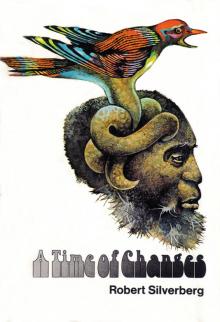 A Time of Changes
 This Way to the End Times: Classic Tales of the Apocalypse
 Beyond the Gate of Worlds
 Lord Valentine's Castle
 The Man in the Maze
 Tales of Majipoor
 Time of the Great Freeze
 The Collected Stories of Robert Silverberg, Volume 3: Something Wild Is Loose: 1969-72
 Planet of Death
 Trips: The Collected Stories of Robert Silverberg, Volume Four
 In the Beginning: Tales From the Pulp Era
 Hot Sky at Midnight
 Valentine Pontifex
 Up the Line
 Thorns
 Amanda and the Alien
 Star of Gypsies
 Nightwings
 The Time Hoppers
 Blood on the Mink
 Dying Inside
 The Last Song of Orpheus
 The King of Dreams
 The Stochastic Man
 The Collected Stories of Robert Silverberg, Volume Seven: We Are for the Dark
 The Millennium Express: The Collected Stories of Robert Silverberg, Volume Nine
 The Iron Chancellor
 Lord Prestimion
 To Open the Sky
 The World Inside
 Chains of the Sea
 The Collected Stories of Robert Silverberg, Volume Five: The Palace at Midnight
 Postmark Ganymede
 The Second Trip
 The Collected Stories of Robert Silverberg, Volume 4: Trips: 1972-73
 Son of Man
 Tom O'Bedlam
 To the Land of the Living
 To Be Continued: The Collected Stories of Robert Silverberg, Volume One
 Shadrach in the Furnace
 The Chalice of Death: Three Novels of Mystery in Space
 The Queen of Springtime
 To Be Continued 1953-1958
 Legends
 Roma Eterna
 To Live Again
 At Winter's End
 Needle in a Timestack
 To Live Again and the Second Trip: The Complete Novels
 Lord of Darkness
 The Mountains of Majipoor
 The World Outside
 The Alien Years
 The Book of Skulls
 The Face of the Waters
 Gilgamesh the King
 The Collected Stories of Robert Silverberg, Volume 6: Multiples: 1983-87
 The Happy Unfortunate
 Three Survived
 Cronos
 Tower of Glass
 Legends II
 The Planet Killers
 The Collected Stories of Robert Silverberg, Volume 2: To the Dark Star: 1962-69
 Downward to the Earth
 Lord Valentine's Castle: Book One of the Majipoor Cycle
 Hot Times in Magma City, 1990-95
 Hunt the Space-Witch! Seven Adventures in Time and Space
 Majipoor Chronicles
 The Robert Silverberg Science Fiction Megapack(r)
 Starman's Quest
 Car Sinister
 Worlds of Maybe
 Fantasy The Best of 2001
 Revolt on Alpha C
 Homefaring
 The Pardoner's Tale
 Sailing to Byzantium - Six Novellas
 The Chalice of Death
 Sundance
 A Tip on a Turtle
 Nebula Awards Showcase 2001: The Year's Best SF and Fantasy Chosen by the Science Fiction and Fantasy Writers of America
 The Fangs of the Trees
 The Palace at Midnight: The Collected Work of Robert Silverberg, Volume Five
 The Millennium Express - 1995-2009 - The Collected Stories of Robert Silverberg Volume Nine
 Book of Skulls
 Passengers
 Something Wild is Loose - 1969–72 - The Collected Stories of Robert Silverberg Volume Three
 Multiples
 Starborne
 The Masks of Time
 The Mountains of Majipoor m-8
 Multiples (1983-87)
 Those Who Watch
 In the Beginning
 Earth Is The Strangest Planet
 Collision Course
 Neutral Planet
 To the Dark Star - 1962–69 - The Collected Stories of Robert Silverberg Volume Two
 Mutants
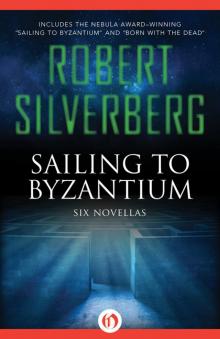 Sailing to Byzantium
 When We Went to See the End of the World
 Robert Silverberg The Science Fiction Hall Of Fame Volume One, 1929-1964
 To Be Continued - 1953–58 - The Collected Stories of Robert Silverberg Volume One
 Valentine Pontifex m-3
 Gianni
 Majipoor Chronicles m-2
 We Are for the Dark (1987-90)
 Waiting for the Earthquake
 Fantasy: The Best of 2001
 How It Was When the Past Went Away
 Beauty in the Night
 The Man Who Never Forgot
 The Book of Changes m-9
 Lord Valentine's Castle m-1
 This Way to the End Times
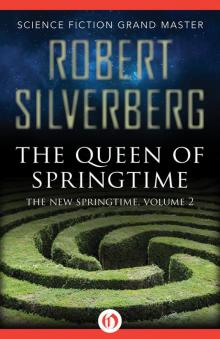 Queen of Springtime
 Legends-Volume 3 Stories by the Masters of Modern Fantasy
 The Palace at Midnight - 1980–82 - The Collected Stories of Robert Silverberg Volume Five
 Something Wild is Loose: The Collected Stories of Robert Silverberg, Volume Three
 Multiples - 1983–87 - The Collected Stories of Robert Silverberg Volume Six
 Alaree
 Three Survived: A Science Fiction Novel
 Defenders of the Frontier
 The New Springtime
 We Are for the Dark - 1987–90 - The Collected Stories of Robert Silverberg Volume Seven
 The Science Fiction Hall of Fame, Volume One 1929-1964--The Greatest Science Fiction Stories of All Time Chosen by the Members of the Science Fiction Writers of America
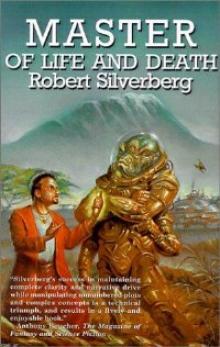 Master Of Life And Death
 Choke Chain
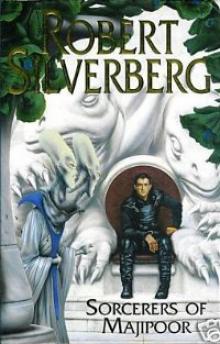 Sorcerers of Majipoor m-4
 Absolutely Inflexible
 Trips - 1962–73 - The Collected Stories of Robert Silverberg Volume Four
 Hot Times in Magma City - 1990-95 - The Collected Stories of Robert Silverberg Volume Eight
 Far Horizons
 The Queen of Springtime ns-2
 The Seventh Science Fiction Megapack
 Invaders From Earth
 Hanosz Prime Goes To Old Earth
 The Macauley Circuit
 Science Fiction: The Best of 2001
 To the Dark Star: The Collected Stories of Robert Silverberg, Volume Two
 Stochastic Man
 Legends: Stories By The Masters of Modern Fantasy
 To Live Again And The Second Trip
 Flies
Flies The Silent Invaders
 Ship-Sister, Star-Sister