
- Home
- Robert Silverberg
Worlds of Maybe Page 2
Worlds of Maybe Read online
Page 2
The high-school boy leaned mournfully on the push-bar of the lawn-mower. At the instant the static ended, the boy sat down suddenly on the dew-wet grass. The colored woman reeled and grabbed frantically at the nearest tree-trunk. The basket of wash toppled and spilled in a snowstorm of starched, varicolored clothing. Howls of terror from children. Sharp shrieks from women. “Earthquake! Earthquake/” Figures appeared running, pouring out of houses. Someone fled out to a sleeping porch, slid down a supporting column, and in his pajamas tripped over a rose-bush. In seconds, it seemed, the entire population of the street was out-of-doors.
And then there was a queer, blank silence. There was no earthquake. No house had fallen. No chimney had cracked. Not so much as a dish or window-pane had made a sound in smashing. The sensation every human being had felt was not an actual shaking of the ground. There had been movement, yes, and of the earth, but no such movement as any human being had ever dreamed of before. These people were to learn of that movement much later. Now they stared blankly at each other.
And in the sudden, dead silence broken only by the hum of an idling car and the wail of a frightened baby, a new sound became audible. It was the tramp of marching feet. With it came a curious clanking and clattering noise. And then a barked command, which was definitely not in the English language.
Down the street of a suburb of Joplin, Missouri, came a file of spear-armed, shield-bearing soldiers, in the short, skirtlike dress of ancient Rome. They wore helmets upon their heads. They peered about as if they were as blankly amazed as the citizens of Joplin who regarded them. A long column of marching men came into view, every man with shield and spear and the indefinable air of being used to just such weapons.
They halted at another barked order. A wizened short man with a short-sword snapped a question at the staring citizens. The high-school boy jumped. The wizened man roared his question again. The high-school boy stammered, and painfully formed syllables with his lips. The wizened man grunted in satisfaction. He talked, articulating clearly if impatiently. And the high-school boy turned dazedly to the other Americans.
“He wants to know the name of this town,” he said, disbelieving his own ears. ‘‘He’s talking Latin, like I learn in school. He says this town isn’t on the roadmaps, and he doesn’t know where he is. But all the same he takes possession of it in the name of the Emperor Valerius Fabricius, emperor of Rome and the far corners of the earth.” And then the school-boy stuttered. “He—he says these are the first six cohorts of the Forty-Second Legion, on garrison duty in Messalia. That—that’s supposed to be two days march up that way.”
He pointed in the direction of St. Louis.
The idling motor-car roared suddenly into life. Its gears whined and it came rolling out into the street. Its horn honked peremptorily for passage through the shield-clad soldiers. They gaped at it. It honked again and moved toward them.
A roared order, and they flung themselves upon it, spears thrusting, short-swords stabbing. Up to this instant there was not one single inhabitant of Joplin who did not believe the spear-armed soldiers motion-picture actors, or masqueraders, or something else equally insane but credible. But there was nothing make-believe about their attack on the car. They assaulted it as if it were a strange and probably deadly beast. They flung themselves into battle with it in a grotesquely reckless valor.
And there was nothing at all make-believe in the thoroughness and completeness with which they speared Mr. Horace B. Davis, who had only intended to drive down to the cotton-brokerage office of which he was chief clerk. They thought he was driving this strange beast to slaughter them, and they slaughtered him instead. The high-school boy saw them do it, growing whiter and whiter as he watched. When a swordsman approached the wizened man and displayed the severed head of Mr. Davis, with the spectacles dangling grotesquely from one ear, the high-school boy fainted dead away.
It was sunrise of June 5th. Cyrus Harding gulped down his breakfast in the pale gray dawnlight. He had felt very dizzy and sick for just a moment, some little while since, but he was himself again now. The smell of frying filled the kitchen. His wife cooked. Cyrus Harding ate. He made noises as he emptied his plate. His hands were gnarled and work-worn, but his expression was of complacent satisfaction. He looked at a calendar hung on the wall, a Christmas sentiment from the Bryan Feed and Fertilizer Company, in Bryan, Ohio.
“Sheriff’s goin’ to sell out Amos today,” he said comfortably. “I figger I’ll get that north forty cheap.”
His wife said tiredly:
“He’s been offerin’ to sell it to you for a year.”
“Yep,” agreed Cyrus Harding more complacently still. “Cornin’ down on the price, too. But nobuddy’ll bid against me at the sale. They know I want it bad, an’ I ain’t a good neighbor to have when somebuddy takes somethin’ from under my nose. Folks know it. I’ll git it a lot cheaper’n Amos offered it to me for. He wanted to sell it t’meet his int’rest an’ hoi’ on another year. I’ll git it for half that.”
He stood up and wiped his mouth. He strode to the door.
“That hired man shoulda got a good start with his harrowin’,” he said expansively. “I’ll take a look an’ go over to the sale.”
He went to the kitchen door and opened it. Then his mouth dropped open. The view from this doorway was normally that of a not-especially neat barnyard, with beyond it farmland flat as a floor, cultivated to the very fence-rails, with a promising crop of corn as a border against the horizon.
Now the view was quite otherwise. All was normal as far as the* barn. But beyond the barn was delirium. Huge, spreading tree-ferns soared upward a hundred feet. Lacy, foliated branches formed a roof of incredible density above sheer jungle such as no man on earth had ever seen before. The jungles of the Amazon basin were park-like by comparison with its thickness. It was a riotous tangle of living vegetation in which growth was battle, and battle was life, and life was deadly, merciless conflict. No man could have forced his way ten feet through such a wilderness. From it came a fetid exhalation which was part decay and part lush rank growing things, and part the overpowering perfumes of glaringly vivid flowers. It was jungle such as paleobotanists have described as existing in the Carboniferous Period; as the source of our coal-beds.
“It—it ain’t so!” said Cyrus Harding weakly. “It— ain’t so!”
His wife did not reply. She had not seen. Wearily, she began to clean up after her lord and master’s meal.
He went down the kitchen steps, staring and shaken. He moved toward this impossible apparition which covered his crops. It did not disappear as he neared it.
He went within twenty feet of it and stopped, still staring, still unbelieving, beginning to entertain the monstrous supposition that he had gone insane.
Then something moved in the jungle. A long, snaky neck, feet thick at its base and tapering to a mere sixteen inches behind a head the size of a barrel. The neck reached out the twenty feet to him. Cold eyes regarded him abstractedly. The mouth opened. Cyrus Harding screamed.
His wife raised her eyes. She looked through the open door and saw the jungle. She saw the jaws close upon her husband. She saw the colossal, abstracted eyes half-close as Something gulped, and partly choked, and swallowed. She saw a lump in the monstrous neck move from the relatively slender portion just behind the head to the enormous mass of flesh where the neck joined its unseen body. She saw the head withdraw into the jungle and be instantly lost to sight.
Cyrus Harding’s widow went very pale. She put on her hat and walked subduedly out of the front door. She began to walk steadily toward the house of the nearest neighbor. As she went, she said composedly to herself:
“It’s come. I’ve gone crazy. They’ll have to put me in an asylum. But I won’t have to stand him any more. 1 wont have to stand him any more!”
And at 10:30 a.m. on the morning of June 5th, Instructor James Minott of Robinson College turned upon the party of students with a revolver in each hand. Gone was the app
earance of the dour young instructor whose most destructive possibility was a below-passing mark in Math. He had guns in his hands now, instead of chalk or pencil, and his eyes were glowing even as he smiled frostily. The four girls gasped. The young men, accustomed to see him only in a class-room, realized that not only could he use the weapons in his hands, but that he would. And suddenly they respected him as they would respect— say—a burglar or a prominent gangster or a well-known murderer. He was raised far above the level of a mathematics instructor. He became instantly a leader, and by virtue of his weapons, even a ruler.
“As you see,” said Minott evenly, “I have anticipated the situation in which we find ourselves. At any moment, to be sure, we and all the human race may be wiped out with a completeness of which you can form no idea. But we may survive, and I am prepared equally to be wiped out or to make the most of my chance of survival—if we live.”
He looked steadily from one to another of the students who had followed him to explore the extraordinary appearance of a sequoia forest north of Fredericksburg.
“I know what has happened,” said Minott coolly. “I also know what is likely to happen. And I know what I intend to do about it. Any of you who are prepared to follow me can say so. Any of you who objects—well —I can’t have mutinies! I’ll shoot him!”
“But Mr. Minott,” said Blake nervously, “we ought to get the girls home—”
“They will never go home,” said Minott calmly. “Neither will you nor any of the rest of us. As soon as you’re quite convinced that I’m ready to use these weapons, I’ll tell you whats happened and what it means. I’ve been preparing for it for weeks.”
It was noon of June 5th. The cell-door opened and a very grave, whiskered man in a curious gray uniform came in. He tapped the prisoner gently on the shoulder.
“I’m Doctor Holloway,” he said encouragingly. “Army Medical Corps. Suppose you tell me, suh, just what happened t’you? I’m right sure it can all be straightened out.”
The prisoner sputtered:
“Why—why—dammit,” he protested. “I drove down from Louisville this morning. I had a dizzy spell and— well—I must have missed my road, because suddenly I noticed that everything around me was unfamiliar. And then a man in a gray uniform yelled at me, and a minute later he began to shoot, and the first thing I knew they’d arrested me for having the American flag painted on my car! I’m a traveling salesman for the Uncle Sam Candy-Bar Company! Dammit, it’s funny when a man can’t fly his own country’s flag—”
“In your own country, of co’se,” assented the doctor, comfortingly. “But you must know, suh, that we don’t allow any flag but ouah own to be displayed heah. You violated ouah laws, suh.”
“Your laws!” The prisoner stared blankly. “What laws? Where in the United States is it illegal to fly the American flag?”
“Nowheah in the United States, suh.” The doctor smiled. “You must have crossed ouah border unawares, suh. I will be frank, an’ admit that it was suspected you were insane. I see now that it was just a mistake.”
“Border—United—” The prisoner gasped. “I’m not in the United States? I’m not? Then where in hell am I?”
“Ten miles, suh, within the borders of the Confederacy,” said the doctor, and laughed. “A queer mistake, suh, but theah was no intention of insult. You’ll be released at once. Theah is enough tension between Washington an’ Richmond without another border incident to upset ouah hot-heads.”
“Confederacy?” The prisoner choked. “You can’t— you don’t mean the Confederate States—”
“Of co’se, suh. The Confederate States of North America. Why not?”
The prisoner gulped.
“I—I’ve gone mad!” he stammered. “I must be mad! There was Gettysburg—there was—”
“Gettysburg? Oh, yes!” The doctor nodded indulgently. “We are very proud of ouah history, suh. You refer to the battle in the War of Separation, when the fate of the Confederacy rested on ten minutes time. I have often wondered what would have been the result if Pickett’s charge had been driven back. It was Pickett’s charge that gained the day for us, suh. England recognized the Confederacy two days later, France in another week, an’ with unlimited credit abroad we won out. But it was a tight squeeze, suh!”
The prisoner gasped again. He stared out of the window. And opposite the jail stood an unquestionable court-house. Upon the court-house stood a flag-pole. And spread gloriously in the breeze above a government building—floated the Stars and Bars of the Confederacy!
It was night of June 5th. The post-master of North Centerville, Massachusetts, came out of his cubbyhole to listen to the narrative. The pot-bellied stove of the general store sent a comfortable, if unnecessary glow about. The eyewitness chuckled.
“Yeah. They come around the cape, thirty or forty of ’em in a boat all o’ sixty feet long with a crazy square sail drawin’. Round things in the gun’le like— like shields. An’ rowin’ like hell. They stopped when they saw the town an’ looked s’prised. Then they hailed us, talkin’ some lingo that wa’n't American. Ole Peterson, he near dropped his line, with a fish on it too. Then he tried t’ talk back. They hadda lotta trouble understandin’ him, or made out to. Then they turned around an’ rowed back. Actors or somethin’,* try in’ to play a joke. It fell flat, though. Maybe some o’ those rich folks up the coast pullin’ it. Ho! Ho! Ole says they was talkin’ a funny, old-fashioned Skowegian. They told him they was from Leifsholm, or somethin’ like that, just up the coast. That they couldn’t make out how our town got here. They’d never seen it before! Can y’ imagine that? Ole says they were Vikin’s, an’ they called this place Vinland, an’ says—My Gawd! What’s that?”
A sudden hubbub arose in the night. Screams. Cries. A shot-gun boomed dully. The loafers in the general store crowded out on the porch. Flames rose from half a dozen places on the water-front. In their light could be seen a full dozen serpent-ships, speeding for the shore, propelled by oars. Firelight glinted on swords, on shields. A woman screamed as a huge, yellowmaned man seized her. His brazen helmet and shield glittered. He was laughing. Then a figure in overalls hurtled toward the blonde giant, an axe held threateningly—
The giant cut him down with an already dripping blade and roared. Men rushed to him and they plunged on to loot and burn. More of the armored figures leaped to the sand from another beached ship. Another house roared flames skyward. . . .
Tall trees rose around the party. Giant trees. Magnificent trees. They towered two hundred and fifty feet into the air, and their air of venerable calm was at once the most convincing evidence of their actuality, and the most improbable of all the things which had happened in the neighborhood of Fredericksburg, Virginia. The little group of people sat their horses affrightedly beneath the monsters of the forest. Minott regarded them estimatingly, these three young men and four girls, all students of Robinson College.
Minott was now no longer the faculty-member in charge of a party of exploration, but a definitely ruthless leader.
At eight-thirty a.m. on June 5th the inhabitants of Fredericksburg had felt a curious, unanimous dizziness. It passed. The sun shone brightly. There seemed to be no noticeable change in any of the facts of everyday existence. But within an hour, the sleepy little town was buzzing with excitement. The road to Washington—Route One on all road-maps—ceased abruptly some three miles north. A colossal, a gigantic forest had appeared magically to block the way. Telegraphic communication with Washington had ceased. F,ven the Washington broadcasting stations were no longer on the air. The trees of the extraordinary forest were tall beyond the experience of any human being in town. They looked like the photographs of the giant sequoias on the Pacific Coast, but—well—the thing was simply impossible.
In an hour and a half, instructor Minott had organized a party of sight-seers among the students. He seemed to pick his party with a queer definiteness of decision. Three young men and four girls. They would have piled into a rickety ca
r owned by one of the boys, but Minott negated the idea.
“The road ends at the forest,” he said, smiling. “I'd rather like to explore a magic forest. Suppose we ride horseback? I’ll arrange for horses.”
In ten minutes the horses appeared. The girls had vanished to get into riding-breeches or knickers. They noted appreciatively on their return that besides the saddles, the horses had saddle-bags slung in place. Again Minott smiled.
“Were exploring,” he said humorously. “We must dress the part. Also, we’ll probably want some lunch. And we can bring back specimens for the botanical lab to look over.”
They rode forth; the girls thrilled, the young men pleased and excited, and all of them just a little bit disappointed at finding themselves passed by motorcars which whizzed by as all Fredericksburg went to look at the improbable forest ahead.
There were cars by hundreds where the road abruptly ended. A crowd stared at the forest. Giant trees, their roots fixed firmly in the ground. Undergrowth here and there. Over it all, an aspect of peace and utter serenity—and permanence. The watching crowd hummed and buzzed with speculation, with talk. The thing they saw was impossible. It could not have happened. This forest could not possibly be real. They were regarding some sort of mirage.
 The Longest Way Home
 Hawksbill Station
 A Time of Changes
 This Way to the End Times: Classic Tales of the Apocalypse
 Beyond the Gate of Worlds
 Lord Valentine's Castle
 The Man in the Maze
 Tales of Majipoor
 Time of the Great Freeze
 The Collected Stories of Robert Silverberg, Volume 3: Something Wild Is Loose: 1969-72
 Planet of Death
 Trips: The Collected Stories of Robert Silverberg, Volume Four
 In the Beginning: Tales From the Pulp Era
 Hot Sky at Midnight
 Valentine Pontifex
 Up the Line
 Thorns
 Amanda and the Alien
 Star of Gypsies
 Nightwings
 The Time Hoppers
 Blood on the Mink
 Dying Inside
 The Last Song of Orpheus
 The King of Dreams
 The Stochastic Man
 The Collected Stories of Robert Silverberg, Volume Seven: We Are for the Dark
 The Millennium Express: The Collected Stories of Robert Silverberg, Volume Nine
 The Iron Chancellor
 Lord Prestimion
 To Open the Sky
 The World Inside
 Chains of the Sea
 The Collected Stories of Robert Silverberg, Volume Five: The Palace at Midnight
 Postmark Ganymede
 The Second Trip
 The Collected Stories of Robert Silverberg, Volume 4: Trips: 1972-73
 Son of Man
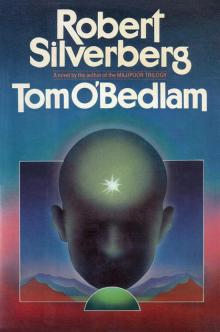 Tom O'Bedlam
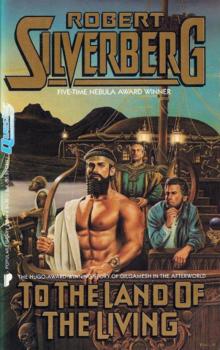 To the Land of the Living
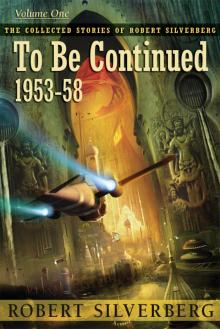 To Be Continued: The Collected Stories of Robert Silverberg, Volume One
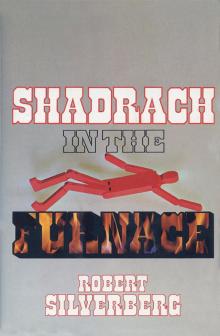 Shadrach in the Furnace
 The Chalice of Death: Three Novels of Mystery in Space
 The Queen of Springtime
 To Be Continued 1953-1958
 Legends
 Roma Eterna
 To Live Again
 At Winter's End
 Needle in a Timestack
 To Live Again and the Second Trip: The Complete Novels
 Lord of Darkness
 The Mountains of Majipoor
 The World Outside
 The Alien Years
 The Book of Skulls
 The Face of the Waters
 Gilgamesh the King
 The Collected Stories of Robert Silverberg, Volume 6: Multiples: 1983-87
 The Happy Unfortunate
 Three Survived
 Cronos
 Tower of Glass
 Legends II
 The Planet Killers
 The Collected Stories of Robert Silverberg, Volume 2: To the Dark Star: 1962-69
 Downward to the Earth
 Lord Valentine's Castle: Book One of the Majipoor Cycle
 Hot Times in Magma City, 1990-95
 Hunt the Space-Witch! Seven Adventures in Time and Space
 Majipoor Chronicles
 The Robert Silverberg Science Fiction Megapack(r)
 Starman's Quest
 Car Sinister
 Worlds of Maybe
 Fantasy The Best of 2001
 Revolt on Alpha C
 Homefaring
 The Pardoner's Tale
 Sailing to Byzantium - Six Novellas
 The Chalice of Death
 Sundance
 A Tip on a Turtle
 Nebula Awards Showcase 2001: The Year's Best SF and Fantasy Chosen by the Science Fiction and Fantasy Writers of America
 The Fangs of the Trees
 The Palace at Midnight: The Collected Work of Robert Silverberg, Volume Five
 The Millennium Express - 1995-2009 - The Collected Stories of Robert Silverberg Volume Nine
 Book of Skulls
 Passengers
 Something Wild is Loose - 1969–72 - The Collected Stories of Robert Silverberg Volume Three
 Multiples
 Starborne
 The Masks of Time
 The Mountains of Majipoor m-8
 Multiples (1983-87)
 Those Who Watch
 In the Beginning
 Earth Is The Strangest Planet
 Collision Course
 Neutral Planet
 To the Dark Star - 1962–69 - The Collected Stories of Robert Silverberg Volume Two
 Mutants
 Sailing to Byzantium
 When We Went to See the End of the World
 Robert Silverberg The Science Fiction Hall Of Fame Volume One, 1929-1964
 To Be Continued - 1953–58 - The Collected Stories of Robert Silverberg Volume One
 Valentine Pontifex m-3
 Gianni
 Majipoor Chronicles m-2
 We Are for the Dark (1987-90)
 Waiting for the Earthquake
 Fantasy: The Best of 2001
 How It Was When the Past Went Away
 Beauty in the Night
 The Man Who Never Forgot
 The Book of Changes m-9
 Lord Valentine's Castle m-1
 This Way to the End Times
 Queen of Springtime
 Legends-Volume 3 Stories by the Masters of Modern Fantasy
 The Palace at Midnight - 1980–82 - The Collected Stories of Robert Silverberg Volume Five
 Something Wild is Loose: The Collected Stories of Robert Silverberg, Volume Three
 Multiples - 1983–87 - The Collected Stories of Robert Silverberg Volume Six
 Alaree
 Three Survived: A Science Fiction Novel
 Defenders of the Frontier
 The New Springtime
 We Are for the Dark - 1987–90 - The Collected Stories of Robert Silverberg Volume Seven
 The Science Fiction Hall of Fame, Volume One 1929-1964--The Greatest Science Fiction Stories of All Time Chosen by the Members of the Science Fiction Writers of America
 Master Of Life And Death
 Choke Chain
 Sorcerers of Majipoor m-4
 Absolutely Inflexible
 Trips - 1962–73 - The Collected Stories of Robert Silverberg Volume Four
 Hot Times in Magma City - 1990-95 - The Collected Stories of Robert Silverberg Volume Eight
 Far Horizons
 The Queen of Springtime ns-2
 The Seventh Science Fiction Megapack
 Invaders From Earth
 Hanosz Prime Goes To Old Earth
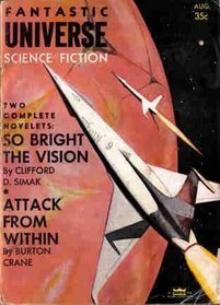 The Macauley Circuit
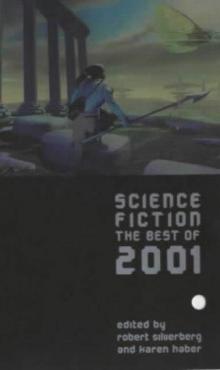 Science Fiction: The Best of 2001
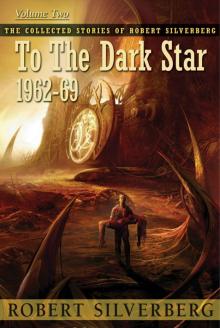 To the Dark Star: The Collected Stories of Robert Silverberg, Volume Two
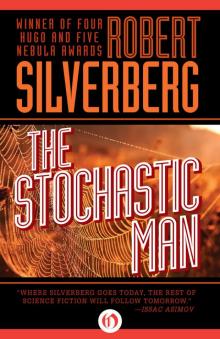 Stochastic Man
 Legends: Stories By The Masters of Modern Fantasy
 To Live Again And The Second Trip
 Flies
Flies The Silent Invaders
 Ship-Sister, Star-Sister