
- Home
- Robert Silverberg
Hawksbill Station Page 2
Hawksbill Station Read online
Page 2
Despite such difficulties, the planning authorities had finally sent through enough components to the master temporal site to allow for the construction of a receiving station. It was very much like threading a needle by remote control using mile-long manipulators, but they succeeded. All this time, of course, the Station was uninhabited; the government hadn’t cared to waste any of its own engineers by sending them back to set the place up, because they’d be unable to return. Finally, the first prisoners had gone through—political prisoners, naturally, but chosen for their technical backgrounds. Before they were shipped out, they were given instructions on how to put the parts of the Hammer and Anvil together.
Of course, it was their privilege to refuse to cooperate, once they reached the Station. They were beyond the reach of authority there. But it was to their own advantage to assemble the receiving station, thus making it possible for them to get further supplies from Up Front. They had done the job. After that, outfitting Hawksbill Station had been easy.
Now the Hammer glowed, meaning that they had activated the Hawksbill Field on the sending end, somewhere up around A.D. 2028 or 2030. All the sending was done from there. All the receiving was done here. Time travel didn’t work the other way. Nobody really knew why, although there was a lot of superficially profound talk about the rules of entropy and the infinite temporal momentum that you were likely to attain if you tried to accelerate along the normal axis of time flow, which is to say from past to future.
The whining, hissing sound in the room began to grow painfully louder as the edges of the Hawksbill Field began to ionize the atmosphere. Then came the expected thunderclap of implosion, caused by an imperfect overlapping of the quantity of air that was being subtracted from this era and the quantity that was being thrust into it from the future.
And then, abruptly, a man dropped out of the Hammer and lay, stunned and limp, on the gleaming Anvil.
He looked very young, which surprised Barrett considerably. He seemed to be well under thirty years old. Generally, only middle-aged men were condemned to exile at Hawksbill Station. They sent only the incorrigibles, the men who had to be separated from humanity for the general good of the greatest number. The youngest man in the place now had been close to forty when he first arrived. The sight of this lean, clean-cut boy drew a hiss of anguish from a couple of the men in the room, and Barrett understood the constellation of emotions that pained them.
The new man sat up. He stirred like a child coming out of a long, deep sleep. He looked around.
He was wearing a simple gray tunic, with an underlying fabric of iridescent threads. His face was wedge-shaped, tapering to a sharp chin, and right now he was very pale. His thin lips seemed bloodless. His blue eyes blinked rapidly. He rubbed his eyebrows, which were blond and nearly invisible. His jaws worked as though he wanted to say something, but could not find the words.
The sensations incurred in time travel were not physiologically harmful, but they could deliver a rough jolt to the consciousness. The last moments before the Hammer descended were very much like the final moments beneath the guillotine, since exile to Hawksbill Station was tantamount to a sentence of death. The departing prisoner took his last look at the world of rocket transport and artificial organs and visiphones, at the world in which he had lived and loved and agitated for a sacred political cause, and then came the Hammer and he was rammed instantaneously into the inconceivably remote past on an irreversible trajectory. It was a gloomy business, and it was not very surprising that the newcomers arrived in a state of emotional shock.
Barrett elbowed his way through the crowd toward the machine. Automatically, the others made way for him. He reached the lip of the Anvil and leaned over it, extending a hand to the new man. His broad smile was met by a look of glassy bewilderment.
“I’m Jim Barrett. Welcome to Hawksbill Station.”
“I—it—”
“Here—get off that thing before a load of groceries lands on top of you. They may still be transmitting.” Barrett, wincing a little as he shifted his weight, pulled the new man down from the Anvil. It was altogether likely that the idiots Up Front would shoot another shipment along a minute after sending a man, without worrying about whether the man had had time to get off the Anvil. When it came to prisoners, Up Front had no empathy at all.
Barrett beckoned to Mel Rudiger, a plump, freckled anarchist with a soft pink face. Rudiger handed the new man an alcohol capsule. He took it and pressed it to his arm without a word, and his eyes brightened.
“Here’s a candy bar,” Charley Norton said. “Get your glucose level up to par in a hurry.”
The man shook it off, moving his head as though through a liquid atmosphere. He looked groggy—a real case of temporal shock, Barrett thought, possibly the worst he had ever seen. The newcomer hadn’t even spoken yet. Could the effect really be that extreme? Maybe for a young man the shock of being ripped from his rightful time was stronger than for others.
Barrett said softly, “We’ll take you to the infirmary and check you out, okay? Then I’ll assign you your quarters. There’ll be time later on for you to find your way around and meet everybody. What’s your name?”
“Hahn. Lew Hahn.”
His voice was just a raspy whisper.
“I can’t hear you,” Barrett said.
“Hahn,” the man repeated, still only barely audible.
“When are you from, Lew?”
“2029”
“You feel pretty sick?”
“I feel awful. I don’t even believe this is happening to me. There isn’t really such a place as Hawksbill Station, is there?”
“I’m afraid there is,” Barrett said. “At least, for most of us. A few of the boys think it’s all an illusion induced by drugs, that we’re really still up there in Century Twenty-one. But I have my doubts of that. If it’s an illusion, it’s a damned good one. Look.”
He put one arm around Hahn’s shoulders and guided him through the press of Station men, out of the Hammer chamber, and down the corridor toward the nearby infirmary. Although Hahn looked thin, even fragile, Barrett was surprised to feel the rippling, steely muscles in those shoulders. He suspected that this man was a good deal less helpless and ineffectual than he seemed to be right now. He had to be, in order to merit banishment to Hawksbill Station. It was expensive to hurl a man this far back in time; they didn’t send just anyone here.
Barrett and Hahn passed the open door of the building. “Look out there,” Barrett commanded.
Hahn looked. He passed a hand across his eyes as though to clear away unseen cobwebs, and looked again.
“A Late Cambrian landscape,” said Barrett quietly. “This view would be a geologist’s dream, except that geologists don’t tend to become political prisoners, it seems. Out in front of you is what they call Appalachia. It’s a strip of rock a few hundred miles wide and a few thousand miles long, running from the Gulf of Mexico to Newfoundland. To the east we’ve got the Atlantic Ocean. A little way to the west we’ve got a thing called the Appalachian Geosyncline, which is a trough five hundred miles wide full of water. Somewhere about two thousand miles to the west there’s another trough, what they call the Cordilleran Geosyncline. It’s full of water too, and at this particular stage of geological history the patch of land between the geosynclines is below sea level, so where Appalachia ends we’ve got the Inland Sea, currently, running way out to the west. On the far side of the Inland Sea is a narrow north-south land mass called Cascadia, that’s going to be California and Oregon and Washington someday. Don’t hold your breath till it happens. I hope you like seafood, Lew.”
Hahn stared, and Barrett, standing beside him at the doorway, stared also. Even now, he felt wonder at the sight of it. You never could get used to the sheer alienness of this place, not even after you had lived here twenty years, as Barrett had done. It was Earth, and yet it was not really Earth at all, because it was somber and empty and unreal. Where were the swarming cities? Where were the elect
ronic freeways? Where were the noise, the pollution, the garishness? None of it had been born yet. This was a silent, sterile place.
The gray oceans swarmed with life, of course. But at this stage of evolution there was nothing living on the land except the intrusive men of Hawksbill Station. The surface of the planet, where it jutted above the seas, was a raw shield of naked rock, bare and monotonous, broken only by occasional patches of moss in the occasional patches of soil that had managed to form. Even a few cockroaches would have been welcome; but insects, it seemed, were still a couple of geological periods in the future. To land dwellers, this was a dead world, a world unborn.
Shaking his head, Hahn moved away from the door. Barrett led him down the corridor and into the small, brightly lit room that served as the Station’s infirmary. Doc Quesada was waiting for him there.
Quesada wasn’t really a doctor, but he had been a medical technician once, and that was good enough. He was a compact, swarthy man with harsh cheekbones and a spreading wedge of a nose. In his infirmary he wore a look of complete self-assurance. He hadn’t lost too many of his patients, all things considered. Barrett had watched him removing appendixes and suturing wounds and amputating limbs with total aplomb. In his slightly frayed white smock, Quesada looked sufficiently medical to carry off his role convincingly.
Barrett said, “Doc, this is Lew Hahn. He’s in temporal shock. Fix him up.”
Quesada nudged the new man onto a webfoam cradle and briskly unzipped his gray tunic. Then he reached for his medical kit. Hawksbill Station was well equipped for most medical emergencies, now. The people Up Front were not terribly concerned with what happened to the prisoners at the Station, but they had no wish to be inhumane to men who could no longer harm them, and they sent back from time to time all sorts of useful things, like anesthetics and surgical clamps and diagnostats and medicines and dermal probes. Barrett could remember a time at the beginning when there had been nothing much here but the empty huts, and a man who hurt himself was in real trouble.
“He’s had a drink already,” said Barrett. “I thought you ought to know.”
“I see that,” Quesada murmured. He scratched at his short-cropped, bristly reddish mustache. The little diagnostat in the cradle had gone rapidly to work, flashing information about Hahn’s blood pressure, potassium count, dilation index, vascular flow, alveolar flexing, and much else. Quesada seemed to have no difficulty in comprehending the barrage of facts that flashed across the screen and landed on the confirmation tape. After a moment he turned to Hahn and said, “You aren’t really sick, are you, fellow? Just shaken up a little. I don’t blame you. Here—I’ll give you a quick jolt to calm your nerves, and you’ll be all right. As all right as any of us ever are, I guess.”
He put a tube to Hahn’s carotid and thumbed the snout. The subsonic whirred, and a tranquilizing compound slid into the man’s bloodstream. Hahn shivered.
Quesada said to Barrett, “Let him rest for five minutes. Then he’ll be over the hump.”
They left Hahn slumped in the cradle and went out of the infirmary. In the hall, Quesada said, “This one’s a lot younger than usual.”
“I’ve noticed. And also the first in months.”
“You think something funny’s going on Up Front?”
“I couldn’t really say. But I’ll have a long talk with Hahn once he’s got some energy back.” Barrett looked down at the little medic and said, “I meant to ask you before. What’s the report on Valdosto?”
Valdosto had gone into psychotic collapse several weeks before. Quesada was keeping him drugged and trying to bring him slowly back to an acceptance of the reality of Hawksbill Station. Shrugging, he replied, “The status is quo. I let him out from under the dream-juice this morning, and he was the same as he’s been.”
“You don’t think he’ll come out of it?”
“I doubt it. He’s cracked for keeps. They could paste him together Up Front, but—”
“Yeah,” Barrett said. “If he could get Up Front at all, Valdosto wouldn’t have cracked. Keep him happy, then. If he can’t be sane, he can at least be comfortable.”
“What’s happened to Valdosto really hurts you, doesn’t it, Jim?”
“What do you think?” Barrett’s eyes flickered a moment. “He and I were together almost from the start. When the party was getting organized, when we were all full of jism and ideals. I was the coordinator, he was the bomb-thrower. He was so steamed up about the rights of man that he was ready to mutilate any so-and-so who didn’t toe a proper liberal line. I had to keep calming him down. You know, when Val and I were kids, we had an apartment together in New York—”
“You and Val weren’t kids at the same time,” Quesada reminded him.
“Well, no,” Barrett said. “He was maybe eighteen and I was pushing thirty. But he always seemed older than his age. And we had this apartment, the two of us. And girls. Girls all the time, coming, going, sometimes living there for a few weeks. Val always said a true revolutionary needs lots of sex. Hawksbill would come there too, the bastard, only we didn’t know then that he was working on something that would hang us all. And Bernstein. And we’d sit up all night drinking cheap filtered rum, and Valdosto would start planning terrorist raids, and we’d shut him up, and—” Barrett scowled. “To hell with it. The past is dead. Probably it would be better if Val was, too.”
“Jim—”
“Let’s change the subject,” Barrett said. “What about Altman? Still got the shakes?”
“He’s building a woman,” Quesada said.
“That’s what Charley Norton told me. What’s he using? A rag, a bone—”
“I gave him some surplus chemicals to fool with. Chosen mainly for their color, matter of fact. He’s got some foul green copper compounds and a little bit of ethyl alcohol and some zinc sulphate and six or seven other things, and he collected some soil and threw in a lot of dead shellfish, and he’s sculpting it all into what he claims is female shape and waiting for lightning to strike it and bring it to life.”
“In other words,” Barrett said, “he’s gone crazy.”
“I think that’s a safe assumption. But at least he’s not molesting his friends any more, anyway. You didn’t think Altman’s homosexual phase would last much longer, as I recall.”
“No, but I didn’t think he’d go altogether off the deep end, Doc. If a man needs sex and he can find some consenting playmates here, that’s quite all right with me, as long as they don’t offend anybody out in the open. But when Altman starts putting a woman together out of some dirt and rotten brachiopod meat, it means we’ve lost him for keeps. It’s too bad.”
Quesada’s dark eyes fell. “We’re all going to go that way sooner or later, Jim.”
“I haven’t cracked up yet. You haven’t.”
“Give us time. I’ve only been here eleven years.”
“Altman’s been here only eight,” said Barrett. “Valdosto even less.”
“Some shells crack faster than others,” said Quesada. “Well, here’s our new friend.”
Hahn had come out of the infirmary to join them. He still looked pale and shaken, but the fright was gone from his eyes. He was beginning, thought Barrett, to adjust to the unthinkable.
He said, “I couldn’t help overhearing part of your conversation. Is there a lot of mental illness here?”
“Some of the men haven’t been able to find anything meaningful to do at the Station,” Barrett said. “The boredom eats them away.”
“What’s meaningful to do here?”
“Quesada has his medical work. I’ve got administrative duties. A couple of the fellows are studying the sea life, making a real scientific survey. We’ve got a newspaper that comes out every now and then and keeps some of the boys busy. There’s fishing, and cross-continental hiking. But there are always those who just let themselves slide into despair, and they crack up. I’d say we have thirty or forty certifiable maniacs here at the moment, out of a hundred forty residents.�
�
“That’s not so bad,” Hahn said. “Considering the inherent instability of the men who get sent here, and the unusual conditions of life here.”
“Inherent instability?” Barrett repeated. “I don’t know about that. Most of us thought we were pretty sane, and fighting on the right side. Do you think that because a man’s a revolutionary, he’s ipso facto nuts? And if you do think so, Hahn, what the hell are you doing here?”
“You’re misinterpreting me, Mr. Barrett. I’m not drawing any parallel between antigovernmental activity and mental disturbance, God knows. But you have to admit that a lot of the people any revolutionary movement attracts are—well, a little unhinged somewhere.”
“Valdosto,” Quesada murmured. “Throwing bombs.”
“All right,” Barrett said. He laughed. “Hey, Hahn, you’re suddenly pretty articulate, aren’t you, for a man who couldn’t even mumble a few minutes back? What was in the stuff Doc Quesada jolted you with?”
“I didn’t mean to sound superior,” Hahn said quickly. “Maybe that came out a little too smug and condescending. I mean—”
“Forget it. What did you do Up Front, anyway?”
“I was an economist.”
“Just what we need,” said Quesada. “He can help us solve our balance-of-payments problem.”
Barrett said, “If you were an economist back there, you’ll have plenty to talk about here. This place is full of nutty economic theorists who’ll want to bounce their ideas off you. Some of them are almost sane, too. The ideas, that is. Come with me and I’ll show you where you’re going to stay.”
THREE
The path from the main building to the hut where Donald Latimer lived was mainly downhill, for which Barrett was grateful even though he knew that he’d have to negotiate the uphill return in a little while, anyway. Latimer’s hut was on the eastern side of the Station, looking out over it. Hahn and Barrett walked slowly toward it. Hahn was solicitous of Barrett’s game leg, and Barrett was irritated by the exaggerated care the younger man took to keep pace with him.
 The Longest Way Home
 Hawksbill Station
 A Time of Changes
 This Way to the End Times: Classic Tales of the Apocalypse
 Beyond the Gate of Worlds
 Lord Valentine's Castle
 The Man in the Maze
 Tales of Majipoor
 Time of the Great Freeze
 The Collected Stories of Robert Silverberg, Volume 3: Something Wild Is Loose: 1969-72
 Planet of Death
 Trips: The Collected Stories of Robert Silverberg, Volume Four
 In the Beginning: Tales From the Pulp Era
 Hot Sky at Midnight
 Valentine Pontifex
 Up the Line
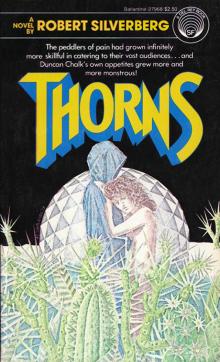 Thorns
 Amanda and the Alien
 Star of Gypsies
 Nightwings
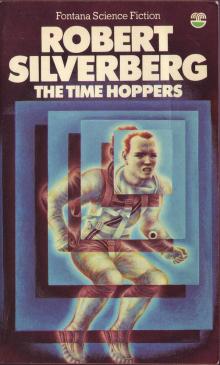 The Time Hoppers
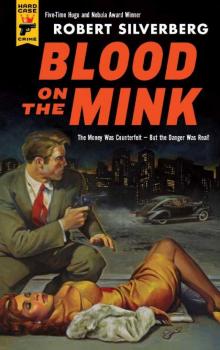 Blood on the Mink
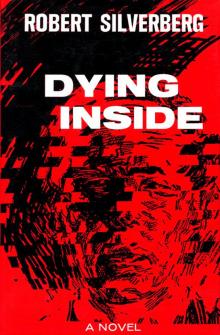 Dying Inside
 The Last Song of Orpheus
 The King of Dreams
 The Stochastic Man
 The Collected Stories of Robert Silverberg, Volume Seven: We Are for the Dark
 The Millennium Express: The Collected Stories of Robert Silverberg, Volume Nine
 The Iron Chancellor
 Lord Prestimion
 To Open the Sky
 The World Inside
 Chains of the Sea
 The Collected Stories of Robert Silverberg, Volume Five: The Palace at Midnight
 Postmark Ganymede
 The Second Trip
 The Collected Stories of Robert Silverberg, Volume 4: Trips: 1972-73
 Son of Man
 Tom O'Bedlam
 To the Land of the Living
 To Be Continued: The Collected Stories of Robert Silverberg, Volume One
 Shadrach in the Furnace
 The Chalice of Death: Three Novels of Mystery in Space
 The Queen of Springtime
 To Be Continued 1953-1958
 Legends
 Roma Eterna
 To Live Again
 At Winter's End
 Needle in a Timestack
 To Live Again and the Second Trip: The Complete Novels
 Lord of Darkness
 The Mountains of Majipoor
 The World Outside
 The Alien Years
 The Book of Skulls
 The Face of the Waters
 Gilgamesh the King
 The Collected Stories of Robert Silverberg, Volume 6: Multiples: 1983-87
 The Happy Unfortunate
 Three Survived
 Cronos
 Tower of Glass
 Legends II
 The Planet Killers
 The Collected Stories of Robert Silverberg, Volume 2: To the Dark Star: 1962-69
 Downward to the Earth
 Lord Valentine's Castle: Book One of the Majipoor Cycle
 Hot Times in Magma City, 1990-95
 Hunt the Space-Witch! Seven Adventures in Time and Space
 Majipoor Chronicles
 The Robert Silverberg Science Fiction Megapack(r)
 Starman's Quest
 Car Sinister
 Worlds of Maybe
 Fantasy The Best of 2001
 Revolt on Alpha C
 Homefaring
 The Pardoner's Tale
 Sailing to Byzantium - Six Novellas
 The Chalice of Death
 Sundance
 A Tip on a Turtle
 Nebula Awards Showcase 2001: The Year's Best SF and Fantasy Chosen by the Science Fiction and Fantasy Writers of America
 The Fangs of the Trees
 The Palace at Midnight: The Collected Work of Robert Silverberg, Volume Five
 The Millennium Express - 1995-2009 - The Collected Stories of Robert Silverberg Volume Nine
 Book of Skulls
 Passengers
 Something Wild is Loose - 1969–72 - The Collected Stories of Robert Silverberg Volume Three
 Multiples
 Starborne
 The Masks of Time
 The Mountains of Majipoor m-8
 Multiples (1983-87)
 Those Who Watch
 In the Beginning
 Earth Is The Strangest Planet
 Collision Course
 Neutral Planet
 To the Dark Star - 1962–69 - The Collected Stories of Robert Silverberg Volume Two
 Mutants
 Sailing to Byzantium
 When We Went to See the End of the World
 Robert Silverberg The Science Fiction Hall Of Fame Volume One, 1929-1964
 To Be Continued - 1953–58 - The Collected Stories of Robert Silverberg Volume One
 Valentine Pontifex m-3
 Gianni
 Majipoor Chronicles m-2
 We Are for the Dark (1987-90)
 Waiting for the Earthquake
 Fantasy: The Best of 2001
 How It Was When the Past Went Away
 Beauty in the Night
 The Man Who Never Forgot
 The Book of Changes m-9
 Lord Valentine's Castle m-1
 This Way to the End Times
 Queen of Springtime
 Legends-Volume 3 Stories by the Masters of Modern Fantasy
 The Palace at Midnight - 1980–82 - The Collected Stories of Robert Silverberg Volume Five
 Something Wild is Loose: The Collected Stories of Robert Silverberg, Volume Three
 Multiples - 1983–87 - The Collected Stories of Robert Silverberg Volume Six
 Alaree
 Three Survived: A Science Fiction Novel
 Defenders of the Frontier
 The New Springtime
 We Are for the Dark - 1987–90 - The Collected Stories of Robert Silverberg Volume Seven
 The Science Fiction Hall of Fame, Volume One 1929-1964--The Greatest Science Fiction Stories of All Time Chosen by the Members of the Science Fiction Writers of America
 Master Of Life And Death
 Choke Chain
 Sorcerers of Majipoor m-4
 Absolutely Inflexible
 Trips - 1962–73 - The Collected Stories of Robert Silverberg Volume Four
 Hot Times in Magma City - 1990-95 - The Collected Stories of Robert Silverberg Volume Eight
 Far Horizons
 The Queen of Springtime ns-2
 The Seventh Science Fiction Megapack
 Invaders From Earth
 Hanosz Prime Goes To Old Earth
 The Macauley Circuit
 Science Fiction: The Best of 2001
 To the Dark Star: The Collected Stories of Robert Silverberg, Volume Two
 Stochastic Man
 Legends: Stories By The Masters of Modern Fantasy
 To Live Again And The Second Trip
 Flies
Flies The Silent Invaders
 Ship-Sister, Star-Sister