
- Home
- Robert Silverberg
Legends II Page 21
Legends II Read online
Page 21
“It might,” said Alvin. “Me and water never did get along.”
“When you was a little baby, maybe,” said Arthur Stuart. “Fog does what you tell it to do these days.”
“You think,” said Alvin.
“You showed me your own self.”
“I showed you with smoke from a candle,” said Alvin, “and just because Ican do it don’t mean that every fog or smoke you see is doing what I say.”
“Don’t mean it ain’t, either,” said Arthur Stuart, grinning.
“I’m just waiting to see if this boat’s a slave ship or not,” said Alvin.
Arthur Stuart looked over where Alvin was looking, at the runaways. “Why don’t you just turn them loose?” he asked.
“And where would they go?” said Alvin. “They’re being watched.”
“Not all that careful,” said Arthur Stuart. “Them so-called guards has got jugs that ain’t close to full by now.”
“The Finders still got their sachets. It wouldn’t take long to round them up again, and they’d be in even more trouble.”
“So you ain’t going to do a thing about it?”
“Arthur Stuart, I can’t just pry the manacles off every slave in the South.”
“I seen you melt iron like it was butter,” said Arthur Stuart.
“So a bunch of slaves run away and leave behind puddles of iron that was once their chains,” said Alvin. “What do the authorities think? There was a blacksmith snuck in with a teeny tiny bellows and a ton of coal and lit him a fire that het them chains up? And then he run off after, taking all his coal with him in his pockets?”
Arthur Stuart looked at him defiantly. “So it’s all about keeping you safe.”
“I reckon so,” said Alvin. “You know what a coward I am.”
Last year, Arthur Stuart would have blinked and said he was sorry, but now that his voice had changed the word “sorry” didn’t come so easy to his lips. “You can’t heal everybody, neither,” he said, “but that don’t stop you from healingsome .”
“No point in freeing them as can’t stay free,” said Alvin. “And how many of them would run, do you think, and how many drown themselves in the river?”
“Why would they do that?”
“Because they know as well as I do, there ain’t no freedom here in Carthage City for a runaway slave. This town may be the biggest on the Hio, but it’s more southern than northern, when it comes to slavery. There’s even buying and selling of slaves here, they say, flesh markets hidden in cellars, and the authorities know about it and don’t do a thing because there’s so much money in it.”
“So there’s nothing you can do.”
“I healed their wrists and ankles where the manacles bite so deep. I cooled them in the sun and cleaned the water they been given to drink so it don’t make them sick.”
Now, finally, Arthur Stuart looked a bit embarrassed—though still defiant. “I never said you wasn’tnice ,” he said.
“Nice is all I can be,” said Alvin. “In this time and place. That and I don’t plan to give my money to this captain iffen the slaves are going southbound on his boat. I won’t help pay for no slave ship.”
“He won’t even notice the price of our passage.”
“Oh, he’ll notice, all right,” said Alvin. “This Captain Howard is a fellow what can tell how much money you got in your pocket by the smell of it.”
“Youcan’t even do that,” said Arthur Stuart.
“Money’s his knack,” said Alvin. “That’s my guess. He’s got him a pilot to steer the ship, and an engineer to keep that steam engine going, and a carpenter to tend the paddlewheel and such damage as the boat takes passing close to the left bank all the way down the Mizzippy. So why is he captain? It’s about the money. He knows who’s got it, and he knows how to talk it out of them.”
“So how much money’s he going to thinkyou got?”
“Enough money to own a big young slave, but not enough money to afford one what doesn’t have such a mouth on him.”
Arthur Stuart glared. “You don’t own me.”
“I told you, Arthur Stuart, I didn’t want you on this trip and I still don’t. I hate taking you south because I have to pretend you’re my property, and I don’t know which is worse, you pretending to be a slave, or me pretending to be the kind of man as would own one.”
“I’m going and that’s that.”
“So you keep on saying,” said Alvin.
“And you must not mind because you could force me to stay here iffen you wanted.”
“Don’t say ‘iffen,’ it drives Peggy crazy when you do.”
“She ain’t here and you say it your own self.”
“The idea is for the younger generation to be an improvement over the older.”
“Well, then, you’re a mizzable failure, you got to admit, since I been studying makering with you for lo these many years and I can barely make a candle flicker or a stone crack.”
“I think you’re doing fine, and you’re better than that, anyway, if you just put your mind to it.”
“I put my mind to it till my head feels like a cannonball.”
“I suppose I should have said, Put your heart in it. It’s not aboutmaking the candle or the stone—or the iron chains, for that matter—it’s not aboutmaking them do what you want, it’s aboutgetting them to do what you want.”
“I don’t see you setting down andtalking no iron into bending or deadwood into sprouting twigs, but they do it.”
“You may not see me or hear me do it, but I’m doing it all the same, only they don’t understand words, they understand the plan in my heart.”
“Sounds like making wishes to me.”
“Only because you haven’t learned yourself how to do it yet.”
“Which means you ain’t much of a teacher.”
“Neither is Peggy, what with you still saying ‘ain’t.’ ”
“Difference is, I know hownot to say ‘ain’t’ when she’s around to hear it,” said Arthur Stuart, “only I can’t poke out a dent in a tin cup whether you’re there or not.”
“Could if you cared enough,” said Alvin.
“I want to ride on this boat.”
“Even if it’s a slave ship?” said Alvin.
“Us staying off ain’t going to make it any less a slave ship,” said Arthur Stuart.
“Ain’t you the idealist.”
“You ride thisYazoo Queen , Master of mine, and you can keep those slaves comfy all the way back to hell.”
The mockery in his tone was annoying, but not misplaced, Alvin decided.
“I could do that,” said Alvin. “Small blessings can feel big enough, when they’re all you got.”
“So buy the ticket, cause this boat’s supposed to sail first thing in the morning, and we want to be aboard already, don’t we?”
Alvin didn’t like the mixture of casualness and eagerness in Arthur Stuart’s words. “You don’t happen to have some plan to set these poor souls free during the voyage, do you? Because you know they’d jump overboard and there ain’t a one of them knows how to swim, you can bet on that, so it’d be plain murder to free them.”
“I got no such plan.”
“I need your promise you won’t free them.”
“I won’t lift a finger to help them,” said Arthur Stuart. “I can make my heart as hard as yours whenever I want.”
“I hope you don’t think that kind of talk makes me glad to have your company,” said Alvin. “Specially because I think you know I don’t deserve it.”
“You telling me youdon’t make your heart hard, to see such sights and do nothing?”
“If I could make my heart hard,” said Alvin, “I’d be a worse man, but a happier one.”
Then he went off to the booth where theYazoo Queen ’s purser was selling passages. Bought him a cheap ticket all the way to Nueva Barcelona, and a servant’s passage for his boy. Made him angry just to have to say the words, but he lied with his face and t
he tone of his voice and the purser didn’t seem to notice anything amiss. Or maybe all slave owners were just a little angry with themselves, so Alvin didn’t seem much different from any other.
Plain truth of it was, Alvin was about as excited to make this voyage as a man could get. He loved machinery, all the hinges, pistons, elbows of metal, the fire hot as a smithy, the steam pent up in the boilers. He loved the great paddlewheel, turning like the one he grew up with at his father’s mill, except here it was the wheel pushing the water, stead of the water pushing the wheel. He loved feeling the strain on the steel—the torque, the compression, the levering, the flexing and cooling. He sent out his doodlebug and wandered around inside the machines, so he’d know it all like he knew his own body.
The engineer was a good man who cared well for his machine, but there was things he couldn’t know. Small cracks in the metal, places where the stress was too much, places where the grease wasn’t enough and the friction was a-building up. Soon as he understood how it ought to be, Alvin began to teach the metal how to heal itself, how to seal the tiny fractures, how to smooth itself so the friction was less. That boat wasn’t more than two hours out of Carthage before he had the machinery about as perfect as a steam engine could get, and then it was just a matter of riding with it. His body, like everybody else’s, riding on the gently shifting deck, and his doodlebug skittering through the machinery to feel it pushing and pulling.
But soon enough it didn’t need his attention any more, and so the machinery moved to the back of his mind while he began to take an interest in the goings-on among the passengers.
There was people with money in the first-class cabins, with their servants’ quarters close at hand. And then people like Alvin, with only a little coin, but enough for the second-class cabins, where there was four passengers to the room. Alltheir servants, them as had any, was forced to sleep below decks like the crew, only even more cramped, not because there wasn’t room to do better, but because the crew was bound to get surly iffen their bed was as bad as a blackamoor’s.
And finally there was the steerage passengers, who didn’t even have no beds, but just benches. Them as was going only a short way, a day’s journey or so, it made plain good sense to go steerage. But a good many was just poor folks bound for some far-off destination, like Thebes or Corinth or Barcy itself, and if their butts got sore on the benches, well, it wouldn’t be the first pain they suffered in their life, nor would it be their last.
Still, Alvin felt like it was kind of his duty, being as how it took him so little effort, to sort of shape the benches to the butts that sat on them. And it took no great trouble to get the lice and bedbugs to move on up to the first-class cabins. Alvin thought of it as kind of an educational project, to help the bugs get a taste of the high life. Blood so fine must be like fancy likker to a louse, and they ought to get some knowledge of it before their short lives was over.
All this took Alvin’s concentration for a good little while. Not that he ever gave it his whole attention—that would be too dangerous, in their world where he had enemies out to kill him, and strangers as would wonder what was in his bag that he kept it always so close at hand. So he kept an eye out for all the heartfires on the boat, and if any seemed coming a-purpose toward him, he’d know it, right enough.
Except it didn’t work that way. He didn’t sense a soul anywheres near him, and then there was a hand right there on his shoulder, and he like to jumped clean overboard with the shock of it.
“What the devil are you—Arthur Stuart, don’t sneak up on a body like that.”
“It’s hard not to sneak with the steam engine making such a racket,” said Arthur, but he was a-grinnin’ like old Davy Crockett, he was so proud of himself.
“Why is it the one skill you take the trouble to master is the one that causes me the most grief?” asked Alvin.
“I think it’s good to know how to hide my . . . heartfire.” He said the last word real soft, on account of it didn’t do to talk about makery where others might hear and get too curious.
Alvin taught the skill freely to all who took it serious, but he didn’t put on a show of it to inquisitive strangers, especially because there was no shortage of them as would remember hearing tales of the runaway smith’s apprentice who stole a magic golden plowshare. Didn’t matter that the tale was three-fourths fantasy and nine-tenths lie. It could get Alvin kilt or knocked upside the head and robbed all the same, and the one part that was true was that living plow inside his poke, which he didn’t want to lose, specially not after carrying it up and down America for half his life now.
“Ain’t nobody on this boat can see your heartfire ceptin’ me,” said Alvin. “So the only reason for you to learn to hide is to hide from the one person you shouldn’t hide from anyhow.”
“That’s plain dumb,” said Arthur Stuart. “If there’s one person a slave has to hide from, it’s his master.”
Alvin glared at him. Arthur grinned back.
A voice boomed out from across the deck. “I like to see a man who’s easy with his servants!”
Alvin turned to see a smallish man with a big smile and a face that suggested he had a happy opinion of himself.
“My name’s Travis,” said the fellow. “William Barret Travis, attorney at law, born, bred, and schooled in the Crown Colonies, and now looking for people as need legal work out here on the edge of civilization.”
“The folks on either hand of the Hio like to think of theirselves as mostwise civilized,” said Alvin, “but then, they haven’t been to Camelot to see the King.”
“Was I imagining that I heard you speak to your boy there as ‘Arthur Stuart’?”
“It was someone else’s joke at the naming of the lad,” said Alvin, “but I reckon by now the name suits him.” All the time Alvin was thinking, What does this man want, that he’d trouble to speak to a sun-browned, strong-armed, thick-headed-looking wight like me?
He could feel a breath for speech coming up in Arthur Stuart, but the last thing Alvin wanted was to deal with whatever fool thing the boy might take it into his head to say. So he gripped him noticeably on the shoulder and it just kind of squeezed the air right out of him without more than a sigh.
“I noticed you’ve got shoulders on you,” said Travis.
“Most folks do,” said Alvin. “Two of ’em, nicely matched, one to an arm.”
“I almost thought you might be a smith, except smiths always have one huge shoulder, and the other more like a normal man’s.”
“Except such smiths as use their left hand exactly as often as their right, just so they keep their balance.”
Travis chuckled. “Well, then, that solves the mystery. Youare a smith.”
“When I got me a bellows, and charcoal, and iron, and a good pot.”
“I don’t reckon you carry that around with you in your poke.”
“Sir,” said Alvin, “I been to Camelot once, and I don’t recollect as how it was good manners there to talk about a man’s poke or his shoulders neither, upon such short acquaintance.”
“Well, of course, it’s bad manners all around the world, I’d say, and I apologize. I meant no disrespect. Only I’m recruiting, you see, them as has skills we need, and yet who don’t have a firm place in life. Wandering men, you might say.”
“Lots of men a-wanderin’,” said Alvin, “and not all of them are what they claim.”
“But that’s why I’ve accosted you like this, my friend,” said Travis. “Because you weren’t claiming a blessed thing. And on the river, to meet a man with no brag is a pretty good recommendation.”
“Then you’re new to the river,” said Alvin, “because many a man with no brag is afraid of gettin’ recognized.”
“Recognized,” said Travis. “Not ‘reckonize.’ So you’ve had you some schooling.”
“Not as much as it would take to turn a smith into a gentleman.”
“I’m recruiting,” said Travis. “For an expedition.”
“Smiths in particular need?”
“Strong men good with tools of all kinds,” said Travis.
“Got work already, though,” said Alvin. “And an errand in Barcy.”
“So you wouldn’t be interested in trekking out into new lands, which are now in the hands of bloody savages, awaiting the arrival of Christian men to cleanse the land of their awful sacrifices?”
Alvin instantly felt a flush of anger mixed with fear, and as he did whenever so strong a feeling came over him, he smiled brighter than ever and kept hisself as calm as could be. “I reckon you’d have to brave the fog and cross to the west bank of the river for that,” said Alvin. “And I hear the reds on that side of the river has some pretty powerful eyes and ears, just watching for whites as think they can take war into peaceable places.”
“Oh, you misunderstood me, my friend,” said Travis. “I’m not talking about the prairies where one time trappers used to wander and now the reds won’t let no white man pass.”
“So what savages did you have in mind?”
“South, my friend, south and west. The evil Mexica tribes, that vile race that tears the heart out of a living man upon the tops of their ziggurats.”
“That’s a long trek indeed,” said Alvin. “And a foolish one. What the might of Spain couldn’t rule, you think a few Englishmen with a lawyer at their head can conquer?”
By now Travis was leaning on the rail beside Alvin, looking out over the water. “The Mexica have become rotten. Hated by the other reds they rule, dependent on trade with Spain for second-rate weaponry—I tell you it’s ripe for conquest. Besides, how big an army can they put in the field, after killing so many men on their altars for all these centuries?”
“It’s a fool as goes looking for a war that no one brought to him.”
“Aye, a fool, a whole passel of fools. The kind of fools as wants to be as rich as Pizarro, who conquered the great Inca with a handful of men.”
“Or as dead as Cortés?”
“They’re all dead now,” said Travis. “Or did you think to live forever?”
Alvin was torn between telling the fellow to go pester someone else and leading him on so he could find out more about what he was planning. But in the long run, it wouldn’t do to become too familiar with this fellow, Alvin decided. “I reckon I’ve wasted your time up to now, Mr. Travis. There’s others are bound to be more interested than I am, since I got no interest at all.”
 The Longest Way Home
 Hawksbill Station
 A Time of Changes
 This Way to the End Times: Classic Tales of the Apocalypse
 Beyond the Gate of Worlds
 Lord Valentine's Castle
 The Man in the Maze
 Tales of Majipoor
 Time of the Great Freeze
 The Collected Stories of Robert Silverberg, Volume 3: Something Wild Is Loose: 1969-72
 Planet of Death
 Trips: The Collected Stories of Robert Silverberg, Volume Four
 In the Beginning: Tales From the Pulp Era
 Hot Sky at Midnight
 Valentine Pontifex
 Up the Line
 Thorns
 Amanda and the Alien
 Star of Gypsies
 Nightwings
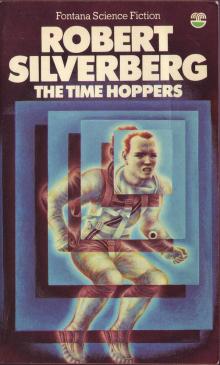 The Time Hoppers
 Blood on the Mink
 Dying Inside
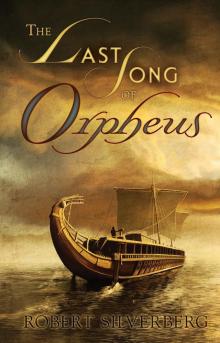 The Last Song of Orpheus
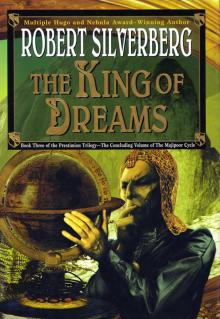 The King of Dreams
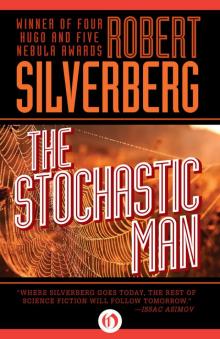 The Stochastic Man
 The Collected Stories of Robert Silverberg, Volume Seven: We Are for the Dark
 The Millennium Express: The Collected Stories of Robert Silverberg, Volume Nine
 The Iron Chancellor
 Lord Prestimion
 To Open the Sky
 The World Inside
 Chains of the Sea
 The Collected Stories of Robert Silverberg, Volume Five: The Palace at Midnight
 Postmark Ganymede
 The Second Trip
 The Collected Stories of Robert Silverberg, Volume 4: Trips: 1972-73
 Son of Man
 Tom O'Bedlam
 To the Land of the Living
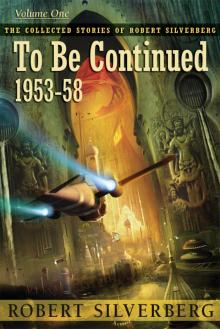 To Be Continued: The Collected Stories of Robert Silverberg, Volume One
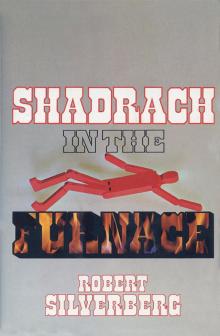 Shadrach in the Furnace
 The Chalice of Death: Three Novels of Mystery in Space
 The Queen of Springtime
 To Be Continued 1953-1958
 Legends
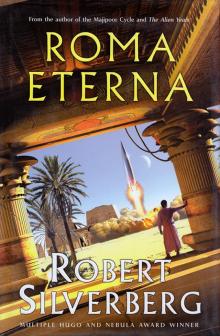 Roma Eterna
 To Live Again
 At Winter's End
 Needle in a Timestack
 To Live Again and the Second Trip: The Complete Novels
 Lord of Darkness
 The Mountains of Majipoor
 The World Outside
 The Alien Years
 The Book of Skulls
 The Face of the Waters
 Gilgamesh the King
 The Collected Stories of Robert Silverberg, Volume 6: Multiples: 1983-87
 The Happy Unfortunate
 Three Survived
 Cronos
 Tower of Glass
 Legends II
 The Planet Killers
 The Collected Stories of Robert Silverberg, Volume 2: To the Dark Star: 1962-69
 Downward to the Earth
 Lord Valentine's Castle: Book One of the Majipoor Cycle
 Hot Times in Magma City, 1990-95
 Hunt the Space-Witch! Seven Adventures in Time and Space
 Majipoor Chronicles
 The Robert Silverberg Science Fiction Megapack(r)
 Starman's Quest
 Car Sinister
 Worlds of Maybe
 Fantasy The Best of 2001
 Revolt on Alpha C
 Homefaring
 The Pardoner's Tale
 Sailing to Byzantium - Six Novellas
 The Chalice of Death
 Sundance
 A Tip on a Turtle
 Nebula Awards Showcase 2001: The Year's Best SF and Fantasy Chosen by the Science Fiction and Fantasy Writers of America
 The Fangs of the Trees
 The Palace at Midnight: The Collected Work of Robert Silverberg, Volume Five
 The Millennium Express - 1995-2009 - The Collected Stories of Robert Silverberg Volume Nine
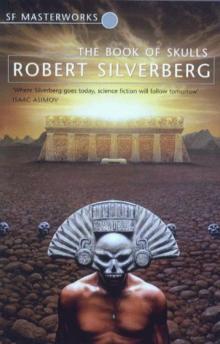 Book of Skulls
 Passengers
 Something Wild is Loose - 1969–72 - The Collected Stories of Robert Silverberg Volume Three
 Multiples
 Starborne
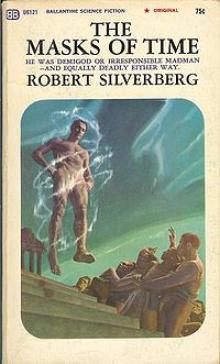 The Masks of Time
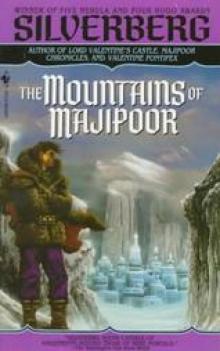 The Mountains of Majipoor m-8
 Multiples (1983-87)
 Those Who Watch
 In the Beginning
 Earth Is The Strangest Planet
 Collision Course
 Neutral Planet
 To the Dark Star - 1962–69 - The Collected Stories of Robert Silverberg Volume Two
 Mutants
 Sailing to Byzantium
 When We Went to See the End of the World
 Robert Silverberg The Science Fiction Hall Of Fame Volume One, 1929-1964
 To Be Continued - 1953–58 - The Collected Stories of Robert Silverberg Volume One
 Valentine Pontifex m-3
 Gianni
 Majipoor Chronicles m-2
 We Are for the Dark (1987-90)
 Waiting for the Earthquake
 Fantasy: The Best of 2001
 How It Was When the Past Went Away
 Beauty in the Night
 The Man Who Never Forgot
 The Book of Changes m-9
 Lord Valentine's Castle m-1
 This Way to the End Times
 Queen of Springtime
 Legends-Volume 3 Stories by the Masters of Modern Fantasy
 The Palace at Midnight - 1980–82 - The Collected Stories of Robert Silverberg Volume Five
 Something Wild is Loose: The Collected Stories of Robert Silverberg, Volume Three
 Multiples - 1983–87 - The Collected Stories of Robert Silverberg Volume Six
 Alaree
 Three Survived: A Science Fiction Novel
 Defenders of the Frontier
 The New Springtime
 We Are for the Dark - 1987–90 - The Collected Stories of Robert Silverberg Volume Seven
 The Science Fiction Hall of Fame, Volume One 1929-1964--The Greatest Science Fiction Stories of All Time Chosen by the Members of the Science Fiction Writers of America
 Master Of Life And Death
 Choke Chain
 Sorcerers of Majipoor m-4
 Absolutely Inflexible
 Trips - 1962–73 - The Collected Stories of Robert Silverberg Volume Four
 Hot Times in Magma City - 1990-95 - The Collected Stories of Robert Silverberg Volume Eight
 Far Horizons
 The Queen of Springtime ns-2
 The Seventh Science Fiction Megapack
 Invaders From Earth
 Hanosz Prime Goes To Old Earth
 The Macauley Circuit
 Science Fiction: The Best of 2001
 To the Dark Star: The Collected Stories of Robert Silverberg, Volume Two
 Stochastic Man
 Legends: Stories By The Masters of Modern Fantasy
 To Live Again And The Second Trip
 Flies
Flies The Silent Invaders
 Ship-Sister, Star-Sister