
- Home
- Robert Silverberg
Legends Page 22
Legends Read online
Page 22
“Not only in the dark,” Zedd said. “Once it has stabilized, it will be hard to see at all. We will have to set up guards to keep people away. We will have to set aside land near the boundary and have men guard the area to keep people out.”
“Men?” Abby asked. “You mean you will have to start a corps of boundary wardens?”
“Yes,” Zedd said, his eyebrows lifting, “that’s a good name for them. Boundary wardens.”
Silence settled over those leaning in to hear the wizard’s words. The mood had changed and was now serious with the grim matter at hand. Abby couldn’t imagine a place without magic, but she knew how vehemently some wished it.
Thomas finally nodded. “Zedd, this time I think you’ve gotten it right. Sometimes, we must serve the people by not serving them.” The others mumbled their agreement, though, like Abby, they thought it a bleak solution.
Zedd straightened. “Then it is decided.”
He turned and announced to the crowd the end of the war, and the division to come in which those who had petitioned for years would finally have their petition granted; for those who wished it, a land outside the Midlands, without magic, would be created.
While everyone was chattering about such a mysterious and exotic thing as a land without magic, or cheering and celebrating the end of the war, Abby whispered to Jana to wait with her father a moment. She kissed her daughter and then took the opportunity to pull Zedd aside.
“Zedd, may I speak with you? I have a question.”
Zedd smiled and took her by the elbow, urging Abby into her small home. “I’d like to check on my daughter. Come along.”
Abby cast caution to the winds and took the Mother Confessor’s hand in one of hers, Delora’s in the other, and pulled them in with her. They had a right to hear this, too.
“Zedd,” Abby asked once they were away from the crowd in her yard, “may I please know the debt your father owed my mother?”
Zedd lifted an eyebrow. “My father owed your mother no debt.”
Abby frowned. “But it was a debt of bones, passed down from your father to you, and from my mother to me.”
“Oh, it was a debt all right, but not owed to your mother, but by your mother.”
“What?” Abby asked in stunned confusion. “What do you mean?”
Zedd smiled. “When your mother was giving birth to you, she was in trouble. You both were dying in the labor. My father used magic to save her. Helsa begged him to save you, too. In order to keep you in the world of the living and out of the Keeper’s grasp, without thought to his own safety, he worked far beyond the endurance anyone would expect of a wizard.
“Your mother was a sorceress, and understood the extent of what was involved in saving your life. In appreciation of what my father had done, she swore a debt to him. When she died, the debt passed to you.”
Abby, eyes wide, tried to reconcile the whole thing in her mind. Her mother had never told her the nature of the debt.
“But … but you mean that it is I who owe the debt to you? You mean that the debt of bones is my burden?”
Zedd pushed open the door to the room where his daughter slept, smiling as he looked in. “The debt is paid, Abby. The bracelet your mother gave you had magic, linking you to the debt. Thank you for my daughter’s life.”
Abby glanced to the Mother Confessor. Trickster indeed. “But why would you help me, if it was really not a debt of bones you owed me? If it was really a debt I owed you?”
Zedd shrugged. “We reap a reward merely in the act of helping others. We never know how, or if, that reward will come back to us. Helping is the reward; none other is needed nor better.”
Abby watched the beautiful little girl sleeping in the room beyond. “I am thankful to the good spirits that I could help keep such a life in this world. I may not have the gift, but I can foresee that she will go on to be a person of import, not only for you, but for others.”
Zedd smiled idly as he watched his daughter sleeping. “I think you may have the gift of prophecy, my dear, for she is already a person who has played a part in bringing a war to an end, and in so doing, saved the lives of countless people.”
The sorceress pointed out the window. “I still want to know why that thing isn’t moving. It was supposed to pass over D’Hara and purge it of all life, to kill them all for what they have done.” Her scowl deepened. “Why is it just sitting there?”
Zedd folded his hands. “It ended the war. That is enough. The wall is a part of the underworld itself, the world of the dead. Their army will not be able to cross it and make war on us for as long as such a boundary stands.”
“And how long will that be?”
Zedd shrugged. “Nothing remains forever. For now, there will be peace. The killing is ended.”
The sorceress did not look to be satisfied. “But they were trying to kill us all!”
“Well, now they can’t. Delora, there are those in D’Hara who are innocent, too. Just because Panis Rahl wished to conquer and subjugate us, that does not mean that all the D’Haran people are evil. Many good people in D’Hara have suffered under harsh rule. How could I kill everyone there, including all the people who have caused no harm, and themselves wish only to live their lives in peace?”
Delora wiped a hand across her face. “Zeddicus, sometimes I don’t know about you. Sometimes, you make a lousy wind of death.”
The Mother Confessor stood staring out the window, toward D’Hara. Her violet eyes turned back to the wizard.
“There will be those over there who will be your foes for life because of this, Zedd. You have made bitter enemies with this. You have left them alive.”
“Enemies,” the wizard said, “are the price of honor.”
Tales of Alvin Maker
ORSON SCOTT CARD
THE TALES OF ALVIN MAKER:
BOOK ONE: SEVENTH SON (1987)
BOOK TWO: RED PROPHET (1988)
BOOK THREE: PRENTICE ALVIN (1989)
BOOK FOUR: ALVIN JOURNEYMAN (1996)
BOOK FIVE: HEARTFIRE (1998)
In the Tales of Alvin Maker series, an alternate-history view of an America that never was, Orson Scott Card postulated what the world might have been like if the Revolutionary War had never happened, and if folk magic actually worked.
America is divided into several provinces, with the Spanish and French still having a strong presence in the New World. The emerging scientific revolution in Europe has led many people with “talent,” that is, magical ability, to emigrate to North America, bringing their prevailing magic with them. The books chronicle the life of Alvin, the seventh son of a seventh son—a fact that marks him right away as a person of great power. It is Alvin’s ultimate destiny to become a Maker, an adept being of a kind that has not existed for a thousand years. However, there exists an Unmaker for every Maker—a being of great supernatural evil—who is Alvin’s adversary, and strives to use Alvin’s brother Calvin against him.
During the course of his adventures, Alvin explores the world around him and encounters such problems as slavery and the continued enmity between the settlers and the Native Americans who control the western half of the continent. The series appears to be heading toward an ultimate confrontation between Alvin and the Unmaker, with the fate of the entire continent, perhaps even the world, hinging on the outcome.
Grinning Man
ORSON SCOTT CARD
The first time Alvin Maker ran across the grinning man was in the steep woody hills of eastern Kenituck. Alvin was walking along with his ward, the boy Arthur Stuart, talking either deep philosophy or the best way for travelers to cook beans, I can’t bring to mind now which, when they come upon a clearing where a man was squatting on his haunches looking up into a tree. Apart from the unnatural grin upon his face, there wasn’t all that much remarkable about him, for that time and place. Dressed in buckskin, a cap made of coonhide on his head, a musket lying in the grass ready to hand—plenty of men of such youth and roughness walked the game
trails of the unsettled forest in those days.
Though come to think of it, eastern Kenituck wasn’t all that unsettled by then, and most men gave up buckskin for cotton during summer, less they was too poor to get them none. So maybe it was partly his appearance that made Alvin stop up short and look at the fellow. Arthur Stuart, of course, he did what he saw Alvin do, till he had some good reason to do otherwise, so he stopped at the meadow’s edge too, and fell silent too, and watched.
The grinning man had his gaze locked on the middle branches of a scruffy old pine that was getting somewhat choked out by slowergrowing flat-leaf trees. But it wasn’t no tree he was grinning at. No sir, it was the bear.
There’s bears and there’s bears, as everyone knows. Some little old brown bears are about as dangerous as a dog—which means if you beat it with a stick you deserve what you get, but otherwise it’ll leave you alone. But some black bears and some grizzlies, they have a kind of bristle to the hair on their backs, a kind of spikiness like a porcupine that tells you they’re just spoiling for a fight, hoping you’ll say a cross word so’s they can take a swipe at your head and suck your lunch back up through your neck. Like a likkered-up riverman.
This was that kind of bear. A little old, maybe, but as spiky as they come, and it wasn’t up that tree cause it was afraid, it was up there for honey, which it had plenty of, along with bees that were now so tired of trying to sting through that matted fur that they were mostly dead, all stung out. There was no shortage of buzzing, though, like a choir of folks as don’t know the words to the hymn so they just hum, only the bees was none too certain of the tune, neither.
But there sat that man, grinning at the bear. And there sat the bear, looking down at him with its teeth showing.
Alvin and Arthur stood watching for many a minute while nothing in the tableau changed. The man squatted on the ground, grinning up; the bear squatted on a branch, grinning down. Neither one showed the slightest sign that he knew Alvin and Arthur was even there.
So it was Alvin broke the silence. “I don’t know who started the ugly contest, but I know who’s going to win.”
Without breaking his grin, through clenched teeth the man said, “Excuse me for not shaking your hands but I’m a-busy grinning this bear.”
Alvin nodded wisely—it certainly seemed to be a truthful statement. “And from the look of it,” says Alvin, “that bear thinks he’s grinning you, too.”
“Let him think what he thinks,” said the grinning man. “He’s coming down from that tree.”
Arthur Stuart, being young, was impressed. “You can do that just by grinning?”
“Just hope I never turn my grin on you,” said the man. “I’d hate to have to pay your master the purchase price of such a clever blackamoor as you.”
It was a common mistake, to take Arthur Stuart for a slave. He was half-Black, wasn’t he? And south of the Hio was all slave country then, where a Black man either was, or used to be, or sure as shooting was bound to become somebody’s property. In those parts, for safety’s sake, Alvin didn’t bother correcting the assumption. Let folks think Arthur Stuart already had an owner, so folks didn’t get their hearts set on volunteering for the task.
“That must be a pretty strong grin,” said Alvin Maker. “My name’s Alvin. I’m a journeyman blacksmith.”
“Ain’t much call for a smith in these parts. Plenty of better land farther west, more settlers, you ought to try it.” The fellow was still talking through his grin.
“I might,” said Alvin. “What’s your name?”
“Hold still now,” says the grinning man. “Stay right where you are. He’s a-coming down.”
The bear yawned, then clambered down the trunk and rested on all fours, his head swinging back and forth, keeping time to whatever music it is that bears hear. The fur around his mouth was shiny with honey and dotted with dead bees. Whatever the bear was thinking, after a while he was done, whereupon he stood on his hind legs like a man, his paws high, his mouth open like a baby showing its mama it swallowed its food.
The grinning man rose up on his hind legs, then, and spread his arms, just like the bear, and opened his mouth to show a fine set of teeth for a human, but it wasn’t no great shakes compared to bear teeth. Still, the bear seemed convinced. It bent back down to the ground and ambled away without complaint into the brush.
“That’s my tree now,” said the grinning man.
“Ain’t much of a tree,” said Alvin.
“Honey’s about all et up,” added Arthur Stuart.
“My tree and all the land round about,” said the grinning man.
“And what you plan to do with it? You don’t look to be a farmer.”
“I plan to sleep here,” said the grinning man. “And my intention was to sleep without no bear coming along to disturb my slumber. So I had to tell him who was boss.”
“And that’s all you do with that knack of yours?” asked Arthur Stuart. “Make bears get out of the way?”
“I sleep under bearskin in winter,” said the grinning man. “So when I grin a bear, it stays grinned till I done what I’m doing.”
“Don’t it worry you that someday you’ll meet your match?” asked Alvin mildly.
“I got no match, friend. My grin is the prince of grins. The king of grins.”
“The emperor of grins,” said Arthur Stuart. “The Napoleon of grins!”
The irony in Arthur’s voice was apparently not subtle enough to escape the grinning man. “Your boy got him a mouth.”
“Helps me pass the time,” said Alvin. “Well, now you done us the favor of running off that bear, I reckon this is a good place for us to stop and build us a canoe.”
Arthur Stuart looked at him like he was crazy. “What do we need a canoe for?”
“Being a lazy man,” said Alvin, “I mean to use it to go downstreams.”
“Don’t matter to me,” said the grinning man. “Float it, sink it, wear it on your head, or swallow it for supper, you ain’t building nothing right here.” The grin was still on his face.
“Look at that, Arthur,” said Alvin. “This fellow hasn’t even told us his name, and he’s a-grinning us.”
“Ain’t going to work,” said Arthur Stuart. “We been grinned at by politicians, preachers, witchers, and lawyers, and you ain’t got teeth enough to scare us.”
With that, the grinning man brought his musket to bear right on Alvin’s heart. “I reckon I’ll stop grinning then,” he said.
“I think this ain’t canoe-building country,” said Alvin. “Let’s move along, Arthur.”
“Not so fast,” said the grinning man. “I think maybe I’d be doing all my neighbors a favor if I kept you from ever moving away from this spot.”
“First off,” said Alvin, “you got no neighbors.”
“All mankind is my neighbor,” said the grinning man. “Jesus said so.”
“I recall he specified Samaritans,” said Alvin, “and Samaritans got no call to fret about me.”
“What I see is a man carrying a poke that he hides from my view.”
That was true, for in that sack was Alvin’s golden plow, and he always tried to keep it halfway hid behind him so folks wouldn’t get troubled if they happened to see it move by itself, which it was prone to do from time to time. Now, though, to answer the challenge, Alvin moved the sack around in front of him.
“I got nothing to hide from a man with a gun,” said Alvin.
“A man with a poke,” said the grinning man, “who says he’s a blacksmith but his only companion is a boy too scrawny and stubby to be learning his trade. But the boy is just the right size to skinny his way through an attic window or the eaves of a loose-made house. So I says to myself, this here’s a second-story man, who lifts his boy up with those big strong arms so he can sneak into houses from above and open the door to the thief. So shooting you down right now would be a favor to the world.”
Arthur Stuart snorted. “Burglars don’t get much trade in the woods.
”
“I never said you-all looked smart,” said the grinning man.
“Best point your gun at somebody else now,” said Arthur Stuart quietly. “Iffen you want to keep the use of it.”
The grinning man’s answer was to pull the trigger. A spurt of flame shot out as the barrel of the gun exploded, splaying into iron strips like the end of a worn-out broom. The musket ball rolled slowly down the barrel and plopped out into the grass.
“Look what you done to my gun,” said the grinning man.
“Wasn’t me as pulled the trigger,” said Alvin. “And you was warned.”
“How come you still grinning?” asked Arthur Stuart.
“I’m just a cheerful sort of fellow,” said the grinning man, drawing his big old knife.
“Do you like that knife?” asked Arthur Stuart.
“Got it from my friend Jim Bowie,” said the grinning man. “It’s took the hide off six bears and I can’t count how many beavers.”
“Take a look at the barrel of your musket,” said Arthur Stuart, “and then look at the blade of that knife you like so proud, and think real hard.”
The grinning man looked at the gun barrel and then at the blade. “Well?” asked the man.
“Keep thinking,” said Arthur Stuart. “It’ll come to you.”
“You let him talk to White men like that?”
“A man as fires a musket at me,” said Alvin, “I reckon Arthur Stuart here can talk to him any old how he wants.”
The grinning man thought that over for a minute, and then, though no one would have believed it possible, he grinned even wider, put away his knife, and stuck out his hand. “You got some knack,” he said to Alvin.
Alvin reached out and shook the man’s hand. Arthur Stuart knew what was going to happen next, because he’d seen it before. Even though Alvin was announced as a blacksmith and any man with eyes could see the strength of his arms and hands, this grinning man just had to brace foot-to-foot against him and try to pull him down.
 The Longest Way Home
 Hawksbill Station
 A Time of Changes
 This Way to the End Times: Classic Tales of the Apocalypse
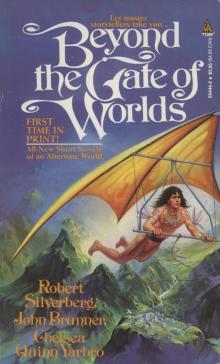 Beyond the Gate of Worlds
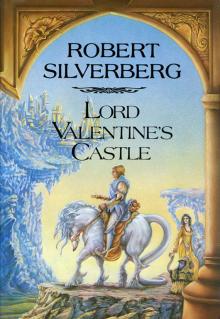 Lord Valentine's Castle
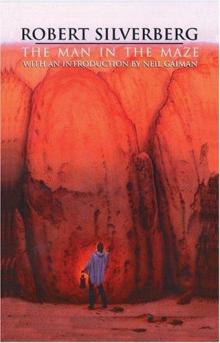 The Man in the Maze
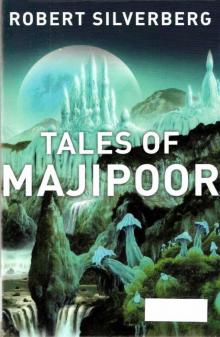 Tales of Majipoor
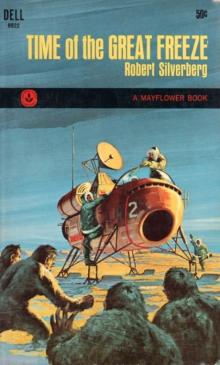 Time of the Great Freeze
 The Collected Stories of Robert Silverberg, Volume 3: Something Wild Is Loose: 1969-72
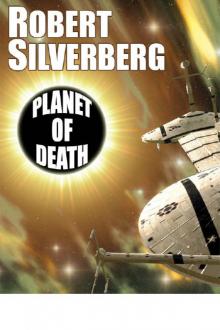 Planet of Death
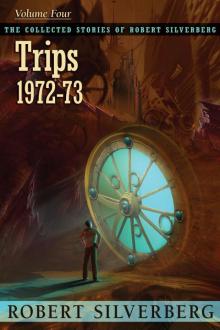 Trips: The Collected Stories of Robert Silverberg, Volume Four
 In the Beginning: Tales From the Pulp Era
 Hot Sky at Midnight
 Valentine Pontifex
 Up the Line
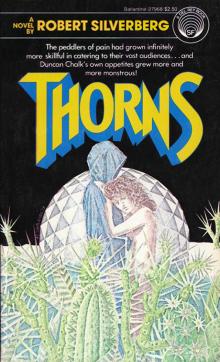 Thorns
 Amanda and the Alien
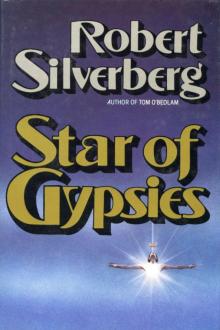 Star of Gypsies
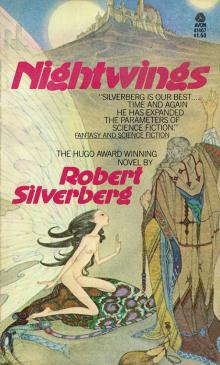 Nightwings
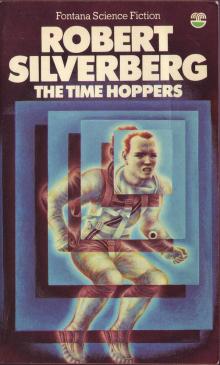 The Time Hoppers
 Blood on the Mink
 Dying Inside
 The Last Song of Orpheus
 The King of Dreams
 The Stochastic Man
 The Collected Stories of Robert Silverberg, Volume Seven: We Are for the Dark
 The Millennium Express: The Collected Stories of Robert Silverberg, Volume Nine
 The Iron Chancellor
 Lord Prestimion
 To Open the Sky
 The World Inside
 Chains of the Sea
 The Collected Stories of Robert Silverberg, Volume Five: The Palace at Midnight
 Postmark Ganymede
 The Second Trip
 The Collected Stories of Robert Silverberg, Volume 4: Trips: 1972-73
 Son of Man
 Tom O'Bedlam
 To the Land of the Living
 To Be Continued: The Collected Stories of Robert Silverberg, Volume One
 Shadrach in the Furnace
 The Chalice of Death: Three Novels of Mystery in Space
 The Queen of Springtime
 To Be Continued 1953-1958
 Legends
 Roma Eterna
 To Live Again
 At Winter's End
 Needle in a Timestack
 To Live Again and the Second Trip: The Complete Novels
 Lord of Darkness
 The Mountains of Majipoor
 The World Outside
 The Alien Years
 The Book of Skulls
 The Face of the Waters
 Gilgamesh the King
 The Collected Stories of Robert Silverberg, Volume 6: Multiples: 1983-87
 The Happy Unfortunate
 Three Survived
 Cronos
 Tower of Glass
 Legends II
 The Planet Killers
 The Collected Stories of Robert Silverberg, Volume 2: To the Dark Star: 1962-69
 Downward to the Earth
 Lord Valentine's Castle: Book One of the Majipoor Cycle
 Hot Times in Magma City, 1990-95
 Hunt the Space-Witch! Seven Adventures in Time and Space
 Majipoor Chronicles
 The Robert Silverberg Science Fiction Megapack(r)
 Starman's Quest
 Car Sinister
 Worlds of Maybe
 Fantasy The Best of 2001
 Revolt on Alpha C
 Homefaring
 The Pardoner's Tale
 Sailing to Byzantium - Six Novellas
 The Chalice of Death
 Sundance
 A Tip on a Turtle
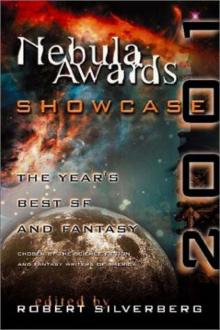 Nebula Awards Showcase 2001: The Year's Best SF and Fantasy Chosen by the Science Fiction and Fantasy Writers of America
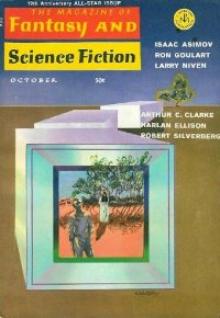 The Fangs of the Trees
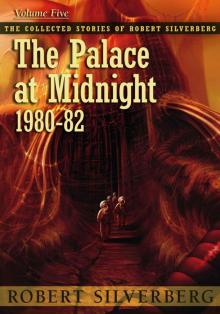 The Palace at Midnight: The Collected Work of Robert Silverberg, Volume Five
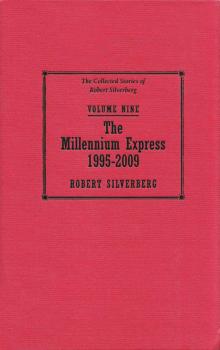 The Millennium Express - 1995-2009 - The Collected Stories of Robert Silverberg Volume Nine
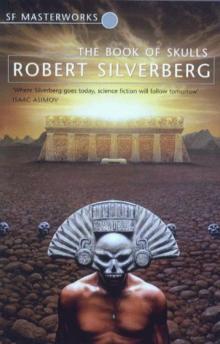 Book of Skulls
 Passengers
 Something Wild is Loose - 1969–72 - The Collected Stories of Robert Silverberg Volume Three
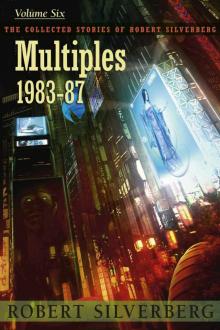 Multiples
 Starborne
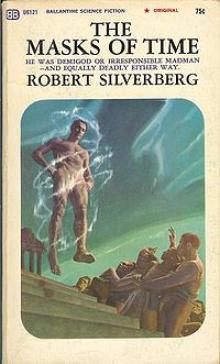 The Masks of Time
 The Mountains of Majipoor m-8
 Multiples (1983-87)
 Those Who Watch
 In the Beginning
 Earth Is The Strangest Planet
 Collision Course
 Neutral Planet
 To the Dark Star - 1962–69 - The Collected Stories of Robert Silverberg Volume Two
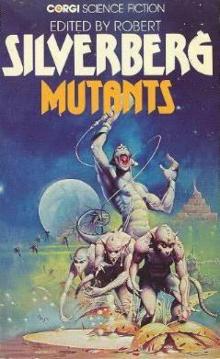 Mutants
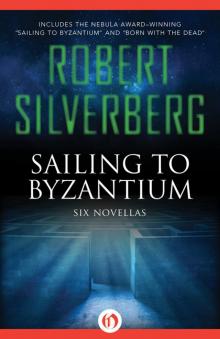 Sailing to Byzantium
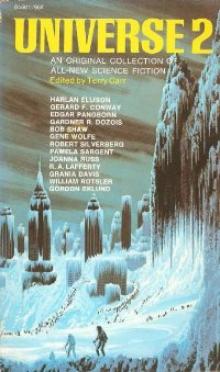 When We Went to See the End of the World
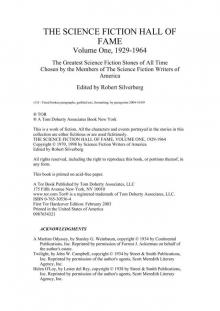 Robert Silverberg The Science Fiction Hall Of Fame Volume One, 1929-1964
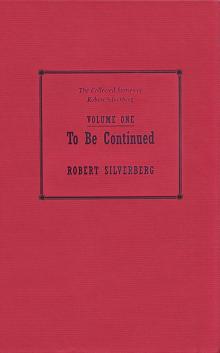 To Be Continued - 1953–58 - The Collected Stories of Robert Silverberg Volume One
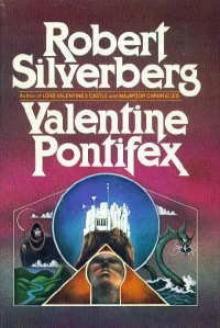 Valentine Pontifex m-3
 Gianni
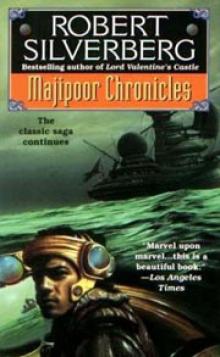 Majipoor Chronicles m-2
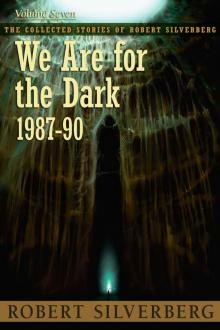 We Are for the Dark (1987-90)
 Waiting for the Earthquake
 Fantasy: The Best of 2001
 How It Was When the Past Went Away
 Beauty in the Night
 The Man Who Never Forgot
 The Book of Changes m-9
 Lord Valentine's Castle m-1
 This Way to the End Times
 Queen of Springtime
 Legends-Volume 3 Stories by the Masters of Modern Fantasy
 The Palace at Midnight - 1980–82 - The Collected Stories of Robert Silverberg Volume Five
 Something Wild is Loose: The Collected Stories of Robert Silverberg, Volume Three
 Multiples - 1983–87 - The Collected Stories of Robert Silverberg Volume Six
 Alaree
 Three Survived: A Science Fiction Novel
 Defenders of the Frontier
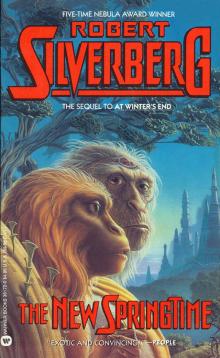 The New Springtime
 We Are for the Dark - 1987–90 - The Collected Stories of Robert Silverberg Volume Seven
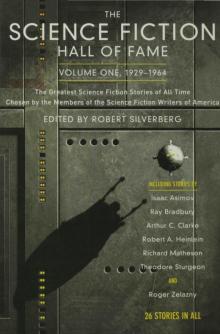 The Science Fiction Hall of Fame, Volume One 1929-1964--The Greatest Science Fiction Stories of All Time Chosen by the Members of the Science Fiction Writers of America
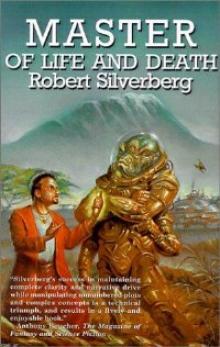 Master Of Life And Death
 Choke Chain
 Sorcerers of Majipoor m-4
 Absolutely Inflexible
 Trips - 1962–73 - The Collected Stories of Robert Silverberg Volume Four
 Hot Times in Magma City - 1990-95 - The Collected Stories of Robert Silverberg Volume Eight
 Far Horizons
 The Queen of Springtime ns-2
 The Seventh Science Fiction Megapack
 Invaders From Earth
 Hanosz Prime Goes To Old Earth
 The Macauley Circuit
 Science Fiction: The Best of 2001
 To the Dark Star: The Collected Stories of Robert Silverberg, Volume Two
 Stochastic Man
 Legends: Stories By The Masters of Modern Fantasy
 To Live Again And The Second Trip
 Flies
Flies The Silent Invaders
 Ship-Sister, Star-Sister