
- Home
- Robert Silverberg
Roma Eterna Page 26
Roma Eterna Read online
Page 26
He stared at me. Then he rose and stomped across the patio toward the balcony. He is a cripple from birth, with a twisted left leg and a foot that points out to the side. My hunting accident angered him, because it caused me to limp as well, which directs additional attention to Spiculo’s own deformity as we hobble side by side through the streets, a grotesquely comical pair who might easily be thought to be on their way to a beggar’s convention.
For a long moment he stood scowling at me without speaking. It was a night of bright moonlight, brilliantly illuminating the villas of the wealthy all up and down the slopes of the Tauromenian hillside, and as the silence went on and on I found myself studying the triangular outlines of Spiculo’s form as it was limned from behind by the chilly white light: the broad burly shoulders tapering down to the narrow waist and the spindly legs, with the big out-jutting head planted defiantly atop. If I had had my sketchpad I would have begun to draw him. But of course I have drawn him many times before.
He said at last, very quietly, “You astound me, Draco. What do you mean, you don’t have any choice? Simply resign from his service and go back to Roma. The Emperor needs you there. He can find some other nursemaid for his idiot princeling. You don’t seriously think that Demetrius will have you thrown in jail if you decline to take on the job, do you? Or executed, or something?”
“You don’t understand,” I said. “I want to take the job on.”
“Even though it’s a madman’s wet dream? Draco, have you gone crazy yourself? Is the Caesar’s lunacy contagious?”
I smiled. “Of course I know how ridiculous the whole thing is. But that doesn’t mean I don’t want to give it a try.”
“Ah,” Spiculo said, getting it at last. “Ah! So that’s it! The temptation of the unthinkable! The engineer in you wants to pile Pelion on Ossa just to find out whether he can manage the trick! Oh, Draco, Demetrius isn’t as crazy as he seems, is he? He sized you up just perfectly. There’s only one man in the world who’s got the hybris to take on this idiotic job, and he’s right here in Tauromenium.”
“It’s piling Ossa on Pelion, not the other way around,” I said. “But yes. Yes, Spiculo! Of course I’m tempted. So what if it’s all craziness? And if nothing ever gets finished, what of it? At least things will be started. Plans will be drawn; foundations will be dug. Don’t you think I want to see how an Aegyptian pyramid can be built? Or how to cantilever a palace thousands of feet down the side of this cliff here? It’s the chance of a lifetime for me.”
“And your account of the life of Trajan VII? Only the day before yesterday you couldn’t stop talking about the documents that are on their way to you from the archive in Sevilla. Speculating half the night about the wonderful new revelations you were going to find in them, you were. Are you going to abandon the whole thing just like that?”
“Of course not. Why should one project interfere with another? I’m quite capable of working on a book in the evening while designing palaces during the day. I expect to continue with my painting and my poetry and my music too.—I think you underestimate me, old friend.”
“Well, let it not be said that you’ve ever been guilty of doing the same.”
I let the point pass. “I offer you one additional consideration, and then let’s put this away, shall we? Lodovicus is past sixty and not in wonderful health. When he dies, Demetrius is going to be Emperor, whether anybody likes that idea or not, and you and I will return to Roma, where I will be a key figure in his administration and all the scholarly and scientific resources of the capital will be at my disposal.—Unless, of course, I irrevocably estrange myself from him while he’s still only heir apparent by throwing this project of his back in his face, as you seem to want me to do. So I will take the job. As an investment leading to the hope of future gain, so to speak.”
“Very nicely reasoned, Draco.”
“Thank you.”
“And suppose, when Demetrius becomes Emperor, which through some black irony of the gods he probably will before too long, he decides he’d rather keep you down here in Sicilia finishing the great work of filling this island with second-hand architectural splendors instead of transferring you to the court in Roma, and here you’ll stay for the rest of your life, plodding around this backwater of a place supervising the completely useless and unnecessary construction of—”
I had had about enough. “Look, Spiculo, that’s a risk I’m willing to take. He’s already told me in just that many words that when he’s Emperor he plans to make fuller use of my skills than his father ever chose to do.”
“And you believe him?”
“He sounded quite sincere.”
“Oh, Draco, Draco! I’m beginning to think you’re even crazier than he is!”
It was a gamble, of course. I knew that.
And Spiculo might well have been speaking the truth when he said that I was crazier than poor Demetrius. The Caesar, after all, can’t help being the way he is. There has been madness, real madness, in his family for a hundred years or more, serious mental instability, some defect of the mind leading to unpredictable outbreaks of flightiness and caprice. I, on the other hand, face each day with clear perceptions. I am hardworking and reliable, and I have a finely tuned intelligence capable of succeeding at anything I turn it to. This is not boasting. The solidity of my achievements is a fact not open to question. I have built temples and palaces, I have painted great paintings and fashioned splendid statues, I have written epic poems and books of history, I have even designed a flying machine that I will some day build and test successfully. And there is much more besides that I have in mind to achieve, the secrets that I write in cipher in my notebooks in a crabbed left-handed script, things that would transform the world. Some day I will bring them all to perfection. But at present I am not ready to do so much as hint at them to anyone, and so I use the cipher. (As though anyone would be able to comprehend these ideas of mine even if they could read what is written in those notebooks!)
One might say that I owe all this mental agility to the special kindness of the gods, and I am unwilling to contradict that pious thought; but heredity has something to do with it, too. My superior capacities are the gift of my ancestors just as the flaws of Demetrius Caesar’s mind are of his. In my veins courses the blood of one of the greatest of our Emperors, the visionary Trajan VII, who would have been well fit to wear the title that was bestowed sixteen centuries ago on the first Emperor of that name: Optimus Princeps, “best of princes.” Who, though, are the forefathers of Demetrius Caesar? Lodovicus! Marius Antoninus! Valens Aquila! Why, are these not some of the feeblest men ever to have held the throne, and have they not led the Empire down the path of decadence and decline?
Of course it is the fate of the Empire to enter into periods of decadence now and then, just as it is its supreme good fortune to find, ever and always, a fresh source of rebirth and renewal when one is needed. That is why our Roma has been the preeminent power in the world for more than two thousand years and why it will go on and on to the end of time, world without end, eternally rebounding to new vigor.
Consider. There was a troubled and chaotic time about eighteen hundred years ago, and out of it Augustus Caesar gave us the Imperial government, which has served us in good stead ever since. When the blood of the early Caesars ran thin and such men as Caligula and Nero came disastrously to power, redemption was shortly at hand in the form of the first Trajan, and after him Hadrianus, succeeded by the equally capable Antoninus Pius and Marcus Aurelius.
A later period of troubles was put to right by Diocletianus, whose work was completed by the great Constantinus; and when, inevitably, we declined yet again, seven hundred years later, falling into what modern historians call the Great Decadence, and were so easily and shamefully conquered by our Greek-speaking brothers of the East, eventually Flavius Romulus arose among us to give us our freedom once more. And not long after him came Trajan VII to carry our explorers clear around the globe, bringing back incalculable wealth a
nd setting in motion the exciting period of expansion that we know as the Renaissance. Now, alas, we are decadent again, living through what I suppose will some day be termed the Second Great Decadence. The cycle seems inescapable.
I like to think of myself as a man of the Renaissance, the last of my kind, born by some sad and unjust accident of fate two centuries out of his proper time and forced to live in this imbecilic decadent age. It’s a pleasant fantasy and there’s much evidence, to my way of thinking, that it’s true.
That this is a decadent age there can be no doubt. One defining symptom of decadence is a fondness for vast and nonsensical extravagance, and what better example of that could be provided than the Caesar’s witless and imprudent scheme for reshaping Sicilia as a monument to his own grandeur? The fact that the structures he would have me construct for him are, almost without exception, imitations of buildings of earlier and less fatuous eras only reinforces the point.
But also we are experiencing a breakdown of the central government. Not only do distant provinces like Syria and Persia blithely go their own way most of the time, but also Gallia and Hispania and Dalmatia and Pannonia, which are practically on the Emperor’s own home turf, are behaving almost like independent nations. The new languages, too: what has become of our pure and beautiful Latin, the backbone of our Empire? It has degenerated into a welter of local dialects. Every place now has its own babbling lingo. We Hispaniards speak Hispanian, and the long-nosed Gallians have the nasal honking thing called Gallian, and in the Teutonic provinces they have retreated from Latin altogether, reverting to some primitive sputtering tongue known as Germanisch, and so on and so on. Why, even in Italia itself you find Latin giving way to a bastard child they call Roman, which at least is sweetly musical to the ear but has thrown away all the profundity and grammatical versatility that makes Latin the master language of the world. And if Latin is discarded entirely (which has not been the fate of Greek in the East), how will a man of Hispania be understood by a man of Britannia, or a Teuton by a Gallian, or a Dalmatian by anyone at all?
Surely this is decadence, when these destructive centrifugalities sweep through our society.
But is it really the case that I am a man of the Renaissance stranded in this miserable age? That’s not so easy to say. In common speech we use the phrase “a Renaissance man” to indicate someone of unusual breadth and depth of attainment. I am certainly that. But would I have truly felt at home in the swashbuckling age of Trajan VII? I have the Renaissance expansiveness of mind; but do I have the flamboyant Renaissance temperament as well, or am I in truth just as timid and stodgy and generally piddling as everyone I see about me? We must not forget that they were medievals. Could I have carried a sword in the streets and brawled like a legionary at the slightest provocation? Would I have had twenty mistresses and fifty bastard sons? And yearned to clamber aboard a tiny creaking ship and sail off beyond the horizon?
No, I am probably not much like them. Their souls were large. The world was bigger and brighter and far more mysterious to them than it seems to us, and they responded to its mysteries with a romantic fervor, a ferocious outpouring of energy, that may be impossible for any of us to encompass today. I have taken on this assignment of Caesar’s because it stirs some of that romantic fervor in me and makes me feel renewed kinship with my great world-girdling ancestor Trajan VII, Trajan the Dragon. But what will I be doing, really? Discovering new worlds, as he did? No, no, I will be building pyramids and Greek temples and the villa of Hadrianus. But all that has been done once already, quite satisfactorily, and there is no need to do it again. Am I, therefore, as decadent as any of my contemporaries?
I wonder, too, what would have happened to great Trajan if he had been born into this present era of Lodovicus Augustus and his crackbrained son Demetrius? Men of great spirit are at high risk at a time when small souls rule the world. I myself have found shrewd ways of fitting in, of ensuring my own security and safety, but would he have done the same? Or would he have gone noisily swaggering around the place like the true man of the Renaissance that he was, until finally it became necessary to do away with him quietly in some dark alley as an inconvenience to the royal house and to the realm in general? Perhaps not. Perhaps, as I prefer to think, he would have risen like a flaming arrow through the dark night of this murky epoch and, as he did in his own time, cast a brilliant light over the entirety of the world.
In any case here was I, undeniably intelligent and putatively sane, voluntarily linking myself with our deranged young Caesar’s project, simply because I was unable to resist the wonderful technical challenge that it represented. A grand romantic gesture, or simply a mad one? Very likely Spiculo was right in saying by accepting the job I demonstrated that I was crazier than Demetrius. Any genuinely sane man would have run screaming away.
One did not have to be the Cumaean Sibyl to be able to foresee that a long time would go by before Demetrius mentioned the project to me again. The Caesar is forever flitting from one thing to another; it is a mark of his malady; two days after our conversation in the theater he left Tauromenium for a holiday among the sand dunes of Africa, and he was gone more than a month. Since we had not yet done so much as chosen a location for the cliffside palace, let alone come to an understanding about such things as a design and a construction budget, I put the whole matter out of my mind pending his return. My hope, I suppose, was that he would have forgotten it entirely by the time he came back to Sicilia.
I took advantage of his absence to resume work on what had been my main undertaking of the season, my study of the life of Trajan VII.
Which was something that had occupied me intermittently for the past seven or eight years. Two things had led me back to it at this time. One was the discovery, in the dusty depths of the Sevilla maritime archives, of a packet of long-buried journals purporting to be Trajan’s own account of his voyage around the world. The other was the riding mishap during the boar hunt that had left me on crutches for the time being: a period of enforced inactivity that gave me, for lack of any other option, a good reason to assume the scholar’s role once more.
No adequate account of Trajan’s extraordinary career had ever been written. That may seem strange, considering our long national tradition of great historical scholarship, going back to the misty figures of Naevius and Ennius in the time of the Republic, and, of course, Sallust and Livius and Tacitus and Suetonius later on, Ammianus Marcellinus after them, Drusillus of Alexandria, Marcus Andronicus—and, to come closer to modern times, Lucius Aelius Antipater, the great chronicler of the conquest of Roma by the Byzantines in the time of Maximilianus VI.
But something has gone awry with the writing of history since Flavius Romulus put the sundered halves of Imperial Roma back together in the year 2198 after the founding of the city. Perhaps it is that in a time of great men—and certainly the era of Flavius Romulus and his two immediate successors was that—everyone is too busy making history to have time to write it. That was what I used to believe, at any rate; but then I broke my ankle, and I came to understand that in any era, however energetic it may be, there is always someone who, from force of special circumstances, be it injury or illness or exile, finds himself with sufficient leisure to turn his hand to writing.
What has started to seem more likely to me is that in the time of Flavius Romulus and Gaius Flavillus and Trajan the Dragon, publishing any sort of account of those mighty Emperors would not have been an entirely healthy pastime. Just as the finest account of the lives of the first twelve Caesars—I speak of Suetonius’s scathing and scabrous book—was written during the relatively benign reign of the first Trajan and not when such monsters as Caligula or Nero or Domitianus were still breathing fire in the land, so too may it have seemed unwise for scholars in the epoch of the three Hispaniard monarchs to set down anything but a bare-bones chronicle of public events and significant legislation. To analyze Caesar is to criticize him. That is not always safe.
Whatever the reason, no wort
hwhile contemporary books on the remarkable Flavius Romulus have come down to us, only mere factual chronicles and some fawning panegyrics. Of the inner nature of his successor, the shadowy Gaius Julius Flavillus, we know practically nothing, only such dry data as where he was born—like Flavius Romulus, he came from Tarraco in Hispania, my own native city—and which governmental posts he held during his long career before attaining the Imperial throne. And for the third of the three great Hispaniards, Trajan VII—whose surname happened by coincidence to be Draco but who earned by his deeds as well, throughout the world, the name of Trajan the Dragon—we have, once again, just the most basic annals of his glorious reign.
That no one has tackled the job of writing his life in the two centuries since his death should come as no surprise. One can write safely about a dead Caesar, yes, but where was the man to do the job? The glittering period of the Renaissance gave way all too quickly to the dawning age of industrial development, and in that dreary, smoky time the making of money took priority over everything else, art and scholarship included. And now we have our new era of decadence, in which one weakling after another has worn the Imperial crown and the Empire itself seems gradually to be collapsing into a congeries of separate entities that feel little or no sense of loyalty to the central authority. Such vigor as our masters can manage to muster goes into inane enterprises like the construction of gigantic pointy-headed tombs in the Pharaonic style here in this isle of Sicilia. Who, in such an age, can bear to confront the grandeur of a Trajan VII?
Well, I can.
And have a thick sheaf of manuscript to show for it. I have taken advantage of my position in the Imperial service to burrow in the subbasements of the Capitol in Roma, unlocking cabinets that have been sealed for twenty centuries and bringing official papers into the light of day whose very existence had been forgotten. I have looked into the private records of the deliberations of the Senate: no one seemed to mind, or to care at all. I have read memoirs left behind by high officials of the court. I have pored over the reports of provincial excise collectors and tax commissioners and inspectors of the public markets, which, abstract and dull though they may seem, are in fact the true ore out of which history is mined. From all of this I have brought Trajan the Dragon and his era back into vivid reality—at least in my own mind, and on the pages of my unfinished book.
 The Longest Way Home
 Hawksbill Station
 A Time of Changes
 This Way to the End Times: Classic Tales of the Apocalypse
 Beyond the Gate of Worlds
 Lord Valentine's Castle
 The Man in the Maze
 Tales of Majipoor
 Time of the Great Freeze
 The Collected Stories of Robert Silverberg, Volume 3: Something Wild Is Loose: 1969-72
 Planet of Death
 Trips: The Collected Stories of Robert Silverberg, Volume Four
 In the Beginning: Tales From the Pulp Era
 Hot Sky at Midnight
 Valentine Pontifex
 Up the Line
 Thorns
 Amanda and the Alien
 Star of Gypsies
 Nightwings
 The Time Hoppers
 Blood on the Mink
 Dying Inside
 The Last Song of Orpheus
 The King of Dreams
 The Stochastic Man
 The Collected Stories of Robert Silverberg, Volume Seven: We Are for the Dark
 The Millennium Express: The Collected Stories of Robert Silverberg, Volume Nine
 The Iron Chancellor
 Lord Prestimion
 To Open the Sky
 The World Inside
 Chains of the Sea
 The Collected Stories of Robert Silverberg, Volume Five: The Palace at Midnight
 Postmark Ganymede
 The Second Trip
 The Collected Stories of Robert Silverberg, Volume 4: Trips: 1972-73
 Son of Man
 Tom O'Bedlam
 To the Land of the Living
 To Be Continued: The Collected Stories of Robert Silverberg, Volume One
 Shadrach in the Furnace
 The Chalice of Death: Three Novels of Mystery in Space
 The Queen of Springtime
 To Be Continued 1953-1958
 Legends
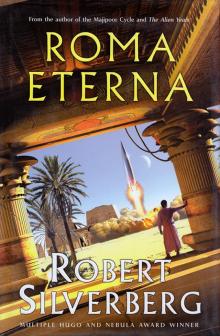 Roma Eterna
 To Live Again
 At Winter's End
 Needle in a Timestack
 To Live Again and the Second Trip: The Complete Novels
 Lord of Darkness
 The Mountains of Majipoor
 The World Outside
 The Alien Years
 The Book of Skulls
 The Face of the Waters
 Gilgamesh the King
 The Collected Stories of Robert Silverberg, Volume 6: Multiples: 1983-87
 The Happy Unfortunate
 Three Survived
 Cronos
 Tower of Glass
 Legends II
 The Planet Killers
 The Collected Stories of Robert Silverberg, Volume 2: To the Dark Star: 1962-69
 Downward to the Earth
 Lord Valentine's Castle: Book One of the Majipoor Cycle
 Hot Times in Magma City, 1990-95
 Hunt the Space-Witch! Seven Adventures in Time and Space
 Majipoor Chronicles
 The Robert Silverberg Science Fiction Megapack(r)
 Starman's Quest
 Car Sinister
 Worlds of Maybe
 Fantasy The Best of 2001
 Revolt on Alpha C
 Homefaring
 The Pardoner's Tale
 Sailing to Byzantium - Six Novellas
 The Chalice of Death
 Sundance
 A Tip on a Turtle
 Nebula Awards Showcase 2001: The Year's Best SF and Fantasy Chosen by the Science Fiction and Fantasy Writers of America
 The Fangs of the Trees
 The Palace at Midnight: The Collected Work of Robert Silverberg, Volume Five
 The Millennium Express - 1995-2009 - The Collected Stories of Robert Silverberg Volume Nine
 Book of Skulls
 Passengers
 Something Wild is Loose - 1969–72 - The Collected Stories of Robert Silverberg Volume Three
 Multiples
 Starborne
 The Masks of Time
 The Mountains of Majipoor m-8
 Multiples (1983-87)
 Those Who Watch
 In the Beginning
 Earth Is The Strangest Planet
 Collision Course
 Neutral Planet
 To the Dark Star - 1962–69 - The Collected Stories of Robert Silverberg Volume Two
 Mutants
 Sailing to Byzantium
 When We Went to See the End of the World
 Robert Silverberg The Science Fiction Hall Of Fame Volume One, 1929-1964
 To Be Continued - 1953–58 - The Collected Stories of Robert Silverberg Volume One
 Valentine Pontifex m-3
 Gianni
 Majipoor Chronicles m-2
 We Are for the Dark (1987-90)
 Waiting for the Earthquake
 Fantasy: The Best of 2001
 How It Was When the Past Went Away
 Beauty in the Night
 The Man Who Never Forgot
 The Book of Changes m-9
 Lord Valentine's Castle m-1
 This Way to the End Times
 Queen of Springtime
 Legends-Volume 3 Stories by the Masters of Modern Fantasy
 The Palace at Midnight - 1980–82 - The Collected Stories of Robert Silverberg Volume Five
 Something Wild is Loose: The Collected Stories of Robert Silverberg, Volume Three
 Multiples - 1983–87 - The Collected Stories of Robert Silverberg Volume Six
 Alaree
 Three Survived: A Science Fiction Novel
 Defenders of the Frontier
 The New Springtime
 We Are for the Dark - 1987–90 - The Collected Stories of Robert Silverberg Volume Seven
 The Science Fiction Hall of Fame, Volume One 1929-1964--The Greatest Science Fiction Stories of All Time Chosen by the Members of the Science Fiction Writers of America
 Master Of Life And Death
 Choke Chain
 Sorcerers of Majipoor m-4
 Absolutely Inflexible
 Trips - 1962–73 - The Collected Stories of Robert Silverberg Volume Four
 Hot Times in Magma City - 1990-95 - The Collected Stories of Robert Silverberg Volume Eight
 Far Horizons
 The Queen of Springtime ns-2
 The Seventh Science Fiction Megapack
 Invaders From Earth
 Hanosz Prime Goes To Old Earth
 The Macauley Circuit
 Science Fiction: The Best of 2001
 To the Dark Star: The Collected Stories of Robert Silverberg, Volume Two
 Stochastic Man
 Legends: Stories By The Masters of Modern Fantasy
 To Live Again And The Second Trip
 Flies
Flies The Silent Invaders
 Ship-Sister, Star-Sister