
- Home
- Robert Silverberg
Legends II Page 26
Legends II Read online
Page 26
“But you saw what I did, didn’t you? I made it soft without getting it hot.”
“You done good, Arthur Stuart. There’s no denying it. You’re a maker now.”
“Not much of one.”
“Whenever you got two makers, one’s going to be more of a maker than the other. But lessen that one starts gettin’ uppity, it’s good to remember that there’s always a third one who’s better than both of them.”
“Who’s better than you?” asked Arthur Stuart.
“You,” said Alvin. “Because I’ll take an ounce of compassion over a pound of tricks any day. Now go to sleep.”
Only then did Arthur let himself feel how very, very tired he was. Whatever had kept him awake before, it was gone now. He barely made it to his cot before he fell asleep.
Oh, there was a hullabaloo in the morning. Suspicions flew every which way. Some folks thought it was the boys from the raft, because why else would the slaves have left their cargo behind? Until somebody pointed out that with the cargo still on the raft, there wouldn’t have been room for all the runaways.
Then suspicion fell on the guard who had slept, but most folks knew that was wrong, because if he had done it then why didn’t he run off, instead of lying there asleep on the deck till a crewman noticed the slaves was gone and raised the alarm?
Only now, when they were gone, did the ownership of the slaves become clear. Alvin had figured Mr. Travis to have a hand in it, but the man most livid at their loss was Captain Howard hisself. That was a surprise. But it explained why the men bound for Mexico had chosen this boat to make their journey downriver.
To Alvin’s surprise, though, Travis and Howard both kept glancing at him and young Arthur Stuart as if they suspected the truth. Well, he shouldn’t have been surprised, he realized. If Bowie told them what had happened to his knife out on the water, they’d naturally wonder if a man with such power over iron might have been the one to slip the hinge pins out of all the fetters.
Slowly the crowd dispersed. But not Captain Howard, not Travis. And when Alvin and Arthur made as if to go, Howard headed straight for them. “I want to talk to you,” he said, and he didn’t sound friendly.
“What about?” said Alvin.
“That boy of yours,” said Howard. “I saw how he was doing their slops on the morning watch. I saw him talking to them. That made me suspicious, all right, since not one of them spoke English.”
“Pero todos hablaban español,” said Arthur Stuart.
Travis apparently understood him, and looked chagrined. “Theyall of them spoke Spanish? Lying skunks.”
Oh, right, as if slaves owed you some kind of honesty.
“That’s as good as a confession,” said Captain Howard. “He just admitted he speaks their language and learned things from them that even their master didn’t know.”
Arthur was going to protest, but Alvin put a hand on his shoulder. He didnot , however, stop his mouth. “My boy here,” said Alvin, “only just learned to speak Spanish, so naturally he seized on an opportunity to practice. Unless you got some evidence that those fetters was opened by use of a slop bucket, then I think you can safely leave this boy out of it.”
“No, I expect hewasn’t the one who popped them hinge pins,” said Captain Howard. “I expect he was somebody’s spy to tell them blacks about the plan.”
“I didn’t tell nobody no plan,” said Arthur Stuart hotly.
Alvin clamped his grip tighter. No slave would talk to a white man like that, least of all a boat captain.
Then from behind Travis and Howard came another voice. “It’s all right, boy,” said Bowie. “You can tell them. No need to keep it secret any more.”
And with a sinking feeling, Alvin wondered what kind of pyrotechnics he’d have to go through to distract everybody long enough for him and Arthur Stuart to get away.
But Bowie didn’t say at all what Alvin expected. “I got the boy to tell me what he learned from them. They were cooking up some evil Mexica ritual. Something about tearing out somebody’s heart one night when they were pretending to be our guides. A treacherous bunch, and so I decided we’d be better off without them.”
“Youdecided!” Captain Howard growled. “What right didyou have to decide?”
“Safety,” said Bowie. “You put me in charge of the scouts, and that’s what these were supposed to be. But it was a blame fool idea from the start. Why do you think them Mexica left those boys alive instead of taking their beating hearts out of their chests? It was a trap. All along, it was a trap. Well, we didn’t fall into it.”
“Do you know how much they cost?” demanded Captain Howard.
“They didn’t costyou anything,” said Travis.
That reminder took a bit of the dudgeon out of Captain Howard. “It’s the principle of the thing. Just setting them free.”
“But I didn’t,” said Bowie. “I sent them across the river. What do you think will happen to them there—ifthey make it through the fog?”
There was a bit more grumbling, but some laughter, too, and the matter was closed.
Back in his room, Alvin waited for Bowie to return.
“Why?” he demanded.
“I told you I could keep a secret,” said Bowie. “I watched you and the boy do it, and I have to say, it was worth it to see how you broke their irons without ever laying a hand on them. To think I’d ever see a knack like that. Oh, you’re a maker all right.”
“Then come with me,” said Alvin. “Leave these men behind. Don’t you know the doom that lies over their heads? The Mexica aren’t fools. These are dead men you’re traveling with.”
“Might be so,” said Bowie, “but they need what I can do, and you don’t.”
“I do so,” said Alvin. “Because I don’t know many men in this world can hide their heartfire from me. It’s your knack, isn’t it? To disappear from all men’s sight, when you want to. Because I never saw you watching us.”
“And yet I woke you up just reaching for your poke the other night,” said Bowie with a grin.
“Reaching for it?” said Alvin. “Or putting it back?”
Bowie shrugged.
“I thank you for protecting us and taking the blame on yourself.”
Bowie chuckled. “Not much blame there. Truth is, Travis was getting sick of all the trouble of taking care of them blacks. It was only Howard who was so dead set on having them, and he ain’t even going with us, once he drops us off on the Mexica coast.”
“I could teach you. The way Arthur Stuart’s been learning.”
“I don’t think so,” said Bowie. “It’s like you said. We’re different kind of men.”
“Not so different but what you can’t change iffen you’ve a mind to.”
Bowie only shook his head.
“Well, then, I’ll thank you the only way that’s useful to you,” said Alvin.
Bowie waited. “Well?”
“I just did it,” said Alvin. “I just put it back.”
Bowie reached down to the sheath at his waist. It wasn’t empty. He drew out the knife. There was the blade, plain as day, not a whit changed.
You’d’ve thought Bowie was handling his long-lost baby.
“How’d you get the blade back on it?” he asked. “You never touched it.”
“It was there all along,” said Alvin. “I just kind of spread it out a little.”
“So I couldn’t see it?”
“And so it wouldn’t cut nothing.”
“But now it will?”
“I think you’re bound to die, when you take on them Mexica, Mr. Bowie. But I want you to take some human sacrificers with you on the way.”
“I’ll do that,” said Bowie. “Except for the part about me dying.”
“I hope I’m wrong and you’re right, Mr. Bowie,” said Alvin.
“And I hope you live forever, Alvin Maker,” said the knife-wielding killer.
That morning Alvin and Arthur Stuart left the boat, as did Abe Lincoln and Cuz, and t
hey made their journey down to Nueva Barcelona together, all four of them, swapping impossible stories all the way. But that’s another tale, not this one.
OUTLANDER
DIANA GABALDON
OUTLANDER(1991*)
DRAGONFLY INAMBER(1992)
VOYAGER(1994)
DRUMS OFAUTUMN(1997)
THEOUTLANDISHCOMPANION(nonfiction, 1999)
THEFIERYCROSS(2001)
A BREATH OFSNOW ANDASHES(forthcoming)
THE LORD JOHN GREY BOOKS:
“Hellfire” (novella—published in
the U.K. anthology PASTPOISONS, 1998)
LORDJOHN AND THEPRIVATEMATTER(2003)
LORDJOHN AND THEBROTHERHOOD OF THEBLADE
(forthcoming)
In 1946, just after World War II, a young woman named Claire Beauchamp Randall goes to the Scottish Highlands on a second honeymoon. She and her husband, Frank, have been separated by the war, he as a British army officer, she as a combat nurse, and are now becoming reacquainted, rekindling their marriage, and thinking of starting a family. These plans hit a snag when Claire, walking by herself one afternoon, walks through a circle of standing stones and disappears.
The first person she meets, upon regaining possession of her faculties, is a man in the uniform of an eighteenth-century English army officer—a man who bears a startling resemblance to her husband, Frank. This is not terribly surprising, as Captain Johnathan Randall is her husband’s six-times-great-grandfather. However, Black Jack, as he’s called, does not resemble his descendant in terms of personality, being a sadistic bisexual pervert, and while attempting to escape from him, Claire falls into the hands of a group of Highland Scots, who are also eager to avoid the Captain for reasons of their own.
Events culminate in Claire’s being obliged to marry Jamie Fraser, a young Highlander, in order to stay out of the hands of Black Jack Randall. Hoping to escape from the Scots long enough to get back to the stone circle and Frank, Claire agrees—only to find herself gradually falling in love with Jamie.
TheOutlander books are the story of Claire, Jamie, and Frank, and a complicated double marriage that occupies two separate centuries.
* All dates are first U.S. hardcover publication, unless otherwise noted.
They are also the story of the Jacobite Rising under Bonnie Prince Charlie, the end of the Highland clans, and the flight of the Highlanders, after the slaughter of Culloden, to the refuge and promise of the New World—a world that promises to be just as dangerous as the old one. And along the way, theOutlander series is an exploration of the nuances, operation, and moral complexities of time travel—and history.
The series encompasses hundreds of characters, both real and fictional. Among these, one of the most complex and interesting is Lord John Grey, whom we meet originally inDragonfly in Amber , and who appears again in the succeeding books of the series. A gay man in a time when that particular predilection could get one hanged, Lord John is a man accustomed to keeping secrets. He’s also a man of honor and deep affections—whether returned or not.
Lord John’s adventures are interpolations within the story line of the mainOutlander novels—following the same timeline (complex as that may be), and involving the same universe and people—but focused on the character of Lord John Grey.
LORD JOHN
AND THE SUCCUBUS
DIANA GABALDON
Historical note: Between 1756 and 1763, Great Britain joined with her allies, Prussia and Hanover, to fight against the combined forces of Austria, Saxony—and England’s ancient foe, France. In the autumn of 1757, the Duke of Cumberland was obliged to surrender at Kloster-Zeven, leaving the allied armies temporarily shattered and the forces of Frederick the Great of Prussia encircled by French and Austrian troops.
CHAPTER 1
DEATHRIDES APALEHORSE
Grey’s spoken German was improving by leaps and bounds, but found itself barely equal to the present task.
After a long, boring day of rain and paperwork, there had come the sound of loud dispute in the corridor outside his office, and the head of Lance-Korporal Helwig appeared in his doorway wearing an apologetic expression.
“Major Grey?” he said,“Ich habe ein kleines Englischproblem.”
A moment later, Lance-Korporal Helwig had disappeared down the corridor like an eel sliding into mud, and Major John Grey, English liaison to the First Regiment of Hanoverian Foot, found himself adjudicating a three-way dispute among an English private, a gypsy prostitute, and a Prussian tavern owner.
“A little English problem,” Helwig had described it as. The problem, as Grey saw it, was rather thelack of English.
The tavern owner spoke the local dialect with such fluency and speed that Grey grasped no more than one word in ten. The English private, who normally probably knew no more German than “Ja,” “Nein,” and the two or three crude phrases necessary to accomplish immoral transactions, was so stricken with fury that he was all but speechless in his own tongue as well.
The gypsy, whose abundant charms were scarcely impaired by a missing tooth, had German that most nearly matched Grey’s own in terms of grammar—though her vocabulary was immensely more colorful and detailed.
Using alternate hands to quell the sputterings of the private and the torrents of the Prussian, Grey concentrated his attention carefully on the gypsy’s explanations—meanwhile taking care to consider the source, which meant discounting the factual basis of most of what she said.
“. . . and then the disgusting pig of an Englishman, he put his [incomprehensible colloquial expression] into my [unknown Gypsy word]! And then . . .”
“She said, she said, she’d do it for sixpence, sir! She did, she said so—but, but, but then . . .”
“These-barbarian-pig-dogs-did-revolting-things-under-the-table-and-made-it-fall-over-so-the-leg-of-the-table-was-broken-and-the-dishes-broken-too-even-my-large-platter-which-cost-six-thalers-at-St.-Martin’s-Fair-and-the-meat-was-ruined-by-falling-on-the-floor-and-even-if-it-was-not-the-dogs-fell-upon-it-snarling-so-that-I-was-bitten-when-I-tried-to-seize-it-away-from-them-and-all-the-time-these-vile-persons-were-copulating-like-filthy-foxes-on-the-floor-and-THEN . . .”
At length, an accommodation was reached, by means of Grey’s demanding that all three parties produce what money was presently in their possession. A certain amount of shifty-eyed reluctance and dramatic pantomimes of purse and pocket searching having resulted in three small heaps of silver and copper, he firmly rearranged these in terms of size and metal value, without reference as to the actual coinage involved, as these appeared to include the currency of at least six different principalities.
Eyeing the gypsy’s ensemble, which included both gold earrings and a crude but broad gold band around her finger, he assigned roughly equitable heaps to her and to the private, whose name, when asked, proved to be Bodger.
Assigning a slightly larger heap to the tavern owner, he then scowled fiercely at the three combatants, jabbed a finger at the money, and jerked a thumb over his shoulder, indicating that they should take the coins and leave while he was still in possession of his temper.
This they did, and storing away a most interesting gypsy curse for future reference, Grey returned tranquilly to his interrupted correspondence.
26 September 1757
To Harold, Earl of Melton
From Lord John Grey
The Township of Gundwitz,
Kingdom of Prussia
My Lord—
In reply to your request for information regarding my situation, I beg to say that I am well suited. My duties are . . .He paused, considering, then wrote,interesting, smiling slightly to himself at thought of what interpretation Hal might put upon that,. . . and the conditions comfortable. I am quartered with several other English and German officers in the house of a Princess von Lowenstein, the widow of a minor Prussian noble, who possesses a fine estate near the town.
We have two English regiments quartered here; Sir Peter Hicks’s 35th, and hal
f of the 52nd—I am told Colonel Ruysdale is in command, but have not yet met him, the 52nd having arrived only days ago. As the Hanoverians to whom I am attached and a number of Prussian troops are occupying all the suitable quarters in the town, Hicks’s men are encamped some way to the south; Ruysdale to the north.
French forces are reported to be within twenty miles, but we expect no immediate trouble. Still, so late in the year, the snow will come soon, and put an end to the fighting; they may try for a final thrust before the winter sets in. Sir Peter begs me send his regards.
He dipped his quill again, and changed tacks.
My grateful thanks to your good wife for the smallclothes, which are superior in quality to what is available here.
At this point, he was obliged to transfer the pen to his left hand in order to scratch ferociously at the inside of his left thigh. He was wearing a pair of the local German product under his breeches, and while they were well laundered and not infested with vermin, they were made of coarse linen and appeared to have been starched with some substance derived from potatoes, which was irritating in the extreme.
Tell Mother I am still intact, and not starving,he concluded, transferring the pen back to his right hand.Quite the reverse, in fact; Princess von Lowenstein has an excellent cook.
Your Most Affec’t. Brother,
J.
Sealing this with a brisk stamp of his half-moon signet, he then took down one of the ledgers and a stack of reports, and began the mechanical work of recording deaths and desertions. There was an outbreak of bloody flux among the men; more than a score lost to it in the last two weeks.
The thought brought the gypsy woman’s last remarks to mind. Blood and bowels had both come into that, though he feared he had missed some of the refinements. Perhaps she had merely been trying to curse him with the flux?
He paused for a moment, twiddling the quill. It was rather unusual for the flux to occur in cold weather; it was more commonly a disease of hot summer, while winter was the season for consumption, catarrh, influenza, and fever.
 The Longest Way Home
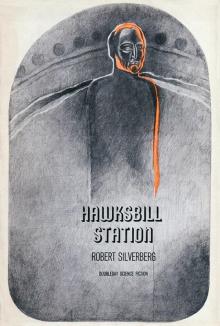 Hawksbill Station
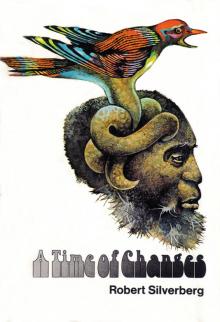 A Time of Changes
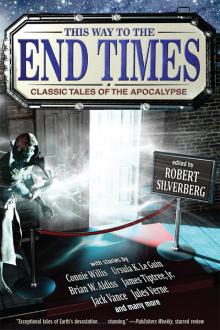 This Way to the End Times: Classic Tales of the Apocalypse
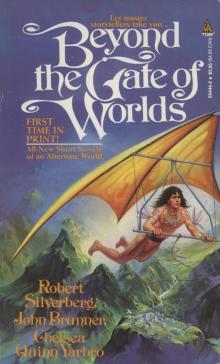 Beyond the Gate of Worlds
 Lord Valentine's Castle
 The Man in the Maze
 Tales of Majipoor
 Time of the Great Freeze
 The Collected Stories of Robert Silverberg, Volume 3: Something Wild Is Loose: 1969-72
 Planet of Death
 Trips: The Collected Stories of Robert Silverberg, Volume Four
 In the Beginning: Tales From the Pulp Era
 Hot Sky at Midnight
 Valentine Pontifex
 Up the Line
 Thorns
 Amanda and the Alien
 Star of Gypsies
 Nightwings
 The Time Hoppers
 Blood on the Mink
 Dying Inside
 The Last Song of Orpheus
 The King of Dreams
 The Stochastic Man
 The Collected Stories of Robert Silverberg, Volume Seven: We Are for the Dark
 The Millennium Express: The Collected Stories of Robert Silverberg, Volume Nine
 The Iron Chancellor
 Lord Prestimion
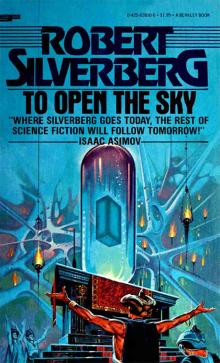 To Open the Sky
 The World Inside
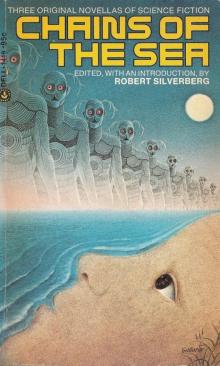 Chains of the Sea
 The Collected Stories of Robert Silverberg, Volume Five: The Palace at Midnight
 Postmark Ganymede
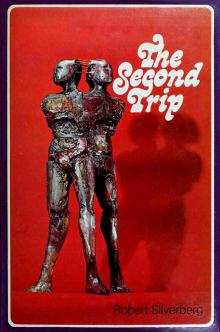 The Second Trip
 The Collected Stories of Robert Silverberg, Volume 4: Trips: 1972-73
 Son of Man
 Tom O'Bedlam
 To the Land of the Living
 To Be Continued: The Collected Stories of Robert Silverberg, Volume One
 Shadrach in the Furnace
 The Chalice of Death: Three Novels of Mystery in Space
 The Queen of Springtime
 To Be Continued 1953-1958
 Legends
 Roma Eterna
 To Live Again
 At Winter's End
 Needle in a Timestack
 To Live Again and the Second Trip: The Complete Novels
 Lord of Darkness
 The Mountains of Majipoor
 The World Outside
 The Alien Years
 The Book of Skulls
 The Face of the Waters
 Gilgamesh the King
 The Collected Stories of Robert Silverberg, Volume 6: Multiples: 1983-87
 The Happy Unfortunate
 Three Survived
 Cronos
 Tower of Glass
 Legends II
 The Planet Killers
 The Collected Stories of Robert Silverberg, Volume 2: To the Dark Star: 1962-69
 Downward to the Earth
 Lord Valentine's Castle: Book One of the Majipoor Cycle
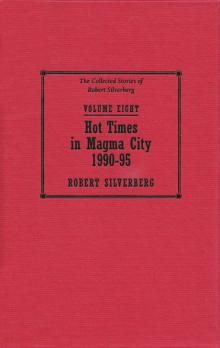 Hot Times in Magma City, 1990-95
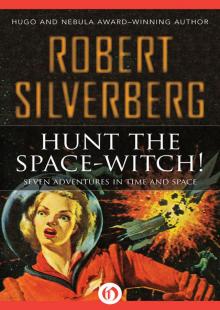 Hunt the Space-Witch! Seven Adventures in Time and Space
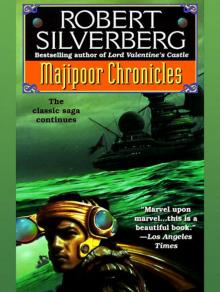 Majipoor Chronicles
 The Robert Silverberg Science Fiction Megapack(r)
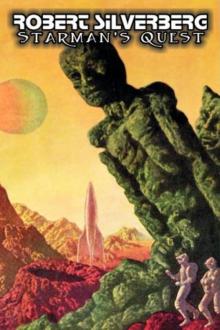 Starman's Quest
 Car Sinister
 Worlds of Maybe
 Fantasy The Best of 2001
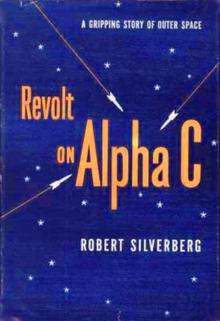 Revolt on Alpha C
 Homefaring
 The Pardoner's Tale
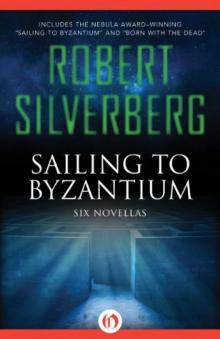 Sailing to Byzantium - Six Novellas
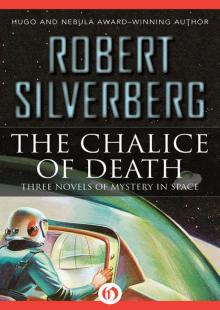 The Chalice of Death
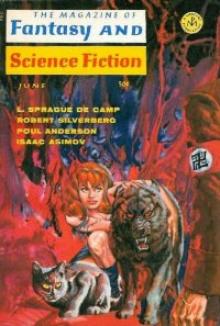 Sundance
 A Tip on a Turtle
 Nebula Awards Showcase 2001: The Year's Best SF and Fantasy Chosen by the Science Fiction and Fantasy Writers of America
 The Fangs of the Trees
 The Palace at Midnight: The Collected Work of Robert Silverberg, Volume Five
 The Millennium Express - 1995-2009 - The Collected Stories of Robert Silverberg Volume Nine
 Book of Skulls
 Passengers
 Something Wild is Loose - 1969–72 - The Collected Stories of Robert Silverberg Volume Three
 Multiples
 Starborne
 The Masks of Time
 The Mountains of Majipoor m-8
 Multiples (1983-87)
 Those Who Watch
 In the Beginning
 Earth Is The Strangest Planet
 Collision Course
 Neutral Planet
 To the Dark Star - 1962–69 - The Collected Stories of Robert Silverberg Volume Two
 Mutants
 Sailing to Byzantium
 When We Went to See the End of the World
 Robert Silverberg The Science Fiction Hall Of Fame Volume One, 1929-1964
 To Be Continued - 1953–58 - The Collected Stories of Robert Silverberg Volume One
 Valentine Pontifex m-3
 Gianni
 Majipoor Chronicles m-2
 We Are for the Dark (1987-90)
 Waiting for the Earthquake
 Fantasy: The Best of 2001
 How It Was When the Past Went Away
 Beauty in the Night
 The Man Who Never Forgot
 The Book of Changes m-9
 Lord Valentine's Castle m-1
 This Way to the End Times
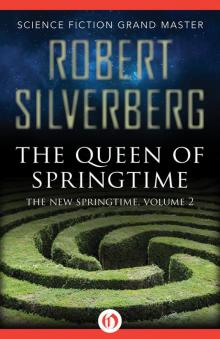 Queen of Springtime
 Legends-Volume 3 Stories by the Masters of Modern Fantasy
 The Palace at Midnight - 1980–82 - The Collected Stories of Robert Silverberg Volume Five
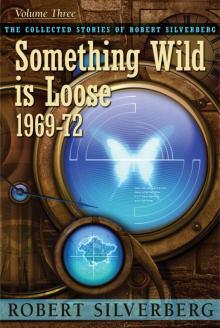 Something Wild is Loose: The Collected Stories of Robert Silverberg, Volume Three
 Multiples - 1983–87 - The Collected Stories of Robert Silverberg Volume Six
 Alaree
 Three Survived: A Science Fiction Novel
 Defenders of the Frontier
 The New Springtime
 We Are for the Dark - 1987–90 - The Collected Stories of Robert Silverberg Volume Seven
 The Science Fiction Hall of Fame, Volume One 1929-1964--The Greatest Science Fiction Stories of All Time Chosen by the Members of the Science Fiction Writers of America
 Master Of Life And Death
 Choke Chain
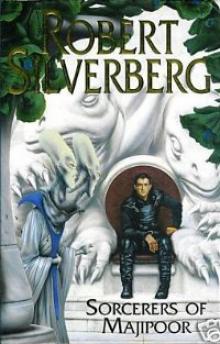 Sorcerers of Majipoor m-4
 Absolutely Inflexible
 Trips - 1962–73 - The Collected Stories of Robert Silverberg Volume Four
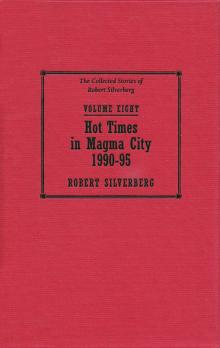 Hot Times in Magma City - 1990-95 - The Collected Stories of Robert Silverberg Volume Eight
 Far Horizons
 The Queen of Springtime ns-2
 The Seventh Science Fiction Megapack
 Invaders From Earth
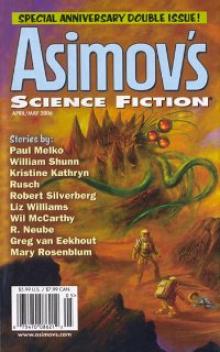 Hanosz Prime Goes To Old Earth
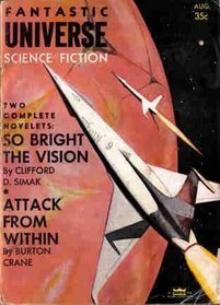 The Macauley Circuit
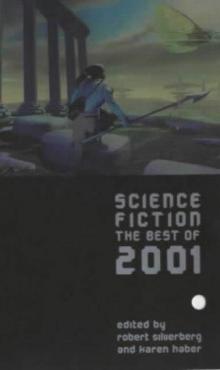 Science Fiction: The Best of 2001
 To the Dark Star: The Collected Stories of Robert Silverberg, Volume Two
 Stochastic Man
 Legends: Stories By The Masters of Modern Fantasy
 To Live Again And The Second Trip
 Flies
Flies The Silent Invaders
 Ship-Sister, Star-Sister