
- Home
- Robert Silverberg
Multiples Page 28
Multiples Read online
Page 28
“I have no interest in hearing about—”
“It’s been tested, actually. With me as the subject. But I can’t make the voyage alone. We have a crew of five and they’ve volunteered for tectogenetic retrofits to give them what I have. We don’t know anyone else who has your experience in that area. We’d like you to come out of retirement, Dr. Wu. We’ll set up a complete lab for you on a nearby satellite world, whatever equipment you need. And pay you very well. And insure your safety all the time you’re gone from Valparaiso. What do you say?”
The red-haired woman was trembling and slowly backing away.
“No,” she said. “It was such a long time ago. Whatever skills I had, I have forgotten, I have buried.”
So Farkas was right all along, Juanito thought.
“You can give yourself a refresher course. I don’t think it’s possible really to forget a gift like yours, do you?” Farkas said.
“No. Please. Let me be.”
Juanito was amazed at how cockeyed his whole handle on the situation had been from the start.
Farkas didn’t seem at all angry with the gene surgeon. He hadn’t come here for vengeance, Juanito realized. Just to cut a deal.
“Where’s he going?” Farkas said suddenly. “Don’t let him get away, Juanito.”
The woman—Wu—was moving faster now, not quite running but sidling away at a steady pace, back into the enclosed part of the cafe. Farkas gestured sharply and Juanito began to follow. The spike he was carrying could deliver a stun-level jolt at fifteen paces. But he couldn’t just spike her down in this crowd, not if she had sanctuary protection, not in El Mirador of all places.
There’d be fifty sanctuarios on top of him in a minute. They’d grab him and club him and sell his foreskin to the Generalissimo’s men for two and a half callies.
The cafe was crowded and dark. Juanito caught sight of her somewhere near the back, near the restrooms. Go on, he thought. Go into the ladies’ room. I’ll follow you right in there. I don’t give a damn about that.
But she went past the restrooms and ducked into an alcove near the kitchen instead. Two waiters laden with trays came by, scowling at Juanito to get out of the way. It took him a moment to pass around them, and by then he could no longer see the red-haired woman. He knew he was going to have big trouble with Farkas if he lost her in here. Farkas was going to have a fit. Farkas would try to stiff him on this week’s pay, most likely. Two thousand callies down the drain, not even counting the extra charges.
Then a hand reached out of the shadows and seized his wrist with surprising ferocity. He was dragged a little way into a claustrophobic games room dense with crackling green haze coming from some bizarre machine on the far wall. The red-haired woman glared at him, wild-eyed. “He wants to kill me, doesn’t he? That’s all bullshit about having me do retrofit operations, right?”
“I think he means it,” Juanito said.
“Nobody would volunteer to have his eyes replaced with blindsight.”
“How would I know? People do all sorts of crazy things. But if he wanted to kill you I think he’d have operated differently when we tracked you down.”
“He’ll get me off Valparaiso and kill me somewhere else.”
“I don’t know,” Juanito said. “I was just doing a job.”
“How much did he pay you to do the trace?” Savagely. “How much? I know you’ve got a spike in your pocket. Just leave it there and answer me. How much?”
“Three thousand callies a week,” Juanito muttered, padding things a little.
“I’ll give you five to help me get rid of him.”
Juanito hesitated. Sell Farkas out? He didn’t know if he could turn himself around that fast. Was it the professional thing to do, to take a higher bid?
“Eight,” he said, after a moment.
Why the hell not? He didn’t owe Farkas any loyalty. This was a sanctuary world; the compassion of El Supremo entitled Wu to protection here. It was every citizen’s duty. And eight thousand callies was a big bundle.
“Six five,” Wu said.
“Eight. Handshake right now. You have your glove?”
The woman who was Wu made a muttering sound and pulled out her flex terminal. “Account 1133,” Juanito said, and they made the transfer of funds. “How do you want to do this?” Juanito asked.
“There is a passageway into the outer shell just behind this cafe. You will catch sight of me slipping in there and the two of you will follow me. When we are all inside and he is coming toward me, you get behind him and take him down with your spike. And we leave him buried in there.” There was a frightening gleam in Wu’s eyes. It was almost as if the cunning retrofit body was melting away and the real Wu beneath was emerging, moment by moment. “You understand?” Wu said. A fierce, blazing look. “I have bought you, boy. I expect you to stay bought when we are in the shell. Do you understand me? Do you? Good.”
It was like a huge crawlspace entirely surrounding the globe that was El Mirador. Around the periphery of the double shell was a deep layer of lunar slag held in place by centrifugal forces, the tailings left over after the extraction of the gases and minerals that the satellite world had needed in its construction. On top of that was a low open area for the use of maintenance workers, lit by a trickle of light from a faint line of incandescent bulbs; and overhead was the inner skin of El Mirador itself, shielded by the slagpile from any surprises that might come ricocheting in from the void. Juanito was able to move almost upright within the shell, but Farkas, following along behind, had to bend double, scuttling like a crab.
“Can you see him yet?” Farkas asked.
“Somewhere up ahead, I think. It’s pretty dark in here.”
“Is it?”
Juanito saw Wu edging sideways, moving slowly around behind Farkas now. In the dimness Wu was barely visible, the shadow of a shadow. He had scooped up two handfuls of tailings. Evidently he was going to fling them at Farkas to attract his attention, and when Farkas turned toward Wu it would be Juanito’s moment to nail him with the spike.
Juanito stepped back to a position near Farkas’ left elbow. He slipped his hand into his pocket and touched the cool sleek little weapon. The intensity stud was down at the lower end, shock level, and without taking the spike from his pocket he moved the setting up to lethal. Wu nodded. Juanito began to draw the spike.
Suddenly Farkas roared like a wild creature. Juanito grunted in shock, stupefied by that terrible sound. This is all going to go wrong, he realized. A moment later Farkas whirled and seized him around the waist and swung him as if he was a throwing-hammer, hurling him through the air and sending him crashing with tremendous impact into Wu’s midsection. Wu crumpled, gagging and puking, with Juanito sprawled stunned on top of him. Then the lights went out—Farkas must have reached up and yanked the conduit loose—and then Juanito found himself lying with his face jammed down into the rough floor of tailings. Farkas was holding him down with a hand clamped around the back of his neck and a knee pressing hard against his spine. Wu lay alongside him, pinned the same way.
“Did you think I couldn’t see him sneaking up on me?” Farkas asked. “Or you, going for your spike? It’s 360 degrees, the blindsight. Something that Dr. Wu must have forgotten. All these years on the run, I guess you start to forget things.”
Jesus, Juanito thought. Couldn’t even get the drop on a blind man from behind him. And now he’s going to kill me. What a stupid way to die this is.
He imagined what Kluge might say about this, if he knew. Or Delilah. Nattathaniel. Decked by a blind man.
But he isn’t blind. He isn’t blind. He isn’t blind at all.
Farkas said, “How much did you sell me to him for, Juanito?”
The only sound Juanito could make was a muffled moan. His mouth was choked with sharp bits of slag.
“How much? Five thousand? Six?”
“It was eight,” said Wu quietly.
“At least I didn’t go cheaply,” Farkas murmured. He
reached into Juanito’s pocket and withdrew the spike. “Get up,” he said. “Both of you. Stay close together. If either of you makes a funny move I’ll kill you both. Remember that I can see you very clearly. I can also see the door through which we entered the shell. That starfish-looking thing over there, with streamers of purple light pulsing from it. We’re going back into El Mirador now, and there won’t be any surprises, will there? Will there?”
Juanito spit out a mouthful of slag. He didn’t say anything.
“Dr. Wu? The offer still stands,” Farkas continued. “You come with me, you do the job we need you for. That isn’t so bad, considering what I could do to you for what you did to me. But all I want from you is your skills, and that’s the truth. You are going to need that refresher course, aren’t you, though?”
Wu muttered something indistinct.
Farkas said, “You can practice on this boy, if you like. Try retrofitting him for blindsight first, and if it works, you can do our crew people, all right? He won’t mind. He’s terribly curious about the way I see things, anyway. Aren’t you, Juanito? Eh? Eh?” Farkas laughed. To Juanito he said, “If everything works out the right way, maybe we’ll let you go on the voyage with us, boy.” Juanito felt the cold nudge of the spike in his back. “You’d like that, wouldn’t you? The first trip to the stars? What do you say to that, Juanito?”
Juanito didn’t answer. His tongue was still rough with slag. With Farkas prodding him from behind, he shambled slowly along next to Dr. Wu toward the door that Farkas said looked like a starfish. It didn’t look at all like a fish to him, or a star, or like a fish that looked like a star. It looked like a door to him, as far as he could tell by the feeble light of the distant bulbs. That was all it looked like, a door that looked like a door. Not a star. Not a fish. But there was no use thinking about it, or anything else, not now, not with Farkas nudging him between the shoulderblades with his own spike. He let his mind go blank and kept on walking.
Gilgamesh in the Outback
Back in the mid-1980s, during the heyday of the shared-world science-fiction anthologies, in which a group of writers produced stories set in a common background defined by someone else, I was drawn into a project called Heroes in Hell. Its general premise (at least as I understood it) was that everybody who had ever lived, and a good many mythical beings besides, had been resurrected in a quasi-afterlife in a place that was called, for the sake of convenience, Hell. The concept was never clearly explained to me—one of the problems with these shared-world deals—and so I never fully grasped what I was supposed to be doing. But the basic idea struck me as reminiscent of the great Riverworld concept of Philip Jose Farmer, humanity’s total resurrection in some strange place, and I had long admired the Farmer books, so here was my chance to run my own variant on what Farmer had done a couple of decades earlier.
I seized on Gilgamesh as my protagonist, since he has always seemed to me to be the archetype of the fantastic hero. (He had figured in several of my earlier stories, and in 1984 I had used the original Sumerian Gilgamesh legend as the basis for my novel Gilgamesh the King.) Then, wondering whether Robert E. Howard would regard the towering Sumerian monarch as the prototype of his own Conan the Conqueror, I conjured Howard up to wander the wastelands of Hell as my secondary protagonist, and gave him H. P. Lovecraft for company. From there I added to the mix such people as Prester John, Kublai Khan, and Albert Schweitzer.
The story took a couple of months for me to finish—from October, 1985 to the end of the year, because I was busy with other things, as I’ll explain in the next introduction. But it was so much fun to write that I went on to do a second Gilgamesh in Hell novella, featuring the likes of Pablo Picasso and Simon Magus, and then a third. I never read very many of the other Heroes in Hell stories, so I have no idea how well my stories integrated themselves with those of my putative collaborators in the series, but I was enjoying myself and the novellas (which were also being published in Asimov’s Science Fiction) were popular among readers. “Gilgamesh in the Outback,” in fact, from the July, 1986 issue of Asimov’s, won a Hugo for Best Novella in 1987, one of the few shared-world stories ever to achieve that.
By then I realized that what I was doing was writing a novel in serialized form. The book that resulted in 1987, To the Land of the Living, was not primarily an expansion but a compilation: I drew together my three Gilgamesh novellas, making slight revisions here and there in the interest of consistency, and added a brief epilog that gave Gilgamesh’s seemingly random wanderings in Hell some emotional significance and an ultimate epiphany. The only major change in the original three texts involved deleting all material that referred directly, or directly grew from, the work of the other writers in the Heroes in Hell series. This was done to avoid any clashes over copyright issues. Since I had, by and large, gone my own way as a contributor to the series, with only the most tangential links to what others had invented, it seemed wisest to eradicate from my book any aspect that some other writer might lay claim to, and I did.
___________
Faust. First I will question thee about hell.
Tell me, where is the place that men call hell?
Meph. Under the heavens.
Faust. Ay, but whereabout?
Meph. Within the bowels of these elements,
Where we are tortur’d and remain for ever:
Hell hath no limits, nor is circumscrib’d
In one self place; for where we are is hell,
And where hell is, there must we ever be:
And, to conclude, when all the world dissolves,
And every creature shall be purified,
All places shall be hell that are not heaven.
Faust. Come, I think hell’s a fable.
Meph. Ay, think so still, till experience change thy mind.
Marlowe: Dr. Faustus
Jagged green lightning danced on the horizon and the wind came ripping like a blade out of the east, skinning the flat land bare and sending up clouds of gray-brown dust. Gilgamesh grinned broadly. By Enlil, now that was a wind! A lion-killing wind it was, a wind that turned the air dry and crackling. The beasts of the field gave you the greatest joy in their hunting when the wind was like that, hard and sharp and cruel.
He narrowed his eyes and stared into the distance, searching for this day’s prey. His bow of several fine woods, the bow that no man but he was strong enough to draw—no man but he and Enkidu his beloved thrice-lost friend—hung loosely from his hand. His body was poised and ready. Come now, you beasts! Come and be slain! It is Gilgamesh, king of Uruk, who would make his sport with you this day!
Other men in this land, when they went about their hunting, made use of guns, those foul machines that the New Dead had brought, which hurled death from a great distance along with much noise and fire and smoke; or they employed the even deadlier laser devices from whose ugly snouts came spurts of blue-white flame. Cowardly things, all those killing machines! Gilgamesh loathed them, as he did most instruments of the New Dead, those slick and bustling Johnny-come-latelies of Hell. He would not touch them if he could help it. In all the thousands of years he had dwelled in this nether world he had never used any weapons but those he had known during his first lifetime: the javelin, the spear, the double-headed axe, the hunting bow, the good bronze sword. It took some skill, hunting with such weapons as those. And there was physical effort; there was more than a little risk. Hunting was a contest, was it not? Then it must make demands. Why, if the idea was merely to slaughter one’s prey in the fastest and easiest and safest way, then the sensible thing to do would be to ride high above the hunting grounds in a weapons platform and drop a little nuke, eh, and lay waste five kingdoms’ worth of beasts at a single stroke!
He knew that there were those who thought him a fool for such ideas. Caesar, for one. Cocksure cold-blooded Julius with the gleaming pistols thrust into his belt and the submachine gun slung across his shoulders. “Why don’t you admit it?” Caesar had asked him once, riding u
p in his jeep as Gilgamesh was making ready to set forth toward Hell’s open wilderness. “It’s a pure affectation, Gilgamesh, all this insistence on arrows and javelins and spears. This isn’t old Sumer you’re living in now.”
Gilgamesh spat. “Hunt with 9-millimeter automatics? Hunt with grenades and cluster bombs and lasers? You call that sport, Caesar?”
“I call it acceptance of reality. Is it technology you hate? What’s the difference between using a bow and arrow and using a gun? They’re both technology, Gilgamesh. It isn’t as though you kill the animals with your bare hands.”
“I have done that, too,” said Gilgamesh.
“Bah! I’m on to your game. Big hulking Gilgamesh, the simple innocent oversized Bronze Age hero! That’s just an affectation, too, my friend! You pretend to be a stupid, stubborn thick-skulled barbarian because it suits you to be left alone to your hunting and your wandering, and that’s all you claim that you really want. But secretly you regard yourself as superior to anybody who lived in an era softer than your own. You mean to restore the bad old filthy ways of the ancient ancients, isn’t that so? If I read you the right way you’re just biding your time, skulking around with your bow and arrow in the dreary Outback until you think it’s the right moment to launch the putsch that carries you to supreme power here. Isn’t that it, Gilgamesh? You’ve got some crazy fantasy of overthrowing Satan himself and lording it over all of us. And then we’ll live in mud cities again and make little chicken scratches on clay tablets, the way we were meant to do. What do you say?”
“I say this is great nonsense, Caesar.”
“Is it? This place is full of kings and emperors and sultans and pharaohs and shahs and presidents and dictators, and every single one of them wants to be Number One again. My guess is that you’re no exception.”
“In this you are very wrong.”
“I doubt that. I suspect you believe you’re the best of us all; you, the sturdy warrior, the great hunter, the maker of bricks, the builder of vast temples and lofty walls, the shining beacon of ancient heroism. You think we’re all decadent rascally degenerates and that you’re the one true virtuous man. But you’re as proud and ambitious as any of us. Isn’t that how it is? You’re a fraud, Gilgamesh, a huge musclebound fraud!”
 The Longest Way Home
 Hawksbill Station
 A Time of Changes
 This Way to the End Times: Classic Tales of the Apocalypse
 Beyond the Gate of Worlds
 Lord Valentine's Castle
 The Man in the Maze
 Tales of Majipoor
 Time of the Great Freeze
 The Collected Stories of Robert Silverberg, Volume 3: Something Wild Is Loose: 1969-72
 Planet of Death
 Trips: The Collected Stories of Robert Silverberg, Volume Four
 In the Beginning: Tales From the Pulp Era
 Hot Sky at Midnight
 Valentine Pontifex
 Up the Line
 Thorns
 Amanda and the Alien
 Star of Gypsies
 Nightwings
 The Time Hoppers
 Blood on the Mink
 Dying Inside
 The Last Song of Orpheus
 The King of Dreams
 The Stochastic Man
 The Collected Stories of Robert Silverberg, Volume Seven: We Are for the Dark
 The Millennium Express: The Collected Stories of Robert Silverberg, Volume Nine
 The Iron Chancellor
 Lord Prestimion
 To Open the Sky
 The World Inside
 Chains of the Sea
 The Collected Stories of Robert Silverberg, Volume Five: The Palace at Midnight
 Postmark Ganymede
 The Second Trip
 The Collected Stories of Robert Silverberg, Volume 4: Trips: 1972-73
 Son of Man
 Tom O'Bedlam
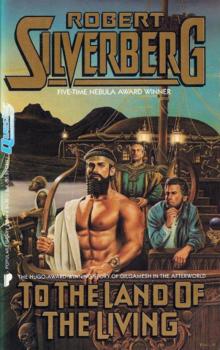 To the Land of the Living
 To Be Continued: The Collected Stories of Robert Silverberg, Volume One
 Shadrach in the Furnace
 The Chalice of Death: Three Novels of Mystery in Space
 The Queen of Springtime
 To Be Continued 1953-1958
 Legends
 Roma Eterna
 To Live Again
 At Winter's End
 Needle in a Timestack
 To Live Again and the Second Trip: The Complete Novels
 Lord of Darkness
 The Mountains of Majipoor
 The World Outside
 The Alien Years
 The Book of Skulls
 The Face of the Waters
 Gilgamesh the King
 The Collected Stories of Robert Silverberg, Volume 6: Multiples: 1983-87
 The Happy Unfortunate
 Three Survived
 Cronos
 Tower of Glass
 Legends II
 The Planet Killers
 The Collected Stories of Robert Silverberg, Volume 2: To the Dark Star: 1962-69
 Downward to the Earth
 Lord Valentine's Castle: Book One of the Majipoor Cycle
 Hot Times in Magma City, 1990-95
 Hunt the Space-Witch! Seven Adventures in Time and Space
 Majipoor Chronicles
 The Robert Silverberg Science Fiction Megapack(r)
 Starman's Quest
 Car Sinister
 Worlds of Maybe
 Fantasy The Best of 2001
 Revolt on Alpha C
 Homefaring
 The Pardoner's Tale
 Sailing to Byzantium - Six Novellas
 The Chalice of Death
 Sundance
 A Tip on a Turtle
 Nebula Awards Showcase 2001: The Year's Best SF and Fantasy Chosen by the Science Fiction and Fantasy Writers of America
 The Fangs of the Trees
 The Palace at Midnight: The Collected Work of Robert Silverberg, Volume Five
 The Millennium Express - 1995-2009 - The Collected Stories of Robert Silverberg Volume Nine
 Book of Skulls
 Passengers
 Something Wild is Loose - 1969–72 - The Collected Stories of Robert Silverberg Volume Three
 Multiples
 Starborne
 The Masks of Time
 The Mountains of Majipoor m-8
 Multiples (1983-87)
 Those Who Watch
 In the Beginning
 Earth Is The Strangest Planet
 Collision Course
 Neutral Planet
 To the Dark Star - 1962–69 - The Collected Stories of Robert Silverberg Volume Two
 Mutants
 Sailing to Byzantium
 When We Went to See the End of the World
 Robert Silverberg The Science Fiction Hall Of Fame Volume One, 1929-1964
 To Be Continued - 1953–58 - The Collected Stories of Robert Silverberg Volume One
 Valentine Pontifex m-3
 Gianni
 Majipoor Chronicles m-2
 We Are for the Dark (1987-90)
 Waiting for the Earthquake
 Fantasy: The Best of 2001
 How It Was When the Past Went Away
 Beauty in the Night
 The Man Who Never Forgot
 The Book of Changes m-9
 Lord Valentine's Castle m-1
 This Way to the End Times
 Queen of Springtime
 Legends-Volume 3 Stories by the Masters of Modern Fantasy
 The Palace at Midnight - 1980–82 - The Collected Stories of Robert Silverberg Volume Five
 Something Wild is Loose: The Collected Stories of Robert Silverberg, Volume Three
 Multiples - 1983–87 - The Collected Stories of Robert Silverberg Volume Six
 Alaree
 Three Survived: A Science Fiction Novel
 Defenders of the Frontier
 The New Springtime
 We Are for the Dark - 1987–90 - The Collected Stories of Robert Silverberg Volume Seven
 The Science Fiction Hall of Fame, Volume One 1929-1964--The Greatest Science Fiction Stories of All Time Chosen by the Members of the Science Fiction Writers of America
 Master Of Life And Death
 Choke Chain
 Sorcerers of Majipoor m-4
 Absolutely Inflexible
 Trips - 1962–73 - The Collected Stories of Robert Silverberg Volume Four
 Hot Times in Magma City - 1990-95 - The Collected Stories of Robert Silverberg Volume Eight
 Far Horizons
 The Queen of Springtime ns-2
 The Seventh Science Fiction Megapack
 Invaders From Earth
 Hanosz Prime Goes To Old Earth
 The Macauley Circuit
 Science Fiction: The Best of 2001
 To the Dark Star: The Collected Stories of Robert Silverberg, Volume Two
 Stochastic Man
 Legends: Stories By The Masters of Modern Fantasy
 To Live Again And The Second Trip
 Flies
Flies The Silent Invaders
 Ship-Sister, Star-Sister