
- Home
- Robert Silverberg
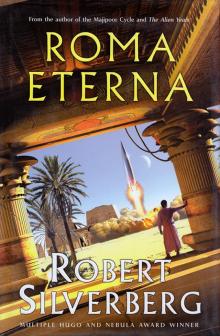
Roma Eterna Page 31
Roma Eterna Read online
Page 31
But this night Torquatus’s table was set for a person of Apollinaris’s tastes, with any number of wines and sherbets and a splendid main course of spiced venison. There was no entertainment—dancers and musicians would not be appropriate for such a meeting—and just the two of them were at the table. Apollinaris had never married and Torquatus’s wife, who was seldom seen in public, made no appearance even in her own home this evening.
He had indeed made changes in the customs procedures, he told Apollinaris. He had made other changes as well. The whole depraved crew that surrounded the Emperor had been rounded up and taken away. There would be no more wild spending sprees on Demetrius’s part. Torquatus had instituted reforms on every level of the government, as well. Corrupt officials had been removed. Regulations that had been on the books for decades but never enforced were now being applied. All governmental departments had been ordered to draw up new budgets and they would be required to live within them.
“And the Emperor?” Apollinaris asked, when Torquatus finally paused in his recitation. “How has he taken your dismissal of his coterie of flunkies? I see your head is still on its shoulders, so you must have found some way of pacifying him, but what could it have been?”
“His Majesty is not in any position to order executions these days,” said Torquatus. “His Majesty is currently under house arrest.”
Apollinaris felt a stab of amazement.
“Do you seriously mean that? Yes, yes, of course you do. You always seriously mean it.—Penned up in his own palace, is he?”
“In the palace guest-house, actually. That new building, the weird-looking one with those bizarre mosaics. I have troops posted on duty around it twenty-four hours a day.”
“But surely the Praetorian Guard wouldn’t have allowed—”
“I took the precaution of having the Prefect of the Praetorian Guard removed from office, and replaced him with a man of my own staff, a certain Atilius Rullianus. The Praetorians have received a generous payment and have willingly taken an oath of allegiance to their new prefect.”
“Yes. They usually do, if paid well enough.”
“And so we keep Demetrius well supplied with women and food, but otherwise he is completely isolated. He has no contact with any of the officials of his court, or with the members of the Senate. Naturally I stay away from him also. You will, I hope, keep your distance from him yourself, Apollinaris. Essentially you and I, jointly, are the Emperor, now. All governmental decrees flow from the Consular office; all governmental officials report to us.”
Apollinaris gave Torquatus a keen, close look. “So you intend to keep the Emperor a prisoner for the rest of his life? You know there’ll be problems with that, man. Crazy or not, the Emperor is expected to present himself before the people at certain times of the year. The New Year festival, the opening of the new Senate session, the first day of the season’s games at the Colosseum—you can’t just hide him away indefinitely, you know, without arousing a little curiosity about where he is.”
“For the moment,” said Torquatus, “it has been announced that His Majesty is ill. I think we can leave it at that for the time being. How fast he recovers—well, we can deal with that issue later. There are other problems.”
“Such as?”
“The Senate, for one. You may or may not be aware that a goodly number of Senators have been quite comfortable with Demetrius’s way of doing things. The general corruption spills over to them as well. With no real Emperor to hold them accountable, they do as they please, and plenty of them live like little Demetriuses themselves. The kind of orgiastic existences that Roma was famous for in Nero’s time, I mean. We can’t allow a return to that kind of thing. The Senate is in need of some reform itself. If it doesn’t get it, many of its members will try to obstruct our program.”
“I see,” Apollinaris said. “Are you talking about removing certain Senators from office, then?”
“That might be necessary.”
“But only an Emperor can do that.”
“We will do it in the name of the Emperor,” said Torquatus. “As we do everything else that must be done.”
“Ah,” Apollinaris said. “I see. In the name of the Emperor.”
For the first time he noticed how tired Torquatus looked. Torquatus was a big man, of formidable physical strength and legendary endurance; but his eyes, Apollinaris saw, were reddened with fatigue, and his heavy-jowled face was drawn and sallow.
“There’s even more to deal with,” Torquatus went on.
“More than dismissing the whole court, imprisoning the Emperor, and purging the Senate?”
“I refer to the possibility of a general uprising of the people,” Torquatus said portentously.
“Because of the reforms you’ve been instituting, you mean?”
“On the contrary. My reforms are the salvation of the Empire, and sooner or later everyone will see that—if we can hold things together until that point. But the people may not allow us enough time to explain things to them. You’ve been away these five years and you don’t know what’s been happening here. I want you to come with me to the Subura tomorrow.”
“The Subura,” Apollinaris said. He pressed his hands together and brought the tips of his fingers to his lips. The Subura, as he recalled, was an ancient slum district of the capital, a filthy, smelly place of dark alleys and crooked streets that led nowhere. Every few hundred years some civic-minded Emperor would order it cleaned out and rebuilt, but its innate nature was unconquerable and the pestilential nature of the place always managed to reassert itself in a couple of generations. “The Subura is restless, is it? A few truckloads of free bread and wine can fix that, I’d think.”
“Wrong. Those people have plenty to eat as it is. For all of Demetrius’s excesses, this is still a prosperous land. And, whatever you think, revolutions don’t spring up because of poverty. It’s the passion for novelty, the pursuit of excitement, that does it. Revolution is the fruit of idleness and leisure, not of poverty.”
“The idleness and leisure of the slum-dwellers of the Subura,” Apollinaris said, gazing thoughtfully at the other man. It was an interesting concept, marvelous in its complete absurdity.
But it appeared that Torquatus found a certain logic in it. “Yes. Amid the general breakdown of law and order, this thing that some people call the Decadence, they’ve come to see that nobody’s really in charge of anything any more. And so they want to get themselves a bigger share of the loot. Overthrow the monarchy, butcher all the patricians, divide up the wealth among themselves. I’ve been in their taverns, Apollinaris. I’ve listened to their harangues. You come with me tomorrow and sit down next to them and you’ll hear the same things yourself.”
“Two Consuls, going freely and unguarded into slum taverns?”
“They’ll have no idea who we are. I’ll show you how to dress.”
“It would be interesting, I suppose. But, thank you, no. I’ll take your word for it: there’s restlessness in the Subura. But we still have an army, Torquatus. I’ve just spent five years pacifying the provinces. I can pacify the Subura too, if I have to.”
“Turn the Roman army against the citizens of the capital? Think about it, my friend. The agitators in the Subura must be dealt with before the real trouble breaks out.—I agree, a great deal for you to consider on your first day back. But there’s no time to waste. We face a very big job.” Torquatus signaled to a slave who was waiting nearby to refill their glasses. “Enough of this talk for the moment, all right? What do you think of this wine? Forty-year-old Falernian, it is. From the Emperor’s own cellars, I should tell you. I had some brought here especially for this occasion.”
“Quite splendid,” said Apollinaris. “But age has made it a trifle bitter. Would you pass me the honey, Torquatus?”
Charax said, “This is the list so far, sir.”
Apollinaris took the sheet of paper from his aide-de-camp and ran quickly down the names. “Statius—Claudius Nero—Judas Anto
nius Soranus—who are these people, Charax?”
“Lucius Status is the Emperor’s private secretary. Soranus is a Hebrew who is said to import unusual animals from Africa for his collection. I have no information about Claudius Nero, sir, but he is probably a craftsman to the court.”
“Ah.” Apollinaris turned his attention back to the list. “Hilarion and Polybius, yes. The personal attendants. I remember those two. Oily little bastards, both of them. Glitius Agricola. Gaius Callistus. Marco Cornuto—what kind of name is that, ‘Marco Cornuto?’”
“A Roman name, sir. I mean, it’s Roman in language, not Latin.”
That puzzled him. “Latin—Roman—what’s the difference?”
“The lower classes speak some rough new kind of language now that they call ‘Roman,’ a dialect—the dialect of the people, it’s called. Derived from Latin, the way the languages of the provinces are. It’s like an easier, sloppier form of Latin. They’ve begun translating their own names into it, I hear. This Marco Cornuto is probably one of the Emperor’s coachmen, or a stable groom, something along those lines.”
Apollinaris made a face. He very much disliked the custom, of late so prevalent out in the provinces, of speaking local dialects that were coarse, vulgar versions of Latin mixed with primitive regional words: one way of speaking in Gallia, another in Hispania, another in Britannia, and still another, very different from the others, in the Teutonic provinces. He had suppressed the use of those languages, those dialects, wherever he had encountered it. So now it was happening here, too? “What sense does that make, a new dialect of Latin used right here in Roma? In the provinces, those dialects are a way of signifying independence from the Empire. But Roma can’t secede from itself, can it?”
Charax merely smiled and shrugged.
Apollinaris remembered now what Torquatus had told him about the restlessness in the slums, the likelihood of some kind of uprising among the plebeians. Was a new bastard form of Latin beginning to establish itself among the poor, a private language of their own, setting them apart from the hated aristocrats? It was worth investigating. He knew from his experiences in the provinces what power language could have in fomenting political unrest.
He looked once more at the list of those whom Torquatus had arrested.
“Matius—Licentius—Licinius—Caesius Bassius—” He looked up. “What do these little red marks next to some of the names mean?”
“Those are the ones who have already been executed,” Charax said.
“Did you say ‘executed’?” Apollinaris asked, startled.
“Put to death, yes,” said Charax. “You seem surprised. I thought you knew, sir.”
“No,” Apollinaris said. “I haven’t heard anything about executions.”
“At the far end of the Forum, in the little plaza in front of the Arch of Marcus Anastasius: he’s had a platform set up there, and every afternoon there have been executions all week, four or five a day.”
“‘He’?”
“Larcius Torquatus, sir,” Charax said, in the tone of one who was explaining something to a child.
Apollinaris nodded. This was the tenth day since his return to Roma, and they had been busy days. Torquatus had never given him a chance, at their first meeting in Torquatus’s home, to explain that it was his intention to give up his Consulship and retire to private life. And once he had heard what Torquatus had been up to—putting the Emperor under house arrest, throwing His Majesty’s playmates into prison, issuing a raft of stringent new decrees designed to cleanse the government of corruption—Apollinaris had realized that his notion of retiring was an impossible one. Torquatus’s program, commendable though it was, was so radical that he could not be left to carry it out alone. That would make him, in effect, dictator of Roma, and Apollinaris knew from his readings in history that the only kind of dictators Roma would tolerate were those who, like Augustus Caesar, were able to conceal their dictatorial ways behind a façade of constitutional legitimacy. A mere appointive Consul, ruling on his own after overthrowing the Emperor, would not be able to sustain himself in power unless he assumed the Imperial powers himself. Apollinaris did not want to see Torquatus do that. Maintaining the Consular system was essential now. And Torquatus must have a legitimate Consular colleague if he wanted his reforms to have any success.
So Apollinaris had put all thought of retirement aside and had spent his first days back reestablishing his presence at the capital, setting up his office in the Consular building, renewing his connections with the important men of the Senate, and otherwise resuming his life at the center of power. He had met daily with his colleague Torquatus, who assured him that the work of purging the commonwealth of idlers and parasites was moving along smoothly, but up until now Apollinaris had not pressed him for details. That had been a mistake, he realized now. Torquatus’s policy of ending the drain on the public treasury that the Emperor’s huge mob of hangers-on had created was one that he had applauded, of course. But it had never occurred to Apollinaris that his co-Consul was having them killed. And his travels around the city since his return had not taken him anywhere near that little plaza of Marcus Anastasius, the place of execution where heads rolled in the dust by order of M. Larcius Torquatus.
“Perhaps I should have a little talk with Torquatus about this,” Apollinaris said, rising and tucking the list of the arrested men into a fold of his robe.
Torquatus’s office was one floor above Apollinaris’s in the Consular building. In the old days the two Consuls had divided the ninth floor between themselves: that was how it had been in Apollinaris’s first three terms as Consul, certainly. The first time, as junior Consul, he had used the office on the eastern side of the building, looking down into Trajan’s Forum. During his second and third terms, when he now was senior Consul, he had moved over to the somewhat more imposing rooms on the western side of the top floor. But during Apollinaris’s long absence in the provinces Torquatus had expanded his own Consular domain into the part of the floor that had previously been his, and had set up a secondary office for his colleague on the building’s eighth floor. “The Consul’s tasks have increased so greatly since we reconstituted the post,” Torquatus explained, a little shamefacedly, when Apollinaris, having returned, had showed up to reclaim his old office. “You were away fighting in Sicilia and probably wouldn’t be back for two or three years, and I needed more room close at hand for the additional staff members that now were required, et cetera, et cetera—”
The new arrangement rankled more than a little, but this was not the moment, Apollinaris felt, to start quarreling with his co-Consul about office space. There would be time to express concern over matters of precedence and status once things were a little more stable at the capital.
Torquatus was busily signing papers when Apollinaris arrived. He seemed unaware, for a moment, that his fellow Consul had entered the room. Then he looked up and offered Apollinaris a quick apologetic smile. “So much paperwork—”
“Signing more death warrants, are you?”
Apollinaris had meant the statement to sound neutral, even bland. But Torquatus’s frowning response told him that he had not quite succeeded.
“As a matter of fact, Apollinaris, I am. Does that trouble you?”
“A little, perhaps. I don’t think I understood that you were actually going to have Demetrius’s people put to death.”
“I thought we had discussed it.”
“Not in so many words. You said you were ‘removing’ them, I think. I don’t recall your explicitly explaining what you meant by that.” Already a defensive iciness was visible in Torquatus’s eyes. Apollinaris brought forth the list of prisoners that Charax had procured for him and said, “Do you think it’s wise, Torquatus, to inflict such severe penalties on such trivial people? The Emperor’s barber? The Emperor’s clown?”
“You’ve been away from the capital many years,” Torquatus said. “These men are not such simple innocents as you may think. I send no one lightly to h
is death.”
“Even so, Torquatus—”
Smoothly Torquatus cut him off. “Consider our choices, if you will. Strip them of office but let them go free? Then they remain among us, stirring up trouble, conniving to get themselves back to their high positions in the palace. We merely imprison them? Then we must maintain them at public expense, perhaps for the rest of their lives. Send them into exile? Then they take their illicitly gained wealth with them, which otherwise we could recapture for the treasury. No, Apollinaris, getting rid of them once and for all is the only solution. If we allow them to live, sooner or later they’ll manage to get access to His Majesty again and begin working him up to overthrow us.”
“So we put them to death to minimize the risks to ourselves?”
“The risks to the Empire,” Torquatus said. “Do you think I care that much about my own life? But if we fall, the Empire falls with us. These men are the enemies of the commonwealth. You and I are all that stand between them and the reign of chaos. They have to go. I thought we had already come to full agreement on that point.”
In no way was that statement true, Apollinaris knew. Yet he saw the validity of the argument. The Empire stood, not for the first time, at the brink of anarchy. The disturbances in the provinces had given early warning of that. Augustus had created the Imperium by dint of military force, and it was the army that had sustained the Emperors on their thrones all these centuries. But Emperors ruled, ultimately, by the consent of the governed. No army was strong enough to compel the populace to accept the authority of a wicked or crazy Emperor indefinitely: that had been shown again and again, from the time of Caligula and Nero on up through history. Demetrius was plainly crazy; most of the government officials were demonstrably corrupt; if Torquatus was right that the plebeians were muttering about a revolution, and it was altogether possible that he was right about that, then a fierce purge of the corruption and craziness might be the only way of heading off calamity. And to allow Demetrius’s minions to live, and to regroup, and to regain the Emperor’s ear, was to invite that very calamity.
 The Longest Way Home
 Hawksbill Station
 A Time of Changes
 This Way to the End Times: Classic Tales of the Apocalypse
 Beyond the Gate of Worlds
 Lord Valentine's Castle
 The Man in the Maze
 Tales of Majipoor
 Time of the Great Freeze
 The Collected Stories of Robert Silverberg, Volume 3: Something Wild Is Loose: 1969-72
 Planet of Death
 Trips: The Collected Stories of Robert Silverberg, Volume Four
 In the Beginning: Tales From the Pulp Era
 Hot Sky at Midnight
 Valentine Pontifex
 Up the Line
 Thorns
 Amanda and the Alien
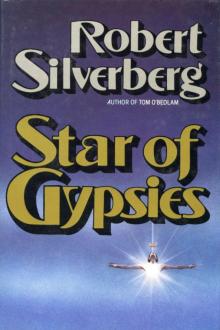 Star of Gypsies
 Nightwings
 The Time Hoppers
 Blood on the Mink
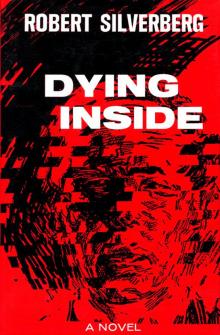 Dying Inside
 The Last Song of Orpheus
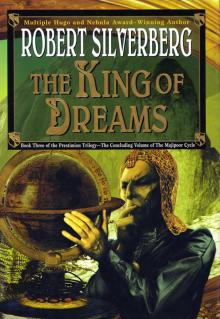 The King of Dreams
 The Stochastic Man
 The Collected Stories of Robert Silverberg, Volume Seven: We Are for the Dark
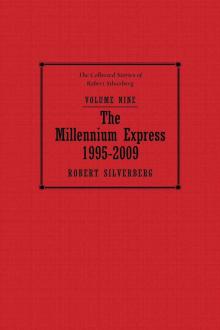 The Millennium Express: The Collected Stories of Robert Silverberg, Volume Nine
 The Iron Chancellor
 Lord Prestimion
 To Open the Sky
 The World Inside
 Chains of the Sea
 The Collected Stories of Robert Silverberg, Volume Five: The Palace at Midnight
 Postmark Ganymede
 The Second Trip
 The Collected Stories of Robert Silverberg, Volume 4: Trips: 1972-73
 Son of Man
 Tom O'Bedlam
 To the Land of the Living
 To Be Continued: The Collected Stories of Robert Silverberg, Volume One
 Shadrach in the Furnace
 The Chalice of Death: Three Novels of Mystery in Space
 The Queen of Springtime
 To Be Continued 1953-1958
 Legends
 Roma Eterna
 To Live Again
 At Winter's End
 Needle in a Timestack
 To Live Again and the Second Trip: The Complete Novels
 Lord of Darkness
 The Mountains of Majipoor
 The World Outside
 The Alien Years
 The Book of Skulls
 The Face of the Waters
 Gilgamesh the King
 The Collected Stories of Robert Silverberg, Volume 6: Multiples: 1983-87
 The Happy Unfortunate
 Three Survived
 Cronos
 Tower of Glass
 Legends II
 The Planet Killers
 The Collected Stories of Robert Silverberg, Volume 2: To the Dark Star: 1962-69
 Downward to the Earth
 Lord Valentine's Castle: Book One of the Majipoor Cycle
 Hot Times in Magma City, 1990-95
 Hunt the Space-Witch! Seven Adventures in Time and Space
 Majipoor Chronicles
 The Robert Silverberg Science Fiction Megapack(r)
 Starman's Quest
 Car Sinister
 Worlds of Maybe
 Fantasy The Best of 2001
 Revolt on Alpha C
 Homefaring
 The Pardoner's Tale
 Sailing to Byzantium - Six Novellas
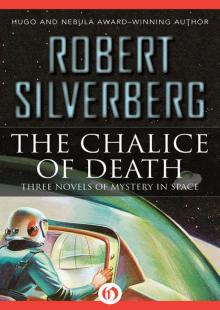 The Chalice of Death
 Sundance
 A Tip on a Turtle
 Nebula Awards Showcase 2001: The Year's Best SF and Fantasy Chosen by the Science Fiction and Fantasy Writers of America
 The Fangs of the Trees
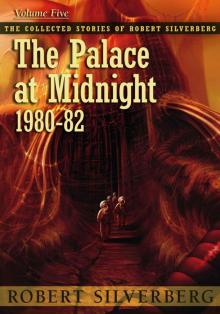 The Palace at Midnight: The Collected Work of Robert Silverberg, Volume Five
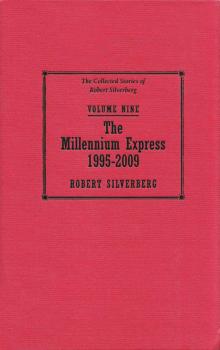 The Millennium Express - 1995-2009 - The Collected Stories of Robert Silverberg Volume Nine
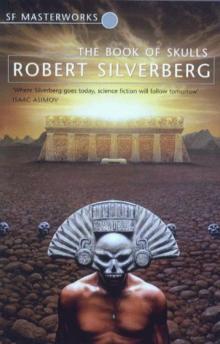 Book of Skulls
 Passengers
 Something Wild is Loose - 1969–72 - The Collected Stories of Robert Silverberg Volume Three
 Multiples
 Starborne
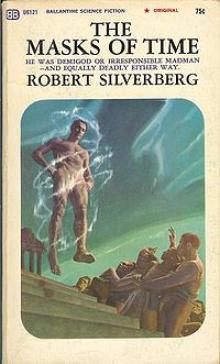 The Masks of Time
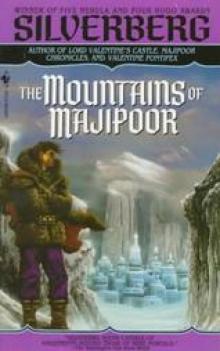 The Mountains of Majipoor m-8
 Multiples (1983-87)
 Those Who Watch
 In the Beginning
 Earth Is The Strangest Planet
 Collision Course
 Neutral Planet
 To the Dark Star - 1962–69 - The Collected Stories of Robert Silverberg Volume Two
 Mutants
 Sailing to Byzantium
 When We Went to See the End of the World
 Robert Silverberg The Science Fiction Hall Of Fame Volume One, 1929-1964
 To Be Continued - 1953–58 - The Collected Stories of Robert Silverberg Volume One
 Valentine Pontifex m-3
 Gianni
 Majipoor Chronicles m-2
 We Are for the Dark (1987-90)
 Waiting for the Earthquake
 Fantasy: The Best of 2001
 How It Was When the Past Went Away
 Beauty in the Night
 The Man Who Never Forgot
 The Book of Changes m-9
 Lord Valentine's Castle m-1
 This Way to the End Times
 Queen of Springtime
 Legends-Volume 3 Stories by the Masters of Modern Fantasy
 The Palace at Midnight - 1980–82 - The Collected Stories of Robert Silverberg Volume Five
 Something Wild is Loose: The Collected Stories of Robert Silverberg, Volume Three
 Multiples - 1983–87 - The Collected Stories of Robert Silverberg Volume Six
 Alaree
 Three Survived: A Science Fiction Novel
 Defenders of the Frontier
 The New Springtime
 We Are for the Dark - 1987–90 - The Collected Stories of Robert Silverberg Volume Seven
 The Science Fiction Hall of Fame, Volume One 1929-1964--The Greatest Science Fiction Stories of All Time Chosen by the Members of the Science Fiction Writers of America
 Master Of Life And Death
 Choke Chain
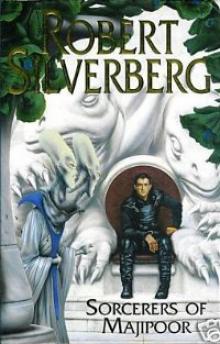 Sorcerers of Majipoor m-4
 Absolutely Inflexible
 Trips - 1962–73 - The Collected Stories of Robert Silverberg Volume Four
 Hot Times in Magma City - 1990-95 - The Collected Stories of Robert Silverberg Volume Eight
 Far Horizons
 The Queen of Springtime ns-2
 The Seventh Science Fiction Megapack
 Invaders From Earth
 Hanosz Prime Goes To Old Earth
 The Macauley Circuit
 Science Fiction: The Best of 2001
 To the Dark Star: The Collected Stories of Robert Silverberg, Volume Two
 Stochastic Man
 Legends: Stories By The Masters of Modern Fantasy
 To Live Again And The Second Trip
 Flies
Flies The Silent Invaders
 Ship-Sister, Star-Sister