
- Home
- Robert Silverberg
The New Springtime Page 34
The New Springtime Read online
Page 34
And if ever I become king of this place, he thought, I’ll give a high position to this princely Biterulve, and keep him by my side. And if I’m never granted a son, he’ll be king after me in Yissou. We’ll alternate the dynasties, a son of Salaman’s following the son of Harruel.
He laughed at his own foolishness. He was looking a great many steps ahead. Too many, perhaps.
Esperasagiot had the wagons waiting in the courtyard outside. The wagonmaster was studying the gray heavy sky with displeasure. Anger made his bright golden fur stand out full and thick. He gave Thu-Kimnibol a scowling glance. “If my say ruled, I’d say it was no weather for journeying.”
“It could be better, yes. But today’s the day we leave this place.”
Esperasagiot spat. “They say these winter storms are likely to last only another week or two.”
“Or three, or four. How can anyone know? The chieftain has summoned me, Esperasagiot. Do you love this bleak city so much that you want to wait here for spring?”
“I love my xlendis, prince.”
“Won’t they be able to withstand the cold?”
“Their kind withstood worse in the Long Winter. But it’ll do them no good to be out there. As I’ve told you: these are city-bred animals. They’re accustomed to warmth.”
“We’ll keep them warm, then. Ask King Salaman’s grooms for extra blankets. And we’ll take care not to push them too hard. We’ll go at a steady pace, the kind you like. If this miserable season is almost over, well, we’ll only have to cope with the cold for a matter of days. But by the time it lifts, we’ll be far along on the road to Dawinno.”
Esperasagiot smiled frostily. “As you wish, prince.”
He went off toward the stables. Thu-Kimnibol caught sight of Dumanka at the far side of the courtyard, inventorying the provisions that were to be loaded on the wagons. The quartermaster waved cheerfully without interrupting his work.
It was midday when all the preparations at last were done and they rode out through the southern gate. The sun was bright and the wind was barely blowing. But the landscape beyond the wall was a forbidding one. Leafless trees rose like dead things everywhere, and a dusting of frost clung to the north-facing slopes. Toward late afternoon the east wind intensified, sweeping across the dry plateau like a scimitar. The only sign of life came from the lantern-trees that lay just south of the city, for even in this hard season they hadn’t been abandoned by the tiny birds responsible for their glow. As the early night came on they began to send forth a blinking, feeble light, but that was nothing to inspire any great degree of cheer.
Thu-Kimnibol looked back. Tiny figures watched them from the top of the wall. Salaman? Biterulve? Weiawala? He waved at them. A few of the figures, not all, waved back.
The wagons moved onward. The City of Yissou vanished behind them. Slowly, warily, the ambassadors from the City of Dawinno wended their way south across the forlorn wintry land.
7
Rumblings of War
A week after Thu-Kimnibol’s departure, Salaman had the commander of the Acknowledgers brought to the palace. Zechtior Lukin, his name was. Athimin, newly released from prison and more than a little chastened, went with half a dozen guards into the run-down eastern quarter of the city to get him, anticipating a fight. But Athimin was surprised to find that Zechtior Lukin had no more qualms about going to speak with the king than he did about dancing naked in the streets when the black winds were blowing. He behaved as though he’d been expecting Salaman to summon him all along—as though he’d been wondering why the summons had taken so long to come.
There were some surprises for Salaman, too, in his meeting with the Acknowledger leader.
He had imagined that the head of the sect would be some wild-eyed fanatic, excitable and irascible, who would foam at the mouth, would shout and rant and babble incomprehensible slogans. He was right about one part of that, at least: Zechtior Lukin was a fanatic, beyond any doubt. Everything about him, the iron set of his jaw and the cold, bleak stony look of his eyes and his hard, thick-muscled frame, covered with gray, grizzled fur, spoke of extraordinary singlemindedness of purpose and dedication to his unlikely cause. And very likely he was irascible, too.
But a shouter? A ranter? A babbler of slogans? No. This man was cool and tough, with an air of icy reserve that Salaman immediately recognized as much like his own. He could surely have been a king, this one, if things had gone a little differently in the early years of the city. Instead he had become a butcher, a meat-cutter, who spent his days not in a stone palace but in a slaughterhouse, chopping joints and loins and flanks while blood ran in rivers around him. And in the evenings he and his followers met in a drafty gymnasium in the eastern quarter, and drilled one another in the strange tenets of their creed.
He stood calmly before the king, square-shouldered, unintimidated.
“How long is it since you people first started this?” Salaman asked.
“Years.”
“Three years? Five?”
“Almost since the founding of the city.”
“No,” Salaman said. “That’s impossible, that you could have been in existence that long a time without my even hearing about you.”
Zechtior Lukin shrugged. “There were very few of us, and we kept to ourselves. We studied our texts and held our meetings and practiced our disciplines, and we didn’t go out looking for recruits. It was our private thing. My father Lakkamai was the first of us, and then—”
“Lakkamai?” Another surprise. In the cocoon and in Vengiboneeza Lakkamai had been a silent man, who kept to himself and seemed to have no depths to his soul. He had been the lover of the offering-woman Torlyri in Vengiboneeza, but when the Breaking Apart had happened Lakkamai had abandoned Torlyri without a qualm, to go off with Harruel as one of the founders of the tiny settlement that would become the City of Yissou. He had died long ago. Salaman couldn’t remember his ever having taken a mate, let alone siring a son.
“You knew him,” Zechtior Lukin said.
“Many years back, yes.”
“Lakkamai taught us that what happened to the Great World was by design of the gods. He said that everything that happens is part of their plan, whether it seems good or ill to us, and that when the Great World people chose to die, it was because they understood the will of the gods and knew that it was their time to go from the world. So they lifted no hand to avert the death-stars, and allowed them to strike the world, and the great cold descended on them. He learned these things, he said, while speaking with Hresh, the chronicler of the Koshmar people.”
“Yes,” said Salaman. “You talk with Hresh, your mind becomes filled with all sorts of fancies and strangeness.”
“These are truths,” said Zechtior Lukin.
Salaman let the blunt contradiction pass. There was no point in arguing with the man. “So there were originally only a few of you. A couple of families only, is that it? But now my son says that there are a hundred ninety of you.”
“Three hundred seventy-six,” Zechtior Lukin said.
“I see.” One more black mark for Athimin. “So now you’ve decided to go out looking for new recruits after all, is that it? Why?”
“In dreams I saw the hjjk queen hovering in the air over the city. I felt the tremendous presence of her like a great weight above us. This was last year. And I saw that the day of reckoning is coming. The hjjks, as everyone knows, were exempted from the destruction of the Great World. The Five Heavenly Ones had some other purpose in mind for them, and brought them safely through the time of cold and snow so that they could perform that purpose in the New Springtime.”
“And you know what that purpose is, of course.”
“They are meant to destroy the People and their cities,” said Zechtior Lukin calmly. “They are the scourge of the gods.”
So he’s crazy after all, Salaman thought. What a pity that is.
But with calmness that matched the Acknowledger’s he said, “And how would that serve the pu
rposes of the Five? They brought us safely through the Long Winter to be the inheritors of the world—so say all our chronicles. Why did the gods bother to preserve us, if all they had in mind was to let the hjjks destroy us now? It would have been simpler just to leave us out in the cold and let the Long Winter finish us off hundreds and thousands of years back.”
“You don’t understand. We were tested, and we have failed the test. As you say, we were spared from the cold so that we might inherit the world. But we have taken the wrong turn. We build cities; we live in ever more comfortable houses; we grow soft and lazy. It’s worse in Dawinno than it is here, but everywhere the People fall away from the intent of the Five. What was our aim, after all, in building these cities? Only to duplicate the ease and comfort of the Great World, so it would appear. But such a duplication is wrong. If the gods wanted the world to be as it was when the sapphire-eyes lived, they would merely have left the Great World as it was. Instead they destroyed it. As they will destroy us. I tell you, king, the hjjks will be the instruments of our correction. They will fall upon us; they will shatter our cities; they will force us out into the wild lands, where we will finally accept the disciplines that the gods intended for us to learn. Those few of us who survive the onslaught will make another attempt at building a world. This is Dawinno’s will: he who transforms.”
“And if you all die of freezing, dancing in the plazas at night, is that going to create this wonderful new world for you?”
“We do not freeze. We will not die.”
“I see. You’re invulnerable.”
“We are very strong. You saw us, that night, at our festivals. You haven’t seen us at our training. Our spiritual exercises, our physical drills. We are warriors. We have developed immense endurance. We can march for days without sleep or food. We are unafraid of cold or privation. We have given up our individual selves, to form a new unity.”
All this was astonishing to Salaman. The philosophies of Lakkamai’s son were gibberish and lunacy; but all the same the king felt a great kinship of temperament with this man, and much affection for him. His strength, his ferocity, were evident. Secretly he had built an entire little kingdom within the kingdom. He had the true force of royalty about him. They could almost have been brothers. And yet he was crazy. It seemed an immense pity.
He said, “You must let me see you at your training.”
“This very night, if you wish, King Salaman.”
“Done. Perform your most difficult exercises for me. And then, my friend, you and your friends will need to start packing. You’ll be leaving here.”
Zechtior Lukin seemed unsurprised by that, and even indifferent, as he appeared to be toward everything that came his way.
“Where would you have us go?” he asked calmly.
“Northward. Obviously you’re unhappy here in Yissou, living amidst our contemptible softness. And I tell you truly that I have no great eagerness to have you spread your creed of inevitable destruction in the city that I love. So it’s in your interest and mine also for you to leave, wouldn’t you say? You wouldn’t want to go south, of course. Life’s too easy there. Besides, as our city expands into the lands to the south and Dawinno grows northward, we’re bound to trespass on your privacy. So go north, Zechtior Lukin. Cold doesn’t bother you, you say. Hunger is unimportant to you. And there’s plenty of land to the north where you can found a settlement that lives according to your principles and precepts. It could well be the capital of the great and pure and proper world that we of the cities have failed to create.”
“You mean, we should go into the hjjk lands?”
“I mean that, yes. Beyond Vengiboneeza, even. Deep into the cold dry northlands. Choose the territory to please yourselves. It may be that the hjjks will leave you unmolested. From what you say, your ways are very much like theirs, anyway—warriors, unafraid of discomfort, free of individual ambition. They may welcome you because you’re so much like them. Or they’ll simply ignore you. Why should a few hundred settlers matter to them, when they have half a continent? Yes: go to the hjjks. What do you say, Zechtior Lukin?”
There was a silence. Zechtior Lukin’s face was expressionless: no look of anger, no defiance, not even dismay. Something was going on in his mind, but he looked as untroubled as if the king had asked him some question about the price of meat.
“How much time will you allow us to prepare ourselves for the journey?” he asked, after a little while.
Nialli Apuilana has had all the solitude she can bear. She has been in hibernation all the winter long, like some animal that goes through a metamorphosis every year, and lies hidden away, wrapped in its own web, until the time arrives to come forth. Now the time is here. On a day in late winter when the rain is falling on Dawinno in torrents that are stupendous even for that season of merciless downpours, Nialli Apuilana leaves her room in the House of Nakhaba early in the afternoon. Now and then she has gone out late at night, but this is the first time since her recovery that she’s been out in daytime. There’s no one around to see her. The storm is so furious that the streets are deserted. Not even the guards are out. A light gleams behind every window: everyone’s indoors. But she laughs at the fury of the storm. “It’s really much too much,” she says out loud, looking upward, addressing herself to Dawinno. It is Dawinno who moves the great wheel of the seasons, now sending sun and now storms. “You’re overdoing it a little, don’t you think?” All she’s wearing is a sash. Her fur is drenched before she has taken five steps. It clings to her like a tight cloak, and water streams down her thighs.
She crosses the city to the House of Knowledge and climbs the winding stairs to the uppermost floor. She hadn’t doubted for an instant that Hresh would be there; and indeed he is, writing away in one of his huge old books.
“Nialli!” he cries. “Have you lost your wits, going out in weather like this? Here—let me dry you off—”
He swaddles her in a cloth, as if she’s a child. Passively she lets him enfold her and rub her dry, though it leaves her fur ruffled and wild.
When he’s done she says, “We should start to tell each other things, father. The time for doing that is long overdue.”
“Things? What kind of things?”
“About—the Nest—” she says hesitantly. “About—the Queen—”
He looks incredulous. “You actually want to talk about the hjjks?”
“About the hjjks, yes. The things you’ve learned, and what I have. They may not be the same things. You’ve always said you need to understand the hjjks better. You aren’t the only one. I do too, father. I do too.”
Chevkija Aim indicated an arching doorway of weatherbeaten smoke-gray wood at the end of a blind alleyway just off Fishmonger Street, flanked on either side by grubby-looking commercial buildings with façades of soiled red brick. Husathirn Mueri had never been in this part of the city before. It was some sort of industrial district, more than a little disreputable. “It’s all the way down there,” the guard-captain said. “A basement room. You go in and turn left, and down the stairs.”
“And is it safe for me just to walk right in?” Husathirn Mueri asked. “They won’t recognize me and panic?”
“You’ll be all right, sir. There’s not much light in there. You can just barely make out shapes, let alone faces. Nobody’ll know who you are.” The lithe young Beng grinned and nudged Husathirn Mueri’s arm with surprising familiarity. “Go on in, sir! Go on! I tell you, you’ll be all right.”
Indeed the room, long and narrow and rich with the salty reek of dried fish, was very dark. The only sources of light were two faint glowberry clusters mounted on the wall at the far end. A boy and a girl stood there, beside a table containing fruits and aromatic boughs that was probably the altar.
Husathirn Mueri, squinting, saw only darkness. Then his eyes adapted to it and saw a congregation of perhaps fifty people seated close together on rows of rough black barrels. They were muttering and chanting and occasionally stamping their feet in r
esponse to the words of the children at the altar. Here and there a towering Beng helmet rose above the crowd, but most of them were unhelmeted. The voices he heard were deep, thick, the voices of ordinary people, working-folk. Husathirn Mueri felt a new level of uneasiness. He had never gone among working-folk much. And to spy on them now, in their own sanctuary—
“Sit!” Chevkija Aim whispered, half shoving him down on one of the barrels in the last row. “Sit and listen! The boy is Tikharein Tourb. He’s the priest. The priestess is Chhia Kreun.”
“Priest? Priestess?”
“Listen to them, sir!”
He stared in disbelief. It seemed to Husathirn Mueri that he had arrived at the threshold of some other world.
The boy-priest made thick strange sounds, horrid chittering clicking sounds that sounded like hjjk-talk. The worshippers before him replied with the same bizarre noises. Husathirn Mueri shivered and put his hands over his face.
Then suddenly the boy called out, in a high clear voice, “The Queen is our comfort and our joy. Such is the teaching of the prophet Kundalimon, blessed be he.”
“The Queen is our comfort and our joy,” replied the congregation, singsong.
“She is the light and the way.”
“She is the light and the way.”
“She is the essence and the substance.”
“She is the essence and the substance.”
“She is the beginning and the end.”
“She is the beginning and the end.”
Husathirn Mueri trembled. At the sound of that sweet innocent voice he felt a touch of terror. The light and the way? The essence and the substance? What madness was this? Was he dreaming it?
He felt a choking, gagging sensation and covered his mouth with his hand. The basement room was windowless, and the air was close and hot. The musky salt tang of the barrels of dried fish, the gamy odor of sweaty fur, the rich pungent aroma of the sippariu and dilifar boughs on the altar—it was all starting to sicken him. He began to grow dizzy. He knotted his hands together and pressed his elbows hard into his ribs.
 The Longest Way Home
 Hawksbill Station
 A Time of Changes
 This Way to the End Times: Classic Tales of the Apocalypse
 Beyond the Gate of Worlds
 Lord Valentine's Castle
 The Man in the Maze
 Tales of Majipoor
 Time of the Great Freeze
 The Collected Stories of Robert Silverberg, Volume 3: Something Wild Is Loose: 1969-72
 Planet of Death
 Trips: The Collected Stories of Robert Silverberg, Volume Four
 In the Beginning: Tales From the Pulp Era
 Hot Sky at Midnight
 Valentine Pontifex
 Up the Line
 Thorns
 Amanda and the Alien
 Star of Gypsies
 Nightwings
 The Time Hoppers
 Blood on the Mink
 Dying Inside
 The Last Song of Orpheus
 The King of Dreams
 The Stochastic Man
 The Collected Stories of Robert Silverberg, Volume Seven: We Are for the Dark
 The Millennium Express: The Collected Stories of Robert Silverberg, Volume Nine
 The Iron Chancellor
 Lord Prestimion
 To Open the Sky
 The World Inside
 Chains of the Sea
 The Collected Stories of Robert Silverberg, Volume Five: The Palace at Midnight
 Postmark Ganymede
 The Second Trip
 The Collected Stories of Robert Silverberg, Volume 4: Trips: 1972-73
 Son of Man
 Tom O'Bedlam
 To the Land of the Living
 To Be Continued: The Collected Stories of Robert Silverberg, Volume One
 Shadrach in the Furnace
 The Chalice of Death: Three Novels of Mystery in Space
 The Queen of Springtime
 To Be Continued 1953-1958
 Legends
 Roma Eterna
 To Live Again
 At Winter's End
 Needle in a Timestack
 To Live Again and the Second Trip: The Complete Novels
 Lord of Darkness
 The Mountains of Majipoor
 The World Outside
 The Alien Years
 The Book of Skulls
 The Face of the Waters
 Gilgamesh the King
 The Collected Stories of Robert Silverberg, Volume 6: Multiples: 1983-87
 The Happy Unfortunate
 Three Survived
 Cronos
 Tower of Glass
 Legends II
 The Planet Killers
 The Collected Stories of Robert Silverberg, Volume 2: To the Dark Star: 1962-69
 Downward to the Earth
 Lord Valentine's Castle: Book One of the Majipoor Cycle
 Hot Times in Magma City, 1990-95
 Hunt the Space-Witch! Seven Adventures in Time and Space
 Majipoor Chronicles
 The Robert Silverberg Science Fiction Megapack(r)
 Starman's Quest
 Car Sinister
 Worlds of Maybe
 Fantasy The Best of 2001
 Revolt on Alpha C
 Homefaring
 The Pardoner's Tale
 Sailing to Byzantium - Six Novellas
 The Chalice of Death
 Sundance
 A Tip on a Turtle
 Nebula Awards Showcase 2001: The Year's Best SF and Fantasy Chosen by the Science Fiction and Fantasy Writers of America
 The Fangs of the Trees
 The Palace at Midnight: The Collected Work of Robert Silverberg, Volume Five
 The Millennium Express - 1995-2009 - The Collected Stories of Robert Silverberg Volume Nine
 Book of Skulls
 Passengers
 Something Wild is Loose - 1969–72 - The Collected Stories of Robert Silverberg Volume Three
 Multiples
 Starborne
 The Masks of Time
 The Mountains of Majipoor m-8
 Multiples (1983-87)
 Those Who Watch
 In the Beginning
 Earth Is The Strangest Planet
 Collision Course
 Neutral Planet
 To the Dark Star - 1962–69 - The Collected Stories of Robert Silverberg Volume Two
 Mutants
 Sailing to Byzantium
 When We Went to See the End of the World
 Robert Silverberg The Science Fiction Hall Of Fame Volume One, 1929-1964
 To Be Continued - 1953–58 - The Collected Stories of Robert Silverberg Volume One
 Valentine Pontifex m-3
 Gianni
 Majipoor Chronicles m-2
 We Are for the Dark (1987-90)
 Waiting for the Earthquake
 Fantasy: The Best of 2001
 How It Was When the Past Went Away
 Beauty in the Night
 The Man Who Never Forgot
 The Book of Changes m-9
 Lord Valentine's Castle m-1
 This Way to the End Times
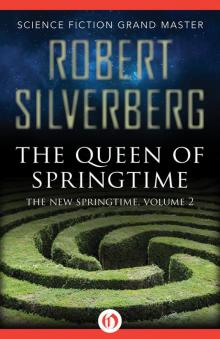 Queen of Springtime
 Legends-Volume 3 Stories by the Masters of Modern Fantasy
 The Palace at Midnight - 1980–82 - The Collected Stories of Robert Silverberg Volume Five
 Something Wild is Loose: The Collected Stories of Robert Silverberg, Volume Three
 Multiples - 1983–87 - The Collected Stories of Robert Silverberg Volume Six
 Alaree
 Three Survived: A Science Fiction Novel
 Defenders of the Frontier
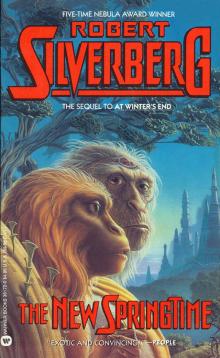 The New Springtime
 We Are for the Dark - 1987–90 - The Collected Stories of Robert Silverberg Volume Seven
 The Science Fiction Hall of Fame, Volume One 1929-1964--The Greatest Science Fiction Stories of All Time Chosen by the Members of the Science Fiction Writers of America
 Master Of Life And Death
 Choke Chain
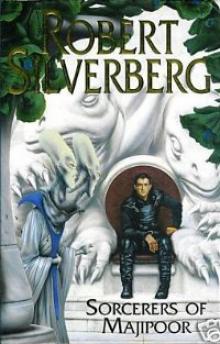 Sorcerers of Majipoor m-4
 Absolutely Inflexible
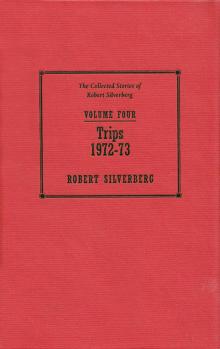 Trips - 1962–73 - The Collected Stories of Robert Silverberg Volume Four
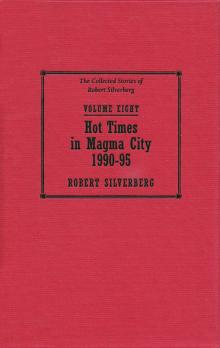 Hot Times in Magma City - 1990-95 - The Collected Stories of Robert Silverberg Volume Eight
 Far Horizons
 The Queen of Springtime ns-2
 The Seventh Science Fiction Megapack
 Invaders From Earth
 Hanosz Prime Goes To Old Earth
 The Macauley Circuit
 Science Fiction: The Best of 2001
 To the Dark Star: The Collected Stories of Robert Silverberg, Volume Two
 Stochastic Man
 Legends: Stories By The Masters of Modern Fantasy
 To Live Again And The Second Trip
 Flies
Flies The Silent Invaders
 Ship-Sister, Star-Sister