
- Home
- Robert Silverberg
Roma Eterna Page 34
Roma Eterna Read online
Page 34
“We could search for him in there for five hundred years and not succeed in finding him,” said Charax.
“Find him,” Apollinaris said again.
The days went by, and Timoleon continued to elude capture.
Other plebeian revolutionaries were not as clever, or as lucky, and arrested agitators were brought in by the cartload. The pace of executions, which had fallen off somewhat during the period of official mourning following the announcement of Emperor Demetrius’s death and the ceremonies accompanying Emperor Laureolus’s accession, now quickened again. Before long there were as many each day as there had been toward the end of Torquatus’s time; and then the daily toll came to surpass even that of Torquatus.
Apollinaris had never been one to indulge in self-deception. He had removed Torquatus in the interests of peace, and here he was following the same bloody path as his late colleague. But he saw no alternative. There was necessity here. The commonwealth had become a fragile one. A hundred years of foolish Emperors had undermined its foundations, and now they had to be rebuilt. And since it appeared unavoidable that blood must be mixed into the mortar, so shall it be, Apollinaris thought. So shall it be. It was his duty, painful though it sometimes was. He had always understood that word, “duty,” as meaning nothing more complicated than “service”: service to the Empire, to the Emperor, to the citizens of Roma, to his own sense of his obligations as a Roman. But he had discovered in these apocalyptic days that it was more complex than that, that it entailed a heavy weight of difficulty, conflict, pain, and necessity.
Even so, he would not shirk it.
During this time the Emperor Laureolus was rarely seen in public. Apollinaris had suggested to him that it would be best, in this transitional period, if he let himself be perceived as a remote figure sequestered in the palace, floating high above the carnage, so that when the time of troubles finally ended he would not seem unduly stained with the blood of his people. Laureolus seemed willing to follow this advice. He kept to himself, attending no Senate sessions, taking part in none of the public rituals, issuing no statements. Several times a week Apollinaris visited him at the palace but those visits were Laureolus’s only direct contact with the machinery of the government.
Somehow he was aware, though, of the hectic activities in the plaza of execution.
“All this bloodshed troubles me, Apollinaris,” the Emperor said. It was the seventh week of his reign. The intolerable heat of summer had given way to the chill of an unnaturally cold and rainy autumn. “It’s a bad way to begin my reign. I’ll be thought of as a heartless monster, and how can a heartless monster expect to win the love of his people? I can’t be an effective Emperor if the people hate me.”
“In time, Caesar, they’ll be brought to understand that what is happening now is for the good of our whole society. They’ll give thanks to you for rescuing the Empire from degradation and ruin.”
“Can we not revive the old custom of sending our enemies into exile, Apollinaris? Can we not show a little clemency now and then?”
“Clemency will only be interpreted as weakness just now. And exiles return, more dangerous than ever. Through these deaths we guarantee the peace of future generations.”
The Emperor remained unconvinced. He reminded Apollinaris that the brunt of punishment now was falling on the common people, whose lives had always been hard even in the best of times. The contract that the Emperors had made with the people, said Laureolus, was to offer stability and peace in return for strict obedience to Imperial rule; but if the Emperor made the bonds too tight, the populace would begin turning toward the fantasy of a happier life in some imaginary existence beyond death. There had always been religious teachers in the East, in Syria, in Aegyptus, in Arabia, who had tried to instill such concepts in the people, and it had always been necessary to stamp such teachings out. A cult that promised salvation in the next world would inevitably weaken the common folk’s loyalty to the state in this one. But that loyalty had to be won, over and over again, through the benevolence of the rulers. Thus the need for judicious relaxation, from time to time, of governmental restraint. The present campaign of executing the people’s leaders, said Laureolus, flew in the face of wisdom.
“This man Timoleon, for example,” the Emperor said. “Must you make such a great thing of searching him out? You don’t seem to be able to find him, and you’re turning him into an even bigger popular hero than he already was.”
“Timoleon is the greatest danger the Empire has ever faced, Caesar. He is a spear aimed straight at the throne.”
“You are too melodramatic sometimes, Apollinaris. I urge you: let him go free. Show the world that we can tolerate even a Timoleon in our midst.”
“I think you fail to understand just how dangerous—”
“Dangerous? He’s just a ragged rabble-rouser. What I don’t want to do is make him into a martyr. We could capture him and crucify him, yes, but that would give the people a hero, and they would turn the world upside down in his name. Let him be.”
But Apollinaris saw only peril in that path, and the search for Timoleon went on. And in time Timoleon was betrayed by a greedy associate and arrested in one of the Underworld’s most remote and obscure caverns, along with dozens of his most intimate associates and several hundred other followers.
Apollinaris, on his own authority as head of the Council of Internal Security and without notifying the Emperor, ordered an immediate trial. There would be one more climactic spate of executions, he told himself, and then, he swore, the end of the time of blood would finally be at hand. With Timoleon and his people gone, Laureolus at last could step forth and offer the olive branch of clemency to the citizenry in general: the beginning of the time of reconciliation and repair that must follow any such epoch as they had all just lived through.
For the first time since his return to Roma from the provinces Apollinaris began to think that he was approaching the completion of his task, that he had brought the Empire safely through all its storms and could retire from public responsibility at long last.
And then Tiberius Charax came to him with the astonishing news that the Emperor Laureolus had ordered an amnesty for all political prisoners as an act of Imperial mercy, and that Timoleon and his friends would be released from the dungeons within the next two or three days.
“He’s lost his mind,” Apollinaris said. “Demetrius himself would not have been guilty of such insanity.” He reached for pen and paper. “Here—take these warrants of execution to the prison at once, before any releases can be carried out—”
“Sir—” said Charax quietly.
“What is it?” Apollinaris asked, not looking up.
“Sir, the Emperor has sent for you. He asks your attendance at the palace within the hour.”
“Yes,” he said. “Just as soon as I’ve finished signing these warrants.”
The moment Apollinaris entered the Emperor’s private study he understood that it was his own death warrant, and not Timoleon’s, that he had signed this afternoon. For there on Laureolus’s desk was the stack of papers that he had given Charax less than an hour before. Some minion of Laureolus’s must have intercepted them.
There was a coldness beyond that of ice in the Emperor’s pale blue eyes.
“Were you aware that we ordered clemency for these men, Consul?” Laureolus asked him.
“Shall I lie to you? No, Caesar, it’s very late for me to take up the practice of lying. I was aware of it. I felt it was a mistake, and countermanded it.”
“Countermanded your Emperor’s orders? That was very bold of you, Consul!”
“Yes. It was. Listen to me, Laureolus—”
“Caesar.”
“Caesar. Timoleon wants nothing less than the destruction of the Imperium, and the Senate, and everything else that makes up our Roman way of life. He must be put to death.”
“I’ve already told you: any fool of an Emperor can have his enemies put to death. He snaps his fingers and th
e thing is done. The Emperor who’s capable of showing mercy is the Emperor whom the people will love and obey.”
“I’ll take no responsibility for what happens, Caesar, if you insist on letting Timoleon go.”
“You will not be required to take responsibility for it,” said Laureolus evenly.
“I think I understand your meaning, Caesar.”
“I think you do, yes.”
“I fear for you, all the same, if you free that man. I fear for Roma.” For an instant all his iron self-control deserted him, and he cried, “Oh, Laureolus, Laureolus, how I regret that I chose you to be Emperor! How wrong I was!—Can’t you see that Timoleon has to die, for the good of us all? I demand his execution!”
“How strangely you address your Emperor,” said Laureolus, in a quiet voice altogether devoid of anger. “It is as if you can’t quite bring yourself to believe that I am Emperor. Well, Apollinaris, we are indeed your sovereign, and we refuse to accept what you speak of as your ‘demand.’ Furthermore: your resignation as Consul is accepted. You have overstepped your Consular authority, and there is no longer any room for you in our government as the new period of healing begins. We offer you exile in any place of your choice, so long as it’s far from here: Aegyptus, perhaps, or maybe the isle of Cyprus, or Pontus—”
“No.”
“Then suicide is your only other option. A fine old Roman way to die.”
“Not that either,” said Apollinaris. “If you want to be rid of me, Laureolus, have me taken to the plaza of Marcus Anastasius and chop my head off in front of all the people. Explain to them, if you will, why it was necessary to do that to someone who has served the Empire so long and so well. Blame all the recent bloodshed on me, perhaps. Everything, even the executions that Torquatus ordered. You’ll surely gain the people’s love that way, and I know how dearly you crave that love.”
Laureolus’s expression was utterly impassive. He clapped his hands and three men of the Guard entered.
“Conduct Count Apollinaris to the Imperial prison,” he said, and turned away.
Charax said, “He wouldn’t dare to execute you. It would start an entirely new cycle of killings.”
“Do you think so?” Apollinaris asked. They had given him the finest cell in the place, one usually reserved for prisoners of high birth, disgraced members of the royal family, younger brothers who had made attempts on the life of the Emperor, people like that. Its walls were hung with heavy purple draperies and its couches were of the finest make.
“I think so, yes. You are the most important man in the realm. Everyone knows what you achieved in the provinces. Everyone knows, also, that you saved us from Torquatus and that you put Laureolus on the throne. You should have been made Emperor yourself when Demetrius died. If he kills you the whole Senate will speak out against him, and the entire city will be outraged.”
“I doubt that very much,” said Apollinaris wearily. “Your view of things has rarely been so much in error. But no matter: did you bring the books?”
“Yes,” Charax said. He opened the heavy package he was carrying. “Lentulus Aufidius. Sextus Asinius. Suetonius. Ammianus Marcellinus. Julius Capitolinus, Livius, Thucydides, Tacitus. All the great historians.”
“Enough reading to last me through the night,” said Apollinaris. “Thank you. You can leave me now.”
“Sir—”
“You can leave me now,” said Apollinaris again. But as Charax walked toward the door he said, “One more thing, though. What about Timoleon?”
“He has gone free, sir.”
“I expected nothing else,” Apollinaris said.
Once Charax was gone he turned his attention to the books. He would start with Thucydides, he thought—that merciless account of the terrible war between Athens and Sparta, as grim a book as had ever been written—and would make his way, volume by volume, through all of later history. And if Laureolus let him live long enough to have read them all one last time, perhaps then he would begin writing his own here in prison, a memoir that he would try to keep from being too self-serving, even though it would be telling the story of how he had sacrificed his own life in order to preserve the Empire. But he doubted that Laureolus would let him live long enough to do any writing. There would be no public execution, no—Charax had been correct about that. He was too much of a hero in the public’s eyes to be sent off so callously to the block, and in any event Laureolus’s stated intention was to give the executioners a long respite from their somber task and allow the city to return to something approaching normal.
He reached for the first volume of Thucydides, and sat for a time reading and rereading its opening few sentences.
A knock at his door, then. He had been waiting for it.
“Come in,” he said. “I doubt that it’s locked.”
A tall, gaunt figure entered, a man wearing a hooded black cape that left his face exposed. He had cold close-set eyes, a taut fleshless face, rough skin, thin tight-clamped lips.
“I know you,” said Apollinaris calmly, though he had never seen the man in his life.
“Yes, I believe you do,” the other said, showing him the knife as he came toward him. “You know me very well. And I think you’ve been expecting me.”
“So I have,” said Apollinaris.
It was the first day of the new month, when the Prefect of the Fiscus Imperialis and the Prefect of the Fiscus Publicus traditionally lunched together to discuss matters that pertained to the workings of the two treasuries. Even now, many weeks along in the reign of the new Emperor, the Emperor’s private purse, the Fiscus Imperialis, was still under the charge of Quintus Cestius, and the other fund, the Fiscus Publicus, was, as it had been for years, administered by Sulpicius Silanus. They had weathered all the storms. They were men who knew the art of surviving.
“So Count Valerian Apollinaris has perished,” Cestius said. “A pity, that. He was a very great man.”
“Too great, I think, to be able to keep out of harm’s way indefinitely. Such men inevitably are brought down. A pity, I agree. He was a true Roman of the old sort. Men like that are very scarce in these dreadful times.”
“But at least peace is restored. The Empire is whole again, thanks be to Count Apollinaris, and to our beloved Emperor Laureolus.”
“Yes. But is it secure, though? Have any of the real problems been addressed?” Silanus, that sly little man of hearty appetite and exuberant spirit, cut himself another slab of meat and said, “I offer you a prediction, Cestius. It will all fall apart again within a hundred years.”
“You are too optimistic by half, at least,” said Quintus Cestius, reaching for the wine, though he rarely drank.
“Yes,” said Silanus. “Yes, I am.”
A.U.C. 2603: VIA ROMA
A carriage is waiting for me, by prearrangement, when I disembark at the port in Neapolis after the six-day steamer voyage from Britannia. My father has taken care of all such details for me with his usual efficiency. The driver sees me at once—I am instantly recognizable, great strapping golden-haired barbarian that I am, a giant Nordic pillar towering over this busy throng of small swarthy southern people running to and fro—and cries out to me, “Signore! Signore! Venga qua, signore.”
But I’m immobilized in that luminous October warmth, staring about me in wonder, stunned by the avalanche of unfamiliar sights and smells. My journey from the dank rainy autumnal chill of my native Britannia into this glorious Italian land of endless summer has transported me not merely to another country but, so it seems, to another world. I am overwhelmed by the intense light, the radiant shimmering air, the profusion of unknown tropical-looking trees. By the vast sprawling city stretching before me along the shores of the Bay of Neapolis. By the lush green hills just beyond, brilliantly bespeckled with the white winter villas of the Imperial aristocracy. And then too there is the great dark mountain far off to my right, the mighty volcano, Vesuvius itself, looming above the city like a slumbering god. I imagine that I can make out a f
aint gray plume of pale smoke curling upward from its summit. Perhaps while I am here the god will awaken and send fiery rivers of red lava down its slopes, as it has done so many times in the immemorial past.
No, that is not to happen. But there will be fire, yes: a fire that utterly consumes the Empire. And I am destined to stand at the very edge of it, on the brink of the conflagration, and be altogether unaware of everything going on about me: poor fool, poor innocent fool from a distant land.
“Signore! Per favore!” My driver jostles his way to my side and tugs impatiently at the sleeve of my robe, an astonishing transgression against propriety. In Britannia I surely would strike any coachman who did that; but this is not Britannia, and customs evidently are very different here. He looks up imploringly. I’m twice his size. In comic Britannic he says, “You no speak Romano, signore? We must leave this place right away. Is very crowded, all the people, the luggage, the everything, I may not remain at the quay once my passenger has been found. It is the law. Capisce, signore? Capisce?”
“Si, si, capisco,” I tell him. Of course I speak Roman. I spent three weeks studying it in preparation for this journey, and it gave me no trouble to learn. What is it, after all, except a mongrelized and truncated kind of bastard Latin? And everyone in the civilized world knows Latin. “Andiamo, si.”
He smiles and nods. “Allora. Andiamo!”
All around us is chaos—newly arrived passengers trying to find transportation to their hotels, families fighting to keep from being separated in the crush, peddlers selling cheap pocket-watches and packets of crudely tinted picture postcards, mangy dogs barking, ragged children with sly eyes moving among us looking for purses to pick. The roaring babble is astonishing. But we are an island of tranquility in the midst of it all, my driver and I. He beckons me into the carriage: a plush seat, leather paneling, glistening brass fittings, but also an inescapable smell of garlic. Two noble auburn horses stand patiently in their traces. A porter comes running up with my luggage and I hear it being thumped into place overhead. And then we are off, gently jouncing down the quay, out into the bustling city, past the marble waterfront palaces of the customs officials and the myriad other agencies of the Imperial government, past temples of Minerva, Neptune, Apollo, and Jupiter Optimus Maximus, and up the winding boulevards toward the district of fashionable hotels on the slopes that lie midway between the sea and the hills. I will be staying at the Tiberius, on Via Roma, a boulevard which I have been told is the grand promenade of the upper city, the place to see and be seen.
 The Longest Way Home
 Hawksbill Station
 A Time of Changes
 This Way to the End Times: Classic Tales of the Apocalypse
 Beyond the Gate of Worlds
 Lord Valentine's Castle
 The Man in the Maze
 Tales of Majipoor
 Time of the Great Freeze
 The Collected Stories of Robert Silverberg, Volume 3: Something Wild Is Loose: 1969-72
 Planet of Death
 Trips: The Collected Stories of Robert Silverberg, Volume Four
 In the Beginning: Tales From the Pulp Era
 Hot Sky at Midnight
 Valentine Pontifex
 Up the Line
 Thorns
 Amanda and the Alien
 Star of Gypsies
 Nightwings
 The Time Hoppers
 Blood on the Mink
 Dying Inside
 The Last Song of Orpheus
 The King of Dreams
 The Stochastic Man
 The Collected Stories of Robert Silverberg, Volume Seven: We Are for the Dark
 The Millennium Express: The Collected Stories of Robert Silverberg, Volume Nine
 The Iron Chancellor
 Lord Prestimion
 To Open the Sky
 The World Inside
 Chains of the Sea
 The Collected Stories of Robert Silverberg, Volume Five: The Palace at Midnight
 Postmark Ganymede
 The Second Trip
 The Collected Stories of Robert Silverberg, Volume 4: Trips: 1972-73
 Son of Man
 Tom O'Bedlam
 To the Land of the Living
 To Be Continued: The Collected Stories of Robert Silverberg, Volume One
 Shadrach in the Furnace
 The Chalice of Death: Three Novels of Mystery in Space
 The Queen of Springtime
 To Be Continued 1953-1958
 Legends
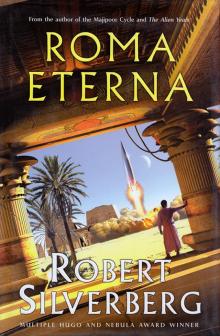 Roma Eterna
 To Live Again
 At Winter's End
 Needle in a Timestack
 To Live Again and the Second Trip: The Complete Novels
 Lord of Darkness
 The Mountains of Majipoor
 The World Outside
 The Alien Years
 The Book of Skulls
 The Face of the Waters
 Gilgamesh the King
 The Collected Stories of Robert Silverberg, Volume 6: Multiples: 1983-87
 The Happy Unfortunate
 Three Survived
 Cronos
 Tower of Glass
 Legends II
 The Planet Killers
 The Collected Stories of Robert Silverberg, Volume 2: To the Dark Star: 1962-69
 Downward to the Earth
 Lord Valentine's Castle: Book One of the Majipoor Cycle
 Hot Times in Magma City, 1990-95
 Hunt the Space-Witch! Seven Adventures in Time and Space
 Majipoor Chronicles
 The Robert Silverberg Science Fiction Megapack(r)
 Starman's Quest
 Car Sinister
 Worlds of Maybe
 Fantasy The Best of 2001
 Revolt on Alpha C
 Homefaring
 The Pardoner's Tale
 Sailing to Byzantium - Six Novellas
 The Chalice of Death
 Sundance
 A Tip on a Turtle
 Nebula Awards Showcase 2001: The Year's Best SF and Fantasy Chosen by the Science Fiction and Fantasy Writers of America
 The Fangs of the Trees
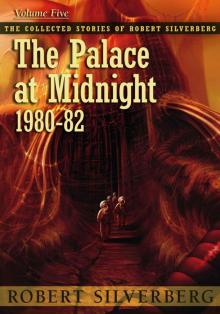 The Palace at Midnight: The Collected Work of Robert Silverberg, Volume Five
 The Millennium Express - 1995-2009 - The Collected Stories of Robert Silverberg Volume Nine
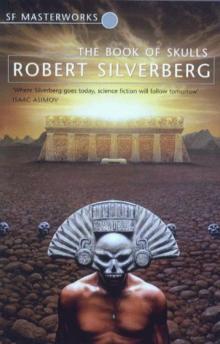 Book of Skulls
 Passengers
 Something Wild is Loose - 1969–72 - The Collected Stories of Robert Silverberg Volume Three
 Multiples
 Starborne
 The Masks of Time
 The Mountains of Majipoor m-8
 Multiples (1983-87)
 Those Who Watch
 In the Beginning
 Earth Is The Strangest Planet
 Collision Course
 Neutral Planet
 To the Dark Star - 1962–69 - The Collected Stories of Robert Silverberg Volume Two
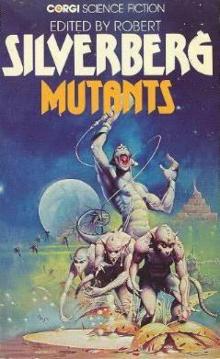 Mutants
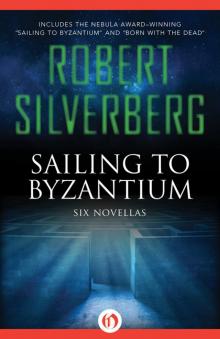 Sailing to Byzantium
 When We Went to See the End of the World
 Robert Silverberg The Science Fiction Hall Of Fame Volume One, 1929-1964
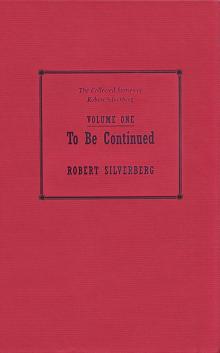 To Be Continued - 1953–58 - The Collected Stories of Robert Silverberg Volume One
 Valentine Pontifex m-3
 Gianni
 Majipoor Chronicles m-2
 We Are for the Dark (1987-90)
 Waiting for the Earthquake
 Fantasy: The Best of 2001
 How It Was When the Past Went Away
 Beauty in the Night
 The Man Who Never Forgot
 The Book of Changes m-9
 Lord Valentine's Castle m-1
 This Way to the End Times
 Queen of Springtime
 Legends-Volume 3 Stories by the Masters of Modern Fantasy
 The Palace at Midnight - 1980–82 - The Collected Stories of Robert Silverberg Volume Five
 Something Wild is Loose: The Collected Stories of Robert Silverberg, Volume Three
 Multiples - 1983–87 - The Collected Stories of Robert Silverberg Volume Six
 Alaree
 Three Survived: A Science Fiction Novel
 Defenders of the Frontier
 The New Springtime
 We Are for the Dark - 1987–90 - The Collected Stories of Robert Silverberg Volume Seven
 The Science Fiction Hall of Fame, Volume One 1929-1964--The Greatest Science Fiction Stories of All Time Chosen by the Members of the Science Fiction Writers of America
 Master Of Life And Death
 Choke Chain
 Sorcerers of Majipoor m-4
 Absolutely Inflexible
 Trips - 1962–73 - The Collected Stories of Robert Silverberg Volume Four
 Hot Times in Magma City - 1990-95 - The Collected Stories of Robert Silverberg Volume Eight
 Far Horizons
 The Queen of Springtime ns-2
 The Seventh Science Fiction Megapack
 Invaders From Earth
 Hanosz Prime Goes To Old Earth
 The Macauley Circuit
 Science Fiction: The Best of 2001
 To the Dark Star: The Collected Stories of Robert Silverberg, Volume Two
 Stochastic Man
 Legends: Stories By The Masters of Modern Fantasy
 To Live Again And The Second Trip
 Flies
Flies The Silent Invaders
 Ship-Sister, Star-Sister