
- Home
- Robert Silverberg
Multiples (1983-87) Page 36
Multiples (1983-87) Read online
Page 36
“My business to know,” I said. “You want me to run an asset check on you?”
“I’m worth seventeen five. Fifteen hundred real, the rest collat. What can I get for seventeen five?”
“Just what I said. Through the wall, and seven years’ exemption.”
“A bargain rate, hey?”
“I take what I can get,” I said. “Give me your wrist. And don’t worry. This part is read-only.”
I keyed his data implant and patched mine in. He had fifteen hundred in the bank and a collateral rating of sixteen thou, exactly as he claimed. We eyed each other very carefully now. As I said, you never know who the borgmanns are.
“You can do it right here in the park?” he asked.
“You bet. Lean back, close your eyes, make like you’re snoozing in the sun. The deal is that I take a thousand of the cash now and you transfer five thou of the collateral bucks to me, straight labor-debenture deal. When you get through the wall I get the other five hundred cash and five thou more on sweat security. The rest you pay off at three thou a year plus interest, wherever you are, quarterly key-ins. I’ll program the whole thing, including beep reminders on payment dates. It’s up to you to make your travel arrangements, remember. I can do pardons and wall transits but I’m not a goddamned travel agent. Are we on?”
He put his head back and closed his eyes.
“Go ahead,” he said.
It was fingertip stuff, straight circuit emulation, my standard hack. I picked up all his identification codes, carried them into central, found his records. He seemed real, nothing more or less than he had claimed. Sure enough, he had drawn a lulu of a labor tax, ten years on the wall. I wrote him a pardon good for the first seven of that. Had to leave the final three on the books, purely technical reasons, but the computers weren’t going to be able to find him by then. I gave him a wall-transit pass, too, which meant writing in a new skills class for him, programmer third grade. He didn’t think like a programmer and he didn’t look like a programmer but the wall software wasn’t going to figure that out. Now I had made him a member of the human elite, the relative handful of us who are free to go in and out of the walled cities as we wish. In return for these little favors I signed over his entire life savings to various accounts of mine, payable as arranged, part now, part later. He wasn’t worth a nickel any more, but he was a free man. That’s not such a terrible trade-off.
Oh, and the pardon was a valid one. I had decided not to write any stiffs while I was in Los Angeles. A kind of sentimental atonement, you might say, for the job I had done on that woman all those years back.
You absolutely have to write stiffs once in a while, you understand. So that you don’t look too good, so that you don’t give the Entities reason to hunt you down. Just as you have to ration the number of pardons you do. I didn’t have to be writing pardons at all, of course. I could have just authorized the system to pay me so much a year, fifty thou, a hundred, and taken it easy forever. But where’s the challenge in that?
So I write pardons, but no more than I need to cover my expenses, and I deliberately fudge some of them up, making myself look as incompetent as the rest so the Entities don’t have a reason to begin trying to track the identifying marks of my work. My conscience hasn’t been too sore about that. It’s a matter of survival, after all. And most other pardoners are out-and-out frauds, you know. At least with me you stand a better than even chance of getting what you’re paying for.
The next one was a tiny Japanese woman, the classic style, sleek, fragile, doll-like. Crying in big wild gulps that I thought might break her in half, while a gray-haired older man in a shabby business suit—her grandfather, you’d guess—was trying to comfort her. Public crying is a good indicator of Entity trouble. “Maybe I can help,” I said, and they were both so distraught that they didn’t even bother to be suspicious.
He was her father-in-law, not her grandfather. The husband was dead, killed by burglars the year before. There were two small kids. Now she had received her new labor-tax ticket. She had been afraid they were going to send her out to work on the wall, which of course wasn’t likely to happen: the assignments are pretty random, but they usually aren’t crazy, and what use would a 90-pound girl be in hauling stone blocks around? The father-in-law had some friends who were in the know, and they managed to bring up the hidden encoding on her ticket. The computers hadn’t sent her to the wall, no. They had sent her to Area Five. And they had given her a TTD classification.
“The wall would have been better,” the old man said. “They’d see, right away, she wasn’t strong enough for heavy work, and they’d find something else, something she could do. But Area Five? Who ever comes back from that?”
“You know what Area Five is?” I said.
“The medical experiment place. And this mark here, TTD. I know what that stands for too.”
She began to moan again. I couldn’t blame her. TTD means Test To Destruction. The Entities want to find out how much work we can really do, and they feel that the only reliable way to discover that is to put us through tests that show where the physical limits are.
“I will die,” she wailed. “My babies! My babies!”
“Do you know what a pardoner is?” I asked the father-in-law.
A quick excited response: sharp intake of breath, eyes going bright, head nodding vehemently. Just as quickly the excitement faded, giving way to bleakness, helplessness, despair.
“They all cheat you,” he said.
“Not all.”
“Who can say? They take your money, they give you nothing.”
“You know that isn’t true. Everybody can tell you stories of pardons that came through.”
“Maybe. Maybe,” the old man said. The woman sobbed quietly. “You know of such a person?”
“For three thousand dollars,” I said, “I can take the TTD off her ticket. For five I can write an exemption from service good until her children are in high school.”
Sentimental me. A fifty percent discount, and I hadn’t even run an asset check. For all I knew the father-in-law was a millionaire. But no, he’d have been off cutting a pardon for her, then, and not sitting around like this in Pershing Square.
He gave me a long, deep, appraising look. Peasant shrewdness coming to the surface.
“How can we be sure of that?” he asked.
I might have told him that I was the king of my profession, the best of all pardoners, a genius hacker with the truly magic touch, who could slip into any computer ever designed and make it dance to my tune. Which would have been nothing more than the truth. But all I said was that he’d have to make up his own mind, that I couldn’t offer any affidavits or guarantees, that I was available if he wanted me and otherwise it was all the same to me if she preferred to stick with her TTD ticket. They went off and conferred for a couple of minutes. When they came back, he silently rolled up his sleeve and presented his implant to me. I keyed his credit balance: thirty thou or so, not bad. I transferred eight of it to my accounts, half to Seattle, the rest to Los Angeles. Then I took her wrist, which was about two of my fingers thick, and got into her implant and wrote her the pardon that would save her life. Just to be certain, I ran a double validation check on it. It’s always possible to stiff a customer unintentionally, though I’ve never done it. But I didn’t want this particular one to be my first.
“Go on,” I said. “Home. Your kids are waiting for their lunch.”
Her eyes glowed. “If I could only thank you somehow—”
“I’ve already banked my fee. Go. If you ever see me again, don’t say hello.”
“This will work?” the old man asked.
“You say you have friends who know things. Wait seven days, then tell the data bank that she’s lost her ticket. When you get the new one, ask your pals to decode it for you. You’ll see. It’ll be all right.”
I don’t think he believed me. I think he was more than half sure I had swindled him out of one fourth of his life’s savings, and I coul
d see the hatred in his eyes. But that was his problem. In a week he’d find out that I really had saved his daughter-in-law’s life, and then he’d rush down to the Square to tell me how sorry he was that he had had such terrible feelings toward me. Only by then I’d be somewhere else, far away.
They shuffled out the east side of the park, pausing a couple of times to peer over their shoulders at me as if they thought I was going to transform them into pillars of salt the moment their backs were turned. Then they were gone.
I’d earned enough now to get me through the week I planned to spend in L.A. But I stuck around anyway, hoping for a little more. My mistake.
This one was Mr. Invisible, the sort of man you’d never notice in a crowd, gray on gray, thinning hair, mild bland apologetic smile. But his eyes had a shine. I forget whether he started talking first to me, or me to him, but pretty soon we were jockeying around trying to find out things about each other. He told me he was from Silver Lake. I gave him a blank look. How in hell am I supposed to know all the zillion L.A. neighborhoods? Said that he had come down here to see someone at the big government HQ on Figueroa Street. All right: probably an appeals case. I sensed a customer.
Then he wanted to know where I was from. Santa Monica? West L.A.? Something in my accent, I guess. “I’m a traveling man,” I said. “Hate to stay in one place.” True enough. I need to hack or I go crazy; if I did all my hacking in just one city I’d be virtually begging them to slap a trace on me sooner or later and that would be the end. I didn’t tell him any of that. “Came in from Utah last night. Wyoming before that.” Not true, either one. “Maybe on to New York, next.” He looked at me as if I’d said I was planning a voyage to the moon. People out here, they don’t go east a lot. These days most people don’t go anywhere.
Now he knew that I had wall-transit clearance, or else that I had some way of getting it when I wanted it. That was what he was looking to find out. In no time at all we were down to basics.
He said he had drawn a new ticket, six years at the salt-field reclamation site out back of Mono Lake. People die like mayflies out there. What he wanted was a transfer to something softer, like Operations & Maintenance, and it had to be within the walls, preferably in one of the districts out by the ocean where the air is cool and clear. I quoted him a price and he accepted without a quiver.
“Let’s have your wrist,” I said.
He held out his right hand, palm upward. His implant access was a pale yellow plaque, mounted in the usual place but rounder than the standard kind and of a slightly smoother texture. I didn’t see any great significance in that. As I had done maybe a thousand times before, I put my own arm over his, wrist to wrist, access to access. Our biocomputers made contact and instantly I knew that I was in trouble.
Human beings have been carrying biochip-based computers in their bodies for the last forty or fifty years or so—long before the Entity invasion, anyway—but for most people it’s just something they take for granted, like the vaccination mark on their thighs. They use them for the things they’re meant to be used for, and don’t give them a thought beyond that. The biocomputer’s just a commonplace tool for them, like a fork, like a shovel. You have to have the hacker sort of mentality to be willing to turn your biocomputer into something more. That’s why, when the Entities came and took us over and made us build walls around our cities, most people reacted just like sheep, letting themselves be herded inside and politely staying there. The only ones who can move around freely now—because we know how to manipulate the mainframes through which the Entities rule us—are the hackers. And there aren’t many of us. I could tell right away that I had hooked myself on to one now.
The moment we were in contact, he came at me like a storm.
The strength of his signal let me know I was up against something special, and that I’d been hustled. He hadn’t been trying to buy a pardon at all. What he was looking for was a duel. Mr. Macho behind the bland smile, out to show the new boy in town a few of his tricks.
No hacker had ever mastered me in a one-on-one anywhere. Not ever. I felt sorry for him, but not much.
He shot me a bunch of stuff, cryptic but easy, just by way of finding out my parameters. I caught it and stored it and laid an interrupt on him and took over the dialog. My turn to test him. I wanted him to begin to see who he was fooling around with. But just as I began to execute he put an interrupt on me. That was a new experience. I stared at him with some respect.
Usually any hacker anywhere will recognize my signal in the first thirty seconds, and that’ll be enough to finish the interchange. He’ll know that there’s no point in continuing. But this guy either wasn’t able to identify me or just didn’t care, and he came right back with his interrupt. Amazing. So was the stuff he began laying on me next.
He went right to work, really trying to scramble my architecture. Reams of stuff came flying at me up in the heavy megabyte zone.
—jspike. dbltag. nslice. dzcnt.
I gave it right back to him, twice as hard.
—maxfrq. minpau. spktot. jspike.
He didn’t mind at all.
—maxdz. spktim. falter. nslice.
—frqsum. eburst.
—iburst.
—prebst.
—nobrst.
Mexican standoff. He was still smiling. Not even a trace of sweat on his forehead. Something eerie about him, something new and strange. This is some kind of borgmann hacker, I realized suddenly. He must be working for the Entities, roving the city, looking to make trouble for freelancers like me. Good as he was, and he was plenty good, I despised him. A hacker who had become a borgmann—now, that was truly disgusting. I wanted to short him. I wanted to burn him out, now. I had never hated anyone so much in my life.
I couldn’t do a thing with him.
I was baffled. I was the Data King, I was the Megabyte Monster. All my life I had floated back and forth across a world in chains, picking every lock I came across. And now this nobody was tying me in knots. Whatever I gave him, he parried; and what came back from him was getting increasingly bizarre. He was working with an algorithm I had never seen before and was having serious trouble solving. After a little while I couldn’t even figure out what he was doing to me, let alone what I was going to do to cancel it. It was getting so I could barely execute. He was forcing me inexorably toward a wetware crash.
“Who are you?” I yelled.
He laughed in my face.
And kept pouring it on. He was threatening the integrity of my implant, going at me down on the microcosmic level, attacking the molecules themselves. Fiddling around with electron shells, reversing charges and mucking up valences, clogging my gates, turning my circuits to soup. The computer that is implanted in my brain is nothing but a lot of organic chemistry, after all. So is my brain. If he kept this up the computer would go and the brain would follow, and I’d spend the rest of my life in the bibblebibble academy.
This wasn’t a sporting contest. This was murder.
I reached for the reserves, throwing up all the defensive blockages I could invent. Things I had never had to use in my life, but they were there when I needed them, and they did slow him down. For a moment I was able to halt his ballbreaking onslaught and even push him back. And give myself the breathing space to set up a few offensive combinations of my own. But before I could get them running, he shut me down once more and started to drive me toward crashville all over again. He was unbelievable.
I blocked him. He came back again. I hit him hard and he threw the punch into some other neural channel altogether and it went fizzling away.
I hit him again. Again he blocked it.
Then he hit me and I went reeling and staggering, and managed to get myself together when I was about three nanoseconds from the edge of the abyss.
I began to set up a new combination. But even as I did it, I was reading the tone of his data, and what I was getting was absolute cool confidence. He was waiting for me. He was ready for anything I co
uld throw. He was in that realm beyond mere self-confidence into utter certainty.
What it was coming down to was this. I was able to keep him from ruining me, but only just barely, and I wasn’t able to lay a glove on him at all. And he seemed to have infinite resources behind him. I didn’t worry him. He was tireless. He didn’t appear to degrade at all. He just took all I could give and kept throwing new stuff at me, coming at me from six sides at once.
Now I understood for the first time what it must have felt like for all the hackers I had beaten. Some of them must have felt pretty cocky, I suppose, until they ran into me. It costs more to lose when you think you’re good. When you know you’re good. People like that, when they lose, they have to reprogram their whole sense of their relation to the universe.
I had two choices. I could go on fighting until he wore me down and crashed me. Or I could give up right now. In the end everything comes down to yes or no, on or off, one or zero, doesn’t it?
I took a deep breath. I was staring straight into chaos.
“All right,” I said. “I’m beaten. I quit.”
I wrenched my wrist free of his, trembled, swayed, went toppling down on the ground.
A minute later five cops jumped me and trussed me up like a turkey and hauled me away, with my implant arm sticking out of the package and a security lock wrapped around my wrist, as if they were afraid I was going to start pulling data right out of the air.
Where they took me was Figueroa Street, the big black marble ninety-story job that is the home of the puppet city government. I didn’t give a damn. I was numb. They could have put me in the sewer and I wouldn’t have cared. I wasn’t damaged—the automatic circuit check was still running and it came up green—but the humiliation was so intense that I felt crashed. I felt destroyed. The only thing I wanted to know was the name of the hacker who had done it to me.
The Figueroa Street building has ceilings about twenty feet high everywhere, so that there’ll be room for Entities to move around. Voices reverberate in those vast open spaces like echoes in a cavern. The cops sat me down in a hallway, still all wrapped up, and kept me there for a long time. Blurred sounds went lalloping up and down the passage. I wanted to hide from them. My brain felt raw. I had taken one hell of a pounding.
 The Longest Way Home
 Hawksbill Station
 A Time of Changes
 This Way to the End Times: Classic Tales of the Apocalypse
 Beyond the Gate of Worlds
 Lord Valentine's Castle
 The Man in the Maze
 Tales of Majipoor
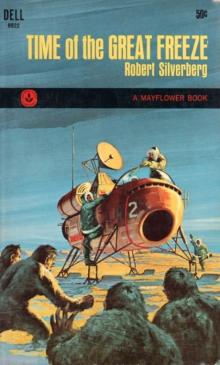 Time of the Great Freeze
 The Collected Stories of Robert Silverberg, Volume 3: Something Wild Is Loose: 1969-72
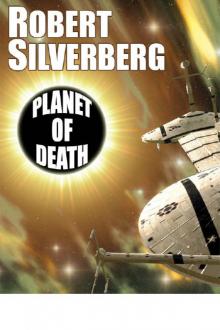 Planet of Death
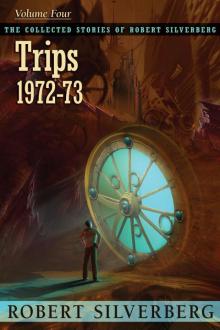 Trips: The Collected Stories of Robert Silverberg, Volume Four
 In the Beginning: Tales From the Pulp Era
 Hot Sky at Midnight
 Valentine Pontifex
 Up the Line
 Thorns
 Amanda and the Alien
 Star of Gypsies
 Nightwings
 The Time Hoppers
 Blood on the Mink
 Dying Inside
 The Last Song of Orpheus
 The King of Dreams
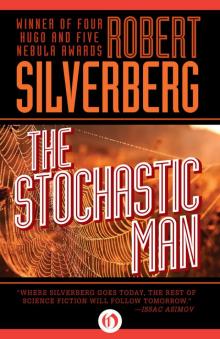 The Stochastic Man
 The Collected Stories of Robert Silverberg, Volume Seven: We Are for the Dark
 The Millennium Express: The Collected Stories of Robert Silverberg, Volume Nine
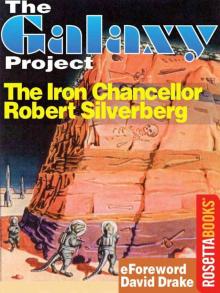 The Iron Chancellor
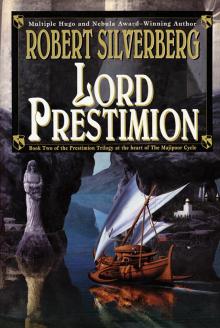 Lord Prestimion
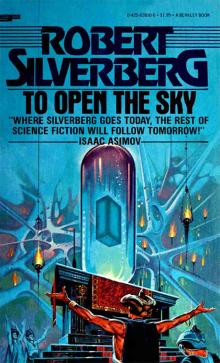 To Open the Sky
 The World Inside
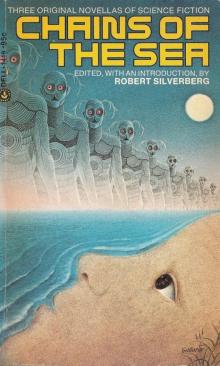 Chains of the Sea
 The Collected Stories of Robert Silverberg, Volume Five: The Palace at Midnight
 Postmark Ganymede
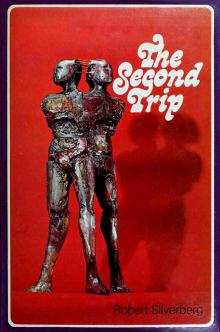 The Second Trip
 The Collected Stories of Robert Silverberg, Volume 4: Trips: 1972-73
 Son of Man
 Tom O'Bedlam
 To the Land of the Living
 To Be Continued: The Collected Stories of Robert Silverberg, Volume One
 Shadrach in the Furnace
 The Chalice of Death: Three Novels of Mystery in Space
 The Queen of Springtime
 To Be Continued 1953-1958
 Legends
 Roma Eterna
 To Live Again
 At Winter's End
 Needle in a Timestack
 To Live Again and the Second Trip: The Complete Novels
 Lord of Darkness
 The Mountains of Majipoor
 The World Outside
 The Alien Years
 The Book of Skulls
 The Face of the Waters
 Gilgamesh the King
 The Collected Stories of Robert Silverberg, Volume 6: Multiples: 1983-87
 The Happy Unfortunate
 Three Survived
 Cronos
 Tower of Glass
 Legends II
 The Planet Killers
 The Collected Stories of Robert Silverberg, Volume 2: To the Dark Star: 1962-69
 Downward to the Earth
 Lord Valentine's Castle: Book One of the Majipoor Cycle
 Hot Times in Magma City, 1990-95
 Hunt the Space-Witch! Seven Adventures in Time and Space
 Majipoor Chronicles
 The Robert Silverberg Science Fiction Megapack(r)
 Starman's Quest
 Car Sinister
 Worlds of Maybe
 Fantasy The Best of 2001
 Revolt on Alpha C
 Homefaring
 The Pardoner's Tale
 Sailing to Byzantium - Six Novellas
 The Chalice of Death
 Sundance
 A Tip on a Turtle
 Nebula Awards Showcase 2001: The Year's Best SF and Fantasy Chosen by the Science Fiction and Fantasy Writers of America
 The Fangs of the Trees
 The Palace at Midnight: The Collected Work of Robert Silverberg, Volume Five
 The Millennium Express - 1995-2009 - The Collected Stories of Robert Silverberg Volume Nine
 Book of Skulls
 Passengers
 Something Wild is Loose - 1969–72 - The Collected Stories of Robert Silverberg Volume Three
 Multiples
 Starborne
 The Masks of Time
 The Mountains of Majipoor m-8
 Multiples (1983-87)
 Those Who Watch
 In the Beginning
 Earth Is The Strangest Planet
 Collision Course
 Neutral Planet
 To the Dark Star - 1962–69 - The Collected Stories of Robert Silverberg Volume Two
 Mutants
 Sailing to Byzantium
 When We Went to See the End of the World
 Robert Silverberg The Science Fiction Hall Of Fame Volume One, 1929-1964
 To Be Continued - 1953–58 - The Collected Stories of Robert Silverberg Volume One
 Valentine Pontifex m-3
 Gianni
 Majipoor Chronicles m-2
 We Are for the Dark (1987-90)
 Waiting for the Earthquake
 Fantasy: The Best of 2001
 How It Was When the Past Went Away
 Beauty in the Night
 The Man Who Never Forgot
 The Book of Changes m-9
 Lord Valentine's Castle m-1
 This Way to the End Times
 Queen of Springtime
 Legends-Volume 3 Stories by the Masters of Modern Fantasy
 The Palace at Midnight - 1980–82 - The Collected Stories of Robert Silverberg Volume Five
 Something Wild is Loose: The Collected Stories of Robert Silverberg, Volume Three
 Multiples - 1983–87 - The Collected Stories of Robert Silverberg Volume Six
 Alaree
 Three Survived: A Science Fiction Novel
 Defenders of the Frontier
 The New Springtime
 We Are for the Dark - 1987–90 - The Collected Stories of Robert Silverberg Volume Seven
 The Science Fiction Hall of Fame, Volume One 1929-1964--The Greatest Science Fiction Stories of All Time Chosen by the Members of the Science Fiction Writers of America
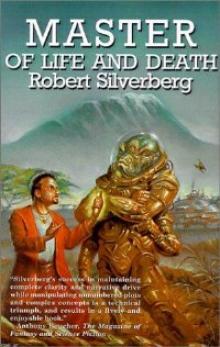 Master Of Life And Death
 Choke Chain
 Sorcerers of Majipoor m-4
 Absolutely Inflexible
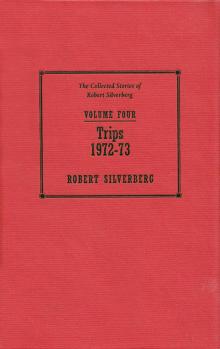 Trips - 1962–73 - The Collected Stories of Robert Silverberg Volume Four
 Hot Times in Magma City - 1990-95 - The Collected Stories of Robert Silverberg Volume Eight
 Far Horizons
 The Queen of Springtime ns-2
 The Seventh Science Fiction Megapack
 Invaders From Earth
 Hanosz Prime Goes To Old Earth
 The Macauley Circuit
 Science Fiction: The Best of 2001
 To the Dark Star: The Collected Stories of Robert Silverberg, Volume Two
 Stochastic Man
 Legends: Stories By The Masters of Modern Fantasy
 To Live Again And The Second Trip
 Flies
Flies The Silent Invaders
 Ship-Sister, Star-Sister