
- Home
- Robert Silverberg
Roma Eterna Page 38
Roma Eterna Read online
Page 38
“Oh, it gets quite cold, quite wet,” Lucilla assures me. “You’ll see. Not so much down here, but in Roma itself, yes, the winters can be extremely vile. You’ll still be here at the time of the Saturnalia, won’t you?”
That’s still two months away. “I hadn’t really given it much thought. I suppose I will.”
“Then you’ll see how cold it can get. I usually go to someplace like Sicilia or Aegyptus for the winter months, but this year I’m going to stay in Roma.” She snuggles cozily against me. “When the rains come we’ll keep each other warm. Won’t that be nice, Cymbelin?”
“Lovely. On the other hand, I wouldn’t mind seeing Aegyptus, you know. We could take the trip together at the end of the year. The Pyramids, the great temples at Menfe—”
“I have to stay in Italia this winter. In or at least near Roma.”
“You do? Why is that?”
“A family thing,” she says. “It involves my uncle. But I mustn’t talk about it.”
I take the meaning of her words immediately.
“He’s going to be named Consul again, isn’t he? Isn’t he?”
She stiffens and pulls her breath in quickly, and I know that I’ve hit on the truth.
“I mustn’t say,” she replies, after a moment.
“That’s it, though. It has to be. The new year’s Consuls take office on the first of Januarius, and so of course you’ll want to be there for the ceremony. What will this be, the fourth time for him? The fifth, maybe.”
“Please, Cymbelin.”
“Promise me this, at least. We’ll stay around in Roma until he’s sworn in, and then we’ll go to Aegyptus. The middle of January, all right? I can see us now, heading up the Nilus from Alexandria in a barge for two—”
“That’s such a long time from now. I can’t promise anything so far in advance.” She puts her hand gently on my wrist and lets it linger there. “But we’ll have as much fun as we can, won’t we, even if it’s cold and rainy, love?”
I see that there’s no point pressing the issue. Maybe her Januarius is already arranged, and her plans don’t include me: a trip to Africa with one of her Imperial friends, perhaps, young Flavius Caesar or some other member of the royal family. Irrational jealousy momentarily curdles my soul; and then I put all thought of January out of my mind. This is October, and the gloriously beautiful Lucilla Junia Scaevola will share my bed tonight and tomorrow night and so on and on at least until the Saturnalia, if I wish it, and I certainly do, and that should be all that matters to me right now.
We are passing the great hotels of the Via Roma. Their resplendent façades shine in the morning sun. And then we begin to climb up out of town again, into the suburban heights, a string of minor villas and here and there an isolated hill with some venerable estate of the Imperial family sprawling around its summit. After a time we go down the far side of the hills and enter the flat open country beyond, heading through the fertile plains of Campania Felix toward the capital city in the distant north.
We spend our first night in Capua, where Lucilla wants me to see the frescoes in the Mithraeum. I attempt to draw on my letter of credit to pay the hotel bill, but I discover that there will be no charge for our suite: the magic name of Scaevola has opened the way for us. The frescoes are very fine, the god slaying a white bull with a serpent under its feet, and there is a huge amphitheater here, too—the one where Spartacus spurred the revolt of the gladiators—but Lucilla tells me, as I gawk in provincial awe, that the one in Roma is far more impressive. Dinner is brought to us in our room, breast of pheasant and some thick, musky wine, and afterward we soak in the bath a long while and then indulge in the nightly scramble of the passions. I can easily endure this sort of life well through the end of the year and some distance beyond.
Then in the morning it is onward, northward and westward along the Via Roma, which now has become the Via Appia, the ancient military highway along which the Romans marched when they came to conquer their neighbors in southern Italia. This is sleepy agricultural country, broken here and there by the dark cyclopean ruins of dead cities that go back to pre-Roman times, and by hilltop towns of more recent date, though themselves a thousand years old or more. I feel the tremendous weight of history here.
Lucilla chatters away the slow drowsy hours of our drive with talk of her innumerable patrician friends in the capital, Claudio and Traiano and Alessandro and Marco Aureliano and Valeriano and a few dozen more, nearly all of them male, but there are a few female names among them, too, Domitilla, Severina, Giulia, Paolina, Tranquillina. High lords and ladies, I suppose. Sprinkled through the gossip are lighthearted references to members of the Imperial family who seem to be well known to her, close companions, in fact—not just the young Emperor, but his four brothers and three sisters, and assorted Imperial cousins and more distant kin.
I see more clearly than I have ever realized before how vast an establishment the family of our Caesars is, how many idle princes and princesses, each one with a great array of palaces, servitors, lovers and hangers-on. Nor is it only a single family, the cluster of royals who sit atop our world. For of course we have had innumerable dynasties occupying the throne during the nineteen centuries of the Empire, most of them long since extinct but many of the past five hundred years still surviving at least in some collateral line, completely unrelated to each other but all of them nevertheless carrying the great name of Caesar and all staking their claim to the public treasury. A dynasty can be overthrown but somehow the great-great-great-grandnephews, or whatever, of someone whose brother was Emperor long ago can still manage, so it seems, to claim pensions from the public purse down through all the succeeding epochs of time.
It’s clear from the way she talks that Lucilla has been the mistress of Flavius Caesar and very likely also of his older brother, Camillus Caesar, who holds the title of Prince of Constantinopolis, though he lives in Roma; she speaks highly also of a certain Roman count who bears the grand name of Nero Romulus Claudius Palladius, and there is a special tone in her voice when she tells me of him that I know comes into women’s voices when they are speaking of a man with whom they have made love.
Jealousy of men I have never even met surges within me. How can she have done so much already, she who is only twenty-one? I try to control my feelings. This is Roma; there is no morality here as I understand the word; I must strive to do as the Romans do, indeed.
Despite myself I try to ask her about this Nero Romulus Claudius Palladius, but already she has moved along to a sister of the Emperor whom she’s sure I’ll adore. Severina Floriana is her name. “We went to school together. Next to Adriana, she’s my best friend in the world. She’s absolutely beautiful—dark, sultry, almost Oriental-looking. You’d think she was an Arab. And you’d be right, because her grandmother on her mother’s side came from Syria. A dancing-girl, once upon a time, so the story goes—”
And on and on. I wonder if I am to be offered to Severina Floriana also.
It is the third day of our journey now. As the Via Appia nears the capital we begin to encounter the Imperial tombs, lining the road on both sides. Lucilla seems to know them all and calls them off for me.
“There’s the tomb of Flavius Romulus, the big one on the left—and that one is Claudius IX—and Gaius Martius, there—that’s Cecilia Metella, she lived in the time of Augustus Caesar—Titus Gallius—Constantinus V—Lucius and Arcadius Agrippa, both of them—Heraclius III—Gaius Paulus—Marcus Anastasius—”
The weight of antiquity presses ever more heavily on me.
“What about the earliest ones?” I ask. “Augustus, Tiberius, Claudius—”
“You’ll see the Tomb of Augustus in the city. Tiberius? Nobody seems to remember where he was buried. There are a lot of them in Hadrianus’s tomb overlooking the river, maybe ten of them, Antoninus Pius, Marcus Aurelius, a whole crowd of dead Emperors in there. And Julius Caesar himself—there’s a great tomb for him right in the middle of the Forum, but the archaeologists say
it isn’t really his, it was built six hundred years later—oh, look, Cymbelin—do you see, there? The walls of the city right ahead of us! Roma! Roma!”
And so it is, Urbs Roma, the great mother of cities, the capital of the world, the Imperial metropolis: its white marble-sheathed walls, built and rebuilt so many times, rise suddenly before me. Roma! The boy from the far country, humbled by the grandeur of it all, is shaken to the core. A shiver of awe goes through me so convulsively that it is transmitted through the reins to the horses, one of which glances back at me in what I imagine to be contempt and puzzlement.
Roma the city is like a palimpsest, a scroll that has been written on and cleaned and written on again, and again and again: and all the old texts show through amidst the newest one. Two thousand years of history assail the newcomer’s bedazzled eye in a single glance. Nothing ever gets torn down here, except occasionally for the sake of building something even more grand on its site. Here and there can still be seen the last quaint occasional remnants of the Roma of the Republic—the First Republic, I suppose I should say now—with the marble Roma of Augustus Caesar right atop them, and then the Romas of all the later Caesars, Hadrianus’s Roma and Septimius Severus’s Roma and the Roma of Flavius Romulus, who lived and ruled a thousand years after Severus, and the one that the renowned world-spanning Emperor Trajan VII erected upon all the rest in the great years that followed Flavius’s reuniting of the Eastern and Western Empires. All these are mixed together in the historic center of the city, and then too in a frightful ring surrounding them rise the massive hideous towers of modern times, the dreary office buildings and apartment houses of the Roma of today.
But even they, ugly as they are, are ugly in an awesomely grand Roman way. Roma is nothing if not grand: it excels at everything, even at ugliness.
Lucilla guides me in, calling off the world-famous sights as we pass them one by one: the Baths of Caracalla, the Circus Maximus, the Temple of the Divine Claudius, the Tower of Aemilius Magnus, even the ponderous and malproportioned Arch of Triumph that the Byzantine Emperor Andronicus erected in the year 1952 to mark the short-lived Greek victory in the Civil War, and which the Romans have allowed to remain as an all too visible reminder of the one great defeat in their history. But just at the opposite end of the avenue from it is the Arch of Flavius Romulus, too, five times the size of the Arch of Andronicus, to signify the final defeat of the Greeks after their two centuries of Imperial dominion.
The traffic is stupefying and chaotic. Chariots everywhere, horse-drawn trams, bicycles, and something that Lucilla says is very new, little steam-driven trains that run freely on wheels instead of tracks. There seem to be no rules: each vehicle goes wherever it pleases, nobody giving any signals, each driver attempting to intimidate those about him with gestures and curses. At first I have trouble with this, not because I am easily intimidated but because we Britons are taught early to be courteous to one another on the highways; but quickly I see that I have no choice but to behave as they do. When in Roma, et cetera—the old maxim applies to every aspect of life in the capital.
“Left here. Now right. You see the Colosseum, over there? Bigger than you thought, isn’t it? Turn right, turn right! That’s the Forum down there, and the Capitol up on that hill. But we want to go the other way, over to the Palatine—it’s the hill up there, you see? The one covered with palaces.”
Yes. Enormous Imperial dwellings, two score or even more of them, all higgledy-piggledy, cheek by jowl. Whole mountains of marble must have been leveled to build that incomprehensible maze of splendor.
And we are heading right into the midst of it all. The entrance to the Palatine is well patrolled, hordes of Praetorians everywhere, but they all seem to know Lucilla by sight and they wave us on in. She tries to explain to me which palace is whose, but it’s all a hopeless jumble, and even she isn’t really sure. Underneath what we see, she says, are the original palaces of the early Imperial days, those of Augustus and Tiberius and the Flavians, but of course nearly every Emperor since then has wanted to add his own embellishments and enhancements, and by now the whole hill is a crazyquilt of Imperial magnificence and grandiosity in twenty different styles, including a few very odd Oriental and pseudo-Byzantine structures inserted into the mix in the twenty-fourth century by some of the weirder monarchs of the Decadence. Towers and arcades and pavilions and gazebos and colonnades and domes and basilicas and fountains and peculiar swooping vaults jut out everywhere.
“And the Emperor himself?” I ask her. “Where in all that does he live?”
She waves her hand vaguely toward the middle of the heap. “Oh, he moves around, you know. He never stays in the same place two nights in a row.”
“Why is that? Is he the restless type?”
“Not at all. But Actinius Varro makes him do it.”
“Who?”
“Varro. The Praetorian Prefect. He worries a lot about assassination plots.”
I laugh. “When an Emperor is assassinated, isn’t it usually his own Praetorian Prefect who does it?”
“Usually, yes. But the Emperor always thinks that his prefect is the first completely loyal one, right up till the moment the knife goes into his belly. Not that anyone would want to assassinate a foolish fop like our Maxentius,” she adds.
“If he’s as incompetent as everyone says, wouldn’t that be a good reason for removing him, then?”
“What, and make one of his even more useless brothers Emperor in his place? Oh, no, Cymbelin. I know them all, believe me, and Maxentius is the best of the lot. Long life to him, I say.”
“Indeed. Long life to Emperor Maxentius,” I chime in, and we both enjoy a good laugh.
The particular palace we are heading for is one of the newest on the hill: an ornate, many-winged guest pavilion, much bedizened with eye-dazzling mosaics, brilliant wild splotches of garish yellows and uninhibited scarlets. It had been erected some fifty years before, she tells me, early in the reign of the lunatic Emperor Demetrius, the last Caesar of the Decadence. Lucilla has a little apartment in it, courtesy of her good friend, Prince Flavius Rufus. Apparently a good many non-royal members of the Imperial Roman social set live up here on the Palatine. It’s more convenient for everyone that way, traffic being what it is in Roma and the number of parties being so great.
The beginning of my stay in the capital is Neapolis all over again: there is a glittering social function for me to attend on my very first night. The host, says Lucilla, is none other than the famous Count Nero Romulus Claudius Palladius, who is terribly eager to meet me.
“And who is he, exactly?” I ask.
“His grandfather’s brother was Count Valerian Apollinaris. You know who he was?”
“Of course.” One doesn’t need a Cantabrigian education to recognize the name of the architect of the modern Empire, the great five-term Consul of the First War of Reunification. It was Valerian Apollinaris who had dragged the frayed and crumbling Empire out of the sorry era known as the Decadence, put an end to the insurrections in the provinces that had wracked the Empire throughout the troubled twenty-fifth century, restored the authority of the central government, and installed Laureolus Caesar, grandfather of our present Emperor, on the throne. It was Apollinaris who—acting in Laureolus’s name, as an unofficial Caesar standing behind the true one—had instituted the Reign of Terror, that time of brutal discipline that had, for better or for worse, brought the Empire back to some semblance of the greatness that it last had known in the time of Flavius Romulus and the seventh Trajan. And then perished in the Terror himself, along with so many others.
I know nothing of this grand-nephew of his, this Nero Romulus Claudius Palladius, except what I’ve heard of him from Lucilla. But she conveys merely by the way she utters his name, his full name every time, that he has followed his ancestor’s path, that he too is a man of great power in the realm.
And indeed it is obvious to me right away, when Lucilla and I arrive at Count Nero Romulus’s Palatine Hill palace,
that my guess is correct.
The palace itself is relatively modest: a charming little building on the lower slope of the hill, close to the Forum, that I am told dates from the Renaissance and was originally built for one of the mistresses of Trajan VII. Just as Count Nero Romulus has never bothered to hold the Consulate or any of the other high offices of the realm, Count Nero Romulus doesn’t need a grand edifice to announce his importance. But the guest list at his party says it all.
The current Consul, Aulus Galerius Bassanius, is there. So are two of the Emperor’s brothers, and one of his sisters. And also Lucilla’s uncle, the distinguished and celebrated Gaius Junius Scaevola, four times Consul of Roma and by general report the most powerful man in the Empire next to Emperor Maxentius himself—more powerful than the Emperor, many believe.
Lucilla introduces me to Scaevola first. “My friend Cymbelin Vetruvius Scapulanus from Britannia,” she says, with a grand flourish. “We met at Marcello Domiziano’s house in Neapolis, and we’ve been inseparable ever since. Isn’t he splendid, Uncle Gaius?”
What does one say, when one is a mere artless provincial on his first night in the capital and one finds oneself thrust suddenly into the presence of the greatest citizen of the realm?
But I manage not to stammer and blurt and lurch. With reasonable smoothness, in fact, I say, “I could never have imagined, when I set out from Britannia to see the fatherland of the Empire, Consul Scaevola, that I would have the honor to encounter the father of the country himself!”
At which he smiles amiably and says, “I think you rank me too highly, my friend. It’s the Emperor who’s the father of the country, you know. As it says right here.” And pulls a shiny new sestertius piece from his purse and holds it up so I can see the inscriptions around the edge, the cryptic string of abbreviated Imperial titles that all the coinage has carried since time immemorial. “You see?” he says, pointing to the letters on the rim of the coin just above the eyebrows of Caesar Maxentius. “P.P., standing for ‘Pater Patriae.’ There it is. Him, not me. Father of the country.” Then, with a wink to take the sting out of his rebuke, such as it had been, he says, “But I appreciate flattery as much as the next man, maybe even a little more. So thank you, young man. Lucilla’s not being too much trouble for you, is she, now?”
 The Longest Way Home
 Hawksbill Station
 A Time of Changes
 This Way to the End Times: Classic Tales of the Apocalypse
 Beyond the Gate of Worlds
 Lord Valentine's Castle
 The Man in the Maze
 Tales of Majipoor
 Time of the Great Freeze
 The Collected Stories of Robert Silverberg, Volume 3: Something Wild Is Loose: 1969-72
 Planet of Death
 Trips: The Collected Stories of Robert Silverberg, Volume Four
 In the Beginning: Tales From the Pulp Era
 Hot Sky at Midnight
 Valentine Pontifex
 Up the Line
 Thorns
 Amanda and the Alien
 Star of Gypsies
 Nightwings
 The Time Hoppers
 Blood on the Mink
 Dying Inside
 The Last Song of Orpheus
 The King of Dreams
 The Stochastic Man
 The Collected Stories of Robert Silverberg, Volume Seven: We Are for the Dark
 The Millennium Express: The Collected Stories of Robert Silverberg, Volume Nine
 The Iron Chancellor
 Lord Prestimion
 To Open the Sky
 The World Inside
 Chains of the Sea
 The Collected Stories of Robert Silverberg, Volume Five: The Palace at Midnight
 Postmark Ganymede
 The Second Trip
 The Collected Stories of Robert Silverberg, Volume 4: Trips: 1972-73
 Son of Man
 Tom O'Bedlam
 To the Land of the Living
 To Be Continued: The Collected Stories of Robert Silverberg, Volume One
 Shadrach in the Furnace
 The Chalice of Death: Three Novels of Mystery in Space
 The Queen of Springtime
 To Be Continued 1953-1958
 Legends
 Roma Eterna
 To Live Again
 At Winter's End
 Needle in a Timestack
 To Live Again and the Second Trip: The Complete Novels
 Lord of Darkness
 The Mountains of Majipoor
 The World Outside
 The Alien Years
 The Book of Skulls
 The Face of the Waters
 Gilgamesh the King
 The Collected Stories of Robert Silverberg, Volume 6: Multiples: 1983-87
 The Happy Unfortunate
 Three Survived
 Cronos
 Tower of Glass
 Legends II
 The Planet Killers
 The Collected Stories of Robert Silverberg, Volume 2: To the Dark Star: 1962-69
 Downward to the Earth
 Lord Valentine's Castle: Book One of the Majipoor Cycle
 Hot Times in Magma City, 1990-95
 Hunt the Space-Witch! Seven Adventures in Time and Space
 Majipoor Chronicles
 The Robert Silverberg Science Fiction Megapack(r)
 Starman's Quest
 Car Sinister
 Worlds of Maybe
 Fantasy The Best of 2001
 Revolt on Alpha C
 Homefaring
 The Pardoner's Tale
 Sailing to Byzantium - Six Novellas
 The Chalice of Death
 Sundance
 A Tip on a Turtle
 Nebula Awards Showcase 2001: The Year's Best SF and Fantasy Chosen by the Science Fiction and Fantasy Writers of America
 The Fangs of the Trees
 The Palace at Midnight: The Collected Work of Robert Silverberg, Volume Five
 The Millennium Express - 1995-2009 - The Collected Stories of Robert Silverberg Volume Nine
 Book of Skulls
 Passengers
 Something Wild is Loose - 1969–72 - The Collected Stories of Robert Silverberg Volume Three
 Multiples
 Starborne
 The Masks of Time
 The Mountains of Majipoor m-8
 Multiples (1983-87)
 Those Who Watch
 In the Beginning
 Earth Is The Strangest Planet
 Collision Course
 Neutral Planet
 To the Dark Star - 1962–69 - The Collected Stories of Robert Silverberg Volume Two
 Mutants
 Sailing to Byzantium
 When We Went to See the End of the World
 Robert Silverberg The Science Fiction Hall Of Fame Volume One, 1929-1964
 To Be Continued - 1953–58 - The Collected Stories of Robert Silverberg Volume One
 Valentine Pontifex m-3
 Gianni
 Majipoor Chronicles m-2
 We Are for the Dark (1987-90)
 Waiting for the Earthquake
 Fantasy: The Best of 2001
 How It Was When the Past Went Away
 Beauty in the Night
 The Man Who Never Forgot
 The Book of Changes m-9
 Lord Valentine's Castle m-1
 This Way to the End Times
 Queen of Springtime
 Legends-Volume 3 Stories by the Masters of Modern Fantasy
 The Palace at Midnight - 1980–82 - The Collected Stories of Robert Silverberg Volume Five
 Something Wild is Loose: The Collected Stories of Robert Silverberg, Volume Three
 Multiples - 1983–87 - The Collected Stories of Robert Silverberg Volume Six
 Alaree
 Three Survived: A Science Fiction Novel
 Defenders of the Frontier
 The New Springtime
 We Are for the Dark - 1987–90 - The Collected Stories of Robert Silverberg Volume Seven
 The Science Fiction Hall of Fame, Volume One 1929-1964--The Greatest Science Fiction Stories of All Time Chosen by the Members of the Science Fiction Writers of America
 Master Of Life And Death
 Choke Chain
 Sorcerers of Majipoor m-4
 Absolutely Inflexible
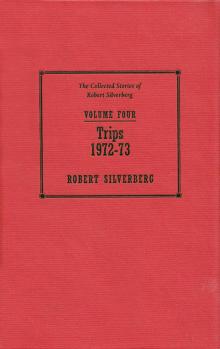 Trips - 1962–73 - The Collected Stories of Robert Silverberg Volume Four
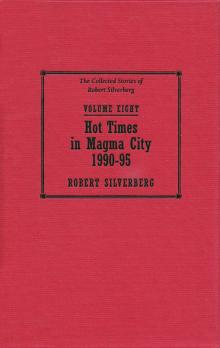 Hot Times in Magma City - 1990-95 - The Collected Stories of Robert Silverberg Volume Eight
 Far Horizons
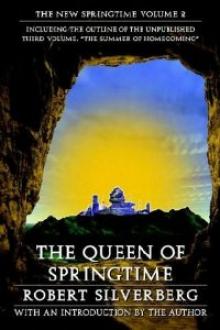 The Queen of Springtime ns-2
 The Seventh Science Fiction Megapack
 Invaders From Earth
 Hanosz Prime Goes To Old Earth
 The Macauley Circuit
 Science Fiction: The Best of 2001
 To the Dark Star: The Collected Stories of Robert Silverberg, Volume Two
 Stochastic Man
 Legends: Stories By The Masters of Modern Fantasy
 To Live Again And The Second Trip
 Flies
Flies The Silent Invaders
 Ship-Sister, Star-Sister