
- Home
- Robert Silverberg
Legends Page 38
Legends Read online
Page 38
He was shaking his head all through her speech. “No, no, no, no. Hopeless. Useless. Fatal!”
“Even if you—”
“Even if I argued for you. They won’t listen. The Rule of Roke forbids women to be taught any High Art, any word of the Language of the Making. It’s always been so. They will not listen. So they must be shown! And we’ll show them, you and I. We’ll teach them. You must have courage, Dragonfly. You must not weaken, and not think ‘Oh, if I just beg them to let me in, they can’t refuse me.’ They can, and will. And if you reveal yourself, they will punish you. And me.” He put a ponderous emphasis on the last word, and inwardly murmured, “Avert.”
She gazed at him from her unreadable eyes, and finally said, “What must I do?”
“Do you trust me, Dragonfly?”
“Yes.”
“Will you trust me entirely, wholly—knowing that the risk I take for you is greater even than your risk in this venture?”
“Yes.”
“Then you must tell me the word you will speak to the Doorkeeper.”
She stared. “But I thought you’d tell it to me—the password.”
“The password he will ask you for is your true name.”
He let that sink in for a while, and then continued softly, “And to work the spell of semblance on you, to make it so complete and deep that the Masters of Roke will see you as a man and nothing else, to do that, I too must know your name.” He paused again. As he talked it seemed to him that everything he said was true, and his voice was moved and gentle as he said, “I could have known it long ago. But I chose not to use those arts. I wanted you to trust me enough to tell me your name yourself.”
She was looking down at her hands, clasped now on her knees. In the faint reddish glow of the cabin lantern her lashes cast very delicate, long shadows on her cheeks. She looked up, straight at him. “My name is Irian,” she said.
He smiled. She did not smile.
He said nothing. In fact he was at a loss. If he had known it would be this easy, he could have had her name and with it the power to make her do whatever he wanted, days ago, weeks ago, with a mere pretense at this crazy scheme—without giving up his salary and his precarious respectability, without this sea voyage, without having to go all the way to Roke for it! For he saw the whole plan now was folly. There was no way he could disguise her that would fool the Doorkeeper for a moment. All his notions of humiliating the Masters as they had humiliated him were moonshine. Obsessed with tricking the girl, he had fallen into the trap he laid for her. Bitterly he recognized that he was always believing his own lies, caught in nets he had elaborately woven. Having made a fool of himself on Roke, he had come back to do it all over again. A great, desolate anger swelled up in him. There was no good, no good in anything.
“What’s wrong?” she asked. The gentleness of her deep, husky voice unmanned him, and he hid his face in his hands, fighting against the shame of tears.
She put her hand on his knee. It was the first time she had ever touched him. He endured it, the warmth and weight of her touch that he had wasted so much time wanting.
He wanted to hurt her, to shock her out of her terrible, ignorant kindness, but what he said when he finally spoke was “I only wanted to make love to you.”
“You did?”
“Did you think I was one of their eunuchs? That I’d castrate myself with spells so I could be holy? Why do you think I don’t have a staff? Why do you think I’m not at the School? Did you believe everything I said?”
“Yes,” she said. “I’m sorry.” Her hand was still on his knee. She said, “We can make love if you want.”
He sat up, sat still.
“What are you?” he said to her at last.
“I don’t know. It’s why I wanted to come to Roke. To find out.”
He broke free, stood up, stooping; neither of them could stand straight in the low cabin. Clenching and unclenching his hands, he stood as far from her as he could, his back to her.
“You won’t find out. It’s all lies, shams. Old men playing games with words. I wouldn’t play their games, so I left. Do you know what I did?” He turned, showing his teeth in a rictus of triumph. “I got a girl, a town girl, to come to my room. My cell. My little stone celibate cell. It had a window looking out on a back street. No spells—you can’t make spells with all their magic going on. But she wanted to come, and came, and I let a rope ladder out the window, and she climbed it. And we were at it when the old men came in! I showed ‘em! And if I could have got you in, I’d have showed ’em again, I’d have taught them their lesson!”
“Well, I’ll try,” she said.
He stared.
“Not for the same reasons as you,” she said, “but I still want to. And we came all this way. And you know my name.”
It was true. He knew her name: Irian. It was like a coal of fire, a burning ember in his mind. His thought could not hold it. His knowledge could not use it. His tongue could not say it.
She looked up at him, her sharp, strong face softened by the shadowy lantern-light. “If it was only to make love you brought me here, Ivory,” she said, “we can do that. If you still want to.”
Wordless at first, he simply shook his head. After a while he was able to laugh. “I think we’ve gone on past … that possibility …”
She looked at him without regret, or reproach, or shame.
“Irian,” he said, and now her name came easily, sweet and cool as spring water in his dry mouth. “Irian, here’s what you must do to enter the Great House … .”
3. Azver
He left her at the corner of the street, a narrow, dull, somehow slylooking street that slanted up between featureless walls to a wooden door in a higher wall. He had put his spell on her, and she looked like a man, though she did not feel like one. She and Ivory took each other in their arms, because after all they had been friends, companions, and he had done all this for her. “Courage!” he said, and let her go. She walked up the street and stood before the door. She looked back then, but he was gone.
She knocked.
After a while she heard the latch rattle. The door opened. An ordinary-looking middle-aged man stood there. “What can I do for you?” he said. He did not smile, but his voice was pleasant.
“You can let me into the Great House, sir.”
“Do you know the way in?” His almond-shaped eyes were attentive, yet seemed to look at her from miles or years away.
“This is the way in, sir.”
“Do you know whose name you must tell me before I let you in?”
“My own, sir. It is Irian.”
“Is it?” he said.
That gave her pause. She stood silent. “It’s the name the witch Rose of my village on Way gave me, in the spring under Iria Hill,” she said at last, standing up and speaking truth.
The Doorkeeper looked at her for what seemed a long time. “Then it is your name,” he said. “But maybe not all your name. I think you have another.”
“I don’t know it, sir.”
After another long time she said, “Maybe I can learn it here, sir.”
The Doorkeeper bowed his head a little. A very faint smile made crescent curves in his cheeks. He stood aside. “Come in, daughter,” he said.
She stepped across the threshold of the Great House.
Ivory’s spell of semblance dropped away like a cobweb. She was and looked herself.
She followed the Doorkeeper down a stone passageway. Only at the end of it did she think to turn back to see the light shine through the thousand leaves of the tree carved in the high door in its bone-white frame.
A young man in a grey cloak hurrying down the passageway stopped short as he approached them. He stared at Irian; then with a brief nod he went on. She looked back at him. He was looking back at her.
A globe of misty, greenish fire drifted swiftly down the corridor at eye level, apparently pursuing the young man. The Doorkeeper waved his hand at it, and it avoided him. Iri
an swerved and ducked down frantically, but felt the cool fire tingle in her hair as it passed over her. The Doorkeeper looked round, and now his smile was wider. Though he said nothing, she felt he was aware of her, concerned for her. She stood up and followed him.
He stopped before an oak door. Instead of knocking he sketched a little sign or rune on it with the top of his staff, a light staff of some greyish wood. The door opened as a resonant voice behind it said, “Come in!”
“Wait here a little, if you please, Irian,” the Doorkeeper said, and went into the room, leaving the door wide open behind him. She could see bookshelves and books, a table piled with more books and inkpots and writings, two or three boys seated at the table, and the grey-haired, stocky man the Doorkeeper spoke to. She saw the man’s face change, saw his eyes shift to her in a brief, startled gaze, saw him question the Doorkeeper, low-voiced, intense.
They both came to her. “The Master Changer of Roke: Irian of Way,” said the Doorkeeper.
The Changer stared openly at her. He was not as tall as she was. He stared at the Doorkeeper, and then at her again.
“Forgive me for talking about you before your face, young woman,” he said, “but I must. Master Doorkeeper, you know I’d never question your judgment, but the Rule is clear. I have to ask what moved you to break it and let her come in.”
“She asked to,” said the Doorkeeper.
“But—” The Changer paused.
“When did a woman last ask to enter the School?”
“They know the Rule doesn’t allow them.”
“Did you know that, Irian?” the Doorkeeper asked her, and she said, “Yes, sir.”
“So what brought you here?” the Changer asked, stern, but not hiding his curiosity.
“Master Ivory said I could pass for a man. Though I thought I should say who I was. I will be as celibate as anyone, sir.”
Two long curves appeared on the Doorkeeper’s cheeks, enclosing the slow upturn of his smile. The Changer’s face remained stern, but he blinked, and after a little thought said, “I’m sure—yes—It was definitely the better plan to be honest. What Master did you speak of?”
“Ivory,” said the Doorkeeper. “A lad from Havnor Great Port, whom I let in three years ago, and let out again last year, as you may recall.”
“Ivory! That fellow that studied with the Hand?—Is he here?” the Changer demanded of Irian, wrathily. She stood straight and said nothing.
“Not in the School,” the Doorkeeper said, smiling.
“He fooled you, young woman. Made a fool of you by trying to make fools of us.”
“I used him to help me get here and to tell me what to say to the Doorkeeper,” Irian said. “I’m not here to fool anybody, but to learn what I need to know.”
“I’ve often wondered why I let the boy in,” said the Doorkeeper. “Now I begin to understand.”
At that the Changer looked at him, and after pondering said soberly, “Doorkeeper, what have you in mind?”
“I think Irian of Way may have come to us seeking not only what she needs to know, but also what we need to know.” The Doorkeeper’s tone was equally sober, and his smile was gone. “I think this may be a matter for talk among the nine of us.”
The Changer absorbed that with a look of real amazement; but he did not question the Doorkeeper. He said only, “But not among the students.”
The Doorkeeper shook his head, agreeing.
“She can lodge in the town,” the Changer said, with some relief.
“While we talk behind her back?”
“You won’t bring her into the Council Room?” the Changer said in disbelief.
“The Archmage brought the boy Arren there.”
“But—But Arren was King Lebannen—”
“And who is Irian?”
The Changer stood silent, and then he said quietly, with respect, “My friend, what is it you think to do, to learn? What is she, that you ask this for her?”
“Who are we,” said the Doorkeeper, “that we refuse her without knowing what she is?”
A woman,“said the Master Summoner.
Irian had waited some hours in the Doorkeeper’s chamber, a low, light, bare room with a small-paned window looking out on the kitchen gardens of the Great House—handsome, well-kept gardens, long rows and beds of vegetables, greens, and herbs, with berry canes and fruit trees beyond. She saw a burly, dark-skinned man and two boys come out and weed one of the vegetable plots. It eased her mind to watch their careful work. She wished she could help them at it. The waiting and the strangeness were very difficult. Once the Doorkeeper came in, bringing her a plate with cold meat and bread and scallions, and she ate because he told her to eat, but chewing and swallowing was hard work. The gardeners went away and there was nothing to watch out the window but the cabbages growing and the sparrows hopping, and now and then a hawk far up in the sky, and the wind moving softly in the tops of tall trees, on beyond the gardens.
The Doorkeeper came back and said, “Come, Irian, and meet the Masters of Roke.” Her heart began to go at a carthorse gallop. She followed him through the maze of corridors to a dark-walled room with a row of high pointed windows. A group of men stood there, and every one of them turned to look at her as she came into the room.
“Irian of Way, my lords,” said the Doorkeeper. They were all silent. He motioned her to come farther into the room. “The Master Changer you have met,” he said. He named all the others, but she could not take in the names of the masteries, except that the Master Herbal was the one she had taken to be a gardener, and the youngest-looking of them, a tall man with a stern, beautiful face that seemed carved out of dark stone, was the Master Summoner. It was he who spoke, when the Doorkeeper was done. “A woman,” he said.
The Doorkeeper nodded once, mild as ever.
“This is what you brought the Nine together for? This and no more?”
“This and no more,” said the Doorkeeper.
“Dragons have been seen flying above the Inmost Sea. Roke has no Archmage, and the islands no true-crowned king. There is real work to do,” the Summoner said, and his voice too was like stone, cold and heavy. “When will we do it?”
There was an uncomfortable silence, as the Doorkeeper did not speak. At last a slight, bright-eyed man who wore a red tunic under his grey wizard’s cloak said, “Do you bring this woman into the House as a student, Master Doorkeeper?”
“If I did, it would be up to you all to approve or disapprove,” said he.
“Do you?” asked the man in the red tunic, smiling a little.
“Master Hand,” said the Doorkeeper, “she asked to enter as a student, and I saw no reason to deny her.”
“Every reason,” said the Summoner.
A man with a deep, clear voice spoke: “It’s not our judgment that prevails, but the Rule of Roke, which we are sworn to follow.”
“I doubt the Doorkeeper would defy it lightly,” said one of them Irian had not noticed till he spoke, though he was a big man, whitehaired, rawboned, and crag-faced. Unlike the others, he looked at her as he spoke. “I am Kurremkarmerruk,” he said to her. “As the Master Namer here, I make free with names, my own included. Who named you, Irian?”
“The witch Rose of our village, lord,” she answered, standing straight, though her voice came out high-pitched and rough.
“Is she misnamed?” the Doorkeeper asked the Namer.
Kurremkarmerruk shook his head. “No. But …”
The Summoner, who had been standing with his back to them, facing the fireless hearth, turned round. “The names witches give each other are not our concern here,” he said. “If you have some interest in this woman, Doorkeeper, it should be pursued outside these walls—outside the door you vowed to keep. She has no place here nor ever will. She can bring only confusion, dissension, and further weakness among us. I will speak no longer and say nothing else in her presence. The only answer to conscious error is silence.”
“Silence is not enough, my lord,�
� said one who had not spoken before. To Irian’s eyes he was very strange-looking, having pale reddish skin, long pale hair, and narrow eyes the color of ice. His speech was also strange, stiff and somehow deformed. “Silence is the answer to everything, and to nothing,” he said.
The Summoner lifted his noble, dark face and looked across the room at the pale man, but did not speak. Without a word or gesture he turned away again and left the room. As he walked slowly past Irian, she shrank back from him. It was as if a grave had opened, a winter grave, cold, wet, dark. Her breath stuck in her throat. She gasped a little for air. When she recovered herself she saw the Changer and the pale man both watching her intently.
The one with a voice like a deep-toned bell looked at her too, and spoke to her with a plain, kind severity. “As I see it, the man who brought you here meant to do harm, but you do not. Yet being here, Irian, you do us and yourself harm. Everything not in its own place does harm. A note sung, however well sung, wrecks the tune it isn’t part of. Women teach women. Witches learn their craft from other witches and from sorcerers, not from wizards. What we teach here is in a language not for women’s tongues. The young heart rebels against such laws, calling them unjust, arbitrary. But they are true laws, founded not on what we want, but on what is. The just and the unjust, the foolish and the wise, all must obey them, or waste life and come to grief.”
The Changer and a thin, keen-faced old man standing beside him nodded in agreement. The Master Hand said, “Irian, I am sorry. Ivory was my pupil. If I taught him badly, I did worse in sending him away. I thought him insignificant, and so harmless. But he lied to you and beguiled you. You must not feel shame. The fault was his, and mine.”
“I am not ashamed,” Irian said. She looked at them all. She felt that she should thank them for their courtesy but the words would not come. She nodded stiffly to them, turned round, and strode out of the room.
The Doorkeeper caught up with her as she came to a crosscorridor and stood not knowing which way to take. “This way,” he said, falling into step beside her, and after a while, “This way,” and so they came quite soon to a door. It was not made of horn and ivory. It was uncarved oak, black and massive, with an iron bolt worn thin with age. “This is the back door,” the mage said, unbolting it. “Medra’s Gate, they used to call it. I keep both doors.” He opened it. The brightness of the day dazzled Irian’s eyes. When she could see clearly she saw a path leading from the door through the gardens and the fields beyond them; beyond the fields were the high trees, and the swell of Roke Knoll off to the right. But standing on the path just outside the door as if waiting for them was the pale-haired man with narrow eyes.
 The Longest Way Home
 Hawksbill Station
 A Time of Changes
 This Way to the End Times: Classic Tales of the Apocalypse
 Beyond the Gate of Worlds
 Lord Valentine's Castle
 The Man in the Maze
 Tales of Majipoor
 Time of the Great Freeze
 The Collected Stories of Robert Silverberg, Volume 3: Something Wild Is Loose: 1969-72
 Planet of Death
 Trips: The Collected Stories of Robert Silverberg, Volume Four
 In the Beginning: Tales From the Pulp Era
 Hot Sky at Midnight
 Valentine Pontifex
 Up the Line
 Thorns
 Amanda and the Alien
 Star of Gypsies
 Nightwings
 The Time Hoppers
 Blood on the Mink
 Dying Inside
 The Last Song of Orpheus
 The King of Dreams
 The Stochastic Man
 The Collected Stories of Robert Silverberg, Volume Seven: We Are for the Dark
 The Millennium Express: The Collected Stories of Robert Silverberg, Volume Nine
 The Iron Chancellor
 Lord Prestimion
 To Open the Sky
 The World Inside
 Chains of the Sea
 The Collected Stories of Robert Silverberg, Volume Five: The Palace at Midnight
 Postmark Ganymede
 The Second Trip
 The Collected Stories of Robert Silverberg, Volume 4: Trips: 1972-73
 Son of Man
 Tom O'Bedlam
 To the Land of the Living
 To Be Continued: The Collected Stories of Robert Silverberg, Volume One
 Shadrach in the Furnace
 The Chalice of Death: Three Novels of Mystery in Space
 The Queen of Springtime
 To Be Continued 1953-1958
 Legends
 Roma Eterna
 To Live Again
 At Winter's End
 Needle in a Timestack
 To Live Again and the Second Trip: The Complete Novels
 Lord of Darkness
 The Mountains of Majipoor
 The World Outside
 The Alien Years
 The Book of Skulls
 The Face of the Waters
 Gilgamesh the King
 The Collected Stories of Robert Silverberg, Volume 6: Multiples: 1983-87
 The Happy Unfortunate
 Three Survived
 Cronos
 Tower of Glass
 Legends II
 The Planet Killers
 The Collected Stories of Robert Silverberg, Volume 2: To the Dark Star: 1962-69
 Downward to the Earth
 Lord Valentine's Castle: Book One of the Majipoor Cycle
 Hot Times in Magma City, 1990-95
 Hunt the Space-Witch! Seven Adventures in Time and Space
 Majipoor Chronicles
 The Robert Silverberg Science Fiction Megapack(r)
 Starman's Quest
 Car Sinister
 Worlds of Maybe
 Fantasy The Best of 2001
 Revolt on Alpha C
 Homefaring
 The Pardoner's Tale
 Sailing to Byzantium - Six Novellas
 The Chalice of Death
 Sundance
 A Tip on a Turtle
 Nebula Awards Showcase 2001: The Year's Best SF and Fantasy Chosen by the Science Fiction and Fantasy Writers of America
 The Fangs of the Trees
 The Palace at Midnight: The Collected Work of Robert Silverberg, Volume Five
 The Millennium Express - 1995-2009 - The Collected Stories of Robert Silverberg Volume Nine
 Book of Skulls
 Passengers
 Something Wild is Loose - 1969–72 - The Collected Stories of Robert Silverberg Volume Three
 Multiples
 Starborne
 The Masks of Time
 The Mountains of Majipoor m-8
 Multiples (1983-87)
 Those Who Watch
 In the Beginning
 Earth Is The Strangest Planet
 Collision Course
 Neutral Planet
 To the Dark Star - 1962–69 - The Collected Stories of Robert Silverberg Volume Two
 Mutants
 Sailing to Byzantium
 When We Went to See the End of the World
 Robert Silverberg The Science Fiction Hall Of Fame Volume One, 1929-1964
 To Be Continued - 1953–58 - The Collected Stories of Robert Silverberg Volume One
 Valentine Pontifex m-3
 Gianni
 Majipoor Chronicles m-2
 We Are for the Dark (1987-90)
 Waiting for the Earthquake
 Fantasy: The Best of 2001
 How It Was When the Past Went Away
 Beauty in the Night
 The Man Who Never Forgot
 The Book of Changes m-9
 Lord Valentine's Castle m-1
 This Way to the End Times
 Queen of Springtime
 Legends-Volume 3 Stories by the Masters of Modern Fantasy
 The Palace at Midnight - 1980–82 - The Collected Stories of Robert Silverberg Volume Five
 Something Wild is Loose: The Collected Stories of Robert Silverberg, Volume Three
 Multiples - 1983–87 - The Collected Stories of Robert Silverberg Volume Six
 Alaree
 Three Survived: A Science Fiction Novel
 Defenders of the Frontier
 The New Springtime
 We Are for the Dark - 1987–90 - The Collected Stories of Robert Silverberg Volume Seven
 The Science Fiction Hall of Fame, Volume One 1929-1964--The Greatest Science Fiction Stories of All Time Chosen by the Members of the Science Fiction Writers of America
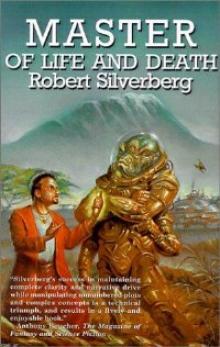 Master Of Life And Death
 Choke Chain
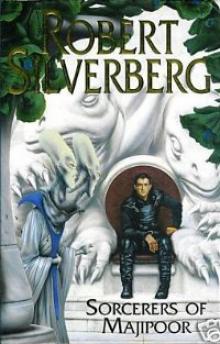 Sorcerers of Majipoor m-4
 Absolutely Inflexible
 Trips - 1962–73 - The Collected Stories of Robert Silverberg Volume Four
 Hot Times in Magma City - 1990-95 - The Collected Stories of Robert Silverberg Volume Eight
 Far Horizons
 The Queen of Springtime ns-2
 The Seventh Science Fiction Megapack
 Invaders From Earth
 Hanosz Prime Goes To Old Earth
 The Macauley Circuit
 Science Fiction: The Best of 2001
 To the Dark Star: The Collected Stories of Robert Silverberg, Volume Two
 Stochastic Man
 Legends: Stories By The Masters of Modern Fantasy
 To Live Again And The Second Trip
 Flies
Flies The Silent Invaders
 Ship-Sister, Star-Sister