
- Home
- Robert Silverberg
Needle in a Timestack Page 4
Needle in a Timestack Read online
Page 4
Those summers were my only opportunities for contact with strangers, since during the year and especially during the long snowbound winters we stayed on the farm, a tight family unit. We never went to public school; obviously, it was impossible to enroll us, en masse, without arousing the curiosity my mother wished to avoid.
Instead, she tutored us privately, giving us care and attention that no professional teacher could possibly have supplied. And we grew older, diverging towards our professions like branching limbs of a tree.
As a future historian, of course, I took it upon myself to observe the changes in my own society, which was bounded by the acreage of our farm. I made notes on the progress of my brothers, keeping my notebooks well hidden, and also on the changes time was working on Mother. She stood up surprisingly well, considering the astonishing burden she had taken upon herself. Formidable was the best word to use in describing her.
We grew into adolescence. By this time Martin had an imposing chemical laboratory in his room; Leonard harangued us all on legal fine points, and Anthony pored over Proust and Kafka, delivering startling critical interpretations. Our house was a beehive of industry constantly, and I don’t remember being bored for more than three consecutive seconds, at any time. There were always distractions: Claude and George jostling for room on the piano bench while they played Claude’s four-hand sonata, Mark hurling a baseball through a front window, Peter declaiming a sequence of shocking sonnets during our communal dinner.
We fought, of course, since we were healthy individualists with sound bodies. Mother encouraged it; Saturday afternoon was wrestling time, and we pitted our growing strengths against one another.
Mother was always the dominant figure, striding tall and erect around the farm, calling to us in her familiar boom, assigning us chores, meeting with us privately. Somehow she had the knack of making each of us think we were the favorite child, the one in whose future she was most deeply interested of all. It was false, of course; though once Jonas unkindly asserted that Barry must be her real favorite, because he, like her, was a biologist.
I doubted it. I had learned much about people through my constant reading, and I knew that Mother was something extraordinary—a fanatic, if you like, or merely a woman driven by an inner demon, but still and all a person of overwhelming intellectual drive and conviction, whose will to know the truth had led her to undertake this fantastic experiment in biology and human breeding.
I knew that no woman of that sort could stoop to petty favoritism. Mother was unique. Perhaps, had she been born a man, she would have changed the entire course of human development.
When we were seventeen, she called us all together round the big table in the common room of our rambling home. She waited, needing to clear her throat only once in order to cut the hum of conversation.
“Sons,” she said, and the echo rang through the entire first floor of the house. “Sons, the time has come for you to leave the farm.”
We were stunned, even those of us who were expecting it. But she explained, and we understood, and we did not quarrel.
One could not become a doctor or a chemist or a novelist or even a historian in a total vacuum. One had to enter the world. And one needed certain professional qualifications.
We were going to college.
Not all of us, of course. Robert was to be a bookkeeper; he would go to business school. Mark had developed, through years of practice, into a superb right-handed pitcher, and he was to go to Milwaukee for a major-league tryout. Claude and George, aspiring composer and aspiring pianist, would attend an Eastern conservatory together, posing as twins.
The rest of us were to attend colleges, and those who were to go on to professions such as medicine or chemistry would plan to attend professional schools afterwards. Mother believed a college education was essential, even to a poet or a painter or a novelist.
Only one of us was not sent to any accredited institution. He was Richard, who was to be our criminal. Already he had made several sallies into the surrounding towns and cities, returning a few days or a few weeks later with money or jewels and with a guilty grin on his face. He was simply to be turned loose into the school of Life, and Mother warned him never to get caught.
As for me, I was sent to Princeton and enrolled as a liberal-arts student. Since, like my brothers, I was privately educated, I had no diplomas or similar records to show them, and they had to give me an equivalency examination in their place. Evidently I did quite well, for I was immediately accepted. I wired Mother, who sent a check for $3,000 to cover my first year’s tuition and expenses.
I enrolled as a history major; among my first-year courses were Medieval English Constitutional History and the Survey of Western Historical Currents; naturally, my marks were the highest in the class in both cases. I worked diligently and even with a sort of frenzied fury. My other courses, in the sciences or in the arts, I devoted no more nor no less time to than was necessary, but history was my ruling passion.
At least, through my first two semesters of college.
June came, and final exams, and then I returned to Wisconsin, where Mother was waiting. It was 21 June when I returned; since not all colleges end their spring semester simultaneously, some of my brothers had been home for more than a week, others had not yet arrived. Richard had sent word that he was in Los Angeles, and would be with us after the first of July. Mark had signed a baseball contract and was pitching for a team in New Mexico, and he, too, would not be with us.
The summer passed rapidly.
We spent it as we had in the old days before college, sharing our individual specialities, talking, meeting regularly and privately with Mother to discuss the goals that still lay ahead. Except for Claude and George, we had scattered in different directions, no two of us at the same school.
I returned to Princeton that fall for my sophomore year. It passed, and I made the homeward journey again, and in the fall traveled once more eastward. The junior year went by likewise.
And I began to detect signs of a curious change in my inward self. It was a change I did not dare mention to Mother on those July days when I met with her in her room near the library. I did not tell my brothers, either. I kept my knowledge to myself, brooding over it, wondering why it was that this thing should happen to me, why I should be singled out.
For I was discovering that the study of history bored me utterly and completely.
The spirit of rebellion grew in me during my final year in college. My marks had been excellent; I had achieved Phi Beta Kappa and several graduate schools were interested in having me continue my studies with them. But I had been speaking to a few chosen friends (none of whom knew my bizarre family background, of course) and my values had been slowly shifting.
I realized that I had mined history as deeply as I ever cared to. Waking and sleeping, for more than fifteen years, I had pondered Waterloo and Bunker Hill, considered the personalities of Cromwell and James II, held imaginary conversations with Jefferson and Augustus Caesar and Charles Martel. And I was bored with it.
It began to become evident to others, eventually. One day during my final semester a friend asked me, “Is there something worrying you, Harry?”
I shook my head quickly—too quickly. “No,” I said. “Why? Do I look worried?”
“You look worse than worried. You look obsessed.”
We laughed about it, and finally we went down to the student center and had a few beers, and before long my tongue had loosened a little.
I said, “There is something worrying me. And you know what it is? I’m afraid I won’t live up to the standards my family set for me.”
Guffaws greeted me. “Come off it, Harry! Phi Beta in your junior year, top class standing, a brilliant career in history ahead of you—what do they want from you, blood?”
I chuckled and gulped my beer and mumbled something innocuous, but inside I was
curdling.
Everything I was, I owed to Mother. She made me what I am. But I was played out as a student of history; I was the family failure, the goat, the rotten egg. Raymond still wrestled gleefully with nuclear physics, with Heisenberg and Schrödinger and the others. Mark gloried in his fast ball and his slider and his curve. Paul daubed canvas merrily in his Greenwich Village flat near NYU, and even Robert seemed to take delight in keeping books.
Only I had failed. History had become repugnant to me. I was in rebellion against it. I would disappoint my mother, become the butt of my brothers’ scorn, and live in despair, hating the profession of historian and fitted by training for nothing else.
I was graduated from Princeton summa cum laude, a few days after my twenty-first birthday. I wired Mother that I was on my way home, and bought train tickets.
It was a long and grueling journey to Wisconsin. I spent my time thinking, trying to choose between the unpleasant alternatives that faced me.
I could attempt duplicity, telling my mother I was still studying history, while actually preparing myself for some more attractive profession—the law, perhaps.
I could confess to her at once my failure of purpose, ask her forgiveness for disappointing her and flawing her grand scheme, and try to begin afresh in another field.
Or I could forge ahead with history, compelling myself grimly to take an interest, cramping and paining myself so that my mother’s design would be complete.
None of them seemed desirable paths to take. I brooded over it, and was weary and apprehensive by the time I arrived at our farm.
The first of my brothers I saw was Mark. He sat on the front porch of the big house, reading a book which I recognized at once and with some surprise as Volume I of Churchill. He looked up at me and smiled feebly.
I frowned. “I didn’t expect to find you here, Mark. According to the local sports pages the Braves are playing on the Coast this week. How come you’re not with them?”
His voice was a low murmur. “Because they gave me my release,” he said.
“What?”
He nodded. “I’m washed up at twenty-one. They made me a free agent; that means I can hook up with any team that wants me.”
“And you’re just taking a little rest before offering yourself around?”
He shook his head. “I’m through. Kaput. Harry, I just can’t stand baseball. It’s a silly, stupid game. You know how many times I had to stand out there in baggy knickers and throw a bit of horsehide at some jerk with a club in his paws? A hundred, hundred-fifty times a game, every four days. For what? What the hell does it all mean? Why should I bother?”
There was a strange gleam in his eyes. I said, “Have you told Mother?”
“I don’t dare! She thinks I’m on leave or something. Harry, how can I tell her—”
“I know.” Briefly, I told him of my own disenchantment with history. We were mutually delighted to learn that we were not alone in our affliction. I picked up my suitcases, scrambled up the steps, and went inside.
Dewey was cleaning up the common room as I passed through. He nodded hello glumly. I said, “How’s the tooth trade?”
He whirled and glared at me viciously.
“Something wrong?” I asked.
“I’ve been accepted by four dental schools, Harry.”
“Is that any cause for misery?”
He let the broom drop, walked over to me, and whispered, “I’ll murder you if you tell Mother this. But the thought of spending my life poking around in foul-smelling oral cavities sickens me. Sickens.”
“But I thought—”
“Yeah. You thought. You’ve got it soft; you just need to dig books out of the library and rearrange what they say and call it new research. I have to drill and clean and fill and plug and—” He stopped. “Harry, I’ll kill you if you breathe a word of this. I don’t want Mother to know that I didn’t come out the way she wanted.”
I repeated what I had said to Mark—and told him about Mark, for good measure. Then I made my way upstairs to my old room. I felt a burden lifting from me; I was not alone. At least two of my brothers felt the same way. I wondered how many more were at last rebelling against the disciplines of a lifetime.
Poor Mother, I thought! Poor Mother!
Our first family council of the summer was held that night. Stephen and Saul were the last to arrive, Stephen resplendent in his Annapolis garb, Saul crisp looking and stiff-backed from West Point. Mother had worked hard to wangle appointments for those two.
We sat around the big table and chatted. The first phase of our lives, Mother told us, had ended. Now, our preliminary educations were complete, and we would undertake the final step towards our professions—those of us who had not already entered them.
Mother looked radiant that evening, tall, energetic, her white hair cropped mannishly short, as she sat about the table with her thirty-one strapping sons. I envied and pitied her: envied her for the sweet serenity of her life, which had proceeded so inexorably and without swerving towards the goal of her experiment, and pitied her for the disillusioning that awaited her.
For Mark and Dewey and I were not the only failures in the crop.
I had made discreet inquiries during the day. I learned that Anthony found literary criticism to be a fraud and a sham, that Paul knew clearly he had no talent as a painter (and, also, that very few of his contemporaries did either), that Robert bitterly resented a career of bookkeeping, that piano playing hurt George’s fingers, that Claude had had difficulty with his composing because he was tone deaf, that the journalistic grind was too strenuous for Jonas, that John longed to quit the seminarial life because he had no calling, that Albert hated the uncertain Bohemianism of an actor’s life—
We circulated, all of us raising for the first time the question that had sprouted in our minds during the past several years. I made the astonishing discovery that not one of Donna Mitchell’s sons cared for the career that had been chosen for him.
The experiment had been a resounding flop.
Late that evening, after Mother had gone to bed, we remained together, discussing our predicament. How could we tell her? How could we destroy her life’s work? And yet, how could we compel ourselves to lives of unending drudgery?
Robert wanted to study engineering; Barry, to write. I realized I cared much more for law than for history, while Leonard longed to exchange law for the physical sciences. James, our banker-manque, much preferred politics. And so it went, with Richard (who claimed five robberies, a rape, and innumerable picked pockets) pouring out his desire to settle down and live within the law as an honest farmer.
It was pathetic.
Summing up the problem in his neat forensic way, Leonard said, “Here’s our dilemma: Do we all keep quiet about this and ruin our lives, or do we speak up and ruin Mother’s experiment?”
“I think we ought to continue as is, for the time being,” Saul said. “Perhaps Mother will die in the next year or two. We can start over then.”
“Perhaps she doesn’t die?” Edward wanted to know. “She’s tough as nails. She may last another twenty or thirty or even forty years.”
“And we’re past twenty-one already,” remarked Raymond. “If we hang on too long at what we’re doing, it’ll be too late to change. You can’t start studying for a new profession when you’re thirty-five.”
“Maybe we’ll get to like what we’re doing by then,” suggested David hopefully. “Diplomatic service isn’t as bad as all that, and I’d say—”
“What about me?” Paul yelped. “I can’t paint and I know I can’t paint. I’ve got nothing but starvation ahead of me unless I wise up and get into business in a hurry. You want me to keep messing up good white canvas the rest of my life?”
“It won’t work,” said Barry in a doleful voice. “We’ll have to tell her.”
Doug
las shook his head. “We can’t do that. You know just what she’ll do. She’ll bring down the umpteen volumes of notes she’s made on this experiment, and ask us if we’re going to let it all come to naught.”
“He’s right,” Albert said. “I can picture the scene now. The big organ-pipe voice blasting us for our lack of faith, the accusations of ingratitude—”
“Ingratitude?” William shouted. “She twisted us and pushed us and molded us without asking our permission. Hell, she created us with her laboratory tricks. But that didn’t give her the right to make zombies out of us.”
“Still,” Martin said, “we can’t just go to her and tell her that it’s all over. The shock would kill her.
“Well?” Richard asked in the silence that followed. “What’s wrong with that?”
For a moment, no one spoke. The house was quiet; we heard footsteps descending the stairs. We froze.
Mother appeared, an imperial figure even in her old housecoat. “You boys are kicking up too much of a racket down here,” she boomed. “I know you’re glad to see each other again after a year, but I need my sleep.”
She turned and strode upstairs again. We heard her bedroom door slam shut. For an instant we were all ten-year-olds again, diligently studying our books for fear of Mother’s displeasure.
I moistened my lips. “Well?” I asked. “I call for a vote on Richard’s suggestion.”
Martin, as a chemist, prepared the drink, using Donald’s medical advice as his guide. Saul, Stephen, and Raymond dug a grave, in the woods at the back of our property. Douglas and Mark built the coffin.
Richard, ending his criminal career with a murder to which we were all accessories before the fact, carried the fatal beverage upstairs to Mother the next morning, and persuaded her to sip it. One sip was all that was necessary; Martin had done his work well.
Leonard offered us a legal opinion: It was justifiable homicide. We placed the body in its coffin and carried it out across the fields. Richard, Peter, Jonas and Charles were her pallbearers; the others of us followed in their path.
 The Longest Way Home
 Hawksbill Station
 A Time of Changes
 This Way to the End Times: Classic Tales of the Apocalypse
 Beyond the Gate of Worlds
 Lord Valentine's Castle
 The Man in the Maze
 Tales of Majipoor
 Time of the Great Freeze
 The Collected Stories of Robert Silverberg, Volume 3: Something Wild Is Loose: 1969-72
 Planet of Death
 Trips: The Collected Stories of Robert Silverberg, Volume Four
 In the Beginning: Tales From the Pulp Era
 Hot Sky at Midnight
 Valentine Pontifex
 Up the Line
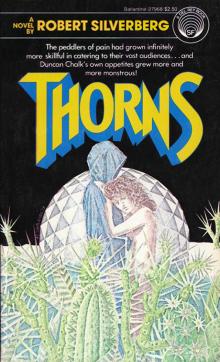 Thorns
 Amanda and the Alien
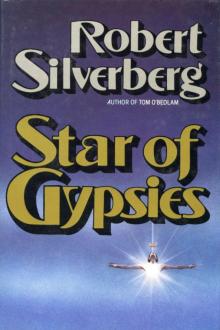 Star of Gypsies
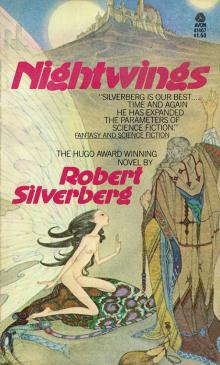 Nightwings
 The Time Hoppers
 Blood on the Mink
 Dying Inside
 The Last Song of Orpheus
 The King of Dreams
 The Stochastic Man
 The Collected Stories of Robert Silverberg, Volume Seven: We Are for the Dark
 The Millennium Express: The Collected Stories of Robert Silverberg, Volume Nine
 The Iron Chancellor
 Lord Prestimion
 To Open the Sky
 The World Inside
 Chains of the Sea
 The Collected Stories of Robert Silverberg, Volume Five: The Palace at Midnight
 Postmark Ganymede
 The Second Trip
 The Collected Stories of Robert Silverberg, Volume 4: Trips: 1972-73
 Son of Man
 Tom O'Bedlam
 To the Land of the Living
 To Be Continued: The Collected Stories of Robert Silverberg, Volume One
 Shadrach in the Furnace
 The Chalice of Death: Three Novels of Mystery in Space
 The Queen of Springtime
 To Be Continued 1953-1958
 Legends
 Roma Eterna
 To Live Again
 At Winter's End
 Needle in a Timestack
 To Live Again and the Second Trip: The Complete Novels
 Lord of Darkness
 The Mountains of Majipoor
 The World Outside
 The Alien Years
 The Book of Skulls
 The Face of the Waters
 Gilgamesh the King
 The Collected Stories of Robert Silverberg, Volume 6: Multiples: 1983-87
 The Happy Unfortunate
 Three Survived
 Cronos
 Tower of Glass
 Legends II
 The Planet Killers
 The Collected Stories of Robert Silverberg, Volume 2: To the Dark Star: 1962-69
 Downward to the Earth
 Lord Valentine's Castle: Book One of the Majipoor Cycle
 Hot Times in Magma City, 1990-95
 Hunt the Space-Witch! Seven Adventures in Time and Space
 Majipoor Chronicles
 The Robert Silverberg Science Fiction Megapack(r)
 Starman's Quest
 Car Sinister
 Worlds of Maybe
 Fantasy The Best of 2001
 Revolt on Alpha C
 Homefaring
 The Pardoner's Tale
 Sailing to Byzantium - Six Novellas
 The Chalice of Death
 Sundance
 A Tip on a Turtle
 Nebula Awards Showcase 2001: The Year's Best SF and Fantasy Chosen by the Science Fiction and Fantasy Writers of America
 The Fangs of the Trees
 The Palace at Midnight: The Collected Work of Robert Silverberg, Volume Five
 The Millennium Express - 1995-2009 - The Collected Stories of Robert Silverberg Volume Nine
 Book of Skulls
 Passengers
 Something Wild is Loose - 1969–72 - The Collected Stories of Robert Silverberg Volume Three
 Multiples
 Starborne
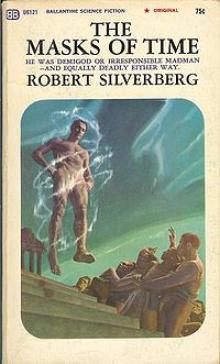 The Masks of Time
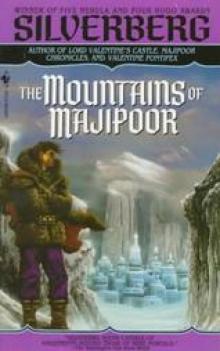 The Mountains of Majipoor m-8
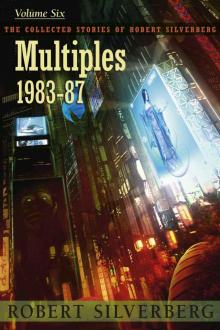 Multiples (1983-87)
 Those Who Watch
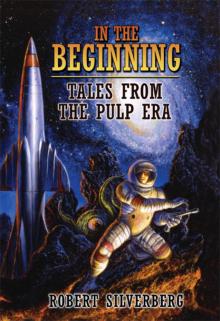 In the Beginning
 Earth Is The Strangest Planet
 Collision Course
 Neutral Planet
 To the Dark Star - 1962–69 - The Collected Stories of Robert Silverberg Volume Two
 Mutants
 Sailing to Byzantium
 When We Went to See the End of the World
 Robert Silverberg The Science Fiction Hall Of Fame Volume One, 1929-1964
 To Be Continued - 1953–58 - The Collected Stories of Robert Silverberg Volume One
 Valentine Pontifex m-3
 Gianni
 Majipoor Chronicles m-2
 We Are for the Dark (1987-90)
 Waiting for the Earthquake
 Fantasy: The Best of 2001
 How It Was When the Past Went Away
 Beauty in the Night
 The Man Who Never Forgot
 The Book of Changes m-9
 Lord Valentine's Castle m-1
 This Way to the End Times
 Queen of Springtime
 Legends-Volume 3 Stories by the Masters of Modern Fantasy
 The Palace at Midnight - 1980–82 - The Collected Stories of Robert Silverberg Volume Five
 Something Wild is Loose: The Collected Stories of Robert Silverberg, Volume Three
 Multiples - 1983–87 - The Collected Stories of Robert Silverberg Volume Six
 Alaree
 Three Survived: A Science Fiction Novel
 Defenders of the Frontier
 The New Springtime
 We Are for the Dark - 1987–90 - The Collected Stories of Robert Silverberg Volume Seven
 The Science Fiction Hall of Fame, Volume One 1929-1964--The Greatest Science Fiction Stories of All Time Chosen by the Members of the Science Fiction Writers of America
 Master Of Life And Death
 Choke Chain
 Sorcerers of Majipoor m-4
 Absolutely Inflexible
 Trips - 1962–73 - The Collected Stories of Robert Silverberg Volume Four
 Hot Times in Magma City - 1990-95 - The Collected Stories of Robert Silverberg Volume Eight
 Far Horizons
 The Queen of Springtime ns-2
 The Seventh Science Fiction Megapack
 Invaders From Earth
 Hanosz Prime Goes To Old Earth
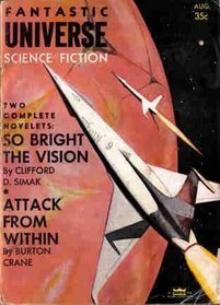 The Macauley Circuit
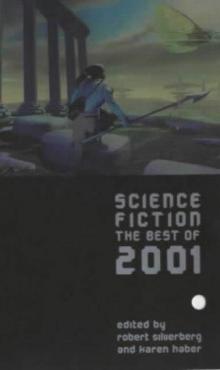 Science Fiction: The Best of 2001
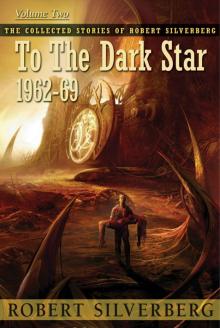 To the Dark Star: The Collected Stories of Robert Silverberg, Volume Two
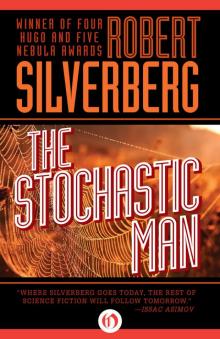 Stochastic Man
 Legends: Stories By The Masters of Modern Fantasy
 To Live Again And The Second Trip
 Flies
Flies The Silent Invaders
 Ship-Sister, Star-Sister