
- Home
- Robert Silverberg
To Live Again Page 4
To Live Again Read online
Page 4
Any window into the past was a source of pain. Anything that reminded him of a time when he had been young, with prospects before him: a legal career, a fruitful marriage, a fine home, the joys of tradition. He had flunked out of law school. Flunked out of marriage, too. Today he was a wealthy man, but only because Roditis had picked him up from the junkheap and stuffed money in his pockets, as the price of his soul. Noyes’ credit balance was high, but he spent little and lived in a kind of genteel poverty, not out of miserliness but merely because he refused to believe that the largesse Roditis had showered upon him was real.
“Charles! Charles, are you up yet?”
—His master’s voice, said Kravchenko slyly.
“I’m here, John,” Noyes called into the other room, while sending a subliminal shout of fury at his persona. “I’m coming!”
One entire wall of the sitting room bore a viewscreen that was hooked into Roditis’ master communications circuit. No matter where Roditis was, at any station along the territory of his far-flung empire, he could activate that circuit and introduce himself, life-size, three dimensions, into Noyes’ apartment. Noyes presented himself before the screen and confronted the blocky figure of his friend and employer. The furniture surrounding Roditis was that of his office in Jersey City: stock tickers, computer banks, data filters, the huge green eye of an analysis machine. Roditis looked wide awake. He said, “Feeling better?”
“Passable, John.”
“You were in lousy shape when we got back last night. I was worried about you.”
“A night’s sleep, that’s all I needed.”
“The acknowledgment on the lamasery gift just came in. Want to see what the guru’s got to say?”
“I suppose.”
Roditis gestured. His image shattered and vanished, and for a moment a cloudy blueness filled the screen; then came the sharp snap of a message flake being thrust into a holder, followed by the appearance in Noyes’ sitting room of the holy man from San Francisco. Noyes had the illusion that he smelled incense. The guru, all smiles, poured forth a honeyed stream of praise and gratitude for Roditis’ generous gift. Noyes sat through it impatiently, wondering why Roditis was bothering to inflict these few minutes of fatuity on him. Of course the guru was going to sound grateful, after having been handed a million dollars; of course he was going to say that Roditis was blessed among men in wisdom, and worthy of many rebirths. Noyes had the uneasy suspicion that Roditis genuinely believed what the guru was saying—that he felt it was praise earned through merit, not merely bought for cash. It was something like a sonic sculptor who bribed the Times critic to give him a rave, then called up all his friends and proudly read them the glowing review. Not a day passed on which Noyes failed to rediscover the core of naïveté that lay within John Roditis’ energetic, shrewd, ruthless spirit.
The guru reached his peroration and vanished from the screen. Roditis returned, beaming.
“What did you think of that?”
“Fine, John. Wonderful.”
“He really sounded happy about the gift.”
“I’m sure he was. It was very handsome.”
“Yes,” said Roditis. “I’ll give him some more, by and by. I’ll make them name a whole damn wing of that place after me. The John Roditis Soul Bank for Departed Lamas, or something. Onward and upward, yes? Om mani padme hum, fella.”
Noyes said nothing. Kravchenko seemed to chuckle; Noyes felt it as a tickling in his frontal lobes.
Then, as though experiencing some inner shifting of gears, Roditis lost his look of jovial self-satisfaction, and a glimmer of strain showed through his carefully abstract expression. He said, “Mark Kaufmann is giving a party Saturday at his Dominica estate.”
“He’s coming out of mourning, then?”
“Yes. This is the first social thing he’s done since old Paul was gathered to repose. It’s going to be a big, noisy, expensive affair.”
“Are you invited?” Noyes asked.
Roditis looked scornful. “Me? The filthy little nouveau riche with delusions of grandeur? No, of course I’m not invited! It’s mainly going to be a party for various Kaufmanns and their Jewish banking relatives.”
“John, you know you shouldn’t use that phrase.”
“Why? Does it make me seem a bigot? You know I’ve got nothing against Jews. Can I help it if the Kaufmanns are related to the other big Jewish bankers?”
“When you say it, somehow, it comes out like a sneer,” Noyes dared to tell him.
“Well, I don’t mean it as a sneer. You don’t sneer at a social and cultural elite. What you hear in my voice isn’t anti-Semitism, Charles, it’s simple envy without any neurotic irrational manifestations attached. There’ll be a mess of Lehmans and Loebs at that party. There won’t be any John Roditis. Frank Santoliquido is going to be there, too.”
“He’s not Jewish.”
Roditis looked annoyed. “No, dolt, he isn’t! But he’s important, and he’s socially well-placed besides, and Mark Kaufmann is trying to buy his support in this business of the old man’s persona. Santoliquido and his girl friend are flying down on Mark’s own jet; that’s how tight things are getting. And you can bet that Mark is going to spend the whole day letting Santo know how important it is to keep Uncle Paul out of my clutches. That’s got to be counteracted somehow. Which is why you’re going to go to the party too.”
“Me? But I’m not invited!”
“Get yourself invited.”
“Impossible, John. Kaufmann knows I’m connected to your organization, and if you’re on the dead list, you can bet that I—”
“You’re also connected to the Loebs, aren’t you?”
“Well, my sister married a Loeb, yes.”
“Damn right, she did. Won’t she be at the party?”
“I suppose she’s been invited, at any rate.”
“I know she has. I’ve got the complete guest list right here. Mr. and Mrs. David Loeb. That’s your sister, right?”
“Right.”
“Fine. Now, what happens if she phones Kaufmann and says she’s in the air over Cuba, say, and she’ll be landing in five minutes, and she’s happened to bring her kid brother Charlie along for the party. Is Kaufmann going to say no, send the scoundrel home?”
“He’ll be furious, John.”
“Let him be furious, then. He’ll have to maintain decorum, though. It’s not the sort of formal party where one extra guest throws the whole thing out of balance, and he can’t very well refuse you permission to attend with your sister. You’ll be admitted. The worst that’ll happen is you’ll get a few sour stares from Kaufmann. But socially you’ll be among your equals, and everybody else will be glad to see you, and there’ll be no hard feelings.”
Noyes’ fingers began to tremble. Kravchenko scrabbled derisively against the walls of his cranium. Carefully, Noyes reached to his left, out of the range of the sensors relaying his image to Roditis, and scooped a drink capsule from a tray. He activated the capsule and let the fluid flow into his arm. That was better. But not good enough. He felt sick. The idea of muscling his way into a party like this, parlaying his own tattered status and his sister’s connections by marriage into Roditis’ advantage, chilled and saddened him.
He said, “Assuming I succeed in crashing the party, John, what’s the purpose of my going there?”
“Mainly to get next to Santoliquido and work on him.”
“About the Paul Kaufmann persona?”
“What else? You can be subtle. You can be indirect. He’s going to make up his mind about the transplant any day now. I want it so bad I can taste it, Charles. Do you realize what I could do with Paul Kaufmann inside my head? The doors—that would open for me, the plans I could bring off? And it’s all up to Santo. He’ll be down there, relaxed, out in the sunshine, drinking too much. And you can work on him. Use the old charm. That’s what I pay you for, the old Episcopalian Anglo-Saxon charm. Turn it on!”
“All right,” Noyes muttered.
“And even if you don’t get anywhere immediately with him, perhaps you can find a plan of action. Some vulnerable spot in his makeup. Some opening wedge that we can get leverage on.”
Appalled, Noyes said, “Are you thinking of blackmailing Santoliquido into approving your request?”
“Now, did I say that? What a terribly crude suggestion, Charles! I expect more finesse from you.” Roditis laughed heavily. “Call your sister. Get everything set up. Oh—Charles? How’s Jimmy-boy?”
“Kravchenko? I think he’s asleep.”
“I’m sure he’ll appreciate going to the party too. He’ll see many of his old friends there. Call your sister, Charles.”
The screen darkened.
Noyes looked at the floor. He knelt and dug his fingers into the carpet, trying to steady himself. His head seemed to be splitting into segments.
—Call your sister, Charles. Didn’t you hear the man?
“I won’t!”
—You’d better. You don’t dare defy him.
“It’s filthiness! To crash a party so he can use me to suck up to Santoliquido—”
—He wants the old Kaufmann persona, doesn’t he? It’s his ticket to social respectability. Your job is to help him get what he wants.
“Not at the cost of my integrity.”
—You got rid of that a long time ago. Come on, Chuck. He’s right: I want to go to that party. At least three of my wives ought to be there. I’d love to see how they’re aging.
“I’ll kill myself first!”
—If you had the guts, I suppose you would. Pick up the phone. Call your sister.
Noyes heard mocking laughter in his skull.
He returned to the bedroom and eyed the carniphage flask. But, as ever, it was only a dramatic gesture, fooling neither himself nor the demonic persona he harbored. Defeat dragged at his muscles. He seized the phone and jabbed out the numbers. Moments later, his sister’s privacy code appeared on the little gray screen. She’s taking her morning bath, Noyes thought. He said, “It’s me, Gloria, just Charlie. Your womb-mate.”
The screen cleared, and the face and shoulders of Gloria Loeb appeared. She wore some sort of flimsy wrap, and her cheeks and forehead were glossy with whatever mystic preparation she favored to keep her complexion eternally young. She was three years older than Noyes, and looked at least a dozen years younger. They had never liked one another. Her marriage to David Loeb had been a stunning social event sixteen years ago, a grandiose blowout, as was appropriate for the union of old New England aristocracy with old Jewish aristocracy. That was the fashionable sort of marriage these days, rapidly creating a tribe of Anglo-Saxon Hebrews whose formidable bloodlines linked them securely to Plantagenets on one hand, Solomon and David on the other, an unbeatable combination. Noyes had become very drunk at his sister’s wedding; in a way, his decline and fall had begun that evening, a few weeks after he had turned twenty-one.
She said coolly, “How good to hear from you again, Charles. You look well.”
“That’s a polite lie. I look terrible, and you can feel free to let me know about it.”
Her lips quirked impatiently. “Is something the matter? Are you all right?”
Noyes took a deep breath and said, “I need a tiny favor, Gloria.”
4
The building housing the soul bank rose in stunning tiers from a broad plaza three superblocks in area. The site had been chosen with an eye toward deliberate ostentation, at Manhattan’s southern tip in an area thick with historic associations. Here, Peter Minuit had haggled with Indian braves and bought a world for a handful of beads; here, Pegleg Stuyvesant had tromped in choleric efficiency; Washington had walked these streets, as had J. P. Morgan, Jay Gould, Thomas Edison, Bet-a-Million Gates, Joseph P. Kennedy, Paul Kaufmann, and Helmut Scheffing, along with others. Few traces of that history remained. A block of eighteenth-century buildings had been preserved as a sort of museum; the seventeenth-century New York was gone, as was the nineteenth, and all that survived of the twentieth in this neighborhood were a few scruffy, faded curtain-wall skyscrapers put up by the big banks during the boom of the midcentury, shortly before the panic. Serene, isolated, set apart from its neighbors by thousands of priceless square feet of pink noctilucent tile, rose the glowing shaft of the Scheffing Institute tower: eighty stories, then a setback and forty stories more, and a twenty-story cap tipped with black granite. The tower was easily visible from Brooklyn, from Queens, from Staten Island, from New Jersey, and especially from Jubilisle, the floating pleasure dome in New York Harbor. One looked up from the sins and gaming tables of Jubilisle to see the reassuring bulk of the Scheffing Institute at the edge of land, offering the promise of rebirth beyond rebirth, and it was comforting. The architects had taken all that into account when planning the building.
To the Scheffing Institute that Friday morning came Mark Kaufmann to renew his lease on life. His small hopter landed as programed on the flight deck at the tower’s first setback, and waiting guards hustled him inside to see Santoliquido. The morning was cool; he had chosen a thick-fibered tunic that sparkled with dark brown and red highlights.
Francesco Santoliquido’s office was deep, high, consciously impressive. In one corner stood a sonic sculpture, the work of Anton Kozak: a beautiful piece, all flowing lines and delicate rhythms, emitting a gentle white hiss that swiftly infiltrated itself into one’s consciousness and became rooted there. Kaufmann’s pleasure in the lovely work was marred by his awareness that Anton Kozak, who had died nine years ago, had returned to the corporate form as one of the implanted personae of John Roditis.
Santoliquido’s desk split obediently and the administrator came through the sections to greet Kaufmann. He was a bulky man, heavier than the fashion prescribed, but he carried himself well. His thick fingers glittered with the rings that betrayed Santoliquido’s innocent predisposition toward vanity. At his throat hung a cluster of small beady-eyed crustaceans, violet and green and azure, within a crystal container: products of the mutagenetic art, elaborate little baroques that moved through their prison in an unending stately dance. Santoliquido’s shirt was green, his epaulets vermilion. In the blaze of color his white, slicked-back hair took on a compelling vividness.
The two men touched hands. Santoliquido returned to his desk, extended a tray of drinks, took part with Kaufmann in the moment of pleasure. Shafts of sunlight danced across the room. The window, a vaulted arch, was wholly transparent. From where he stood Kaufmann enjoyed a superb view of the harbor, and peering down into gay Jubilisle from this height was like staring into a prismatic image from some unimaginable protonic subuniverse.
“Well,” said Santoliquido, “we had the pleasure of your lovely daughter’s company here yesterday. She seems hard to please, though. We unrolled our best carpets for her, but there was no deal.”
“Not yet. She’ll be back.”
“Yes, certainly. Next Tuesday. She’s choosing among three interesting alternatives.”
“I’d like to scan them,” said Kaufmann.
“That would be a little irregular.”
“I know.”
Santoliquido smiled elegantly. Kaufmann had always had a good working relationship with this man; they had participated in several joint ventures, most notably a power scheme in the Antarctic, and always Santoliquido had come out of them with his considerable fortunes considerably enhanced. Reciprocal favors were not impossible.
The pitch of the Kozak piece altered perceptively, growing more definite, more passionate. Once Kaufmann had had several Kozaks. After Roditis had received the sculptor’s persona, Kaufmann had found occasions to bestow the works on delighted friends.
Kaufmann said, “Nothing new on Uncle Paul since Wednesday?”
“Nothing new.”
“I’d like to see him, too.”
“Really?”
“You’ll satisfy my curiosity, won’t you?” Kaufmann leaned forward at the waist and fingered an amber rubbingstone on Santoliquido’
s desk. “There’s a therapeutic reason. I find it hard to believe that the old man’s really dead. You know, he rose above the whole family like such a colossus—”
“So that when you see him taped and carded, you’ll finally accept that he’s gone?”
“Yes.”
“It’s not the first time I’ve heard something like that, Mark.” Santoliquido clasped his hands over his belly and laughed. “Paul was quite the titan, wasn’t he? I’ll admit I ran his persona off myself, after the funeral, just to get some feel for the man. And I was awed. Let me tell you, Mark, I don’t awe easily, but I was awed.”
“Toying with the idea of taking him on yourself?”
Santoliquido looked displeased, and even the crustaceans at his throat rapidly changed hues, as if somehow attuned to the flavor of his thoughts. “I have no desire whatever to have that terrible old man mixing in my nervous system,” said Santoliquido firmly. “And in any event, considering the demand for his persona, it would be a grave breach of trust if I were to appropriate him for my own use. Yes?”
“Of course. Of course.”
The look of affability returned. “Anyone who wants your uncle’s persona is welcome to it, so far as I care personally. What a powerhouse! He’d overwhelm nine out of ten who took him on.”
“Just as he overwhelmed us all in life,” said Kaufmann. “He reduced my father to a hollow shell, an errand-boy. Me he had a harder time with, but he gave me twenty years of hell before he’d recognize me as a worthy heir. And the others! Of course, we all loved him. He was simply too dynamic to hate. But when he died, Frank, I felt as though a hand had been removed from my throat.”
 The Longest Way Home
 Hawksbill Station
 A Time of Changes
 This Way to the End Times: Classic Tales of the Apocalypse
 Beyond the Gate of Worlds
 Lord Valentine's Castle
 The Man in the Maze
 Tales of Majipoor
 Time of the Great Freeze
 The Collected Stories of Robert Silverberg, Volume 3: Something Wild Is Loose: 1969-72
 Planet of Death
 Trips: The Collected Stories of Robert Silverberg, Volume Four
 In the Beginning: Tales From the Pulp Era
 Hot Sky at Midnight
 Valentine Pontifex
 Up the Line
 Thorns
 Amanda and the Alien
 Star of Gypsies
 Nightwings
 The Time Hoppers
 Blood on the Mink
 Dying Inside
 The Last Song of Orpheus
 The King of Dreams
 The Stochastic Man
 The Collected Stories of Robert Silverberg, Volume Seven: We Are for the Dark
 The Millennium Express: The Collected Stories of Robert Silverberg, Volume Nine
 The Iron Chancellor
 Lord Prestimion
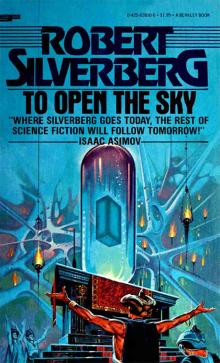 To Open the Sky
 The World Inside
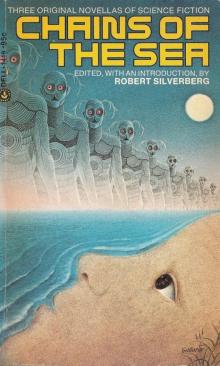 Chains of the Sea
 The Collected Stories of Robert Silverberg, Volume Five: The Palace at Midnight
 Postmark Ganymede
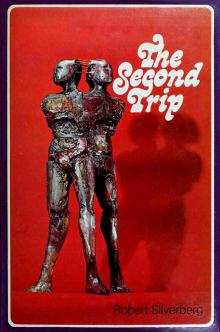 The Second Trip
 The Collected Stories of Robert Silverberg, Volume 4: Trips: 1972-73
 Son of Man
 Tom O'Bedlam
 To the Land of the Living
 To Be Continued: The Collected Stories of Robert Silverberg, Volume One
 Shadrach in the Furnace
 The Chalice of Death: Three Novels of Mystery in Space
 The Queen of Springtime
 To Be Continued 1953-1958
 Legends
 Roma Eterna
 To Live Again
 At Winter's End
 Needle in a Timestack
 To Live Again and the Second Trip: The Complete Novels
 Lord of Darkness
 The Mountains of Majipoor
 The World Outside
 The Alien Years
 The Book of Skulls
 The Face of the Waters
 Gilgamesh the King
 The Collected Stories of Robert Silverberg, Volume 6: Multiples: 1983-87
 The Happy Unfortunate
 Three Survived
 Cronos
 Tower of Glass
 Legends II
 The Planet Killers
 The Collected Stories of Robert Silverberg, Volume 2: To the Dark Star: 1962-69
 Downward to the Earth
 Lord Valentine's Castle: Book One of the Majipoor Cycle
 Hot Times in Magma City, 1990-95
 Hunt the Space-Witch! Seven Adventures in Time and Space
 Majipoor Chronicles
 The Robert Silverberg Science Fiction Megapack(r)
 Starman's Quest
 Car Sinister
 Worlds of Maybe
 Fantasy The Best of 2001
 Revolt on Alpha C
 Homefaring
 The Pardoner's Tale
 Sailing to Byzantium - Six Novellas
 The Chalice of Death
 Sundance
 A Tip on a Turtle
 Nebula Awards Showcase 2001: The Year's Best SF and Fantasy Chosen by the Science Fiction and Fantasy Writers of America
 The Fangs of the Trees
 The Palace at Midnight: The Collected Work of Robert Silverberg, Volume Five
 The Millennium Express - 1995-2009 - The Collected Stories of Robert Silverberg Volume Nine
 Book of Skulls
 Passengers
 Something Wild is Loose - 1969–72 - The Collected Stories of Robert Silverberg Volume Three
 Multiples
 Starborne
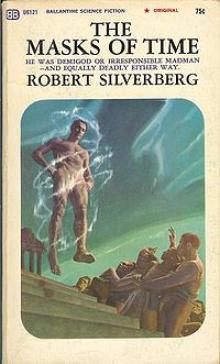 The Masks of Time
 The Mountains of Majipoor m-8
 Multiples (1983-87)
 Those Who Watch
 In the Beginning
 Earth Is The Strangest Planet
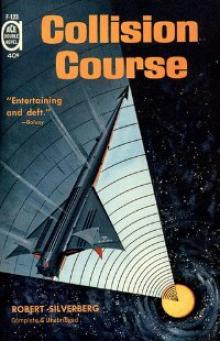 Collision Course
 Neutral Planet
 To the Dark Star - 1962–69 - The Collected Stories of Robert Silverberg Volume Two
 Mutants
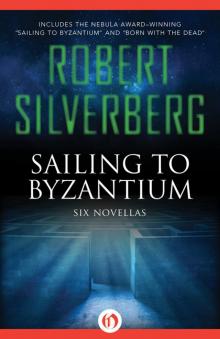 Sailing to Byzantium
 When We Went to See the End of the World
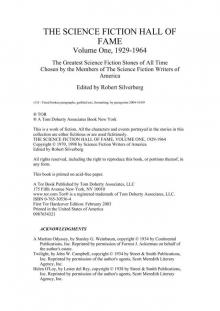 Robert Silverberg The Science Fiction Hall Of Fame Volume One, 1929-1964
 To Be Continued - 1953–58 - The Collected Stories of Robert Silverberg Volume One
 Valentine Pontifex m-3
 Gianni
 Majipoor Chronicles m-2
 We Are for the Dark (1987-90)
 Waiting for the Earthquake
 Fantasy: The Best of 2001
 How It Was When the Past Went Away
 Beauty in the Night
 The Man Who Never Forgot
 The Book of Changes m-9
 Lord Valentine's Castle m-1
 This Way to the End Times
 Queen of Springtime
 Legends-Volume 3 Stories by the Masters of Modern Fantasy
 The Palace at Midnight - 1980–82 - The Collected Stories of Robert Silverberg Volume Five
 Something Wild is Loose: The Collected Stories of Robert Silverberg, Volume Three
 Multiples - 1983–87 - The Collected Stories of Robert Silverberg Volume Six
 Alaree
 Three Survived: A Science Fiction Novel
 Defenders of the Frontier
 The New Springtime
 We Are for the Dark - 1987–90 - The Collected Stories of Robert Silverberg Volume Seven
 The Science Fiction Hall of Fame, Volume One 1929-1964--The Greatest Science Fiction Stories of All Time Chosen by the Members of the Science Fiction Writers of America
 Master Of Life And Death
 Choke Chain
 Sorcerers of Majipoor m-4
 Absolutely Inflexible
 Trips - 1962–73 - The Collected Stories of Robert Silverberg Volume Four
 Hot Times in Magma City - 1990-95 - The Collected Stories of Robert Silverberg Volume Eight
 Far Horizons
 The Queen of Springtime ns-2
 The Seventh Science Fiction Megapack
 Invaders From Earth
 Hanosz Prime Goes To Old Earth
 The Macauley Circuit
 Science Fiction: The Best of 2001
 To the Dark Star: The Collected Stories of Robert Silverberg, Volume Two
 Stochastic Man
 Legends: Stories By The Masters of Modern Fantasy
 To Live Again And The Second Trip
 Flies
Flies The Silent Invaders
 Ship-Sister, Star-Sister