
- Home
- Robert Silverberg
Worlds of Maybe Page 5
Worlds of Maybe Read online
Page 5
“Listen!”
A dull, dull mutter sounded far to the north. It lasted for an instant, and died away. There was a crashing of bushes nearby and a monstrous animal stepped alertly into the firelight. It was an elk, but such an elk! It was a giant, a colossal creature. One of the girls cried out affrightedly, and it turned and crashed away into the underbrush.
“There are no elk in Virginia,” said Minott dryly. Blake said sharply again:
“Listen!”
Again that dull muttering to the north. It grew louder, now. It was an airplane motor. It increased in volume from a dull mutter to a growl, from a growl to a roar. Then the plane shot overhead, the navigation-lights on its wings glowing brightly. It banked steeply and returned. It circled overhead, with a queer effect of helplessness. And then suddenly it dived down . . .
“An aviator from our time,” said Blake, staring toward the sound. “He saw our fire. He’s going to try to make a crash landing in the dark. . . .”
The motor cut off. An instant in which there was only the crackling of the fire and the whistling of wind around gliding surfaces off there in the night. Then a terrific thrashing of branches. A crash . . .
Then a flare of flame. A roaring noise, and the lurid yellow of gasoline-flames spouting skyward.
“Stay here!” snapped Blake. He was on his feet in an instant. “Harris, Minott! Somebody has to stay with the girls! I’ll get Hunter and go help!”
He plunged off into the darkness, calling to Hunter. The two of them forced their way through the underbrush. Minott scowled and got out his revolvers. Still scowling, he slipped out of the firelight and took up the guard-duty Hunter had abandoned.
A gasoline-tank exploded, off there in the darkness. The glare of the fire grew intolerably vivid. The sound of the two young men racing through undergrowth became fainter and died away.
A long time passed. A very long time. Then, very far away, the sound of thrashing bushes could be heard again. The gasoline-flare dulled and dimmed. Figures came slowly back. They moved as if they were carrying something very heavy. They stopped beyond the glow of light from the campfire. Then Blake and Hunter reappeared, alone.
“He’s dead,” said Blake curtly. “Luckily, he was flung clear of the crash before the gas-tanks caught. He came back to consciousness for a couple of minutes before he—died. Our fire was the only sign of human life he’d seen in hours. We brought him over here. We’ll bury him in the morning.”
There was silence. Minott’s scowl was deep and savage as he came back to the firelight.
“What—what did he say?” asked Maida Haynes.
“He left Washington at five this afternoon,” said Blake shortly. “From our time, or something like it. All of Virginia across the Potomac vanished at four-thirty, and virgin forest took its place. He went out to explore. At the end of an hour he came back, and Washington was gone. In its place was a fog-bank, with snow underneath. He followed the Potomac down and saw palisaded homesteads with long, oared ships drawn up on shore.”
“Vikings—Norsemen!” said Minott in satisfaction.
“He didn’t land. He swept on down, following the edge of the bay. He looked for Baltimore. Gone. Once, he’s sure, he saw a city, but he was taken sick at about that time and when he recovered, it had vanished. He was heading north again and his gasoline was getting low when he saw our fire. He tried for a crash landing. He’d no flares with him. He crashed—and died.”
“Poor fellow!” said Lucy shakenly.
“The point is,” said young Blake, “that Washington was in our present time at about four-thirty today. We’ve got a chance, though a slim one, of getting back! We’ve got to get to the edge of one of these blocks that go swinging through time, the edge of what Mr. Minott calls a ‘time-fault,’ and watch it! When the shifts come, we explore as quickly as we can. We’ve no great likelihood, perhaps, of getting back exactly to our own period, but we can get nearer to it than we are now! Mr. Minott said that somewhere the Confederacy exists. Even that, among people of our own race and speaking our own language, would be better than to be marooned forever among Indians, or among Chinese or Norsemen.”
Minott said harshly:
“Blake, we’d better have this out right now! I give the orders in this party! You jumped quickly when the plane crashed, and you gave orders to Harris and to me, I let you get away with it, but we can have but one leader. I am that leader! See you remember it!”
Blake swung about. Minott had a revolver bearing on his body.
“And you are making plans for a return to our time,” he went on savagely. “I won’t have it! The odds are still that we’ll all be killed. But if I do live, I mean to take advantage of it! And my plans do not include a return to an instructorship in mathematics at Robinson College!”
“Well?” said Blake coolly. “What of it, sir?”
“Just this! I’m going to take your revolvers. I’m going to make the plans and give the orders hereafter. We are going to look for the time-path in which a Viking civilization thrives in America. We’ll find it, too, because these disturbances will last for weeks yet. And once we find it, we will settle down among those Norsemen and when space and time are stable again I shall begin the formation of my empire! And you will obey orders or you’ll be left afoot while the rest of us go on.”
Blake said very quietly indeed:
“Perhaps, sir, we’d all prefer to be left to our own destinies rather than be merely the tools by which you attain to yours.”
Minott stared at him an instant. His lips tensed.
“It is a pity,” he said coldly. “I could have used your brains, Blake. But I can’t have mutiny. I shall have to shoot you.”
His revolver came up remorselessly.
The British Academy of Sciences was in extraordinary session to determine the cause of various untoward events. Its members were weary, bleary-eyed, but still conscious of their dignity and the importance of their task. A venerable, whiskered physicist spoke with fitting definiteness and solemnity.
“. . . And so, gentlemen, I see nothing more that remains to be said. The extraordinary events of the past hours seem to follow from certain facts about our own closed space. The gravitational fields of point 1079 particles of matter will close space about such an aggregation. No cosmos can be larger. No cosmos can be smaller. And if we envision the creation of such a cosmos we will observe its galaxies vanish at the instant the 1079th particle adds its own mass to those which were present before it. However, the fact that space has closed about such a cosmos does not imply its annihilation. It means merely its separation from its original space, the isolation of itself in space and time because of the curvature of space due to its gravitational field. And if we assume the existence of more than one area of closed space, we assume in some sense the existence of a hyper-space separating the closed spaces; hyper-spatial coordinates which mark their relative hyper-spatial positions; hyper—”
A gentleman with even longer and whiter whiskers than the speaker said in a loud and decided voice: “Fiddlesticks! Stuff and nonsense!”
The speaker paused. He glared.
“Sir! Do you refer—”
“I do!” said the gentleman with the longer and whiter whiskers. “It is stuff and nonsense! Next you’d be saying that in this hyper-space of yours the closed spaces would be subject to hyper-laws, revolve about each other in hyper-orbits regulated by hyper-gravitation, and undoubtedly at times there would be hyper-earthtides or hyper-collisions, producing decidedly hyper-catastrophes!”
“Such, sir,” said the whiskered gentleman on the rostrum, quivering with indignation, “such is the fact, sir!
“Then the fact,” rejoined the scientist with the longer and whiter whiskers, “the fact, sir, makes me sick!”
And as if to prove it, he reeled. But he was not alone in reeling. The entire venerable assembly shuddered in abrupt, nauseating vertigo. And then the British Academy of Sciences adjourned without formality and in a p
anic. It ran away. Because abruptly there was no longer a rostrum nor any end to its assembly-hall. Where their speaker had been was open air. In the open air was a fire. About the fire were certain brutish figures incredibly resembling the whiskered scientists who fled from them. They roared at the fleeing, venerable men. Snarling, wielding crude clubs, they plunged into the hall of the British Academy of Sciences. It is known that they caught one person—a biologist of highly eccentric views. It is believed that they ate him.
But it has long been surmised that some, at least, of the extinct species of humanity such as the Piltdown and Neanderthal men were cannibals. If in some pathway of time they happened to exterminate their more intelligent rivals—if somewhere pithecanthropus erectus survives and homo sapiens does not—well, in that pathway of time cannibalism is the custom of society.
With a gasp, Maida Haynes flung herself before Blake. But Harris was even quicker. Apologetic and shy, he had just finished cutting a smoking piece of meat from the venison haunch. He threw it, swiftly, and the searing mass of stuff flung Minott’s hand aside at the same instant that it burned it painfully.
Blake was on his feet, his gun out.
“If you pick up that gun, sir,” he said rather breathlessly but with unquestionable sincerity, “I’ll put a bullet through your arm!”
Minott swore. He retrieved the weapon with his left hand and thrust it in his pocket.
“You young fool!” he snapped. “I’d no intention of shooting you. I did intend to scare you thoroughly! Harris, you’re an ass! Maida—I shall discuss your action later! The worst punishment I could give the lot of you would be to leave-you to yourselves!”
He stalked out of the firelight and off into the darkness. Something like consternation came upon the group. The flow of fire where the plane had crashed flickered fitfully. The base of the dull-red light seemed to widen a little.
“That’s the devil!” said Hunter uneasily. “He does know more about this stuff than we do. If he leaves us, we’re messed up!”
“We are,” agreed Blake grimly. “And perhaps if he doesn’t.”
Lucy Blair said:
“I—I’ll go and talk to him. He—used to be nice to me in class. And—and his hand must hurt terribly. It’s burnt.”
She moved away from the fire, a long and angular shadow going on before her. Minott’s voice came sharply.
“Go back! There’s something moving out here!”
Instantly after, his revolver flashed. A howl arose, and the weapon flashed again and again. Then there were many crashings. Figures fled. Minott came back to the firelight, scornfully.
“Your leadership is at fault, Blake,” he commented sardonically. “You forgot about a guard. And you were the man who thought he heard voices! They’ve run away now, though. Indians, of course.”
Lucy Blair said hesitantly:
“Could I—could I do something for your hand? It’s burnt . . .”
“What can you do?” he asked angrily.
“There’s some fat,” she told him. “Indians used to dress wounds with bear-fat. I suppose deer-fat would do as well.”
He permitted her to dress the burn, though it was far from a serious one. She begged handkerchiefs from the others to complete the job. There was distinct uneasiness all about the campfire. This was no party of adventurers, prepared for anything. It had started out as an outing of undergraduates. Minott scowled as Lucy Blair worked on his hand. Harris looked as apologetic as possible, because he had made the injury. Bertha Ketterline blubbered—less noisily, now, because nobody paid her any attention. Young Blake frowned meditatively at the fire.
The horses moved uneasily. Bertha Ketterline, between her blubberings, sneezed. Lucy felt her eyes smarting. She was the first one to see the spread of the blaze started by the gas-tanks of the aeroplane. Her cry of alarm roused the others.
The plane had crashed a good mile from the campfire. The blazing of its tanks had been fierce but brief. The burning of the wings and chassis-fabric had been short, as well. The fire had died down to seeming dull embers. But there were more than embers ablaze out there now.
The fire had died down, to be sure, but only that it might spread among thick and tangled underbrush. It had spread widely on the ground before some climbing vine, blazing, carried flames up to resinous pine-branches overhead. A small but steady wind was blowing. And as Lucy looked off to see the source of smoke which stung her eyes, one tall tree was blazing, a long line of angry red flame crept along the ground, and then at two more,—three more—a dozen points bright fire roared upward toward the sky.
The horses snorted and reared. Minott snapped:
“Harris! Get the horses! Hunter, see that the girls get mounted, and quickly!”
He pointedly gave Blake no orders. He pored intently over his map as more trees and still more caught fire and blazed upward. He stuffed it in his pocket. Blake calmly rescued the haunch of venison, and when Minott sprang into the saddle among the snorting, scared horses, Blake was already by Maida Haynes’ side, ready to go.
“We ride in pairs,” said Minott curtly. “A man and a girl. You men, look after them. I’ve a flashlight. I’ll go ahead. We’ll hit the Rappahannock River sooner or later, if we don’t get around the fire first—and if we can keep ahead of it.”
They topped a little hillock and saw more of the extent of their danger. In a half-mile of spreading, the fire had gained three times as much breadth. And to their right, the fire even then roared in among the trees of a forest so thick as to be jungle. The blaze fairly raced through it as if the fire made its own wind, which in fact it did. To their left it crackled fiercely in underbrush which, as they fled, blazed higher.
And then, as if to add mockery to their very real danger, a genuinely brisk breeze sprang up suddenly. Sparks and blazing bits of leaves, fragments of ash and small, unsubstantial coals began to fall among them. Bertha Ketterline yelped suddenly as a tiny live coal touched the flesh of her cheek. Harris’ horse squealed and kicked as something singed it. The eight of them galloped madly ahead. Trees rose about them. The white beam of Minott’s flashlight seemed almost ludicrous in the fierce red glare from behind, but at least it showed the way.
Something large and dark and clumsy lumbered cumbersomely into the space between Grady’s statue and the post-office building. The arc-lights showed it clearly, and it was not anything which should be wandering in the streets of Atlanta, Georgia, at any hour of the day or night. A taxicab chauffeur saw it, and nearly tore off a wheel in turning around to get away. A policeman saw it, and turned very pale as he grabbed at his beat-telephone to report it. But there had been too many queer things happening this day for him to suspect his own sanity, and the Journal had printed too much news from elsewhere for him to disbelieve his own eyes.
The Thing was monstrous, reptilian, loathsome. It was eighty feet long, of which at least fifty was head and tail and the rest flabby-fleshed body. It may have weighed twenty-five or thirty tons, but its head was not much larger than that of a rather large horse. That tiny head swung about stupidly. The Thing was bewildered. It put down a colossal foot—and water gushed up from a broken water-main beneath the pavement. The Thing did not notice. It moved vaguely, exhaling a dank and musty odor.
The clang of police-emergency cars and the scream of fire-engine sirens filled the air. An ambulance flashed into view—and was struck by a balancing sweep of the mighty tail. The ambulance careened and crashed.
The Thing uttered a plaintive cry, ignoring the damage its tail had caused. The sound was like that of a bleat, a thousand times multiplied. It peered ceaselessly around, seeming to feel trapped by the tall buildings about it, but it was too stupid to retrace its steps for escape.
Somebody screamed in the distance as police-cars and fire-engines reached the spot where the first Thing swayed and peered and moved in quest of escape. Two other Things, smaller than the first, came lumbering after it. Like it, they had monstrous bodies and disproportionately tin
y heads. One of them blundered stupidly into a hook-and-ladder truck. Truck and beast went down, and the beast bleated like the first.
Then some fool began to shoot. Other fools joined in. Steel-jacketed bullets poured into the mountains of reptilian flesh. Police sub-machine-guns raked the monsters. Those guns were held by men of great daring, who could not help noting the utter stupidity of the Things out of the great swamp which had appeared where Inman Park used to be.
The bullets stung. They hurt. The three beasts bleated and tried bewilderedly and very clumsily indeed to escape. The largest tried to climb a five-story building, and brought it down in sheer wreckage.
Before the last of them was dead—or rather, before it ceased to move its great limbs, because the tail moved jerkily for a long time and its heart was still beating spasmodically when loaded on a city dump-cart next day—before the last of them was dead they had made sheer chaos of three blocks of business buildings in the heart of Atlanta, had killed seventeen men—and the best testimony is that they made not one attempt to fight. Their whole and only thought was to escape. The destruction they wrought and the deaths they caused were due to their clumsiness and stupidity.
The leading horses floundered horribly. They sank to their fetlocks in something soft and spongy. Bertha Ketterline squawked in terror as her mount’s motion changed. Blake said crisply in the blackness:
“It feels like ploughed ground. Better use the light again, Mr. Minott!”
The sky behind them glowed redly. The forest fire still trailed them. For miles of front, now, it shot up sparks and flame and a harsh red glare which illumined the clouds of its own smoke.
 The Longest Way Home
 Hawksbill Station
 A Time of Changes
 This Way to the End Times: Classic Tales of the Apocalypse
 Beyond the Gate of Worlds
 Lord Valentine's Castle
 The Man in the Maze
 Tales of Majipoor
 Time of the Great Freeze
 The Collected Stories of Robert Silverberg, Volume 3: Something Wild Is Loose: 1969-72
 Planet of Death
 Trips: The Collected Stories of Robert Silverberg, Volume Four
 In the Beginning: Tales From the Pulp Era
 Hot Sky at Midnight
 Valentine Pontifex
 Up the Line
 Thorns
 Amanda and the Alien
 Star of Gypsies
 Nightwings
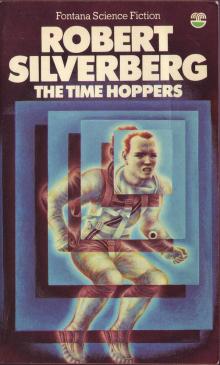 The Time Hoppers
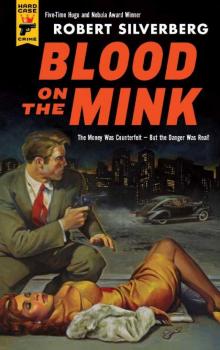 Blood on the Mink
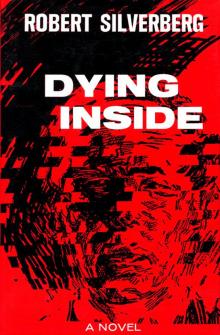 Dying Inside
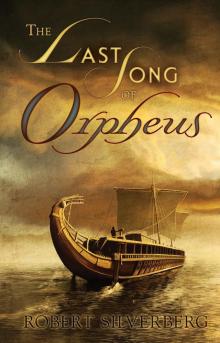 The Last Song of Orpheus
 The King of Dreams
 The Stochastic Man
 The Collected Stories of Robert Silverberg, Volume Seven: We Are for the Dark
 The Millennium Express: The Collected Stories of Robert Silverberg, Volume Nine
 The Iron Chancellor
 Lord Prestimion
 To Open the Sky
 The World Inside
 Chains of the Sea
 The Collected Stories of Robert Silverberg, Volume Five: The Palace at Midnight
 Postmark Ganymede
 The Second Trip
 The Collected Stories of Robert Silverberg, Volume 4: Trips: 1972-73
 Son of Man
 Tom O'Bedlam
 To the Land of the Living
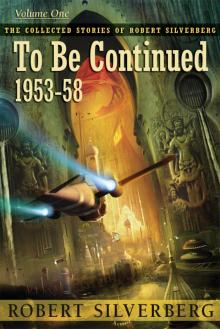 To Be Continued: The Collected Stories of Robert Silverberg, Volume One
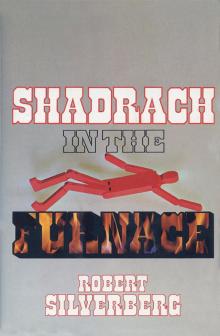 Shadrach in the Furnace
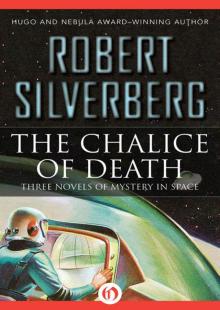 The Chalice of Death: Three Novels of Mystery in Space
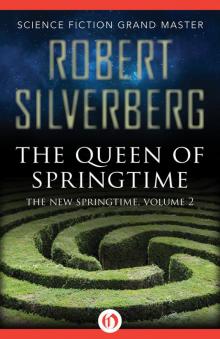 The Queen of Springtime
 To Be Continued 1953-1958
 Legends
 Roma Eterna
 To Live Again
 At Winter's End
 Needle in a Timestack
 To Live Again and the Second Trip: The Complete Novels
 Lord of Darkness
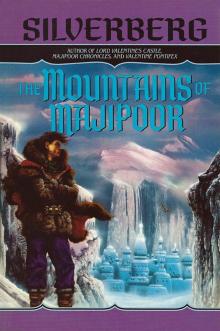 The Mountains of Majipoor
 The World Outside
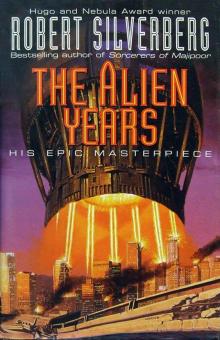 The Alien Years
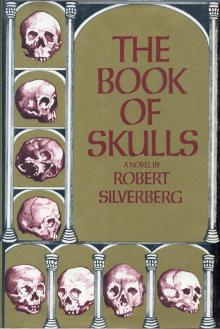 The Book of Skulls
 The Face of the Waters
 Gilgamesh the King
 The Collected Stories of Robert Silverberg, Volume 6: Multiples: 1983-87
 The Happy Unfortunate
 Three Survived
 Cronos
 Tower of Glass
 Legends II
 The Planet Killers
 The Collected Stories of Robert Silverberg, Volume 2: To the Dark Star: 1962-69
 Downward to the Earth
 Lord Valentine's Castle: Book One of the Majipoor Cycle
 Hot Times in Magma City, 1990-95
 Hunt the Space-Witch! Seven Adventures in Time and Space
 Majipoor Chronicles
 The Robert Silverberg Science Fiction Megapack(r)
 Starman's Quest
 Car Sinister
 Worlds of Maybe
 Fantasy The Best of 2001
 Revolt on Alpha C
 Homefaring
 The Pardoner's Tale
 Sailing to Byzantium - Six Novellas
 The Chalice of Death
 Sundance
 A Tip on a Turtle
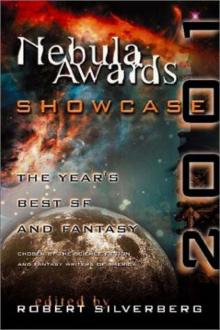 Nebula Awards Showcase 2001: The Year's Best SF and Fantasy Chosen by the Science Fiction and Fantasy Writers of America
 The Fangs of the Trees
 The Palace at Midnight: The Collected Work of Robert Silverberg, Volume Five
 The Millennium Express - 1995-2009 - The Collected Stories of Robert Silverberg Volume Nine
 Book of Skulls
 Passengers
 Something Wild is Loose - 1969–72 - The Collected Stories of Robert Silverberg Volume Three
 Multiples
 Starborne
 The Masks of Time
 The Mountains of Majipoor m-8
 Multiples (1983-87)
 Those Who Watch
 In the Beginning
 Earth Is The Strangest Planet
 Collision Course
 Neutral Planet
 To the Dark Star - 1962–69 - The Collected Stories of Robert Silverberg Volume Two
 Mutants
 Sailing to Byzantium
 When We Went to See the End of the World
 Robert Silverberg The Science Fiction Hall Of Fame Volume One, 1929-1964
 To Be Continued - 1953–58 - The Collected Stories of Robert Silverberg Volume One
 Valentine Pontifex m-3
 Gianni
 Majipoor Chronicles m-2
 We Are for the Dark (1987-90)
 Waiting for the Earthquake
 Fantasy: The Best of 2001
 How It Was When the Past Went Away
 Beauty in the Night
 The Man Who Never Forgot
 The Book of Changes m-9
 Lord Valentine's Castle m-1
 This Way to the End Times
 Queen of Springtime
 Legends-Volume 3 Stories by the Masters of Modern Fantasy
 The Palace at Midnight - 1980–82 - The Collected Stories of Robert Silverberg Volume Five
 Something Wild is Loose: The Collected Stories of Robert Silverberg, Volume Three
 Multiples - 1983–87 - The Collected Stories of Robert Silverberg Volume Six
 Alaree
 Three Survived: A Science Fiction Novel
 Defenders of the Frontier
 The New Springtime
 We Are for the Dark - 1987–90 - The Collected Stories of Robert Silverberg Volume Seven
 The Science Fiction Hall of Fame, Volume One 1929-1964--The Greatest Science Fiction Stories of All Time Chosen by the Members of the Science Fiction Writers of America
 Master Of Life And Death
 Choke Chain
 Sorcerers of Majipoor m-4
 Absolutely Inflexible
 Trips - 1962–73 - The Collected Stories of Robert Silverberg Volume Four
 Hot Times in Magma City - 1990-95 - The Collected Stories of Robert Silverberg Volume Eight
 Far Horizons
 The Queen of Springtime ns-2
 The Seventh Science Fiction Megapack
 Invaders From Earth
 Hanosz Prime Goes To Old Earth
 The Macauley Circuit
 Science Fiction: The Best of 2001
 To the Dark Star: The Collected Stories of Robert Silverberg, Volume Two
 Stochastic Man
 Legends: Stories By The Masters of Modern Fantasy
 To Live Again And The Second Trip
 Flies
Flies The Silent Invaders
 Ship-Sister, Star-Sister