
- Home
- Robert Silverberg
Thorns Page 6
Thorns Read online
Page 6
“They did quite a job on you,” Chalk remarked. “Do you have any idea why they did it?”
“Sheer curiosity. Also the desire to improve. In their inhuman way, they’re quite human.”
“What do they look like?”
“Pockmarked. Leathery. I’d rather not say.”
“All right.” Chalk had not risen. Burris stood before him, hands folded, the little outer tentacles twining and untwining. He sensed a seat behind him and took it unbidden.
“You have quite a place here,” he said.
Chalk smiled and let the statement roll away. He said, “Does it hurt?”
“What?”
“Your changes.”
“There’s considerable discomfort. Terran painkillers don’t help much. They did things to the neural channels, and no one here knows quite where to apply the blocks. But it’s bearable. They say the limbs of amputees throb for years after they’ve been removed. Same sensation, I guess.”
“Were any of your limbs removed?”
“All of them,” Burris said. “And put back on again a new way. The medics who examined me were very pleased by my joints. Also my tendons and ligaments. These are my own original hands, a little altered. My feet. I’m not really sure how much else of me is mine and how much theirs.”
“And internally?”
“All different. Chaos. A report is being prepared. I haven’t been back on Earth long. They studied me awhile, and then I rebelled.”
“Why?”
“I was becoming a thing. Not only to them but to myself. I’m not a thing. I’m a human being who’s been rearranged. Inside, I’m still human. Prick me and I’ll bleed. What can you do for me, Chalk?”
A meaty hand waved. “Patience. Patience. I want to know more about you. You were a space officer?”
“Yes.”
“Academy and all?”
“Naturally.”
“Your rating must have been good. You were given a tough assignment. First landing on a world of intelligent beings—never a cinch. How many in your team?”
“Three. We all went through surgery. Prolisse died first, then Malcondotto. Lucky for them.”
“You dislike your present body?”
“It has its advantages. The doctors say I’m likely to live five hundred years. But it’s painful, and it’s also embarrassing. I was never cut out to be a monster.”
“You’re not as ugly as you may think you are,” Chalk observed. “Oh, yes, children run screaming from you, that sort of thing. But children are conservatives. They loathe anything new. I find that face of yours quite attractive in its way. I daresay a lot of women would fling themselves at your feet.”
“I don’t know. I haven’t tried.”
“Grotesqueness has its appeal, Burris. I weighed over twenty pounds at birth. My weight has never hampered me. I think of it as an asset.”
“You’ve had a lifetime to get used to your size,” said Burris. “You accommodate to it in a thousand ways. Also, you chose to be this way. I was the victim of an incomprehensible whim. It’s a violation. I’ve been raped, Chalk.”
“You want it all undone?”
“What do you think?”
Chalk nodded. His eyelids slid down, and it appeared that he had dropped instantly into a sound sleep. Burris waited, baffled, and more than a minute passed. Without stirring, Chalk said, “Surgeons here on Earth can transplant brains successfully from one body to another.”
Burris started, seized by a grand mal of fevered excitement. A new organ within his body injected spurts of some unknown hormone into the bowl of strangenesses beside his heart. He dizzied. He scrabbled in the roiling surf, dashed again and again onto the abrasive sand by relentless waves.
Chalk went on calmly, “Does the technology of the thing interest you at all?”
The tentacles of Burris’s hands writhed uncontrollably.
The smooth words came: “The brain must be surgically isolated within the skull by paring away of all contiguous tissues. The cranium itself is preserved for support and protection. Naturally, absolute hemostasis must be maintained during the long period of anticoagulation, and there are techniques for sealing the base of the skull and the frontal bone to prevent loss of blood. Brain functions are monitored by electrodes and thermoprobes. Circulation is maintained by linking the internal maxillary and internal carotid arteries. Vascular loops, you understand. I’ll spare you the details by which the body is shaved away, leaving only the living brain. At length the spinal cord is severed and the brain is totally isolated, fed by its own carotid system. Meanwhile the recipient has been prepared. The carotid and jugular are dissected away and the major strap muscles in the cervical area are resected. The brain graft is put in place after submergence in an antibiotic solution. The carotid arteries of the isolated brain are connected by a siliconized cannula to the proximal carotid artery of the recipient. A second cannula is fixed in the jugular of the recipient. All this is done in a low freeze to minimize damage. Once the grafted brain’s circulation is meshed with that of the recipient body, we bring the temperature toward normal and begin standard post-operative techniques. A prolonged period of re-education is necessary before the grafted brain has assumed control over the recipient body.”
“Remarkable.”
“Not much of an achievement compared with what was done to you,” Chalk conceded. “But it’s been carried out successfully with higher mammals. Even with primates.”
“With humans?”
“No.”
“Then—”
“Terminal patients have been used. Brains grafted into recently deceased. Too much goes against the chance of success there, though. Still, there have been some near misses. Another three years, Burris, and human beings will be swapping brains as easily as they swap arms and legs today.”
Burris disliked the sensations of intense anticipation that roared through him. His skin temperature was uncomfortably high. His throat throbbed.
Chalk said, “We build a synthetic for you, duplicating in as many respects as possible your original appearance. We assemble a golem, you see, from the spare-parts bank, but we do not include a brain. We transplant your brain into the assemblage. There will be differences, naturally, but you’ll be fundamentally integral. Interested?”
“Don’t torture me, Chalk.”
“I give you my word I’m serious. Two technological problems stand in the way. We have to master the technique of total assembly of a recipient, and we have to keep it alive until we can successfully carry out the transplant. I’ve already said it would take three years to achieve the second. Say two more to build the golem. Five years, Burris, and you’ll be fully human again.”
“What will this cost?”
“Perhaps a hundred million. Perhaps more.”
Burris laughed harshly. His tongue—how like a serpent’s now!—flickered into view.
Chalk: “I’m prepared to underwrite the entire cost of your rehabilitation.”
“You’re dealing in fantasy now.”
“I ask you to have faith in my resources. Are you willing to part with your present body if I can supply something closer to the human norm?”
It was a question that Burris had never expected anyone to ask him. He was startled by the extent of his own vacillation. He detested this body and was bowed beneath the weight of the thing that had been perpetrated on him. And yet, was he coming to love his alienness?
He said after a brief pause, “The sooner I could shed this thing, the better.”
“Good. Now, there’s the problem of your getting through the five years or so that this will take. I propose that we attempt to modify your facial appearance, at least, so that you’ll be able to get along in society until we can make the switch. Does that interest you?”
“It can’t be done. I’ve already explored the idea with the doctors who examined me after my return. I’m a mess of strange antibodies, and I’ll reject any graft.”
“Do you th
ink that’s so? Or were they merely telling you a convenient lie?”
“I think it’s so.”
“Let me send you to a hospital,” Chalk suggested. “We’ll run a few tests to confirm the earlier verdict. If it’s so, so. If not, we can make life a little easier for you. Yes?”
“Why are you doing this, Chalk? What’s the quid pro quo?”
The fat man pivoted and swung ponderously forward until his eyes were only inches from Burris’s face. Burris surveyed the oddly delicate lips, the fine nose, the immense cheeks and puffy eyelids. In a low voice Chalk murmured, “The price is a steep one. It’ll sicken you to the core. You’ll turn down the whole deal.”
“What is it?”
“I’m a purveyor of popular amusement. I can’t remotely get my investment back out of you, but I want to recover what I can.”
“The price?”
“Full rights to commercial exploitation of your story,” said Chalk. “Beginning with your seizure by the aliens, carrying through your return to Earth and your difficult adjustment to your altered condition, and continuing on through your forthcoming period of re-adaptation. The world already knows that three men came to a planet called Manipool, two were killed, and a third came back the victim of surgical experiments. That much was announced, and then you dropped from sight. I want to put you back in sight. I want to show you rediscovering your humanity, relating to other people again, groping upward out of hell, eventually triumphing over your catastrophic experience and coming out of it purged. It’ll mean a frequent intrusion on your privacy, and I’m prepared to hear you refuse. After all, one would expect—”
“It’s a new form of torture, is it?”
“Something of an ordeal, perhaps,” Chalk admitted. His wide forehead was stippled with sweat. He looked flushed and strained, as though approaching some sort of inner emotional climax.
“Purged,” Burris whispered. “You offer me purgatory.”
“Call it that.”
“I hide for weeks. Then I stand naked before the universe for five years. Eh?”
“Expenses paid.”
“Expenses paid,” said Burris. “Yes. Yes. I accept the torture. I’m your toy, Chalk. Only a human being would refuse the offer. But I accept. I accept!”
TEN
A POUND OF FLESH
■
■ “He’s at the hospital,” Aoudad said. “They’ve begun to study him.” He plucked at the woman’s clothes. “Take them off, Elise.”
Elise Prolisse brushed the questing hand away. “Will Chalk really put him back in a human body?”
“I don’t doubt it.”
“Then if Marco had returned alive, he might have been put back, too.”
Aoudad was noncommittal. “You’re dealing in too many ifs now. Marco’s dead. Open your robe, dear.”
“Wait. Can I visit Burris in the hospital?”
“I suppose. What do you want with him?”
“Just to talk. He was the last man to see my husband alive, remember? He can tell me how Marco died.”
“You would not want to know,” said Aoudad softly. “Marco died as they tried to make him into the kind of creature Burris now is. If you saw Burris, you would realize that Marco is better off dead.”
“All the same—”
“You would not want to know.”
“I asked to see him,” Elise said dreamily, “as soon as he returned. I wanted to talk to him about Marco. And the other, Malcondotto—he had a widow, too. But they would not let us near him. And afterward Burris disappeared. You could take me to him!”
“It’s for your own good that you keep away,” Aoudad told her. His hands crept up her body, lingering, seeking out the magnetic snaps and depolarizing them. The garment opened. The heavy breasts came into view, deathly white, tipped with circlets of deep red. He felt the inward stab of desire. She caught his hands as he reached for them.
“You will help me see Burris?” she asked.
“I—”
“You will help me see Burris.” Not a question this time.
“Yes. Yes.”
The hands blocking his path dropped away. Trembling, Aoudad peeled back the garments. She was a handsome woman, past her first youth, meaty, yet handsome. These Italians! White skin, dark hair. Sensualissima! Let her see Burris if she wished. Would Chalk object? Chalk had already indicated the kind of matchmaking he expected. Burris and the Kelvin girl. But perhaps Burris and the widow Prolisse first? Aoudad’s mind churned.
Elise looked up at him in adoration as his lean, tough body poised above her.
Her last garment surrendered. He stared at acres of whiteness, islands of black and red.
“Tomorrow you will arrange it,” she said.
“Yes. Tomorrow.”
He fell upon her nakedness. Around the fleshy part of her left thigh she wore a black velvet band. A mourning band for Marco Prolisse, done to death incomprehensibly by incomprehensible beings on an incomprehensible world. Pover’uomo! Her flesh blazed. She was incandescent. A tropical valley beckoned to him. Aoudad entered. Almost at once came a strangled cry of ecstasy.
ELEVEN
TWO IF BY NIGHT
■
■ The hospital lay at the very edge of the desert. It was a U-shaped building, long and low, whose limbs pointed toward the east. Early sunlight, rising, crept along them until it splashed against the long horizontal bar linking the parallel vertical wings. The construction was of gray sandstone tinged with red. Just to the west of the building—that is, behind its main section—was a narrow garden strip, and beyond the garden began the zone of dry brownish desert.
The desert was not without life of its own. Somber tufts of sagebrush were common. Beneath the parched surface were the tunnels of rodents. Kangaroo mice could be seen by the lucky at night, grasshoppers during the day. Cacti and euphorbias and other succulents studded the earth.
Some of the desert’s abundant life had invaded the hospital grounds themselves. The garden in the rear was a desert garden, thick with the thorned things of dryness. The courtyard between the two limbs of the U had been planted with cacti also. Here stood a saguaro six times the height of a man, with rugged central trunk and five skyward arms. There, framing it, were two specimens of the bizarre variant form, the cancer cactus, solid trunk, two small arms crying help, and a cluster of gnarled, twisted growths at the summit. Down the path, tree-high, the grotesque white cholla. Facing it, squat, sturdy, the thorn-girdled barrel of a water cactus. Spiny canes of an opuntia; flat grayish pads of the prickly pear; looping loveliness of a cereus. At other times of the year these formidable, bristling, stolid gargoyles bore tender blossoms, yellow and violet and pink, pale and delicate. But this was winter. The air was dry, the sky blue in a hard way and cloudless, though snow never fell here. This was a timeless place, the humidity close to zero. The winds could be chilling, free of weather, going through a fifty-degree shift of temperature from summer to winter but otherwise remaining unaltered.
This was the place to which Lona Kelvin had been brought in summer, six months ago, after her attempt at suicide. Most of the cacti had already flowered by then. Now she was back, and she had missed the flowering season once more, coming three months too soon instead of three months too late. It would have been better for her to time her self-destructive impulses more precisely.
The doctors stood above her bed, speaking of her as though she were elsewhere.
“It’ll be easier to repair her this time. No need to heal bones. Just a lung graft or so and she’ll be all right.”
“Until she tries again.”
“That’s not for me to worry about. Let them send her for psychotherapy. All I do is repair the shattered body.”
“Not shattered just now, though. Just badly used.”
“She’ll get herself sooner or later. A really determined self-destroyer always succeeds. Let them step into nuclear converters, or something permanent like that. Jump from ninety floors up. We can’t paste a
smear of molecules together.”
“Aren’t you afraid you’ll give her ideas?”
“If she’s listening. But she could have thought of that herself if she wanted to.”
“You’ve got something there. Maybe she’s not a really determined self-destroyer. Maybe she’s just a self-advertiser.”
“I think I agree. Two suicide attempts in six months, both of them botched—when all she needed to do was open the window and jump—”
“What’s the alveolar count?”
“Not bad.”
“Her blood pressure?”
“Rising. Adrenocortical flow’s down. Respiration up two points. She’s coming along.”
“We’ll have her walking in the desert in three days.”
“She’ll need rest. Someone to talk to her. Why the hell does she want to be dead, anyway?”
“Who knows? I wouldn’t think she was bright enough to want to kill herself.”
“Fear and trembling. The sickness unto death.”
“Anomie is supposedly reserved for more complex…”
They moved away from her bed, still talking. Lona did not open her eyes. She had not even been able to decide how many of them had been over her. Three, she guessed. More than two, less than four—so it had seemed. But their voices were so similar. And they didn’t really argue with each other; they simply placed one slab of statement atop the next, gluing them carefully in place. Why had they saved her if they thought so little of her?
This time she had been certain she was going to die.
There are ways and ways of getting killed. Lona was shrewd enough to conceive of the most reliable ones, yet somehow had not permitted herself to try them, not out of fear of meeting death but out of fear of what she might encounter on the road. That other time she had hurled herself in front of a truck. Not on a highway, where vehicles hurtling toward her at a hundred and fifty miles an hour would swiftly and effectively mince her, but on a city street, where she was caught and tossed and slammed down, broken but not totally shattered, against the side of a building. So they had rebuilt her bones, and she had walked again in a month, and she was without outer scars.
 The Longest Way Home
 Hawksbill Station
 A Time of Changes
 This Way to the End Times: Classic Tales of the Apocalypse
 Beyond the Gate of Worlds
 Lord Valentine's Castle
 The Man in the Maze
 Tales of Majipoor
 Time of the Great Freeze
 The Collected Stories of Robert Silverberg, Volume 3: Something Wild Is Loose: 1969-72
 Planet of Death
 Trips: The Collected Stories of Robert Silverberg, Volume Four
 In the Beginning: Tales From the Pulp Era
 Hot Sky at Midnight
 Valentine Pontifex
 Up the Line
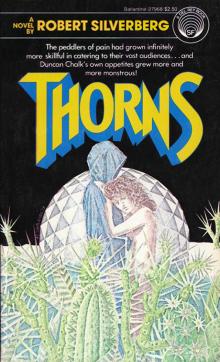 Thorns
 Amanda and the Alien
 Star of Gypsies
 Nightwings
 The Time Hoppers
 Blood on the Mink
 Dying Inside
 The Last Song of Orpheus
 The King of Dreams
 The Stochastic Man
 The Collected Stories of Robert Silverberg, Volume Seven: We Are for the Dark
 The Millennium Express: The Collected Stories of Robert Silverberg, Volume Nine
 The Iron Chancellor
 Lord Prestimion
 To Open the Sky
 The World Inside
 Chains of the Sea
 The Collected Stories of Robert Silverberg, Volume Five: The Palace at Midnight
 Postmark Ganymede
 The Second Trip
 The Collected Stories of Robert Silverberg, Volume 4: Trips: 1972-73
 Son of Man
 Tom O'Bedlam
 To the Land of the Living
 To Be Continued: The Collected Stories of Robert Silverberg, Volume One
 Shadrach in the Furnace
 The Chalice of Death: Three Novels of Mystery in Space
 The Queen of Springtime
 To Be Continued 1953-1958
 Legends
 Roma Eterna
 To Live Again
 At Winter's End
 Needle in a Timestack
 To Live Again and the Second Trip: The Complete Novels
 Lord of Darkness
 The Mountains of Majipoor
 The World Outside
 The Alien Years
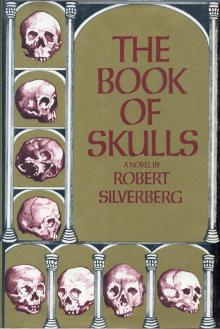 The Book of Skulls
 The Face of the Waters
 Gilgamesh the King
 The Collected Stories of Robert Silverberg, Volume 6: Multiples: 1983-87
 The Happy Unfortunate
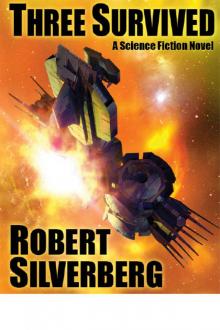 Three Survived
 Cronos
 Tower of Glass
 Legends II
 The Planet Killers
 The Collected Stories of Robert Silverberg, Volume 2: To the Dark Star: 1962-69
 Downward to the Earth
 Lord Valentine's Castle: Book One of the Majipoor Cycle
 Hot Times in Magma City, 1990-95
 Hunt the Space-Witch! Seven Adventures in Time and Space
 Majipoor Chronicles
 The Robert Silverberg Science Fiction Megapack(r)
 Starman's Quest
 Car Sinister
 Worlds of Maybe
 Fantasy The Best of 2001
 Revolt on Alpha C
 Homefaring
 The Pardoner's Tale
 Sailing to Byzantium - Six Novellas
 The Chalice of Death
 Sundance
 A Tip on a Turtle
 Nebula Awards Showcase 2001: The Year's Best SF and Fantasy Chosen by the Science Fiction and Fantasy Writers of America
 The Fangs of the Trees
 The Palace at Midnight: The Collected Work of Robert Silverberg, Volume Five
 The Millennium Express - 1995-2009 - The Collected Stories of Robert Silverberg Volume Nine
 Book of Skulls
 Passengers
 Something Wild is Loose - 1969–72 - The Collected Stories of Robert Silverberg Volume Three
 Multiples
 Starborne
 The Masks of Time
 The Mountains of Majipoor m-8
 Multiples (1983-87)
 Those Who Watch
 In the Beginning
 Earth Is The Strangest Planet
 Collision Course
 Neutral Planet
 To the Dark Star - 1962–69 - The Collected Stories of Robert Silverberg Volume Two
 Mutants
 Sailing to Byzantium
 When We Went to See the End of the World
 Robert Silverberg The Science Fiction Hall Of Fame Volume One, 1929-1964
 To Be Continued - 1953–58 - The Collected Stories of Robert Silverberg Volume One
 Valentine Pontifex m-3
 Gianni
 Majipoor Chronicles m-2
 We Are for the Dark (1987-90)
 Waiting for the Earthquake
 Fantasy: The Best of 2001
 How It Was When the Past Went Away
 Beauty in the Night
 The Man Who Never Forgot
 The Book of Changes m-9
 Lord Valentine's Castle m-1
 This Way to the End Times
 Queen of Springtime
 Legends-Volume 3 Stories by the Masters of Modern Fantasy
 The Palace at Midnight - 1980–82 - The Collected Stories of Robert Silverberg Volume Five
 Something Wild is Loose: The Collected Stories of Robert Silverberg, Volume Three
 Multiples - 1983–87 - The Collected Stories of Robert Silverberg Volume Six
 Alaree
 Three Survived: A Science Fiction Novel
 Defenders of the Frontier
 The New Springtime
 We Are for the Dark - 1987–90 - The Collected Stories of Robert Silverberg Volume Seven
 The Science Fiction Hall of Fame, Volume One 1929-1964--The Greatest Science Fiction Stories of All Time Chosen by the Members of the Science Fiction Writers of America
 Master Of Life And Death
 Choke Chain
 Sorcerers of Majipoor m-4
 Absolutely Inflexible
 Trips - 1962–73 - The Collected Stories of Robert Silverberg Volume Four
 Hot Times in Magma City - 1990-95 - The Collected Stories of Robert Silverberg Volume Eight
 Far Horizons
 The Queen of Springtime ns-2
 The Seventh Science Fiction Megapack
 Invaders From Earth
 Hanosz Prime Goes To Old Earth
 The Macauley Circuit
 Science Fiction: The Best of 2001
 To the Dark Star: The Collected Stories of Robert Silverberg, Volume Two
 Stochastic Man
 Legends: Stories By The Masters of Modern Fantasy
 To Live Again And The Second Trip
 Flies
Flies The Silent Invaders
 Ship-Sister, Star-Sister