
- Home
- Robert Silverberg
Roma Eterna Page 6
Roma Eterna Read online
Page 6
This capacity for wild rage was an aspect of Maximilianus that Faustus had never seen. The Caesar took nothing seriously. The world was a great joke to him. He had always let it be known that he cared for nothing and no one, not even himself. He was too cynical and wanton of spirit, too flighty, too indifferent to anything of any real importance, ever to muster the kind of involvement with events that true anger required. Then why had the soothsayer’s words upset him so? His fury had been out of all proportion to the offense, if offense there had been. The man was merely trying to flatter. Here is a royal prince come among us: very well, tell him he will be a great hero, tell him even that he will be Emperor some day. The second of those, at least, was not impossible. Heraclius, who soon would have the throne, might well die childless, and they would have no choice but to ask his brother to ascend to power, however little Maximilianus himself might care for the idea.
Saying that Maximilianus would become a great hero, though: that must have been what stung him so, Faustus thought. Doubtless he did not regard himself as having a single iota of the stuff of heroes in him, whatever a flattering soothsayer might choose to say. And must believe also that all Roma perceived him not as a handsome young prince who might yet achieve great things but only as the idle wencher and gambler and dissipated profligate rogue that he was in his own eyes. And so he would interpret the soothsayer’s words as mockery of the most inflammatory kind, rather than as flattery.
“We should quickly find ourselves a wineshop, I think,” Faustus said. “Some wine will cool your overheated blood, my lord.”
Indeed the wine, vile though it was, calmed Maximilianus rapidly, and soon he was laughing and shaking his head over the impudence of the ratty little man. “A hero of the realm! Me! And Emperor, too? Was there ever a soothsayer so far from the truth in his auguries?”
“If they are all like that one,” said bar-Heap, “then I think there’s no need to fear the coming fiery destruction of the universe, either. These men are clowns, or worse. All they provide is amusement for fools.”
“A useful function in the world, I would say,” Menandros observed. “There are so many fools, you know, and are they not entitled to amusement also?”
Faustus said very little. The episode among the sorcerers and soothsayers had left him in a mood of uncharacteristic bleakness. He had always been a good-humored man; the Caesar prized him for the jolly companionship he offered; but his frame of mind had grown steadily more sober since the coming to Roma of this Greek ambassador, and now he felt himself ringed round with an inchoate host of despondent thoughts. It was spending so much time in this underground realm of darkness and flickering shadows, he told himself, that had done this to him. He and the prince had found only pleasure here in days gone by, but their time these two days past in these ancient tunnels, this mysterious kingdom of inexplicable noises and visitations, of invisible beings, of lurking ghosts, had made him weary and uncomfortable. This dank sunless underground world, he thought, was the true Roma, a benighted kingdom of magic and terror, a place of omens and dread.
Would the world be destroyed by flame in eighteen years, as the old man said? Probably not. In any case he doubted that he would live to see it. The universe’s end might not be approaching, but surely his own was: five years, ten, at best fifteen, and he would be gone, well before the promised catastrophe, the—what had the Greek called it?—the great ekpyrosis.
But even if no flaming apocalypse was really in store, the Empire did seem to be crumbling. There were symptoms of disease everywhere. That the man second in line for the throne would react with such fury at the possibility that he might be called upon to serve the realm was a sign of the extent of the illness. That the barbarians might soon be battering at the gates again, only a generation after they supposedly had been put to rout forever, was another. We seem to have lost our way.
Faustus filled his cup again. He knew he was drinking too much too fast: even his capacious paunch had its limits. But the wine eased the pain. Drink, then, old Faustus. Drink. If nothing else, you can allow your body a little comfort.
Yes, he was getting old. But Roma was even older. The immensity of the city’s past pressed down on him from all sides. The narrow streets, choked with dunghill rubbish, that gave way to the great plazas and their myriad fountains with their silvery jets, and the palaces of the rich and mighty, and the statues everywhere, the obelisks, the columns taken from far-off temples, the spoils of a hundred Imperial conquests, the shrines of a hundred foreign gods, and the clean old Roma of the early Republic somewhere beneath it all: level upon level of history here, twelve centuries of it, the present continually superimposing itself upon the past, though the past remains also—yes, he told himself, it has been a good long run, and perhaps, now that we have created so much past for ourselves, we have very little future, and really are wandering toward the finish now, and will disappear into our own softness, our own confusion, our own fatal love of pleasure and ease.
That troubled him greatly. But why, he wondered, did he care? He was nothing but a licentious old idler himself, the companion to a licentious young one. It had been his lifelong pretense never to care about anything.
And yet, yet, he could not let himself forget that he had the blood of the prodigious Constantinus in his veins, one of the greatest Emperors of all. The fate of the Empire had mattered profoundly to Constantinus: he had toiled for decades at its helm, and ultimately he had saved it from collapse by creating a new capital for it in the East, a second foundation to help carry the weight that Urbs Roma itself was no longer capable of bearing alone. Here am I, two and a quarter centuries later, and I am to my great ancestor Constantinus as a plump, sleepy old cat is to a raging lion: but I must care at least a little about the fate of the Empire to which he pledged his life. For his sake, if not particularly for my own. Otherwise, Faustus asked himself fiercely, what is the point of having the blood of an Emperor in my veins?
“You’ve grown very quiet, old man,” Maximilianus said. “Did I upset you, shouting and rioting like that back there?”
“A little. But that’s over now.”
“What is it, then?”
“Thinking. A pernicious pastime, which I regret.” Faustus swirled his cup about and peered glumly into its depths. “Here we are,” he said, “down in the bowels of the city, this weird dirty place. I have always thought that everything seems unreal here, that it is all a kind of stage show. And yet right now it seems to me that it’s far more real than anything up above. Down here, at least, there are no pretenses. It’s every man for himself amidst the fantasies and grotesqueries, and no one has any illusions. We know why we are here and what we must do.” Then, pointing toward the world above them: “Up there, though, folly reigns supreme. We delude ourself into thinking that it is the world of stern reality, the world of Imperial power and Roman commercial might, but no one actually behaves as though any of it has to be taken seriously. Our heads are in the sand, like that great African bird’s. The barbarians are coming, but we’re doing nothing to stop them. And this time the barbarians will swallow us. They’ll go roaring at last through the marble city that’s sitting up there above us, looting and torching, and afterward nothing will remain of Roma but this, this dark, dank, hidden, eternally mysterious Underworld of strange gods and ghastly monstrosities. Which I suppose is the true Roma, the eternal city of the shadows.”
“You’re drunk,” Maximilianus said.
“Am I?”
“This place down here is a mere fantasy world, Faustus, as you are well aware. It’s a place without meaning.” The prince pointed upward as Faustus just had done. “The true Roma that you speak of is up there. Always was, always will be. The palaces, the temples, the Capitol, the walls. Solid, indestructible, imperishable. The eternal city, yes. And the barbarians will never swallow it. Never. Never.”
That was a tone of voice Faustus had never heard the prince use before, either. The second unfamiliar one in less than an hour,
this one hard, clear, passionate. There was, again, an odd new intensity in his eyes. Faustus had seen that strange intensity the day before, too, when the prince had spoken of Emperors as freaks and monsters. It was as though something new was trying to burst free inside the Caesar these two days past, Faustus realized. And it must be getting very close to the surface now. What will happen to us all, he wondered, when it breaks loose?
He closed his own eyes a moment, nodded, smiled. Let what will come come, he thought. Whatsoever it may be.
They ended their day in the Underworld soon afterward. Maximilianus’s savage outburst in the hall of the soothsayers seemed to have placed a damper on everything, even Menandros’s previously insatiable desire to explore the infinite crannies of the underground caverns.
It was near sundown when Faustus reached his chambers, having promised Menandros that he would dine with him later at the ambassador’s lodgings in the Severan Palace. A surprise was waiting for him. Prince Heraclius had indeed gone to his hunting lodge, not to the frontier, and the message that Faustus had sent to him there had actually reached him. The prince was even now on his way back to Roma, arriving this very evening, and wished to meet with the emissary from Justinianus as soon as possible.
Hurriedly Faustus bathed and dressed in formal costume. The Numidian girl was ready and waiting, but Faustus dismissed her, and told his equerry that he would not require her services later in the evening, either.
“A curious day,” Menandros said, when Faustus arrived.
“It was, yes,” said Faustus.
“Your friend the Caesar was greatly distressed by that man’s talk of his becoming Emperor some day. Is the idea so distasteful to him?”
“It’s not something he gives any thought to at all, becoming Emperor. Heraclius will be Emperor. That’s never been in doubt. He’s the older by six years: he was well along in training for the throne when Maximilianus was born, and has always been treated by everyone as his father’s successor. Maximilianus sees no future for himself in any way different from the life he leads now. He’s never looked upon himself as a potential ruler.”
“Yet the Senate could name either brother as Emperor, is that not so?”
“The Senate could name me as Emperor, if it chose. Or even you. In theory, as you surely know, there’s nothing hereditary about it. In practice things are different. Heraclius’s way to the throne is clear. Besides, Maximilianus doesn’t want to be Emperor. Being Emperor is hard work, and Maximilianus has never worked at anything in his life. I think that’s what upset him so much today, the mere thought that he somehow would have to be Emperor, some day.”
Faustus knew Menandros well enough by now to be able to detect the barely masked disdain that these words of his produced. Menandros understood what an Emperor was supposed to be: a man like that severe and ruthless soldier Justinianus, who held sway from Dacia and Thrace to the borders of Persia, and from the frosty northern shores of the Pontic Sea to some point far down in torrid Africa, exerting command over everything and everyone, the whole complex crazyquilt that was the Eastern Empire, with the merest flick of an eye. Whereas here, in the ever flabbier West, which was about to ask Justinianus’s help in fighting off its own long-time enemies, the reigning Emperor was currently ill and invisible, the heir to the throne was so odd that he was capable of slipping out of town just as Justinianus’s ambassador was arriving to discuss the very alliance the West so urgently needed, and the man second in line to the Empire cared so little for the prospect of attaining the Imperial grandeur that he would thrash someone half his size for merely daring to suggest he might.
He sees us of the West as next to worthless, Faustus thought. And perhaps he is correct.
This was not a profitable discussion. Faustus cut it short by telling him that Prince Heraclius would return that very evening.
“Ah, then,” said Menandros, “affairs must be settling down on your northern frontier. Good.”
Faustus did not think it was his duty to explain that the Caesar couldn’t possibly have made the round trip to the frontier and back in so few days, that in fact he had merely been away at his hunting lodge in the countryside. Heraclius would be quite capable of achieving his own trivialization without Faustus’s assistance.
Instead Faustus gave orders for their dinner to be served. They had just reached the last course, the fruits and sherbets, when a messenger entered with word that Prince Heraclius was now in Roma, and awaited the presence of the ambassador from Constantinopolis in the Hall of Marcus Anastasius at the Imperial palace.
The closest part of the five-hundred-year-old string of buildings that was the Imperial compound was no more than ten minutes’ walk from where they were now. But Heraclius, with his usual flair for the inappropriate gesture, had chosen for the place of audience not his own residential quarters, which were relatively near by, but the huge, echoing chamber where the Great Council of State ordinarily met, far over on the palace’s northern side at the very crest of the Palatine Hill. Faustus had two litters brought to take them up there.
The prince had boldly stationed himself on the throne-like seat at the upper end of the chamber that the Emperor used during meetings of the Council. He sat there now with Imperial haughtiness, waiting in silence while Menandros undertook the endless unavoidable ambassadorial plod across the enormous room, with Faustus hulking along irritatedly behind him. For one jarring instant Faustus wondered whether the old Emperor had actually, unbeknownst to him, died during the day, and the reason Heraclius was in Roma was that he had hurried back to take his father’s place. But someone surely would have said something to him in that case, Faustus thought.
Menandros knew his job. He knelt before the prince and made the appropriate gesticulation. When he rose, Heraclius had risen also and was holding forth his hand, which bore an immense carnelian ring, to be kissed. Menandros kissed the prince’s ring. The ambassador made a short, graceful speech expressing his greetings and the best wishes of the Emperor Justinianus for the good health of his royal colleague the Emperor Maximilianus, and for that of his royal son the Caesar Heraclius, and offered thanks for the hospitality that had been rendered him thus far. He gave credit warmly to Faustus but—quite shrewdly, Faustus thought—did not mention the role of Prince Maximilianus at all.
Heraclius listened impassively. He seemed jittery and remote, more so, even, than he ordinarily was.
Faustus had never felt any love for the Imperial heir. Heraclius was a stiff, tense person, ill at ease under the best of circumstances: a short, slight, inconsequential figure of a man with none of his younger brother’s easy athleticism. He was cold-eyed, too, thin-lipped, humorless. It was hard to see him as his father’s son. The Emperor Maximilianus, in earlier days, had looked much the way the prince his namesake did today: a tall, slender, handsome man with glinting russet hair and smiling blue eyes. Heraclius, though, was dark-haired, where he still had hair at all, and his eyes were dark as coals, glowering under heavy brows out of his pale, expressionless face.
The meeting was inconclusive. The prince and the ambassador both understood that this first encounter was not the time to begin any discussion of the royal marriage or the proposed East-West military alliance, but even so Faustus was impressed by the sheer vacuity of the conversation. Heraclius asked if Menandros cared to attend the gladiatorial games the following week, said a sketchy thing or two about his Etruscan ancestors and their religious beliefs, of which he claimed to be a student of sorts, and spoke briefly of some idiotic Greek play that had been presented at the Odeum of Agrippa Ligurinus the week before. Of the barbarians massing at the border he said nothing at all. Of his father’s grave illness, nothing. Of his hope of close friendship with Justinianus, nothing. He might just as well have been discussing the weather. Menandros gravely met immateriality with immateriality. He could do nothing else, Faustus understood. The Caesar Heraclius must be allowed to lead, here.
And then, very quickly, Heraclius made an end of it. �
��I hope we have an opportunity to meet again very shortly,” the prince said, arbitrarily terminating the visit with such suddenness that even the quick-witted Menandros was caught off guard by his blunt dismissal, and Faustus heard a tiny gasp from him. “To my regret, I will have to leave the city again tomorrow. But upon my return, at the earliest opportunity—” And he held forth his ringed hand to be kissed again.
Menandros said, when they were outside and waiting for their litters to be brought, “May we speak frankly, my friend?”
Faustus chuckled. “Let me guess. You found the Caesar to be less than engaging.”
“I would use some such phrase, yes. Is he always like that?”
“Oh, no,” Faustus said. “He’s ordinarily much worse. He was on his best behavior for you, I’d say.”
“Indeed. Very interesting. And this is to be the next Emperor of the West. Word had reached us in Constantinopolis, you know, that the Caesar Heraclius was, well, not altogether charming. But—even so—I was not fully prepared—”
“Did you mind very much kissing his ring?”
“Oh, no, not at all. One expects, as an ambassador, to have to show a certain deference, at least to the Emperor. And to his son as well, I suppose, if he requires it of one. No, Faustus, what I was struck by—how can I say this?—let me think a moment—” Menandros paused. He looked off into the night, at the Forum and the Capitol far across the valley. “You know,” he said at last, “I’m a relatively young man, but I’ve made a considerable study of Imperial history, both Eastern and Western, and I think I know what is required to be a successful Emperor. We have a Greek word—charisma, do you know it?—it is something like your Latin word virtus, but not quite—that describes the quality that one must have. But there are many sorts of charisma. One can rule well through sheer force of personality, through the awe and fear and respect that one engenders—Justinianus is a good example of that, or Vespasianus of ancient times, or Titus Gallius. One can rule through a combination of great personal determination and guile, as the great Augustus did, and Diocletianus. One can be a man of grace and deep wisdom—Hadrianus, say, or Marcus Aurelius. One can win acclaim through great military valor: I think of Trajan here, and Gaius Martius, and your two Emperors who bore the name Maximilianus. But”—and again Menandros paused, and this time he drew in his breath deeply before continuing—“if one has neither grace, nor wisdom, nor valor, nor guile, nor the capability to engender fear and respect—”
 The Longest Way Home
 Hawksbill Station
 A Time of Changes
 This Way to the End Times: Classic Tales of the Apocalypse
 Beyond the Gate of Worlds
 Lord Valentine's Castle
 The Man in the Maze
 Tales of Majipoor
 Time of the Great Freeze
 The Collected Stories of Robert Silverberg, Volume 3: Something Wild Is Loose: 1969-72
 Planet of Death
 Trips: The Collected Stories of Robert Silverberg, Volume Four
 In the Beginning: Tales From the Pulp Era
 Hot Sky at Midnight
 Valentine Pontifex
 Up the Line
 Thorns
 Amanda and the Alien
 Star of Gypsies
 Nightwings
 The Time Hoppers
 Blood on the Mink
 Dying Inside
 The Last Song of Orpheus
 The King of Dreams
 The Stochastic Man
 The Collected Stories of Robert Silverberg, Volume Seven: We Are for the Dark
 The Millennium Express: The Collected Stories of Robert Silverberg, Volume Nine
 The Iron Chancellor
 Lord Prestimion
 To Open the Sky
 The World Inside
 Chains of the Sea
 The Collected Stories of Robert Silverberg, Volume Five: The Palace at Midnight
 Postmark Ganymede
 The Second Trip
 The Collected Stories of Robert Silverberg, Volume 4: Trips: 1972-73
 Son of Man
 Tom O'Bedlam
 To the Land of the Living
 To Be Continued: The Collected Stories of Robert Silverberg, Volume One
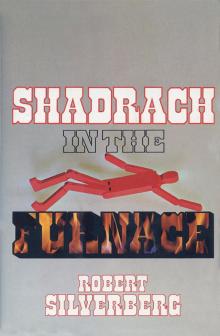 Shadrach in the Furnace
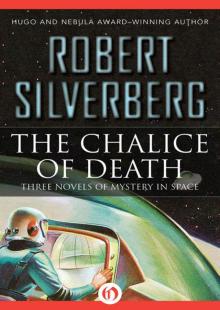 The Chalice of Death: Three Novels of Mystery in Space
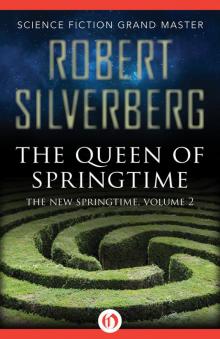 The Queen of Springtime
 To Be Continued 1953-1958
 Legends
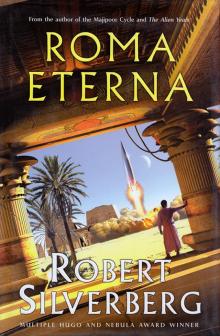 Roma Eterna
 To Live Again
 At Winter's End
 Needle in a Timestack
 To Live Again and the Second Trip: The Complete Novels
 Lord of Darkness
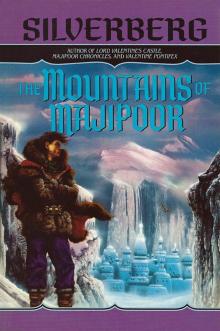 The Mountains of Majipoor
 The World Outside
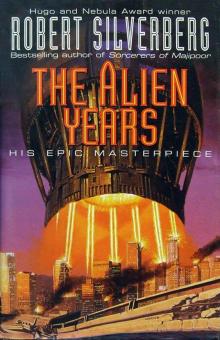 The Alien Years
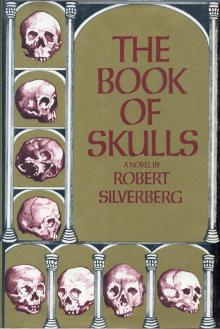 The Book of Skulls
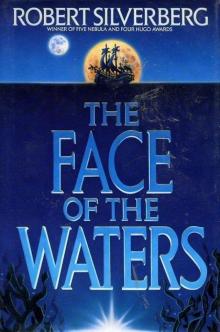 The Face of the Waters
 Gilgamesh the King
 The Collected Stories of Robert Silverberg, Volume 6: Multiples: 1983-87
 The Happy Unfortunate
 Three Survived
 Cronos
 Tower of Glass
 Legends II
 The Planet Killers
 The Collected Stories of Robert Silverberg, Volume 2: To the Dark Star: 1962-69
 Downward to the Earth
 Lord Valentine's Castle: Book One of the Majipoor Cycle
 Hot Times in Magma City, 1990-95
 Hunt the Space-Witch! Seven Adventures in Time and Space
 Majipoor Chronicles
 The Robert Silverberg Science Fiction Megapack(r)
 Starman's Quest
 Car Sinister
 Worlds of Maybe
 Fantasy The Best of 2001
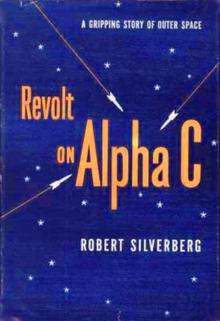 Revolt on Alpha C
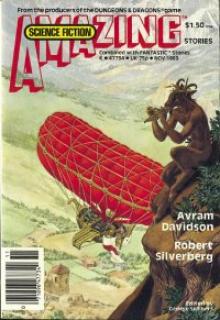 Homefaring
 The Pardoner's Tale
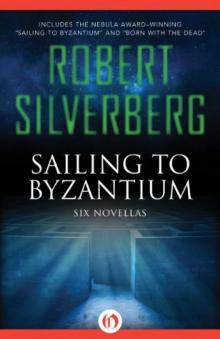 Sailing to Byzantium - Six Novellas
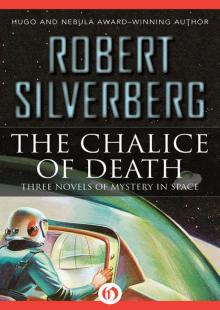 The Chalice of Death
 Sundance
 A Tip on a Turtle
 Nebula Awards Showcase 2001: The Year's Best SF and Fantasy Chosen by the Science Fiction and Fantasy Writers of America
 The Fangs of the Trees
 The Palace at Midnight: The Collected Work of Robert Silverberg, Volume Five
 The Millennium Express - 1995-2009 - The Collected Stories of Robert Silverberg Volume Nine
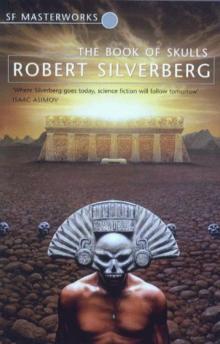 Book of Skulls
 Passengers
 Something Wild is Loose - 1969–72 - The Collected Stories of Robert Silverberg Volume Three
 Multiples
 Starborne
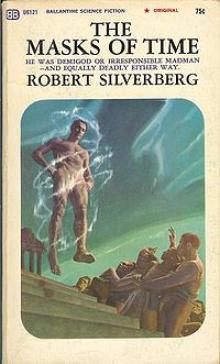 The Masks of Time
 The Mountains of Majipoor m-8
 Multiples (1983-87)
 Those Who Watch
 In the Beginning
 Earth Is The Strangest Planet
 Collision Course
 Neutral Planet
 To the Dark Star - 1962–69 - The Collected Stories of Robert Silverberg Volume Two
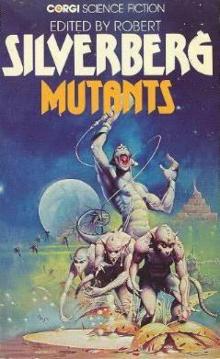 Mutants
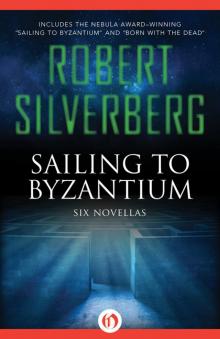 Sailing to Byzantium
 When We Went to See the End of the World
 Robert Silverberg The Science Fiction Hall Of Fame Volume One, 1929-1964
 To Be Continued - 1953–58 - The Collected Stories of Robert Silverberg Volume One
 Valentine Pontifex m-3
 Gianni
 Majipoor Chronicles m-2
 We Are for the Dark (1987-90)
 Waiting for the Earthquake
 Fantasy: The Best of 2001
 How It Was When the Past Went Away
 Beauty in the Night
 The Man Who Never Forgot
 The Book of Changes m-9
 Lord Valentine's Castle m-1
 This Way to the End Times
 Queen of Springtime
 Legends-Volume 3 Stories by the Masters of Modern Fantasy
 The Palace at Midnight - 1980–82 - The Collected Stories of Robert Silverberg Volume Five
 Something Wild is Loose: The Collected Stories of Robert Silverberg, Volume Three
 Multiples - 1983–87 - The Collected Stories of Robert Silverberg Volume Six
 Alaree
 Three Survived: A Science Fiction Novel
 Defenders of the Frontier
 The New Springtime
 We Are for the Dark - 1987–90 - The Collected Stories of Robert Silverberg Volume Seven
 The Science Fiction Hall of Fame, Volume One 1929-1964--The Greatest Science Fiction Stories of All Time Chosen by the Members of the Science Fiction Writers of America
 Master Of Life And Death
 Choke Chain
 Sorcerers of Majipoor m-4
 Absolutely Inflexible
 Trips - 1962–73 - The Collected Stories of Robert Silverberg Volume Four
 Hot Times in Magma City - 1990-95 - The Collected Stories of Robert Silverberg Volume Eight
 Far Horizons
 The Queen of Springtime ns-2
 The Seventh Science Fiction Megapack
 Invaders From Earth
 Hanosz Prime Goes To Old Earth
 The Macauley Circuit
 Science Fiction: The Best of 2001
 To the Dark Star: The Collected Stories of Robert Silverberg, Volume Two
 Stochastic Man
 Legends: Stories By The Masters of Modern Fantasy
 To Live Again And The Second Trip
 Flies
Flies The Silent Invaders
 Ship-Sister, Star-Sister