
- Home
- Robert Silverberg
Far Horizons Page 7
Far Horizons Read online
Page 7
“Right,” he said. He struggled to his feet, found his way to the ladder, and climbed it laboriously. I’m too old for this, he thought again. He pushed up the trap and looked out. He listened for a long time. At last he whispered to those below him in the dark, “I’ll be back as soon as I can,” and crawled out, scrambling awkwardly to his feet. He caught his breath: the air of the place was thick with burning. The light was strange, dim. He followed the wall till he could peer out of the storeroom doorway.
What had been left of the old house was down like the rest of it, blown open, smouldering and masked in stinking smoke. Black embers and broken glass covered the cobbled yard. Nothing moved except the smoke. Yellow smoke, grey smoke. Above it all was the even, clear blue of dawn.
He went round onto the terrace, limping and stumbling, for his foot shot blinding pains up his leg. Coming to the balustrade he saw the blackened wrecks of the two flyers. Half the upper terrace was a raw crater. Below it the gardens of Yaramera stretched beautiful and serene as ever, level below level, to the old tree and the river. A man lay across the steps that went down to the lower terrace; he lay easily, restfully, his arms outflung. Nothing moved but the creeping smoke and the white-flowered bushes nodding in a breath of wind.
The sense of being watched from behind, from the blank windows of the fragments of the house that still stood, was intolerable. “Is anybody here?” Esdan suddenly called out.
Silence.
He shouted again, louder.
There was an answer, a distant call, from around in front of the house. He limped his way down onto the path, out in the open, not seeking to conceal himself; what was the use? Men came around from the front of the house, three men, then a fourth—a woman. They were assets, roughly clothed, field hands they must be, come down from their compound. “I’m with some of the housepeople,” he said, stopping when they stopped, ten meters apart. “We hid out in a cellar. Is anybody else around?”
“Who are you?” one of them said, coming closer, peering, seeing the wrong color skin, the wrong kind of eyes.
“I’ll tell you who I am. But is it safe for us to come out? There’s old people, a baby. Are the soldiers gone?”
“They are dead,” the woman said, a tall, pale-skinned, bony-faced woman.
“One we found hurt,” said one of the men. “All the housepeople dead. Who did throw those bombs? What army?”
“I don’t know what army,” Esdan said. “Please, go tell my people they can come up. Back there, in the stables. Call out to them. Tell them who you are. I can’t walk.” The wrappings on his foot had worked loose, and the fractures had moved; the pain began to take away his breath. He sat down on the path, gasping. His head swam. The gardens of Yaramera grew very bright and very small and drew away and away from him, farther away than home.
He did not quite lose consciousness, but things were confused in his mind for a good while. There were a lot of people around, and they were outdoors, and everything stank of burnt meat, a smell that clung in the back of his mouth and made him retch. There was Kamsa, the tiny bluish shadowy sleeping face of the baby on her shoulder. There was Gana, saying to other people, “He did befriend us.” A young man with big hands talked to him and did something to his foot, bound it up again, tighter, causing terrible pain and then the beginning of relief.
He was lying down on his back on grass. Beside him a man was lying down on his back on grass. It was Metoy, the eunuch. Metoy’s scalp was bloody, the black hair burned short and brown. The dust-colored skin of his face was pale, bluish, like the baby’s. He lay quietly, blinking sometimes.
The sun shone down. People were talking, a lot of people, somewhere nearby, but he and Metoy were lying on the grass, and nobody bothered them.
“Were the flyers from Bellen, Metoy?” Esdan said.
“Came from the east.” Metoy’s harsh voice was weak and hoarse. “I guess they were.” After a while he said, “They want to cross the river.”
Esdan thought about this for a while. His mind still did not work well at all. “Who does?” he said finally.
“These people. The field hands. The assets of Yaramera. They want to go meet the Army.”
“The invasion?”
“The liberation.”
Esdan propped himself up on his elbows. Raising his head seemed to clear it, and he sat up. He looked over at Metoy. “Will they find them?” he asked.
“If the Lord so wills,” said the eunuch.
Presently Metoy tried to prop himself up like Esdan, but failed. “I got blown up,” he said, short of breath. “Something hit my head. I see two for one.”
“Probably a concussion. Lie still. Stay awake. Were you with Banarkamye, or observing?”
“I’m in your line of work.”
Esdan nodded, the backward nod.
“Factions will be the death of us,” Metoy said faintly.
Kamsa came and squatted down beside Esdan. “They say we must go cross the river,” she told him in her soft voice. “To where the people-army will keep us safe. I don’t know.”
“Nobody knows, Kamsa.”
“I can’t take Rekam cross a river,” she whispered. Her face clenched up, her lips drawing back, her brows down. She wept, without tears and in silence. “The water is cold.”
“They’ll have boats, Kamsa. They’ll look after you and Rekam. Don’t worry. It’ll be all right.” He knew his words were meaningless.
“I can’t go,” she whispered.
“Stay here then,” Metoy said.
“They said that other army will come here.”
“It might. More likely ours will.”
She looked at Metoy. “You are the cutfree,” she said. “With those others.” She looked back at Esdan. “Choyo got killed. All the kitchen is blown in pieces burning.” She hid her face in her arms.
Esdan sat up and reached out to her, stroking her shoulder and arm. He touched the baby’s fragile head with its thin, dry hair.
Gana came and stood over them. “All the field hands are going cross the river,” she said. “To be safe.”
“You’ll be safer here. Where there’s food and shelter.” Metoy spoke in short bursts, his eyes closed. “Than walking to meet an invasion.”
“I can’t take him, mama,” Kamsa whispered. “He has got to be warm. I can’t, I can’t take him.”
Gana stooped and looked into the baby’s face, touching it very softly with one finger. Her wrinkled face closed like a fist. She straightened up, but not erect as she used to stand. She stood bowed. “All right,” she said. “We’ll stay.”
She sat down on the grass beside Kamsa. People were on the move around them. The woman Esdan had seen on the terrace stopped by Gana and said, “Come on, grandmother. Time to go. The boats are ready waiting.”
“Staying,” Gana said.
“Why? Can’t leave that old house you worked in?” the woman said, jeering, humoring. “It’s all burned up, grandmother! Come on now. Bring that girl and her baby.” She looked at Esdan and Metoy, a flick-glance. They were not her concern. “Come on,” she repeated. “Get up now.”
“Staying,” Gana said.
“You crazy housefolk,” the woman said, turned away, turned back, gave it up with a shrug, and went on.
A few others stopped, but none for more than a question, a moment. They streamed on down the terraces, the sunlit paths beside the quiet pools, down towards the boat-houses beyond the great tree. After a while they were all gone.
The sun had grown hot. It must be near noon. Metoy was whiter than ever, but he sat up, saying he could see single, most of the time.
“We should get into the shade, Gana,” Esdan said. “Metoy, can you get up?”
He staggered and shambled, but walked without help, and they got to the shade of a garden wall. Gana went off to look for water. Kamsa was carrying Rekam in her arms, close against her chest, sheltered from the sun. She had not spoken for a long time. When they had settled down she said, half question
ing, looking around dully, “We are all alone here.”
“There’ll be others stayed. In the compounds,” Metoy said. “They’ll turn up.”
Gana came back; she had no vessel to carry water in, but had soaked her scarf, and laid the cold wet cloth on Metoy’s head. He shuddered. “You can walk better, then we can go to the house-compound, cutfree,” she said. “Places we can live in, there.”
“House-compound is where I grew up, grandmother,” he said.
And presently, when he said he could walk, they made their halt and lame way down a road which Esdan vaguely remembered, the road to the crouchcage. It seemed a long road. They came to the high compound wall and the gate standing open.
Esdan turned to look back at the ruins of the great house for a moment. Gana stopped beside him.
“Rekam died,” she said under her breath.
He caught his breath. “When?”
She shook her head. “I don’t know. She wants to hold him. She’s done with holding him, then she will let him go.” She looked in the open gateway at the rows of huts and longhouses, the dried-up garden patches, the dusty ground. “Lotsalot little babies are in there,” she said. “In that ground. Two of my own. Her sisters.” She went in, following Kamsa. Esdan stood a while longer in the gateway, and then he went in to do what there was for him to do: dig a grave for the child, and wait with the others for the Liberation.
THE FOREVER WAR
Joe Haldeman
The Forever War (1974)
1968 (1995)
Forever Peace (1997)
The Forever War told the story of William Mandella and Marygay Potter, Americans born in the late twentieth century, who were drafted into an interstellar war that lasted for more than a thousand years. Because of the effect of relativity, they lived through the whole thing.
When they came back to Earth, midway through the book, they found that the culture they had supposedly been protecting had changed so radically that they couldn’t live in it—and much as they hated the army, at least it was familiar, so they reenlisted. In the last quarter of the novel, they’re separated: forever, they assume. But at the very end the almost impossible happens, and they do find each other again.
People have been after me for a sequel ever since the book came out, and my response always was no, the book is complete. But someday I would write a novella about what happened to the characters later in life.
Kindly editor Silverberg asked that I write that novella for this book, and I started it out with some enthusiasm. But then I saw I actually was writing a novel, the sequel that I said I’d never write. So I warped it around into a novel proposal and sent it out, and then started over, writing a different story for this volume.
The obvious thing missing from The Forever War is the story of what happened to Marygay in the part of the book where she’s separated from William. I wrote “A Separate War” to fill in that lacuna, but it also serves as a sort of foreshadowing of the new novel.
SET THEORY
A few years ago I wrote a novel called Forever Peace, and was careful in introducing it to point out that it was not a sequel to The Forever War, though it did cover some of the same ground, from the viewpoint of the same author, more than twenty years later.
The critic Gary Wolfe noted that those two books combined with my “mainstream” novel 1968 to form a kind of triptych about love and war. That was a neat, elegant idea, and here I go kicking it out of shape by writing another novel. I don’t think they let you write or paint quartyches.
I had an inkling that a sequel was necessary, though, back when I first sold the paperback rights to The Forever War. The editor said she never would have bought it if the book hadn’t had a happy ending.
If ever there was a time and place to keep your mouth shut, that was one of them, but that was in another country, and besides the editor is dead. The Forever War does not have a happy ending. Marygay and William do get back together—the book ends with the birth announcement of their first child—but they’re together on a prison planet, preserved as genetic curiosities in a universe where the human race has abandoned its humanity in a monstrous liaison with its former enemy.
In the sequel, Forever Free, they decide to do something about it. Or die trying.
—Joe Haldeman
A SEPARATE WAR
by Joe Haldeman
1
Our wounds were horrible, but the army made us well and gave us Heaven, temporarily. And a fortune to spend there.
The most expensive and hard-to-replace component of a fighting suit is the soldier inside of it, so if he is crippled badly enough to be taken out of the fight, the suit tries to save what’s left. In William’s case, it automatically cut off his mangled leg and sealed the stump. In my case it was the right arm, just above the elbow. They say that for us women, losing an arm is easier than a leg. How did they come up with that?
But it was amazing luck that we should both get amputation wounds at the same time, which kept us together.
That was the Tet-2 campaign, which was a disaster, and William and I lay around doped to the gills with happyjuice while the others died their way through the disaster of Aleph-7. The score after the two battles was fifty-four dead, thirty-seven of us crips, two head cases, and only twelve more or less working soldiers, who were of course bristling with enthusiasm. Twelve is not enough to fight a battle with, unfortunately, so the Sangre y Victoria was rerouted to the hospital planet Heaven.
We took a long time, three collapsar jumps, getting to Heaven. The Taurans can chase you through one jump, if they’re at the right place and the right time. But two would be almost impossible, and three just couldn’t happen.
(But “couldn’t happen” is probably a bad-luck charm. Because of the relativistic distortions associated with travel through collapsar jumps, you never know, when you greet the enemy, whether it comes from your own time, or centuries in your past or future. Maybe in a millennium or two, they’ll be able to follow you through three collapsar jumps like following footprints. One of the first things they’d do is vaporize Heaven. Then Earth.)
Heaven is like an Earth untouched by human industry and avarice, pristine forests and fields and mountains—but it’s also a monument to human industry, and avarice, too.
When you recover—and there’s no “if”; you wouldn’t be there if they didn’t know they could fix you—you’re still in the army, but you’re also immensely wealthy. Even a private’s pay rolls up a fortune, automatically invested during the centuries that creak by between battles. One of the functions of Heaven is to put all those millions back into the economy. So there’s no end of things to do, all of them expensive.
When William and I recovered, we were given six months of “rest and recreation” on Heaven. I actually got out two days before him, but waited around, reading. They did still have books, for soldiers so old-fashioned they didn’t want to plug themselves into adventures or ecstasies for thousands of dollars a minute. I did have $529,755,012 sitting around, so I could have dipped into tripping. But I’d heard I would have plenty of it, retraining before our next assignment. The ALSC, “accelerated life situation computer,” which taught you things by making you do them in virtual reality. Over and over, until you got them right.
William had half again as much money as I did, since he had outranked me for centuries, but I didn’t wait around just to get my hands on his fortune. I probably would have wanted his company even if I didn’t love him. We were the only two people here born in the twentieth century, and there were only a handful from the twenty-first. Very few of them, off-duty, spoke a language I understood, though all soldiers were taught “premodern” English as a sort of temporal lingua franca. Some of them claimed their native language was English, but it was extremely fast and seemed to have lost some vowels along the way. Four centuries. Would I have sounded as strange to a Pilgrim? I don’t think so.
(It would be interesting to take one of those Pilgrim Fathers and sho
w him what had evolved from a life of grim piety and industriousness. Religion on Earth is a curiosity, almost as rare as heterosex. Heaven has no God, either, and men and women in love or in sex with people not of their own gender are committing an anachronistic perversion.)
I’d already arranged for a sumptuous “honeymoon” suite on Skye, an airborne resort, before William got out, and we did spend five days there, amusing each other anachronistically. Then we rented a flyer and set out to see the world.
William humored my desire to explore the physical, wild aspects of the world first. We camped in desert, jungle, arctic waste, mountaintops, deserted islands. We had pressor fields that kept away dangerous animals, allowing us a good close look at them while they tried to figure out what was keeping them from lunch, and they were impressive—evolution here had not favored mammal over reptile, and both families had developed large, swift predators in a variety of beautiful and ugly designs.
Then we toured the cities, in their finite variety. Some, like the sylvan Threshold where we’d grown and trained our new limbs, blended in with their natural surroundings. This was a twenty-second-century esthetic, too bland and obvious for modern tastes. The newer cities, like Skye, flaunted their artificiality.
We were both nervous in Atlantis, under a crushing kilometer of water, with huge glowing beasts bumping against the pressors, dark day and dark night. Perhaps it was too exact a metaphor for our lives in the army, the thin skins of cruiser or fighting suit holding the dark nothingness of space at bay while monsters tried to destroy you.
Many of the cities had no function other than separating soldiers from their money, so in spite of their variety there was a sameness to them. Eat, drink, drug, trip, have or watch sex.
I found the sex shows more interesting than William did, but he was repelled by the men together. It didn’t seem to me that what they did was all that different from what we did—and not nearly as alien as tripping for sex, plugging into a machine that delivered to you the image of an ideal mate and cleaned up afterwards.
 The Longest Way Home
 Hawksbill Station
 A Time of Changes
 This Way to the End Times: Classic Tales of the Apocalypse
 Beyond the Gate of Worlds
 Lord Valentine's Castle
 The Man in the Maze
 Tales of Majipoor
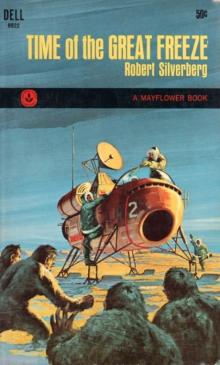 Time of the Great Freeze
 The Collected Stories of Robert Silverberg, Volume 3: Something Wild Is Loose: 1969-72
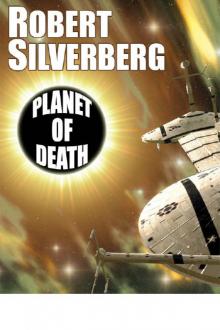 Planet of Death
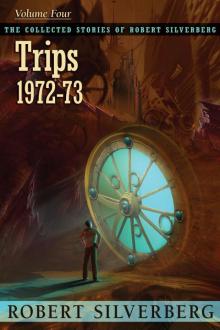 Trips: The Collected Stories of Robert Silverberg, Volume Four
 In the Beginning: Tales From the Pulp Era
 Hot Sky at Midnight
 Valentine Pontifex
 Up the Line
 Thorns
 Amanda and the Alien
 Star of Gypsies
 Nightwings
 The Time Hoppers
 Blood on the Mink
 Dying Inside
 The Last Song of Orpheus
 The King of Dreams
 The Stochastic Man
 The Collected Stories of Robert Silverberg, Volume Seven: We Are for the Dark
 The Millennium Express: The Collected Stories of Robert Silverberg, Volume Nine
 The Iron Chancellor
 Lord Prestimion
 To Open the Sky
 The World Inside
 Chains of the Sea
 The Collected Stories of Robert Silverberg, Volume Five: The Palace at Midnight
 Postmark Ganymede
 The Second Trip
 The Collected Stories of Robert Silverberg, Volume 4: Trips: 1972-73
 Son of Man
 Tom O'Bedlam
 To the Land of the Living
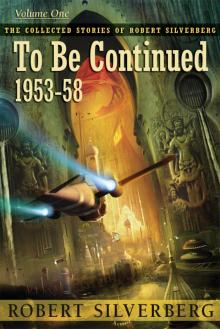 To Be Continued: The Collected Stories of Robert Silverberg, Volume One
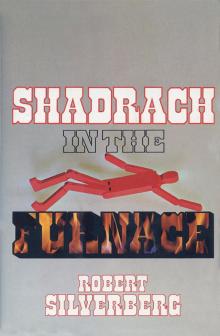 Shadrach in the Furnace
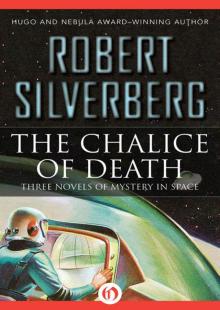 The Chalice of Death: Three Novels of Mystery in Space
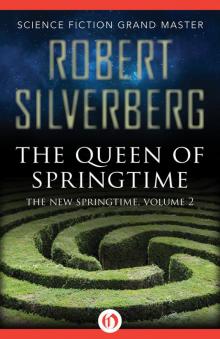 The Queen of Springtime
 To Be Continued 1953-1958
 Legends
 Roma Eterna
 To Live Again
 At Winter's End
 Needle in a Timestack
 To Live Again and the Second Trip: The Complete Novels
 Lord of Darkness
 The Mountains of Majipoor
 The World Outside
 The Alien Years
 The Book of Skulls
 The Face of the Waters
 Gilgamesh the King
 The Collected Stories of Robert Silverberg, Volume 6: Multiples: 1983-87
 The Happy Unfortunate
 Three Survived
 Cronos
 Tower of Glass
 Legends II
 The Planet Killers
 The Collected Stories of Robert Silverberg, Volume 2: To the Dark Star: 1962-69
 Downward to the Earth
 Lord Valentine's Castle: Book One of the Majipoor Cycle
 Hot Times in Magma City, 1990-95
 Hunt the Space-Witch! Seven Adventures in Time and Space
 Majipoor Chronicles
 The Robert Silverberg Science Fiction Megapack(r)
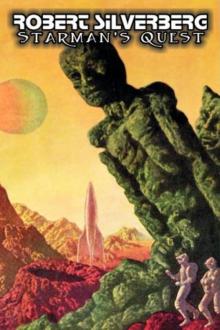 Starman's Quest
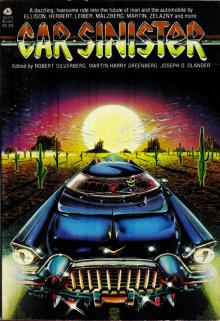 Car Sinister
 Worlds of Maybe
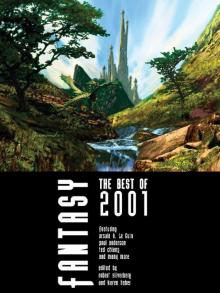 Fantasy The Best of 2001
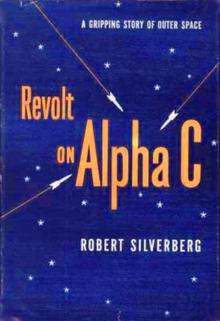 Revolt on Alpha C
 Homefaring
 The Pardoner's Tale
 Sailing to Byzantium - Six Novellas
 The Chalice of Death
 Sundance
 A Tip on a Turtle
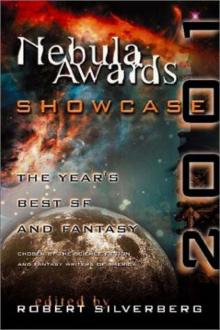 Nebula Awards Showcase 2001: The Year's Best SF and Fantasy Chosen by the Science Fiction and Fantasy Writers of America
 The Fangs of the Trees
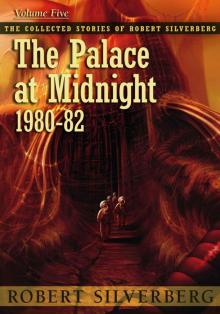 The Palace at Midnight: The Collected Work of Robert Silverberg, Volume Five
 The Millennium Express - 1995-2009 - The Collected Stories of Robert Silverberg Volume Nine
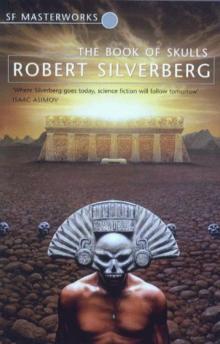 Book of Skulls
 Passengers
 Something Wild is Loose - 1969–72 - The Collected Stories of Robert Silverberg Volume Three
 Multiples
 Starborne
 The Masks of Time
 The Mountains of Majipoor m-8
 Multiples (1983-87)
 Those Who Watch
 In the Beginning
 Earth Is The Strangest Planet
 Collision Course
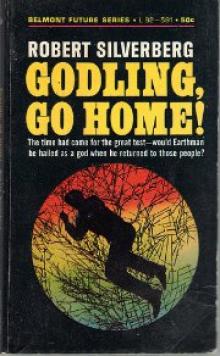 Neutral Planet
 To the Dark Star - 1962–69 - The Collected Stories of Robert Silverberg Volume Two
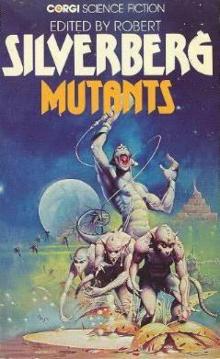 Mutants
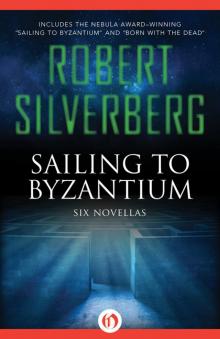 Sailing to Byzantium
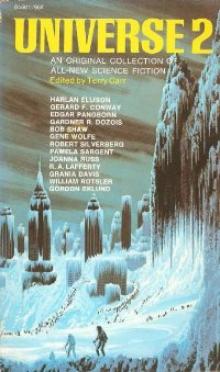 When We Went to See the End of the World
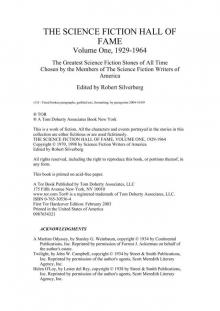 Robert Silverberg The Science Fiction Hall Of Fame Volume One, 1929-1964
 To Be Continued - 1953–58 - The Collected Stories of Robert Silverberg Volume One
 Valentine Pontifex m-3
 Gianni
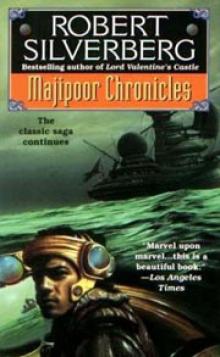 Majipoor Chronicles m-2
 We Are for the Dark (1987-90)
 Waiting for the Earthquake
 Fantasy: The Best of 2001
 How It Was When the Past Went Away
 Beauty in the Night
 The Man Who Never Forgot
 The Book of Changes m-9
 Lord Valentine's Castle m-1
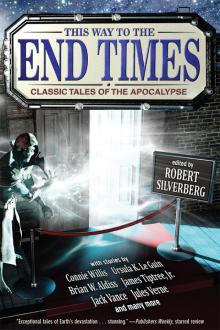 This Way to the End Times
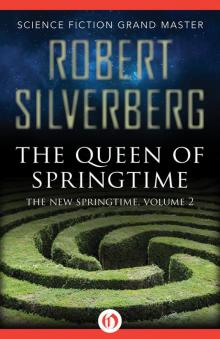 Queen of Springtime
 Legends-Volume 3 Stories by the Masters of Modern Fantasy
 The Palace at Midnight - 1980–82 - The Collected Stories of Robert Silverberg Volume Five
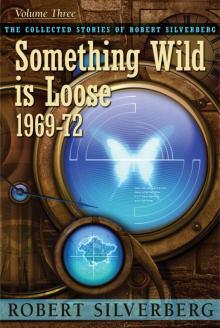 Something Wild is Loose: The Collected Stories of Robert Silverberg, Volume Three
 Multiples - 1983–87 - The Collected Stories of Robert Silverberg Volume Six
 Alaree
 Three Survived: A Science Fiction Novel
 Defenders of the Frontier
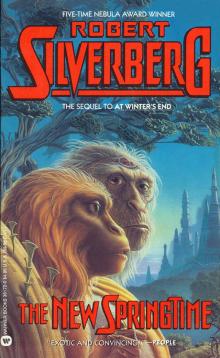 The New Springtime
 We Are for the Dark - 1987–90 - The Collected Stories of Robert Silverberg Volume Seven
 The Science Fiction Hall of Fame, Volume One 1929-1964--The Greatest Science Fiction Stories of All Time Chosen by the Members of the Science Fiction Writers of America
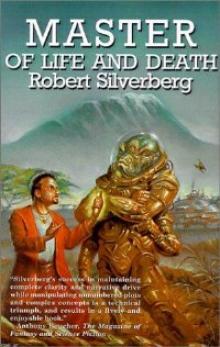 Master Of Life And Death
 Choke Chain
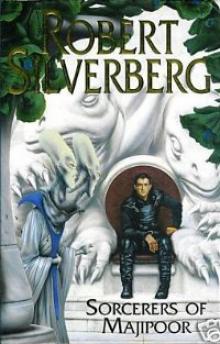 Sorcerers of Majipoor m-4
 Absolutely Inflexible
 Trips - 1962–73 - The Collected Stories of Robert Silverberg Volume Four
 Hot Times in Magma City - 1990-95 - The Collected Stories of Robert Silverberg Volume Eight
 Far Horizons
 The Queen of Springtime ns-2
 The Seventh Science Fiction Megapack
 Invaders From Earth
 Hanosz Prime Goes To Old Earth
 The Macauley Circuit
 Science Fiction: The Best of 2001
 To the Dark Star: The Collected Stories of Robert Silverberg, Volume Two
 Stochastic Man
 Legends: Stories By The Masters of Modern Fantasy
 To Live Again And The Second Trip
 Flies
Flies The Silent Invaders
 Ship-Sister, Star-Sister