
- Home
- Robert Silverberg
Collision Course Page 7
Collision Course Read online
Page 7
On the ninth morning, negotiations began. Stone, it had been decided, would do the actual talking, Havig would provide linguistic midwifery. Bernard would make cultural observations, Dominici biophysical ones, that would enable Earth to understand the aliens better. The Technarch had picked his men with care.
In the tent, a rough wooden table had been rigged. The aliens sat on their heels at one side; apparently they had no use for chairs. The Earthmen, in the absence of seats, adopted a crosslegged squat.
Havig said, “This Earthman is called Stone. He will talk to you today.”
The biggest of the three Norglans, who identified himself as Zagidh—whether that was an honorific title or his personal name, there was no way of telling—said, “He is Stone called? I touch?”
An eight-fingered hand reached out and grasped Stone’s arm as it lay on the conference table. The chubby diplomat blinked in alarm, then smiled as the Norglan prodded a fingertip into the soft flesh of his forearm.
Zagidh released the hand and fixed all the Earthmen in a saucer-eyed glare. “Stone is hard. He is not-hard.”
Havig said, “Stone is label, not description.”
The alien puzzled that one over for a while. Dominici murmured, “Curse you for having a name like that, Stone. We may never get past this point because you aren’t made out of granite.”
But the alien seemed to grasp the distinction between a proper name and a nominal description within moments. Zagidh conferred briefly with his two comrades, then said: “I am Zagidh. You are Stone-label. But label is a not-truth.”
It took ten minutes more before Havig was willing to concede that Zagidh really understood the point. The Earthmen fidgeted; if, thought Bernard, we bog down on fine points like this, how are we ever going to get anything important ever settled?
Stone threaded a tortuous verbal path, with much help and correction from Havig. After two hours he was dripping wet, but he had succeeded in establishing several vital points:
That Earth was the nucleus of a colonial empire.
That the Norglan home world, wherever it was, was a similar center of colonial expansion.
That some sort of conflict between the two dynamic planet-systems was inevitable.
That, therefore, it was vital here and now to decide which parts of the galaxy should be reserved for Norglan and which for Terran expansion.
Zagidh and his companions wrestled with these four points and appeared to show a complete understanding of what they meant. There was a brief but fervid discussion between the three Norglans. Then the alien to Zagidh’s left rose and left the tent.
Zagidh grimaced in the now-familiar facial agony that preceded any major statement of his. The alien said slowly, “This is serious matter. I—we—do not hold authority. We—you can no further talk. Others—we must come.”
The four sentences seemed to exhaust the Norglan. His tongue licked out, dog-like, and he panted. Rising, he and the remaining blueskin exited without a further word, leaving the startled Earthmen alone.
EIGHT
“What do you figure this means?” Stone asked uneasily. It was half an hour since the Norglans had left the tent. A few curious greenskins had drifted past the tent to peer in at the Earthmen, but their blue overseers had shouted them back to work, and since then the Earthmen in the tent had not been disturbed.
“Obviously Zagidh and his friends realized they’d stumbled into something too big for them to handle,” Bernard said. “Suppose you were a colonial administrator busy digging wells and building shelters, and some alien beings dropped down out of the sky and told you they wanted to hold a discussion about carving up the universe? Would you sit down and write a treaty on your own hook—or would you pass the buck back to the Archonate as fast as you could?”
“Yes—yes, of course,” Stone said. “They’ve gone to get higher-ups. But how long will it take?”
“If they’ve got a transmat equivalent,” Dominici pointed out, “it won’t take any time at all. And if not…”
“If not,” Bernard said, “we may be here a while.”
They fell silent. Bernard walked to the tentflap and looked out. Work was proceeding, without a hitch. The Norglans were not ones for wasting time when it came to setting up a colony, apparently.
There was nothing to do now but wait. Bernard scowled. This entire mission was a first-class education in patience. Laurance and his men sat quietly in the corner, no longer active participants in the negotiations, simply letting the minutes trickle past. Havig, with his Neopuritan self-control, showed no outward manifestation of impatience.
“Anybody bring a set of pyramid-dice?” Dominici asked. “We could get a good game going in here.”
“You’d be offending Havig,” Stone pointed out. “His people don’t countenance gambling.”
The linguist smiled thinly. “These sly remarks tire me. Do I actively interfere with your behavior? I live by my own example—but I’ve never maintained that you should do the same.”
Bernard’s lips firmed tightly. He found himself envying Havig’s glacial self-restraint. At least the linguist could sit quietly, almost as quietly as the spacemen, waiting for the uncertain hours to pass.
Now it was three hours since the Norglans had made their abrupt exit. Mid-afternoon had come; a blistering shroud of heat lay over the clearing, but the greenskins toiled on without seeming to mind. Inside the tent, the air was hot and hard to breathe, and twice Bernard fought back the desperate temptation to guzzle the remaining contents of his canteen. He rationed himself: a drop now, another drop fifteen minutes later. Just enough to keep his parched throat moist.
“We’ll wait around until sundown,” Laurance said. “If they don’t come back by then, we’ll go back to the ship and try again tomorrow morning. How does that sound, Dr. Bernard?”
“As good a suggestion as any,” the sociologist agreed. “Sundown’s the normal time for breakup of a meeting. They won’t have any reason to get insulted if we leave then.”
“But how about the insult to us?” Dominici demanded with sudden warmth. “These damned bluefaces just picked up without a word and left us to roast in here all afternoon! Why the deuce should we be so concerned about their feelings, when they left us…”
“Because we’re Earthmen,” Bernard said sharply. “Maybe they don’t have the same ideas about politeness. Maybe they don’t see anything wrong with what they’ve done this afternoon. We can’t judge them by our own behavior norms.”
“You sociologists don’t seem to think anyone can be judged by any norms,” Dominici retorted sourly. “Everything’s relative, isn’t it? There aren’t any absolute standards, you say. Just individual patterns of behavior. Well, I say…”
“Quiet,” Laurance interjected. “Someone’s coming!”
The tentflap parted and three aliens entered. The first was Zagidh. Behind him came two Norglans of massive stature, their skins a deep, rich bluish-purple. They were clad in elaborate gem-encrusted robes, and their entire bearing was regal. Zagidh sank into the familiar heels-to-thighs squat. The newcomers remained standing.
Grimacing terribly, Zagidh said, “Two—kharvish— have come from Norgla. To speak. Time taken—learning the Terran talk. They—we will talk to you.”
Still squatting, Zagidh duck-waddled out of the tent. The two big Norglans lowered themselves now in one smooth simultaneous motion into the standard squat.
The Earthmen regarded them uneasily. Bernard gnawed his lower lip. These two obviously were Very Important Norglans indeed.
Haltingly, but in a voice whose tone was the mellow boom of a fine ’cello, one of the big Norglans said, “I am label Skrinri. He is label Vortakel. He—I—we both—label kharvish. How you say? One-who-comes-to-talk-to-others-of-other kind.”
“Ambassador,” Havig suggested.
Skinri repeated it, making the big word his own. “Ambas-sa-dor. Yes. Ambassador. I label Skrinri, he label Vortakel, he-I-we label ambassador. From Norgla. From home
planet.”
“You speak Terran very well,” Stone said in widely separated syllables. “Were you taught by Zagidh?”
“No—meaning…”
“The past participle,” Havig murmured. “They don’t know that one. Try, Did Zagidh teach you?”
“Did Zagidh teach you Terran?” Stone asked.
“He teach him-I-we,” Skrinri affirmed. “We are here since highest of sun.”
“Since noon,” Havig translated.
Stone said, “You have come to talk to us?”
“Yes. You are from Earth. Where is Earth?”
“Much distant,” Stone said. “How can I convey it to him, Havig? Would he know what a light-year means?”
“Not unless he knows what a year is first,” Havig said. “Better let it go by.”
“Okay,” Stone said. Facing the Norglans he said, “Your world is close?”
“All worlds are close. It takes no time to travel there to here.”
Stone looked around, startled. “So they’ve got a transmat too!”
“Or something that has the same effect,” Laurance said.
Sweltering in his corner of the tent, Bernard followed the evolving chain of reasoning. One thing was certain: these two Norglans were pretty special, perhaps as far above Zagidh and the other blueskins in general superiority as the blueskins were above the green laborers. Skrinri and Vortakel learned the language with enormous speed, picking up hints of pronunciation and sentence order from byplay between the Earthmen as well as from the formal statements Stone framed.
Gradually, the similarities between the two empires began to unfold.
The Norglans had the transmat, it seemed: Skrinri and Vortakel had come from the mother world only a few hours ago via some form of instantaneous transportation. The spaceship looming above the settlement was testimony that the Norglans also had some form of conventional space travel, probably a near-light drive but nothing faster-than-light.
Concrete information on distances was a good deal more difficult to elicit. But it was reasonable to guess that the home world of the Norglans was somewhere within three or four hundred light-years of the present planet, maybe less, probably not more. Which meant that the Norglan sphere of colonization was roughly of the same order of magnitude as the Terran.
So much was clear. But yet the real issue had not even been mentioned yet. Stone was working up to it closely, building a dazzling pattern of ideas and communicated information before he got down to actual business.
As they spoke, Bernard followed every word, trying to construct a picture of the Norglans as a people that might be of some use in further negotiating. They were a stratified race, that was certain: the variation in color was not simply a difference in pigmentation but one of complete genetic makeup. The greenskins were shorter, stocker, and evidently not intellectually gifted; they made ideal workers for this kind of labor. The blueskins were shrewd, good organizers, quick thinkers—but they lacked the inner authority, the decisiveness of personality, that marked a true leader. The big bluish-purple ones had the necessary strength.
Were they the top of the pyramid? Or did they, in turn, depend for guidance on some still more capable kind of Norglan? How far did the stratification extend?
No telling; but it was likely that Skrinri and Vortakel represented pretty close to the pinnacle of Norglan evolution. If there were others who came much better, then the Norglans would be further along the scale of development than they were.
Outside the tent, night was falling. The temperature drop came swiftly. A cold wind scudded across the clearing, flicking open the tentflap. Hunger-sounds growled in Bernard’s belly. But the Norglans showed no indications of wishing to suspend negotiations for the night; as for Stone, he was in his element now, tirelessly advancing the chain of communication until he could bring the discussion to its vital point.
And that moment was approaching. Stone was sketching diagrams in the packed-down dirt floor of the conference tent, a dot with a circle around it: Earth’s sphere of colonization. At a distance of several yards, another dot, another circle: Norgla’s sphere.
Beyond those, other dots; no circles. These were the uncolonized stars, the terrae incognitae of the galaxy, which neither Earthman nor Norglan had reached at this stage of the galactic expansion.
Stone said gravely, “Earth people spread outward from Earth. We settle on other worlds.”
He drew radial spokes projecting from the circle that was the Terran sphere of dominance. The spokes reached into the neutral area.
“Norglan people spread outward too. You build your colonies, we build ours.”
Spokes grew from the Norglan sphere as well. Dragging his stick doggedly through the ground, Stone extended the Norglan spokes until some of them all but grazed Terran ones.
“You settle here,” Stone said. “We settle there. We continue settling new worlds. Soon this happens…”
Stone sketched it graphically. Two spokes met, crossed. Others intersected as well.
“We reach the same territory. We fight over this world or that. There would be war between Earthman and Norglan. There would be death. Destruction.”
Skrinri and Vortakel stared at the diagram on the ground as if it were the symbology of some complex rite. Their fleshless faces gave no hint of the thoughts passing through their minds. The Earthmen waited, silently, hardly daring to draw a breath.
Vortakel said slowly, “This must not happen. There must be no war between Earthman and Norglan.”
“There must be no war,” Stone repeated.
Bernard leaned forward, chafing a little at his role as a spectator, but as tense as if he were conducting the negotiations and not Stone. Despite the chill, despite the hunger, he felt a pounding surge of triumph swelling in his breast. The aliens had understood; there had been two-way communication; the Norglan ambassadors realized the grave dangers of war. The conflict would be averted. The paths of empire would swerve from their collision course.
Stone said, “We must choose the way of peace. Norglan leaders and Terran leaders will meet. We will divide the stars between us.” He paused, making sure the ambassadors comprehended the meaning of divide. “We will draw a line,” Stone went on, emphasizing his words by scratching a boundary between the two spheres of dominion on the ground. Quickly he scuffed out with his foot those Norglan spokes that projected into the Terran side of the line, and those Terran spokes which overreached the boundary in the Norglan’s direction.
Stone smiled. “All these worlds”—he made a sweeping gesture over the left-hand side of his sketch—“will be Norglan. No Terrans will settle there. And on this side”—he indicated the Terran doman—“no Norglans may come. These worlds will be Terran.”
He waited for some response from the Norglans.
The aliens were silent, peering down at the lines scrawled in the dirt. Taking their silence for lack of understanding, Stone repeated his suggestion.
“On this side, all worlds to be Terran. On this, all Norglan. Do you understand?”
“We understand,” said Skrinri slowly and heavily.
The wind whipped furiously at the tent, whacking the loose flap back and forth. Rising from the squat he had maintained with so little discomfort for so long, Skrinri stepped forward to tower over Stone’s diagram.
Carefully placing one huge bare foot over the lines, the Norglan rubbed out the boundary Stone had drawn to delimit the proposed Norglan and Terran sectors. Then, kneeling, Skrinri obliterated with his fingers every one of the spokes of expansion Stone had depicted as radiating from the Terran sphere.
A moment before Skrinri spoke, Martin Bernard divined what the Norglan was going to say. A cold hand seemed to clutch at the sociologist’s throat. The triumph of an instant before vanished like a snuffed flame.
Skinri’s voice was level, somber, without any hit of malice. He made a broad gesture with both hands, as if to take in the entire universe.
“Norgla builds colonies. We ex
pand. You—Earthmen— have occupied certain worlds. You may keep these worlds. We will not take them away. All other worlds belong to Norgla. We do not have to talk further.”
With calm dignity, the two Norglans made their way from the tent. In the shocked silence that followed, the wind rose to a mocking screech.
All other worlds belong to Norgla. Stunned, the nine Earthmen stared white-faced at each other; no one had expected this.
“It’s a bluff!” Dominici whispered harshly. “Limiting us to present holdings? They can’t mean it!”
“Perhaps they can,” Havig said quietly. “Perhaps this is the end of our fine dream of galactic colonization. And perhaps this is a disguised blessing. Come: we’ll accomplish no more here today.”
The Earthmen filed out of the tent, into the alien darkness, into the suddenly hostile wind.
NINE
Morning came slowly. The little red moon twirled across the sky and was gone; the unfamiliar constellations passed above and lost themselves beyond the horizon. As the hours of night gave way to the hours of dawn, blackness to grayness, chill to morning warmth, the men of the XV-ftl busied themselves in the routine tasks of daybreak. No one had slept that night aboard the ship. Cabin lights had burned through till dawn, as Earthmen too weary to sleep argued and reargued the aspects of the situation.
“We shouldn’t have let them march out of there like that,” Stone said bitterly, cupping his plump cheeks with plump hands. “They stalked out like a couple of princes giving the word to a rabble of commoners. We should have made them stay, let them know that Earth wasn’t going to listen to their high-handed nonsense.”
“ ‘You may keep these worlds’ ” Dominici repeated in harshly sardonic tories. “ ‘All other worlds belong to Norgla.’ As if we were worms!”
“Perhaps it was the will of God that man’s expansion through the heavens come to a halt,” Havig suggested. “The Norglans may have been sent as a reminder that pride is sinful, that there are limits beyond which we dare not go.”
 The Longest Way Home
 Hawksbill Station
 A Time of Changes
 This Way to the End Times: Classic Tales of the Apocalypse
 Beyond the Gate of Worlds
 Lord Valentine's Castle
 The Man in the Maze
 Tales of Majipoor
 Time of the Great Freeze
 The Collected Stories of Robert Silverberg, Volume 3: Something Wild Is Loose: 1969-72
 Planet of Death
 Trips: The Collected Stories of Robert Silverberg, Volume Four
 In the Beginning: Tales From the Pulp Era
 Hot Sky at Midnight
 Valentine Pontifex
 Up the Line
 Thorns
 Amanda and the Alien
 Star of Gypsies
 Nightwings
 The Time Hoppers
 Blood on the Mink
 Dying Inside
 The Last Song of Orpheus
 The King of Dreams
 The Stochastic Man
 The Collected Stories of Robert Silverberg, Volume Seven: We Are for the Dark
 The Millennium Express: The Collected Stories of Robert Silverberg, Volume Nine
 The Iron Chancellor
 Lord Prestimion
 To Open the Sky
 The World Inside
 Chains of the Sea
 The Collected Stories of Robert Silverberg, Volume Five: The Palace at Midnight
 Postmark Ganymede
 The Second Trip
 The Collected Stories of Robert Silverberg, Volume 4: Trips: 1972-73
 Son of Man
 Tom O'Bedlam
 To the Land of the Living
 To Be Continued: The Collected Stories of Robert Silverberg, Volume One
 Shadrach in the Furnace
 The Chalice of Death: Three Novels of Mystery in Space
 The Queen of Springtime
 To Be Continued 1953-1958
 Legends
 Roma Eterna
 To Live Again
 At Winter's End
 Needle in a Timestack
 To Live Again and the Second Trip: The Complete Novels
 Lord of Darkness
 The Mountains of Majipoor
 The World Outside
 The Alien Years
 The Book of Skulls
 The Face of the Waters
 Gilgamesh the King
 The Collected Stories of Robert Silverberg, Volume 6: Multiples: 1983-87
 The Happy Unfortunate
 Three Survived
 Cronos
 Tower of Glass
 Legends II
 The Planet Killers
 The Collected Stories of Robert Silverberg, Volume 2: To the Dark Star: 1962-69
 Downward to the Earth
 Lord Valentine's Castle: Book One of the Majipoor Cycle
 Hot Times in Magma City, 1990-95
 Hunt the Space-Witch! Seven Adventures in Time and Space
 Majipoor Chronicles
 The Robert Silverberg Science Fiction Megapack(r)
 Starman's Quest
 Car Sinister
 Worlds of Maybe
 Fantasy The Best of 2001
 Revolt on Alpha C
 Homefaring
 The Pardoner's Tale
 Sailing to Byzantium - Six Novellas
 The Chalice of Death
 Sundance
 A Tip on a Turtle
 Nebula Awards Showcase 2001: The Year's Best SF and Fantasy Chosen by the Science Fiction and Fantasy Writers of America
 The Fangs of the Trees
 The Palace at Midnight: The Collected Work of Robert Silverberg, Volume Five
 The Millennium Express - 1995-2009 - The Collected Stories of Robert Silverberg Volume Nine
 Book of Skulls
 Passengers
 Something Wild is Loose - 1969–72 - The Collected Stories of Robert Silverberg Volume Three
 Multiples
 Starborne
 The Masks of Time
 The Mountains of Majipoor m-8
 Multiples (1983-87)
 Those Who Watch
 In the Beginning
 Earth Is The Strangest Planet
 Collision Course
 Neutral Planet
 To the Dark Star - 1962–69 - The Collected Stories of Robert Silverberg Volume Two
 Mutants
 Sailing to Byzantium
 When We Went to See the End of the World
 Robert Silverberg The Science Fiction Hall Of Fame Volume One, 1929-1964
 To Be Continued - 1953–58 - The Collected Stories of Robert Silverberg Volume One
 Valentine Pontifex m-3
 Gianni
 Majipoor Chronicles m-2
 We Are for the Dark (1987-90)
 Waiting for the Earthquake
 Fantasy: The Best of 2001
 How It Was When the Past Went Away
 Beauty in the Night
 The Man Who Never Forgot
 The Book of Changes m-9
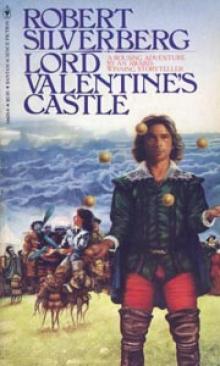 Lord Valentine's Castle m-1
 This Way to the End Times
 Queen of Springtime
 Legends-Volume 3 Stories by the Masters of Modern Fantasy
 The Palace at Midnight - 1980–82 - The Collected Stories of Robert Silverberg Volume Five
 Something Wild is Loose: The Collected Stories of Robert Silverberg, Volume Three
 Multiples - 1983–87 - The Collected Stories of Robert Silverberg Volume Six
 Alaree
 Three Survived: A Science Fiction Novel
 Defenders of the Frontier
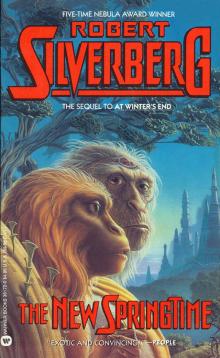 The New Springtime
 We Are for the Dark - 1987–90 - The Collected Stories of Robert Silverberg Volume Seven
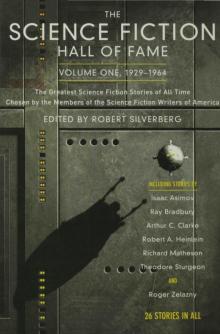 The Science Fiction Hall of Fame, Volume One 1929-1964--The Greatest Science Fiction Stories of All Time Chosen by the Members of the Science Fiction Writers of America
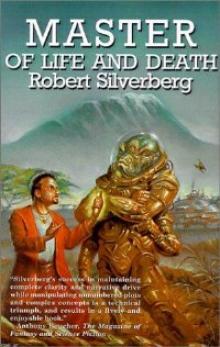 Master Of Life And Death
 Choke Chain
 Sorcerers of Majipoor m-4
 Absolutely Inflexible
 Trips - 1962–73 - The Collected Stories of Robert Silverberg Volume Four
 Hot Times in Magma City - 1990-95 - The Collected Stories of Robert Silverberg Volume Eight
 Far Horizons
 The Queen of Springtime ns-2
 The Seventh Science Fiction Megapack
 Invaders From Earth
 Hanosz Prime Goes To Old Earth
 The Macauley Circuit
 Science Fiction: The Best of 2001
 To the Dark Star: The Collected Stories of Robert Silverberg, Volume Two
 Stochastic Man
 Legends: Stories By The Masters of Modern Fantasy
 To Live Again And The Second Trip
 Flies
Flies The Silent Invaders
 Ship-Sister, Star-Sister