
- Home
- Robert Silverberg
The Book of Changes m-9 Page 7
The Book of Changes m-9 Read online
Page 7
It could only have been the doing of Kasinibon himself, Furvain decided. No member of Kasinibon’s outlaw band, and certainly not any servant, would have taken half so much trouble over the pens. He is sneaking in while I am elsewhere, Furvain thought. He is secretly reading my poem.
Furious, Furvain sought Kasinibon out and assailed him for violating the privacy of his quarters.
To his surprise, Kasinibon made no attempt to deny the accusation. “Ah, so you know? Well, of course.
I couldn’t resist.” His eyes were shining with excitement. “It’s marvelous, Furvain. Magnificent. I was so profoundly moved by it I can hardly begin to tell you. The episode of Lord Stiamot and the Metamorph priestess — when she comes before him, when she weeps for her people, and Stiamot weeps also—”
“You had no right to go rummaging around in my cupboard,” said Furvain icily.
“Why not? I’m the master here. I do as I please. All you said was that you didn’t want to have a discussion of an unfinished work. I respected that, didn’t I? Did I say a word? A single word? For days, now, I’ve been reading what you were writing, almost since the beginning, following your daily progress, practically participating in the creation of a great poem myself, and tears came to my eyes over the beauty of it, and yet not ever once did I give you a hint — never once—”
Furvain felt mounting outrage. “You’ve been going into my room all along?” he sputtered, astounded.
“Every day. Since long before you started the thing with the pens. — Look, Furvain, a classic poem, one of the great masterpieces of literature, is being born under my own roof by a man I feed and shelter. Am I to be denied the pleasure of watching it grow and evolve?”
“I’ll burn it,” Furvain said. “Rather than let you spy on me any more.”
“Don’t talk idiocy. Just go on writing. I’ll leave it alone from now on. But you mustn’t stop, if that’s what you have in mind. That would be a monstrous crime against art. Finish the Melikand scene. Do the Dvorn story. And continue on to all the rest.” He laughed wickedly. “You can’t stop, anyway. The poem has you in its spell. It possesses you.”
Glaring, Furvain said, “How would you know that?”
“I’m not as stupid as you want to think I am,” said Kasinibon.
But then he softened, asked for forgiveness, promised again to control his overpowering curiosity about the poem. He seemed genuinely repentant: afraid, even, that by intruding on Furvain’s privacy this way he might have jeopardized the completion of the poem. He would never cease blaming himself, he said, if Furvain took this as a pretext for abandoning the project. But also he would always hold it against Furvain. And then, once more with force: “You will go on with it. You will. You could not possibly stop.”
Furvain was unable to maintain his anger in the face of so shrewd an assessment of his character. It was clear that Kasinibon perceived Furvain’s innate slothfulness, his fundamental desire not to involve himself in anything as ambitious and strenuous as a work on this scale. But also Kasinibon saw that the poem held him in thrall, clasping him in a grip so powerful that even an idler such as he could not shrug off the imperative command that each day was willing the poem into being. That command came from somewhere within, from a place beyond Furvain’s own comprehension; but also, Furvain knew, it was reinforced by Kasinibon’s fierce desire to have him bring the work to completion. Furvain could not withstand the whiplash force of Kasinibon’s eagerness atop that other, interior command. There was no way to abandon the work.
Grudgingly he said, “Yes, I’ll continue. You can be sure of that. But keep out of my room.”
“Agreed.”
As Kasinibon began to leave Furvain called him back and said, “One more thing. Has there been any news yet from Dundilmir about my ransom?”
“No. Nothing. Nothing,” replied Kasinibon, and went swiftly from the room.
No news. About what I expected, Furvain thought. Tanigel has thrown the note away. Or they are laughing about it at court: can you believe it? Poor silly Furvain, captured by bandits!
He felt certain that Kasinibon was never going to hear from Tanigel. It seemed appropriate, then, to draft new ransom requests — one to his father at the Labyrinth, one to Lord Hunzimar at the Castle, perhaps others to other people, if he could think of anyone who was even remotely likely to be willing to help — and have Kasinibon send his messengers forth with them.
Meanwhile Furvain continued his daily work. The trance state came ever more easily; the mysterious figure of Lord Valentine appeared whenever summoned, and gladly led him back through time into the dawn of the world. The manuscript grew. The pens were not disturbed again. After a little while Furvain ceased taking the trouble to lay them out.
Furvain saw the overall shape of the poem clearly, now.
There would be nine great sections, which in his mind had the form of an arch, with the Stiamot sequences at the highest part of the curve. The first canto would deal with the arrival of the original human settlers on Majipoor, full of the hope of leaving the sorrows of Old Earth behind and creating a paradise on this most wonderful of all worlds. He would depict their tentative early explorations of the planet and their awe at its size and beauty, and the founding of the first tiny outposts. In the second, Furvain would portray the growth of those outposts into towns and cities, the strife between the cities that arose in the next few hundred years, the spreading conflicts that caused in time the breakdown of all order, the coming of turbulence and general nihilism.
The third canto would be Dvorn’s: how he had risen up out of the chaos, a provincial leader from the west-country town of Kesmakuran, to march across Alhanroel calling upon the people of every town to join with him in a stable government uniting all the world under its sway. How by force of personality as well as strength of arms he had brought that government into being — the nonhereditary monarchy under the authority of an emperor to whom he gave the ancient title of Pontifex, “bridge-builder,” who would choose a royal subordinate, the Coronal Lord, to head the executive arm of his administration and ultimately to succeed him as Pontifex. And Furvain would tell how Dvorn and his Coronal, Lord Barhold, had won the support of all Majipoor and had established for all time the system of government under which the world still thrived.
Then the fourth canto, a transitional one, depicting the emergence of something resembling modern Majipoor out of the primordial structure devised by Dvorn. The construction of the atmosphere-machines that made possible the settling of the thirty-mile-high mountain that later would be called Castle Mount, and the founding of the first cities along its lower slopes. Lord Melikand’s insight that the human population alone was insufficient to sustain the growth of a world the size of Majipoor, and his importation of the Skandars, the Vroons, the Hjorts, and the other various alien races to live side by side with humankind there. The exacerbation of human-Metamorph conflicts, now, as the relatively sparse aboriginal population found itself being crowded out of its own territories by the growth of the settlements. The beginnings of war.
Lord Stiamot’s canto, already completed, would be the fifth one, the keystone of the great arch. But reluctantly Furvain realized that Stiamot required more space. The canto would have to be expanded, divided perhaps into two, or more likely three, in order to do justice to the theme. It was necessary to limn Stiamot’s moral anguish, the terrible ironies of his reign, the man of peace compelled for his people’s sake to wage a ghastly war against the original inhabitants of the world, innocent though those inhabitants were of anything but the desire to retain possession of their own planet. Stiamot’s construction of a castle for the Coronal at the highest point of the Mount, symbolizing his epic victory, would be the climax of the middle section of the poem. Then would come the final three cantos, one to show the gradual return to general tranquility, one to portray Majipoor as a fully mature world, and one, a visionary ninth one not entirely shaped yet in Furvain’s mind, which would, perhaps, deal someh
ow with the healing of the unresolved instabilities — the wound — that the war against the Metamorphs had created in the fabric of the planet’s life.
Furvain even had a name for the poem, now. The Book of Changes was what he would call it, for change was its theme, the eternal seasonal flux, the ceaseless ebb and flow of events, and in counterpoint to that the steady line of the sacred destiny of Majipoor beneath. Kings arose and flourished and died, movements rose and fell, but the commonwealth went ever onward like a great river, following the path that the Divine had ordained for it, and all its changes were but stations along that path. Which was a path marked by challenge and response, the constant collision of opposing forces to produce an inevitable synthesis: the necessary triumph of Dvorn over anarchy, the necessary triumph of Stiamot over the Metamorphs, and — someday in the future — the necessary triumph of the victors over their own victory.
That was the thing he must show, he knew: the pattern that emerges from the passage of time and demonstrates that everything, even the great unavoidable sin of the suppression of the Metamorphs, is part of an unswerving design, the inevitable triumph of organization over chaos.
Whenever he was not actually working on the poem Furvain felt terrified by the immensity of the task and the insufficiency of his own qualifications for writing it. A thousand times a day he fought back the desire to walk away from it. But he could not allow that. You have to change your life, the Lady Dolitha had told him, back there on Castle Mount, what seemed like centuries ago. Yes. Her stern words had had the force of an order. He had changed his life, and his life had changed him. And so he must continue, he knew, bringing into being this great poem that he would give to the world as his atonement for all those wasted years. Kasinibon, too, goaded him mercilessly toward the same goal: no longer spying on him, never even inquiring after the poem, but forever watching him, measuring his progress by the gauntness of his features and the bleariness of his eyes, waiting, seeking, silently demanding. Against such silent pressure Furvain was helpless.
He worked on and on, cloistered now in his rooms, rarely coming forth except for meals, toiling each day to the point of exhaustion, resting briefly, plunging back into trance. It was like a journey through some infernal region of the mind. Full of misgivings, he traveled by wandering and laborious circuits through the dark. For hours at a time he was certain that he had become separated from his guide and he had no idea of his destination, and he felt terrors of every kind, shivers and trembling, sweat and turmoil. But then a wonderful light would shine upon him, and he would be admitted into pure meadowlands, where there were voices and dances, and the majesty of holy sounds and sacred visions, and the words would flow as though beyond conscious control.
The months passed. He was entering the second year of his task, now. The pile of manuscript steadily increased. He worked in no consecutive way, but turned, rather, to whichever part of the poem made the most insistent call on his attention. The only canto that he regarded as complete was the central one, the fifth, the key Stiamot section; but he had finished much of the Melikand canto, and nearly all of the Dvorn one, and big pieces of the opening sequence dealing with the initial settlement. Some of the other sections, the less dramatic ones, were mere fragments; and of the ninth canto he had set down nothing at all. And parts of the Stiamot story, the early and late phases, were still untold. It was a chaotic way to work, but he knew no other way of doing it. Everything would be handled in due time, of that he felt sure.
Now and again he would ask Kasinibon whether any replies had come to his requests for ransom money, and invariably was told, “No, no, no word from anyone.” It scarcely mattered. Nothing mattered, except the work at hand.
Then, when he was no more than three stanzas into the ninth and final canto, Furvain suddenly felt as though he stood before an impassable barrier, or perhaps an infinite dark abyss: at any rate that he had come to a point in the great task beyond which he was incapable of going. There had been times in the past, many of them, when Furvain had felt that way. But this was different. Those other times what he had experienced was an unwillingness to go on, quickly enough conquered by summoning a feeling that he could not allow himself the shameful option of not continuing. What he felt now was the absolute incapacity to carry the poem any farther, because he saw only blackness ahead.
Help me, he prayed, not knowing to whom. Guide me.
But no help came, nor any guidance. He was alone. And, alone, he had no idea how to handle the material that he had intended to use for the ninth canto. The reconciliation with the Shapeshifters — the expiation of the great unavoidable sin that humankind had committed against them on this world — the absolution, the redemption, even the amends — he had no notion whatever of how to proceed with that.
For here was Majipoor, close to ten thousand years on beyond Dvorn and four thousand years beyond Stiamot, and what reconciliation, even now, had been reached with the Metamorphs? What expiation, what redemption? They were still penned up in their jungle home in Zimroel, their movements elsewhere on that continent tightly restricted, and their presence anywhere in Alhanroel forbidden entirely. The world was no closer to a solution to the problem of the Shapeshifters than it had been on the day the first settlers landed. Lord Stiamot’s solution — conquer them, lock them up forever in southern Zimroel, and keep the rest of the world for ourselves — was no solution at all, only a mere brutal expedient, as Stiamot himself had recognized. Stiamot had known that it was too late to turn back from the settlement of the planet. Majipoor’s history could not be unhappened. And so, for the sake of Majipoor’s billions of human settlers, Majipoor’s millions of aborigines had had to give up their freedom.
If Stiamot could find no answer to the problem, Furvain thought, then who am I to offer one now?
In that case he could not write the ninth canto. And — worse — he began to think that he could not finish the earlier unfinished cantos, either. Now that he saw there was no hope of capping the edifice with its intended conclusion, all inspiration seemed to flee from him. If he tried to force his way onward now, he suspected that he would only ruin what he had already written, diluting its power with lesser material.
And even if somehow he did manage to finish, he felt now in his hopelessness and despair that he could never reveal the poem to the world. No one would believe that he had written it. They would think that some sort of theft was involved, some fraud, and he would become a figure of scorn when he was unable to produce the real author. Better for there to be no poem at all than for that sort of disgrace to descend upon him in his final years, he reasoned.
And from that perception to the decision that he must destroy the manuscript this very day was a short journey indeed.
From the cupboards and crannies of his apartment in Kasinibon’s fortress he gathered the various copies and drafts, and stacked them atop his table. They made a goodly heap. On days when he felt too tired or too stale to carry the poem onward, he had occupied his time in making additional copies of the existing texts, in order to lessen the risk that some mischance would rob him of his work. He had kept all his discarded pages, too, the deleted stanzas, the rewritten ones. It was an immense mound of paper.
Burning it all would probably take hours.
Calmly he peeled an inch-thick mass of manuscript from the top of his stack and laid it on the hearth of his fireplace.
He found a match. Struck it. Stared at it for a moment, still terribly calm, and then brought it toward the corner of the stack.
“What are you doing?” Kasinibon cried, stepping swiftly into the room. Briskly the little man brought the heel of his boot down on the smoldering match and ground it out against the stone hearth. The pile of manuscript had not had time to ignite.
“What I’m doing is burning the poem,” said Furvain quietly. “Or trying to.”
“Doing what?”
“Burning it,” Furvain said again.
“You’ve gone crazy. Your mind has snapped
under the pressure of the work.”
Furvain shook his head. “No, I think I’m still sane. But I can’t go on with it, that I know. And once I came to that realization, I felt that it was best to destroy the incomplete poem.” In a low, unemotional tone he laid out for Kasinibon all that had passed through his mind in the last half hour.
Kasinibon listened without interrupting him. He was silent for a long moment thereafter. Then he said, looking past Furvain’s shoulder to the window and speaking in a strained, hollow, barely audible tone, “I have a confession to make, Furvain. Your ransom money arrived a week ago. From your friend the Duke. I was afraid to tell you, because I wanted you to finish the poem first, and I knew that you never would if I let you go back to Dundilmir. But I see that that’s wrong. I have no right to hold you here any longer. Do as you please, Furvain. Go, if you like. Only — I beg you — spare what you’ve written. Let me keep a copy of it when you leave.”
“I want to destroy it,” Furvain said.
Kasinibon’s eyes met Furvain’s. He said, speaking more strongly now, the old whiplash voice of the bandit chieftain, “No. I forbid you. Give it to me freely, or I’ll simply confiscate it.”
“I’m still a prisoner, then, I see,” said Furvain, smiling. “Have you really received the ransom money?”
“I swear it.”
Furvain nodded. It was his time for silence, now. He turned his back on Kasinibon and stared out toward the blood-red waters of the lake beyond.
Was it really so impossible, he wondered, to finish the poem?
Dizziness swept over him for an instant and he realized that some unexpected force was moving within him. Kasinibon’s shamefaced confession had broken things open. No longer did he feel as though he stood before that impassable barrier. Suddenly the way was open and the ninth canto was in his grasp after all.
 The Longest Way Home
 Hawksbill Station
 A Time of Changes
 This Way to the End Times: Classic Tales of the Apocalypse
 Beyond the Gate of Worlds
 Lord Valentine's Castle
 The Man in the Maze
 Tales of Majipoor
 Time of the Great Freeze
 The Collected Stories of Robert Silverberg, Volume 3: Something Wild Is Loose: 1969-72
 Planet of Death
 Trips: The Collected Stories of Robert Silverberg, Volume Four
 In the Beginning: Tales From the Pulp Era
 Hot Sky at Midnight
 Valentine Pontifex
 Up the Line
 Thorns
 Amanda and the Alien
 Star of Gypsies
 Nightwings
 The Time Hoppers
 Blood on the Mink
 Dying Inside
 The Last Song of Orpheus
 The King of Dreams
 The Stochastic Man
 The Collected Stories of Robert Silverberg, Volume Seven: We Are for the Dark
 The Millennium Express: The Collected Stories of Robert Silverberg, Volume Nine
 The Iron Chancellor
 Lord Prestimion
 To Open the Sky
 The World Inside
 Chains of the Sea
 The Collected Stories of Robert Silverberg, Volume Five: The Palace at Midnight
 Postmark Ganymede
 The Second Trip
 The Collected Stories of Robert Silverberg, Volume 4: Trips: 1972-73
 Son of Man
 Tom O'Bedlam
 To the Land of the Living
 To Be Continued: The Collected Stories of Robert Silverberg, Volume One
 Shadrach in the Furnace
 The Chalice of Death: Three Novels of Mystery in Space
 The Queen of Springtime
 To Be Continued 1953-1958
 Legends
 Roma Eterna
 To Live Again
 At Winter's End
 Needle in a Timestack
 To Live Again and the Second Trip: The Complete Novels
 Lord of Darkness
 The Mountains of Majipoor
 The World Outside
 The Alien Years
 The Book of Skulls
 The Face of the Waters
 Gilgamesh the King
 The Collected Stories of Robert Silverberg, Volume 6: Multiples: 1983-87
 The Happy Unfortunate
 Three Survived
 Cronos
 Tower of Glass
 Legends II
 The Planet Killers
 The Collected Stories of Robert Silverberg, Volume 2: To the Dark Star: 1962-69
 Downward to the Earth
 Lord Valentine's Castle: Book One of the Majipoor Cycle
 Hot Times in Magma City, 1990-95
 Hunt the Space-Witch! Seven Adventures in Time and Space
 Majipoor Chronicles
 The Robert Silverberg Science Fiction Megapack(r)
 Starman's Quest
 Car Sinister
 Worlds of Maybe
 Fantasy The Best of 2001
 Revolt on Alpha C
 Homefaring
 The Pardoner's Tale
 Sailing to Byzantium - Six Novellas
 The Chalice of Death
 Sundance
 A Tip on a Turtle
 Nebula Awards Showcase 2001: The Year's Best SF and Fantasy Chosen by the Science Fiction and Fantasy Writers of America
 The Fangs of the Trees
 The Palace at Midnight: The Collected Work of Robert Silverberg, Volume Five
 The Millennium Express - 1995-2009 - The Collected Stories of Robert Silverberg Volume Nine
 Book of Skulls
 Passengers
 Something Wild is Loose - 1969–72 - The Collected Stories of Robert Silverberg Volume Three
 Multiples
 Starborne
 The Masks of Time
 The Mountains of Majipoor m-8
 Multiples (1983-87)
 Those Who Watch
 In the Beginning
 Earth Is The Strangest Planet
 Collision Course
 Neutral Planet
 To the Dark Star - 1962–69 - The Collected Stories of Robert Silverberg Volume Two
 Mutants
 Sailing to Byzantium
 When We Went to See the End of the World
 Robert Silverberg The Science Fiction Hall Of Fame Volume One, 1929-1964
 To Be Continued - 1953–58 - The Collected Stories of Robert Silverberg Volume One
 Valentine Pontifex m-3
 Gianni
 Majipoor Chronicles m-2
 We Are for the Dark (1987-90)
 Waiting for the Earthquake
 Fantasy: The Best of 2001
 How It Was When the Past Went Away
 Beauty in the Night
 The Man Who Never Forgot
 The Book of Changes m-9
 Lord Valentine's Castle m-1
 This Way to the End Times
 Queen of Springtime
 Legends-Volume 3 Stories by the Masters of Modern Fantasy
 The Palace at Midnight - 1980–82 - The Collected Stories of Robert Silverberg Volume Five
 Something Wild is Loose: The Collected Stories of Robert Silverberg, Volume Three
 Multiples - 1983–87 - The Collected Stories of Robert Silverberg Volume Six
 Alaree
 Three Survived: A Science Fiction Novel
 Defenders of the Frontier
 The New Springtime
 We Are for the Dark - 1987–90 - The Collected Stories of Robert Silverberg Volume Seven
 The Science Fiction Hall of Fame, Volume One 1929-1964--The Greatest Science Fiction Stories of All Time Chosen by the Members of the Science Fiction Writers of America
 Master Of Life And Death
 Choke Chain
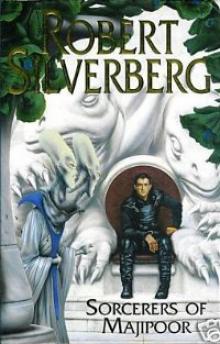 Sorcerers of Majipoor m-4
 Absolutely Inflexible
 Trips - 1962–73 - The Collected Stories of Robert Silverberg Volume Four
 Hot Times in Magma City - 1990-95 - The Collected Stories of Robert Silverberg Volume Eight
 Far Horizons
 The Queen of Springtime ns-2
 The Seventh Science Fiction Megapack
 Invaders From Earth
 Hanosz Prime Goes To Old Earth
 The Macauley Circuit
 Science Fiction: The Best of 2001
 To the Dark Star: The Collected Stories of Robert Silverberg, Volume Two
 Stochastic Man
 Legends: Stories By The Masters of Modern Fantasy
 To Live Again And The Second Trip
 Flies
Flies The Silent Invaders
 Ship-Sister, Star-Sister