
- Home
- Robert Silverberg
Dying Inside Page 7
Dying Inside Read online
Page 7
A roaring furnace. The heat is overwhelming. I’ve been in contact with intense minds before, far more intense even than this one, but that was when I was younger, stronger, more resilient. I can’t handle this volcanic blast. The force of his contempt for me is magnified factorially by the force of the self-contempt that needing my services makes him feel. He is a pillar of hatred. And my poor enfeebled power can’t take it. Some sort of automatic safety device cuts in to protect me from an overload: the mental receptors shut themselves down. This is a new experience for me, a strange one, this load-shedding phenomenon. It is as though limbs are dropping off, ears, balls, anything disposable, leaving nothing but a smooth torso. The inputs fall away, the mind of Yahya Lumumba retreats and is inaccessible to me, and I find myself involuntarily reversing the process of penetration until I can feel only his most superficial emanations, then not even those, only a gray furry exudation marking the mere presence of him alongside me. All is indistinct. All is muffled. Boum. We are back to that again. There is a ringing in my ears: it is an artifact of the sudden silence, a silence loud as thunder. A new stage on my downward path. Never have I lost my grip and slipped from a mind like this. I look up, dazed, shattered. Yahya Lumumba’s thin lips are tightly compressed; he stares down at me in distaste, having no inkling of what has occurred. I say faintly, “I’d like ten dollars now in advance. The rest you pay when I deliver the paper.” He tells me coldly that he has no money to give me today. His next check from the scholarship fund isn’t due until the beginning of the coming month. I’ll just have to do the job on faith, he says. Take it or leave it, man. “Can you manage five?” I ask. “As a binder. Faith isn’t enough. I have expenses.” He glares. He draws himself to his full height; he seems nine or ten feet tall. Without a word he takes a five-dollar bill from his wallet, crumples it, scornfully tosses it into my lap. “I’ll see you here the morning of November 9,” I call after him, as he stalks away. Europydes, Sophocles, Eeskilus. I sit stunned, shivering, listening to the bellowing silence. Boum. Boum. Boum.
TWELVE.
In his more flamboyantly Dostoevskian moments, David Selig liked to think of his power as a curse, a savage penalty for some unimaginable sin. The mark of Cain, perhaps. Certainly his special ability had caused a lot of trouble for him, but in his saner moments he knew that calling it a curse was sheer self-indulgent melodramatic bullshit. The power was a divine gift. The power brought ecstasy. Without the power he was nothing, a schmendrick; with it he was a god. Is that a curse? Is that so terrible? Something funny happens when gamete meets gamete, and destiny cries, Here, Selig-baby: be a god! This you would spurn? Sophocles, age 88 or so, was heard to express his great relief at having outlived the pressures of the physical passions. I am freed at last from a tyrannical master, said the wise and happy Sophocles. Can we then assume that Sophocles, had Zeus given him a chance retroactively to alter the entire course of his days, would have opted for lifelong impotence? Don’t kid yourself, Duvid: no matter how badly the telepathy stuff fucked you up, and it fucked you up pretty badly, you wouldn’t have done without it for a minute. Because the power brought ecstasy.
The power brought ecstasy. That’s the whole megillah in a single crisp phrase. Mortals are born into a vale of tears and they get their kicks wherever they can. Some, seeking pleasure, are compelled to turn to sex, drugs, booze, television, movies, pinochle, the stock market, the racetrack, the roulette wheel, whips and chains, collecting first editions, Caribbean cruises, Chinese snuff bottles, Anglo-Saxon poetry, rubber garments, professional football games, whatever. Not him, not the accursed David Selig. All he had to do was sit quietly with his apparatus wide open and drink in the thought-waves drifting on the telepathic breeze. With the greatest of ease he lived a hundred vicarious lives. He heaped his treasurehouse with the plunder of a thousand souls. Ecstasy. Of course, the ecstatic part was all quite some time ago.
The best years were those between the ages of fourteen and twenty-five. Younger, and he was still too naive, too unformed, to wring much appreciation from the data he took in. Older, and his growing bitterness, his sour sense of isolation, damped his capacity for joy. Fourteen to twenty-five, though. The golden years. Ah!
It was so very much more vivid then. Life was like a waking dream. There were no walls in his world; he could go anywhere and see anything. The intense flavor of existence. Steeped in the rich juices of perception. Not until Selig was past forty did he realize how much he had lost, over the years, in the way of fine focus and depth of field. The power had not begun detectibly to dim until he was well along in his thirties, but it obviously must have been fading by easy stages all through his manhood, dwindling so gradually that he remained unaware of the cumulative loss. The change had been absolute, qualitative rather than quantitative. Even on a good day, now, the inputs did not begin to approach the intensity of those he remembered from his adolescence. In those remote years the power had brought him not only bits of subcranial conversation and scattered snatches of soul, as now, but also a gaudy universe of colors, textures, scents, densities: the world through an infinity of other sensory intakes, the world captured and played out for his delight on the glassy radiant spherical screen within his mind.
* * *
For instance. He lies propped against an itchy August haystack in a hot Brueghelesque landscape, shortly past noon. This is 1950 and he hangs becalmed midway between his fifteenth birthday and his sixteenth. Some sound effects, Maestro: Beethoven’s Sixth, bubbling up gently, sweet flutes and playful piccolos. The sun dangles in a cloudless sky. A gentle wind stirs the willows bordering the cornfield. The young corn trembles. The brook burbles. A starling circles overhead. He hears crickets. He hears the drone of a mosquito, and watches calmly as it zeroes in on his bare, hair-less, sweat-shiny chest. His feet are bare too; he wears only tight, faded blue jeans. City boy, digging the country.
The farm is in the Catskills, twelve miles north of Ellenville. It is owned by the Schieles, a tribe of tawny Teutons, who produce eggs and an assortment of vegetable crops and who supplement their earnings every summer by renting out their guest house to some family of urban Yids looking for rural solace. This year the tenants are Sam and Annette Stein of Brooklyn, New York, and their daughter Barbara. The Steins have invited their close friends, Paul and Martha Selig, to spend a week on the farm with their son David and their daughter Judith. (Sam Stein and Paul Selig are hatching a scheme, destined ultimately to empty their bank accounts and destroy the friendship between the two families, to enter into a partnership and act as jobbers for replacement parts for television sets. Paul Selig is forever attempting unwise business ventures.) Today is the third day of the visit, and this afternoon, mysteriously, David finds himself utterly alone. His father has gone on an all-day hike with Sam Stein: in the serenity of the nearby hills they will plot the details of their commercial coup. Their wives have driven off, taking five-year-old Judith with them, to explore the antique shops of Ellenville. No one remains on the premises except the tightlipped Schieles, going somberly about their unending chores, and sixteen-year-old Barbara Stein, who has been David’s classmate from the third grade on through high school. Willy-nilly, David and Barbara are thrown together for the day. The Steins and the Seligs evidently have some unvoiced hope that romance will blossom between their offspring. This is naive of them. Barbara, a lush and reasonably beautiful dark-haired girl, sleek-skinned and long-legged, sophisticated and smooth of manner, is six months older than David chronologically, and three or four years ahead of him in social development. She does not actually dislike him, but she regards him as strange, disturbing, alien, and repellent. She has no knowledge of his special gift—no one does; he’s seen to that—but she’s had seven years to observe him at close range, and she knows there’s something fishy about him. She is a conventional girl, plainly destined to marry early (a doctor, a lawyer, an insurance broker) and have lots of babies, and the chances of romance flowering between her and anyone as dark-souled a
nd odd as David Selig are slight. David knows this very well and he is not at all surprised, or even dismayed, when Barbara slips away in mid-morning. “If anyone asks,” she says, “tell them I went for a stroll in the woods.” She carries a paperback poetry anthology. David is not deceived by it. He knows she goes off to screw 19-year-old Hans Schiele at every chance she gets.
So he is left to his own resources. No matter. He has ways of entertaining himself. He wanders the farm for a while, peering at the hen-coop and the combine, and then settles down in a quiet corner of the fields. Time for mind-movies. Lazily he casts his net. The power rises and goes forth, looking for emanations. What shall I read, what shall I read? Ah. A sense of contact. His questing mind has snared another mind, a buzzing one, small, dim, intense. It is a bee’s mind, in fact: David is not limited only to contact with humans. Of course there are no verbal outputs from the bee, nor any conceptual ones. If the bee thinks at all, David is incapable of detecting those thoughts. But he does get into the bee’s head. He experiences a strong sense of what it is like to be tiny and compact and winged and fuzzy. How dry the universe of a bee is: bloodless, desiccated, arid. He soars. He swoops. He evades a passing bird, as monstrous as a winged elephant. He burrows deep into a steamy, pollen-laden blossom. He goes aloft again. He sees the world through the bee’s faceted eyes. Everything breaks into a thousand fragments, as though seen through a cracked glass; the essential color of everything is gray, but odd hues lurk at the corners of things, peripheral blues and scarlets that do not correspond in any way to the colors he knows. The effect, he might have said twenty years later, is an extremely trippy one. But the mind of a bee is a limited one. David bores easily. He abandons the insect abruptly and, zooming his perceptions barnward, clicks into the soul of a hen. She is laying an egg! Rhythmic internal contractions, pleasurable and painful, like the voiding of a mighty turd. Frenzied squawks. The smarmy hen-coop odor, sharp and biting. A sense of too much straw all about. The world looks dark and dull to this bird. Heave. Heave. Oooh! Orgasmic excitement! The egg slides through the hatch and lands safely. The hen subsides, fulfilled, exhausted. David departs from her in this moment of rapture. He plunges deep into the adjoining woods, finds a human mind, enters it. How much richer and more intense it is to make communion with his own species. His identity blurs into that of his communicant who is Barbara Stein, who is getting laid by Hans Schiele. She is naked and lying on a carpet of last year’s fallen leaves. Her legs are spread and her eyes are closed. Her skin is damp with sweat. Hans’ fingers dig into the soft flesh of her shoulders and his cheek, rough with blond stubble, abrades her cheek. His weight presses down on her chest, flattening her breasts and emptying her lungs. With steady thrusts and unvarying tempo he penetrates her, and as his long stiff member slowly and patiently rams into her again and again, throbbing sensation spreads in eddying ripples outward from her loins, growing less intense with distance. Through her mind David observes the impact of the hard penis against the tender, slippery internal membranes. He picks up her clamorous heartbeat. He notices her hammering her heels against the calves of Hans’ legs. He is aware of the slickness of her own fluids on her buttocks and thighs. And now he senses the first dizzying spasms of orgasm. David struggles to remain with her, but he knows he won’t succeed; clinging to the consciousness of someone who’s coming is like trying to ride a wild horse. Her pelvis bucks and heaves, her fingernails desperately rake her lover’s back, her head twists to one side, she gulps for air, and, as she erupts with pleasure, she catapults David from her unsaddled mind. He travels only a short way, into the stolid soul of Hans Schiele, who unknowingly grants the virgin voyeur a few instants of knowledge of what it is like to be stoking the furnace of Barbara Stein, thrust and thrust and thrust and thrust, her inner muscles clamping fiercely against the swollen prod, and then, almost immediately, comes the tickle of Hans’ onrushing climax. Hungry for information, David holds on with all his strength, hoping to keep contact right through the tumult of fulfillment, but no, he is flipped free, he tumbles uncontrollably, the world goes swinging past him in giddy streaks of color, until—click!—he finds a new sanctuary. All is calm here. He glides through a dark cold environment. He has no weight; his body is long and slender and agile; his mind is nearly a void, but through it run faint chilly flickering perceptions of a low order. He has entered the consciousness of a fish, perhaps a brook trout. Downstream he moves in the swiftly rushing creek, taking delight in the smoothness of his motions and the delicious texture of the pure icy water flowing past his fins. He can see very little and smell even less; information comes to him in the form of minute impacts on his scales, tiny deflections and interferences. Easily he responds to each incoming news item, now twisting to avoid a fang of rock, now fluttering his fins to seize some speedy subcurrent. The process is fascinating, but the trout itself is a dull companion, and David, having extracted the troutness of the experience in two or three minutes, leaps gladly to a more complex mind the moment he approaches one. It is the mind of gnarled old Georg Schiele, Hans’ father, who is at work in a remote corner of the cornfield. David has never entered the elder Schiele’s mind before. The old man is a grim and forbidding character, well past sixty, who says little and stalks dourly through his day-long round of chores with his heavy-jowled face perpetually locked in a frosty scowl. David occasionally wonders whether he once might have been a concentration-camp attendant, though he knows the Schieles came to America in 1935. The farmer gives off so unpleasant a psychic aura that David has steered clear of him, but he is bored with the trout and he slips now into Schiele, slides down through dense layers of unintelligible Deutsch ruminations, and strikes bottom in the basement of the farmer’s soul, the place where his essence lives. Astonishment: old Schiele is a mystic, an ecstatic! No dourness here. No dark Lutheran vindictiveness. This is pure Buddhism: Schiele stands in the rich soil of his fields, leaning on his hoe, feet firmly planted, communing with the universe. God floods his soul. He touches the unity of all things. Sky, trees, earth, sun, plants, brook, insects, birds—everything is one, part of a seamless whole, and Schiele resonates in perfect harmony with it. How can this be? How can such a bleak, inaccessible man entertain such raptures in his depths? Feel his joy! Sensations drench him! Bird-song, sunlight, the scent of flowers and clods of upturned earth, the rustling of the sharp-bladed green cornstalks, the trickle of sweat down the reddened deep-channeled neck, the curve of the planet, the fleecy premature outline of the full moon—a thousand delights enfold this man. David shares his pleasure. He kneels in his mind, reverent, awed. The world is a mighty hymn. Schiele breaks from his stasis, raises his hoe, brings it down; heavy muscles go taut and metal digs into earth, and everything is as it should be, all conforms to the divine plan. Is this how Schiele goes through his days? Is such happiness possible? David is surprised to find tears bulging in his eyes. This simple man, this narrow man, lives in daily grace. Suddenly sullen, bitterly envious, David rips his mind free, whirls, projects it toward the woods, drops down into Barbara Stein again. She lies back, sweat-sticky, exhausted. Through her nostrils David receives the stink of semen already going sour. She rubs her hands over her skin, plucking stray bits of leaf and grass from herself. Idly she touches her softening nipples. Her mind is slow, dull, almost as empty as the trout’s, just now: sex seems to have drained her of personality. David shifts to Hans and finds him no better. Lying by Barbara’s side, still breathing hard after his exertions, he is torpid and depressed. His wad is shot and all desire is gone from him; peering sleepily at the girl he has just possessed, he is conscious mainly of body odors and the untidiness of her hair. Through the upper levels of his mind wanders a wistful thought, in English punctuated by clumsy German, of a girl from an adjoining farm who will do something to him with her mouth that Barbara refuses to do. Hans will be seeing her on Saturday night. Poor Barbara, David thinks, and wonders what she would say if she knew what Hans is thinking. Idly he tries to bridge their two minds, entering bo
th in the mischievous hope that thoughts may flow from one to the other, but he miscalculates his span and finds himself returning to old Schiele, deep in his ecstasy, while holding contact with Hans as well. Father and son, old and young, priest and profaner. David sustains the twin contact a moment. He shivers. He is filled with a thundering sense of the wholeness of life.
 The Longest Way Home
 Hawksbill Station
 A Time of Changes
 This Way to the End Times: Classic Tales of the Apocalypse
 Beyond the Gate of Worlds
 Lord Valentine's Castle
 The Man in the Maze
 Tales of Majipoor
 Time of the Great Freeze
 The Collected Stories of Robert Silverberg, Volume 3: Something Wild Is Loose: 1969-72
 Planet of Death
 Trips: The Collected Stories of Robert Silverberg, Volume Four
 In the Beginning: Tales From the Pulp Era
 Hot Sky at Midnight
 Valentine Pontifex
 Up the Line
 Thorns
 Amanda and the Alien
 Star of Gypsies
 Nightwings
 The Time Hoppers
 Blood on the Mink
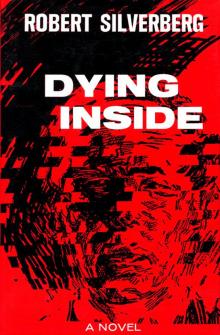 Dying Inside
 The Last Song of Orpheus
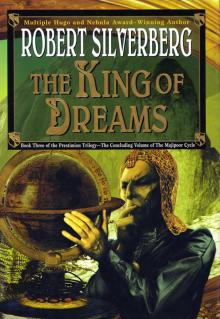 The King of Dreams
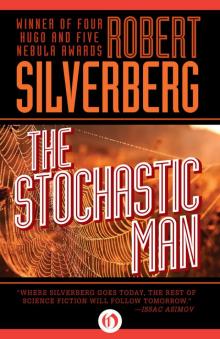 The Stochastic Man
 The Collected Stories of Robert Silverberg, Volume Seven: We Are for the Dark
 The Millennium Express: The Collected Stories of Robert Silverberg, Volume Nine
 The Iron Chancellor
 Lord Prestimion
 To Open the Sky
 The World Inside
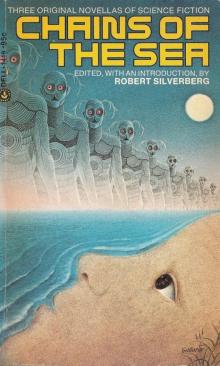 Chains of the Sea
 The Collected Stories of Robert Silverberg, Volume Five: The Palace at Midnight
 Postmark Ganymede
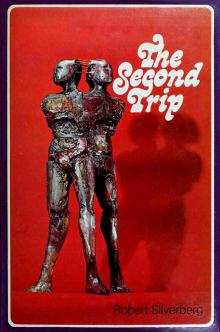 The Second Trip
 The Collected Stories of Robert Silverberg, Volume 4: Trips: 1972-73
 Son of Man
 Tom O'Bedlam
 To the Land of the Living
 To Be Continued: The Collected Stories of Robert Silverberg, Volume One
 Shadrach in the Furnace
 The Chalice of Death: Three Novels of Mystery in Space
 The Queen of Springtime
 To Be Continued 1953-1958
 Legends
 Roma Eterna
 To Live Again
 At Winter's End
 Needle in a Timestack
 To Live Again and the Second Trip: The Complete Novels
 Lord of Darkness
 The Mountains of Majipoor
 The World Outside
 The Alien Years
 The Book of Skulls
 The Face of the Waters
 Gilgamesh the King
 The Collected Stories of Robert Silverberg, Volume 6: Multiples: 1983-87
 The Happy Unfortunate
 Three Survived
 Cronos
 Tower of Glass
 Legends II
 The Planet Killers
 The Collected Stories of Robert Silverberg, Volume 2: To the Dark Star: 1962-69
 Downward to the Earth
 Lord Valentine's Castle: Book One of the Majipoor Cycle
 Hot Times in Magma City, 1990-95
 Hunt the Space-Witch! Seven Adventures in Time and Space
 Majipoor Chronicles
 The Robert Silverberg Science Fiction Megapack(r)
 Starman's Quest
 Car Sinister
 Worlds of Maybe
 Fantasy The Best of 2001
 Revolt on Alpha C
 Homefaring
 The Pardoner's Tale
 Sailing to Byzantium - Six Novellas
 The Chalice of Death
 Sundance
 A Tip on a Turtle
 Nebula Awards Showcase 2001: The Year's Best SF and Fantasy Chosen by the Science Fiction and Fantasy Writers of America
 The Fangs of the Trees
 The Palace at Midnight: The Collected Work of Robert Silverberg, Volume Five
 The Millennium Express - 1995-2009 - The Collected Stories of Robert Silverberg Volume Nine
 Book of Skulls
 Passengers
 Something Wild is Loose - 1969–72 - The Collected Stories of Robert Silverberg Volume Three
 Multiples
 Starborne
 The Masks of Time
 The Mountains of Majipoor m-8
 Multiples (1983-87)
 Those Who Watch
 In the Beginning
 Earth Is The Strangest Planet
 Collision Course
 Neutral Planet
 To the Dark Star - 1962–69 - The Collected Stories of Robert Silverberg Volume Two
 Mutants
 Sailing to Byzantium
 When We Went to See the End of the World
 Robert Silverberg The Science Fiction Hall Of Fame Volume One, 1929-1964
 To Be Continued - 1953–58 - The Collected Stories of Robert Silverberg Volume One
 Valentine Pontifex m-3
 Gianni
 Majipoor Chronicles m-2
 We Are for the Dark (1987-90)
 Waiting for the Earthquake
 Fantasy: The Best of 2001
 How It Was When the Past Went Away
 Beauty in the Night
 The Man Who Never Forgot
 The Book of Changes m-9
 Lord Valentine's Castle m-1
 This Way to the End Times
 Queen of Springtime
 Legends-Volume 3 Stories by the Masters of Modern Fantasy
 The Palace at Midnight - 1980–82 - The Collected Stories of Robert Silverberg Volume Five
 Something Wild is Loose: The Collected Stories of Robert Silverberg, Volume Three
 Multiples - 1983–87 - The Collected Stories of Robert Silverberg Volume Six
 Alaree
 Three Survived: A Science Fiction Novel
 Defenders of the Frontier
 The New Springtime
 We Are for the Dark - 1987–90 - The Collected Stories of Robert Silverberg Volume Seven
 The Science Fiction Hall of Fame, Volume One 1929-1964--The Greatest Science Fiction Stories of All Time Chosen by the Members of the Science Fiction Writers of America
 Master Of Life And Death
 Choke Chain
 Sorcerers of Majipoor m-4
 Absolutely Inflexible
 Trips - 1962–73 - The Collected Stories of Robert Silverberg Volume Four
 Hot Times in Magma City - 1990-95 - The Collected Stories of Robert Silverberg Volume Eight
 Far Horizons
 The Queen of Springtime ns-2
 The Seventh Science Fiction Megapack
 Invaders From Earth
 Hanosz Prime Goes To Old Earth
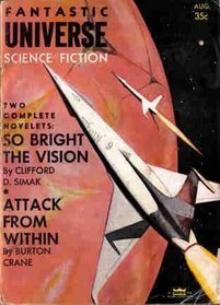 The Macauley Circuit
 Science Fiction: The Best of 2001
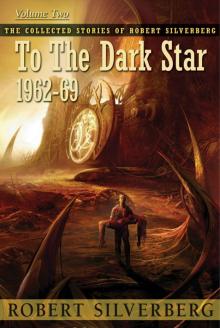 To the Dark Star: The Collected Stories of Robert Silverberg, Volume Two
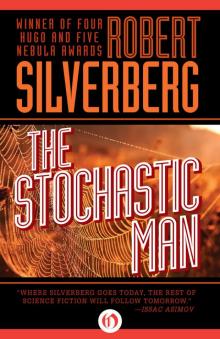 Stochastic Man
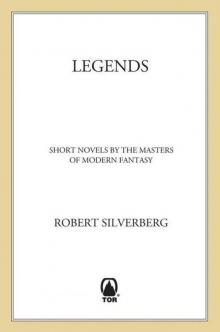 Legends: Stories By The Masters of Modern Fantasy
 To Live Again And The Second Trip
 Flies
Flies The Silent Invaders
 Ship-Sister, Star-Sister