
- Home
- Robert Silverberg
Nightwings Page 7
Nightwings Read online
Page 7
I hesitated. I could not bring myself to explain how it was that this time Avluela flew by day, though she had only nightwings. I could not tell the Prince of Roum that beside her, wingless, flew the invader Gormon, effortlessly moving through the air, his arm about her thin shoulders, steadying her, supporting her, helping her resist the pressure of the solar wind. I could not tell him that his nemesis flew with the last of his consorts above his head.
“Well?” he demanded. “How does she fly by day?”
“I do not know,” I said. “It is a mystery to me. There are many things nowadays I can no longer understand.”
The Prince appeared to accept that. “Yes, Watcher. Many things none of us can understand.”
He fell once more into silence. I yearned to call out to Avluela, but I knew she could not and would not hear me, and so I walked on toward the sunset, toward Perris, leading the blind Prince. And over us Avluela and Gormon sped onward, limned sharply against the day’s last glow, until they climbed so high they were lost to my sight.
Part II
AMONG THE REMEMBERERS
TO journey with a fallen Prince is no easy thing. His eyes were gone, but not his pride; blinding had taught him no humility. He wore the robes and mask of a Pilgrim, but there was no piety in his soul and little grace. Behind his mask he still knew himself to be the Prince of Roum.
I was all his court now, as we walked the road to Perris in early springtime. I led him along the right roads; I amused him at his command with stories of my wanderings; I nursed him through moods of sulky bitterness. In return I got very little except the assurance that I would eat regularly. No one denies food to a Pilgrim, and in each village on our way we stopped in inns, where he was fed and I, as his companion, also was given meals. Once, early in our travels, he erred and haughtily told an innkeeper, “See that you feed my servant as well!” The blinded Prince could not see that look of shocked disbelief—for what would a Pilgrim be doing with a servant?—but I smiled at the innkeeper, and winked, and tapped my forehead, and the man understood and served us both without discussion. Afterward I explained the error to the Prince, and thereafter he spoke of me as his companion. Yet I knew that to him I was nothing but a servant.
The weather was fair. Eyrop was growing warm as the year turned. Slender willows and poplars were greening beside the road, though much of the way out of Roum was planted with lavish star-trees imported during the gaudy days of the Second Cycle, and their blue-bladed leaves had resisted our puny Eyropan winter. The birds, too, were coming back from their season across the sea in Afreek. They sparkled overhead, singing, discussing among themselves the change of masters in the world. “They mock me,” said the Prince one dawn. “They sing to me and defy me to see their brightness!”
Oh, he was bitter, and with good reason. He, who had had so much and lost all, had a good deal to lament. For me, the defeat of Earth meant only an end to habits. Otherwise all was the same: no longer need I keep my Watch, but I still wandered the face of the world, alone even when, as now, I had a companion.
I wondered if the Prince knew why he had been blinded. I wondered if, in the moment of his triumph, Gormon had explained to the Prince that it was as elemental a matter as jealousy over a woman that had cost him his eyes.
“You took Avluela,” Gormon might have said. “You saw a little Flier, and you thought she’d amuse you. And you said, here, girl, come to my bed. Not thinking of her as a person. Not thinking she might prefer others. Thinking only as a Prince of Roum might think—imperiously. Here, Prince!”
—and the quick, forked thrust of long-tipped fingers—
But I dared not ask. That much awe remained in me for this fallen monarch. To penetrate his privacy, to strike up a conversation with him about his mishaps as though he were an ordinary companion of the road—no, I could not. I spoke when I was spoken to. I offered conversation upon command. Otherwise I kept my silence, like a good commoner in the presence of royalty.
Each day we had our reminders that the Prince of Roum was royalty no longer.
Overhead flew the invaders, sometimes in floaters or other chariots, sometimes under their own power. Traffic was heavy. They were taking inventory of their world. Their shadows passed over us, tiny eclipses, and I looked up to see our new masters and oddly felt no anger at them, only relief that Earth’s long vigil was over. For the Prince it was different. He always seemed to know when some invader passed above, and he clenched his fists, and scowled, and whispered black curses. Did his optic nerves still somehow record the movements of shadows? Or were his remaining senses so sharpened by the loss of one that he could detect the imperceptible humming of a floater and sniff the skins of the soaring invaders? I did not ask. I asked so little.
Sometimes at night, when he thought I slept, he sobbed. I pitied him then. He was so young to lose what he had, after all. I learned in those dark hours that even the sobs of a Prince are not those of ordinary men. He sobbed defiantly, belligerently, angrily. But yet he sobbed.
Much of the time he seemed stoic, resigned to his losses. He put one foot before the other and walked on briskly beside me, every step taking him farther from his great city of Roum, nearer to Perris. At other times, though, it seemed I could look through the bronze grillwork of his mask to see the curdled soul within. His pent-up rage took petty outlets. He mocked me for my age, for my low rank, for the emptiness of my life’s purpose now that the invasion for which I had Watched had come. He toyed with me.
“Tell me your name, Watcher!”
“It is forbidden, Majesty.”
“Old laws are now repealed. Come on, man, we have months to travel together. Can I go on calling you Watcher all that time?”
“It is the custom of my guild.”
“The custom of mine,” he said, “is to give orders and have them obeyed. Your name!”
“Not even the guild of Dominators can have a Watcher’s name without due cause and a guildmaster’s writ.”
He spat. “What a jackal you are, to defy me when I’m like this! If we were in my palace now, you’d never dare!”
“In your palace, Majesty, you would not make this unjust demand on me before your court. Dominators have obligations too. One of them is to respect the ways of lesser guilds.”
“He lectures me,” said the Prince. Irritably he threw himself down beside the road. Stretching against the grassy slope, he leaned back, touched one of the star-trees, snapped off a row of blades, clenched them in his hand so that they must have pricked his palm painfully. I stood beside him. A heavy land-vehicle rumbled by, the first we had seen on that empty road this morning. Within it were invaders. Some of them waved to us. After a long while the Prince said in a lighter, almost wheedling tone, “My name is Enric. Now tell me yours.”
“I beg you to let me be, Majesty.”
“But you have my name! It is just as forbidden for me to give mine as you yours!”
“I did not ask yours,” I said firmly.
In the end I did not give him my name. It was a small enough victory, to refuse such information to a powerless Prince, but in a thousand little ways he made me pay for it. He nagged, chivvied, teased, cursed, and berated me. He spoke with contempt of my guild. He demanded menial services of me. I lubricated his metal mask; I sponged ointment into his ruined eyes; I did other things too humiliating to recall. And so we stumbled along the highway to Perris, the empty old man and the emptied young one, full of hatred for one another, and yet bound by the needs and the duties of wayfarers.
It was a difficult time. I had to cope with his changing moods as he soared to cosmic rapture over his plans for redeeming conquered Earth, and as he sank to abysses upon his inescapable realization that the conquest was final. I had to protect him from his own rashness in the villages, where he sometimes behaved as though he were still Prince of Roum, ordering folk about, slapping them even, in a way that was unbecoming to a holy man. Worse yet, I had to minister to his lusts, buying him women who came to
him in darkness, unaware that they were dealing with one who claimed to be a Pilgrim. As a Pilgrim he was a fraud, for he did not carry the starstone with which Pilgrims make communion with the Will. Somehow I got him past all of these crises, even the time when we encountered on the road another Pilgrim, a genuine one. This was a formidable and disputatious old man full of theological quibbles. “Come and talk with me of the immanence of the Will,” he said to the Prince, and the Prince, whose patience was frayed that afternoon, replied obscenely. I kicked the princely shin in a surreptitious way, and to the shocked Pilgrim I said, “Our friend is unwell today. Last night he held communion with the Will and received a revelation that unsettled his mind. I pray you, let us go on, and give him no talk of holiness until he is himself once more.”
With such improvisations I managed our journey.
As the weather warmed, the Prince’s attitude mellowed. Perhaps he was growing reconciled to his catastrophe, or possibly, in the prison of his lightless skull, he was teaching himself new tactics for meeting his changed existence. He talked almost idly of himself, his downfall, his humiliation. He spoke of the power that had been his in terms that said unmistakably that he had no illusions about ever recapturing it. He talked of his wealth, his women, his jewels, his strange machines, his Changelings and Musicians and Servitors, the Masters and even fellow Dominators who had knelt to him. I will not say that at any time I liked him, but at least at these times I recognized a suffering human being behind his impassive mask.
He even recognized in me a human being. I know it cost him much.
He said, “The trouble with power, Watcher, is that it cuts you off from people. People become things. Take yourself. To me, you were nothing but a machine that walked around Watching for invaders. I suppose you had dreams, ambitions, angers, all the rest, but I saw you as a dried-up old man without any independent existence outside of your guild function. Now I see much more by seeing nothing.”
“What do you see?”
“You were young once, Watcher. You had a town you loved. A family. A girl, even. You chose, or had chosen for you, a guild, you went into apprenticeship, you struggled, your head ached you, your belly griped you, there were many dark moments when you wondered what it was all about, what it was for. And you saw us ride by, Masters, Dominators, and it was like comets going past. Yet here we are together, cast up by the tides on the road to Perris. And which of us is happier now?”
“I am beyond happiness or sorrow,” I said.
“Is that the truth? Is that the truth? Or is it a line you hide behind? Tell me, Watcher: I know your guild forbids you to marry, but have you ever loved?”
“Sometimes.”
“And are you beyond that now?”
“I am old,” I said evasively.
“But you could love. You could love. You’re released from your guild vows now, eh? You could take a bride.”
I laughed. “Who’d have me?”
“Don’t speak that way. You’re not that old. You have strengths. You’ve seen the world, you understand it. Why, in Perris you could find yourself some wench who—” He paused. “Were you ever tempted, while you still were under your vows?”
Just then a Flier passed overhead. She was a woman of middle years, struggling a little in the sky, for some daylight remained to press on her wings. I felt a pang, and I wanted to tell the Prince: yes, yes, I was tempted, there was a little Flier not long ago, a girl, a child, Avluela; and in my way I loved her, though I never touched her; and I love her still.
I said nothing to Prince Enric.
I looked, though, at that Flier, freer than I because she had wings, and in the warmth of that spring evening I felt the chill of desolation enfolding me.
“Is it far to Perris?” the Prince asked.
“We will walk, and one day we will get there.”
“And then?”
“For me an apprenticeship in the guild of Rememberers, and a new life. For you?”
“I hope to find friends there,” he said.
We walked on, long hours each day. There were those who went by and offered us rides, but we refused, for at the checkpoints the invaders would be seeking such wandering members of the nobility as the Prince. We walked a tunnel miles long under sky-storming mountains sheathed in ice, and we entered a flat land of farming peasants, and we paused by awakening rivers to cool our toes. Golden summer burst upon us. We moved through the world but were not of it; we listened to no news of the conquest, although it was obvious that the invaders had taken full possession. In small vehicles they hovered everywhere, seeing our world that now was theirs.
I did the bidding of the Prince in all ways, including the unpleasant ones. I attempted to make his life less bleak. I gave him a sensation of being still a ruler—albeit of only one useless old Watcher. I taught him, too, how best to masquerade as a Pilgrim. From what little I knew I gave him postures, phrases, prayers. It was obvious that he had spent little time in contact with the Will while he reigned. Now he professed faith, but it was insincere, part of his camouflage.
In a town called Dijon, he said, “Here I will purchase eyes.”
Not true eyes. The secret of making such replacements perished in the Second Cycle. Out among the more fortunate stars any miracle is available for a price, but our Earth is a neglected world in a backwater of the universe. The Prince might have gone out there in the days before conquest to purchase new sight, but now the best that was available to him was a way of distinguishing light from dark. Even that would give him a rudiment of sight; at present he had no other guidance than the reverberator that warned him of obstacles in his path. How did he know, though, that in Dijon he would find a craftsman with the necessary skills? And with what would he meet the cost?
He said, “The man here is a brother of one of my Scribes. He is of the guild of Artificers, and I often bought his work in Roum. He’ll have eyes for me.”
“And the cost?”
“I am not entirely without resources.”
We stopped in a field of gnarled cork-trees, and the Prince undid his robes. Indicating a place in the fleshy part of his thigh, he said, “I carry a reserve here for emergencies. Give me your blade!” I handed it to him, and he seized the handle and pressed the stud that brought forth the cool, keen beam of light. With his left hand he felt his thigh, surveying for the exact place; then, stretching the flesh between two fingers, he made a surgically precise cut two inches long. He did not bleed, nor was there a sign that he felt pain. I watched in bewilderment as he slipped his fingers into the cut, spread its edges, and seemed to grope as if in a sack. He tossed my blade back to me.
Treasures tumbled from his thigh.
“Watch that nothing is lost,” he ordered me.
To the grass there fell seven sparkling jewels of alien origin, a small and artful celestial globe, five golden coins of Imperial Roum of cycles past, a ring set with a glowing dab of quasi-life, a flask of some unknown perfume, a group of miniature musical instruments done in precious woods and metals, eight statuettes of regal-looking men, and more. I scooped these wonders into a dazzling heap.
“An overpocket,” the Prince said coolly, “which a skilled Surgeon implanted in my flesh. I anticipated a time of crisis in which I might need to leave the palace hurriedly. Into it I stuffed what I could; there is much more where these came from. Tell me, tell me what I have taken out!”
I gave him the full inventory. He listened tensely to the end, and I knew that he had kept count of all that had poured forth, and was testing my honesty. When I was done, he nodded, pleased. “Take the globe,” he said, “and the ring, and the two brightest jewels. Hide them in your pouch. The rest goes back within.” He spread the lips of the incision, and one by one I dropped the glories inside, where they joined who knew what splendid things lying in another dimension, the outlet from which was embedded in the Prince. He might have half the contents of the palace tucked away in his thigh. At the end he pressed the cut together, and it hea
led without a trace of a mark as I watched. He robed himself.
In town we quickly located the shop of Bordo the Artificer. He was a squat man with a speckled face, a grizzled beard, a tic in one eye, and a flat coarse nose, but his fingers were as delicate as a woman’s. His shop was a dark place with dusty wooden shelves and small windows; it could have been a building ten thousand years old. A few elegant items were on display. Most were not. He looked at us guardedly, obviously baffled that a Watcher and a Pilgrim should come to him.
At the Prince’s prodding I said, “My friend needs eyes.”
“I make a device, yes. But it is expensive, and it takes many months to prepare. Beyond the means of any Pilgrim.”
I laid one jewel on the weathered counter. “We have means.”
Shaken, Bordo snatched up the jewel, turned it this way and that, saw the alien fires glowing at its heart.
“If you come back when the leaves are falling—”
“You have no eyes in stock?” I asked.
He smiled. “I get few calls for such things. We keep a small inventory.”
I put down the celestial globe. Bordo recognized it as the work of a master, and his jaw sagged. He put it in one palm and tugged at his beard with the other hand. I let him look at it long enough to fall in love with it, and then I took it back and said, “Autumn is too long to wait. We will have to go elsewhere. Perris, perhaps.” I caught the Prince’s elbow, and we shuffled toward the door.
“Stop!” Bordo cried. “At least let me check! Perhaps I have a pair somewhere—” And he began to rummage furiously in overpockets mounted in the rear wall.
He had eyes in stock, of course, and I haggled a bit on the price, and we settled for the globe, the ring, and one jewel. The Prince was silent throughout the transaction. I insisted on immediate installation and Bordo, nodding excitedly, shut his shop, slipped on a thinking cap, and summoned a sallow-faced Surgeon. Shortly the preliminaries of the operation were under way. The Prince lay on a pallet in a sealed and sterile room. He removed his reverberator and then his mask; and as those sharp features came into view, Bordo—who had been to the court of Roum—grunted in amazement and began to say something. My foot descended heavily on his. Bordo swallowed his words; and the Surgeon, unaware, began tranquilly to swab the ruined sockets.
 The Longest Way Home
 Hawksbill Station
 A Time of Changes
 This Way to the End Times: Classic Tales of the Apocalypse
 Beyond the Gate of Worlds
 Lord Valentine's Castle
 The Man in the Maze
 Tales of Majipoor
 Time of the Great Freeze
 The Collected Stories of Robert Silverberg, Volume 3: Something Wild Is Loose: 1969-72
 Planet of Death
 Trips: The Collected Stories of Robert Silverberg, Volume Four
 In the Beginning: Tales From the Pulp Era
 Hot Sky at Midnight
 Valentine Pontifex
 Up the Line
 Thorns
 Amanda and the Alien
 Star of Gypsies
 Nightwings
 The Time Hoppers
 Blood on the Mink
 Dying Inside
 The Last Song of Orpheus
 The King of Dreams
 The Stochastic Man
 The Collected Stories of Robert Silverberg, Volume Seven: We Are for the Dark
 The Millennium Express: The Collected Stories of Robert Silverberg, Volume Nine
 The Iron Chancellor
 Lord Prestimion
 To Open the Sky
 The World Inside
 Chains of the Sea
 The Collected Stories of Robert Silverberg, Volume Five: The Palace at Midnight
 Postmark Ganymede
 The Second Trip
 The Collected Stories of Robert Silverberg, Volume 4: Trips: 1972-73
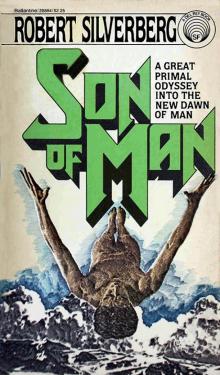 Son of Man
 Tom O'Bedlam
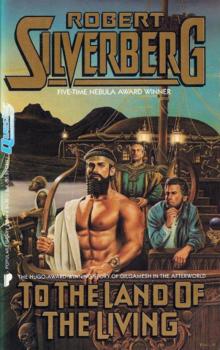 To the Land of the Living
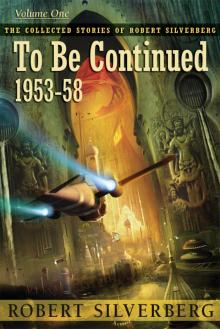 To Be Continued: The Collected Stories of Robert Silverberg, Volume One
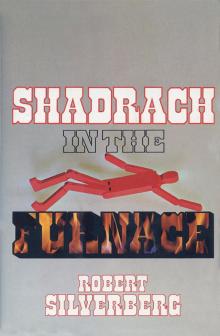 Shadrach in the Furnace
 The Chalice of Death: Three Novels of Mystery in Space
 The Queen of Springtime
 To Be Continued 1953-1958
 Legends
 Roma Eterna
 To Live Again
 At Winter's End
 Needle in a Timestack
 To Live Again and the Second Trip: The Complete Novels
 Lord of Darkness
 The Mountains of Majipoor
 The World Outside
 The Alien Years
 The Book of Skulls
 The Face of the Waters
 Gilgamesh the King
 The Collected Stories of Robert Silverberg, Volume 6: Multiples: 1983-87
 The Happy Unfortunate
 Three Survived
 Cronos
 Tower of Glass
 Legends II
 The Planet Killers
 The Collected Stories of Robert Silverberg, Volume 2: To the Dark Star: 1962-69
 Downward to the Earth
 Lord Valentine's Castle: Book One of the Majipoor Cycle
 Hot Times in Magma City, 1990-95
 Hunt the Space-Witch! Seven Adventures in Time and Space
 Majipoor Chronicles
 The Robert Silverberg Science Fiction Megapack(r)
 Starman's Quest
 Car Sinister
 Worlds of Maybe
 Fantasy The Best of 2001
 Revolt on Alpha C
 Homefaring
 The Pardoner's Tale
 Sailing to Byzantium - Six Novellas
 The Chalice of Death
 Sundance
 A Tip on a Turtle
 Nebula Awards Showcase 2001: The Year's Best SF and Fantasy Chosen by the Science Fiction and Fantasy Writers of America
 The Fangs of the Trees
 The Palace at Midnight: The Collected Work of Robert Silverberg, Volume Five
 The Millennium Express - 1995-2009 - The Collected Stories of Robert Silverberg Volume Nine
 Book of Skulls
 Passengers
 Something Wild is Loose - 1969–72 - The Collected Stories of Robert Silverberg Volume Three
 Multiples
 Starborne
 The Masks of Time
 The Mountains of Majipoor m-8
 Multiples (1983-87)
 Those Who Watch
 In the Beginning
 Earth Is The Strangest Planet
 Collision Course
 Neutral Planet
 To the Dark Star - 1962–69 - The Collected Stories of Robert Silverberg Volume Two
 Mutants
 Sailing to Byzantium
 When We Went to See the End of the World
 Robert Silverberg The Science Fiction Hall Of Fame Volume One, 1929-1964
 To Be Continued - 1953–58 - The Collected Stories of Robert Silverberg Volume One
 Valentine Pontifex m-3
 Gianni
 Majipoor Chronicles m-2
 We Are for the Dark (1987-90)
 Waiting for the Earthquake
 Fantasy: The Best of 2001
 How It Was When the Past Went Away
 Beauty in the Night
 The Man Who Never Forgot
 The Book of Changes m-9
 Lord Valentine's Castle m-1
 This Way to the End Times
 Queen of Springtime
 Legends-Volume 3 Stories by the Masters of Modern Fantasy
 The Palace at Midnight - 1980–82 - The Collected Stories of Robert Silverberg Volume Five
 Something Wild is Loose: The Collected Stories of Robert Silverberg, Volume Three
 Multiples - 1983–87 - The Collected Stories of Robert Silverberg Volume Six
 Alaree
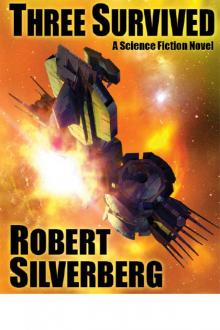 Three Survived: A Science Fiction Novel
 Defenders of the Frontier
 The New Springtime
 We Are for the Dark - 1987–90 - The Collected Stories of Robert Silverberg Volume Seven
 The Science Fiction Hall of Fame, Volume One 1929-1964--The Greatest Science Fiction Stories of All Time Chosen by the Members of the Science Fiction Writers of America
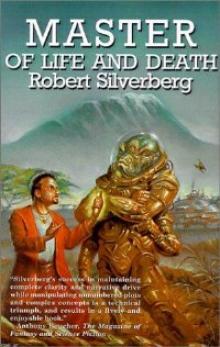 Master Of Life And Death
 Choke Chain
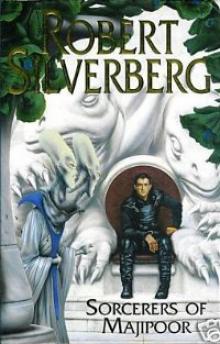 Sorcerers of Majipoor m-4
 Absolutely Inflexible
 Trips - 1962–73 - The Collected Stories of Robert Silverberg Volume Four
 Hot Times in Magma City - 1990-95 - The Collected Stories of Robert Silverberg Volume Eight
 Far Horizons
 The Queen of Springtime ns-2
 The Seventh Science Fiction Megapack
 Invaders From Earth
 Hanosz Prime Goes To Old Earth
 The Macauley Circuit
 Science Fiction: The Best of 2001
 To the Dark Star: The Collected Stories of Robert Silverberg, Volume Two
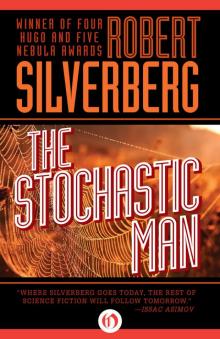 Stochastic Man
 Legends: Stories By The Masters of Modern Fantasy
 To Live Again And The Second Trip
 Flies
Flies The Silent Invaders
 Ship-Sister, Star-Sister