
- Home
- Robert Silverberg
The Stochastic Man Page 7
The Stochastic Man Read online
Page 7
“She’s working on me, too,” I said.
Friedman was slumped on the couch, glassy-eyed, staring dully at the sunrise over Brooklyn. Sundara, steeped in classical Hindu erotology, was a heavy trip for any man.
—when a woman clasps her lover as closely as a serpent twines around a tree, and pulls his head towards her waiting lips, if she then kisses him making a light hissing sound “soutt soutt” and looks at him long and tenderly—her pupils dilated with desire—this posture is known as the Clasp of the Serpent—
“Anyone for breakfast?”
I asked. Catalina smiled obliquely. Sundara merely inclined her head. Friedman looked unenthusiastic. “Later,” he said, voice barely rising above a whisper. A burned-out husk of a man.
—when a woman places one foot on the foot of her lover, and the other around his thigh, when she puts one arm around his neck and the other around his loins, and softly croons her desire, as if she wished to climb the firm stem of his body and capture a kiss—it is known as the Tree Climber—
I left them sprawled in their various parts of the living room and went off to shower. I had had no sleep but my mind was alert and active. A strange night, a busy night: I felt more alive than in weeks, and I sensed a stochastic tickle, a tremor of clairvoyance, that warned me I was moving to the threshold of some new transformation. I took the shower full force, punching for maximum vibratory enhancement, waves of ultrasound keying into my throbbing outreaching nervous system, and emerged looking for new worlds to conquer.
No one was in the living room but Friedman, still naked, still glazed of eye, still supine on the couch.
“Where’d they go?” I asked.
Languidly he waved a finger toward the master bedroom. So Catalina had scored her goal after all.
Was I expected to extend similar hospitality to Friedman now? My bisexuality quotient is low and he inspired not a shred of gaiety in me just then. But no, Sundara bad dismantled his libido; he flashed no signs except exhaustion. “You’re a lucky man,” he murmured after a while. “What a marvelous woman…. What... a... marvelous...” I thought he had dozed. “. . . woman. Is she for sale?”
“Sale?”
He sounded almost serious.
“Your Oriental slave girl is who I’m talking about.”
“My wife?”
“You bought her in the market in Baghdad. Five hundred dinars for her, Nichols.”
“No deal.”
“A thousand.”
“Not for two empires,” I said.
He laughed. “Where’d you find her?”
“California.”
“Are there any more like that out there?”
“She’s unique,” I told him. “So am I, so are you, so is Catalina. People don’t come in standard models, Friedman. Are you interested in breakfast yet?”
He yawned. “If we want to be reborn on the proper level we must learn to purify ourselves of the needs of the meat. That’s Transit. I’ll mortify my meat by renouncing breakfast as a start.” His eyes closed and he went away.
I had breakfast alone and watched morning come rushing out of the Atlantic at us. I took the morning Times out of its door slot and was pleased to see that Quinn’s speech had made the front page, below the fold but with a two-column photo, MAYOR CALLS FOR FULL HUMAN POTENTIAL. That was the headline, a bit below the Times’ usual standard of incisiveness. The story used his Ultimate Society tag as its lead and quoted half a dozen glittering phrases in the first twenty lines. The story then jumped to page 21, and the complete text was in a box accompanying the jump. I found myself reading it, and as I read I found myself wondering why I had been so stirred, for the printed speech seemed to lack any real content; it was purely a verbal object, a collection of catchy lines, offering no program, making no concrete suggestions. And to me last night it had sounded like a blueprint for Utopia. I shivered. Quinn had provided nothing more than an armature; I myself had hung the trimmings on, all my vague fantasies of social reform and millennial transformation. Quinn’s performance had been pure charisma in action, an elemental force working us over from the dais. So it is with all the great leaders: the commodity they have to sell is personality. Mere ideas can be left to lesser men.
The phone began ringing a little after eight. Mardikian wanted to distribute a thousand videotapes of the speech to New Democratic organizations all over the country; what did I think? Lombroso reported pledges of half a million to the as yet nonexistent Quinn-for-President campaign kitty in the aftermath of the speech. Missakian... Ephrikian... Sarkisian...
When I finally had a quiet moment, I came out and found Catalina Yarber, wearing her blouse and her thigh chain, prodding Lamont Friedman into wakefulness. She gave me a foxy grin. “We’ll be seeing more of each other, I know,” she said throatily.
They left. Sundara slept on. There were no more phone calls. Quinn’s speech was making waves everywhere. Eventually she emerged, naked, delicious, sleepy, but perfect in her beauty, not even puffy-eyed.
“I think I want to know more about Transit,” she said.
14
Three days later I came home and was startled to find Sundara and Catalina, both nude, kneeling side by side on the living-room carpet. How beautiful they looked, the pale body beside the chocolate one, the short yellow hair and the long black cascade, the dark nipples and the pink. It was not the prelude to a pasha’s orgy, though. The air was rich with incense and they were running through litanies. “Everything passes,” Yarber intoned, and Sundara repeated, “Everything passes.” A golden chain constricted the dusky satin of my wife’s left thigh and the Transit Creed medallion was mounted on it.
She and Catalina displayed a courteous don’t-mind-us attitude toward me and went on with what they were doing, which evidently was an extended catechism. I thought they would rise at some point and disappear into the bedroom, but no, the nudity was purely ritual, and when they were done with the teachings they donned their clothes and brewed tea and gossiped like old friends. That night, when I reached for Sundara, she said gently that she couldn’t make love just now. Not wouldn’t, not didn’t want to, but couldn’t. As if she had entered into a state of purity that must not at the moment be defiled by lust.
So it began, Sundara’s passage into Transit. At first there was only the morning meditation, ten minutes in silence; then there were the evening readings, out of mysterious paperbound books poorly printed on cheap paper; in the second week she announced there would be a meeting in the city every Tuesday night, and could I manage without her? Tuesdays became nights of sexual abstinence for us also; she was apologetic but firm about that. She seemed distant, preoccupied, engrossed with her conversion. Even her work, the art gallery she ran so shrewdly, seemed unimportant to her. I suspected she was seeing Catalina often in the city during the day, and I was right, though in my naive Western materialist way I imagined they were merely having a love affair, meeting in hotel rooms for interludes of slippery grapplings and tonguings, when in fact it was Sundara’s soul far more than her body that had been seduced. Old friends had warned me long ago: marry a Hindu and you’ll be twirling prayer wheels with her from dusk to dawn, you’ll turn into a vegetarian, she’ll have you singing hymns to Krishna. I laughed at them. Sundara was American, Western, earthy. But now I saw her Sanskrit genes taking their revenge.
Transit, of course, wasn’t Hindu—more a mixture of Buddhism and fascism, actually, a stew of Zen and Tantra and Platonism and Gestalt therapy and Poundian economics and what-all else, and neither Krishna nor Allah nor Jehovah nor any other divinity figured in its beliefs. It had come out of California, naturally, six or seven years ago, a characteristic product of the Wild ‘90s that had succeeded the Goofy ‘80s that had followed the Horrid ‘70s, and, diligently proselytized by an ever-expanding horde of dedicated proctors, it had spread rapidly through such less enlightened places as the eastern United States. Until Sundara’s conversion I had paid little attention to it; it was not so much repugnan
t as irrelevant to me. But as it began to absorb more and more of my wife’s energies, I started to take a closer look.
Catalina Yarber had been able to express most of the basic tenets in five minutes, the night she and I bedded. This world is unimportant, the Transit folk assert, and our passage through it is brief, a quick trifling trip. We go through, we are reborn into it, we go through again, we keep on going through until at last we are freed from the wheel of karma and pass onward to the blissful annihilation that is nirvana, when we become one with the cosmos. What holds us to the wheel is ego attachment: we become hooked on things and needs and pleasures, on self-gratification, and so long as we retain a self that requires gratification we will be born again and again into this dreary meaningless little mud-ball. If we want to move to a higher plane and ultimately to reach the Highest, we must refine our souls in the crucible of renunciation.
All that is fairly orthodox Eastern theology. The special kicker of Transit is its emphasis on volatility and mutability. Transition is all; change is essential; stasis kills; rigid consistency is the road to undesirable rebirths. Transit processes work toward constant evolution, toward perpetual quicksilver flow of the spirit, and encourage unpredictable, even eccentric, behavior. That’s the appeal: the sanctification of craziness. The universe, the proctors say, is in perpetual flux; we never can step twice into the same river; we must flow and yield; we must be supple, protean, kaleidoscopic, mercurial; we must accept the knowledge that permanence is an ugly delusion and everything, ourselves included, is in a state of giddy unending transition. But although the universe is fluid and wayward, we are not therefore condemned to blow haphazardly in its breezes. No, they tell us: because nothing is deterministic, because nothing is unbendingly foreordained, everything is within our individual control. We are the existential shapers of our destinies, and we are free to grasp the Truth and act on it. What is the Truth? That we must freely choose not to be ourselves, that we must discard our rigidly conceived self-images, for only through the unimpeded flow of the Transit processes can we abolish the ego attachments that tie us to intransient low- plane states.
These teachings were threatening to me. I am not comfortable with chaos. I believe in order and predictability. My gift of second sight, my innate stochasticity, is founded on the notion that patterns exist, that probabilities are real. I prefer to believe that while it is not certain that tea over a flame will boil or that a rock thrown in the air will fall, these events are highly likely. The Transit people, it seemed to me, were striving toward abolition of that likelihood: to produce iced tea on a stove was their aim.
Coming home was an adventure now.
One day the furniture was rearranged. Everything. All our carefully calculated effects were destroyed. Three days later I found the furniture in yet another pattern, even more clumsy. I made no comment either time and after about a week Sundara put things back the way they had been at first.
Sundara dyed her hair red. The effect was ghastly.
She kept a white cross-eyed cat for six days.
She begged me to accompany her to a Tuesday night process session, but when I agreed she canceled my appointment an hour before we were due to set out, and went alone, explaining nothing.
She was in the hands of the apostles of chaos. Love breeds patience; therefore I was patient with her. Whatever way she chose to wage her war on stasis, I was patient. This is only a phase, I told myself. Only a phase.
15
On the 9th day of May, 1999, between the hours of four and five in the morning, I dreamed that State Controller Gilmartin was being executed by a firing squad.
I can be so precise about the date and the time because it was a dream so vivid, so much like the eleven o’clock news unreeling on the screen of my mind, that it awakened me, and I mumbled a memo about it into my bedside recorder. I learned long ago to make notes on dreams of such intensity, because they often turn out to be premonitions. In dreams comes truth. Joseph’s Pharaoh dreamed he stood by a river out of which came seven plump cattle and seven scrawny ones—fourteen omens. Calpurnia saw the statue of her husband Caesar spouting blood the night before the ides of March. Abe Lincoln dreamed of hearing the subdued sobs of invisible mourners and beheld himself going downstairs to find a catafalque in the East Room of the White House, an honor guard of soldiers, a body in funeral vestments on the bier, a throng of weeping citizens. Who is dead in the White House? the dreaming President asks, and they tell him that the dead man is the President, slain by an assassin. Long before Carvajal entered my life I knew that the future’s moorings are weak, that floes of time break loose and drift back across the great sea to our sleeping minds. So I paid heed to my Gilmartin dream.
I saw him, plump, pale, sweating, a tall round-faced man with cold blue eyes, hauled into a bare dusty courtyard, a place of fierce sunlight and harsh sharp shadows, by a squad of scowling soldiers in black uniforms. I saw him struggling at his bonds, snuffling, twisting, beseeching, protesting his innocence. The soldiers standing shoulder to shoulder, lifting their rifles, an infinitely long moment of silent aiming. Gilmartin moaning, praying, whining, at the very end finding a scrap of dignity, pulling himself erect, squaring his shoulders, facing his killers defiantly. The order to fire, the crack of guns, the body jerking and writhing hideously, slumping against the ropes...
Now what to make of this? The promise of trouble for Gilmartin, who had made financial troubles for the Quinn administration and whom I didn’t like, or merely the hope of it? An assassination brewing, perhaps? Assassinations had been a big thing in the early ‘90s, bigger even than in the bloody Kennedy years, but I thought the fad had gone out of fashion again. Who would assassinate a drab hack like Gilmartin, anyway? Maybe what I was picking up was a premonition that Gilmartin would die of natural causes. Gilmartin boasted of his good health, though. An accident, then? Or maybe just metaphorical death—a lawsuit, a political squabble, a scandal, an impeachment?
I didn’t know how to interpret my dream or what to do about it, and ultimately I decided not to do anything. And so we missed the boat on the Gilmartin scandal, which indeed was what I was perceiving—no firing squad, no assassination for the controller, but shame, resignation, jail. Quinn could have made tremendous political capital out of it if it had been city investigators who exposed Gilmartin’s manipulations, if the mayor had risen in righteous wrath to say that the city was being shortchanged and an audit was needed. But I failed to see the larger pattern, and it was a state accountant, not one of our people, who eventually blew the story open—how Gilmartin had been systematically diverting millions of dollars of state funds intended for New York City into the treasuries of a few small upstate towns, and thence into his own pockets and those of a couple of rural officials. Too late I realized that I had had two chances at knocking Gilmartin down, and I had fumbled both of them. A month before my dream Carvajal had given me that mysterious note. Keep an eye on Gilmartin, he had suggested. Gilmartin, oil gellation, Leydecker. Well?
“Talk to me about Carvajal,” I said to Lombroso.
“What do you want to know?”
“How well has he actually done in the market?”
“So well it’s uncanny. He’s cleared nine or ten million that I know of, just since ‘93. Maybe a lot more. I’m sure he works through several brokerage firms. Numbered accounts, dummy nominees, all sorts of tricks to hide how much he’s really been taking out of the Street.”
“He earns all of it from trading?”
“All of it. He gets in, rides a stock straight up, gets out. There were people in my office who made fortunes just by following his picks.”
“Is it possible,” I asked, “for anybody to outguess the market that consistently over so many years?”
Lombroso shrugged. “I suppose a few people have done it. We have our legends of great traders all the way back to Bet-a-Million Gates. Nobody I know has been as consistent as Carvajal.”
“Does he have inside information?”
“He can’t have. Not on so many different companies. It has to be pure intuition. He just buys and sells, buys and sells, and reaps his profits. Came in cold one day, opened an account, no bank references, no Wall Street connections. Always cash transactions, never margin. Spooky.”
“Yes,” I said.
“Quiet little man. Sat watching the tape, put in his orders. No fuss, no chatter, no excitement.”
“Is he ever wrong?”
“He’s taken some losses, yes. Small ones. Small losses, big winnings.”
“I wonder why.”
“Why what?” Lombroso asked.
“Why any losses at all?”
“Even Carvajal has to be fallible.”
“Really?” I said. “Maybe he takes the losses for strategic effect. Calculated setbacks, to encourage people to believe he’s human. Or to keep others from automatically backing his picks and distorting the fluctuations.”
“Don’t you think he’s human, Lew?”
“I think he’s human, yes.”
“But—?”
“But with a very special gift.”
“For picking stocks that are going to go up. Very special.”
“More than that.”
“More how?”
“I’m not ready to say.”
“Why are you afraid of him, Lew?” Lombroso said.
“Did I say I was? When?”
“The day he came here, you told me he made you feel creepy, that he gives off scary vibes. Remember?”
 The Longest Way Home
 Hawksbill Station
 A Time of Changes
 This Way to the End Times: Classic Tales of the Apocalypse
 Beyond the Gate of Worlds
 Lord Valentine's Castle
 The Man in the Maze
 Tales of Majipoor
 Time of the Great Freeze
 The Collected Stories of Robert Silverberg, Volume 3: Something Wild Is Loose: 1969-72
 Planet of Death
 Trips: The Collected Stories of Robert Silverberg, Volume Four
 In the Beginning: Tales From the Pulp Era
 Hot Sky at Midnight
 Valentine Pontifex
 Up the Line
 Thorns
 Amanda and the Alien
 Star of Gypsies
 Nightwings
 The Time Hoppers
 Blood on the Mink
 Dying Inside
 The Last Song of Orpheus
 The King of Dreams
 The Stochastic Man
 The Collected Stories of Robert Silverberg, Volume Seven: We Are for the Dark
 The Millennium Express: The Collected Stories of Robert Silverberg, Volume Nine
 The Iron Chancellor
 Lord Prestimion
 To Open the Sky
 The World Inside
 Chains of the Sea
 The Collected Stories of Robert Silverberg, Volume Five: The Palace at Midnight
 Postmark Ganymede
 The Second Trip
 The Collected Stories of Robert Silverberg, Volume 4: Trips: 1972-73
 Son of Man
 Tom O'Bedlam
 To the Land of the Living
 To Be Continued: The Collected Stories of Robert Silverberg, Volume One
 Shadrach in the Furnace
 The Chalice of Death: Three Novels of Mystery in Space
 The Queen of Springtime
 To Be Continued 1953-1958
 Legends
 Roma Eterna
 To Live Again
 At Winter's End
 Needle in a Timestack
 To Live Again and the Second Trip: The Complete Novels
 Lord of Darkness
 The Mountains of Majipoor
 The World Outside
 The Alien Years
 The Book of Skulls
 The Face of the Waters
 Gilgamesh the King
 The Collected Stories of Robert Silverberg, Volume 6: Multiples: 1983-87
 The Happy Unfortunate
 Three Survived
 Cronos
 Tower of Glass
 Legends II
 The Planet Killers
 The Collected Stories of Robert Silverberg, Volume 2: To the Dark Star: 1962-69
 Downward to the Earth
 Lord Valentine's Castle: Book One of the Majipoor Cycle
 Hot Times in Magma City, 1990-95
 Hunt the Space-Witch! Seven Adventures in Time and Space
 Majipoor Chronicles
 The Robert Silverberg Science Fiction Megapack(r)
 Starman's Quest
 Car Sinister
 Worlds of Maybe
 Fantasy The Best of 2001
 Revolt on Alpha C
 Homefaring
 The Pardoner's Tale
 Sailing to Byzantium - Six Novellas
 The Chalice of Death
 Sundance
 A Tip on a Turtle
 Nebula Awards Showcase 2001: The Year's Best SF and Fantasy Chosen by the Science Fiction and Fantasy Writers of America
 The Fangs of the Trees
 The Palace at Midnight: The Collected Work of Robert Silverberg, Volume Five
 The Millennium Express - 1995-2009 - The Collected Stories of Robert Silverberg Volume Nine
 Book of Skulls
 Passengers
 Something Wild is Loose - 1969–72 - The Collected Stories of Robert Silverberg Volume Three
 Multiples
 Starborne
 The Masks of Time
 The Mountains of Majipoor m-8
 Multiples (1983-87)
 Those Who Watch
 In the Beginning
 Earth Is The Strangest Planet
 Collision Course
 Neutral Planet
 To the Dark Star - 1962–69 - The Collected Stories of Robert Silverberg Volume Two
 Mutants
 Sailing to Byzantium
 When We Went to See the End of the World
 Robert Silverberg The Science Fiction Hall Of Fame Volume One, 1929-1964
 To Be Continued - 1953–58 - The Collected Stories of Robert Silverberg Volume One
 Valentine Pontifex m-3
 Gianni
 Majipoor Chronicles m-2
 We Are for the Dark (1987-90)
 Waiting for the Earthquake
 Fantasy: The Best of 2001
 How It Was When the Past Went Away
 Beauty in the Night
 The Man Who Never Forgot
 The Book of Changes m-9
 Lord Valentine's Castle m-1
 This Way to the End Times
 Queen of Springtime
 Legends-Volume 3 Stories by the Masters of Modern Fantasy
 The Palace at Midnight - 1980–82 - The Collected Stories of Robert Silverberg Volume Five
 Something Wild is Loose: The Collected Stories of Robert Silverberg, Volume Three
 Multiples - 1983–87 - The Collected Stories of Robert Silverberg Volume Six
 Alaree
 Three Survived: A Science Fiction Novel
 Defenders of the Frontier
 The New Springtime
 We Are for the Dark - 1987–90 - The Collected Stories of Robert Silverberg Volume Seven
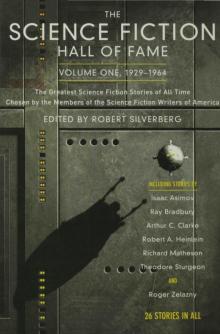 The Science Fiction Hall of Fame, Volume One 1929-1964--The Greatest Science Fiction Stories of All Time Chosen by the Members of the Science Fiction Writers of America
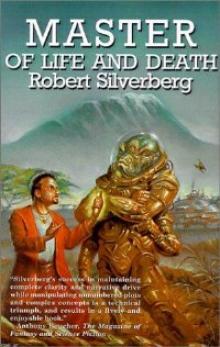 Master Of Life And Death
 Choke Chain
 Sorcerers of Majipoor m-4
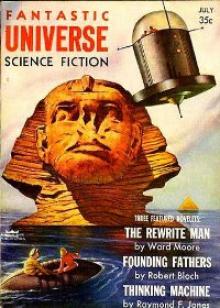 Absolutely Inflexible
 Trips - 1962–73 - The Collected Stories of Robert Silverberg Volume Four
 Hot Times in Magma City - 1990-95 - The Collected Stories of Robert Silverberg Volume Eight
 Far Horizons
 The Queen of Springtime ns-2
 The Seventh Science Fiction Megapack
 Invaders From Earth
 Hanosz Prime Goes To Old Earth
 The Macauley Circuit
 Science Fiction: The Best of 2001
 To the Dark Star: The Collected Stories of Robert Silverberg, Volume Two
 Stochastic Man
 Legends: Stories By The Masters of Modern Fantasy
 To Live Again And The Second Trip
 Flies
Flies The Silent Invaders
 Ship-Sister, Star-Sister