
- Home
- Robert Silverberg
A Time of Changes Page 9
A Time of Changes Read online
Page 9
My childhood recollections did not prepare me for the heat. A steamy haze enveloped the streets. The air was wet and heavy. I felt I could almost touch the heat, could seize it and grasp it, could wring it like water from the atmosphere. It was raining heat and I was drenched in it. I was clad in a coarse, heavy gray uniform, the usual wintertime issue aboard a Glinish merchant ship, and this was a sweltering spring morning in Manneran; two dozen paces in that stifling humidity and I was ready to rip off my chafing clothes and go naked.
A telephone directory gave me the address of Segvord Helalam, my bondsister’s father. I hired a taxi and went there. Helalam lived just outside the city, in a cool leafy suburb of grand homes and glistening lakes; a high brick wall shielded his house from the view of passersby. I rang at the gate and waited to be scanned. My taxi waited too, as if the driver knew certainly that I would be turned away. A voice within the house, some butler, no doubt, queried me over the scanner line and I replied, “Kinnall Darival of Salla, bondbrother to the daughter of the High Justice Helalam, wishes to call upon the father of his bondsister.”
“The Lord Kinnall is dead,” I was informed coldly, “and so you are some impostor.”
I rang again. “Scan this, and judge if he be dead,” I said, holding up to the machine’s eye my royal passport, which I had kept so long concealed. “This is Kinnall Darival before you, and it will not go well with you if you deny him access to the High Justice!”
“Passports may be stolen. Passports may be forged.”
“Open the gate!”
There was no reply. A third time I rang, and this time the unseen butler told me that the police would be summoned unless I departed at once. My taxi driver, parked just across the road, coughed politely. I had not reckoned on any of this. Would I have to go back to town, and take lodgings, and write Segvord Helalam for an appointment, and offer evidence that I still lived?
By good fortune I was spared those bothers. A sumptuous black groundcar drew up, of a kind used generally only by the highest aristocracy, and from it stepped Segvord Helalam, High Justice of the Port of Manneran. He was then at the height of his career, and he carried himself with kingly grace: a short man, but well constructed, with a fine head, a florid face, a noble mane of white hair, a look of strength and purpose. His eyes, an intense blue, were capable of flashing fire, and his nose was an imperial beak, but he canceled all his look of ferocity with a warm, ready smile. He was recognized in Manneran as a man of wisdom and temperance. I went immediately toward him, with a glad cry of “Bondfather!” Swinging about, he stared at me in bewilderment, and two large young men who had been with him in his groundcar placed themselves between the High Justice and myself as though they believed me to be an assassin.
“Your bodyguard may relax,” I said. “Are you unable to recognize Kinnall of Salla?”
“The Lord Kinnall died last year,” Segvord replied quickly.
“That comes as grievous news to Kinnall himself,” I said. I drew myself tall, resuming princely mien for the first time since my sad exit from the city of Glain, and gestured at the High Justice’s protectors with such fury that they gave ground, slipping off to the side. Segvord studied me carefully. He had last seen me at my brother’s coronation; two years had gone by since then, and the last softness of childhood had been stripped from me. My year of felling logs showed in the contours of my frame, and my winter among the farmers had weathered my face, and my weeks as a sailor had left me grimy and unkempt, with tangled hair and a shaggy beard. Segvord’s gaze cut gradually through these transformations until he was convinced of my identity; then suddenly he rushed at me, embracing me with such fervor that I nearly lost my footing in surprise. He cried my name, and I cried his; then the gate was opening, and he was hurrying me within, and the lofty cream-colored mansion loomed before me, the goal of all my wanderings and turmoil.
22
I WAS CONDUCTED to a pretty chamber and told that it was to be mine, and two servant-girls came to me, plucking off my sweaty seaman’s garb; they led me, giggling all the while, to a huge tiled tub, and bathed and perfumed me, and cropped my hair and beard somewhat, and let me pinch and tumble them a bit. They brought me clothes of fine fabric, of a sort I had not worn since my days as royalty, all sheer and white and flowing and cool. And they offered me jewelry, a triple ring set with—I later learned—a sliver of the Stone Chapel’s floor, and also a gleaming pendant, a tree-crystal from the land of Threish, on a leather thong. At length, after several hours of polishing, I was deemed fit to present to the High Justice. Segvord received me in the room he called his study, which actually was a great hall worthy of a septarch’s palace, in which he sat enthroned even as a ruler would. I recall feeling some annoyance at his pretensions, for not only was he not royal, but he was of the lower aristocracy of Manneran, who had been of no stature whatever until his appointment to high office had put him on the road to fame and wealth.
I asked at once after my bondsister Halum.
“She fares well,” he said, “though her soul was darkened by the tidings of your supposed death.”
“Where is she now?”
“On holiday, in the Sumar Gulf, on an island where we have another home.”
I felt a chill. “Has she married?”
“To the regret of all who love her, she has not.”
“Is there anyone, though?”
“No,” Segvord said. “She seems to prefer chastity. Of course, she is very young. When she returns, Kinnall, perhaps you could speak to her, pointing out that she might think now about making a match, for now she might have some fair lord, while in a few years’ time there will be new maidens ahead of her in line.”
“How soon will she be back from this island?”
“At any moment,” said the High Justice. “How amazed she will be to find you here!”
I asked him concerning my death. He replied that word had come, two years earlier, that I was mad and had wandered, helpless and deluded, into Glin. Segvord smiled as though to tell me that he knew right well why I had left Salla, and that there had been nothing of insanity about my motives. “Then,” he said, “there were reports that the Lord Stirron had sent agents into Glin after you, so that you could be brought back for treatment. Halum feared greatly for your safety at that time. And lastly, this summer past, one of your brother’s ministers gave it out that you had gone roaming in the Glinish Huishtors in the pit of winter, and had been lost in the snows, in a blizzard no man could have survived.”
“But of course the Lord Kinnall’s body was not recovered in the warm months of the year gone by, and was left to wither in the Huishtors, instead of being brought back to Salla for a proper burial.”
“There was no news of finding the body, no.”
“Then obviously,” I said, “the Lord Kinnall’s body awakened in the springtime, and trekked about on a ghostly parade, and went its way southward, and now at last has presented itself on the doorstep of the High Justice of the Port of Manneran.”
Segvord laughed. “A healthy ghost!”
“A weary one, as well.”
“What befell you in Glin?” he asked.
“A cold time in more ways than one.” I told him of my snubbing at the hands of my mother’s kin, of my stay in the mountains, and all the rest. When he had heard that, he wished to know what my plans were in Manneran; to this I replied that I had no plans other than to find some honorable enterprise, and succeed in it, and marry, and settle down, for Salla was closed to me and Glin held no temptations. Segvord nodded gravely. There was, he said, a clerkship open at this very moment in his office. The job carried little pay and less prestige, and it was absurd to ask a prince of Salla’s royal line to accept it, but still it was clean work, with a fine chance of advancement, and it might serve to give me a foothold while I acclimated myself to the Mannerangi way of life. Since I had had some such opportunity in mind all along, I told him at once that I would gladly enter his employ, with no heed to my royal bl
ood, since all that was behind me now, done with, and imaginary besides. “What one makes of himself here,” I said soberly, “will depend wholly on his merits, not on the circumstances of rank and influence.” Which was, of course, pure piffle: instead of trading on my high birth, I would instead here make capital out of being bondbrother to the High Justice of the Port’s daughter, a connection that had come to me because of my high birth alone, and where was the effect of merit in any of that?
23
THE SEARCHERS are getting closer to me all the time. Yesterday, while on a long walk through this zone of the Burnt Lowlands, I found, well south of here, the fresh track of a groundcar impressed deep in the dry and fragile crust of the red sand. And this morning, idly strolling in the place where the hornfowl gather—drawn there by some suicidal impulse, maybe?—I heard a droning in the sky, and looked up to see a plane of the Sallan military passing overhead. One does not often see sky-vehicles here. It swooped and circled, hornfowl-fashion, but I huddled under a twisted erosion-knoll, and I think I went unnoticed.
I might be mistaken about these intrusions: the groundcar just some hunting party casually passing through the region, the plane merely out on a training flight. But I think not. If there are hunters here, it is I they hunt. The net will close about me. I must try to write more quickly, and be more concise; too much of what I need to say is yet untold, and I fear being interrupted before I am done. Stirron, let me be for just a few more weeks!
24
THE HIGH JUSTICE of the Port is one of Manneran’s supreme officials. He holds jurisdiction over all commercial affairs in the capital; if there are disputes between merchants, they are tried in his court, and by treaty he has authority over the nationals of every province, so that a seacaptain of Glin or Krell, a Sallan or a westerner, when hailed before the High Justice, is subject to his verdicts with no rights of appeal to the courts of his homeland. This is the High Justice’s ancient function, but if he were nothing but an arbiter of mercantile squabbles he would hardly have the grandeur that he does. However, over the centuries other responsibilities have fallen to him. He alone regulates the flow of foreign shipping into the harbor of Manneran, granting trade permits for so many Glinish vessels a year, so many from Threish, so many from Salla. The prosperity of a dozen provinces is subject to his decisions. Therefore he is courted by septarchs, flooded with gifts, buried in kindnesses and praise, in the hope that he will allow this land or that an extra ship in the year to come. The High Justice, then, is the economic filter of Velada Borthan, opening and closing commercial outlets as he pleases; he does this not by whim but by consideration of the ebb and flow of wealth across the continent, and it is impossible to overestimate his importance in our society.
The office is not hereditary, but the appointment is for life, and a High Justice can be removed only through intricate and well-nigh impracticable impeachment procedures. Thus it comes to pass that a vigorous High Justice, such as Segvord Helalam, can become more powerful in Manneran than the prime septarch himself. The septarchy of Manneran is in decay in any case; two of the seven seats have gone unfilled for the past hundred years or more, and the occupants of the remaining five have ceded so much of their authority to civil servants that they are little more than ceremonial figures. The prime septarch still has some shreds of majesty, but he must consult with the High Justice of the Port on all matters of economic concern, and the High Justice has entangled himself so inextricably in the machinery of Manneran’s government that it is difficult to say truly who is the ruler and who the civil servant.
On my third day in Manneran, Segvord took me to his courthouse to contract me into my job. I who was raised in a palace was awed to see the headquarters of the Port Justiciary; what amazed me was not its opulence (for it had none) but its great size. I beheld a broad yellow-colored brick structure, four stories high, squat and massive, that seemed to run the entire length of the waterfront two blocks inland from the piers. Within it at worn desks in high-ceilinged offices were armies of drudging clerks, shuffling papers and stamping receipts, and my soul quivered at the thought that this was how I was to spend my days. Segvord led me on an endless march through the building, receiving the homage of the workers as he passed their dank and sweaty offices; he paused here and there to greet someone, to glance casually at some half-written report, to study a board on which, apparently, the movements of every vessel within three days’ journey of Manneran were being charted. At length we entered a noble suite of rooms, far from the bustle and hurry I had just seen. Here the High Justice himself presided. Showing me a cool and splendidly furnished room adjoining his own chamber, Segvord told me that this was where I would work.
The contract I signed was like a drainer’s: I pledged myself to reveal nothing of what I might learn in the course of my duties, on pain of terrible penalties. For its part the Port Justiciary promised me lifetime employment, steady increases of salary, and various other privileges of a kind princes do not normally worry about.
Quickly I discovered that I was to be no humble inkstained clerk. As Segvord had warned me, my pay was low and my rank in the bureaucracy almost nonexistent, but my responsibilities proved to be great ones; in effect, I was his private secretary. All confidential reports intended for the High Justice’s eyes would cross my desk first. My task was to discard those that were of no importance and to prepare abridgments of the others, all but those I deemed to be of the highest pertinence, which went to him complete. If the High Justice is the economic filter of Velada Borthan, I was to be the filter’s filter, for he would read only what I wished him to read, and make his decisions on the basis of what I gave him. Once this was clear to me I knew that Segvord had placed me on the path to great power in Manneran.
25
IMPATIENTLY I awaited Halum’s return from her isle in the Gulf of Sumar. Neither bondsister nor bondbrother had I had for over two years, and drainers could not take their place; I ached to sit up late at night with Halum or Noim, as in the old days, opening self to self. Noim was somewhere in Salla, I supposed, but I knew not where, and Halum, though she was said to be due back imminently from holidaying, did not appear in my first week in Manneran, nor the second. During the third, I left the Justiciary office early one day, feeling ill from the humidity and the tensions of mastering my new role, and was driven to Segvord’s estate. Entering the central courtyard on my way to my room, I caught sight of a tall, slender girl at the far end, plucking from a vine a golden flower for her dark glossy hair. I could not see her face, but from her figure and bearing I had no doubt of her, and joyfully I cried, “Halum!” and rushed across the courtyard. She turned frowning to me, halting me in mid-rush. Her brow was furrowed and her lips were tight together; her gaze was chilly and remote. What did that cold glance mean? Her face was Halum’s face—dark eyes, fine slim proud nose, firm chin, bold cheekbones—and yet her face was strange to me. Could two years have changed my bondsister so greatly? The main differences between the Halum I remembered and the woman I saw were subtle ones, differences of expression, a tilt of the eyebrows, a flicker of the nostrils, a quirking of the mouth, as though the whole soul itself within her had altered. Also there were some minor differences of feature, I saw as I drew nearer, but these could be ascribed to the passing of time or to the faults of my memory. My heart sped and my fingers trembled and an odd heat of confusion spread across my shoulders and back. I would have gone to her and embraced her, but suddenly I feared her in her transformations.
“Halum?” I said uncertainly, hoarse-voiced, dry-throated.
“She is not yet here.” A voice like falling snow, deeper than Halum’s, more resonant, colder.
I was stunned. Like enough to Halum to be her twin! I knew of only one sister to Halum, then still a child, not yet sprouting her breasts. It was not possible for her to have concealed from me all her life a twin, or a sister somewhat older. But the resemblance was extraordinary and disturbing. I have read that on old Earth they had ways of making
artificial beings out of chemicals, that could deceive even a mother or a lover with the likeness to some real person, and I could well have been persuaded that moment that the process had come down to us, across the centuries, across the gulf of night, and that this false Halum before me was a devilishly clever synthetic image of my true bondsister.
I said, “Forgive this foolish error. One mistook you for Halum.”
“It happens often.”
“Are you some kin of hers?”
“Daughter to the brother of the High Justice Segvord.”
She gave her name as Loimel Helalam. Never had Halum spoken to me of this cousin, or if she had, I had no recollection of it. How odd that she had hidden from me the existence of this mirror-Halum in Manneran! I told her my name, and Loimel recognized it as that of Halum’s bondbrother, of whom she had evidently heard a good deal; she softened her stance a little, and some of the chill that was about her now thawed. For my part I was over the shock of finding the supposed Halum to be another, and I was beginning to warm to Loimel, for she was beautiful and desirable, and—unlike Halum herself!—available. I could by looking at her out of one eye pretend to myself that she was indeed Halum, and I even managed to deceive myself into accepting her voice as my bondsister’s. Together we strolled the courtyard, talking. I learned that Halum would come home this evening and that Loimel was here to arrange a hearty reception for her; I learned also some things about Loimel, for, in the injudicious fashion of many Mannerangi, she guarded her privacy less sternly than a northerner would. She told me her age: a year older than Halum (and I also). She told me she was unmarried, having recently terminated an unpromising engagement to a prince of an old but unfortunately impoverished family of Mannerangi nobility. She explained her resemblance to Halum by saying that her mother and Halum’s were cousins, as well as her father being brother to Halum’s, and five minutes later, when we walked arm in arm, she hinted scandalously that in fact the High Justice had invaded his elder brother’s bridal couch long ago, so that she was properly half-sister to Halum, not cousin. And she told me much more.
 The Longest Way Home
 Hawksbill Station
 A Time of Changes
 This Way to the End Times: Classic Tales of the Apocalypse
 Beyond the Gate of Worlds
 Lord Valentine's Castle
 The Man in the Maze
 Tales of Majipoor
 Time of the Great Freeze
 The Collected Stories of Robert Silverberg, Volume 3: Something Wild Is Loose: 1969-72
 Planet of Death
 Trips: The Collected Stories of Robert Silverberg, Volume Four
 In the Beginning: Tales From the Pulp Era
 Hot Sky at Midnight
 Valentine Pontifex
 Up the Line
 Thorns
 Amanda and the Alien
 Star of Gypsies
 Nightwings
 The Time Hoppers
 Blood on the Mink
 Dying Inside
 The Last Song of Orpheus
 The King of Dreams
 The Stochastic Man
 The Collected Stories of Robert Silverberg, Volume Seven: We Are for the Dark
 The Millennium Express: The Collected Stories of Robert Silverberg, Volume Nine
 The Iron Chancellor
 Lord Prestimion
 To Open the Sky
 The World Inside
 Chains of the Sea
 The Collected Stories of Robert Silverberg, Volume Five: The Palace at Midnight
 Postmark Ganymede
 The Second Trip
 The Collected Stories of Robert Silverberg, Volume 4: Trips: 1972-73
 Son of Man
 Tom O'Bedlam
 To the Land of the Living
 To Be Continued: The Collected Stories of Robert Silverberg, Volume One
 Shadrach in the Furnace
 The Chalice of Death: Three Novels of Mystery in Space
 The Queen of Springtime
 To Be Continued 1953-1958
 Legends
 Roma Eterna
 To Live Again
 At Winter's End
 Needle in a Timestack
 To Live Again and the Second Trip: The Complete Novels
 Lord of Darkness
 The Mountains of Majipoor
 The World Outside
 The Alien Years
 The Book of Skulls
 The Face of the Waters
 Gilgamesh the King
 The Collected Stories of Robert Silverberg, Volume 6: Multiples: 1983-87
 The Happy Unfortunate
 Three Survived
 Cronos
 Tower of Glass
 Legends II
 The Planet Killers
 The Collected Stories of Robert Silverberg, Volume 2: To the Dark Star: 1962-69
 Downward to the Earth
 Lord Valentine's Castle: Book One of the Majipoor Cycle
 Hot Times in Magma City, 1990-95
 Hunt the Space-Witch! Seven Adventures in Time and Space
 Majipoor Chronicles
 The Robert Silverberg Science Fiction Megapack(r)
 Starman's Quest
 Car Sinister
 Worlds of Maybe
 Fantasy The Best of 2001
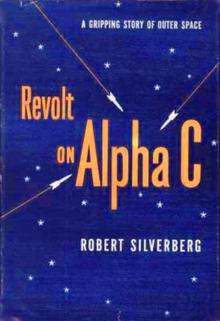 Revolt on Alpha C
 Homefaring
 The Pardoner's Tale
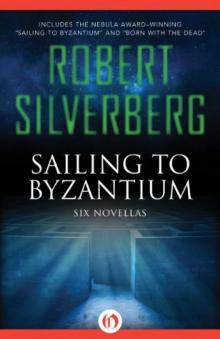 Sailing to Byzantium - Six Novellas
 The Chalice of Death
 Sundance
 A Tip on a Turtle
 Nebula Awards Showcase 2001: The Year's Best SF and Fantasy Chosen by the Science Fiction and Fantasy Writers of America
 The Fangs of the Trees
 The Palace at Midnight: The Collected Work of Robert Silverberg, Volume Five
 The Millennium Express - 1995-2009 - The Collected Stories of Robert Silverberg Volume Nine
 Book of Skulls
 Passengers
 Something Wild is Loose - 1969–72 - The Collected Stories of Robert Silverberg Volume Three
 Multiples
 Starborne
 The Masks of Time
 The Mountains of Majipoor m-8
 Multiples (1983-87)
 Those Who Watch
 In the Beginning
 Earth Is The Strangest Planet
 Collision Course
 Neutral Planet
 To the Dark Star - 1962–69 - The Collected Stories of Robert Silverberg Volume Two
 Mutants
 Sailing to Byzantium
 When We Went to See the End of the World
 Robert Silverberg The Science Fiction Hall Of Fame Volume One, 1929-1964
 To Be Continued - 1953–58 - The Collected Stories of Robert Silverberg Volume One
 Valentine Pontifex m-3
 Gianni
 Majipoor Chronicles m-2
 We Are for the Dark (1987-90)
 Waiting for the Earthquake
 Fantasy: The Best of 2001
 How It Was When the Past Went Away
 Beauty in the Night
 The Man Who Never Forgot
 The Book of Changes m-9
 Lord Valentine's Castle m-1
 This Way to the End Times
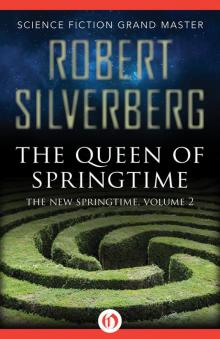 Queen of Springtime
 Legends-Volume 3 Stories by the Masters of Modern Fantasy
 The Palace at Midnight - 1980–82 - The Collected Stories of Robert Silverberg Volume Five
 Something Wild is Loose: The Collected Stories of Robert Silverberg, Volume Three
 Multiples - 1983–87 - The Collected Stories of Robert Silverberg Volume Six
 Alaree
 Three Survived: A Science Fiction Novel
 Defenders of the Frontier
 The New Springtime
 We Are for the Dark - 1987–90 - The Collected Stories of Robert Silverberg Volume Seven
 The Science Fiction Hall of Fame, Volume One 1929-1964--The Greatest Science Fiction Stories of All Time Chosen by the Members of the Science Fiction Writers of America
 Master Of Life And Death
 Choke Chain
 Sorcerers of Majipoor m-4
 Absolutely Inflexible
 Trips - 1962–73 - The Collected Stories of Robert Silverberg Volume Four
 Hot Times in Magma City - 1990-95 - The Collected Stories of Robert Silverberg Volume Eight
 Far Horizons
 The Queen of Springtime ns-2
 The Seventh Science Fiction Megapack
 Invaders From Earth
 Hanosz Prime Goes To Old Earth
 The Macauley Circuit
 Science Fiction: The Best of 2001
 To the Dark Star: The Collected Stories of Robert Silverberg, Volume Two
 Stochastic Man
 Legends: Stories By The Masters of Modern Fantasy
 To Live Again And The Second Trip
 Flies
Flies The Silent Invaders
 Ship-Sister, Star-Sister