
- Home
- Robert Silverberg
Roma Eterna Page 12
Roma Eterna Read online
Page 12
I asked Mahmud how, if it is blasphemous to imagine a face for his god, it can be acceptable to give him a name. For surely that is a kind of representation also. Mahmud seemed pleased at the sharpness of my question; and he explained that “Allah” is not actually a name, as “Mahmud” or “Leontius Corbulo” or “Jupiter” are names, but is a mere word, simply the term in the Saracen language that means the god.
To Mahmud, the fact that there is only one god, whose nature is abstract and incomprehensible to mortals, is the great sublime law from which all other laws flow. This will probably make no more sense to you, Horatius, than it does to me, but it is not our business to be philosophers. What is of interest here is that the man has such a passionate belief in the things he believes. So passionate is it that as you listen to him you become caught up in the simplicity and the beauty of his ideas and the power of his way of speaking of them, and you are almost ready to cry out your belief in Allah yourself.
It is a very simple creed indeed, but enormously powerful in its directness, the way things in this harsh and uncompromising desert land tend to be. He stringently rejects all idol-worship, all fable-making, all notions of how the movements of the stars and planets govern our lives. He places no trust in oracles or sorcery. The decrees of kings and princes mean very little to him either. He accepts only the authority of his remote and all-powerful and inflexible god, whose great stern decree it is that we live virtuous lives of hard work, piety, and respect for our fellow men. Those who live by Allah’s law, says Mahmud, will be gathered into paradise at the end of their days; those who do not will descend into the most terrible of hells. And Mahmud does not intend to rest until all Arabia has been brought forth out of sloth and degeneracy and sin to accept the supremacy of the One God, and its scattered squabbling tribes forged at last into a single great nation under the rule of one invincible king who could enforce the laws of that god.
He was awesome in his conviction. I tell you, by the time he was done, I was close to feeling the presence and might of Allah myself. That was surprising and a little frightening, that Mahmud could stir such feelings in me, of all people. I was amazed. But then he had finished his expounding, and after a few moments the sensation ebbed and I was my own self again.
“What do you say?” he asked me. “Can this be anything other than the truth?”
“I am not in a position to judge that,” said I carefully, not wishing to give offense to this interesting new friend, especially in his own dining hall. “We Romans are accustomed to regarding all creeds with tolerance, and if you ever visit our capital you will find temples of a hundred faiths standing side by side. But I do see the beauty of your teachings.”
“Beauty? I asked about truth. When you say you accept all faiths as equally true, what you are really saying is that you see no truth in any of them, is that not so?”
I disputed that, reaching into my school days for maxims out of Plato and Marcus Aurelius to argue that all gods are reflections of the true godhood. But it was no use. He saw instantly through my Roman indifference to religion. If you claim to believe, as we do, that this god is just as good as that one, what you really mean is that gods in general don’t matter much at all, nor religion itself, except where it is needed as a distraction to keep the people of the lower classes from growing too resentful over the miseries of their worldly existence. Our live-and-let-live policy toward the worship of Mithras and Dagon and Baal and all the other deities whose temples thrive in Roma is a tacit admission of that view. And for Mahmud that is a contemptible position.
Sensing the tension that was rising in him, and unwilling to have our pleasant conversation turn acrid, I offered a plea of fatigue and promised to continue the discussion with him at another time.
In the evening, having been invited yet again to dine with Nicomedes the Paphlagonian and with my head still spinning from the thrust of all that Mahmud had imparted to me, I asked him if he could tell me anything about this extraordinary person.
“That man!” Nicomedes said, chuckling. “Consorting with madmen, are you, now, Corbulo?”
“He seemed quite sane to me.”
“Oh, he is, he is, at least when he’s selling you a pair of camels or a sack of saffron. But get him started on the subject of religion and you’ll see a different man.”
“As a matter of fact, we had quite a lengthy philosophical discussion, he and I, this very afternoon,” I said. “I found it fascinating. I’ve never heard anything quite like it.”
“I dare say you haven’t. Poor chap, he should get himself away from this place while he’s still got the chance. If he keeps on going the way I understand he’s been doing lately, he’ll turn up dead out in the dunes one of these days, and no one will be surprised.”
“I don’t follow you.”
“Preaching against the idols the way he does, is what I mean. You know, Corbulo, they worship three hundred different gods in this city, and each one has his own shrine and his own priesthood and his own busy factory dedicated to making idols for sale to pilgrims, and so on and so forth. If I understand your Mahmud correctly, he’d like to shut all that down. Is that not so?”
“I suppose. Certainly he expressed plenty of scorn for idols and idolaters.”
“Indeed he does. Up till now he’s simply had a little private cult, though, half a dozen members of his own family. They get together in his house and pray to his particular god in the particular way that Mahmud prescribes. An innocent enough pastime, I’d say. But lately, I’m told, he’s been spreading his ideas farther afield, going around to this person and that and testing out his seditious ideas about how to reform Saracen society on them. As he did with you this very day, it seems. Well, it does no harm for him to be talking religion with somebody like you or me, because we Romans are pretty casual about such matters. But the Saracens aren’t. Before long, mark my words, he’ll decide to set himself up as a prophet who preaches in public, and he’ll stand in the main square threatening fire and damnation to anybody who keeps to the old ways, and then they’ll have to kill him. The old ways are big business here, and what this town is about is business and nothing but business. Mahmud is full of subversive notions that these Meccans can’t afford to indulge. He’d better watch his step.” And then, with a grin: “But he is an amusing devil, isn’t he, Corbulo? As you can tell, I’ve had a chat or two with him myself.”
If you ask me, Horatius, Nicomedes is half right and half wrong about Mahmud.
Surely he’s correct that Mahmud is almost ready to begin preaching his religion in public. The way he accosted me, a total stranger, at the slave-market testifies to that. And his talk of not resting until Arabia has been made to accept the supremacy of the One God: what else can that mean, other than that he is on the verge of speaking out against the idolaters?
Mahmud told me in just so many words, during our lunch together, that the way Allah makes his commandments concerning good and evil known to mankind is through certain chosen prophets, one every thousand years or so. Abraham and Moses of the Hebrews were such prophets, Mahmud says. I do believe that Mahmud looks upon himself as their successor.
I think the Greek is wrong, though, in saying that Mahmud will be killed by his angry neighbors for speaking out against their superstitions. No doubt they’ll want to kill him, at first. If his teachings ever prevail, they’ll throw the whole horde of priests and idol-carvers out of business and knock a great hole in the local economy, and nobody here is going to be very enthusiastic about that. But his personality is so powerful that I think he’ll win them over. By Jupiter, he practically had me willing to accept the divine omnipotence of Allah before he was done! He’ll find a way to put his ideas across to them. I can’t imagine how he’ll do it, but he’s clever in a dozen different ways, a true desert merchant, and somehow he’ll offer them something that will make it worthwhile for them to give up their old beliefs and accept his. Allah and no one else will be the god of this place, is what I expect, by the ti
me Mahmud has finished his holy work.
I need to ponder all this very carefully. You don’t come upon a man with Mahmud’s kind of innate personal magnetism very often. I am haunted by the strength of it, awed by the recollection of how, for the moment, he had managed to win my allegiance to that One God of his. Is there, I wonder, some way that I can turn Mahmud’s great power to sway men’s minds to the service of the Empire, by which I mean to the service of Julianus III Augustus? So that, of course, I can regain Caesar’s good graces and get myself redeemed out of Arabian exile.
At the moment I don’t quite see it. Perhaps I could urge him to turn his countrymen against the growing ascendancy of the Greeks in this part of the world, or some such thing. But this week I have plenty of time to think on it, for no company is available to me just now except my own. Mahmud, who travels frequently through the area on business, has gone off to one of the coastal villages to investigate some new mercantile venture. Nicomedes also is away, down into Arabia Felix, where he and his fellow Greeks no doubt are conniving covertly to raise the price of carnelians or aloe-wood or some other commodity currently in great demand at Roma.
So I am alone here but for my servants, a dull lot with whom I can have no hope of companionship. I toyed with the idea of buying myself a lively slave-boy in the bazaar to keep me company of a more interesting kind, but Mahmud, who is so fiery in his piety, might suspect what I had in mind, and I would not at this time want to risk a breach with Mahmud. The idea of such a purchase is very tempting, though.
I think longingly all the time of the court, the festivities at the royal palace, the theater and the games, all that I am missing. Fuscus Salinator: what is he up to? Voconius Rufus? Spurinna? Allifanus? And what of Emperor Julianus himself, he who was my friend, almost my brother, until he turned on me and condemned me to languish like this amidst the sands of Arabia? What times we had together, he and I, until my fall from grace!
And—fear not—I think constantly of you, of course, Horatius. I wonder who you spend your nights with now. Male or female, is it? Lupercus Hector? Little Pomponia Mamiliana, perhaps? Or even the cup-boy from Britannia, whom surely the Emperor no longer would have wanted after I had sullied him. Well, you do not sleep alone, of that much I’m certain.
What, I wonder, would my new friend Mahmud think of our court and its ways? He is so severe and astringent of nature. His hatred for self-indulgence of all sorts seems deep as the bone: a stark prince of the desert, this man, a true Spartan. But perhaps I give him too much credit, you say? Set him up in a villa on the slopes of the Palatine, provide him with a fine chariot and a house full of servants and a cellar of decent wine, let him splash a bit in the Emperor’s perfumed pool with Julianus and his giddy friends, and it may be he’ll sing another tune, eh?
No. No. I doubt that very greatly. Bring Mahmud to Roma and he will rise up like a modern Cato and sweep the place clean, purging the capital of all the sins of these soft Imperial years. And when he is done with us, Horatius, we shall all be faithful adherents to the creed of Allah.
Five days more of solitude went by, and by the end of it I was ready, I think, to open my veins. There has been a wind blowing here all week that bakes the brain to the verge of madness. The air seemed half composed of sand. People came and went in the streets like phantoms, all shrouded up to the eyes in white. I feared going outside.
For the past two days, though, the air has been calm again. Mahmud yesterday returned from his venture from the coast. I saw him in the main street, speaking with three or four other men. Even though he was some distance away, it was plain that Mahmud was doing nearly all the talking, and the others, caught in his spell, were reduced to mere nods and gestures of the hand. There is wizardry in this man’s manner of speech. He casts a powerful spell. You are held; you cannot choose but listen; you find yourself believing whatever he says.
I did not feel it appropriate to approach him just then; but later in the day I sent one of my servants to his house bearing an invitation to dine with me at my villa, and we have spent some hours together this very day. It was a meeting that brought forth a host of startling revelations.
Neither of us chose to plunge back into the theological discussion of our previous conversation, and for a while we made mere idle arm’s-length talk in the somewhat uneasy manner of two gentlemen of very different nations who find themselves dining in intimate circumstances and are determined to get through the meal without giving offense. Mahmud’s manner was genial in a way I had not seen it before. But as the dishes of the first course were being cleared away the old intensity came back into his eyes and he said somewhat abruptly, “And tell me, my friend, how did it happen, exactly, that you came to our country in the first place?”
It would hardly have been useful to my burgeoning friendship with this man to admit that I had been banished here on account of my pederasty with Caesar’s intended plaything. But—you must trust me on this—I had to tell him something. There is no easy way of being evasive when the burning eyes of Mahmud son of Abdallah are peering intently into your own. I could lie more readily to Caesar. Or to Jove himself.
And so, on the principle that telling part of the truth is usually more convincing than telling an outright lie, I admitted to him that my Emperor had sent me to Arabia to spy on the Greeks.
“Your Emperor who is not their Emperor, though it is all one empire.”
“Exactly.” Mahmud, isolated as he had been all his life from the greater world beyond Arabia’s frontiers, seemed to understand the concept of the dual principate. And understood also how little real harmony there is between the two halves of the divided realm.
“And what harm is it that you think the Byzantine folk can cause your people, then?” he asked.
There was a tautness in his voice; I sensed that this was something more than an idle conversational query for him.
“Economic harm,” I said. “Too much of what we import from the eastern nations passes through their hands as it is. Now they seem to be drifting down here into the middle of Arabia, where all the key trade routes converge. If they can establish a stranglehold on those routes, we’ll be at their mercy.”
He was silent for a time, digesting that. But his eyes flashed strange fire. His brain must have been awhirl with thought.
Then he leaned forward until we were almost nose to nose and said, in that low quiet voice of his that seizes your attention more emphatically than the loudest shout, “We share a common concern, then. They are our enemies, too, these Greeks. I know their hearts. They mean to conquer us.”
“But that’s impossible! Nicomedes himself has told me that no army has ever succeeded in seizing possession of Arabia. And he says that none ever will.”
“Indeed, no one can ever take us by force. But that is not what I mean. The Greeks will conquer us by slyness and cunning, if we allow it: playing their gold against our avarice, buying us inch by inch until we have sold ourselves entirely. We are a shrewd folk, but they are much shrewder, and they will bind us in silken knots, and one day we will find that we are altogether owned by Greek traders and Greek usurers and Greek shipowners. It is what the Hebrews would have done to us, if they were more numerous and more powerful; but the Greeks have an entire empire behind them. Or half an empire, at least.” His face was suddenly aflame with that extraordinary animation and excitability, to the point almost of frenzy, that rose in him so easily. He clapped his hand down on mine. “But it will not be. I will not allow it, good Corbulo! I will destroy them before they can ruin us. Tell that to your Emperor, if you like: Mahmud son of Abdallah will take his stand here before the Greeks who would steal this land, and he will march on them, and he will drive them back to Byzantium.”
It was a stunning moment. He had told me on the very first day that he intended to bring Arabia under the rule of a single god and of a single invincible king; and now I knew who he expected that invincible king to be.
I was put in mind of Nicomedes’s mocking wo
rds of the week before: Consorting with madmen, are you, now, Corbulo?
This sudden outburst of Mahmud’s as we sat quietly together at my table did indeed have the pure ring of madness about it. That an obscure merchant of this desert land should also be a mystic and a dreamer was unusual enough; but now, as though drawing back a veil, he had revealed to me the tumultuous presence of a warrior-king within his breast as well. It was too much. Neither Alexander of Macedon nor Julius Caesar nor the Emperor Constantinus the Great had laid claim to holding so many selves within a single soul, and how could Mahmud the son of Abdallah?
A moment later he had subsided again, and all was as calm as it had been just minutes before.
There was a flask of wine on the table near my elbow, a good thick Tunisian that I had bought in the marketplace the day before. I poured myself some now to ease the thunder that Mahmud’s wild speech had engendered in my forehead. He smiled and tapped the flask and said, “I have never understood the point of that stuff, do you know? It seems a waste of good grapes to make it into wine.”
“Well, opinions differ on that,” said I. “But who’s to say who’s right? Let those who like wine drink it, and the rest can leave it alone.” I raised my glass to him. “This is really excellent, though. Are you sure you won’t try even a sip?”
 The Longest Way Home
 Hawksbill Station
 A Time of Changes
 This Way to the End Times: Classic Tales of the Apocalypse
 Beyond the Gate of Worlds
 Lord Valentine's Castle
 The Man in the Maze
 Tales of Majipoor
 Time of the Great Freeze
 The Collected Stories of Robert Silverberg, Volume 3: Something Wild Is Loose: 1969-72
 Planet of Death
 Trips: The Collected Stories of Robert Silverberg, Volume Four
 In the Beginning: Tales From the Pulp Era
 Hot Sky at Midnight
 Valentine Pontifex
 Up the Line
 Thorns
 Amanda and the Alien
 Star of Gypsies
 Nightwings
 The Time Hoppers
 Blood on the Mink
 Dying Inside
 The Last Song of Orpheus
 The King of Dreams
 The Stochastic Man
 The Collected Stories of Robert Silverberg, Volume Seven: We Are for the Dark
 The Millennium Express: The Collected Stories of Robert Silverberg, Volume Nine
 The Iron Chancellor
 Lord Prestimion
 To Open the Sky
 The World Inside
 Chains of the Sea
 The Collected Stories of Robert Silverberg, Volume Five: The Palace at Midnight
 Postmark Ganymede
 The Second Trip
 The Collected Stories of Robert Silverberg, Volume 4: Trips: 1972-73
 Son of Man
 Tom O'Bedlam
 To the Land of the Living
 To Be Continued: The Collected Stories of Robert Silverberg, Volume One
 Shadrach in the Furnace
 The Chalice of Death: Three Novels of Mystery in Space
 The Queen of Springtime
 To Be Continued 1953-1958
 Legends
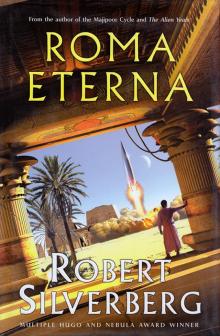 Roma Eterna
 To Live Again
 At Winter's End
 Needle in a Timestack
 To Live Again and the Second Trip: The Complete Novels
 Lord of Darkness
 The Mountains of Majipoor
 The World Outside
 The Alien Years
 The Book of Skulls
 The Face of the Waters
 Gilgamesh the King
 The Collected Stories of Robert Silverberg, Volume 6: Multiples: 1983-87
 The Happy Unfortunate
 Three Survived
 Cronos
 Tower of Glass
 Legends II
 The Planet Killers
 The Collected Stories of Robert Silverberg, Volume 2: To the Dark Star: 1962-69
 Downward to the Earth
 Lord Valentine's Castle: Book One of the Majipoor Cycle
 Hot Times in Magma City, 1990-95
 Hunt the Space-Witch! Seven Adventures in Time and Space
 Majipoor Chronicles
 The Robert Silverberg Science Fiction Megapack(r)
 Starman's Quest
 Car Sinister
 Worlds of Maybe
 Fantasy The Best of 2001
 Revolt on Alpha C
 Homefaring
 The Pardoner's Tale
 Sailing to Byzantium - Six Novellas
 The Chalice of Death
 Sundance
 A Tip on a Turtle
 Nebula Awards Showcase 2001: The Year's Best SF and Fantasy Chosen by the Science Fiction and Fantasy Writers of America
 The Fangs of the Trees
 The Palace at Midnight: The Collected Work of Robert Silverberg, Volume Five
 The Millennium Express - 1995-2009 - The Collected Stories of Robert Silverberg Volume Nine
 Book of Skulls
 Passengers
 Something Wild is Loose - 1969–72 - The Collected Stories of Robert Silverberg Volume Three
 Multiples
 Starborne
 The Masks of Time
 The Mountains of Majipoor m-8
 Multiples (1983-87)
 Those Who Watch
 In the Beginning
 Earth Is The Strangest Planet
 Collision Course
 Neutral Planet
 To the Dark Star - 1962–69 - The Collected Stories of Robert Silverberg Volume Two
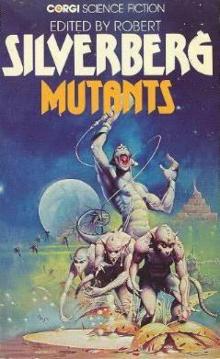 Mutants
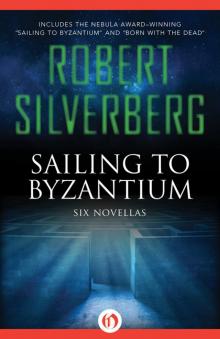 Sailing to Byzantium
 When We Went to See the End of the World
 Robert Silverberg The Science Fiction Hall Of Fame Volume One, 1929-1964
 To Be Continued - 1953–58 - The Collected Stories of Robert Silverberg Volume One
 Valentine Pontifex m-3
 Gianni
 Majipoor Chronicles m-2
 We Are for the Dark (1987-90)
 Waiting for the Earthquake
 Fantasy: The Best of 2001
 How It Was When the Past Went Away
 Beauty in the Night
 The Man Who Never Forgot
 The Book of Changes m-9
 Lord Valentine's Castle m-1
 This Way to the End Times
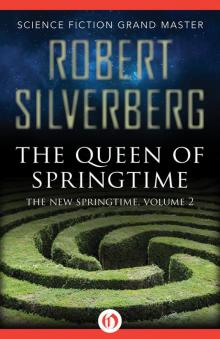 Queen of Springtime
 Legends-Volume 3 Stories by the Masters of Modern Fantasy
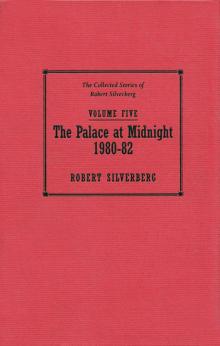 The Palace at Midnight - 1980–82 - The Collected Stories of Robert Silverberg Volume Five
 Something Wild is Loose: The Collected Stories of Robert Silverberg, Volume Three
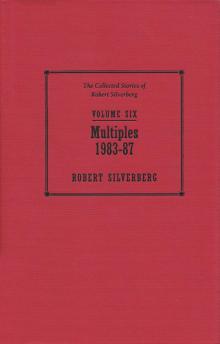 Multiples - 1983–87 - The Collected Stories of Robert Silverberg Volume Six
 Alaree
 Three Survived: A Science Fiction Novel
 Defenders of the Frontier
 The New Springtime
 We Are for the Dark - 1987–90 - The Collected Stories of Robert Silverberg Volume Seven
 The Science Fiction Hall of Fame, Volume One 1929-1964--The Greatest Science Fiction Stories of All Time Chosen by the Members of the Science Fiction Writers of America
 Master Of Life And Death
 Choke Chain
 Sorcerers of Majipoor m-4
 Absolutely Inflexible
 Trips - 1962–73 - The Collected Stories of Robert Silverberg Volume Four
 Hot Times in Magma City - 1990-95 - The Collected Stories of Robert Silverberg Volume Eight
 Far Horizons
 The Queen of Springtime ns-2
 The Seventh Science Fiction Megapack
 Invaders From Earth
 Hanosz Prime Goes To Old Earth
 The Macauley Circuit
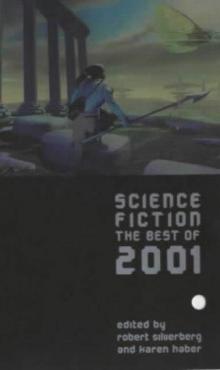 Science Fiction: The Best of 2001
 To the Dark Star: The Collected Stories of Robert Silverberg, Volume Two
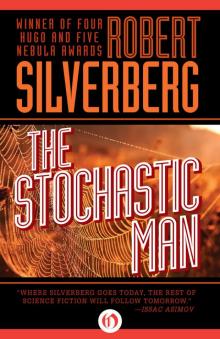 Stochastic Man
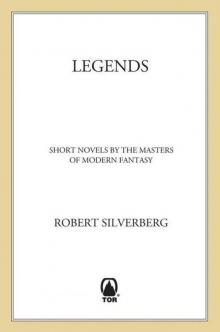 Legends: Stories By The Masters of Modern Fantasy
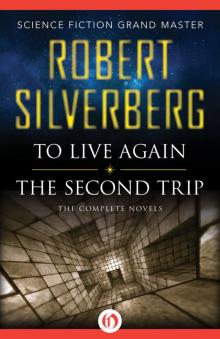 To Live Again And The Second Trip
 Flies
Flies The Silent Invaders
 Ship-Sister, Star-Sister