
- Home
- Robert Silverberg
Roma Eterna Page 13
Roma Eterna Read online
Page 13
He looked at me as though I had offered him a cup of venom. He will never be a drinker, I guess, will Mahmud son of Abdallah, and so be it. Yea and verily, Horatius, it leaves that much more for the likes of thee and me.
“And how is your friend Mahmud?” asked Nicomedes the Paphlagonian, the next time he and I dined together. “Does he have you bowing down to Allah yet?”
“I am not made for bowing before gods, I think,” I told him. And then, warily: “He seems a little troubled about the presence of you people down here.”
“Thinks we’re going to attempt a takeover, does he? He should know better than that. If Augustus and Trajan couldn’t manage to invade this place successfully, why does he think a sensible monarch like Maurice Tiberius would try it?”
“Not a military invasion, Nicomedes. Commercial infiltration is what he fears.”
Nicomedes looked unperturbed. “He shouldn’t. I’d never try to deny to anybody, Corbulo, that we’re looking to increase the quantity of business we do here. But why should that matter to the likes of Mahmud? We won’t cut into his slice of the pie. We’ll just make the pie bigger for everybody. You know the thing the Phoenicians say—‘A rising tide lifts all boats.’”
“Don’t they teach rhetoric in Greek schools any more?” I asked. “Pies? Boats? You’re mixing your metaphors there, I’d say. And Arabia doesn’t have any boats for the tide to raise, or any tides either, for that matter.”
“You know what I mean. Tell Mahmud not to worry. Our plans for expansion of trade with Arabia will only be good for everyone involved, and that includes the merchants of Mecca.—Maybe I should have a little talk with him myself, eh? He’s an excitable sort. I might be able to calm him down.”
“Perhaps it would be best to leave him to me,” I said.
It was in that moment, Horatius, that I saw where the true crux of the situation lay, and who the true enemy of the Empire is.
The Emperor Julianus need not fret over anything that the Greeks might plan to do here. The Greek incursion into Arabia Deserta was only to be expected. Greeks are businessmen by second nature; Arabia, though it is outside the Empire, lies within the natural Eastern sphere of influence; they would have come down here sooner or later, and, well, here they are. If they intend to try to build stronger trade connections with these desert folk, we have no reason to get upset about that, nor is there the slightest thing that the West can do about it. As Nicomedes has said, the East already controls Aegyptus and Syria and Libya and a lot of other such places that produce goods we need, and we don’t suffer thereby. It really is a single empire, in that sense. The Greeks won’t push up prices on Eastern commodities to us for fear that we’ll do the same thing to them with the tin and copper and iron and timber that flow to them out of the West.
No. The soft and citified Greeks are no menace to us. The real peril here comes from the desert prince, Mahmud son of Abdallah.
One god, he says. One Arabian people under one king. And he says, concerning the Greeks, I will destroy them before they can ruin us.
He means it. And perhaps he can do it. Nobody has ever unified these Saracens under a single man’s rule before, but I think they have never had anyone like Mahmud among them before, either. I had a sudden vision of him, dear Horatius, as I sat there at Nicomedes’s nicely laden table: Mahmud with eyes of fire and a gleaming sword held high, leading Saracen warriors northward out of Arabia into Syria Palaestina and Mesopotamia, spreading the message of the One God as he comes and driving the panicky Greeks before his oncoming hordes. The eager peasantry embracing the new creed everywhere: who can resist Mahmud’s persuasive tongue, especially when it is backed by the blades of his ever more numerous followers? Onward, then, into Armenia and Cappadocia and Persia, and then there will come a swing westward as well into Aegyptus and Libya. The warriors of Allah everywhere, inflaming the souls of men with the new belief, the new love of virtue and honor. The old, stale, tired religions of the region melting away before it like springtime snowflakes. The wealth of the temples of the false gods divided among the people. Whole legions of idle parasitic priests butchered like cattle as the superstitions are put to rout. The golden statues of the nonexistent gods melted down. A new commonwealth proclaimed in the world, founded on prayer and sacred law.
Mahmud can say that he has the true god behind him. His eloquence makes you believe it. We of the Empire have only the statues of our gods, and no one of any intelligence has taken those gods seriously for hundreds of years. How can we withstand the fiery onslaught of the new faith? It will roll down upon us like the lava of Vesuvius.
“You take this much too seriously,” said Nicomedes the Paphlagonian, when, much later in the evening and after too many more flasks of wine, I confided my fears to him. “Perhaps you should cover your head when you go out of doors at midday, Corbulo. The sun of Arabia is very strong, and it can do great injury to the mind.”
No, Horatius. I am right and he is wrong. Once they are launched, the legions of Allah will not be checked until they have marched on through Italia and Gallia and Britannia to the far shores of the Ocean Sea, and all the world is Mahmud’s.
It shall not be.
I will save the world from him, Horatius, and perhaps in so doing I will save myself.
Mecca is, of course, a sanctuary city. No man may lift his hand against another within its precincts, under pain of the most awful penalties.
Umar the idol-maker, who served in the temple of the goddess Uzza, understood that. I came to Umar in his workshop, where he sat turning out big-breasted figurines of Uzza, who is the Venus of the Saracens, and bought from him for a handful of coppers a fine little statuette carved from black stone that I hope to show you one of these days, and then I put a gold piece of Justinianus’s time before him and told him what I wanted done; and his only response was to tap his finger two times against Justinianus’s nose. Not understanding his meaning, I merely frowned.
“This man of whom you speak is my enemy and the enemy of all who love the gods,” said Umar the idol-maker, “and I would kill him for you for three copper coins if I did not have a family to support. But the work will involve me in travel, and that is expensive. It cannot be done in Mecca, you know.” And he tapped the nose of Justinianus once again. This time I took his meaning. I laid a second gold piece beside the first one, and the idol-maker smiled.
Twelve days ago Mahmud left Mecca on one of his business trips into the lands to the east. He has not returned. He has met with some accident, I fear, in those sandy wastes, and by now the drifting dunes have probably hidden his body forever.
Umar the idol-maker appears to have disappeared also. The talk around town is that he went out into the desert to collect the black stone that he carves his idols from, and some fellow craftsman with whom he was feuding followed him to the quarry. I think you will agree with me, Horatius, that this was a wise thing to arrange. The disappearance of a well-known man like Mahmud will probably engender some inquiries that could ultimately have led in embarrassing directions, but no one except the wife of Umar will care about the vanishing of Umar the idol-maker.
All of this strikes me as highly regrettable, of course. But it was absolutely necessary.
“He’s almost certainly dead by this time,” Nicomedes said last night. We still dine together frequently. “How very sad, Corbulo. He was an interesting man.”
“A very great one, in his way. If he had lived, I think he would have changed the world.”
“I doubt that very much,” said Nicomedes, in his airy, ever-skeptical Greek way. “But we’ll never know, will we?”
“We’ll never know,” I agreed. I raised my glass. “To Mahmud, poor devil.”
“To Mahmud, yes.”
And there you have the whole sad story. Go to the Emperor, Horatius. Tell him what I’ve done. Place it in its full context, against the grand sweep of Imperial history past and present and especially future. Speak to him of Hannibal, of Vercingetorix, of Attila, of al
l our great enemies of days gone by, and tell him that I have snuffed out in its earliest stages a threat to Roma far more frightening than any of those. Make him understand, if you can, the significance of my deed.
Tell him, Horatius. Tell him that I have saved all the world from conquest: that I have done for him a thing that was utterly essential to do, something which no one else at all could have achieved on his behalf, for who would have had the foresight to see the shape of things to come as I was able to see them? Tell him that.
Above all else, tell him to bring me home. I have dwelled amidst the sands of Arabia long enough. My work is done; I beg for surcease from the dreariness of the desert, the infernal heat, the loneliness of my life here. This is no place for a hero of the Empire.
A.U.C. 1861: THE SECOND WAVE
They were the second wave of the invasion. The first had vanished like water into the sands. But now the Emperor Saturninus had sent another fleet to the New World, far larger than the first, and there would be more to follow if need be. “We will beat against their shores as the ocean does, and in the end we will conquer.” So the Emperor had declared, five years before, on the day news of the disaster reached the capital. “For Roma is an ocean, too: immense, inexhaustible, irresistible. They will not stand against our might.”
Titus Livius Drusus had been at his father’s side that day at the Senate when the Emperor made that speech. He was eighteen, then, a highborn young man of Roma who had not yet settled on his path in life. The Emperor’s words had left him profoundly stirred. A far-off new world awaiting conquest—whole unexplored continents far beyond the Pillars of Hercules, brimming with the treasure of mysterious copper-skinned people! And there before the Senate was the towering resplendent figure of the Emperor, magnificent in his robes of Imperial purple, crying out in that wonderfully resonant voice of his for brave men to carry the eagles of Roma’s legions to these alien empires.
Here I am, young Drusus thought, focusing every atom of his will on the broad forehead of the Emperor. I will do it! I am the man! I will conquer this Mexico for you!
But now five years had passed and the Emperor, true as always to his word, had indeed sent that second expedition across the Ocean Sea to the New World. And Drusus, no longer a starry-eyed boy dreaming of strange new worlds to conquer but an experienced soldier of twenty-three beginning to think of marriage and retirement to a country estate, had been offered a commission in the army of invasion and had accepted it, with rather less enthusiasm than he might have shown earlier. The fate of the first expedition was much on his mind. As he stared out now at the darkness of that enigmatic shore lying just ahead he found himself wondering whether he too might be going to leave his bones in this unknown and very probably hostile land, as so many valiant Romans had done before him.
It was shortly before dawn, the third day of the new year 1861. At home the month of Januarius was the coldest of the year, but if Drusus had needed a reminder that he was far from home, that dry, hot breeze blowing toward him out of the new continent would have provided it. At this time of the year not even the wind out of Africa was as warm as this.
Pale pink strands of first light came up over his shoulder. In the thinning darkness ahead he saw the shadowy outlines of a rocky, inhospitable shore that was crowned on a nearby low hill by a massive white building of impressive height and formidable blocky appearance. The land that stretched off to the west in back of it seemed virtually flat and so densely forested that no sign of habitation was visible.
“What do you think of it, Titus?” asked Marcus Junianus, who had come up quietly on deck beside him. He was two years older than Drusus, a former slave of the family, now a freedman. Free or not, he had chosen to follow Drusus to the New World. They had grown up together; though one was of the ancient Roman nobility and the other the descendant of five hundred years of slaves, they were as close as brothers. Not that anyone would take them for brothers, not ever, for Drusus was tall and pale, with soft straight hair and an aristocrat’s fine features and elegant manner of speech, and Marcus Junianus was a short, broad-beamed, swarthy man with a flat nose and thick curling hair, who spoke with the inflections of his class and carried himself accordingly. But between themselves they had never let these distinctions form a barrier: to each other they always had been Marcus and Titus, Titus and Marcus, friends, companions, even brothers, in every important way save one.
“I think it’s going to give us a struggle, Marcus. You can smell it in the air.” In truth the air itself was unwelcoming: hard, pungent, with an odd sort of spiciness to it that was not at all pleasant. “What do you think that big building is? A fortress or a temple?”
“A temple, wouldn’t you say? The Norseman told us that this was a land of great temples. And why would they bother to fortify their coast when it’s already defended by thousands of miles of empty sea?”
Drusus nodded. “A good point. Still, I don’t think it would be very clever of us to try to make our landfall right below it. Go and tell the captain to look for a safer harbor a couple of miles south of here.”
Marcus went off to give the order. Drusus leaned on the rail and watched the land as it came more clearly into visibility. It did seem uninhabited. Long stands of unfamiliar-looking trees stood shoulder by shoulder to form a solid black wall with no openings in view. And yet there was that temple. Someone had hewn those rocks and assembled that forbidding building atop this coastal headland. Someone, yes.
He had spent eight weeks at sea getting to this place, the longest voyage of his life—or anybody’s, so far as he knew. In eight weeks you could sail the Great Sea, the Mare Mediterraneum, from end to end any number of times, from the Syrian coast westward to the Pillars of Hercules in Hispania and back to Syria again. The Great Sea! How wrong the ancients had been to give the Mediterraneum so grandiose a name. The Great Sea was a mere puddle compared to this one that they had just crossed, the vast Ocean Sea that separated the worlds. It had been an easy enough journey through steadily warming waters, lengthy and dull but not in any way difficult. You hoisted your sails, you aimed your nose westward, you picked up a following wind and off you went, and, yes, sure enough, in the fullness of time you found yourself in a gentle blue-green sea dotted with tropical islands where you could replenish your supplies of food and water with no interference from the simple naked natives, and then, continuing onward, you arrived soon afterward at what was unmistakably the shore of some huge continent, which must beyond any doubt be that Mexico of which the Norseman spoke.
Looking at it now, Drusus felt not fear, for fear was an emotion that he did not regard as permissible to feel, but a certain sense of—what, he wondered? Uneasiness? A sense that this expedition might not be a particularly wise idea?
The possibility of meeting fierce military resistance did not trouble him. It was close to six hundred years since Romans had done any serious fighting, not since Maximilianus the Great had finished off the Goths and Justinianus had put down the unruly Persians, but each succeeding generation had yearned for a chance to show that the old warrior tradition still lived, and Drusus was glad that his was the one that finally would get the opportunity. So let whatever might come, come. Nor did he worry much about dying in battle: he owed the gods a death in any event, and it was always deemed glorious to die for the Empire.
But dying a foolish death—ah, that was something else again. And there were plenty of people back at the capital who felt that Emperor Saturninus’s hunger to turn the New World into a Roman province was the wildest of foolishness. Even the mightiest of empires must admit its limits. The Emperor Hadrianus, a thousand years ago, had decided that the Empire was becoming too unwieldy and had turned away from any conquests east of Mesopotamia. Persia and India, and Khitai and Cipangu farther to the east in Asia Ultima where the yellow-skinned folk lived, had been left as independent lands, though tied to Roma by treaties of trade. And now here was Saturninus going the other way, off into the distant west, with dreams of conqu
est. He had heard tales of the gold of Mexico and another western land called Peru, the Emperor had, and he hungered for that gold. But could this New World be conquered, across such a distance? And, once conquered, could it be administered? Would it not be more intelligent simply to strike up a mercantile alliance with the people of the new continent, sell them Roman goods in return for their abundance of gold, create new prosperity that would bolster the Western Empire against the competition of its prosperous counterpart of the East? Who did Saturninus think he was, Alexander the Great? Even Alexander had turned back from the conquest of distant lands, finally, after reaching the frontiers of India.
Drusus forced himself to brush these treasonous doubts aside. The grandeur that was Roma admitted of no obstacles, he told himself, and, Hadrianus to the contrary, no limits either. The gods had bestowed the world upon the Romans. It said so right there in the first book of Virgil’s great poem, that every schoolboy studied: dominion without end. The Emperor Saturninus had decreed that this place was to be Roman, and Drusus had been sent here to help conquer it in Roma’s name, and so it would be.
Dawn had come by the time the fleet had moved far enough down the coast to be out of sight of that hilltop temple. By the harsh light of morning he had a clearer view of the irregular rock-bound shore, the sandy beaches, the thick forests. The trees, Drusus saw now, were palms of some sort, but their curving jagged fronds marked them as different from the ones native to the Mediterranean countries. There was no indication of any settlement here.
Disembarking proved to be a tricky business. The sea was shallow here, and the ships were big ones, specially designed for the long voyage. It was impossible for them to drop anchor very close to shore. So the men had to jump down into the water—it was warm, at any rate—and struggle ashore through the surf, heavily laden with arms and supplies. Three men were swept away by a current that carried them off toward the south, and two of them went under and were lost. Seeing that, some of the others held back from leaving the ship. Drusus himself jumped in and waded ashore to encourage them.
 The Longest Way Home
 Hawksbill Station
 A Time of Changes
 This Way to the End Times: Classic Tales of the Apocalypse
 Beyond the Gate of Worlds
 Lord Valentine's Castle
 The Man in the Maze
 Tales of Majipoor
 Time of the Great Freeze
 The Collected Stories of Robert Silverberg, Volume 3: Something Wild Is Loose: 1969-72
 Planet of Death
 Trips: The Collected Stories of Robert Silverberg, Volume Four
 In the Beginning: Tales From the Pulp Era
 Hot Sky at Midnight
 Valentine Pontifex
 Up the Line
 Thorns
 Amanda and the Alien
 Star of Gypsies
 Nightwings
 The Time Hoppers
 Blood on the Mink
 Dying Inside
 The Last Song of Orpheus
 The King of Dreams
 The Stochastic Man
 The Collected Stories of Robert Silverberg, Volume Seven: We Are for the Dark
 The Millennium Express: The Collected Stories of Robert Silverberg, Volume Nine
 The Iron Chancellor
 Lord Prestimion
 To Open the Sky
 The World Inside
 Chains of the Sea
 The Collected Stories of Robert Silverberg, Volume Five: The Palace at Midnight
 Postmark Ganymede
 The Second Trip
 The Collected Stories of Robert Silverberg, Volume 4: Trips: 1972-73
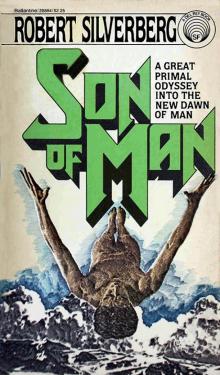 Son of Man
 Tom O'Bedlam
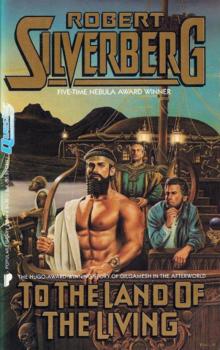 To the Land of the Living
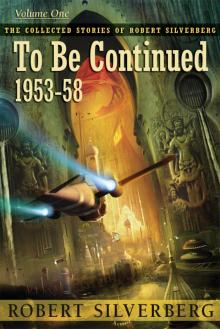 To Be Continued: The Collected Stories of Robert Silverberg, Volume One
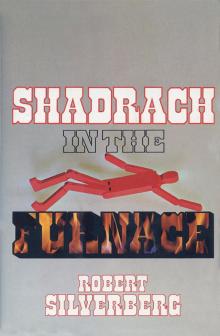 Shadrach in the Furnace
 The Chalice of Death: Three Novels of Mystery in Space
 The Queen of Springtime
 To Be Continued 1953-1958
 Legends
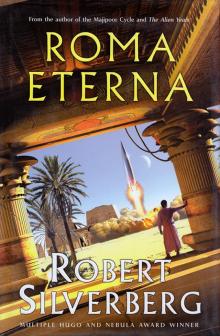 Roma Eterna
 To Live Again
 At Winter's End
 Needle in a Timestack
 To Live Again and the Second Trip: The Complete Novels
 Lord of Darkness
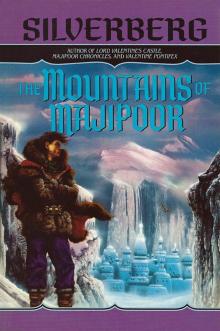 The Mountains of Majipoor
 The World Outside
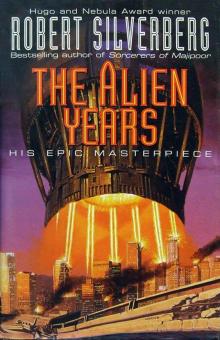 The Alien Years
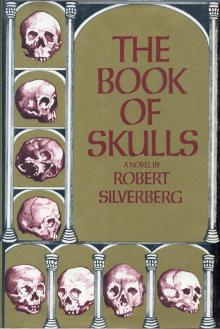 The Book of Skulls
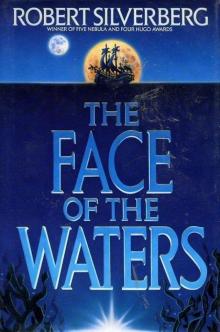 The Face of the Waters
 Gilgamesh the King
 The Collected Stories of Robert Silverberg, Volume 6: Multiples: 1983-87
 The Happy Unfortunate
 Three Survived
 Cronos
 Tower of Glass
 Legends II
 The Planet Killers
 The Collected Stories of Robert Silverberg, Volume 2: To the Dark Star: 1962-69
 Downward to the Earth
 Lord Valentine's Castle: Book One of the Majipoor Cycle
 Hot Times in Magma City, 1990-95
 Hunt the Space-Witch! Seven Adventures in Time and Space
 Majipoor Chronicles
 The Robert Silverberg Science Fiction Megapack(r)
 Starman's Quest
 Car Sinister
 Worlds of Maybe
 Fantasy The Best of 2001
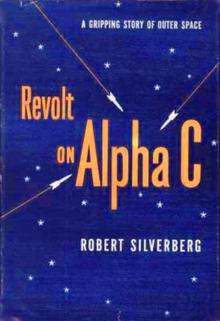 Revolt on Alpha C
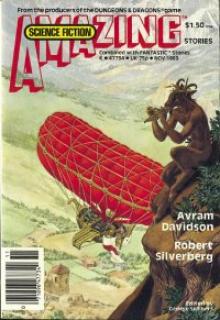 Homefaring
 The Pardoner's Tale
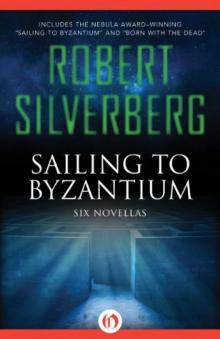 Sailing to Byzantium - Six Novellas
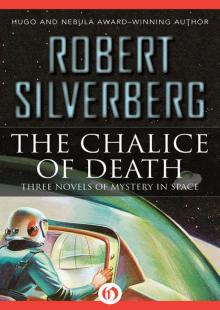 The Chalice of Death
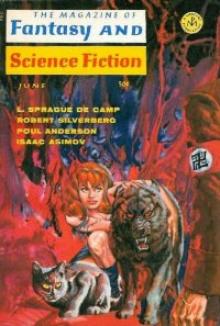 Sundance
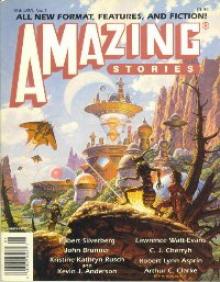 A Tip on a Turtle
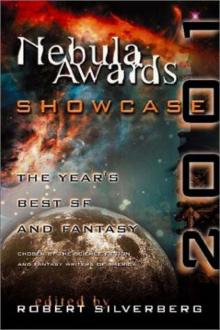 Nebula Awards Showcase 2001: The Year's Best SF and Fantasy Chosen by the Science Fiction and Fantasy Writers of America
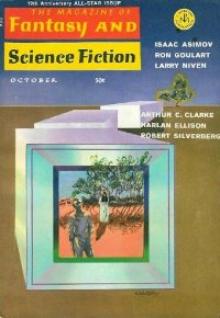 The Fangs of the Trees
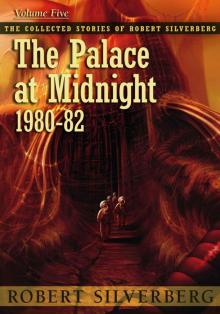 The Palace at Midnight: The Collected Work of Robert Silverberg, Volume Five
 The Millennium Express - 1995-2009 - The Collected Stories of Robert Silverberg Volume Nine
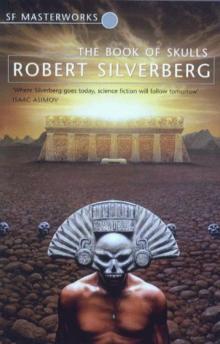 Book of Skulls
 Passengers
 Something Wild is Loose - 1969–72 - The Collected Stories of Robert Silverberg Volume Three
 Multiples
 Starborne
 The Masks of Time
 The Mountains of Majipoor m-8
 Multiples (1983-87)
 Those Who Watch
 In the Beginning
 Earth Is The Strangest Planet
 Collision Course
 Neutral Planet
 To the Dark Star - 1962–69 - The Collected Stories of Robert Silverberg Volume Two
 Mutants
 Sailing to Byzantium
 When We Went to See the End of the World
 Robert Silverberg The Science Fiction Hall Of Fame Volume One, 1929-1964
 To Be Continued - 1953–58 - The Collected Stories of Robert Silverberg Volume One
 Valentine Pontifex m-3
 Gianni
 Majipoor Chronicles m-2
 We Are for the Dark (1987-90)
 Waiting for the Earthquake
 Fantasy: The Best of 2001
 How It Was When the Past Went Away
 Beauty in the Night
 The Man Who Never Forgot
 The Book of Changes m-9
 Lord Valentine's Castle m-1
 This Way to the End Times
 Queen of Springtime
 Legends-Volume 3 Stories by the Masters of Modern Fantasy
 The Palace at Midnight - 1980–82 - The Collected Stories of Robert Silverberg Volume Five
 Something Wild is Loose: The Collected Stories of Robert Silverberg, Volume Three
 Multiples - 1983–87 - The Collected Stories of Robert Silverberg Volume Six
 Alaree
 Three Survived: A Science Fiction Novel
 Defenders of the Frontier
 The New Springtime
 We Are for the Dark - 1987–90 - The Collected Stories of Robert Silverberg Volume Seven
 The Science Fiction Hall of Fame, Volume One 1929-1964--The Greatest Science Fiction Stories of All Time Chosen by the Members of the Science Fiction Writers of America
 Master Of Life And Death
 Choke Chain
 Sorcerers of Majipoor m-4
 Absolutely Inflexible
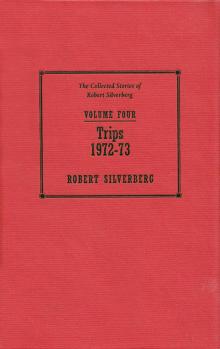 Trips - 1962–73 - The Collected Stories of Robert Silverberg Volume Four
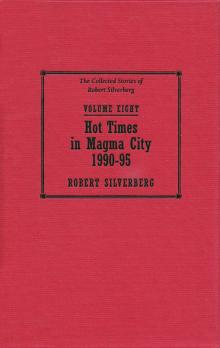 Hot Times in Magma City - 1990-95 - The Collected Stories of Robert Silverberg Volume Eight
 Far Horizons
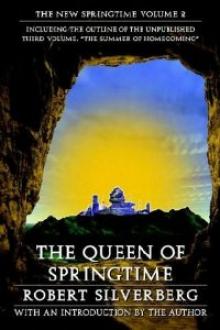 The Queen of Springtime ns-2
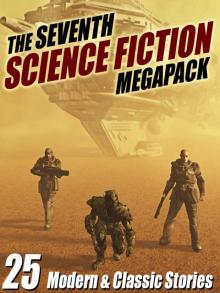 The Seventh Science Fiction Megapack
 Invaders From Earth
 Hanosz Prime Goes To Old Earth
 The Macauley Circuit
 Science Fiction: The Best of 2001
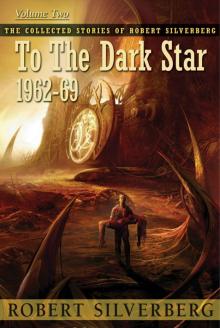 To the Dark Star: The Collected Stories of Robert Silverberg, Volume Two
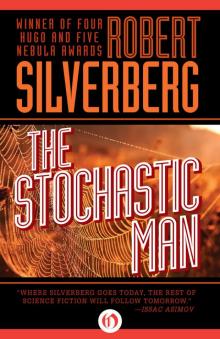 Stochastic Man
 Legends: Stories By The Masters of Modern Fantasy
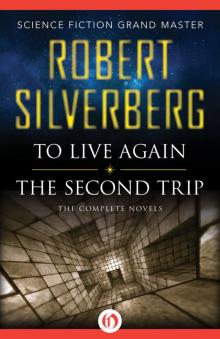 To Live Again And The Second Trip
 Flies
Flies The Silent Invaders
 Ship-Sister, Star-Sister