
- Home
- Robert Silverberg
Starman's Quest Page 17
Starman's Quest Read online
Page 17
_Chapter Sixteen_
At the time, he had been much too excited and flustered to answeranything. But, as the next twelve months went by, he learned that beinga millionaire was quite pleasant indeed.
There were headaches, of course. There was the initial headache ofsigning his name several hundred times in the course of the transfer ofHawkes' wealth to him. There were also the frequent visits from thetax-collectors, and the payment to them of a sum that staggered Alan tothink about, in the name of Rotation Tax.
But even after taxes, legal fees, and other expenses, Alan found heowned better than nine hundred thousand credits, and the estate grew byinvestment every day. The court appointed a legal guardian for him, thelawyer Jesperson, who was to administer Alan's money until Alan reachedthe biological age of twenty-one. The decision was an involved one,since Alan had undeniably been born three hundred years earlier, in3576--but the robojudge that presided over that particular hearingcited a precedent seven hundred years old which stated that for legalpurposes a starman's biological and not his chronological age was to beaccepted.
The guardianship posed no problems for Alan, though. When he met withJesperson to discuss future plans, the lawyer told him, "You can handleyourself, Alan. I'll give you free rein with the estate--with theproviso that I have veto power over any of your expenditures until yourtwenty-first birthday."
That sounded fair enough. Alan had reason to trust the lawyer; hadn'tHawkes recommended him? "I'll agree to that," Alan said. "Suppose westart right now. I'd like to take a year and travel around the world. Asmy legal guardian you'll be stuck with the job of managing my estate andhandling investments for me."
Jesperson chuckled. "You'll be twice as wealthy when you get back!Nothing makes money so fast as money."
Alan left the first week in December, having spent three weeks doingvirtually nothing but sketching out his itinerary. There were plenty ofplaces he intended to visit.
There was London, where James Hudson Cavour had lived and where hishyperdrive research had been carried out. There was the Lexman Instituteof Space Travel in Zurich, where an extensive library of spaceliterature had been accumulated; it was possible that hidden away intheir files was some stray notebook of Cavour's, some clue that wouldgive Alan a lead. He wanted to visit the area in Siberia that Cavour hadused as his testing-ground, and from which the last bulletin had comefrom the scientist before his unexplained disappearance.
But it was not only a business trip. Alan had lived nearly half a yearin the squalor of Hasbrouck--and because of his Free Status he wouldnever be able to move into a better district, despite his wealth. But hewanted to see the rest of Earth. He wanted to travel just for the sakeof travel.
Before he left, he visited a rare book dealer in York City, and for anexorbitant fifty credits purchased a fifth-edition copy of _AnInvestigation into the Possibility of Faster-than-Light Space Travel_,by James H. Cavour. He had left his copy of the work aboard the_Valhalla_, along with the few personal possessions he had managed toaccumulate during his life as a starman.
The book dealer had frowned when Alan asked for the volume under thetitle he knew. "_The Cavour Theory_? I don't think--ah, wait." Hevanished for perhaps five minutes and returned with an old, fragile,almost impossibly delicate-looking book. Alan took it and scanned theopening page. There were the words he had read so many times: "Thepresent system of interstellar travel is so grossly inefficient as to bevirtually inoperable on an absolute level."
"Yes, that's the book. I'll take it."
His first stop on his round-the-globe jaunt was London, where Cavour hadbeen born and educated more than thirteen centuries before. Thestratoliner made the trip across the Atlantic in a little less thanthree hours; it took half an hour more by Overshoot from the airport tothe heart of London.
Somehow, from Cavour's few autobiographical notes, Alan had picturedLondon as a musty old town, picturesque, reeking of medieval history. Hecouldn't have been more wrong. Sleek towers of plastic and concretegreeted him. Overshoots roared by the tops of the buildings. A busynetwork of bridges connected them.
He went in search of Cavour's old home in Bayswater, with the nebulousidea of finding some important document wedged in the woodwork. But alocal security officer shook his head as Alan asked for directions.
"Sorry, lad. I've never heard of that street. Why don't you try theinformation robot up there?"
The information robot was a blocky green-skinned synthetic planted in akiosk in the middle of a broad well-paved street. Alan approached andgave the robot Cavour's thirteen-century-old address.
"There is no record of any such address in the current files," thesteely voice informed him.
"No. It's an old address. It dates back to at least 2570. A man namedCavour lived there."
The robot digested the new data; relays hummed softly within it as itscanned its memory banks. Finally it grunted, "Data on the address youseek has been reached."
"Fine! Where's the house?"
"The entire district was demolished during the general rebuilding ofLondon in 2982-2997. Nothing remains."
"Oh," Alan said.
The London trail trickled out right then and there. He pursued it alittle further, managed to find Cavour's name inscribed on the honorrole of the impressive London Technological Institute for the year 2529,and discovered a copy of Cavour's book in the Institute Library. Therewas nothing else to be found. After a month in London, Alan moved oneastward across Europe.
Most of it was little like the descriptions he had read in the_Valhalla's_ library. The trouble was that the starship's visits toEarth were always at least a decade behind, usually more. Most of thelibrary books had come aboard when the ship had first been commissioned,far back in the year 2731. The face of Europe had almost totallyaltered since then.
Now, shiny new buildings replaced the ancient houses which had enduredfor as much as a thousand years. A gleaming bridge linked Dover andCalais; elsewhere, the rivers of Europe were bridged frequently,providing easy access between the many states of the Federation ofEurope. Here, there, monuments of the past remained--the Eiffel Tower,absurdly dwarfed by the vast buildings around it, still reared itsspidery self in Paris, and Notre Dame still remained as well. But therest of Paris, the ancient city Alan had read so much of--that had longsince been swept under by the advancing centuries. Buildings did notendure forever.
In Zurich he visited the Lexman Institute for Space Travel, amagnificent group of buildings erected on the royalties from the LexmanSpacedrive. A radiant statue sixty feet high was the monument toAlexander Lexman, who in 2337 had first put the stars within the reachof man.
Alan succeeded in getting an interview with the current head of theInstitute, but it was anything but a satisfactory meeting. It was heldin an office ringed with mementoes of the epoch-making test flight of2338.
"I'm interested in the work of James H. Cavour," Alan said almostimmediately--and from the bleak expression that appeared on thescientist's face, he knew he had made a grave mistake.
"Cavour is as far from Lexman as possible, my friend. Cavour was adreamer; Lexman, a doer."
"Lexman succeeded--but how do you know Cavour didn't succeed as well?"
"Because, my young friend, faster-than-light travel is flatlyimpossible. A dream. A delusion."
"You mean that there's no faster-than-light research being carried onhere?"
"The terms of our charter, set down by Alexander Lexman himself, specifythat we are to work toward improvements in the technique of space travel.It said nothing about fantasies and daydreams. No--ah--hyperdriveresearch is taking place at this institute, and none will take place solong as we remain true to the spirit of Alexander Lexman."
Alan felt like crying out that Lexman was a bold and daring pioneer,never afraid to take a chance, never worried about expense or publicreaction. It was obvious, though, that the people of the Institute hadlong since fossilized in their patterns. It was a waste of breath toargue with them.
&nbs
p; Discouraged, he moved on, pausing in Vienna to hear the opera--Max hadalways intended to spend a vacation with him in Vienna, listening toMozart, and Alan felt he owed it to Hawkes to pay his respects. Theoperas he saw were ancient, medieval in fact, better than two thousandyears old; he enjoyed the tinkly melodies but found some of the plotshard to understand.
He saw a circus in Ankara, a football game in Budapest, a nullgravwrestling match in Moscow. He journeyed to the far reaches of Siberia,where Cavour had spent his final years, and found that what had been ableak wasteland suitable for spaceship experiments in 2570 was now athriving modern city of five million people. The site of Cavour's camphad long since been swallowed up.
Alan's faith in the enduring nature of human endeavor was restoredsomewhat by his visit to Egypt--for there he saw the pyramids, nearlyseven thousand years old; they looked as permanent as the stars.
The first anniversary of his leaving the _Valhalla_ found him in SouthAfrica; from there he travelled eastward through China and Japan, acrossthe highly industrialized islands of the Far Pacific, and from thePhilippines he returned to the American mainland by jet express.
He spent the next four months travelling widely through the UnitedStates, gaping at the Grand Canyon and the other scenic preserves of thewest. East of the Mississippi, life was different; there was barely astretch of open territory between York City and Chicago.
It was late in November when he returned to York City. Jesperson greetedhim at the airfield, and they rode home together. Alan had been gone ayear; he was past eighteen, now, a little heavier, a little stronger.Very little of the wide-eyed boy who had stepped off the _Valhalla_ theyear before remained intact. He had changed inwardly.
But one part of him had not changed, except in the direction of greaterdetermination. That was the part that hoped to unlock the secret offaster-than-light travel.
He was discouraged. His journey had revealed the harsh fact that nowhereon Earth was research into hyperdrive travel being carried on; eitherthey had tried and abandoned it as hopeless, or, like the Zurich people,they had condemned the concept from the start.
"Did you find what you were looking for?" Jesperson asked.
Alan slowly shook his head. "Not a hint. And I really covered ground."He stared at the lawyer a moment. "How much am I worth, now?"
"Well, offhand--" Jesperson thought for a moment. "Say, a million threehundred. I've made some good investments this past year."
Alan nodded. "Good. Keep the money piling up. I may decide to open aresearch lab of my own, and we'll need every credit we've got."
But the next day an item arrived in the morning mail which very muchaltered the character of Alan's plans for the future. It was a small butthick package, neatly wrapped, which bore as return address the name_Dwight Bentley_, with a London number.
Alan frowned for a moment, trying to place the name. Then it came backto him--Bentley was the vice-provost of the London Institute ofTechnology, Cavour's old school. Alan had had a long talk with Bentleyone afternoon in January, about Cavour, about space travel, and aboutAlan's hopes for developing a hyperspace drive.
The parcel was the right size and thickness to contain a book. Alan slitthe fastenings, and folded back the outer wrapper. A note from Bentleylay on top.
_London 3rd November 3877_
_My dear Mr. Donnell:_
_Perhaps you may remember the very enjoyable chat you and I had one day at this Institute last winter, on the occasion of your visit to London. You were, I recall, deeply interested in the life and work of James H. Cavour, and anxious to carry on the developments he had achieved in the field of space travel._
_Several days ago, in the course of an extensive resurveying of the Institute's archives, the enclosed volume was discovered very thoroughly hidden in the dusty recesses of our library. Evidently Mr. Cavour had forwarded the book to us from his laboratory in Asia, and it had somehow become misfiled._
_I am taking the liberty of forwarding the book on to you, in the hopes that it will aid you in your work and perhaps ultimately bring you success. Would you be kind enough to return the book to me c/o this Institute when you are finished with it?_
_Cordially, Dwight Bentley_
Alan let the note slip to the floor as he reached for the enclosed book.It was leather-bound and even more fragile than the copy of _The CavourTheory_ he had purchased; it looked ready to crumble at a hostilebreath.
With mounting excitement he lifted the ancient cover and turned it over.The first page of the book was blank; so were the second and third. Onthe fourth page, Alan saw a few lines of writing, in an austere, rigidhand. He peered close, and with awe and astonishment read the wordswritten there:
_The Journal of James Hudson Cavour. Volume 16--Jan. 8 to October 11, 2570._
 The Longest Way Home
 Hawksbill Station
 A Time of Changes
 This Way to the End Times: Classic Tales of the Apocalypse
 Beyond the Gate of Worlds
 Lord Valentine's Castle
 The Man in the Maze
 Tales of Majipoor
 Time of the Great Freeze
 The Collected Stories of Robert Silverberg, Volume 3: Something Wild Is Loose: 1969-72
 Planet of Death
 Trips: The Collected Stories of Robert Silverberg, Volume Four
 In the Beginning: Tales From the Pulp Era
 Hot Sky at Midnight
 Valentine Pontifex
 Up the Line
 Thorns
 Amanda and the Alien
 Star of Gypsies
 Nightwings
 The Time Hoppers
 Blood on the Mink
 Dying Inside
 The Last Song of Orpheus
 The King of Dreams
 The Stochastic Man
 The Collected Stories of Robert Silverberg, Volume Seven: We Are for the Dark
 The Millennium Express: The Collected Stories of Robert Silverberg, Volume Nine
 The Iron Chancellor
 Lord Prestimion
 To Open the Sky
 The World Inside
 Chains of the Sea
 The Collected Stories of Robert Silverberg, Volume Five: The Palace at Midnight
 Postmark Ganymede
 The Second Trip
 The Collected Stories of Robert Silverberg, Volume 4: Trips: 1972-73
 Son of Man
 Tom O'Bedlam
 To the Land of the Living
 To Be Continued: The Collected Stories of Robert Silverberg, Volume One
 Shadrach in the Furnace
 The Chalice of Death: Three Novels of Mystery in Space
 The Queen of Springtime
 To Be Continued 1953-1958
 Legends
 Roma Eterna
 To Live Again
 At Winter's End
 Needle in a Timestack
 To Live Again and the Second Trip: The Complete Novels
 Lord of Darkness
 The Mountains of Majipoor
 The World Outside
 The Alien Years
 The Book of Skulls
 The Face of the Waters
 Gilgamesh the King
 The Collected Stories of Robert Silverberg, Volume 6: Multiples: 1983-87
 The Happy Unfortunate
 Three Survived
 Cronos
 Tower of Glass
 Legends II
 The Planet Killers
 The Collected Stories of Robert Silverberg, Volume 2: To the Dark Star: 1962-69
 Downward to the Earth
 Lord Valentine's Castle: Book One of the Majipoor Cycle
 Hot Times in Magma City, 1990-95
 Hunt the Space-Witch! Seven Adventures in Time and Space
 Majipoor Chronicles
 The Robert Silverberg Science Fiction Megapack(r)
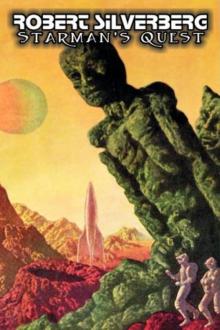 Starman's Quest
 Car Sinister
 Worlds of Maybe
 Fantasy The Best of 2001
 Revolt on Alpha C
 Homefaring
 The Pardoner's Tale
 Sailing to Byzantium - Six Novellas
 The Chalice of Death
 Sundance
 A Tip on a Turtle
 Nebula Awards Showcase 2001: The Year's Best SF and Fantasy Chosen by the Science Fiction and Fantasy Writers of America
 The Fangs of the Trees
 The Palace at Midnight: The Collected Work of Robert Silverberg, Volume Five
 The Millennium Express - 1995-2009 - The Collected Stories of Robert Silverberg Volume Nine
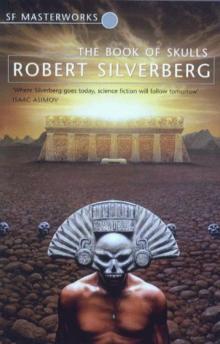 Book of Skulls
 Passengers
 Something Wild is Loose - 1969–72 - The Collected Stories of Robert Silverberg Volume Three
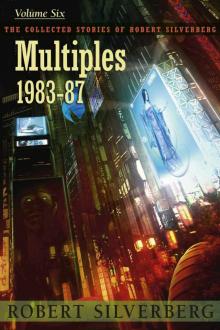 Multiples
 Starborne
 The Masks of Time
 The Mountains of Majipoor m-8
 Multiples (1983-87)
 Those Who Watch
 In the Beginning
 Earth Is The Strangest Planet
 Collision Course
 Neutral Planet
 To the Dark Star - 1962–69 - The Collected Stories of Robert Silverberg Volume Two
 Mutants
 Sailing to Byzantium
 When We Went to See the End of the World
 Robert Silverberg The Science Fiction Hall Of Fame Volume One, 1929-1964
 To Be Continued - 1953–58 - The Collected Stories of Robert Silverberg Volume One
 Valentine Pontifex m-3
 Gianni
 Majipoor Chronicles m-2
 We Are for the Dark (1987-90)
 Waiting for the Earthquake
 Fantasy: The Best of 2001
 How It Was When the Past Went Away
 Beauty in the Night
 The Man Who Never Forgot
 The Book of Changes m-9
 Lord Valentine's Castle m-1
 This Way to the End Times
 Queen of Springtime
 Legends-Volume 3 Stories by the Masters of Modern Fantasy
 The Palace at Midnight - 1980–82 - The Collected Stories of Robert Silverberg Volume Five
 Something Wild is Loose: The Collected Stories of Robert Silverberg, Volume Three
 Multiples - 1983–87 - The Collected Stories of Robert Silverberg Volume Six
 Alaree
 Three Survived: A Science Fiction Novel
 Defenders of the Frontier
 The New Springtime
 We Are for the Dark - 1987–90 - The Collected Stories of Robert Silverberg Volume Seven
 The Science Fiction Hall of Fame, Volume One 1929-1964--The Greatest Science Fiction Stories of All Time Chosen by the Members of the Science Fiction Writers of America
 Master Of Life And Death
 Choke Chain
 Sorcerers of Majipoor m-4
 Absolutely Inflexible
 Trips - 1962–73 - The Collected Stories of Robert Silverberg Volume Four
 Hot Times in Magma City - 1990-95 - The Collected Stories of Robert Silverberg Volume Eight
 Far Horizons
 The Queen of Springtime ns-2
 The Seventh Science Fiction Megapack
 Invaders From Earth
 Hanosz Prime Goes To Old Earth
 The Macauley Circuit
 Science Fiction: The Best of 2001
 To the Dark Star: The Collected Stories of Robert Silverberg, Volume Two
 Stochastic Man
 Legends: Stories By The Masters of Modern Fantasy
 To Live Again And The Second Trip
 Flies
Flies The Silent Invaders
 Ship-Sister, Star-Sister