
- Home
- Robert Silverberg
Starman's Quest Page 19
Starman's Quest Read online
Page 19
_Chapter Eighteen_
Alan brought the _Cavour_ down less than a mile away from the scene ofthe wreckage--it was the best he could do, computing the landing byguesswork--and climbed into his spacesuit. He passed through the airlockand out into the windswept desert.
He felt just a little lightheaded; the gravity was only 0.8 ofEarth-norm, and besides that the air in his spacesuit, being perpetuallyrenewed by the Bennerman re-breathing generator strapped to his back,was just a shade too rich in oxygen.
In the back of his mind he realized he ought to adjust his oxygen flow,but before he brought himself to make the adjustment the surplus tookits effect. He began to hum, then to dance awkwardly over the sand. Amoment later he was singing a wild space ballad that he thought he hadforgotten years before. After ten feet he tripped and went sprawlingdown in the sand. He lay there, trickling the violet sands through thegloves of his spacesuit, feeling very lightheaded and very foolish allat the same time.
But he was still sober enough to realize he was in danger. It was aneffort to reach over his shoulder and move the oxygen gauge back anotch. After a moment the flow levelled out and he felt his headbeginning to clear.
He was marching through a fantastic baroque desert. Venus was a riot ofcolors, all in a minor key: muted greens and reds, an overbearing gray,a strange, ghostly blue. The sky, or rather the cloud layer, dominatedthe atmosphere with its weird pinkness. It was a silent world--a deadworld.
In the distance he saw the wreckage of the ship; beyond it the landbegan to rise, sloping imperceptibly up into a gentle hill with bizarresculptured rock outcroppings here and there. He walked quickly.
Fifteen minutes later he reached the ship. It stood upright--or rather,its skeleton did. The ship had not crashed. It had simply rotted away,the metal of its hide eaten by the sand-laden winds over the course ofcenturies. Nothing remained but a bare framework.
He circled the ship, then entered the cave a hundred feet away. Hesnapped on his lightbeam. In the darkness, he saw----
A huddled skeleton, far to the rear of the cave. A pile of corrodedequipment; atmosphere generators, other tools now shapeless.
Cavour had reached Venus safely. But he had never departed.
To his astonishment Alan found a sturdy volume lying under the pile ofbones--a book, wrapped in metal plates. Somehow it had withstood thepassage of centuries, here in this quiet cave.
Gently he unwrapped the book. The cover dropped off at his touch; heturned back the first three pages, which were blank. On the fourth,written in the now-familiar crabbed hand, were the words: _The Journalof James Hudson Cavour. Volume 17--October 20, 2570----_
* * * * *
He had plenty of time, during the six-day return journey, to read andre-read Cavour's final words and to make photographic copies of thewithered old pages.
The trip to Venus had been easy for old Cavour; he had landed preciselyon schedule, and established housekeeping for himself in the cave. But,as his diary detailed it, he felt strength ebbing away with each passingday.
He was past eighty, no age for a man to come alone to a strange planet.There remained just minor finishing to be done on his pioneeringship--but he did not have the strength to do the work. Climbing thecatwalk of the ship, soldering, testing--now, with his opportunitybefore him, he could not attain his goal.
He made several feeble attempts to finish the job, and on the last ofthem fell from his crude rigging and fractured his hip. He had managedto crawl back inside the cave, but, alone, with no one to tend him, heknew he had nothing to hope for.
It was impossible for him to complete his ship. All his dreams wereended. His equations and his blueprints would die with him.
In his last day he came to a new realization: nowhere had he left acomplete record of the mechanics of his spacewarp generator, the keymechanism without which hyperspace drive was unattainable. So, racingagainst encroaching death, James Hudson Cavour turned to a new page inhis diary, headed it, in firm, forceful letters, _For Those Who FollowAfter_, and inked in a clear and concise explanation of his work.
It was all there, Alan thought exultantly: the diagrams, thespecifications, the equations. It would be possible to build the shipfrom Cavour's notes.
The final page of the diary had evidently been Cavour's dying thoughts.In a handwriting increasingly ragged and untidy, Cavour had indited aparagraph forgiving the world for its scorn, hoping that some daymankind would indeed have easy access to the stars. The paragraph endedin midsentence. It was, thought Alan, a moving testament from a greathuman being.
The days went by, and the green disk of Earth appeared in theviewscreen. Late on the sixth day the _Cavour_ sliced into Earth'satmosphere, and Alan threw it into the landing orbit he had computedthat afternoon. The ship swung in great spirals around Earth, drawingever closer, and finally began to home in on the spaceport.
Alan busied himself over the radio transmitter, getting landingclearance. He brought the ship down easily, checked out, and hurried tothe nearest phone.
He dialed Jesperson's number. The lawyer answered.
"When did you get back?"
"Just now," Alan said. "Just this minute."
"Well? Did you----"
"Yes! I found it! I found it!"
* * * * *
Oddly enough, he was in no hurry to leave Earth now. He was inpossession of Cavour's notes, but he wanted to do a perfect job ofreproducing them, of converting the scribbled notations into a ship.
To his great despair he discovered, when he first examined the Cavournotebook in detail, that much of the math was beyond his depth. That wasonly a temporary obstacle, though. He hired mathematicians. He hiredphysicists. He hired engineers.
Through it all, he remained calm; impatient, perhaps, but not overly so.The time had not yet come for him to leave Earth. All his striving wouldbe dashed if he left too soon.
The proud building rose a hundred miles from York City: _The HawkesMemorial Laboratory_. There, the team of scientists Alan had gatheredworked long and painstakingly, trying to reconstruct what old Cavour hadwritten, experimenting, testing.
Early in 3881 the first experimental Cavour Generator was completed inthe lab. Alan had been vacationing in Africa, but he was called backhurriedly by his lab director to supervise the testing.
The generator was housed in a sturdy windowless building far from themain labs; the forces being channelled were potent ones, and no chanceswere being taken. Alan himself threw the switch that first turned thespacewarp generator on, and the entire research team gathered by theclosed-circuit video pickup to watch.
The generator seemed to blur, to waver, to lose substance and becomeunreal. It vanished.
It remained gone fifteen seconds, while a hundred researchers held theirbreaths. Then it returned. It shorted half the power lines in thecounty.
But Alan was grinning as the auxiliary feeders turned the lights in thelab on again. "Okay," he yelled. "It's a start, isn't it? We got thegenerator to vanish, and that's the toughest part of the battle. Let'sget going on Model Number Two."
By the end of the year, Model Number Two was complete, and the teststhis time were held under more carefully controlled circumstances. Againsuccess was only partial, but again Alan was not disappointed. He hadworked out his time-table well. Premature success might only makematters more difficult for him.
3882 went by, and 3883. He was in his early twenties, now, a tall,powerful figure, widely known all over Earth. With Jesperson's shrewdaid he had pyramided Max's original million credits into an imposingfortune--and much of it was being diverted to hyperspace research. ButAlan Donnell was not the figure of scorn James Hudson Cavour had been;no one laughed at him when he said that by 3885 hyperspace travel wouldbe reality.
3884 slipped past. Now the time was drawing near. Alan spent virtuallyall his hours at the research center, aiding in the successive tests.
On March 11, 3885, the final test was a
ccomplished satisfactorily.Alan's ship, the _Cavour_, had been completely remodeled to accommodatethe new drive; every test but one had been completed.
The final test was that of actual performance. And here, despite theadvice of his friends, Alan insisted that he would have to be the manwho took the _Cavour_ on her first journey to the stars.
Nine years had passed, almost to the week, since a brash youngster namedAlan Donnell had crossed the bridge from the Spacer's Enclave andhesitantly entered the bewildering complexity of York City. Nine years.
He was twenty-six now, no boy any more. He was the same age Steve hadbeen, when he had been dragged unconscious to the _Valhalla_ and takenaboard.
And the _Valhalla_ was still bound on its long journey to Procyon. Nineyears had passed, but yet another remained before the giant starshipwould touch down on a planet of Procyon's. But the FitzgeraldContraction had telescoped those nine years into just a few months, forthe people of the _Valhalla_.
Steve Donnell was still twenty-six.
And now Alan had caught him. The Contraction had evened out. They weretwins again.
And the _Cavour_ was ready to make its leap into hyperspace.
 The Longest Way Home
 Hawksbill Station
 A Time of Changes
 This Way to the End Times: Classic Tales of the Apocalypse
 Beyond the Gate of Worlds
 Lord Valentine's Castle
 The Man in the Maze
 Tales of Majipoor
 Time of the Great Freeze
 The Collected Stories of Robert Silverberg, Volume 3: Something Wild Is Loose: 1969-72
 Planet of Death
 Trips: The Collected Stories of Robert Silverberg, Volume Four
 In the Beginning: Tales From the Pulp Era
 Hot Sky at Midnight
 Valentine Pontifex
 Up the Line
 Thorns
 Amanda and the Alien
 Star of Gypsies
 Nightwings
 The Time Hoppers
 Blood on the Mink
 Dying Inside
 The Last Song of Orpheus
 The King of Dreams
 The Stochastic Man
 The Collected Stories of Robert Silverberg, Volume Seven: We Are for the Dark
 The Millennium Express: The Collected Stories of Robert Silverberg, Volume Nine
 The Iron Chancellor
 Lord Prestimion
 To Open the Sky
 The World Inside
 Chains of the Sea
 The Collected Stories of Robert Silverberg, Volume Five: The Palace at Midnight
 Postmark Ganymede
 The Second Trip
 The Collected Stories of Robert Silverberg, Volume 4: Trips: 1972-73
 Son of Man
 Tom O'Bedlam
 To the Land of the Living
 To Be Continued: The Collected Stories of Robert Silverberg, Volume One
 Shadrach in the Furnace
 The Chalice of Death: Three Novels of Mystery in Space
 The Queen of Springtime
 To Be Continued 1953-1958
 Legends
 Roma Eterna
 To Live Again
 At Winter's End
 Needle in a Timestack
 To Live Again and the Second Trip: The Complete Novels
 Lord of Darkness
 The Mountains of Majipoor
 The World Outside
 The Alien Years
 The Book of Skulls
 The Face of the Waters
 Gilgamesh the King
 The Collected Stories of Robert Silverberg, Volume 6: Multiples: 1983-87
 The Happy Unfortunate
 Three Survived
 Cronos
 Tower of Glass
 Legends II
 The Planet Killers
 The Collected Stories of Robert Silverberg, Volume 2: To the Dark Star: 1962-69
 Downward to the Earth
 Lord Valentine's Castle: Book One of the Majipoor Cycle
 Hot Times in Magma City, 1990-95
 Hunt the Space-Witch! Seven Adventures in Time and Space
 Majipoor Chronicles
 The Robert Silverberg Science Fiction Megapack(r)
 Starman's Quest
 Car Sinister
 Worlds of Maybe
 Fantasy The Best of 2001
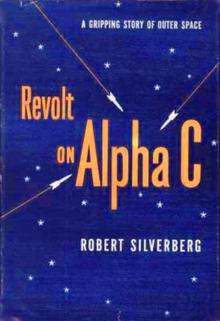 Revolt on Alpha C
 Homefaring
 The Pardoner's Tale
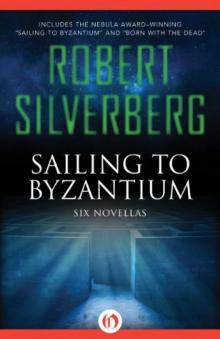 Sailing to Byzantium - Six Novellas
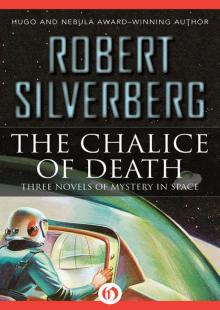 The Chalice of Death
 Sundance
 A Tip on a Turtle
 Nebula Awards Showcase 2001: The Year's Best SF and Fantasy Chosen by the Science Fiction and Fantasy Writers of America
 The Fangs of the Trees
 The Palace at Midnight: The Collected Work of Robert Silverberg, Volume Five
 The Millennium Express - 1995-2009 - The Collected Stories of Robert Silverberg Volume Nine
 Book of Skulls
 Passengers
 Something Wild is Loose - 1969–72 - The Collected Stories of Robert Silverberg Volume Three
 Multiples
 Starborne
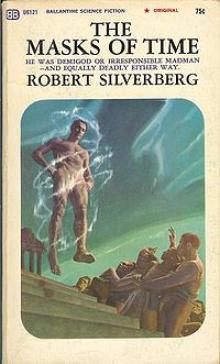 The Masks of Time
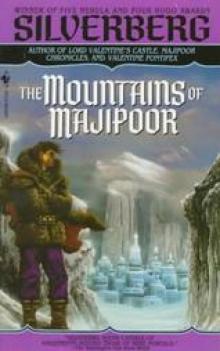 The Mountains of Majipoor m-8
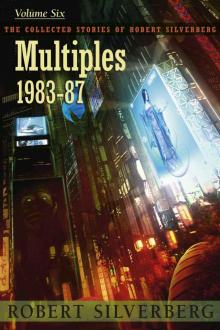 Multiples (1983-87)
 Those Who Watch
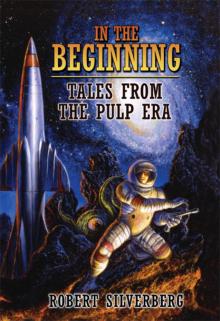 In the Beginning
 Earth Is The Strangest Planet
 Collision Course
 Neutral Planet
 To the Dark Star - 1962–69 - The Collected Stories of Robert Silverberg Volume Two
 Mutants
 Sailing to Byzantium
 When We Went to See the End of the World
 Robert Silverberg The Science Fiction Hall Of Fame Volume One, 1929-1964
 To Be Continued - 1953–58 - The Collected Stories of Robert Silverberg Volume One
 Valentine Pontifex m-3
 Gianni
 Majipoor Chronicles m-2
 We Are for the Dark (1987-90)
 Waiting for the Earthquake
 Fantasy: The Best of 2001
 How It Was When the Past Went Away
 Beauty in the Night
 The Man Who Never Forgot
 The Book of Changes m-9
 Lord Valentine's Castle m-1
 This Way to the End Times
 Queen of Springtime
 Legends-Volume 3 Stories by the Masters of Modern Fantasy
 The Palace at Midnight - 1980–82 - The Collected Stories of Robert Silverberg Volume Five
 Something Wild is Loose: The Collected Stories of Robert Silverberg, Volume Three
 Multiples - 1983–87 - The Collected Stories of Robert Silverberg Volume Six
 Alaree
 Three Survived: A Science Fiction Novel
 Defenders of the Frontier
 The New Springtime
 We Are for the Dark - 1987–90 - The Collected Stories of Robert Silverberg Volume Seven
 The Science Fiction Hall of Fame, Volume One 1929-1964--The Greatest Science Fiction Stories of All Time Chosen by the Members of the Science Fiction Writers of America
 Master Of Life And Death
 Choke Chain
 Sorcerers of Majipoor m-4
 Absolutely Inflexible
 Trips - 1962–73 - The Collected Stories of Robert Silverberg Volume Four
 Hot Times in Magma City - 1990-95 - The Collected Stories of Robert Silverberg Volume Eight
 Far Horizons
 The Queen of Springtime ns-2
 The Seventh Science Fiction Megapack
 Invaders From Earth
 Hanosz Prime Goes To Old Earth
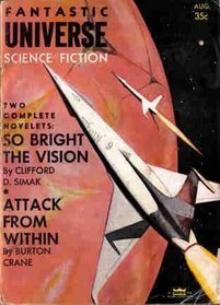 The Macauley Circuit
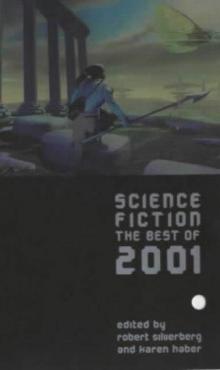 Science Fiction: The Best of 2001
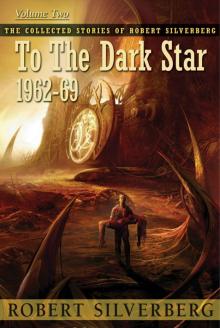 To the Dark Star: The Collected Stories of Robert Silverberg, Volume Two
 Stochastic Man
 Legends: Stories By The Masters of Modern Fantasy
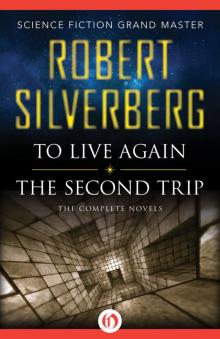 To Live Again And The Second Trip
 Flies
Flies The Silent Invaders
 Ship-Sister, Star-Sister