
- Home
- Robert Silverberg
Cronos Page 28
Cronos Read online
Page 28
“Does that mean he didn’t hop?”
“I’d say so.”
“But how can you be sure that all the hoppers are really listed?” Helaine demanded. “What if a lot of them slipped through?”
“It’s possible.”
“And the names,” she went on. “If Norm gave a different name when he got to the past, he wouldn’t be on your list either. Right?”
Quellen looked glum. “There’s always the possibility that he adopted a pseudonym,” he admitted.
“You’re hedging, Joe. You can’t be sure he didn’t hop. Even with the list.”
“So what do you want me to do, Helaine?”
She took a deep breath. “You could arrest Lanoy before he sends Norm back in time.”
“I’ve got to find Lanoy,” Quellen observed. “And then I’ve got to have some proof that he’s involved. So far there isn’t even any circumstantial evidence, just a lot of conclusion-jumping on your part.”
“Then arrest Norm.”
“What?”
“Find him guilty of something and lock him up. Give him a year or two of corrective therapy. That’ll keep him out of circulation until the hopper crisis is over. Call it protective custody.”
“Helaine, I can’t use the law as a private plaything for members of my family!”
“He’s my husband, Joe. I want to keep him. If he goes back in time, I’ve lost him forever.” Helaine stood up. She swayed, and had to grip Quellen’s desk. How could she make him understand that she stood at the edge of an abyss? To hop was effectively the same as to die. She was fighting to keep her husband. And there sat her brother in the cloak of his righteousness, doing nothing while precious seconds ticked away.
“I’ll do what I can,” Quellen promised. “I’ll look into this Lanoy. If you’d like to send Norm here, I’ll talk to him and try to find out what’s on his mind. Yes. Perhaps that’s best. Get him to come to see me.”
“If he’s planning to hop,” said Helaine, “he’s not likely to tell you about it. He won’t come within five miles of this building.”
“Why don’t you tell him that I want to talk to him about a job opportunity? He’s been complaining that I haven’t been doing anything for him, yes? All right. He’ll come to me, thinking that I’ve got an opening for him. And I’ll pump him about hopping. Subtly. If he knows anything, I’ll get it out of him. We’ll smash the hopper ring and there’ll be no danger of his taking off. How does that sound, Helaine?”
“Encouraging. I’ll talk to him. I’ll send him to you. If he hasn’t already taken off.”
She moved toward the door. Her brother smiled once again. Helaine winced. She was fearful that Norm had already vanished irretrievably, while she sat here talking. She had to get back to him in a hurry. Until this crisis was over, she knew she must keep close watch.
“Remember me to Judith,” Helaine said, and went out.
8.
Quellen had not enjoyed the interview with his sister. Helaine always left him feeling flayed. She was so visibly unhappy that it pained him to see her at all. Now she looked five or six years older than he was. He remembered Helaine at thirteen or so, virginal and radiant, naive enough to think that life held something wonderful for her. Here she was a few years short of forty, marooned within four walls, clawing like a demon to hang on to her morose, embittered husband, because he was just about all that she had.Still, she had given him some useful information. Lanoy had been on Quellen’s mind ever since the sallow-faced stranger had pressed the wadded minislip into his hand on the flyramp. The next day, Quellen had initiated a routine check, but it had turned up nothing tangible. A mere last name was useless to the computer. There were thousands of Lanoys in the world, and Quellen could scarcely investigate every one of them for possible criminal activities. A randomscoop had yielded no information. Now, though, came Helaine with her intuitive conviction that Lanoy was behind the hopper business. And this woman she had mentioned, this Beth Wisnack—Quellen made a note to send a man around to talk to her again. No doubt Beth Wisnack had already been interrogated about her husband’s disappearance, but she would have to be approached from the direction of Lanoy information this time.
Quellen considered the possibility of posting a guard on Norm Pomrath to prevent any untimely departure. He had been ordered in no ambiguous terms to leave Donald Mortensen alone and to do no meddling with any of the listed hoppers. Koll had received The Word from Giacomin, who had it from the lips of Kloofman himself: “Hands off Mortensen.”
They were afraid of changing the past. Quellen could feel the fear in them running right up to the High Government. It was within his power to shake the underpinnings of the universe. Pick up Donald Mortensen for questioning and put a laser bolt through his skull, for example.
“Sorry. Resisted arrest and had to be destroyed.”
Yes. And then Donald Mortensen would never take off for the past on May 4. Which would upset the entire structure of the last few centuries. At the moment I shoot Mortensen, Quellen thought, everything will shift and it will turn out that we were conquered by an army of slimy centipedes from the Magellanic Clouds inA.D.2257—a conquest that would have been prevented by one of the descendants of Donald Mortensen, if I hadn’t been so thoughtless as to shoot him down.
Quellen had no intention of inviting the wrath of the High Government by interfering with the departure of Donald Mortensen. But Norm Pomrath was not on the hopperlist. Was he covered by Kloofman’s directive, then? Was Quellen required to abstain from any action that could possibly lead to the time-departure of any person whatever?
That made no sense. Therefore Quellen agreed with himself-that he could without compromising himself keep watch on his brother-in-law and take steps to prevent Norm from going hopper. That would make Helaine happy. It might also, Quellen thought, contribute to an ultimate solution to this entire worrisome assignment.
“Get me Brogg,” he said into his communicator mouthpiece.
Brogg turned out to be conducting an investigation outsidethe building. The other UnderSec, Leeward, entered Quellen’s office.
The CrimeSec said, “I’ve got a possible lead. My brotherinlaw Norm Pomrath is allegedly on the verge of seeking out a contact who’ll help him become a hopper. I’m not sure there’s any truth in it, but I want it checked. Slap an Ear on Pomrath and have him monitored on a twenty-four-hour, round-the-clock basis. If he utters so much as a syllable about hopping, we’ll make our move.”
“Yes, sir,” said Leeward stolidly.
“There’s also this matter of a certain Lanoy. Did anything new turn up?”
“Not yet, sir.”
“I’ve learned that Pomrath’s supposed contact man is this Lanoy. So that’s our key syllable. Make sure that the monitors are triggered to flash if Pomrath mentions the name. I’m to be summoned immediately.”
Leeward went off to take care of things. There was the end to Norm Pomrath’s privacy, of course. From now until Quellen withdrew the Ear, Pomrath could not embrace his wife, relieve his bowels, scratch his armpit, or denounce the High Government without having some omniscient monitoringsystem making a record of it. Too bad. Quellen himself had been victimized by an Ear, and he knew the anguish of it, because that was how the treacherous Brogg had learned of the CrimeSec’s illegal home in Africa. Yet Quellen had no real regrets about what he was doing to Pomrath. It was for Helaine’s sake. She had asked to have Norm put in jail, hadn’t she? This would be far less inconvenient to him. He’d never even know, most likely. And he might just lead Quellen to the source of the hopper enterprise. In any event it would be extremely difficult for Pomrath to take leave of the present century while he was being monitored.
Quellen dismissed the Pomrath problem from his mind, for the moment, and turned his attention to other matters of urgency.
The day’s general crime reports had landed on his desk. Obsessed as he was with hoppers, Quellen still had responsibilities in other sectors. He was required t
o examine the details of all crimes committed within his zone of Appalachia, and to make recommendations for dispensation. The new stack was about the same size as yesterday’s— crime was a statistical constant—and, Quellen knew, today’s atrocities would be neither less nor more imaginative than yesterday’s.
He leafed through the documents.
The roster of crimes no longer chilled Quellen, and that was the worst part of the job. A creeping loss of sensitivity was overtaking him year by year. When he had been young and new at this game, a fledging Class Eleven just finding out what it was all about, the extent of man’s capacity to do injury to man had numbed him. Now it was all statistics and coded tapes, divorced from reality.
The crimes tended to be motiveless. The benign High Government had removed most of the archaic causes for crime, such as hunger, want, and physical frustration.Everyone received a paycheck, whether he worked or not, and there was enough food for all, nutritious if not particularly tasty. No one was driven into banditry to support a starving family. Most addictive drugs were easily available. Sex of all varieties could be had cheaply at governmentregulated cubicles. These measures were signs of maturity, so it was said. By making most things legal, the High Government had removed the need to commit illegalities.
True. The motives for crime were largely extinct. Crime itself, though, remained. Quellen had had ample proof of that melancholy sociological fact. Theft, murder, rape—these were amusements, now, not matters of need. The middle classes were shot through with criminality. Respectable Class Six burghers did the most hideous things. Plump matrons from Class Five households waylaid strangers in dark alleyways. Bright-eyed children took part in abominations. Even the officers of the law themselves, Quellen knew, circumvented authority by illegal acts, such as establishing second homes for themselves in reservations supposedly limited to Class Two personnel. Yet at least Quellen’s own crime did no direct injury to other human beings. Whereas—
Here was the account of a Class Eight hydroponics man who was accused of a biological crime: unlawful insertion of living matter in the body of another human being. It was alleged that he had anesthetized a fellow technician, made a surgical opening in his body with an ultrasonic probe, and placed within it a lethal quantity of a newly developed Asian carniphage that proceeded to devour the circulatory system of the victim, rampaging up one artery and down the next vein, flowing like flame through the web of vessels. Why? “To see his reactions,” was the explanation. “It was quite instructive.”
Here was a Class Six instructor in advanced hermeneuticsat a large Appalachian university who had invited anubile young student to his luxurious two-room apartment and upon her refusal to participate in sexual relations with him did inflict on her a short-circuit of the pain centers, after which he raped her and turned her loose, minus all sensory reactions. Why? “A matter of masculine pride,” he told the arresting officer. “The Latin-American concept ofmachismo—”
He had his pride. But the girl would never feel sensation again. Neither pain nor pleasure, unless the damage could be undone by surgery.
And here, Quellen saw, was the seamy account of a gathering of believers in the cult of social regurgitation, which had ended in tragedy instead of mystical experience. One of the worshippers, impelled by fathomless motives of cruelty, had covertly intruded three crystals of pseudoliving glass in his cud before turning it over to his companions. The glass, expanding in a congenial environment, had penetrated the internal organs of the victims in a fatal fashion. “It was all a terrible error,” the criminal declared. “My intention was to swallow one of the crystals myself, and so share with them the torment and the ultimate release. Unfortunately—”
The story touched a chord of shock in Quellen. Most of these daily nightmare tales left him unmoved; but it happened that his Judith was a member of this very cult, and Judith had been on his mind since Helaine’s visit. Quellen hadn’t seen Judith or even been in touch with her since his last return from Africa. And it might just as easily have been Judith who swallowed these devilish crystals of pseudoliving glass as the unknown victims listed here. It might even have been me, Quellen thought in distaste. I should call Judith soon. I’ve been ignoring her.
He looked on through the reports.
Not all of the current crimes had been so imaginative.There was the customary quota of bludgeonings, knifings, laserings, and other conventional assaults. But the scope for criminality was infinitely great, and fanciful atrocities were the hallmark of the era. Quellen turned page after page, jotting down his observations and recommendations. Then he pushed all the troublesome material aside.
He had not yet had a chance to look at the spool that Brogg had labeled Exhibit B in the hopper investigation. Brogg had said that it represented some tangential evidence of timetravel outside the recorded 1979–2106 zone. Quellen put the spool on and settled back to watch.
It consisted of Brogg’s scholarly cullings of the annals of occultism. The UnderSec had compiled hundreds of accounts of mysterious appearances and apparitions, evidently under the assumption that they might represent time travelers of a prehopper phase. “I wish to suggest,” Brogg’s memorandum asserted, “that while the normal range of the time-transport apparatus lies within five hundred years of the present time, there have been instances when an overshoot resulted in transportation to a much earlier period.”
Maybe so, Quellen mused. He examined the evidence in a mood of detached curiosity.
Exhibit: the testimony of Giraldus Cambrensis, chronicler, born at the castle of Manorbier in Pembrokeshire, circa
A.D.1146. Giraldus offered the tale of a red-haired young man who turned up unexpectedly in the house of a knight known as Eliodore de Stakepole in western Wales:
This strange man said his name was Simon. He took the keys from the seneschal, and took over, also, the seneschal’s job; but he was so clever and finished a manager that nothing was ever lost or wanting in the house, which ever more became prosperous. Ifthe master or mistress thought of something they would like, and did not even speak their thought, he read their minds and, hey presto, he got it, and no orders given him! He knew where they cached their gold and jewels. He would say to them: ‘Why this niggard care of your gold and silver? Is not life short? Then enjoy it, spend your gold or you will die without enjoying life and the money you so cautiously hoard will do you no service.’ He had an eye for the good opinion of menials and rustics, and he gave them the choicest food and drink . . . This strange red-haired man set foot in no church, used no breviary, and uttered no Catholic word or religious sentiment. He did not sleep in the manor house; but was always on hand to serve and spring forward to give what was wanted.
The chronicler related that the Stakepole children were curious about this mysterious Simon, and took to spying on him around the grounds of the manor house:
And, one night, peering out from behind a holly bush, when the strange man was, by chance, gazing hard into the waters of a still mill dam, they saw him moving his lips as if in converse with something unseen.
Which was duly reported to the elder Stakepole, and that virtuous knight instantly summoned Simon to his private chamber and gave him the sack:
As they took the keys from him, the lady of the manor asked him: ‘Who art thou?’
He replied: ‘I am begotten of the wife of a yokel of the parish by a demon who lay upon her in the shape of her own husband.’
He named the man who was so cuckolded, who was lately dead. The mother was still alive, and when strict inquiry was made of her, the thing was certified to be true by her public confession.
Interesting, Quellen thought. Where did Brogg get these things? It could very well have been that the red-haired “demon” was a hopper accidentally hurled too far in time. So, too, these other monkish accounts. The twelfth and thirteenth centuries, according to Brogg’s researches, had been a fertile era for the arrival of inexplicable strangers. Not all of them had arrived in human form, either. Quell
en observed an extract from theEulogium Historiarumprepared at Malmesbury Abbey, under the rubricA.D.1171:
On the night of the birthday of the Lord, there were thunderings and lightnings of which the like had not been heard before. And at Andover, a certain priest, at midnight, in the presence of the whole congregation, was cast down by lightning, with no other injuries . . . but what looked like a pig was seen to run to and fro between his feet . . .
Brogg had ferreted out a parallel case in theAnnales Francorum Regiumof the monk Bertin, inscribed circaA.D.1160. The entry forA.D.856 declared:
In August, Teotogaudus, Bishop of Trier, with clerics and people was celebrating the office when a very dreadful cloud, with thunderstorms and lightning, terrified the whole congregation in the church, anddeadened the sound of the bells ringing in the tower. The whole building was filled with such dense darkness that one and another could hardly see or recognize his or her neighbor. On a sudden, there was seen a dog of immense size in a sudden opening of the floor or earth, and it ran to and fro around the altar.
Pigs? Dogs? Trial runs, perhaps, in the early days of the time-travel enterprise, Quellen wondered? The machine was still new and unreliable, he imagined, and hapless beasts had been placed within its field, and then had been spurted into the past to the consternation of the devout, devildreading citizens of the middle ages. A deplorable overshoot had taken the unhappy creatures back beyond the industrial revolution, but of course the operators of the machine could not have known the ultimate destinations of their passengers, unless they had had knowledge of these same records that Brogg had unearthed.
Nor did all Brogg’s cases involve medieval episodes. A good many sections of Exhibit B dealt with instances more recent, though still well outside the 1979 date that had been considered the extreme limit of pastward travel. Quellen gave heed to the case of a girl who appeared at the door of a cottage near Bristol, England, on the evening of April 3, 1817, and begged for food in what was described as “an unknown language.”
 The Longest Way Home
 Hawksbill Station
 A Time of Changes
 This Way to the End Times: Classic Tales of the Apocalypse
 Beyond the Gate of Worlds
 Lord Valentine's Castle
 The Man in the Maze
 Tales of Majipoor
 Time of the Great Freeze
 The Collected Stories of Robert Silverberg, Volume 3: Something Wild Is Loose: 1969-72
 Planet of Death
 Trips: The Collected Stories of Robert Silverberg, Volume Four
 In the Beginning: Tales From the Pulp Era
 Hot Sky at Midnight
 Valentine Pontifex
 Up the Line
 Thorns
 Amanda and the Alien
 Star of Gypsies
 Nightwings
 The Time Hoppers
 Blood on the Mink
 Dying Inside
 The Last Song of Orpheus
 The King of Dreams
 The Stochastic Man
 The Collected Stories of Robert Silverberg, Volume Seven: We Are for the Dark
 The Millennium Express: The Collected Stories of Robert Silverberg, Volume Nine
 The Iron Chancellor
 Lord Prestimion
 To Open the Sky
 The World Inside
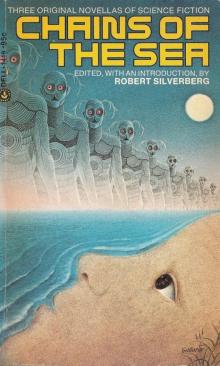 Chains of the Sea
 The Collected Stories of Robert Silverberg, Volume Five: The Palace at Midnight
 Postmark Ganymede
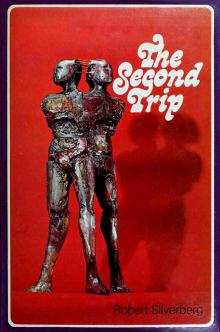 The Second Trip
 The Collected Stories of Robert Silverberg, Volume 4: Trips: 1972-73
 Son of Man
 Tom O'Bedlam
 To the Land of the Living
 To Be Continued: The Collected Stories of Robert Silverberg, Volume One
 Shadrach in the Furnace
 The Chalice of Death: Three Novels of Mystery in Space
 The Queen of Springtime
 To Be Continued 1953-1958
 Legends
 Roma Eterna
 To Live Again
 At Winter's End
 Needle in a Timestack
 To Live Again and the Second Trip: The Complete Novels
 Lord of Darkness
 The Mountains of Majipoor
 The World Outside
 The Alien Years
 The Book of Skulls
 The Face of the Waters
 Gilgamesh the King
 The Collected Stories of Robert Silverberg, Volume 6: Multiples: 1983-87
 The Happy Unfortunate
 Three Survived
 Cronos
 Tower of Glass
 Legends II
 The Planet Killers
 The Collected Stories of Robert Silverberg, Volume 2: To the Dark Star: 1962-69
 Downward to the Earth
 Lord Valentine's Castle: Book One of the Majipoor Cycle
 Hot Times in Magma City, 1990-95
 Hunt the Space-Witch! Seven Adventures in Time and Space
 Majipoor Chronicles
 The Robert Silverberg Science Fiction Megapack(r)
 Starman's Quest
 Car Sinister
 Worlds of Maybe
 Fantasy The Best of 2001
 Revolt on Alpha C
 Homefaring
 The Pardoner's Tale
 Sailing to Byzantium - Six Novellas
 The Chalice of Death
 Sundance
 A Tip on a Turtle
 Nebula Awards Showcase 2001: The Year's Best SF and Fantasy Chosen by the Science Fiction and Fantasy Writers of America
 The Fangs of the Trees
 The Palace at Midnight: The Collected Work of Robert Silverberg, Volume Five
 The Millennium Express - 1995-2009 - The Collected Stories of Robert Silverberg Volume Nine
 Book of Skulls
 Passengers
 Something Wild is Loose - 1969–72 - The Collected Stories of Robert Silverberg Volume Three
 Multiples
 Starborne
 The Masks of Time
 The Mountains of Majipoor m-8
 Multiples (1983-87)
 Those Who Watch
 In the Beginning
 Earth Is The Strangest Planet
 Collision Course
 Neutral Planet
 To the Dark Star - 1962–69 - The Collected Stories of Robert Silverberg Volume Two
 Mutants
 Sailing to Byzantium
 When We Went to See the End of the World
 Robert Silverberg The Science Fiction Hall Of Fame Volume One, 1929-1964
 To Be Continued - 1953–58 - The Collected Stories of Robert Silverberg Volume One
 Valentine Pontifex m-3
 Gianni
 Majipoor Chronicles m-2
 We Are for the Dark (1987-90)
 Waiting for the Earthquake
 Fantasy: The Best of 2001
 How It Was When the Past Went Away
 Beauty in the Night
 The Man Who Never Forgot
 The Book of Changes m-9
 Lord Valentine's Castle m-1
 This Way to the End Times
 Queen of Springtime
 Legends-Volume 3 Stories by the Masters of Modern Fantasy
 The Palace at Midnight - 1980–82 - The Collected Stories of Robert Silverberg Volume Five
 Something Wild is Loose: The Collected Stories of Robert Silverberg, Volume Three
 Multiples - 1983–87 - The Collected Stories of Robert Silverberg Volume Six
 Alaree
 Three Survived: A Science Fiction Novel
 Defenders of the Frontier
 The New Springtime
 We Are for the Dark - 1987–90 - The Collected Stories of Robert Silverberg Volume Seven
 The Science Fiction Hall of Fame, Volume One 1929-1964--The Greatest Science Fiction Stories of All Time Chosen by the Members of the Science Fiction Writers of America
 Master Of Life And Death
 Choke Chain
 Sorcerers of Majipoor m-4
 Absolutely Inflexible
 Trips - 1962–73 - The Collected Stories of Robert Silverberg Volume Four
 Hot Times in Magma City - 1990-95 - The Collected Stories of Robert Silverberg Volume Eight
 Far Horizons
 The Queen of Springtime ns-2
 The Seventh Science Fiction Megapack
 Invaders From Earth
 Hanosz Prime Goes To Old Earth
 The Macauley Circuit
 Science Fiction: The Best of 2001
 To the Dark Star: The Collected Stories of Robert Silverberg, Volume Two
 Stochastic Man
 Legends: Stories By The Masters of Modern Fantasy
 To Live Again And The Second Trip
 Flies
Flies The Silent Invaders
 Ship-Sister, Star-Sister