
- Home
- Robert Silverberg
Cronos Page 29
Cronos Read online
Page 29
How did they know what she was begging for, then, Quellen asked himself? The spool did not answer. It informed him instead that the girl who spoke unintelligibly was brought before a magistrate, one Samuel Worral, who instead of arresting her on a vagrancy charge took her to his home. (Suspicious, Quellen thought!) He questioned her. She wrote replies in an unknown script whose characters lookedlike combs, birdcages, and frying pans. Linguists came to analyze her words. At length came one who described himself as “a gentleman from the East Indies.” He interrogated her in the Malay language and received comprehensible replies.
She was, he declared, the Princess Caraboo, kidnapped by pirates from her Javan home and carried off to sea, involving her in many adventures before at length she made her escape on the English shore. Through the medium of the “gentleman from the East Indies,” Princess Caraboo imparted many details of life in Java. Then a woman of Devonshire, a Mrs. Wilcocks, came forward and announced that the Princess was actually her own daughter Mary, born in 1791. Mary Wilcocks confessed her imposture and emigrated to America.
Brogg had appended the following speculation to the case of the Princess Caraboo:
“According to some authorities a multiple imposture was practiced here. A girl mysteriously appeared. A man stepped forward and claimed to understand her language. An older woman declared that it was all a fraud. But the records are faulty. What if the girl was a visitor from the future, and the ‘gentleman from the East Indies’ another hopper who shrewdly tried to pass her off as a Javan princess in order to keep her true origin from coming out, and the pretended mother yet another hopper who moved in to protect the girl when it looked likely that the Javan hoax would be exposed?How many time-travelers were living in England in 1817, anyway?”
It seemed to Quellen that Brogg was being too credulous. He passed on to the next instance.
Cagliostro: appeared in London, then in Paris, speaking with an accent of an unidentifiable kind. Supernal powers. Aggressive, gifted, unconventional. Accused of being inactuality one Joseph Balsamo, a Sicilian criminal. The same never proven. Earned a good living in eighteenth-century Europe peddling alchemistic powders, love philtres, elixirs of youth, and other useful compounds. Grew careless, was imprisoned in the Bastille in 1785, escaped, visited other countries, was arrested again, died in prison, 1795. Fraud? Impostor? Time-traveler? It was wholly possible. Anything, thought Quellen sadly, was possible once you began giving credence to such evidence.
Kaspar Hauser: staggered into the town of Nuremberg, Germany, on an afternoon in May, 1828. Apparently sixteen or seventeen years old. (A trifle young for becoming a hopper, Quellen thought. Perhaps deceptive in appearance.) Capable of speaking only two sentences in German. Given a pencil and paper, he wrote a name: “Kaspar Hauser.” Assumption made that that was his name. He was unacquainted with the commonest objects and experiences of everyday affairs of human beings. Dropped down out of a time fault, no doubt.
A quick learner, though. Detained for a while in prison as a vagrant, then turned over to a schoolmaster, Professor Daumer. Mastered German and wrote an autobiographical essay, declaring that he had lived all his life in a small, dark cell, living on bread and water. Yet a policeman who had found him declared, “He had a very healthy color: he did not appear pale or delicate, like one who had been some time in confinement.”
Many contradictions. Universal fascination in Europe; everyone speculating on the mysterious origin of Kaspar Hauser. Some said he was the crown prince of Baden, kidnapped in 1812 by the agents of the morganatic wife of his postulated father, the grand duke. Denied. Subsequently disproven. Others said he was sleepwalker, amnesiac. October 17, 1829: Kaspar Hauser found with a wound in forehead,allegedly inflicted by a man in a black mask. Policemen assigned to guard him. Several further purported assaults. December 14, 1833: Kaspar Hauser found dying in a park, with deep stab wound on his left breast. Claimed that a stranger had inflicted the wound. No sign of weapon in the park, no footprints in vicinity except Hauser’s own.
Suggestion that the wound was self-inflicted. Died several days afterward after exclaiming, “My God! that I should so die in shame and disgrace!”
Quellen disconnected the spool. Pigs, dogs, the Princess Caraboo, Kaspar Hauser—it was all quite entertaining. It might even support a belief that the whole of human history was besprinkled with time-travelers, and not simply the period from 1979 to 2106. Fine. But such facts did little to solve Quellen’s immediate problems, however much the gathering of them had gratified the beefy Brogg’s taste for scholarship. Quellen put the spool away.
He dialed Judith’s number. Her face appeared on the screen, pale, somber, austere. She fell short of being beautiful by quite a good deal. The bridge of her nose was too high, her forehead was somewhat domed, her lips were thin, her chin was long. Her eyes were disquietingly far apart, with the right one slightly higher than the left. Yet she was not unattractive. Quellen had toyed with the temptation of allowing himself to fall in love with her. It was awkward, though; he could not let her get too far within his emotional defenses without telling her about the place in Africa, and he did not want to share that fact with her. She had a streak of righteousness; she might inform on him.
She said, “Have you been hiding from me, Joe?”
“I’ve been busy. Submerged in work. I’m sorry, Judith.”
“Don’t let your guilts overflow. I’ve been getting along quite well.”
“I’m sure you have. How’s your frood?”
“Dr. Galuber? He’s fine. He’d like to have the chance to meet you, Joe.”
Quellen bristled. “I’ve got no plans for entering therapy, Judith. I’m sorry.”
“That’s the second time you’ve said you were sorry in the last three sentences.”
“I’m sor—” Quellen began, and then they both laughed.
Judith said, “I meant for you to meet Dr. Galuber socially. He’ll be at our next communion.”
“Which is?”
“Tonight, as a matter of fact. Will you come?”
“You know that social regurgitation has never delighted me very much, Judith.”
She smiled in a wintry way. “I know that. But it’s time you got out of your shell a little. You live too much to yourself, Joe. If you want to be a bachelor, that’s your business, but you don’t have to be a hermit too.”
“I can put a piece in the slot of a frood machine and get advice just as profound as that.”
“Maybe so. Will you come to the communion, though?”
Quellen thought of the case he had studied only an hour or so back, of the earnest communicant who had slipped pseudoliving glass into the alimentary canals of his fellow worshippers and then had watched them die in agony. He pictured himself writhing in torment while a weeping Judith clung to him and tried to extract the last vestige of empathic sorrow from his sufferings, after the manner of her cult.
He sighed. She was right: he had been living too much to himself these days. He needed to get out, away from his official responsibilities.
“Yes,” he said. “Yes, Judith, I’ll come to the communion. Are you happy?”
9.
Stanley Brogg had had a busy day.The UnderSec was juggling a lot of Quellen’s hot potatoes at once, but it did not trouble him, for Brogg had a good capacity for work. He privately felt that he and Spanner between them kept the whole department going. They were two of a kind, both big men, massive and methodical, with a reserve of flesh to draw extra energy from in times of crisis. Of course, Spanner was in the administrative end, and Brogg a lowly legworker. Spanner was Class Six, Brogg Class Nine. Yet Brogg saw himself as Spanner’s comrade-in-arms.
Those other two, Koll and Quellen—they were excresences on the department. Koll was full of hatred and mischief, seething with wrath simply because he was small and ugly. He had ability, of course, but his basically neurotic orientation made him dangerous and useless. If ever there was a case for compulsory frooding, it was Koll. Br
ogg often compared him to Tiberius Caesar: a baleful man full of menace, not insane but badly askew and so to be avoided.
If Koll were Tiberius, Quellen was Claudius: amiable, intelligent, weak to the core. Brogg despised his immediate superior. Quellen struck him as a ditherer, unfit for his post. Now and then Quellen could act with vigor and determination, but it didn’t come naturally to him. Brogg had been doing the legwork for Quellen for years; otherwise, the department would long since have fallen apart.
A surprising thing about Quellen, though: he was capableof criminality. That had startled Brogg. He didn’t think the man had it in him. To obtain a plot of land in Africa by diligently falsifying records, to apply and receive illegal stat service from a Class Seven apartment to the Congo, to live a secret life of ease and even luxury—why, it was an achievement so monstrously bold that Brogg still couldn’t see how Quellen had carried it off. Unless the explanation was that Quellen was so repelled by the harshness of life all about him that he was willing to take any risk to escape from it. Even a coward could rise to what looked like moral grandeur in the interests of his own cowardice. In the same way, a soft, flabby man like the Emperor Nero could transform himself into a demon simply to preserve his own flabbiness. Nero, thought Brogg, hadn’t been innately demonic after the fashion of Caligula; he had drifted into monstrosity in easy stages. In a way it was out of character for him, just as Quellen’s surprising act of boldness jarred with the image of the man that Brogg had constructed.
Brogg had found out Quellen’s great secret purely by accident, though there was some degree of treachery mixed into it. He had suspected for quite a while that Quellen was up to something peculiar, but he had no idea what it was. Deviant religious activity, perhaps; maybe Quellen belonged to one of the proscribed cults, a chaos group perhaps, or one of the rumored bands that gathered in dark corners to pray to the vicious pyrotic assassin, Flaming Bess.
Not knowing the details, but sensing the defensive wariness in Quellen’s recent behavior, Brogg sought to turn the situation to his personal profit. He had high expenses. Brogg was a man with pretensions to scholarship; immersed as he was in the study of ancient Romans, he had surrounded himself with books, authentic Roman coins, scraps of history. It took money to buy anything authentic. Brogg was living to the hilt of his salary now. It had struck him that Quellen might be a fruitful victim for extortion.
First Brogg had spoken to Quellen’s roommate of the time, Bruce Marok—for Quellen had not yet been promoted to Class Seven, and like any unmarried male of his class he was required to share an apartment. Marok, while confirming that something odd was going on, did not offer any details. He didn’t seem to know much. Then came Quellen’s promotion, and with the uptwitch Marok dropped out of the picture.
Brogg slapped an Ear on his boss and sat back to listen. The truth came out soon enough. Quellen had connived to get a chunk of Africa registered under a blind name for which he was the nominee. Much of Africa had been set aside as a private reserve for members of the High Government—the tropical part, particularly, which had been generally depopulated during the Spore War a century and a half back. Quellen had his slice. He had arranged for a house to be built there, and for unauthorized stat service so that he could pop back and forth across the Atlantic in a twinkling. Of course, Quellen’s little scheme was certain to be exposed eventually by one of the resurvey squads. But that part of the world was not due for a resurvey for some fifty years, by which time Quellen would be in little danger.
Brogg spent a fascinated few weeks tracking Quellen’s movements. He had thought at first that Quellen must take women to the hideaway for participation in illicit cultistactivities, but no, Quellen went alone. He simply sought peace and solitude. In a way, Brogg sympathized with Quellen’s need. However, Brogg had needs of his own, and he was not a sentimental man. He went to Quellen.
“The next time you stat to Africa,” he said blandly, “think of me. I envy you, CrimeSec.”
Quellen gasped in shock. Then he recovered. “Africa? What are you talking about, Brogg? Why would I go to Africa?”
“To get away from it all. Yes?”
“I deny all your accusations.”
“I’ve got proof,” said Brogg. “Want to hear?”
In the end, they reached an accommodation. For a generous cash payment, Brogg would keep silent. That had been several months ago, and Quellen had paid regularly. So long as he did, Brogg observed the bargain. He was not really interested in informing on Quellen, who was much more useful to him as a source of money than he would be in an institution for corrective rehabilitation. Pursuing his studies more easily on Quellen’s hush money, Brogg hoped earnestly that no one else would unmask the CrimeSec’s secret. That would mean the loss of his extra income, and might even send him to jail too, as an accomplice after the fact. These days, Brogg watched over Quellen like a guardian angel, protecting him from the prying eyes of others.
Brogg knew that Quellen feared and hated him, of course. It didn’t trouble him. Secreted in various places throughout the vicinity were taped accounts of Quellen’s iniquity, programmed to deliver themselves to High Government authorities in the event of Brogg’s sudden death or disappearance. Quellen knew that. Quellen wasn’t about to do anything. He was well aware that the moment sensors of those devilish little boxes ceased to pick up the alpha rhythms of Stanley Brogg, autonomic legs would comeforth and the telltales would march down to headquarters to pour forth their accusations. So Quellen and Brogg were at a standstill of mutual benefit.
Neither of them ever mentioned the situation. In the office, work proceeded serenely, though Brogg occasionally allowed himself a veiled reminder to keep Quellen uncomfortable. Generally Brogg took orders and carried them out.
As, for example, on this hopper business.
He had spent the last few days tracking Donald Mortensen, the potential hopper who was due to skip out on May 4. Quellen had asked Brogg to handle the Mortensen case with the greatest delicacy. Brogg knew why. He was clever enough to foresee the time-paradox consequences that might result if somebody interfered with the departure of Mortensen, who was on the documented hopper list. Brogg had gone over those old lists himself to compile the spool he had labeled Exhibit A. Subtract a man from the old records and the whole world might totter. Brogg knew that. Undoubtedly Quellen knew that too. Why, most likely Kloofman and Danton would have a dozen aneurysms pop in their aging arteries when they found out that Quellen’s department was monkeying with the structure of the past. Such monkeying jeopardized everybody’s status in the present, and those who had the most status to lose—the Class Ones—were the ones who would get most agitated over the investigation.
So Brogg was careful. He was pretty sure that the High Government would quash the Mortensen investigation once word of it got to Them. In the meanwhile, though, Brogg was merely carrying out his assignment. He could fry Quellen by botching the work and tipping off Mortensen; but Brogg had powerful motives for preserving Quellen from harm.
He found Mortensen easily: a lean, blonde man oftwenty-eight, with pale blue eyes and eyebrows so white they were virtually invisible. Brushing against him at a quickboat ramp, Brogg managed to affix an Ear to the man, hanging the hooked patch of transponding equipment neatly in Mortensen’s flesh. Brogg used a splinter model, working it into a callus in Mortensen’s palm. The man would never feel it. In a few days it would dissolve, but meanwhile it would transmit a world of information. Brogg was expert at such things.
He tuned in on Mortensen and recorded his activities.
The man was involved with a person named Lanoy. Brogg picked up things like:
“—at the station with Lanoy on the hop day—”
“—Lanoy’s fee is on deposit—”
“—you tell Lanoy that I’ll be going out the first week in May—”
“—yes, at the lake, the place I met him the last time—”
Mortensen was married. Class Ten. Didn’t like his wife
. Hopping provided instant divorce, Brogg thought with amusement. The Ear gave him Sidna Mortensen’s shrill complaints, and he couldn’t help but agree that the best thing Mortensen could do was hop. Brogg compiled a considerable dossier on the potential hopper.
Then came The Word, from Kloofman via Giacomin via Koll to Quellen and thence to Brogg:
“Leave Mortensen alone. He’s not to be tampered with. That’s The Word.”
Brogg looked questioningly at Quellen. “What should I do? We’re learning a lot from Mortensen.”
“Discontinue the investigation.”
“We could chance carrying it on quietly,” Brogg suggested. “So long as Mortensen takes no alarm, we’d continue to get data from him. I’m not suggesting that we actually interfere with his departure, but until—”
“No.”
Coward, Brogg thought. Afraid the High Government will flay you!
In a moment of anarchy Brogg saw himself deliberately destroying Donald Mortensen, flying in the face of the High Government, possibly smashing everything like Samson putting his shoulders to the pillars of the temple. It would have amused Brogg to learn that the supposedly meek Quellen had had the same rebellious thought. There was tremendous power in knowing that the minor act of a minor official could threaten the security of the High Government. Yet Brogg did not give way to the impulse, any more than Quellen had. He obediently discontinued the Mortensen investigation. Mortensen would depart for the past on May 4, and the continuum would be preserved.
Anyway, Brogg had a new lead on Lanoy.
It had come to light today. A prolet named Brand, Class Fifteen, had had too much to drink in a common saloon. Leeward, refreshing himself in the drinker, had listened to Brand running off at the mouth about Lanoy and his hopper business. Without benefit of modern technology, Leeward thus picked up a vital clue and brought it to Brogg.
 The Longest Way Home
 Hawksbill Station
 A Time of Changes
 This Way to the End Times: Classic Tales of the Apocalypse
 Beyond the Gate of Worlds
 Lord Valentine's Castle
 The Man in the Maze
 Tales of Majipoor
 Time of the Great Freeze
 The Collected Stories of Robert Silverberg, Volume 3: Something Wild Is Loose: 1969-72
 Planet of Death
 Trips: The Collected Stories of Robert Silverberg, Volume Four
 In the Beginning: Tales From the Pulp Era
 Hot Sky at Midnight
 Valentine Pontifex
 Up the Line
 Thorns
 Amanda and the Alien
 Star of Gypsies
 Nightwings
 The Time Hoppers
 Blood on the Mink
 Dying Inside
 The Last Song of Orpheus
 The King of Dreams
 The Stochastic Man
 The Collected Stories of Robert Silverberg, Volume Seven: We Are for the Dark
 The Millennium Express: The Collected Stories of Robert Silverberg, Volume Nine
 The Iron Chancellor
 Lord Prestimion
 To Open the Sky
 The World Inside
 Chains of the Sea
 The Collected Stories of Robert Silverberg, Volume Five: The Palace at Midnight
 Postmark Ganymede
 The Second Trip
 The Collected Stories of Robert Silverberg, Volume 4: Trips: 1972-73
 Son of Man
 Tom O'Bedlam
 To the Land of the Living
 To Be Continued: The Collected Stories of Robert Silverberg, Volume One
 Shadrach in the Furnace
 The Chalice of Death: Three Novels of Mystery in Space
 The Queen of Springtime
 To Be Continued 1953-1958
 Legends
 Roma Eterna
 To Live Again
 At Winter's End
 Needle in a Timestack
 To Live Again and the Second Trip: The Complete Novels
 Lord of Darkness
 The Mountains of Majipoor
 The World Outside
 The Alien Years
 The Book of Skulls
 The Face of the Waters
 Gilgamesh the King
 The Collected Stories of Robert Silverberg, Volume 6: Multiples: 1983-87
 The Happy Unfortunate
 Three Survived
 Cronos
 Tower of Glass
 Legends II
 The Planet Killers
 The Collected Stories of Robert Silverberg, Volume 2: To the Dark Star: 1962-69
 Downward to the Earth
 Lord Valentine's Castle: Book One of the Majipoor Cycle
 Hot Times in Magma City, 1990-95
 Hunt the Space-Witch! Seven Adventures in Time and Space
 Majipoor Chronicles
 The Robert Silverberg Science Fiction Megapack(r)
 Starman's Quest
 Car Sinister
 Worlds of Maybe
 Fantasy The Best of 2001
 Revolt on Alpha C
 Homefaring
 The Pardoner's Tale
 Sailing to Byzantium - Six Novellas
 The Chalice of Death
 Sundance
 A Tip on a Turtle
 Nebula Awards Showcase 2001: The Year's Best SF and Fantasy Chosen by the Science Fiction and Fantasy Writers of America
 The Fangs of the Trees
 The Palace at Midnight: The Collected Work of Robert Silverberg, Volume Five
 The Millennium Express - 1995-2009 - The Collected Stories of Robert Silverberg Volume Nine
 Book of Skulls
 Passengers
 Something Wild is Loose - 1969–72 - The Collected Stories of Robert Silverberg Volume Three
 Multiples
 Starborne
 The Masks of Time
 The Mountains of Majipoor m-8
 Multiples (1983-87)
 Those Who Watch
 In the Beginning
 Earth Is The Strangest Planet
 Collision Course
 Neutral Planet
 To the Dark Star - 1962–69 - The Collected Stories of Robert Silverberg Volume Two
 Mutants
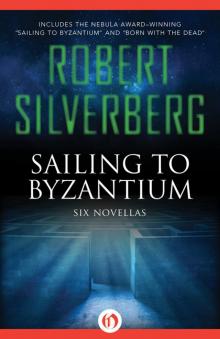 Sailing to Byzantium
 When We Went to See the End of the World
 Robert Silverberg The Science Fiction Hall Of Fame Volume One, 1929-1964
 To Be Continued - 1953–58 - The Collected Stories of Robert Silverberg Volume One
 Valentine Pontifex m-3
 Gianni
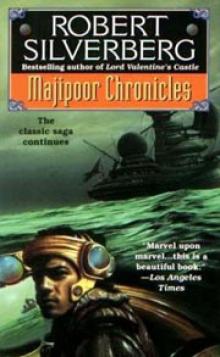 Majipoor Chronicles m-2
 We Are for the Dark (1987-90)
 Waiting for the Earthquake
 Fantasy: The Best of 2001
 How It Was When the Past Went Away
 Beauty in the Night
 The Man Who Never Forgot
 The Book of Changes m-9
 Lord Valentine's Castle m-1
 This Way to the End Times
 Queen of Springtime
 Legends-Volume 3 Stories by the Masters of Modern Fantasy
 The Palace at Midnight - 1980–82 - The Collected Stories of Robert Silverberg Volume Five
 Something Wild is Loose: The Collected Stories of Robert Silverberg, Volume Three
 Multiples - 1983–87 - The Collected Stories of Robert Silverberg Volume Six
 Alaree
 Three Survived: A Science Fiction Novel
 Defenders of the Frontier
 The New Springtime
 We Are for the Dark - 1987–90 - The Collected Stories of Robert Silverberg Volume Seven
 The Science Fiction Hall of Fame, Volume One 1929-1964--The Greatest Science Fiction Stories of All Time Chosen by the Members of the Science Fiction Writers of America
 Master Of Life And Death
 Choke Chain
 Sorcerers of Majipoor m-4
 Absolutely Inflexible
 Trips - 1962–73 - The Collected Stories of Robert Silverberg Volume Four
 Hot Times in Magma City - 1990-95 - The Collected Stories of Robert Silverberg Volume Eight
 Far Horizons
 The Queen of Springtime ns-2
 The Seventh Science Fiction Megapack
 Invaders From Earth
 Hanosz Prime Goes To Old Earth
 The Macauley Circuit
 Science Fiction: The Best of 2001
 To the Dark Star: The Collected Stories of Robert Silverberg, Volume Two
 Stochastic Man
 Legends: Stories By The Masters of Modern Fantasy
 To Live Again And The Second Trip
 Flies
Flies The Silent Invaders
 Ship-Sister, Star-Sister