
- Home
- Robert Silverberg
To Open the Sky Page 9
To Open the Sky Read online
Page 9
There had been nineteen Venusians of the true blood aboard the ship, too. But they felt no kinship for Martell and had forced him to withdraw from their presence. The crewmen had set up Martell’s cradle in a storage chamber, with gentle apologies: “You know those arrogant Venusians, Brother. Give them the wrong kind of look and they’re at you with their daggers. You’ll stay here. You’ll be safer here.” A thin laugh. “You’ll be even safer, Brother, if you head for home without ever setting foot on Venus.”
Martell had smiled. He was prepared to let Venus do its worst.
Venus had martyred several dozen members of Martell’s religious order in the past forty years. He was a Vorster, or, more formally, a member of the Brotherhood of the Immanent Radiance, and he had attached himself to the missionary wing. Unlike his martyred predecessors, Martell was surgically adapted to live on Venus. The others had had to muffle themselves in breathing-suits, and perhaps that had limited their effectiveness. The Vorsters had made no headway on Venus at all, though they were the dominant religious group on Earth, and had been for more than a generation. Martell, alone and adapted, had taken upon himself the long-delayed task of founding a Venusian order of the Brotherhood.
Martell had had a chilly welcome from Venus. He had blanked out in the turbulence of the landing as the ship plunged through the cloud layer. Then he had recovered. He sat patiently, a thin man with a wedge-shaped face and pale, hooded eyes. Through the port he had his first glimpse of Venus: a flat, muddy-looking field, stretching perhaps half a mile, with a bordering fringe of thick-trunked, ugly trees whose massed bluish leaves had a sinister glint. The sky was gray, and swirling clumps of low-lying clouds formed whorling patterns against the deeper background. Robot technicians were bustling from a squat, alien-looking building to service the ship’s needs. The passengers were coming forth.
In the landing station a low-caste Venusian stared at the Vorster with blank indifference, taking his passport and saying coolly, “Religious?”
“That’s right.”
“How’d you get in?”
“Treaty of 2128,” Martell said. “A limited quota of Earthside observers for scientific, ethical, or—”
“Spare me.” The Venusian pressed his fingertip to a page of the passport and a visa stamp appeared, glowing brilliantly. “Nicholas Martell. You’ll die here, Martell. Why don’t you go back where you came from? Men live forever there, don’t they?”
“They live a long time. But I have work here.”
“Fool!”
“Perhaps,” Martell agreed calmly. “May I go?”
“Where are you staying? We have no hotels here.”
“The Martian Embassy will look after me until I’m established.”
“You’ll never be established,” the Venusian said.
Martell did not contradict him. He knew that even a low-caste Venusian regarded himself as superior to an Earthman, and that a contradiction might seem a mortal insult. Martell was not equipped for dagger-dueling. And, since he was not a proud man by nature, he was willing to swallow any manner of abuse for the sake of his mission.
The passport man waved him on. Martell gathered up his single suitcase and passed out of the building. A taxi now, he thought. It was many miles to town. He needed to rest and to confer with the Martian Ambassador, Weiner. The Martians were not particularly sympathetic to his aims, but at least they were willing to countenance Martell’s presence here. There was no Earth Embassy, not even a consulate. The links between the mother planet and her proud colony had been broken long ago.
Taxis waited at the far side of the field. Martell began to cross to them. The ground crunched beneath his feet, as though it were only a brittle crust. The planet looked gloomy. Not a hint of sun came through those clouds. His adapted body was functioning well, though.
The spaceport, Martell thought, had a forlorn look. Hardly anyone but robots seemed to be about. A staff of four Venusians ran the place, and there were the nineteen from his ship, and the ten Martians, but no one else. Venus was a sparsely populated planet, with hardly more than three million people in its seven widely spaced towns. The Venusians were frontiersmen, legendary for their haughtiness. They had room to be haughty, Martell thought. Let them spend a week on teeming Earth and they might change their ways.
“Taxi!” Martell called.
None of the robocars budged from their line. Were even the robots haughty here, he wondered? Or was there something wrong with his accent? He called again, getting no response.
Then he understood. The Venusian passengers were emerging and crossing to the taxi zone. And, naturally, they had precedence. Martell watched them. They were high-caste men, unlike the passport man. They walked with an arrogant, swaggering gait, and Martell knew they would slash him to his knees if he crossed their path.
He felt a bit of contempt for them. What were they, anyway, but blue-skinned samurai, border lairds after their proper time, childish, self-appointed princelings living a medieval fantasy? Men who were sure of themselves did not need to swagger, nor to surround themselves with elaborate codes of chivalry. If one looked upon them as uneasy, inwardly uncertain hotheads, rather than as innately superior noblemen, one could surmount the feeling of awe that a procession of them provoked.
And yet one could not entirely suppress that awe.
For they were impressive as they paraded across the field. More than custom separated the high-caste and the low-caste Venusians. They were biologically different. The high-caste ones were the first comers, the founding families of the Venus colony, and they were far more alien in body and mind than Venusians of more recent vintage. The early genetic processes had been unsubtle, and the first colonists had been transformed virtually into monsters. Close to eight feet tall, with dark blue skins pocked with giant pores, and pendulous red gill-bunches at their throats, they were alien beings who gave little sign that they were the great-great-grandchildren of Earthmen. Later in the process of colonizing Venus, it had become possible to adapt men for the second planet without varying nearly so much from the basic human model. Both strains of Venusians, since they arose from manipulation of the germ plasm, bred true; both shared the same exaggerated sense of honor and the same disdain for Earth; both were now alien strains, inwardly and outwardly, in mind and in body. But those whose ancestry went back to the most changed of the changed ones were in charge, making a virtue of their strangeness, and the planet was their playground.
Martell watched as the high-caste ones solemnly entered the waiting vehicles and drove off. No taxis remained. The ten Martian passengers of the ship could be seen getting into a cab on the other side of the depot. Martell returned to the building. The low-caste Venusian glowered at him.
Martell said, “When will I be able to get a taxi to town?”
“You won’t. They aren’t coming back today.”
“I want to call the Martian Embassy, then. They’ll send a car for me.”
“Are you sure they will? Why should they bother?”
“Perhaps so,” Martell said evenly. “I’d better walk.”
The look he got from the Venusian was worth the gesture. The man stared in surprise and shock. And, possibly, admiration, mingled somewhat with patronizing confidence that Martell must be a madman. Martell left the station. He began to walk, following the narrow ribbon of a road, letting the unearthly atmosphere soak deep into his altered body.
two
IT WAS A lonely walk. Not a sign of habitation broke the belt of vegetation on either side of the highway, nor did any vehicles pass him. The trees, somber and eerie with their bluish cast, towered over the road. Their knifeblade-like leaves glimmered in the faint, diffused light. There was an occasional rustling sound in the woods, as of beasts crashing through the thickets. Martell saw nothing there, though. He walked on. How many miles? Eight, a dozen? He was prepared to walk forever, if necessary. He had the strength.
His mind hummed with plans. He would establish a small chapel and le
t it be known what the Brotherhood had to offer: life eternal and the key to the stars. The Venusians might threaten to kill him, as they had killed previous missionaries of the Brotherhood, but Martell was prepared to die, if necessary, that others might have the stars. His faith was strong. Before his departure the high ones of the Brotherhood had personally wished him well: grizzled Reynolds Kirby, the Hemispheric Coordinator, had grasped his hand, and then had come an even greater surprise as Noel Vorst himself, the Founder, a legendary figure more than a century old, had come forth to tell him in a soft, feathery voice, “I know that your mission will bear fruit, Brother Martell.”
Martell still tingled with the memory of that glorious moment.
Now he strode forward, buoyed by the sight of a few habitations set back from the road. He was at the outskirts, then. On this pioneer world, pioneer habits held true, and the colonists did not build their homes close together. They spread sparsely over a radiating area surrounding the main administrative centers. The man-high walls enclosing the first houses he saw did not surprise him; these Venusians were a surly lot who would build a wall around their entire planet if they could. But soon he would be in town, and then—
Martell came to a halt as he saw the Wheel hurtling toward him.
His first thought was that it had broken free from some vehicle. Then he realized what it was: no fragment of machinery, but Venusian wildlife. It surged over a crest in the road, a hundred yards in front of him, and came plunging wildly toward him at what must have been a speed of ninety miles an hour. Martell had a clear though momentary glimpse: two wheels of some horny substance, mottled orange and yellow, linked by a box-like inner structure. The wheels were nine feet across, at least; the connecting structure was smaller, so that wheel-rims projected around it. Those rims were razor-sharp. The creature moved by ceaselessly transferring its weight within that central housing, and it developed terrific momentum as it barreled toward the missionary.
Martell leaped back. The Wheel hurtled past him, missing his toes by inches. Martell saw the sharpness of the rim and felt an acrid odor sting his nostrils. If he had been a bit slower, the Wheel would have sliced him in two.
It traveled a hundred yards beyond him. Then, like a gyroscope running amok, it executed a turn in an astonishingly narrow radius and came shooting back toward Martell.
The thing’s hunting me, he thought.
He knew many Vorster combat techniques, but none of them were designed to cope with a beast like this. All he could do was keep sidestepping and hope that the Wheel could not make sudden compensations in its course. It drew near; Martell sucked in his breath and leaped back once again. This time the Wheel swerved ever so slightly. Its leading left-hand edge sliced through the trailing end of Martell’s blue cloak, and a ribbon of cloth fluttered to the pavement Panting, Martell watched the thing swing around for another try, and knew that it could indeed correct its course. A few more passes and it would split him.
The Wheel came a third time.
Martell waited as long as he dared. With the outer blades only a few feet away, he broad-jumped—into the path of the creature. Earthborn muscles carried him twenty feet in the light gravity. He more than half expected to be bisected in mid-jump, but when his feet touched ground he was still in one piece. Whirling, Martell saw that he had indeed surprised the beast; it had turned inward, toward the place where it had expected him to be, and had passed through his suitcase. The suitcase had been sliced as though by a laser beam. His belongings were scattered on the road. The Wheel, halting once more, was coming back for another try.
What now? Climb a tree? The nearest one was void of limbs for the first twenty feet. Martell could not shinny to safety in time. All he could do was keep hopping from side to side in the road, trying to outguess the creature. He knew that he could not keep that up much longer. He would tire, and the Wheel would not, and the slashing rims would pass through him and spill his altered guts on the pavement. It did not seem right, Martell thought, to die purposelessly in this way before he had even begun his work here.
The Wheel came. Martell sidestepped it again and heard it whistle past. Was it getting angry? No, it was just an insensate brute looking for a meal, hunting in the manner some perverse nature had designed for it. Martell gasped for breath. On the next pass—
Suddenly he was not alone. A boy appeared, running out from one of the stockaded buildings at the crest of the hill, and trotted alongside the Wheel for a few paces. Then—Martell did not see how it was done—the Wheel went awry and toppled, landing on one disk with the other in the air. It lay there like a huge cheese blocking the road. The boy, who could not have been much more than ten, stood by it, looking pleased with himself. He was low-caste, of course. A high-caste one would not have bothered to save him. Martell realized that probably the low-caste boy had had no interest in saving him, either, but simply had knocked the Wheel over for the sport of it.
Martell said, “I offer thanks, friend. Another moment and I’d have been cut to ribbons.”
The boy made no reply. Martell came closer to inspect the fallen Wheel. Its upper rim was rippling in frustration as it strained to right itself—clearly an impossible task. Martell looked down, saw a dark violet cyst near the center of one wheel writhe and open.
“Look out!” the boy cried, but it was much too late.
Two whip-like threads burst from the cyst. One wrapped itself around Martell’s left thigh, the other around the boy’s waist. Martell felt a blaze of pain, as though the threads were lined with acid-edged suckers. A mouth opened on the inner structure of the Wheel. Martell saw milling, grinding tooth-like projections beginning to churn in anticipation.
But this was a situation he could handle. He had no way of stopping the headlong plunge of the Wheel, for that was mere mechanical energy at work, but presumably the creature’s brain carried an electrical charge, and the Vorsters had ways of altering current flows in the brain. It was a mild form of esping, within the threshold of nearly anyone who cared to master the disciplines involved. Ignoring the pain, Martell seized the tightening thread with his right hand and performed the act of neutralization. A moment later the thread went slack and Martell was free. So was the boy. The threads did not return to the cyst, but remained lying limp in the roadway. The milling teeth became still; the rippling horny plate of the upper wheel subsided. The thing was dead.
Martell glanced at the boy.
“Fair enough,” he said. “I’ve saved you and you’ve saved me. So now we’re even.”
“The debit is still yours,” replied the boy with strange solemnity. “If I had not rescued you first, you never would have lived to rescue me. And it would not have been necessary to rescue me, anyway, since I would not have come out onto the road, and therefore—”
Martell’s eyes widened. “Who taught you to reason like that?” he asked in amusement. “You sound like a theology professor.”
“I am Brother Christopher’s pupil.”
“And he is—”
“You’ll find out. He wants to see you. He sent me out here to fetch you.”
“And where will I find him?”
“Come with me.”
Martell followed the boy toward one of the buildings. They left the dead Wheel in the road; Martell wondered what would happen if a carload of high-casters came along and had to shove the carcass out of the way with their own aristocratic hands.
Martell and the boy passed through a burnished coppery gate that slid open at the boy’s approach. Martell found himself approaching a simple wooden A-frame building. When he saw the sign mounted above the door, he was so amazed that he released his grip on his sundered suitcase, and for the second time in ten minutes his belongings went spilling to the ground.
The sign said:
SHRINE OF THE TRANSCENDENT HARMONY
ALL ARE WELCOME
Martell’s knees felt watery. Harmonists? Here?
The green-robed heretics, offshoots of the original Vorst
er movement, had made some progress on Earth for a while, and had even seemed to threaten the parent organization. But for more than twenty years now they had been nothing but an absurd little splinter group of no significance. It was inconceivable that these heretics, who had failed so utterly on Earth, could have established a church here on Venus—something that the Vorsters themselves had been unable to do. It was impossible. It was unthinkable.
A figure appeared in the doorway—a stocky man in early middle age, about sixty or so, his hair beginning to gray, his features thickening. Like Martell, he had been surgically adapted to Venusian conditions. He looked calm and self-assured. His hands rested lightly on a comfortable priestly paunch.
He said, “I’m Christopher Mondschein. I heard of your arrival, Brother Martell. Won’t you come in?”
Martell hesitated.
Mondschein smiled. “Come, come, Brother. There’s no peril in breaking bread with a Harmonist, is there? You’d be mincemeat now but for the lad’s bravery, and I sent him to save you. You owe me the courtesy of a visit. Come in. Come in. I won’t meddle with your soul, Brother. That’s a promise.”
three
THE HARMONIST PLACE was unassuming but obviously permanent. There was a shrine, festooned with the statuettes and claptrap of the heresy, and a library, and dwelling quarters. Martell caught sight of several Venusian boys at work in the rear of the building, digging what might be the foundations of an extension. Martell followed the older man into the library. A familiar row of books caught his eye: the works of Noel Vorst, handsomely bound, the expensive Founder’s Edition.
Mondschein said, “Are you surprised? Don’t forget that we accept the supremacy of Vorst, too, even if he spurns us. Sit down. Wine? They make a fine dry white here.”
 The Longest Way Home
 Hawksbill Station
 A Time of Changes
 This Way to the End Times: Classic Tales of the Apocalypse
 Beyond the Gate of Worlds
 Lord Valentine's Castle
 The Man in the Maze
 Tales of Majipoor
 Time of the Great Freeze
 The Collected Stories of Robert Silverberg, Volume 3: Something Wild Is Loose: 1969-72
 Planet of Death
 Trips: The Collected Stories of Robert Silverberg, Volume Four
 In the Beginning: Tales From the Pulp Era
 Hot Sky at Midnight
 Valentine Pontifex
 Up the Line
 Thorns
 Amanda and the Alien
 Star of Gypsies
 Nightwings
 The Time Hoppers
 Blood on the Mink
 Dying Inside
 The Last Song of Orpheus
 The King of Dreams
 The Stochastic Man
 The Collected Stories of Robert Silverberg, Volume Seven: We Are for the Dark
 The Millennium Express: The Collected Stories of Robert Silverberg, Volume Nine
 The Iron Chancellor
 Lord Prestimion
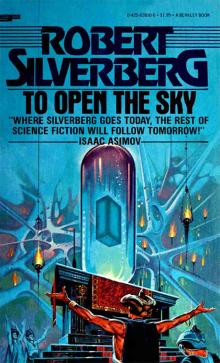 To Open the Sky
 The World Inside
 Chains of the Sea
 The Collected Stories of Robert Silverberg, Volume Five: The Palace at Midnight
 Postmark Ganymede
 The Second Trip
 The Collected Stories of Robert Silverberg, Volume 4: Trips: 1972-73
 Son of Man
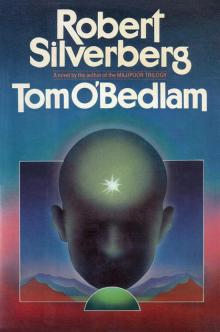 Tom O'Bedlam
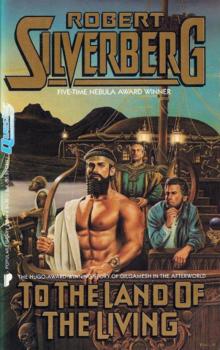 To the Land of the Living
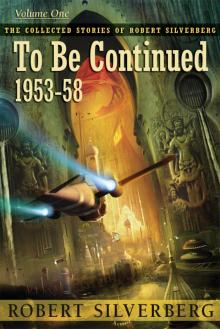 To Be Continued: The Collected Stories of Robert Silverberg, Volume One
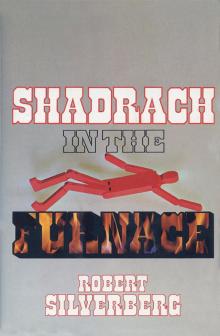 Shadrach in the Furnace
 The Chalice of Death: Three Novels of Mystery in Space
 The Queen of Springtime
 To Be Continued 1953-1958
 Legends
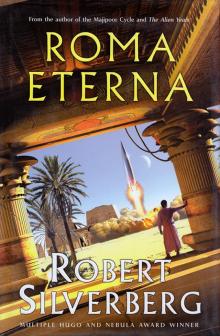 Roma Eterna
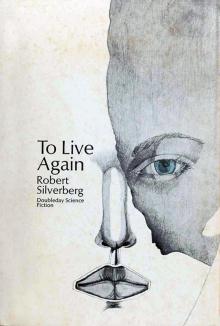 To Live Again
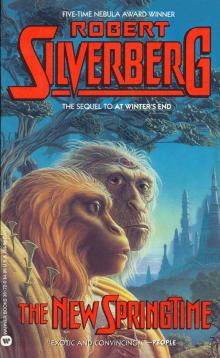 At Winter's End
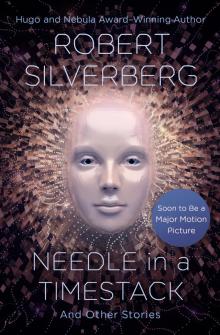 Needle in a Timestack
 To Live Again and the Second Trip: The Complete Novels
 Lord of Darkness
 The Mountains of Majipoor
 The World Outside
 The Alien Years
 The Book of Skulls
 The Face of the Waters
 Gilgamesh the King
 The Collected Stories of Robert Silverberg, Volume 6: Multiples: 1983-87
 The Happy Unfortunate
 Three Survived
 Cronos
 Tower of Glass
 Legends II
 The Planet Killers
 The Collected Stories of Robert Silverberg, Volume 2: To the Dark Star: 1962-69
 Downward to the Earth
 Lord Valentine's Castle: Book One of the Majipoor Cycle
 Hot Times in Magma City, 1990-95
 Hunt the Space-Witch! Seven Adventures in Time and Space
 Majipoor Chronicles
 The Robert Silverberg Science Fiction Megapack(r)
 Starman's Quest
 Car Sinister
 Worlds of Maybe
 Fantasy The Best of 2001
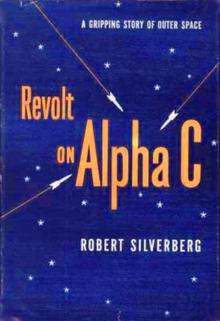 Revolt on Alpha C
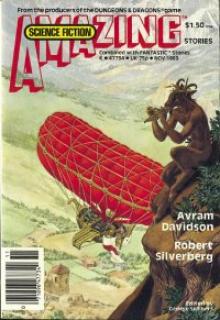 Homefaring
 The Pardoner's Tale
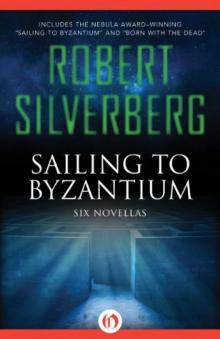 Sailing to Byzantium - Six Novellas
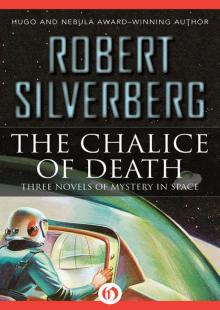 The Chalice of Death
 Sundance
 A Tip on a Turtle
 Nebula Awards Showcase 2001: The Year's Best SF and Fantasy Chosen by the Science Fiction and Fantasy Writers of America
 The Fangs of the Trees
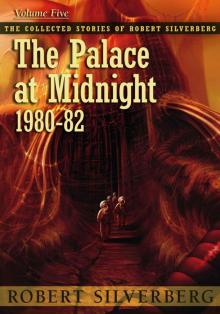 The Palace at Midnight: The Collected Work of Robert Silverberg, Volume Five
 The Millennium Express - 1995-2009 - The Collected Stories of Robert Silverberg Volume Nine
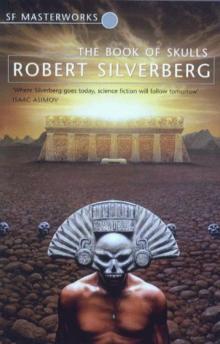 Book of Skulls
 Passengers
 Something Wild is Loose - 1969–72 - The Collected Stories of Robert Silverberg Volume Three
 Multiples
 Starborne
 The Masks of Time
 The Mountains of Majipoor m-8
 Multiples (1983-87)
 Those Who Watch
 In the Beginning
 Earth Is The Strangest Planet
 Collision Course
 Neutral Planet
 To the Dark Star - 1962–69 - The Collected Stories of Robert Silverberg Volume Two
 Mutants
 Sailing to Byzantium
 When We Went to See the End of the World
 Robert Silverberg The Science Fiction Hall Of Fame Volume One, 1929-1964
 To Be Continued - 1953–58 - The Collected Stories of Robert Silverberg Volume One
 Valentine Pontifex m-3
 Gianni
 Majipoor Chronicles m-2
 We Are for the Dark (1987-90)
 Waiting for the Earthquake
 Fantasy: The Best of 2001
 How It Was When the Past Went Away
 Beauty in the Night
 The Man Who Never Forgot
 The Book of Changes m-9
 Lord Valentine's Castle m-1
 This Way to the End Times
 Queen of Springtime
 Legends-Volume 3 Stories by the Masters of Modern Fantasy
 The Palace at Midnight - 1980–82 - The Collected Stories of Robert Silverberg Volume Five
 Something Wild is Loose: The Collected Stories of Robert Silverberg, Volume Three
 Multiples - 1983–87 - The Collected Stories of Robert Silverberg Volume Six
 Alaree
 Three Survived: A Science Fiction Novel
 Defenders of the Frontier
 The New Springtime
 We Are for the Dark - 1987–90 - The Collected Stories of Robert Silverberg Volume Seven
 The Science Fiction Hall of Fame, Volume One 1929-1964--The Greatest Science Fiction Stories of All Time Chosen by the Members of the Science Fiction Writers of America
 Master Of Life And Death
 Choke Chain
 Sorcerers of Majipoor m-4
 Absolutely Inflexible
 Trips - 1962–73 - The Collected Stories of Robert Silverberg Volume Four
 Hot Times in Magma City - 1990-95 - The Collected Stories of Robert Silverberg Volume Eight
 Far Horizons
 The Queen of Springtime ns-2
 The Seventh Science Fiction Megapack
 Invaders From Earth
 Hanosz Prime Goes To Old Earth
 The Macauley Circuit
 Science Fiction: The Best of 2001
 To the Dark Star: The Collected Stories of Robert Silverberg, Volume Two
 Stochastic Man
 Legends: Stories By The Masters of Modern Fantasy
 To Live Again And The Second Trip
 Flies
Flies The Silent Invaders
 Ship-Sister, Star-Sister